
 Login
Login
NFL Draft's most fascinating prospect might be Caleb Banks, a 'planet theory' specimen who struggles with 1 major thing
In a year where teams and analysts feel unsure about the quality of this year’s overall NFL Draft class, there’s one player above all who represents the split feelings: Florida defensive tackle Caleb Banks.
At first glance, the idea that Banks would be considered a first-round talent seems ridiculous. He played three games last season and finished with two tackles in another disappointing year for the Gators’ football team. Pair that with his incredible performance at the NFL combine and the rough framework of Banks’ profile would suggest that he’s a project player for the NFL, which isn’t fully true.
Banks is one of the most fascinating players in this year’s draft class, showing bonafide top-five traits with a critical flaw: He just can’t tackle right now. It’s such a confusing problem when directly compared to everything else he’s able to do, but the case for Banks and how to value him comes down to one question: Can we teach this dude how to tackle?
Guys with Caleb Banks’ athletic profile just don’t come around often
There’s long been the idea of “planet theory” ascribed to Bill Parcells in regard to NFL roster construction. Essentially, there are only so many 300-pounders in the world with legitimately elite athletic traits, and it would behoove NFL teams to collect as many of these humans as they feasibly can. Banks certainly fits into that description, as he showed at the NFL combine. At 6-foot-6 and 327 pounds, Banks ran a 5.04-second 40-yard dash, jumped 32 inches in vertical jump and also hit 9 feet, 6 inches in the broad jump. For a defensive tackle prospect, those are all strong numbers, but when considering his size, it puts him into the class of truly elite athleticism.
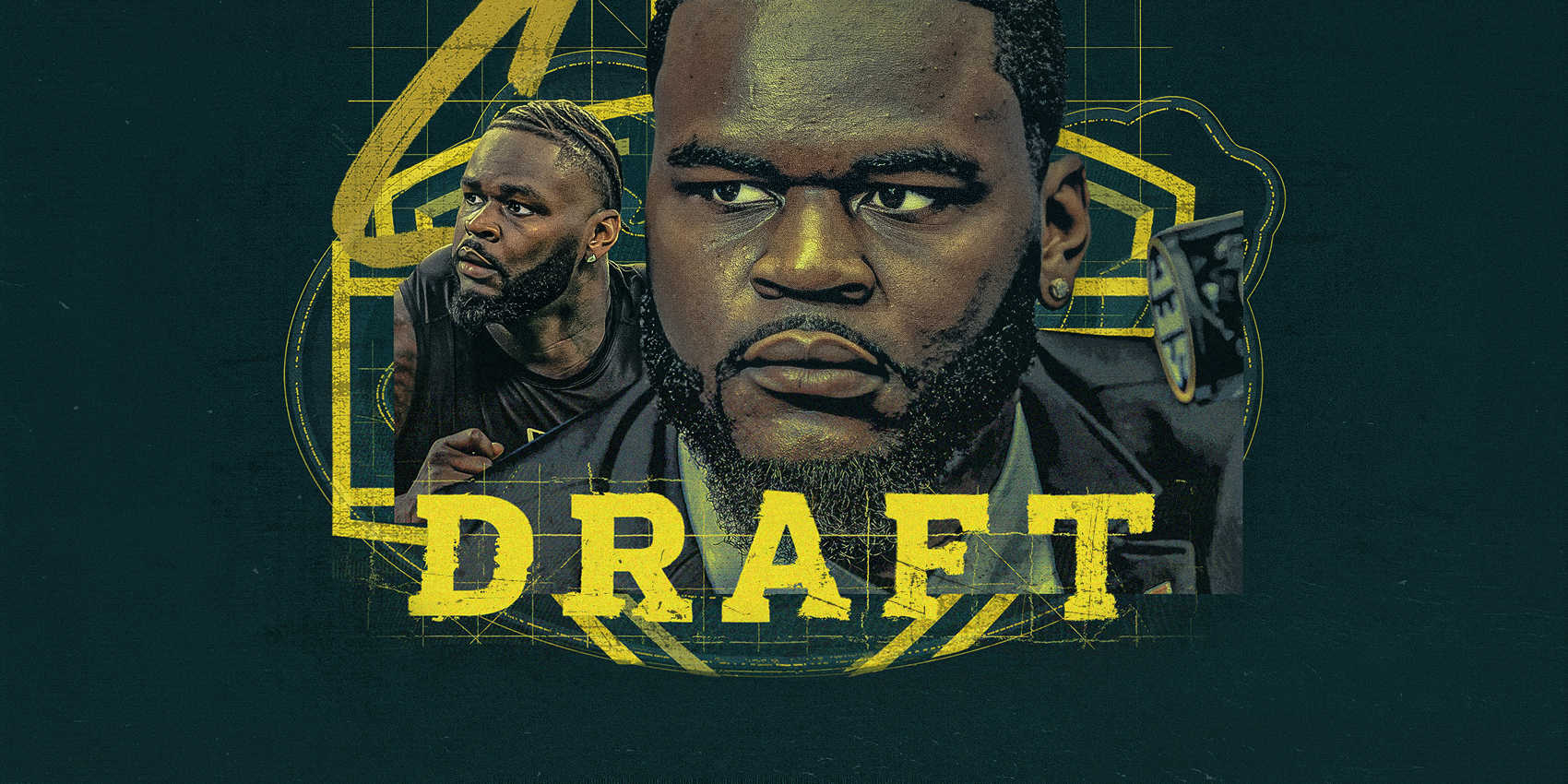
Simply put, Banks can generate an unusual amount of explosion for someone this heavy. To make it even wilder, he did this on a broken foot — equally impressive and concerning. It’s never good to have feet problems at his size, but the fact he was able to notch those numbers with the injury suggests there’s even more here to tap into.
Banks’ athleticism immediately shows up on tape too. He is on a different level athletically than the blockers he faced, overwhelming them with explosion paired with sheer size. However, there’s more to him than just that unrefined level of explosion. He’s not like Shemar Stewart last year, for example, who was selected in the first round with 1.5 sacks during his final collegiate season. Where Stewart struggled with reading blocks and diagnosing plays in real time, Banks really excels. He’s almost always technically sound within the structure of Florida’s defense, plays with great technique in terms of leverage and footwork. He’s incredibly disruptive while remaining true to the structure of the defensive play call … but he just can’t finish.
Missed tackles are an egregious flaw — but also the only one in Caleb Banks’ game
In the three games that Banks played in 2025, he could have put up a season’s worth of tackles for loss. He was incredibly stout and just too much for the opposing offensive line, but the running backs he was trying to get his hands on did not have as difficult of a time. Despite showing incredible balance through the contact and force of opposing 300-pounders, he loses all semblance of that high-end coordination when it’s time to actually finish the player.
— 22 Men (@22InConcert) April 1, 2026
Strictly talking on-field, this is really the only egregious flaw in Banks’ game. He has work to do as a pass rusher, but even then, he has a few pass rush moves that he likes to employ and can gain pressure through sheer applied force and athleticism. It’s not even a huge weakness — the fact that a 330-pounder can even be thought of as a pass-rush threat is fairly rare.
However, his tackling struggles actually create a big strain on the defense. It’s great that Banks can be so sound while penetrating into the backfield and beating blocks, but when he doesn’t finish in the backfield, the defense is suddenly down a man in terms of the framework of how they defend the run.
That became even more dangerous when Florida deployed defensive fronts where he was responsible for two gaps. Now a runway is open where Banks was. It’s a frustrating dichotomy to watch because on one hand, it’s just hard to find players who can consistently function as forceful, disciplined actors within a defense, but the inability to get guys on the ground is unacceptable — especially for someone who is just too talented to sit on the bench.
— 22 Men (@22InConcert) April 1, 2026
Caleb Banks needs to be healthy on a more consistent basis too
Even for Banks’ supporters, he undoubtedly comes packaged with a lot of questions regarding what’s next for him. It’s possible he lands with a staff that helps him fix his tackling issues and he becomes one of the truly elite front seven players in the league. That would also require his health struggles from college through the combine to level out so he can stay on the field long enough to be worth a first-round pick. Those are major questions to answer, because they’ve been persistent problems in his career up to this point.
However, Banks has so many traits that are either hard to find or hard to teach at this point. His understanding of where he needs to be and the techniques to execute those assignments is truly elite, and the physical profile is not something that an NFL staff can build. It comes down to whether or not a team thinks they can fix his tackling.
There should be a reason to stay optimistic if he can stay healthy. There’s just too much talent and proven ability to stay balanced while defeating blocks that there has to be a way to translate that into more production at the point of finishing a play.
Banks is not perfect, but there are plenty of defensive line coaches looking at his tape and saying the ever-toxic phrase that has plagued many throughout the course of their lives: “I can fix him.”
