Login
Login
With Arizona on brink of title, Tommy Lloyd is the hottest coach in college basketball. Will he stay in Tucson or bolt for bluer pastures?
INDIANAPOLIS — Arizona fans would undoubtedly prefer that their first Final Four in 25 years was not happening under a cloud of uncertainty about the future of their coach, Tommy Lloyd.
But the North Carolina job is open. His contract negotiations with Arizona are ongoing. And Lloyd is leveraging this unique moment for absolutely everything it’s worth.
That much was made clear Tuesday afternoon at his news conference when, despite the best efforts of the reporters in attendance, Lloyd once again refused to offer anything that would be considered reassuring to Arizona fans — or, more importantly, administrators — about his intentions after the season ends.
“People are going to speculate all they want,” Lloyd said. “Guys, this team has my full focus. Nothing, nothing, I promise you nothing is knocking me off that path. You guys might call them distractions because you’re distracted. That doesn’t mean I’m distracted or we’re distracted. You know what’s pretty cool? Once you get some experience in this deal and you’re a player or coach who’s been at it awhile, you get pretty good at eliminating distractions. So I think I’m pretty good at that and I can’t wait to get to practice today.”
It’s not difficult to see what’s going on here.
Lloyd is — rightly so — a top target for North Carolina, which fired Hubert Davis. The 51-year-old from Kelso, Washington, waited a long time to take on his first head coaching job after 20 years as Mark Few’s top assistant at Gonzaga, and he has absolutely crushed the opportunity with a 148-35 record and Final Four breakthrough in his fifth season. Among the current crop of college coaches, either Lloyd or Michigan’s Dusty May would be the slam dunk of all slam dunks for a North Carolina program that is finally ready to give the job to someone “outside the family.”
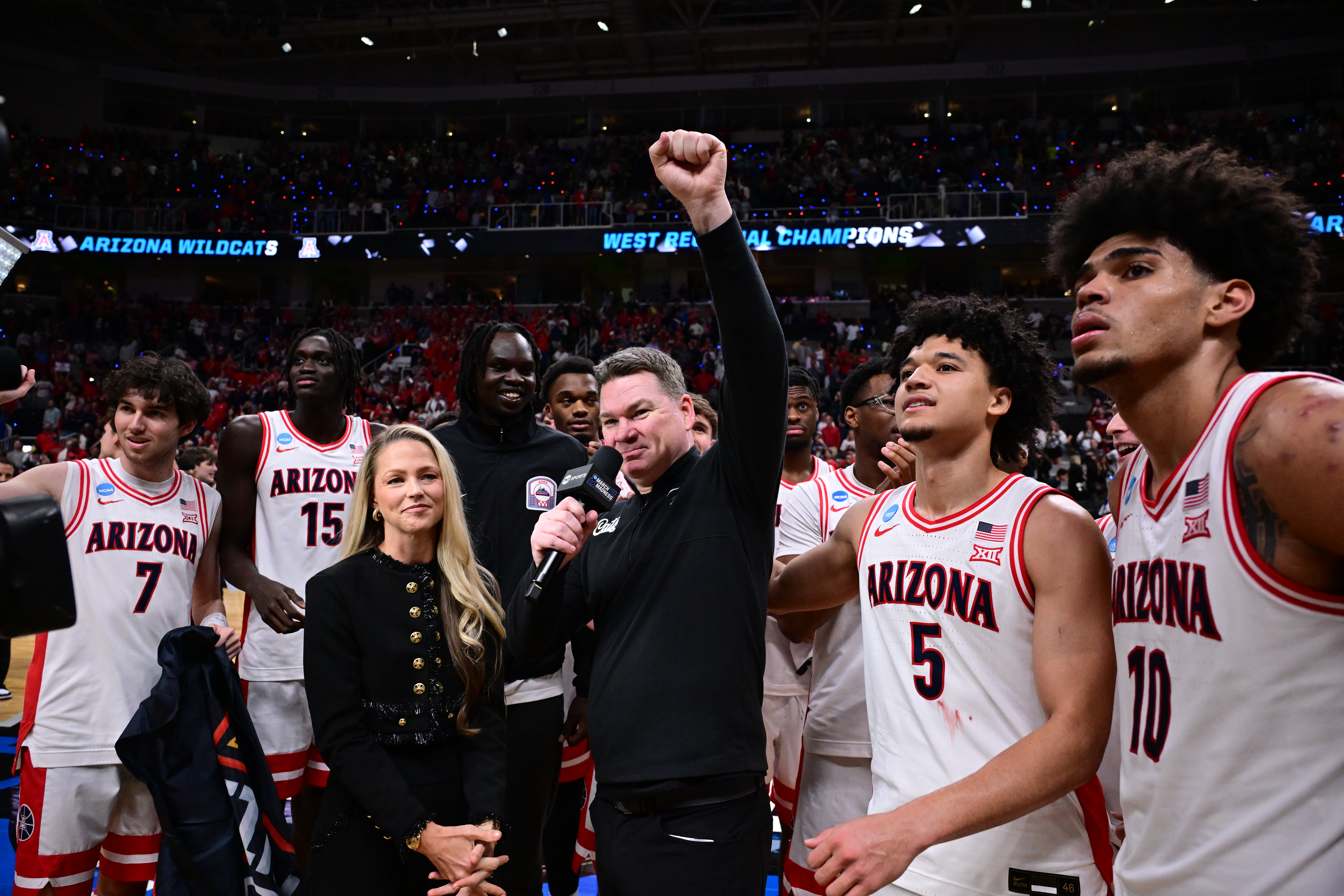
Just as importantly, he is also considered somewhat moveable despite his general happiness in Tucson and the potential for Arizona to dominate the West Coast. And this, it seems, is where the standoff lies: How committed is Arizona, a school and athletic department that has gone through significant financial challenges in recent years, to investing in that dominance?
Or, to put a finer point on it, what exactly does Lloyd want? He seems to understand that this is the moment to get it.
“That’s what I feel like my No. 1 responsibility is, to fight to protect the program and fight to build it for those who came before me and for those that are going to follow after me, because you know what, Arizona is going to have another good coach after me,” Lloyd said Saturday after the Wildcats’ Elite Eight win over Purdue. “I promise you. The place is special.”
Talking about a future theoretical successor shortly after the greatest moment of your career was an eye-catching choice, to be sure, but perhaps more of the focus should go toward the first part of the quote about fighting to protect the program. We are in an era where coaching careers, in many ways, hinge on the resources schools give a coach through revenue sharing and NIL to go build a roster. Since the pay-for-play era began, those numbers have not once gone down.
The message from Lloyd is unambiguous: I need more. And never has there been a more perfect vessel to deploy in negotiations than interest from arguably the top basketball job in the country. And rarely has there been a weaker negotiating position than the one Arizona’s administration is in right now with an athletic director in Desireé Reed-Francois who was hired two years ago to fix the department’s budget issues and has had, sources told Yahoo Sports, a sometimes rocky relationship with her basketball coach over his expectations for funding the program.
Lloyd has played this game before. In fact, he did it last just year — albeit under different, much quieter circumstances. After Arizona’s exit from the Sweet 16, according to sources, Villanova came after Lloyd hard. He was probably closer to taking that job than most people realized before signing a five-year contract extension last April. Though the details are somewhat opaque, it is believed that Lloyd left money on the table — both for himself and in player acquisition — to stay at Arizona.
It's hard to see that happening again.
We can only speculate about where Lloyd truly wants to spend his prime coaching years. What’s undeniable is that he’ll never have a better opportunity to set up the rest of his career to win national titles — either at Arizona or a North Carolina that will be desperate to get back in the mix after the last five mediocre seasons.
Lloyd has no bad options here, and he’s playing it to the hilt — just as he should.
That makes things uncomfortable for Arizona fans, who wanted an unmistakeable signal that he’s staying. It does not appear they’re going to get it.
But if you’re Lloyd, why do anything at this point to tamp down the pressure on Reed-Francois and school president Suresh Garimella? Why undercut your own negotiating position?
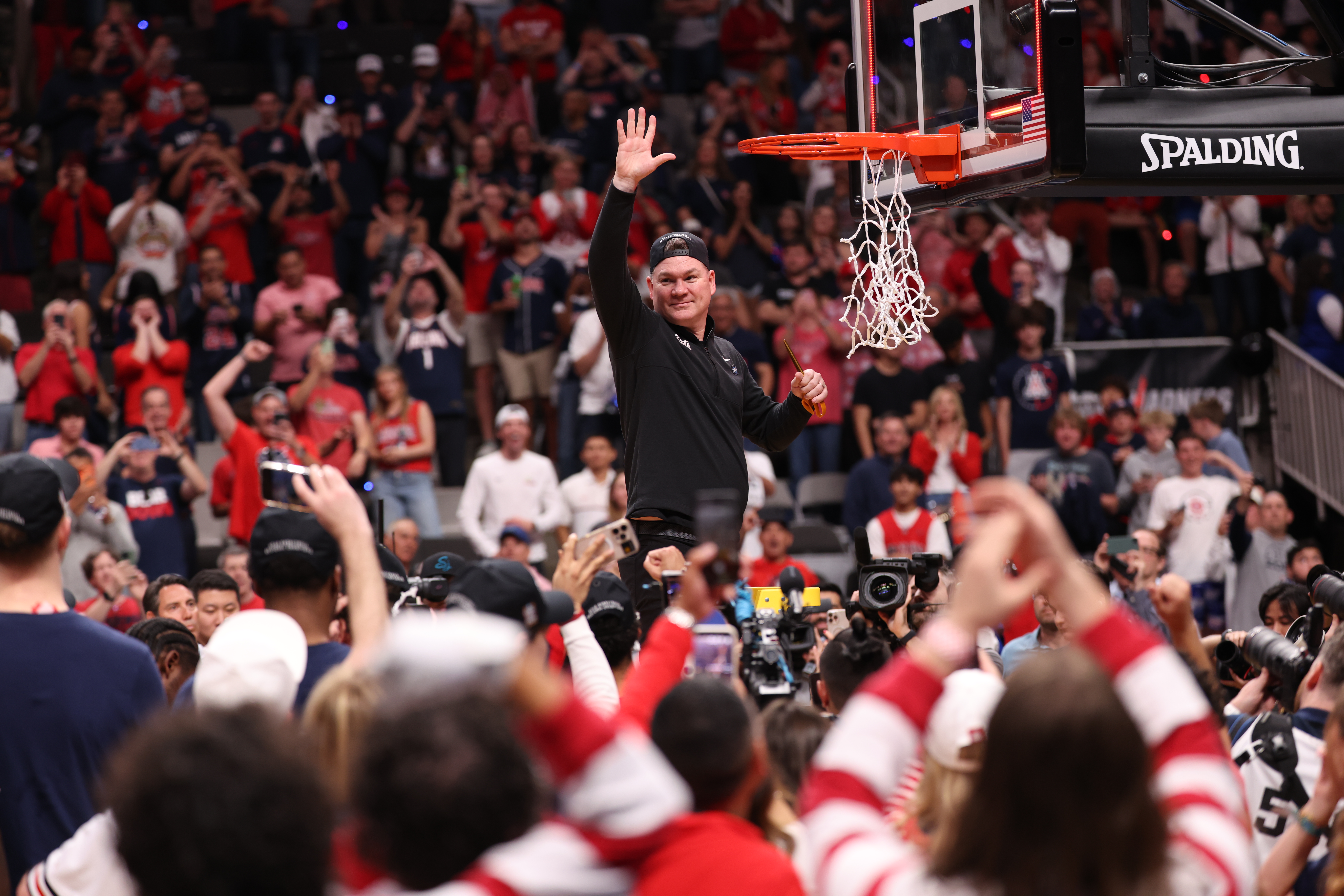
A lot of coaches would feel uncomfortable taking a team to the Final Four under these circumstances. Roy Williams often seemed miserable in 2003 when a similar situation was unfolding at North Carolina and he had Kansas in the Final Four. After losing the championship game to Syracuse, he snapped at CBS’ Bonnie Bernstein when she asked the obvious question about North Carolina, saying: “In tough times people should be more sensitive. I could give a [expletive] about North Carolina right now.”
Roughly a week later, Williams returned to his alma mater.
Lloyd obviously feels comfortable heading to the Final Four with this level of uncertainty hanging publicly over his future, and he’s not straying from the script. But the world has also changed since 2003.
In the era of an unfettered transfer portal, there is no need for a coach’s loyalty test. Lloyd knows that most of his rotation this year will be in professional basketball next season. As much as they may love what the school has done for them, many of them came to Arizona in the first place because it was the best business decision. Where Lloyd coaches in 2026-27 is of little consequence to what they’re trying to accomplish this weekend at the Final Four.
Everyone in college basketball these days is on a one-year contract.
Reed-Francois has said the right things publicly, telling reporters last week that she wants Lloyd to retire as a Wildcat and that they have been engaged in contract negotiations since before the NCAA tournament. She was also brought in to do a difficult job, with the mandate to get back to financial solvency at a place that was running a $39 million deficit. Cutting costs never makes for a popular boss, particularly in college athletics where the ethos has long been to spend your way out of problems and figure out how to pay for it later.
With NIL and revenue-sharing responsibilities, those days are over at most places. A championship-contending basketball roster is probably going to cost upwards of $10 million, and Arizona is one of a small number of places in the country where filling up the basketball arena is mandatory to make the numbers work.
But so is North Carolina, which is why the tug of war over Lloyd is going to be tense — and expensive.
Life is leverage, and the way Lloyd has handled this season — combined with North Carolina’s ability to make a big swing — has put him in position to either take one of the best jobs in basketball or make Arizona one of the best jobs in basketball for a generation.
That’s the handiwork of a man who knows the meaning of the moment. No matter what happens at the Final Four, Lloyd will have plenty of reason to celebrate.