Reading view

Oppo F33 and F33 Pro launch in India with Dimensity 6360 Max, 7000mAh batteries

Oppo F33 Pro

Oppo just refreshed its F-series in India with the new Oppo F33 and Oppo F33 Pro. The two phones share most of their specifications, with differences mainly in areas like the camera and design.

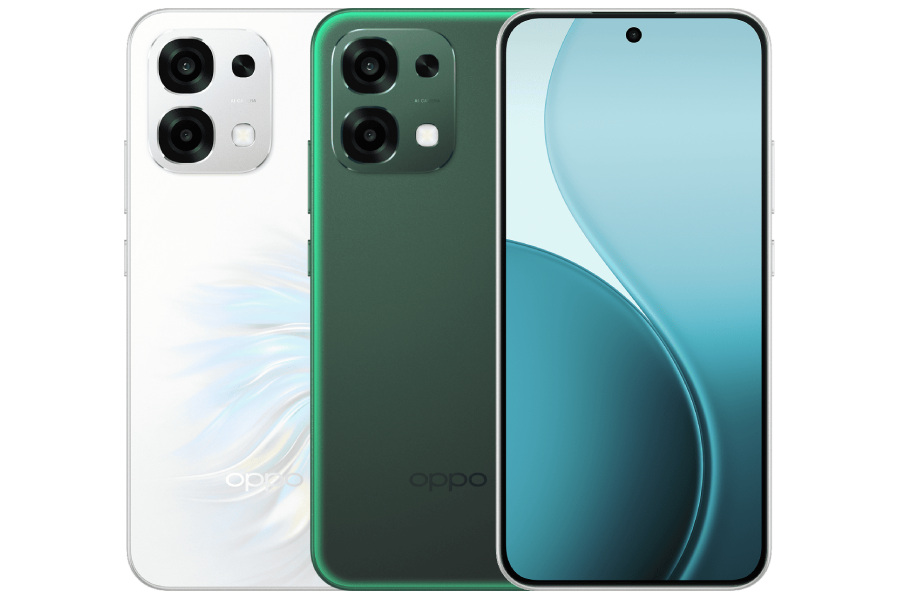
The standard F33 has a rectangular camera module on the back that doesn’t look much different from last year’s model.

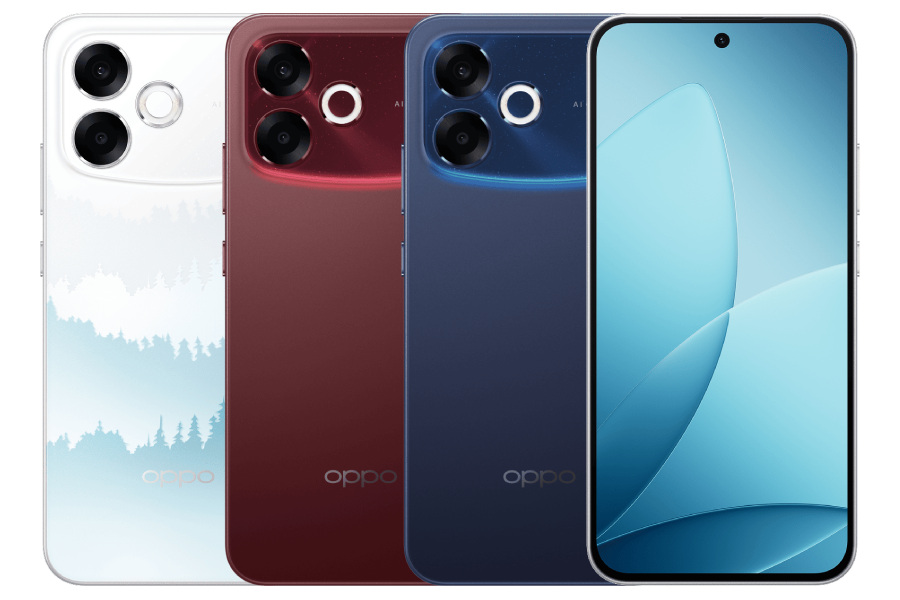
The Pro model, however, introduces a larger camera plateau and a more noticeable visual identity, even if the influence from recent iPhone designs is hard to ignore.
Oppo F33
Oppo F33 Pro

The standard model is available in Pearl White and Forest Green, while the Oppo F33 Pro comes in Starry Blue, Passion Red, and Misty Forest. The latter features a forest-like pattern on the back and a layered 3D depth effect that creates a subtle shifting look under light.

Both phones carry multiple protection ratings, including MIL-STD-810H certification and IP66, IP68, and IP69 dust and water resistance ratings. The Pro model also supports IP69K.

Oppo F33 Pro

Oppo F33 and F33 Pro Specifications

Both phones share the same core specifications. There’s a 6.57-inch AMOLED display with a 120Hz refresh rate and peak brightness of 1,400 nits. Powering them is a MediaTek Dimensity 6360 Max chip built on a 6nm process, paired with up to 8GB of RAM and 256GB of storage.

The Pro model adds a vapor chamber cooling system, which helps with sustained performance.

Oppo F33 Pro
Oppo F33 Pro

Oppo is packing a 7,000mAh battery into both models, paired with 80W fast charging. Features like reverse wired charging and bypass charging are also included.

On the camera side, both devices use a 50MP primary sensor with a 2MP depth sensor. The difference appears on the front — the F33 has a 16MP selfie camera, while the Pro upgrades to a 50MP ultra-wide sensor that can automatically adjust framing when more people enter the shot.

The phones run Android 16 with ColorOS 16 on top.

Pricing and Availability

The Oppo F33 starts at Rs 31,999 for the base variant and goes up to Rs 40,999 for the F33 Pro. Both devices are now up for pre-order through Amazon, Flipkart, Oppo’s online store, and offline retail outlets, with typical launch offers like cashback, exchange bonuses, and EMI options included.

ModelVariantPrice (India)
Oppo F336GB + 128GBRs 31,999
8GB + 128GBRs 34,999
8GB + 256GBRs 37,999
Oppo F33 Pro8GB + 128GBRs 37,999
8GB + 256GBRs 40,999

For more daily updates, please visit our News Section.

Stay ahead in tech! Join our Telegram community and sign up for our daily newsletter of top stories! 💡

The post Oppo F33 and F33 Pro launch in India with Dimensity 6360 Max, 7000mAh batteries appeared first on Gizmochina.

Honor’s next battery phone could have 11,000mAh capacity

Honor-Power-2-Launch-Specs-Price

Honor is one of the few brands offering smartphones with 10,000mAh batteries. The company already offers both mid-range and flagship models with these oversized cells, including the Honor Power 2 and the Honor Win series (Win and Win RT), respectively.

Now, the next milestone for Honor seems to be 11,000mAh.

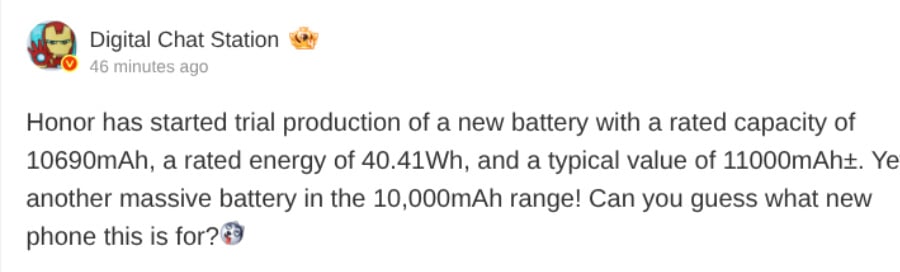
A new leak from tipster Digital Chat Station claims the company has started trial production of a new battery with a rated capacity of 10,690mAh and a typical capacity of 11,000mAh.

The report does not name the phone, but it points to yet another Honor device built around a very large battery.

That would put the phone beyond Honor’s current official battery leader, the Power 2. The latter ships with a 10,080mAh battery, 80W wired charging, and 27W reverse wired charging.

Before that, Honor launched the original Power with an 8,000mAh battery and 66W charging. The growth over just one generation is quite significant.

Honor Power 2 Specifications

While details about this rumored 11,000mAh Honor device remain unknown, the Honor Power 2 offers a useful reference point.

It packs a 10,080mAh battery into a surprisingly slim 7.98mm chassis. Charging caps at 80W wired and 27W for reverse.

Honor-Power-2-Launch-Specs-Price
Honor Power 2

On the front, there’s a 6.79-inch OLED LTPS flat display with a 1.5K resolution (2600 x 1200 pixels). The panel is rated for up to 8,000 nits peak brightness and includes 3,840Hz PWM dimming for reduced eye strain.

Powering the device is the MediaTek Dimensity 8500 Elite chipset, paired with LPDDR5X RAM and UFS 4.1 storage.

As for the cameras, it has a 50MP main sensor with OIS and a 5MP ultra-wide lens on the back, along with a 16MP front-facing camera. On the software side, it runs Android 16 with MagicOS 10 on top.

For more daily updates, please visit our News Section.

Tech enthusiast? Get the latest news first! Follow our Telegram channel and subscribe to our free newsletter for your daily tech fix! ⚡

The post Honor’s next battery phone could have 11,000mAh capacity appeared first on Gizmochina.

Global OnePlus Pad 3 Pro runs Geekbench with the top Qualcomm chip

OnePlus Pad 3

OnePlus has started teasing a new tablet for its global debut, though the company hasn’t revealed the name yet. According to reports, it’s likely the OnePlus Pad 3 Pro. And now, ahead of launch, the same device has surfaced on Geekbench.

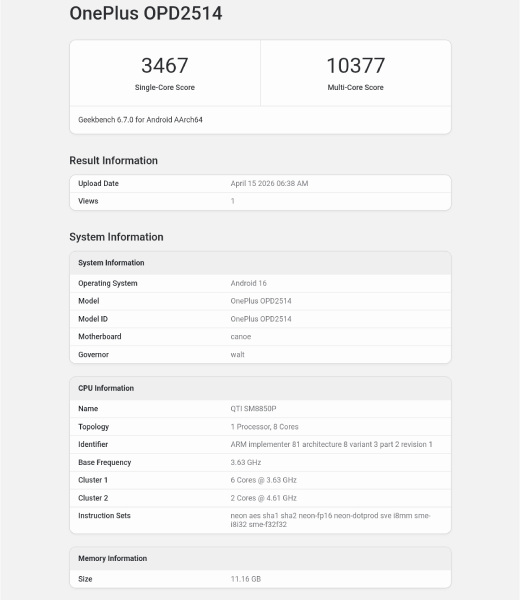
The listing shows a OnePlus tablet with the model number OPD2514, which is likely the global or Indian variant. It is powered by Qualcomm’s Snapdragon 8 Elite Gen 5 chipset, confirmed by its CPU setup of two high-performance cores clocked at 4.61GHz and six efficiency cores running at 3.63GHz.

Meanwhile, graphics are handled by the Adreno 840 GPU.

The device tested on Geekbench is running Android 16 and comes with 12GB of RAM. In terms of performance, it scored 3,467 in the single-core test and 10,377 in the multi-core test.

OnePlus Pad 3 Pro Specifications (Expected)

As for other hardware specs, the OnePlus Pad 3 Pro is likely to feature a 13.2-inch display for productivity and media consumption. Its memory options are said to include up to 16GB of LPDDR5X RAM and 512GB of UFS 4.1 storage.

Being a large device, the tablet is rumored to pack a battery larger than 10,000mAh. Design-wise, it is tipped to arrive in at least two color options: Titanium and Green.

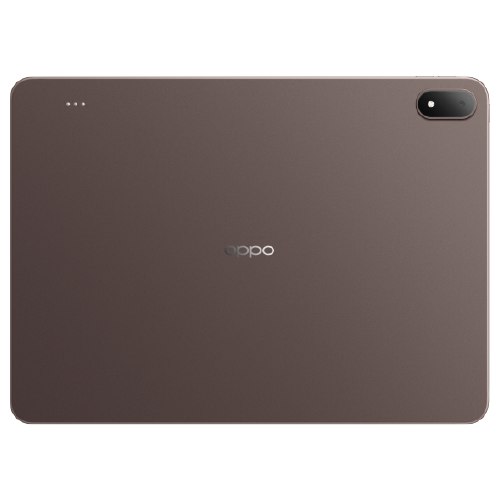
Oppo Pad 3 Pro

On a side note, last year’s OnePlus Pad 2 Pro was based on the Oppo Pad 4 Pro. As a result, the OnePlus Pad 3 Pro may similarly share similarities with the upcoming Oppo Pad 5 Pro

The latter is expected to debut with a 13.2-inch display, a Snapdragon 8 Elite Gen 5 chip, a 13,380mAh battery with 67W fast charging, up to 16GB of RAM, up to 512GB of storage, a 13-megapixel rear camera, and an 8-megapixel front camera.

For more daily updates, please visit our News Section.

Stay ahead in tech! Join our Telegram community and sign up for our daily newsletter of top stories.

(Source)

The post Global OnePlus Pad 3 Pro runs Geekbench with the top Qualcomm chip appeared first on Gizmochina.

Vivo T5 Pro launches with 9020mAh battery, 5000nits OLED display

Vivo-T5-Pro-5G-Launch-Specs-Price

As scheduled, Vivo today announced its latest mid-range smartphone, the Vivo T5 Pro 5G, in India. A successor to the Vivo T4 Pro, it debuts with a much larger 9,020mAh battery, up from 6,500mAh. The Vivo T5 Pro 5G starts at Rs 29,999 for the 8GB + 128GB variant in India. 

Vivo T5 Pro 5G Specifications

The phone features a large 6.83-inch 1.5K LTPS OLED display built on a Visionox VM9 panel. It supports a 144Hz refresh rate and reaches up to 5,000 nits peak brightness, with 2,000 nits in high brightness mode. 

The display also has 2,160Hz PWM dimming for reduced eye strain in low-light conditions.

Under the hood, the device runs on the Snapdragon 7s Gen 4 chipset, paired with LPDDR4X RAM and UFS 3.1 storage. Vivo claims the phone can achieve around 1.2 million points on AnTuTu benchmarks. 

It also supports up to 120FPS gaming, aided by a large 7,000mm² vapor chamber cooling system that the company says is the biggest in this category.

The Vivo T5 Pro features a dual rear camera setup, consisting of a 50MP Sony IMX882 main sensor with OIS and a 2MP secondary depth sensor. On the front, there is a 32MP camera for selfies and video calls.

Powering the 9,020mAh battery is 90W fast charging support. Vivo claims the phone can charge up to 50% in around 37 minutes. Despite the large battery, the device remains 8.25mm thick and weighs 213 grams. The company also promises five years of battery health durability.

On the software side, the phone runs Android 16 with OriginOS 6. Vivo is offering three years of major OS updates and five years of security patches. The device also includes IP68 and IP69 ratings for water and dust resistance, an in-display optical fingerprint sensor, an IR blaster, Wi-Fi 6, and Bluetooth 5.2.

The Vivo T5 Pro 5G will be available in Cosmic Black and Glacier Blue color options. It will go on sale starting April 21 via Flipkart, the Vivo India eStore, and offline retail stores.

For more daily updates, please visit our News Section.

Stay ahead in tech! Join our Telegram community and sign up for our daily newsletter of top stories!

The post Vivo T5 Pro launches with 9020mAh battery, 5000nits OLED display appeared first on Gizmochina.

Xiaomi 17 Max clears SRRC certification, launch imminent

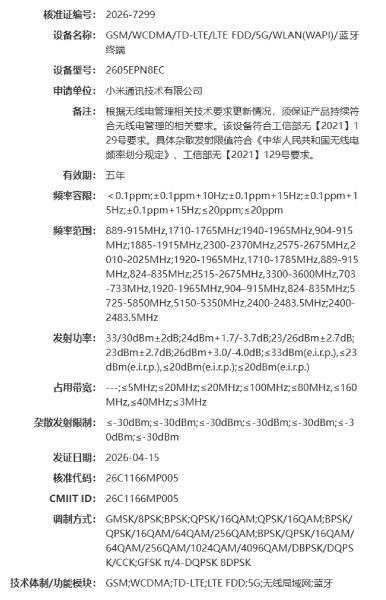
The Xiaomi 17 Max is making headlines again, this time for a regulatory filing in China. A new Xiaomi device with the model number 2605EPN8EC has passed China’s Ministry of Industry and Information Technology SRRC certification.

While the certification doesn’t confirm any specification except its connectivity (5G / WLAN / Bluetooth), it usually means that a launch isn’t too far away.

Based on earlier leaks, this device is widely believed to be the Xiaomi 17 Max, though some sources have referred to it as the Xiaomi 17S Pro. Either way, it’s a large-screen option in the company’s 17 series lineup. 

The model number also hints at Xiaomi’s internal timeline. It suggests a release window around April or May, which lines up with previous reports of a May debut in China.

What to expect?

According to previous reports, the Xiaomi 17 Max could feature a 6.9-inch flat OLED display with a 1.5K resolution and narrow bezels on all sides. The hardware will be led by the Qualcomm Snapdragon 8 Elite Gen 5 chipset, paired with up to 16GB of LPDDR5x RAM and up to 1TB of UFS 4.1 storage.

Xiaomi 17 Pro Max

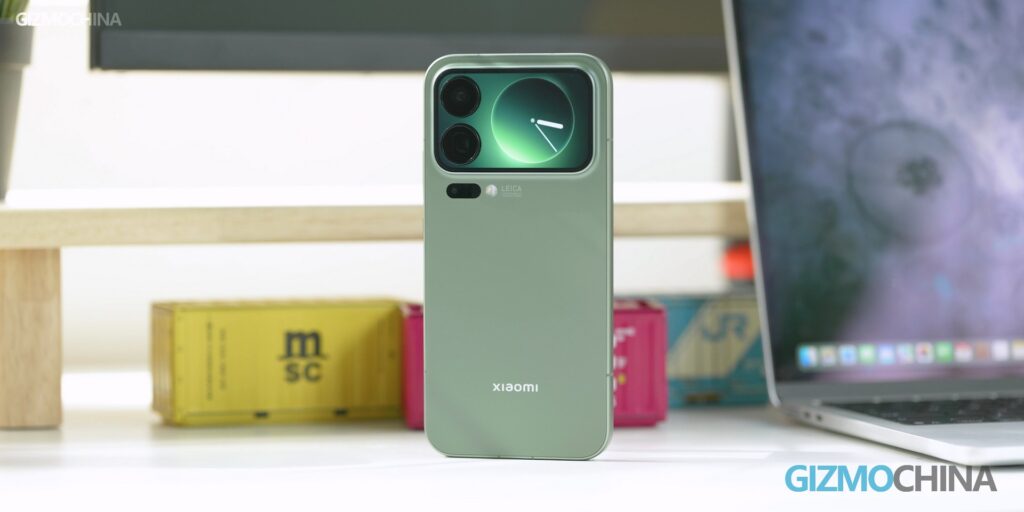
Its camera specs are likely to include a 200-megapixel main sensor, paired with a 50-megapixel telephoto macro lens. It will also have a 50MP ultrawide lens. These specs are similar in comparison to the Xiaomi 17 Pro Max, but the latter also has a secondary display on the rear. The Xiaomi 17 Max is rumored to skip that. 

Other rumored features include symmetrical dual speakers, an X-axis linear motor, and a 3D ultrasonic fingerprint sensor. The device may also introduce a new silicon-based battery with a capacity starting in the 8,000mAh range, along with full water resistance and a metal frame. The overall design is said to follow a clean, minimalist approach.

For more daily updates, please visit our News Section.

Stay ahead in tech! Join our Telegram community and sign up for our daily newsletter of top stories!

The post Xiaomi 17 Max clears SRRC certification, launch imminent appeared first on Gizmochina.

OnePlus gives early confirmation on its gaming console

OnePlus gaming console leaked image by DCS

Word on the street says OnePlus is working on a handheld console, and turns out it’s real. OnePlus official Li Jie confirmed in a livestream yesterday that the company is at least experimenting with a handheld gaming device.

During the stream, Li briefly showed a hand-drawn sketch of what looked like a portable console. The illustration wasn’t detailed, but the outline was clear enough to suggest it’s a gaming device.

Previously, tipster Digital Chat Station shared renders of a similar device. Those images pointed to a slightly boxy design with shoulder buttons, a rear camera, and colored grips.

So far, OnePlus hasn’t confirmed any specifications. But based on leaks, the device could feature an 8-inch display and run on a flagship chipset from MediaTek.

OnePlus’s gaming console will be touchscreen first

What could set this console apart is its approach to controls. Instead of relying entirely on joysticks and physical buttons, OnePlus may focus on a touchscreen-first interaction system. It’s expected to improve multi-finger input, reduce latency, and support high refresh rates.

Previous reports also mention system-level optimizations for games like Delta Force and PUBG Mobile.

The console is also expected to pack a larger battery, with hints of active cooling as well.

OnePlus gaming console leaked image by DCS

Alongside the console tease, Li also showed the OnePlus Ace 6 Ultra, a more immediate product powered by a Dimensity 9500 chip and a 165Hz display. It is closer to launch, while the handheld console is more of an experiment for now.

A report from March had already suggested that OnePlus was exploring an “Android handheld console” concept, possibly as part of a broader push by smartphone makers into new categories.

Nothing is official yet, and there’s still no timeline. But now that the concept has been teased by the company itself, a OnePlus console may not be too far off.

For more daily updates, please visit our News Section.

Stay ahead in tech! Join our Telegram community and sign up for our daily newsletter of top stories! 💡

The post OnePlus gives early confirmation on its gaming console appeared first on Gizmochina.

Total smartphone shipments slip in Q1, while Apple and Samsung continue to grow share

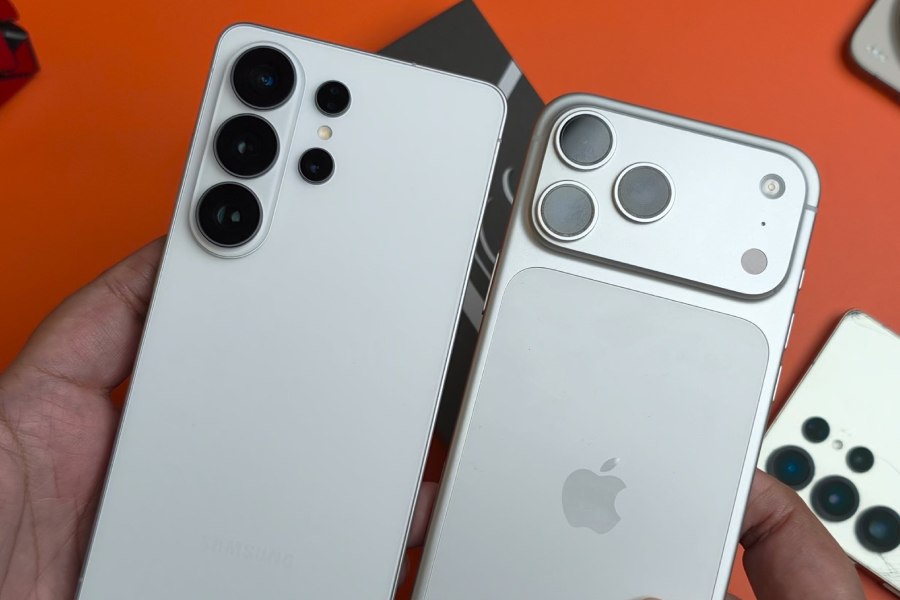
Samsung-Galaxy-S26-Ultra-vs-iPhone-17-Pro-Max-in-real-life

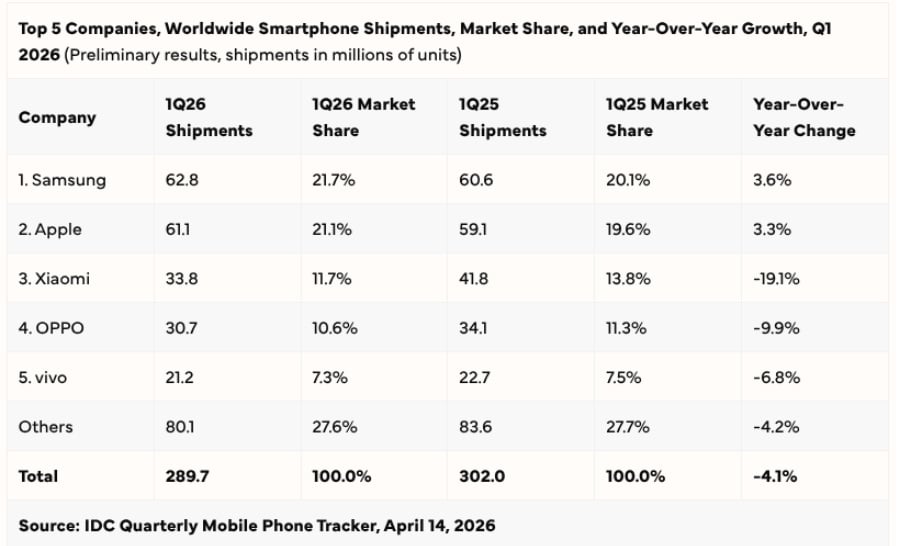
Global smartphone shipments are off to a slower start in 2026. According to IDC’s latest Worldwide Quarterly Mobile Phone Tracker, shipments fell 4.1% year over year in the first quarter to 289.7 million units.

The drop effectively ends a ten-quarter streak of growth that began around mid-2023. And we are all probably aware of the reasons. Supply constraints tied to storage components and rising costs. Both of these are expected to continue putting pressure on the market.

The top two companies still posted growth. Samsung and Apple were the only vendors among the global top five to record year-over-year gains.

The market outlook in Q1, 2026

Samsung returned to the number one spot for the quarter, thanks in part to the demand for the Samsung Galaxy S26 Ultra. Even with a later-than-usual launch, shipments still rose 3.6% compared to last year. 

The company also filled the gap with earlier releases in its midrange A series, which helped stabilize volumes.

Apple followed in second place, with the iPhone 17 series seeing particularly strong demand in China. The company recorded more than 30% growth in the mainland, contributing to a 3.3% increase globally. That said, IDC notes that supply disruptions and weaker channel support in some regions kept that growth in check.

Samsung-Galaxy-S26-Ultra-vs-iPhone-17-Pro-Max-in-real-life

For the rest of the top five, things were a bit more muted. Xiaomi held onto third place despite posting the largest decline among the group. 

Oppo came in fourth, with stronger performance in China offsetting weaker international results. Notably, Oppo’s data now also includes Realme. Vivo rounds out the top five, contributing 7.3% of global smartphone shipments. 

Outside the top tier, there were a few bright spots. Honor, along with Lenovo (through Motorola) and Huawei, all managed to grow. Honor stood out with a 24% year-over-year increase, which IDC says is due to its overseas expansion. 

In China, total shipments reached about 69 million units, down 3.3% from a year ago. Even there, growth from Huawei and Apple wasn’t enough to offset the broader slowdown.

For more daily updates, please visit our News Section.

Stay ahead in tech! Join our Telegram community and sign up for our daily newsletter of top stories! 💡

(Source)

The post Total smartphone shipments slip in Q1, while Apple and Samsung continue to grow share appeared first on Gizmochina.

Motorola Edge 70 Pro Geekbench reveals its chipset

Motorola Edge 70 Pro

The Edge 70 Pro by Motorola is set to be announced in India soon. Ahead of the big reveal, the device has appeared on Geekbench, revealing its chipset and performance metrics.

According to details shared by tipster Abhishek Yadav, the phone appears on benchmark tests with 12GB of RAM and Android 16 out of the box. The listing also reveals an octa-core chipset, believed to be part of MediaTek’s Dimensity 8000 series—likely the Dimensity 8500.

Motorola Edge 70 Pro will use a MediaTek chipset.

Dimensity 8500 SoC ⬛
1 core @ 3.40 GHz
3 cores @ 3.20 GHz
4 cores @ 2.20 GHz

Mali-G720 MC8 GPU 🎮
12GB RAM
Android 16 🍭

Geekbench scores:
Single-core: 1,727
Multi-core: 6,563 pic.twitter.com/LhBWWF0AFT

— Abhishek Yadav (@yabhishekhd) April 14, 2026

The chip uses a mix of cores, including four efficiency cores clocked at 2.2GHz, three performance cores at 3.2GHz, and a prime core reaching up to 3.4GHz. Graphics duties are handled by a Mali-G720 MC8 GPU.

In terms of raw numbers, the device scores 1,727 in single-core and 6,563 in multi-core tests.

What to expect?

The benchmark leak comes shortly after a teaser microsite quietly went live on Flipkart. While the page doesn’t explicitly name the device, the design and finishes shown match previously leaked renders of the Edge 70 Pro. It is expected to come in three finishes: a fabric-like blue, a satin-style green, and a marble-inspired white.

Design-wise, the phone is expected to stick with familiar Motorola aesthetics, a curved display with a centered hole-punch camera, and a square-shaped module on the back housing a triple camera system. There is also mention of HDR10+ certification.

Moreover, certification listings suggest a 6,500 mAh battery with support for 90 W fast charging via USB-C. Other specifications have not been confirmed yet.

None of this is official just yet, but the pieces are starting to line up. Between the benchmark listing, leaked visuals, and the Flipkart teaser, it looks like Motorola is getting ready to formally introduce the Edge 70 Pro soon.

For more daily updates, please visit our News Section.

Stay ahead in tech! Join our Telegram community and sign up for our daily newsletter of top stories!

The post Motorola Edge 70 Pro Geekbench reveals its chipset appeared first on Gizmochina.

Huawei Pura 90 Pro Max gets 20x telephoto video and AI pose suggestions

Huawei-Pura-90-Pro-Max-Design

Huawei is preparing to launch its next flagship lineup, the Pura 90 series, on April 20. The Pro Max is the top-of-the-line model—there’s no Ultra this time—and Huawei today revealed some camera details about it.

The Pura 90 Pro Max features a 200-megapixel telephoto lens, a first for a Huawei flagship. The company says the camera can “capture everything, near and far.”

Huawei is also extending this capability to video. The phone supports up to 20x telephoto video recording using that same lens. While devices like the Galaxy S26 Ultra already offer similar zoom levels, Huawei’s emphasis here suggests strong optimization.

Moreover, the company also announced an AI posture recommendation feature for the Pura 90 series. If you tend to rely on the same poses in photos, the system can suggest alternatives. It’s another example of how smartphone makers are trying to make photography feel more guided rather than purely manual.

Huawei Pura 90 Pro Max Specifications

According to previous reports, the Pura 90 Pro Max features a 50-megapixel main camera with a 1-inch sensor and a variable aperture.

The company is also continuing with its second-generation Red Maple Image technology, which reproduces more natural colors. This is particularly relevant in scenes with complex lighting—such as sunsets or firelight—where maintaining accurate tones is often difficult.

On the hardware side, the device is expected to run on the Kirin 9030 Pro chip. It may also ship with the new HarmonyOS 6.1.

Huawei-Pura-90-Pro-Max-Design

As for looks, the Pura 90 Pro Max will come in Obsidian Black, Dawn Gold, Purple Sunset, Orange Ocean, and Emerald Lake. All variants except Obsidian Black and Dawn Gold will feature a gradient finish. Storage options are expected to include 12GB/256GB, 12GB/512GB, 16GB/512GB, and 16GB/1TB configurations.

We should learn more about the new phones in the lead-up to launch.

Don’t miss a thing! Join our Telegram community for instant updates and grab our free daily newsletter for the best tech stories!

For more daily updates, please visit our News Section.

The post Huawei Pura 90 Pro Max gets 20x telephoto video and AI pose suggestions appeared first on Gizmochina.

Huawei Pura X Max price leak, over 30% expensive than predecessor

HUawei Pura X Max

Huawei is preparing to launch its next foldable, the Pura X Max and Collector’s Edition, on April 20. The device sits at the top of the company’s wide-folding lineup, and if a new leak is anything to go by, it may also come with a noticeably higher price tag than its predecessor.

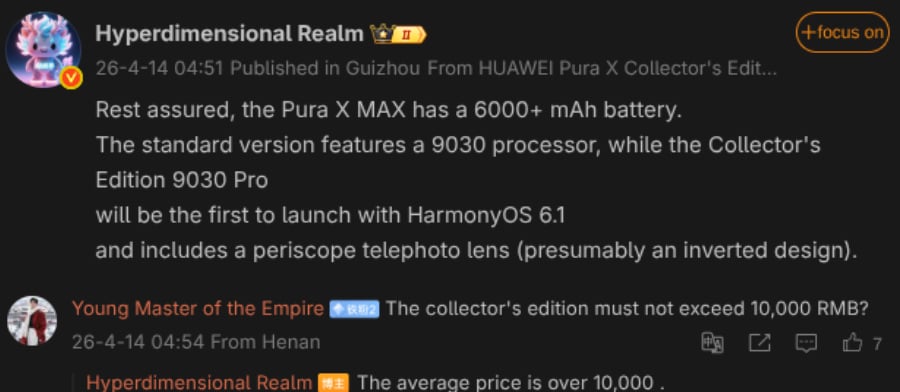
According to a Chinese tipster, the Huawei Pura X Max is expected to start above 10,000 yuan (around $1,465). That would put it well above last year’s Pura X, which launched at 7,499 yuan (roughly $1,097).

Another reliable tipster appears to back that up, hinting at a price in the same 10,000 yuan range.

Huawei Pura X Max Specifications (Expected)

For the price, the tipster says the Pura X Max will bring a battery exceeding 6,000mAh. It’s also expected to debut with HarmonyOS 6.1, making it one of the first devices to ship with Huawei’s updated operating system.

As for performance, the standard Huawei Pura X Max will reportedly use the Kirin 9030 chip, while a higher-end Collector’s Edition could feature a Kirin 9030 Pro. Huawei hasn’t confirmed either chipset so far.

HUawei Pura X Max

The hardware changes extend beyond internals. The Pura X Max is also expected to feature a larger 7.6-inch internal display, maintaining the wide-folding format Huawei introduced with the earlier Pura X.

The device may also include a periscope telephoto lens with Huawei’s XMAGE imaging system, along with a newer version of its Maple Leaf primary color technology.

Huawei will offer the Pura X Max in multiple color options, including Midnight Black, Zero White, Interstellar Blue, Olive Gold, and Vibrant Orange.

The company has some momentum going into this release. The earlier Pura X reportedly crossed 1.5 million units in shipments, a solid number for a foldable device.

For more daily updates, please visit our News Section.

Stay ahead in tech! Join our Telegram community and sign up for our daily newsletter of top stories! 💡

(Source 1 | 2)

The post Huawei Pura X Max price leak, over 30% expensive than predecessor appeared first on Gizmochina.
Honor unveils WIN gaming laptop with redesigned airflow and cooling setup

Honor-WIN-gaming-laptop

The Honor WIN gaming laptop is scheduled to launch on April 23rd in China. However, the company has already revealed most of the interesting parts during a recent PC technology communication conference.

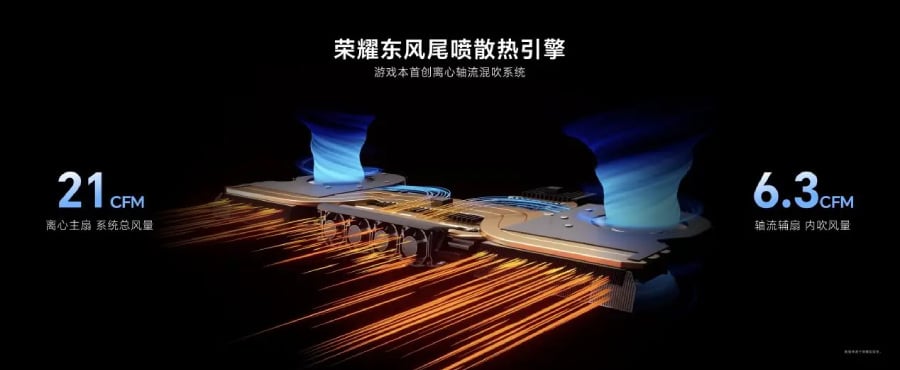
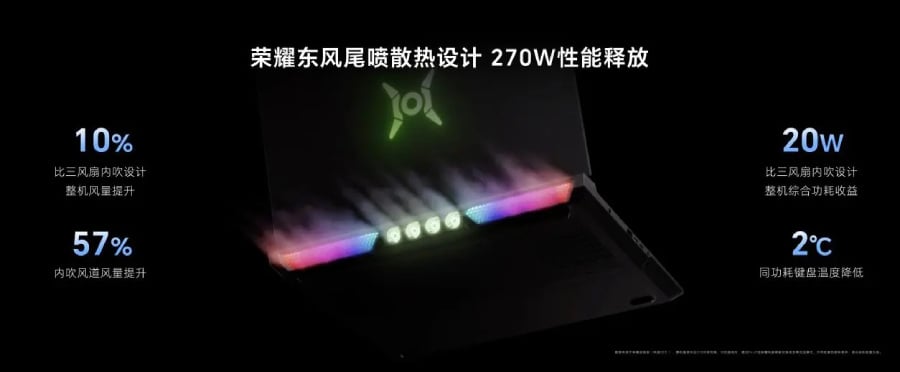
The main focus is cooling. Honor is using what it calls the Dongfeng tail jet cooling engine, which is built around a new airflow system. Instead of relying on a standard internal fan layout, the company has designed what it describes as the industry’s first centrifugal axial flow mixed air system.

This setup uses the thickness at the rear of the laptop to fit four self-developed axial fans in parallel, all connected through an internal airflow duct.

According to Honor’s test data, the system pushes internal airflow beyond 6.3 CFM, with total system airflow exceeding 21 CFM. The company also worked on shrinking the fan components, reducing motor size to around 10 mm while pushing speeds past 20,000 RPM. 

Compared to a typical three-fan setup, Honor claims this design increases internal airflow by 57% and overall airflow by 10%, while also lowering keyboard temperature slightly.

The cooling system is designed to support a total performance output of 270W. Honor says this allows the laptop to better sustain high loads, especially when paired with hardware like the NVIDIA GeForce RTX 5070 Ti. 

Compared to more traditional cooling approaches, the company claims a small gain in overall airflow and a 20W improvement in power handling under similar conditions.

Beyond this

Alongside the laptop, Honor also showed a 360W power adapter based on gallium nitride technology. It is designed to deliver full power while also supporting compatibility across different PC brands through interchangeable connectors. The company also introduced a set of accessories, including a backpack, gaming headset, and mouse, under the same WIN branding.

Honor-WIN-gaming-laptop

Beyond hardware, Honor used the event to talk about software and ecosystem plans. It announced what it calls the AI PC 3.0 era and introduced a new assistant, the YOYO Claw. The company describes it as part of a new category of AI-driven PCs, although details on how this will work in real use are still limited.

For more daily updates, please visit our News Section.

Stay ahead in tech! Join our Telegram community and sign up for our daily newsletter of top stories! 💡

The post Honor unveils WIN gaming laptop with redesigned airflow and cooling setup appeared first on Gizmochina.

Xiaomi 18 Pro battery and camera details leak

Xiaomi’s upcoming 18 Pro series has been showing up in leaks at a steady pace, and the latest one adds a few more details.

As you might already know, Xiaomi is reportedly working on two Xiaomi 18 Pro models: a smaller Xiaomi 18 Pro and a larger 18 Pro Max. 

Xiaomi 18 Pro Specifications (Expected)

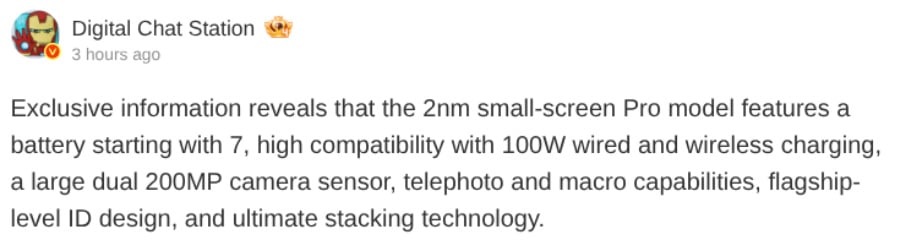
According to prolific tipster Digital Chat Station, the smaller Pro model could feature a battery capacity starting in the “7,000mAh” range, along with support for both 100W wired and wireless charging. In comparison, Xiaomi 17 Pro has a 63000mAh cell. 

On the camera side, the report mentions a “dual 200MP” setup, alongside telephoto and macro capabilities. That lines up with earlier rumors, which also pointed to 200MP sensors from SmartSens for the Xiaomi 18 Pro. 

These new sensors are also expected to support LOFIC HDR 3.0, a hardware-based approach aimed at improving dynamic range.

There’s also talk of modular optics, including magnetic, snap-on lenses. If that actually makes it to the final product, it could give users more flexibility, especially for zoom or more specialized photography.

Performance is expected to come from Qualcomm’s next-generation Snapdragon 8 Elite Gen 6 chip built on a 2nm process. It is likely to be paired with up to 16GB of RAM. 

Meanwhile, the larger 18 Pro Max could push battery capacity even further, with prototypes said to be targeting around 8,500mAh.

The Max model is also expected to retain the secondary rear display introduced last year.

As usual with early leaks, none of this is confirmed, and Xiaomi hasn’t said anything publicly. We’ll keep you updated as more details about the phone start to surface.

/For more daily updates, please visit our News Section.

Stay ahead in tech! Join our Telegram community and sign up for our daily newsletter of top stories! 💡

The post Xiaomi 18 Pro battery and camera details leak appeared first on Gizmochina.

Xiaomi HyperOS 4 to bring a Leica color palette, says leak

Xiaomi-HyperOS-4-self-developed-architecture

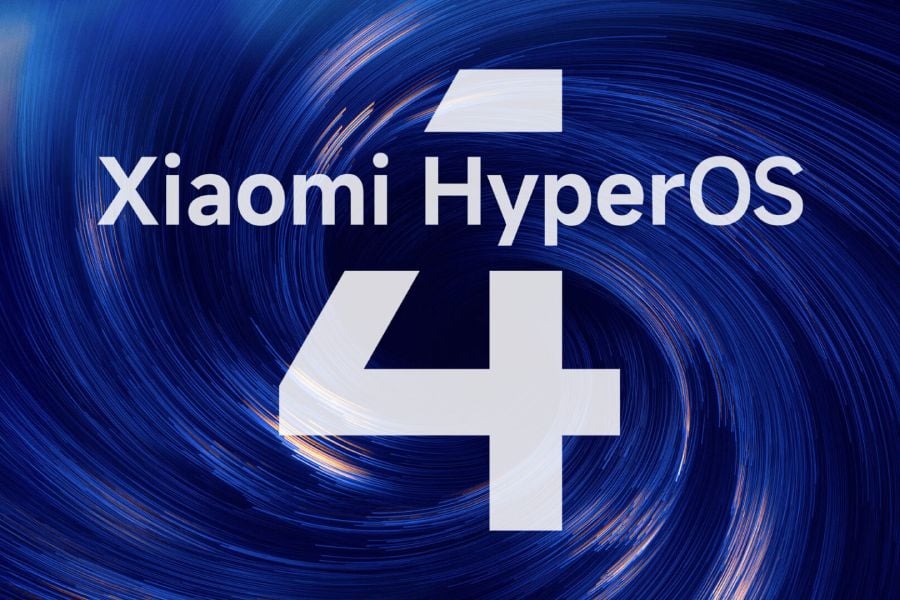
Android 17 is in its beta phase, and phone makers like Xiaomi are already deep into building their next software on top of it. The company’s upcoming HyperOS 4 has previously been rumored to bring a major shift, with earlier reports claiming a self-developed architecture under the hood.

Now, a few more details are starting to surface, courtesy of Weibo tipster Smart Pikachu. According to the leak, Xiaomi is reworking the core user interface for HyperOS 4. Its specifics are still scarce, but the tipster claims the system UI has undergone “significant changes.”

Xiaomi HyperOS with a Leica color palette

One of the more interesting claims is that Xiaomi is reportedly working on a dedicated Leica color palette for the OS.

Xiaomi’s partnership with Leica has mostly been visible in the camera app so far, especially in color science and filters. Bringing that aesthetic into the operating system could mean that Xiaomi wants the software to reflect the same “premium” tone as its camera hardware.

Xiaomi-HyperOS-4-self-developed-architecture

Moreover, Xiaomi also confirmed in January its aim to achieve “grand convergence” in 2026 with a self-developed chip, operating system, and large AI models on a single device. 

If all of this pans out, HyperOS 4 might not be about flashy new features as much as it is about refinement. A redesigned interface paired with a more cohesive visual language could make the experience feel more unified across Xiaomi, Redmi, and Poco devices.

Of course, it’s still early days. Xiaomi hasn’t confirmed any of these details, and the company is known for iterating quickly, which means features seen in leaks don’t always make it to the final release in the same form. So, as always, take it with a grain of salt.

For more daily updates, please visit our News Section.

Stay ahead in tech! Join our Telegram community and sign up for our daily newsletter of top stories.

The post Xiaomi HyperOS 4 to bring a Leica color palette, says leak appeared first on Gizmochina.

❌