
 Login
Login
Intel to Re-launch New Line of "Raptor Lake Refresh" LGA1700 Processors
Intel is preparing to launch a new line of Socket LGA1700 processors based on the "Raptor Lake Refresh" silicon, the same exact chip powering the 14th Gen Core desktop processor series. The move is seen as Intel capitalizing on DDR5 memory shortage, by releasing processors that support both DDR5 and older DDR4 memory standards, and getting motherboard vendors to launch a new crop of LGA1700 motherboards with both DDR4 and DDR5 memory slots, giving gamers better choice of memory upgrades.
Nomenclature is a big area of speculation. One theory holds Intel could use Core Series 2 processor model numbering, but without the "Ultra" brand extension due to the lack of an integrated NPU. Further, the company might limit itself to the "5" and "7" extensions, skipping "9." The top Core 7 2xx SKU could max out the "Raptor Lake Refresh" silicon, with an 8P+16E core configuration, that's eight "Raptor Cove" P-cores, each with 2 MB of L2 cache, and four "Gracemont" E-core clusters, each with 4 MB of L2 cache; all sharing 36 MB of L3 cache. The chip has a DDR4 and DDR5 memory interface, and puts out 20 PCIe lanes, 16 of which are Gen 5, and four of which Gen 4. Having received praise from the media for the aggressive pricing of its Core Ultra 7 270K Plus processor, Intel might attempt to repeat this feat with a similar, aggressively-priced product based on "Raptor Lake Refresh," maxing out all its on-die hardware, but at an attractive price-point, with DDR4 support to boot.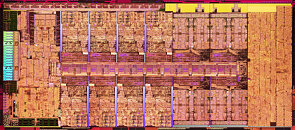
Nomenclature is a big area of speculation. One theory holds Intel could use Core Series 2 processor model numbering, but without the "Ultra" brand extension due to the lack of an integrated NPU. Further, the company might limit itself to the "5" and "7" extensions, skipping "9." The top Core 7 2xx SKU could max out the "Raptor Lake Refresh" silicon, with an 8P+16E core configuration, that's eight "Raptor Cove" P-cores, each with 2 MB of L2 cache, and four "Gracemont" E-core clusters, each with 4 MB of L2 cache; all sharing 36 MB of L3 cache. The chip has a DDR4 and DDR5 memory interface, and puts out 20 PCIe lanes, 16 of which are Gen 5, and four of which Gen 4. Having received praise from the media for the aggressive pricing of its Core Ultra 7 270K Plus processor, Intel might attempt to repeat this feat with a similar, aggressively-priced product based on "Raptor Lake Refresh," maxing out all its on-die hardware, but at an attractive price-point, with DDR4 support to boot.


