Reading view

Will Pi Network Coin Pump Ahead of the Protocol 22 Upgrade Deadline?
Pi Network Rolls Out Testnet RPC and Mainnet Protocol 21 Upgrade

The post Will Pi Network Coin Pump Ahead of the Protocol 22 Upgrade Deadline? appeared first on Coinpedia Fintech News

Pi Network’s Protocol 22 upgrade deadline is just days away, and millions of Pi holders are hoping that Pi coin price will see a pump before the deadline.

As of now, Pi Coin (PI) is currently trading around $0.17, showing only a small gain as rising US–Iran tensions continue to hurt investor sentiment and keep trading cautious.

Pi Network Protocol 22 Upgrade Deadline Approaches April 27

According to the official confirmation from Pi Network developers, all node operators must complete the mandatory upgrade to Protocol 22.1 by April 27, 2026. 

Nodes that fail to transition from version 21.2 will face automatic disconnection from the network. 

This is more than just a routine update. It prepares the network for the upcoming Protocol 23 upgrade in May, which is expected to introduce full smart contract functionality.

Geopolitical Tensions Are Keeping PI Price Suppressed For Now

Despite the upgrade excitement, Pi Coin’s price is still under pressure due to global market weakness. Rising US–Iran tensions, especially around the Strait of Hormuz, have triggered a broader risk-off sentiment.

The situation worsened after Iran refused to resume peace talks unless the US lifts its blockade, followed by the US seizure of an Iranian-flagged cargo ship. This has added more uncertainty to the markets.

This “risk-off” environment is limiting buying activity in smaller tokens like Pi, and even Bitcoin is struggling to break above $76K. 

Will Pi Network Coin Price Pump?

Historically, major network upgrades have acted as short-term price catalysts for the Pi token. At the time of the second migration event on March 28 triggered a 3.8% rally, and ahead of Pi Day, the token surged nearly 15%. 

With the upgrade deadline now closed, similar pre-event buying activity could return. In fact, early signs are already visible. 

A large outflow of over 1.7 million PI tokens from OKX suggests that some holders are moving their coins off exchanges, often seen as a sign that they are not planning to sell anytime soon.

Any bullish rally will test Pi day’s high price of $0.22, which will set the stage for further rally. 
BIS Warns Stablecoin Rise Could Trigger Global Bank Crisis

ECB Says Stablecoins Need Central Bank Backing to Scale

The post BIS Warns Stablecoin Rise Could Trigger Global Bank Crisis appeared first on Coinpedia Fintech News

The Bank for International Settlements (BIS) has warned over the rapid growth of US dollar-backed stablecoins, raising concerns about liquidity stress and systemic risk. Stablecoins like USDT and USDC remain near $1, but their rapid growth and structural risks are driving policy concern. 

This indicates rising pressure for stricter global regulation as stablecoins move closer to mainstream finance.

Stablecoins Growing Faster Than Regulation

Speaking in April 2026 in Tokyo, BIS General Manager Pablo Hernández de Cos said these digital tokens could have “material consequences” for financial stability if they grow large enough to compete with traditional money.

Stablecoins like USDT and USDC have become widely used for payments, trading, and cross-border transfers. Their appeal lies in speed and ease of use.

He noted that while stablecoins offer innovation, they still fall short as a true form of money. Instead, he said they behave more like financial products.

“In this respect, they currently operate more like exchange-traded funds than like money.” 

This means their value can sometimes move away from $1, especially during market stress, raising concerns for users.

G20 central bankers are pushing for urgent regulatory action as they warn dollar-pegged stablecoins could destabilize emerging economies. These assets risk accelerating uncontrolled dollarization and providing new channels for criminal activity across global markets. pic.twitter.com/mYuuXZaBJM

— Steffan (@Steffan0xd) April 20, 2026

Risk of Bank Runs and Market Stress

One of the biggest warnings from BIS is about sudden withdrawals.

Stablecoin issuers hold reserves in short-term government bonds and bank deposits. If users rush to withdraw funds during a crisis, issuers may be forced to sell these assets quickly. This could create pressure across financial markets and even affect banks.

De Cos warned that such “runs” could spread risk across the system.

“Runs on stablecoins could trigger market stress,” he said, adding that proper safeguards are still missing.

Concerns Around Regulation and Illicit Use

Another major issue is regulation.

Because many stablecoins operate on public blockchains and use private wallets, a large part of activity happens outside traditional monitoring systems. This creates challenges for anti-money laundering controls.

The BIS is now urging stronger global coordination to manage these risks and prevent misuse.

Europe and Global Regulators Step In

Governments are already responding. In Europe, officials are pushing for tighter rules on non-euro stablecoins. The European Central Bank has also raised concerns about liquidity risks.

In the UK, lawmakers have questioned whether stablecoins could drain bank deposits or trigger bank-like crises. 

Meanwhile, Switzerland has started testing regulated stablecoins within controlled environments.

What Happens Next?

The next phase will likely bring tighter control. De Cos suggested that risks could be reduced if stablecoin issuers had access to systems like deposit insurance or central bank support. 

He also pointed out that limiting interest payments on stablecoins could reduce their appeal compared to bank deposits.

Sell Bitcoin Now? Trader Warns of Drop to $48K Before May Comeback

Bitcoin Price Crash Ahead Markets Signal 67% Chance of Drop Below $55K$55K

The post Sell Bitcoin Now? Trader Warns of Drop to $48K Before May Comeback appeared first on Coinpedia Fintech News

Since the US–Iran conflict began, the overall market has been under pressure, and crypto has been hit the hardest. Now, a popular trader, Crypto Jack, is warning investors to sell bitcoin now. 

Bitcoin is showing signs of weakness after failing to break above $75K. And crypto Jack believes Bitcoin could fall to $48K before recovering in May.

Here’s why he thinks a drop could happen soon.

Iran to Skip Peace Talks After U.S. Seizes Iranian Ship

One of the biggest concerns right now is rising tension between the US and Iran. Reports suggest Iran may skip the second round of peace talks scheduled for April 20 in Pakistan, even as US Vice President JD Vance is expected to lead the US delegation.

Tensions increased after the US seized an Iranian-flagged cargo ship in the Strait of Hormuz, which Iran called a “violation of the ceasefire” and has promised to respond to.

Iran said Tehran may not join the talks unless the US lifts its blockade.

Bank of Japan Dumped $2.86B Liquidity Shock

Beyond geopolitics, financial signals are also turning negative. Just before the US market opened, the Bank of Japan reportedly dumped $2.86 billion in US Treasuries, marking the largest liquidation in 30 years. 

🚨 BREAKING 🚨

🇯🇵 BANK OF JAPAN DUMPED $2.86B IN U.S. TREASURIES

THIS IS THE BIGGEST LIQUIDATION IN THE LAST 30 YEARS

THE LAST TIME THEY DUMPED U.S. TREASURIES, THE STOCK MARKET DUMPED 15%

THEY DEFINITELY KNOW SOMETHING… pic.twitter.com/KGJRHeRSGj

— CryptoJack (@cryptojack) April 20, 2026

The last time a similar move happened, the stock market dropped nearly 15%, raising fresh fears across global markets.

Massive $53M Bitcoin Short Adds Pressure

There are also signs that large players are reducing risk. Reports suggest that market insiders are offloading large risk positions across US assets, exiting almost everything except oil. 

At the same time, a trader linked to Trump’s circle has reportedly opened a $53 million Bitcoin short at 30x leverage. 

His record is said to be perfect with 10 wins out of 10 trades, but even a small 7% price move against him could wipe out the entire position.

Bitcoin: Key Levels to Watch

From a technical perspective, Crypto Jack believes Bitcoin still has room for a short-term move higher. The liquidation heatmap shows a possible push toward $79K–$80K, especially if buying momentum increases in the near term.

The only major factor that could turn the market bullish, even temporarily, is a US–Iran peace deal. If tensions ease, risk assets like Bitcoin could see a quick relief rally.

However, the overall trend remains cautious. If Bitcoin fails to hold the key $60K support, it could fall further toward the $46K–$52K range. 

Thus, Jack now sees $48K–$50K as a strong re-entry zone.

Why May Could Be A Comeback Phase?

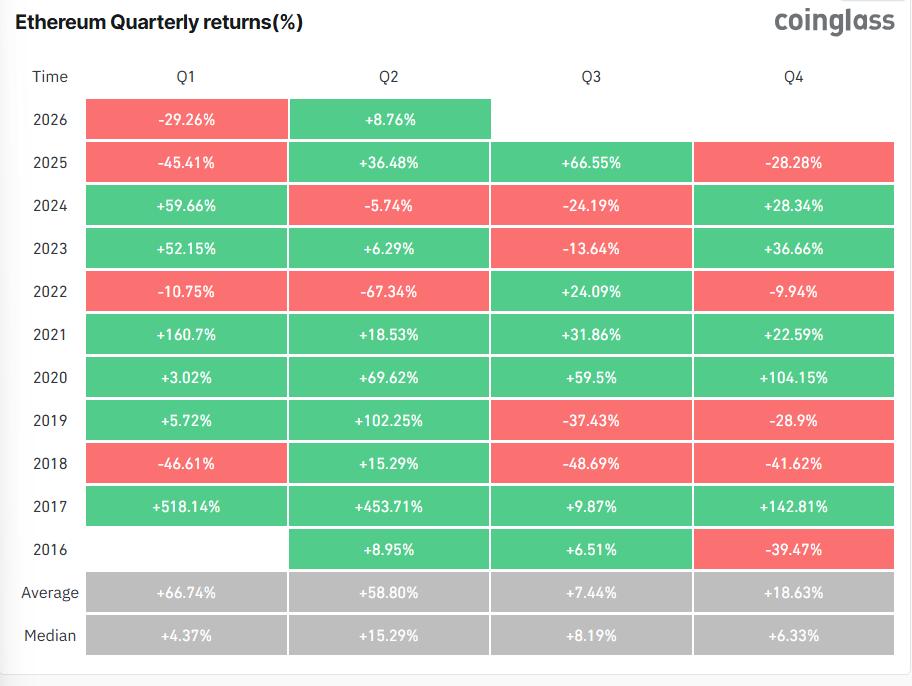
At the same time, Crypto Jack’s main reason for suggesting an exit now and a comeback in May is seasonal performance. Historically, May has delivered an average return of around 8%, with Bitcoin closing in green in 7 out of 13 years. 

Sell Bitcoin Now? Trader Warns of Drop to $48K Before May Comeback

He also notes that the second quarter often sees strong momentum, with an average surge of around 58%, making it one of the most important periods in the crypto calendar after a typically weaker phase earlier in the year.

PayPal’s PYUSD Hits $4.11B While Ripple’s RLUSD Lags Behind

PayPay U.S. IPO

The post PayPal’s PYUSD Hits $4.11B While Ripple’s RLUSD Lags Behind appeared first on Coinpedia Fintech News

PayPal’s stablecoin, PayPal USD (PYUSD), has reached a market capitalization of $4.11 billion, marking one of the fastest growth phases in the stablecoin space. The token has expanded rapidly since mid-2025, rising from around $500 million to over $4 billion. 

In contrast, Ripple’s RLUSD, which once touched nearly $1.6 billion, has recently pulled back to around $1.42 billion.

PYUSD Growth Driven by Real Usage, Not Hype

PYUSD’s rise is not just about market cycles, it is driven by actual usage.

PayPal has expanded the stablecoin across 13 blockchain networks in 2025, including Ethereum, Solana, Arbitrum, and Stellar. This multi-chain approach allows users to move funds easily across networks, making PYUSD more accessible for both payments and DeFi.

A key push came through a LayerZero integration, which allowed PYUSD to move freely across nine additional chains. 

On Solana alone, PYUSD became the second-largest stablecoin on the Kamino lending platform, with over $500 million in deposits. This shows strong demand beyond simple trading.

Even recently, Coinpedia news reported that YouTube announced that eligible U.S. creators can get paid directly in PayPal’s PYUSD stablecoin.

Yield and Rewards Attract Users

Another key reason behind PYUSD’s growth is incentives.

PayPal introduced around 3.7% yield on PYUSD balances, giving users a reason to hold the token instead of just using it for transfers. The stablecoin is currently trading close to $1, maintaining its peg, while daily trading volumes range from $85 to $100 million.

On top of that, features like cashback rewards linked to PYUSD created a real use case for everyday users.

Ripple RLUSD Faces a Tough Competitive Market

PYUSD surged over 600% in 2025, rising to $4.11 billion in market cap, while RLUSD dropped from its peak to around $142 billion. 

Ripple’s RLUSD started strong after its launch in late 2024. It quickly grew to nearly $1.6 billion by early 2026, showing early traction. However, growth later slowed, and it dropped to around $1.42 billion.

The main reason is strong competition. 

RLUSD entered a market led by USDT at $184 billion and USDC at $77 billion, making it hard to grow fast. 

It also depends on the XRP ecosystem, and with XRP down over 40% in 2026, interest has weakened.

Signs of a Comeback for RLUSD

Despite the drop, RLUSD is not out of the race.

Ripple has been expanding its technology, allowing cross-chain transfers on networks like Base and Optimism, which improves its use in DeFi.

Recent data shows growth picking up again, suggesting a possible recovery phase.

With strong growth signals returning from March 31 onwards and new infrastructure coming online, RLUSD could be setting itself up for a run at new all-time highs in the months ahead.

Iran Slams Trump’s “Seven False Claims” as Hormuz Tensions Rise Again

Iran to Collect Bitcoin Fees from Oil Tankers During Ceasefire

The post Iran Slams Trump’s “Seven False Claims” as Hormuz Tensions Rise Again appeared first on Coinpedia Fintech News

Iran’s Parliament Speaker Mohammad Bagher Ghalibaf has criticized U.S. President Donald Trump, accusing him of making “seven false claims in one hour” and warning that the Strait of Hormuz may not remain open if the U.S. blockade continues. 

The statement comes just a day after Iran’s announcement to complete the opening of the Strait of Hormuz for all.

Iran Speaker Slams Trump Over “False Claims”

According to Iranian officials, Trump made several major claims about the situation that Tehran strongly denies.

Ghalibaf said the US has not gained any real advantage through its statements and warned that negotiations would not move forward based on what he called false information.

These include:

  • He said the US “did not achieve success with these claims and will not succeed in negotiations either.”
  • He warned that if the US blockade continues, the Strait of Hormuz may not stay open.
  • He added that all ship movement in the Strait will follow designated routes and require Iranian approval.
  • He said authorities will decide the Strait’s status and rules on the ground, not on social media.
  • He also pushed back on what he called a “media war,” saying the Iranian public is not fooled by what he described as public opinion engineering from the other side.
  • On the nuclear front, Iran’s Foreign Ministry made it crystal clear that enriched uranium is going nowhere. Not to the US, not anywhere.

Iran rejected all of these points, saying they are “false” and part of an attempt to control how people see the situation. Ghalibaf said the real situation on the ground differs completely from what others are claiming.

Crypto Market in the Crossfire, Brace for Volatility 

Rising Iran–US tensions are putting crypto markets directly in the crossfire again. Yesterday, when Iran first announced the Strait’s full reopening, it acted bullishly, jumping over 5%, while Bitcoin rallied to $78K. 

However, Altcoins followed the rally to as sentiment flipped from fear to relief almost overnight.

But geopolitical calm in this region rarely lasts long.

Ghalibaf’s recent statement came after US markets had already closed for the weekend, giving traders no immediate place to react.

However, Bitcoin and the broader crypto market have given up some of their early gains and are now trying to find support to build a stronger base.

What Next in the US-Iran Conflict?

The two-week ceasefire will expire on April 22, while both sides have already accused each other of violations.

At the same time, the U.S. has not backed down militarily. President Donald Trump confirmed that the naval blockade on Iranian ports will remain in full force until what he called a “complete transaction” with Iran is finalized.

Strategy Proposes Semi-Monthly Dividends for STRC to Stabilize Price and Demand

Strategy Raises STRC Offering to $2 Billion to Buy More Bitcoin

The post Strategy Proposes Semi-Monthly Dividends for STRC to Stabilize Price and Demand appeared first on Coinpedia Fintech News

Strategy, the world’s largest corporate Bitcoin holder, has proposed a key change to its STRC preferred stock. The change is made to the dividend payments from monthly to semi-monthly to improve liquidity and stabilize the price. 

Michael Saylor’s proposal was filed on April 17, and voting is expected to conclude by June 8.

Why Is Strategy Doing This?

Strategy’s Chairman and bitcoin supporter, Michael Saylor, stated that the proposed changes are meant to “stabilize price, dampen cyclicality, drive liquidity, and grow demand.”

Right now, STRC shareholders receive their dividend payments once a month. Strategy wants to change that to twice a month, thus investors would get paid every two weeks instead of waiting a full 30 days.

The annual dividend stays the same at 11.5%, no cut, no increase. Only the payment timing changes, from annual payout to smaller chunks.

Saylor says that getting paid more frequently means investors do not have to wait as long to reinvest their dividends. That reduces what is called “reinvestment lag,” which is the gap between receiving a payment and putting it back to work.

Complete Timeline for Semi-Monthly Dividends

In an annocunemnt saylor has outlined the full roadmap, step by step:

  • April 17, 2026 — Preliminary proxy filed with the SEC
  • April 28, 2026 — Definitive proxy filing expected, opening the voting window
  • June 8, 2026 — Voting closes
  • June 30, 2026 — New semi-monthly schedule takes effect
  • July 15, 2026 — First-ever semi-monthly dividend payment made to STRC holders

Lastly, shareholders will need to vote to approve this amendment before any of it becomes official.

Schiff Threatens Saylor with Lawsuits

Recently, Coinpedia News reported that Bitcoin critic and gold advocate Peter Schiff has been vocal in his concerns about STRC, calling the stock’s overall structure “misleading to constitute fraud.” 

He has warned that if dividends are ever cut or the stock price falls significantly, investors could find themselves filing lawsuits against the company.

His main concern was that the money from STRC is used to buy Bitcoin, and if Bitcoin falls, it may become hard to keep paying those dividends.

As of now, Strategy’s STRC stock has seen a slight rise and is trading around $99.21. This uptick comes as geopolitical tensions ease after Iran fully reopened the Strait of Hormuz, improving overall market sentiment.

At the same time, the bitcoin price also jumped to $78k, while other large-cap altcoins jumped by 6 to 10%.

Iran Declared the Strait of Hormuz “Completely Open” Bitcoin Jumps to $78K

Trump Says Iran-US Deal Is 99% About One Thing What That Means for Bitcoin

The post Iran Declared the Strait of Hormuz “Completely Open” Bitcoin Jumps to $78K appeared first on Coinpedia Fintech News

After nearly two months of conflict between the US, Israel, and Iran, Iran finally declared the Strait of Hormuz “completely open” for all commercial vessels on April 17, 2026, sending a wave of relief across global markets. 

Bitcoin responded almost instantly, jumping from around $75,000 to $78,000, a surge of nearly 5.2%, as investors rushed toward risk assets on the back of easing geopolitical tension. 

What Iran’s Foreign Minister Said

On 17 April, Iranian Foreign Minister Abbas Araghchi took X to make the announcement official. He stated that in line with the ongoing ceasefire in Lebanon, all commercial vessels are now free to pass through the Strait of Hormuz for the remaining period of the U.S.-Iran truce, which is currently set to expire on April 22.

The move came one day after U.S. President Donald Trump announced a 10-day ceasefire between Israel and Hezbollah in Lebanon, a development that appears to have set off a broader chain of diplomatic easing across the region.

Trump welcomed the news almost immediately, posting on social media in capital letters: 

“Iran has just announced that the Strait of Hormuz is fully open and ready for full passage. Thank you.”

"IRAN HAS JUST ANNOUNCED THAT THE STRAIT OF IRAN IS FULLY OPEN AND READY FOR FULL PASSAGE. THANK YOU!" – President Donald J. Trump 🇺🇸 pic.twitter.com/xDQpCj8APe

— The White House (@WhiteHouse) April 17, 2026

Why It’s Important For the World?

The Strait of Hormuz is not just another shipping lane. It is the single most important oil corridor on the planet. 

Before the U.S. and Israel launched their military attack on Iran on February 28, 2026, roughly 20% of the world’s entire crude oil supply passed through this narrow stretch of water every single day. Along with a large share of global LNG exports, mostly from Qatar.

When Iran effectively shut it down in response to the attack, daily ship traffic collapsed from over 100 vessels per day to single digits. The economic damage was immediate and severe.

Now that the Strait is open again, oil and gas shipments can move normally. This helps stabilize supply, ease energy prices, and improve overall market confidence.

Bitcoin and Crypto React Fast

Crypto markets reacted quickly, with the total market cap rising about 5% to $2.63 trillion. Bitcoin also moved higher, jumping to $78,000 after bouncing from its recent range near $75,000.

Major altcoins followed the same trend, with Ethereum, Solana, XRP, and others gaining around 6% to 10%.

The move shows a clear “risk-on” shift, where improving sentiment pushes investors back into crypto and other high-risk assets.

Peter Schiff Fires Legal Warning at Michael Saylor Over Strategy’s STRC Stock

Michael Saylor Bitcoin loss

The post Peter Schiff Fires Legal Warning at Michael Saylor Over Strategy’s STRC Stock appeared first on Coinpedia Fintech News

Michael Saylor’s Bitcoin strategy is facing fresh criticism as gold supporter and Bitcoin critic Peter Schiff threatens him with upcoming Lawsuits. He called Strategy’s STRC stock “misleading” and warned it could lead to fraud claims. 

He also said investors may face losses and even file lawsuits if dividends are cut or the stock falls. 

Schiff Threatens Saylor of Coming Lawsuits

The latest tension started after Michael Saylor shared his Bitcoin accumulation strategy on X. His company has been raising money through STRC perpetual preferred stock, which is designed to stay near $100 and pays monthly dividends with an annual yield of about 11.5%.

Peter Schiff strongly reacted to this move and criticized the structure. He said it could mislead investors and may even be seen as fraudulent. 

He warned that if dividends are ever cut or stopped and the stock price falls, investors could sue the company. 

“It’s so misleading to constitute fraud. Get ready for the lawsuits when the dividends are cancelled and the stock craters.”

Schiff also repeated his warning that Bitcoin-focused investment strategies carry high risk and said investors should be careful with such financial setups.

Strategy Is Not Slowing Down

Despite the criticism, Saylor has shown zero interest in changing course. Strategy recently used STRC-raised capital to purchase another 23,934 BTC worth $1.76 billion, pushing its total Bitcoin holdings to a staggering 780,897 BTC, valued at nearly $59 billion.

Saylor’s response to all critics has been dismissive:

“If this makes you uncomfortable, it’s working.”

Strategy Stock See Small Spike

Meanwhile, MSTR stock itself closed 3.76% higher at $148.94 on 16th April, helped by broader market optimism around the Israel-Lebanon ceasefire. Even Bitcoin, the world’s largest cryptocurrency, jumped to $76k now trading around $75K.

But MSTR’s short-term gains do not erase the underlying risks Schiff is pointing to with STRC.

But the real test comes during a downturn.

If Bitcoin falls or funding slows, pressure on STRC could rise quickly. And if dividends are touched, Schiff believes the fallout could be immediate.

❌