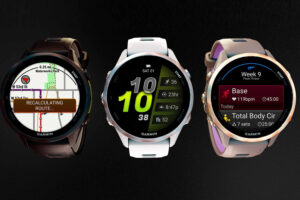
Garmin’s running watch lineup doesn’t look simple at first. And to be honest, it isn’t, especially if you’re navigating it for the first time. Multiple series and overlapping feature sets might confuse even a seasoned user.
But if you look past the marketing names, the logic is actually quite simple. There’s a clear entry point, a middle ground, a flagship for the data-obsessed, and a separate branch for people who spend more time on trails than roads.
What matters isn’t just which watch is the best, but which one actually fits how you run. Some lean heavily into data. Others prioritize battery life. One or two try to do everything.
Here are the best Garmin smartwatches if you’re into running.
Garmin Forerunner 970
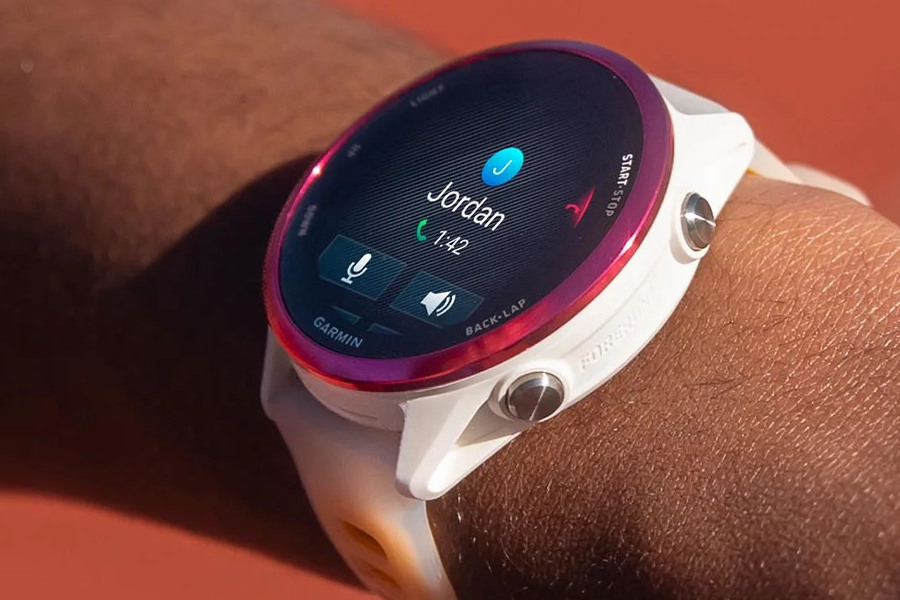
The Garmin Forerunner 970 sits at the top of Garmin’s running-focused lineup. It’s the watch to get if you’re a runner and want the absolute best set of features.
It has a large 1.4-inch AMOLED display with a 454 × 454 resolution, multi-band GPS with SatIQ for better accuracy, and a battery that can stretch to around two weeks in smartwatch mode. In GPS mode, it still holds up long enough for most long runs or race days.
More than the hardware, the software is the stronger part here. It includes features such as Training Readiness, which analyzes your sleep, stress, recovery time, and HRV status to give you a rough sense of whether you should push or hold back.
Another feature, Running Economy, tries to measure how efficiently you’re moving. And of course, there are others like Training Status and Acute Load.
There’s also full mapping support, which remains one of Garmin’s quieter advantages over many competitors. You don’t always need it—but when you do, it’s there.
What makes the 970 work is balance. It’s not as rugged or heavy as the Fenix line, but it still feels like a complete tool. For marathoners, triathletes, or anyone who treats training like a structured system instead of a casual habit, this is the one that makes the most sense.
Garmin Forerunner 570
The Garmin Forerunner 570 sits in what Garmin clearly treats as the “default” option for dedicated runners. Not entry-level. Not excessive. Just enough.
It comes in two sizes, both with AMOLED displays, and features a lighter build than the flagship. Its battery life is shorter than the 970’s, but you can still expect around 10 to 11 days in smartwatch mode, depending on the version. It also supports multi-band GPS tracking.
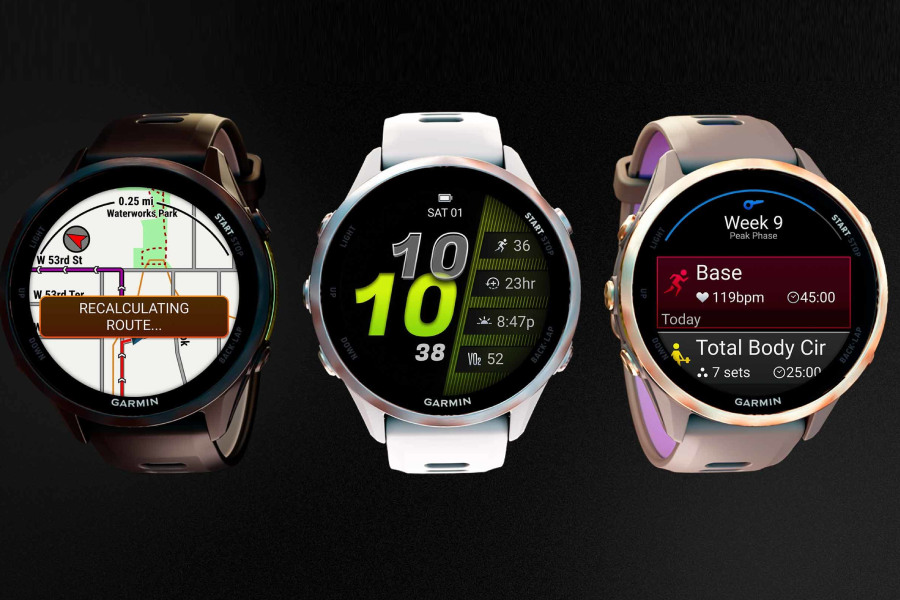
The Forerunner 570 offers features like adaptive plans, race predictions, and detailed recovery insights that factor in sleep and stress. However, it places less emphasis on extras you might not use. You don’t get the same level of mapping or premium materials as the 970—and that’s kind of the point.
The 570 is a more practical choice for many runners. It gives you most of Garmin’s useful training tools without pushing you into a higher price tier or adding features that only matter in niche situations.
Garmin fēnix 8 Pro
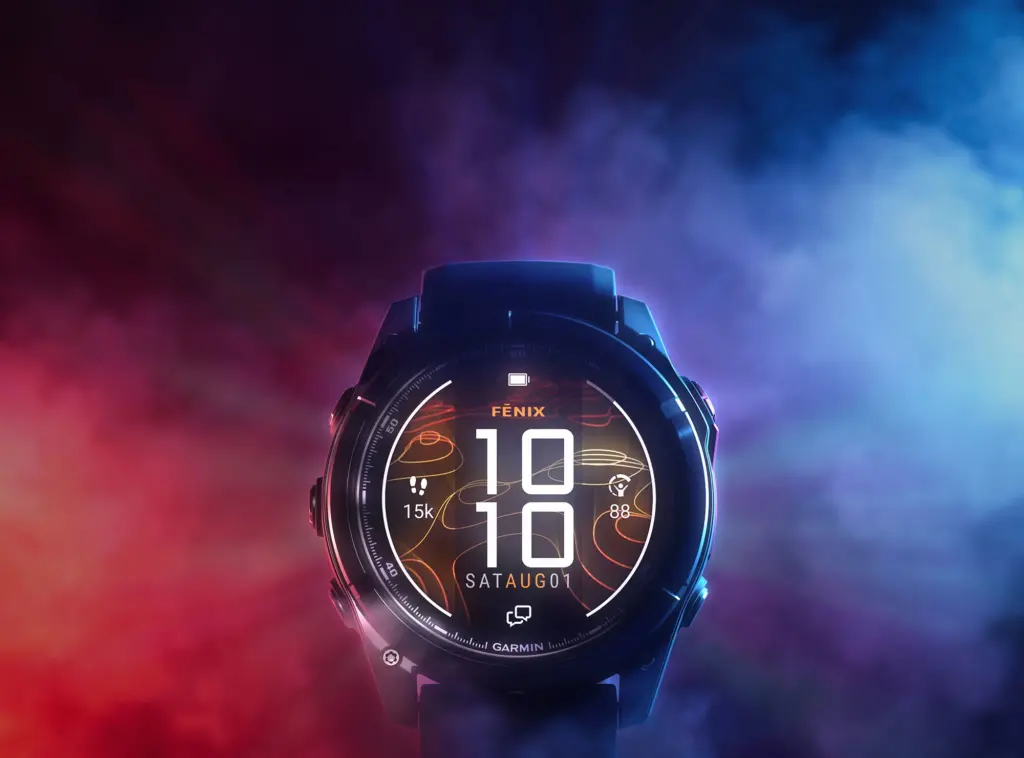
The Garmin fēnix 8 Pro is not strictly a running watch. It’s closer to a multi-sport outdoor device that happens to be very good at running.
You notice it immediately in the design. It’s heavier, more rugged, and built with materials meant to handle rough conditions rather than just daily training.
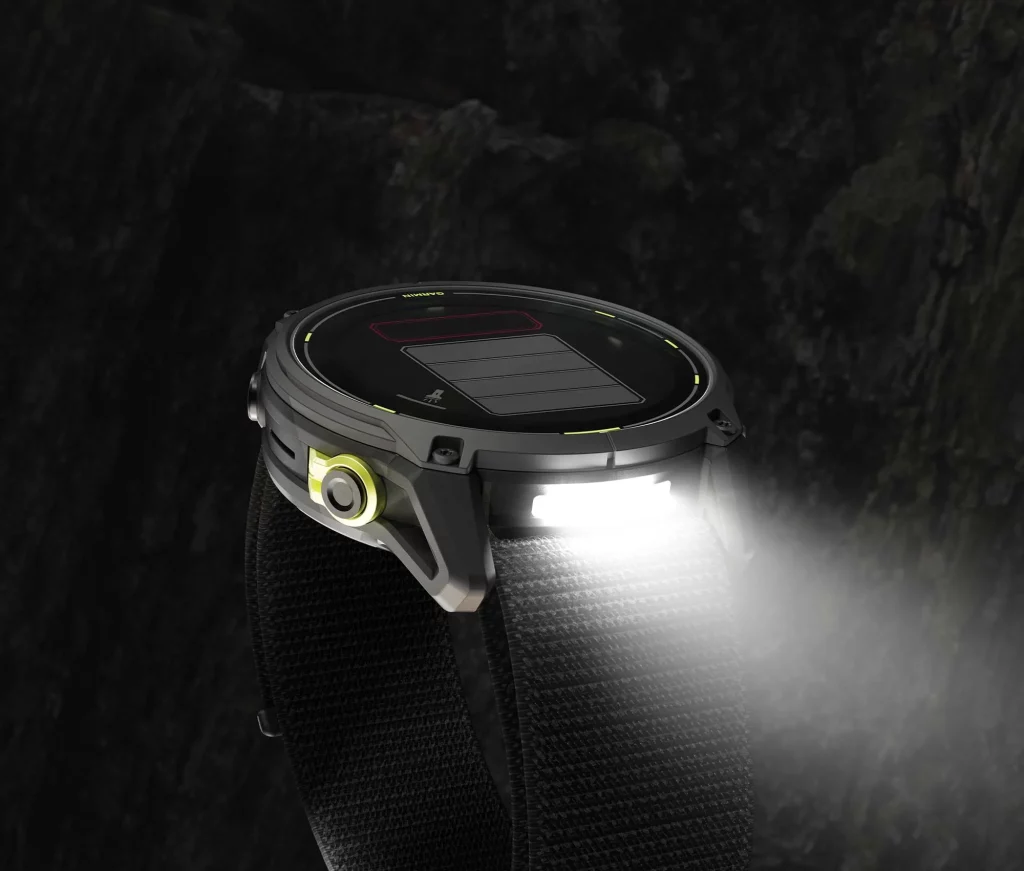
It includes features like advanced mapping, multi-band GPS, and sensors for altitude and navigation. More interestingly, it has a built-in flashlight, which comes in handy if you run early in the morning or late at night. There are also safety features tied to satellite connectivity, which matter more once you’re off-road.
For trail runners, there’s ClimbPro, which provides real-time data on current and upcoming climbs during courses, including gradient, distance, and elevation gain.
The fēnix 8 Pro is available in three sizes—43mm, 47mm, and 51mm—and battery life varies depending on the version you pick. The official claim is up to 27 days of runtime in smartwatch mode.
Garmin Enduro 3
The Garmin Enduro 3 is a different kind of watch. It’s not the most advanced in terms of display or even software polish, but as its name suggests, it’s built to last—and that mostly comes down to its battery life.
The Enduro 3 comes with a Power Sapphire lens that passively charges the watch using sunlight. With it, Garmin claims up to 90 days of runtime in smartwatch mode and up to 320 hours in GPS-only mode.
To get there, Garmin has made some clear trade-offs. The display isn’t AMOLED, and it lacks a built-in speaker and microphone. The design is still rugged, though, with a titanium bezel and a lightweight strap.
This is a watch for ultra-runners who do 50K, 100K, or multi-day stage races. Situations where charging isn’t just inconvenient; it’s not an option.
It still includes useful features like mapping and ClimbPro, along with a built-in flashlight, so it’s not stripped down to the basics.
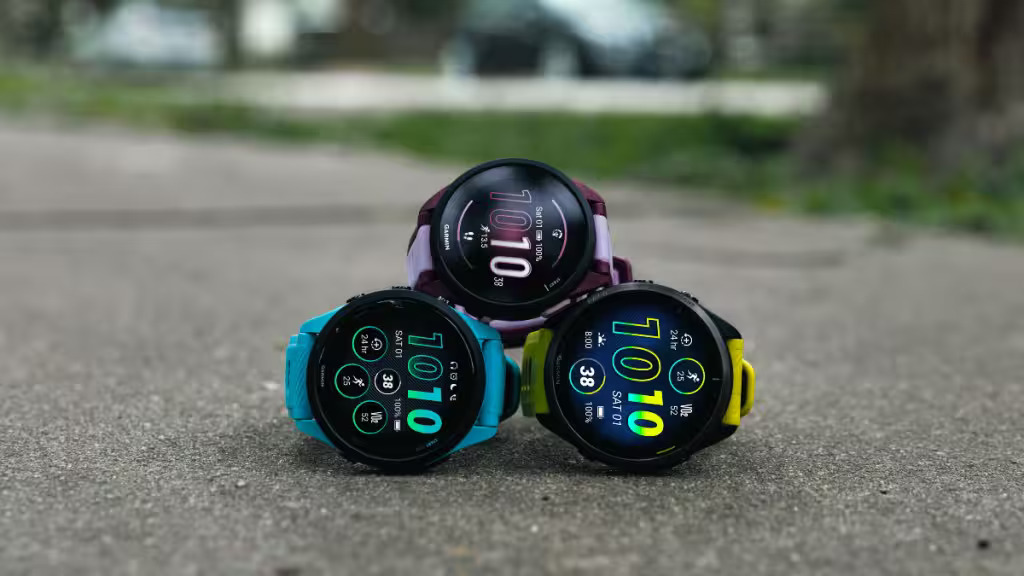
Garmin Forerunner 165 Music
The Garmin Forerunner 165 Music sits at the other end of the lineup. It’s smaller, lighter, and far more approachable.
You still get an AMOLED display, which is important. Garmin used to reserve those for higher-end models, but now even entry-level options include them. The watch weighs around 39 grams, making it easy to wear all day without thinking about it.
It still offers solid battery life, around 11 days in smartwatch mode. And the core features are all here: GPS tracking, wrist-based heart rate monitoring, sleep tracking, and guided training plans through Garmin Coach. Nothing feels missing if you’re just getting into running.
The Music version adds offline playback, allowing you to store and listen to music without a phone. The Forerunner 165 Music is the one to consider if you don’t want to overthink things. It covers the basics, looks good, and doesn’t feel overwhelming.
For more daily updates, please visit our News Section.
Stay ahead in tech! Join our Telegram community and sign up for our daily newsletter of top stories! 
The post 5 best Garmin watches for runners in 2026 appeared first on Gizmochina.

 Login
Login