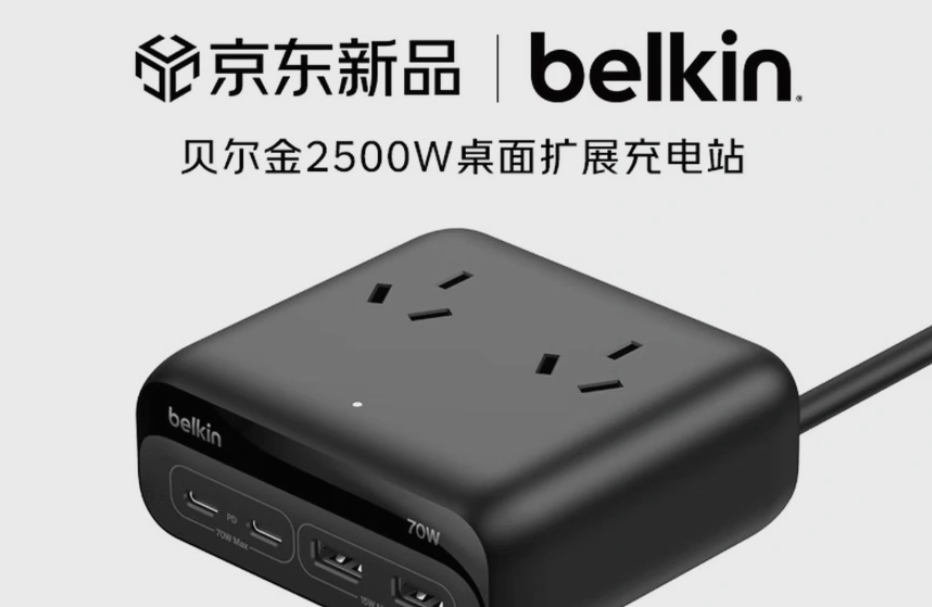
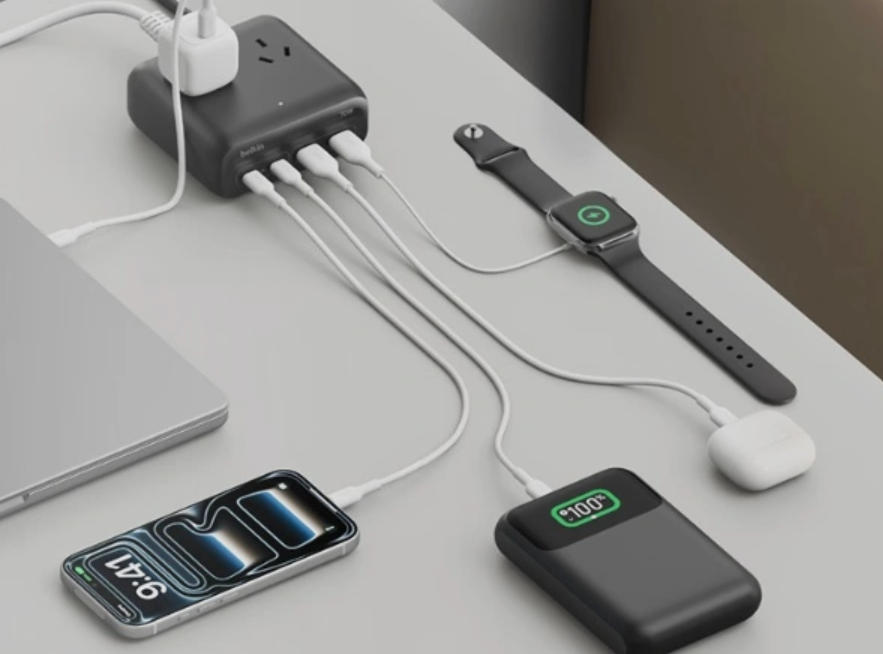
Belkin has introduced a new high-power desktop charging solution, expanding its range of multi-device chargers. The newly listed 2500W desktop charger is now available on JD.com for 329 yuan, with a slightly lower launch price of 326 yuan. This product is designed for users who need to power multiple devices at once without cluttering their workspace.
Compact Design with Multiple Ports
The charger features a compact desktop form factor with dimensions of 101 × 82.98 × 41.5 mm and comes in a matte black finish. Despite its small size, it offers a powerful and versatile setup. The front panel includes four USB ports, two USB-C ports rated at 70W each, and two USB-A ports offering 12W output. In addition, the charger includes three AC outlets, with two placed on the top and one at the back, making it suitable for both charging and powering devices.
High Power Output and Practical Features
One of the key highlights of this charger is its ability to support up to seven devices simultaneously. With a total power capacity of 2500W, it can handle everything from smartphones and laptops to household electronics. LED indicator lights on the top panel provide clear status updates, adding to its ease of use.
Low Power Alternative: 70W GaN Desktop Charger
Belkin’s 70W GaN 7-in-1 desktop charger (model SRZ001) offers a slightly lower power alternative. It also includes three AC outlets and four USB ports, with USB-C ports supporting up to 70W output and PPS charging. The device measures 96 × 83 × 42 mm, weighs 480 grams, and comes with a 1.5-meter cable.
Both chargers focus on convenience, multi-device support, and efficient power distribution. The 2500W model stands out for heavy-duty use, while the 70W GaN option is better suited for everyday charging needs.
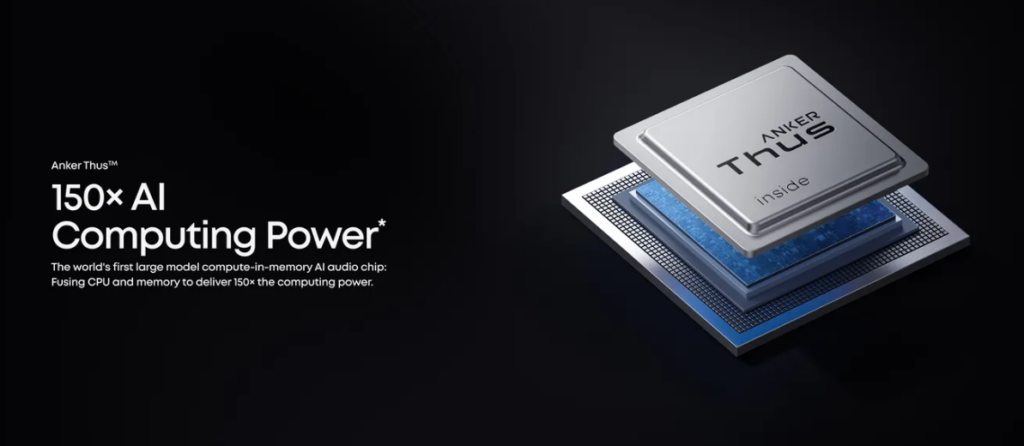
Anker has introduced its first in-house AI chip platform called “Thus.” The new chip will officially debut on May 21, 2026, during its launch event in New York City. This marks the company’s move into custom silicon, focusing on bringing advanced AI features directly to compact devices like wireless earbuds.
Built for Speed and Efficiency
The Thus chip is based on Compute-in-Memory (CIM) architecture, which combines processing and memory into a single unit. Instead of moving data between separate components, it processes data where it is stored. This reduces latency, improves speed, and lowers power consumption, key for small, battery-powered devices. Anker claims the chip delivers up to 150× more AI computing power compared to its earlier audio products.
Smarter Audio with On-Device AI
A major highlight of the Thus chip is real-time AI processing directly on the device. This allows features like noise cancellation and voice enhancement to work faster without relying on cloud processing. It also improves privacy and ensures more stable performance in different environments.
First Product: AI-Powered Earbuds
The chip will first appear in a new flagship pair of earbuds launching alongside it. These earbuds are expected to feature advanced “Clear Calls” technology using AI-based environmental noise cancellation. The setup includes eight microphones and bone-conduction sensors to filter background noise and improve call clarity.
Anker plans to expand the Thus chip beyond audio products into mobile accessories and other smart devices. The goal is to bring faster, more efficient on-device AI to a wider range of everyday products.
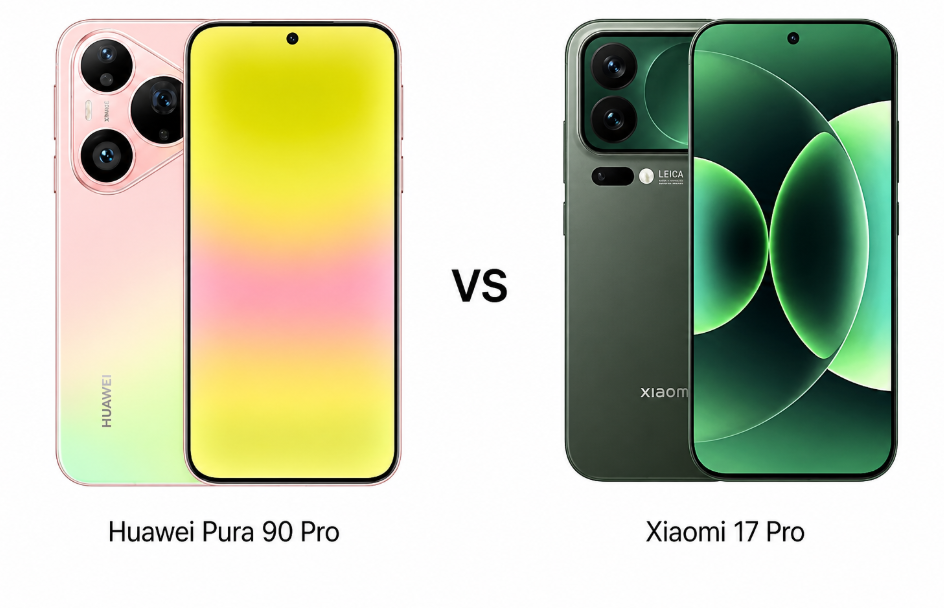
Two flagship phones, two very different approaches to what a premium smartphone should be. The Huawei Pura 90 Pro leans into durability, refined camera control, and a polished ecosystem, while the Xiaomi 17 Pro goes all-in on cutting-edge hardware, performance, and standout features. This comparison matters for buyers deciding between reliability and raw innovation. With both devices sitting in a similar price bracket, the real question isn’t just which is better on paper, but which one actually delivers more value in everyday use.
Please note: Huawei Pura 90 Pro is expected to launch in the second week of May, so some specifications may still change or be refined closer to the official launch.
Disclaimer: Specs are based on available data. Actual performance may vary. Verify details from official sources before buying.
Design and Display
Build and Feel
Both phones use premium materials with glass and aluminum, but the experience differs slightly. The Huawei Pura 90 Pro feels more rugged with IP68/IP69 protection, giving it an edge in durability under harsher conditions. The Xiaomi 17 Pro, while also IP68 rated, focuses more on refinement with its Dragon Crystal Glass and slightly more modern finish. Xiaomi also introduces a secondary rear display, which adds a unique functional touch. Huawei leans toward a solid, dependable flagship feel, while Xiaomi feels more experimental and feature-rich.
Display Quality
Huawei offers a sharp LTPO OLED panel with smooth 120Hz refresh and balanced color output. However, Xiaomi pushes things further with higher brightness, Dolby Vision, HDR10+, and a much higher PWM dimming rate. The display feels more vibrant and versatile, especially for HDR content. The secondary display also adds usability benefits that stand out in daily use.
Verdict
Xiaomi 17 Pro delivers a more advanced and feature-packed display, while Huawei focuses on durability and consistency.
Specifications Including Battery
Performance
Huawei’s Kirin 9030S is capable of everyday tasks and optimized for HarmonyOS, but Xiaomi’s Snapdragon 8 Elite Gen 5 is on another level. It delivers significantly higher performance, better efficiency, and stronger GPU output for gaming and heavy workloads. The Xiaomi feels faster and more future-proof, especially with UFS 4.1 storage. Huawei remains smooth, but Xiaomi clearly targets power users.
Battery and Charging
Both phones offer large batteries, but Xiaomi takes the lead with a bigger capacity and much faster 100W wired charging. Wireless charging is equal on paper, but Xiaomi’s reverse wireless charging is far more powerful. Huawei still offers reliable endurance, but Xiaomi feels more aggressive and convenient for fast top-ups.
Verdict
Xiaomi 17 Pro dominates in performance and charging, making it the better choice for demanding users.
Camera
Main and Secondary Lenses
Huawei focuses on versatility with a variable aperture main sensor and strong 4x telephoto performance. It excels in controlled lighting and offers consistent image quality. Xiaomi, however, brings a more advanced camera system with a larger sensor, 5x periscope zoom, and Leica tuning. It also supports 8K recording and more advanced video formats, making it feel more complete. Xiaomi’s setup feels more flexible and modern overall.
Selfie Camera
Huawei’s 13MP ultrawide selfie camera is functional and supports 4K video, but Xiaomi’s 50MP front camera offers far more detail and better versatility. It feels more aligned with current flagship expectations, especially for content creators.
Verdict
Xiaomi 17 Pro delivers a more powerful and versatile camera system, while Huawei focuses on consistency and control.
Pricing
The Huawei Pura 90 Pro is priced at around $800 (₹75,000), while the Xiaomi 17 Pro comes in lower at about $700 (₹62,000). This creates a noticeable price gap despite Xiaomi offering more advanced hardware in several areas.
Is the Price Justified?
Huawei justifies its price with durability, optimized software, and a refined camera experience. However, Xiaomi clearly offers more aggressive value with a stronger chipset, better display, faster charging, and more advanced camera capabilities. The pricing strategy makes Xiaomi feel like a more competitive flagship option.
Verdict
Xiaomi 17 Pro offers significantly better value for money, while Huawei feels slightly overpriced for what it delivers.
Disclaimer: Prices are approximate and may vary based on country, region, launch timing, and applicable taxes. Always check whether the listed price is for a China unit or a global/international variant when purchasing.
Conclusion
Huawei stands out with its rugged IP69 rating, satellite messaging support, and variable aperture camera, which gives it a unique edge in durability and photography control. Xiaomi, on the other hand, pushes innovation with a secondary rear display, top-tier chipset, advanced video capabilities, and ultra-fast charging. It feels more forward-looking and feature-packed overall.
Verdict
Huawei Pura 90 Pro is ideal for users who prioritize durability and stable performance. Xiaomi 17 Pro is the better all-around flagship with stronger performance, better features, and higher value, making it the more sensible choice for most users.
Disclaimer: This comparison is based on the specifications provided and is intended for general informational purposes. Actual performance, camera results, battery life, and overall experience may vary depending on real-world usage, software updates, and individual preferences.
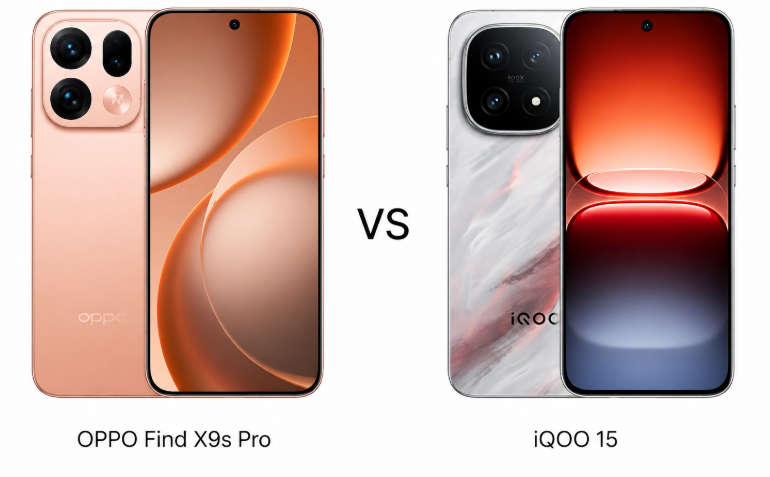
Flagship smartphones in this price range are no longer just about specs; they’re about personality and priorities. The Oppo Find X9s Pro and iQOO 15 take two very different approaches despite sitting at a similar price point in India. One leans heavily into camera innovation and a refined, compact feel, while the other pushes raw power, display tech, and performance-focused features. This comparison matters for buyers who want clarity between a balanced flagship experience and a spec-driven powerhouse, especially when both options look equally compelling on paper.
Major Features:
Feature
Oppo Find X9s Pro
iQOO 15
Winner
Display Type
LTPO AMOLED, 144Hz, 1800 nits peak
LTPO AMOLED, 144Hz, Dolby Vision, 6000 nits peak
iQOO 15 – Much brighter + better HDR support
Display Resolution
1216 × 2640 (~460 ppi)
1440 × 3168 (~508 ppi)
iQOO 15 – Sharper and higher resolution
Chipset
Dimensity 9500 (3nm)
Snapdragon 8 Elite Gen 5 (3nm)
iQOO 15 – More powerful CPU & GPU
GPU
Immortalis-G925
Adreno 840
iQOO 15 – Stronger graphics performance
RAM & Storage
Up to 16GB / 1TB, UFS 4.1
Up to 16GB / 1TB, UFS 4.1
Tie – Same configurations
Main Camera
200MP + 200MP (tele) + 50MP UW
50MP + 50MP (periscope) + 50MP UW
Oppo – Higher resolution + dual 200MP
Zoom
2.8x optical
3x optical (periscope)
iQOO 15 – Better optical zoom
Selfie Camera
32MP, 4K video
32MP, 4K video
Tie – Same specs
Video Recording
8K, 4K@120fps, Dolby Vision
8K, 4K@60fps
Oppo – Higher frame rate + Dolby Vision
Battery
7025 mAh
7000 mAh
Oppo – Slightly larger
Wired Charging
80W
100W
iQOO 15 – Faster charging
Wireless Charging
50W
40W
Oppo – Faster wireless
Build Protection
IP66/IP68/IP69
IP68/IP69
Oppo – Extra IP66 rating
Audio
Stereo speakers
Stereo + Hi-Res + Snapdragon Sound
iQOO 15 – Better audio support
Connectivity
Wi-Fi 7, BT 6.1
Wi-Fi 7, BT 6.0
Oppo – Newer Bluetooth
USB
USB-C (OTG)
USB-C 3.2 (OTG)
iQOO 15 – Faster data speeds
Special Features
Hasselblad tuning, XPAN
Bypass charging, color-changing back
Tie – Different advantages
Disclaimer: Specs are based on available data. Actual performance may vary. Verify details from official sources before buying.
Design and Display
Build and Feel
The Oppo Find X9s Pro leans toward a compact flagship approach with a refined, premium build and strong IP ratings, making it feel more manageable and comfortable for daily use. The iQOO 15, on the other hand, takes a bolder route with a larger footprint, premium materials, and even a color-changing rear panel option that adds visual flair. Both devices offer solid durability, but the iQOO feels more experimental, while the Oppo feels more polished and practical.
Display Quality
The Oppo features a sharp LTPO AMOLED panel with a 144Hz refresh rate and good peak brightness, delivering smooth visuals and balanced colors. However, the iQOO 15 pushes things further with higher resolution, significantly higher peak brightness, and support for Dolby Vision and advanced HDR formats. This results in a more immersive and vibrant viewing experience, especially for streaming and gaming.
Verdict
The Oppo Find X9s Pro is better suited for those who prefer a compact, balanced flagship feel. The iQOO 15 stands out for display excellence and visual impact, making it the more immersive option overall.
Specifications Including Battery
Performance
The Oppo Find X9s Pro runs on the Dimensity 9500, delivering flagship-level performance with strong efficiency and smooth multitasking. It feels fast and reliable for most users. The iQOO 15, powered by the Snapdragon 8 Elite Gen 5, clearly targets peak performance with higher clock speeds and a more powerful GPU. This translates into better sustained gaming performance and future-proofing. The difference is noticeable under heavy workloads, where the iQOO pulls ahead.
Battery and Charging
Both phones pack large silicon-carbon batteries, but Oppo slightly edges ahead in capacity. Still, iQOO compensates with faster 100W wired charging and useful features like bypass charging, which is especially beneficial for gamers. Oppo’s wireless charging is faster, making it more convenient for mixed usage. Each takes a different approach—one prioritizes endurance, the other flexibility and speed.
Verdict
The iQOO 15 is the stronger performer with better raw power and charging versatility. The Oppo Find X9s Pro remains a solid choice for balanced performance and slightly better battery endurance.
Camera
Main and Secondary Lenses
The Oppo Find X9s Pro takes a bold approach with dual 200MP sensors, focusing heavily on detail, zoom clarity, and advanced imaging features like Hasselblad tuning. It delivers a more “flagship camera-first” experience with strong computational photography. The iQOO 15 uses a triple 50MP setup with a periscope lens, offering consistent performance across all lenses. While it may not match Oppo’s sheer resolution, it provides reliable color balance and versatility. Oppo feels more experimental and premium, while iQOO feels controlled and consistent.
Selfie Camera
Both devices feature similar 32MP selfie cameras with 4K video support. The output is sharp and usable in most lighting conditions, with minimal difference between the two. Oppo’s tuning may lean slightly toward richer tones, while iQOO keeps things more neutral.
Verdict
The Oppo Find X9s Pro is the better choice for those who prioritize high-resolution photography and advanced camera features. The iQOO 15 delivers dependable, all-round camera performance without pushing extremes.
Pricing
The Oppo Find X9s Pro is priced at around $870 (₹73,000), while the iQOO 15 comes in at about $600 (₹73,000). Despite the large gap in USD pricing, both devices fall into a similar price bracket in India due to regional pricing differences, taxes, and market strategies. This makes the comparison more interesting, as buyers in India are essentially choosing between two differently positioned flagships at the same cost.
Value for Money
At this price point, the iQOO 15 offers exceptional value with a more powerful chipset, superior display, and faster charging. It feels like a performance-focused flagship at a competitive price. The Oppo Find X9s Pro justifies its pricing through premium camera hardware, compact design, and a more refined overall experience. It appeals more to users who prioritize photography and usability over raw specs.
Verdict
The iQOO 15 delivers better value on paper, especially for performance-focused users. The Oppo Find X9s Pro feels worth it for those who prioritize camera innovation and a more balanced flagship experience.
Disclaimer: While the iQOO 15 and OPPO Find X9s Pro share an identical base launch price of ₹72999 in India, their market positioning differs. The iQOO 15 is frequently available at a lower effective price through aggressive bank offers and discounts, whereas the OPPO Find X9s Pro often maintains its premium pricing and scales significantly higher for top-tier storage variants. Actual prices may vary based on retailer, current promotions, and specific model configurations.
Conclusion
Oppo Find X9s Pro stands out with its dual 200MP camera system, Hasselblad enhancements, and compact flagship approach. It feels like a device designed for photography enthusiasts who also want a manageable form factor. The iQOO 15, meanwhile, focuses on raw power, next-gen display technology, and gamer-friendly features like bypass charging. Its feature set feels more aggressive and performance-driven.
Verdict
iQOO 15 is the better choice for most users, offering stronger performance, a superior display, and better overall value at the same ₹73K price point. The Oppo Find X9s Pro still stands out for its advanced camera system and more refined, compact feel, but unless photography is the top priority, the iQOO 15 makes more sense as a complete and future-proof flagship.
Disclaimer: This comparison is based on the specifications provided and is intended for general informational purposes. Actual performance, camera results, battery life, and overall experience may vary depending on real-world usage, software updates, and individual preferences.
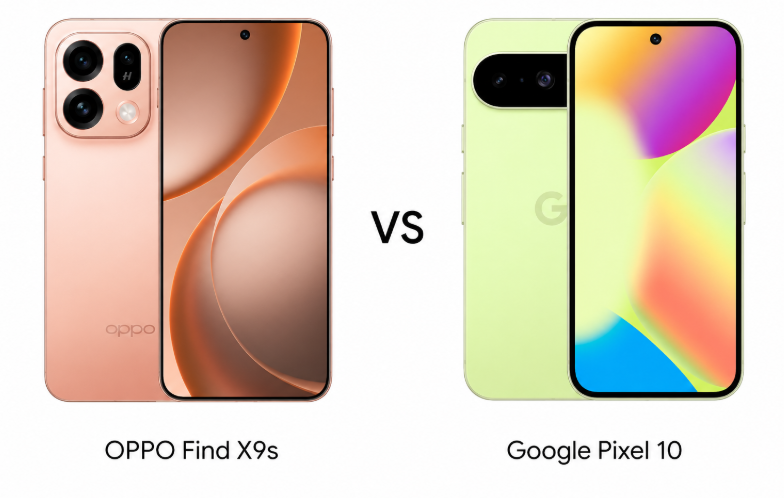
Choosing between the Oppo Find X9s and Pixel 10 isn’t just about specs; it’s about what kind of smartphone experience matters more. One pushes raw power, battery, and cutting-edge hardware, while the other focuses on software intelligence, camera consistency, and long-term reliability. For buyers in the premium mid-range segment, this comparison highlights whether performance-driven value or refined smart features make more sense in daily use.
Major Features:
Feature
Oppo Find X9s
Google Pixel 10
Winner
Display
6.59″ AMOLED, 1216×2640, 120Hz, 3600 nits peak
6.3″ OLED, 1080×2424, 120Hz, 3000 nits peak
Oppo – Higher resolution & brighter
Protection
Gorilla Glass 7i
Gorilla Glass Victus 2
Pixel – Stronger glass protection
OS
Android 16, ColorOS 16
Android 16, 7 major updates
Pixel – Longer software support
Chipset
Dimensity 9500s (3nm)
Tensor G5 (3nm)
Oppo – Higher clock speeds
Storage
UFS 4.1
UFS 3.1 / 4.0
Oppo – Faster storage standard
Rear Camera
50MP + 50MP (3x) + 50MP UW
48MP + 10.8MP (5x) + 13MP UW
Oppo – Higher resolution sensors
Video
4K@120fps
4K@60fps
Oppo – Higher frame rate
Selfie
32MP, 4K video
10.5MP, 4K video
Oppo – Higher resolution
Battery
7025 mAh
4970 mAh
Oppo – Much larger battery
Charging
80W wired
30W wired + wireless + reverse
Oppo – Faster wired charging
Wireless Charging
No
Yes (15W, Qi2)
Pixel – Wireless support
Connectivity
Wi-Fi 7, Bluetooth 6.1, IR
Wi-Fi 6e, Bluetooth 6.0
Oppo – Newer standards + IR
Extras
Infrared port
Satellite SOS, Circle to Search
Pixel – Unique smart features
Price
$730 / ₹60,000
$800 / ₹70,000
Oppo – More affordable
Disclaimer: Specs are based on available data. Actual performance may vary. Verify details from official sources before buying.
Design and Display
Build and Feel
The Oppo Find X9s leans toward a more rugged and futuristic approach with higher durability ratings, including IP66/IP68/IP69 protection. It feels engineered for tougher environments while still maintaining a premium finish. The Pixel 10, on the other hand, focuses on refined minimalism with Gorilla Glass Victus 2 on both sides and a clean aluminum frame. It looks more polished and subtle, which may appeal to users who prefer a classic flagship aesthetic. The Oppo feels slightly more experimental, while the Pixel feels more mature and balanced.
Display Quality
Oppo clearly pushes boundaries with a larger AMOLED panel, higher resolution, and an impressive peak brightness of 3600 nits. This makes it more immersive and easier to use outdoors. The Pixel 10 counters with HDR10+ support and a more color-accurate OLED panel, though its brightness and resolution are slightly lower. The Pixel’s display feels more tuned for consistency, while Oppo’s feels more aggressive and vibrant.
Verdict
Oppo wins for sheer display power and durability, while Pixel 10 offers a more refined and color-accurate experience.
Specifications Including Battery
Performance
The Oppo Find X9s runs on the Dimensity 9500s built on a 3nm process, paired with UFS 4.1 storage, delivering strong raw performance and faster data speeds. It is clearly optimized for heavy multitasking and gaming. The Pixel 10’s Tensor G5 focuses more on AI-driven performance and efficiency rather than raw power. While it may not dominate in benchmarks, it offers smoother real-world optimization and long-term software support with up to seven Android upgrades. Oppo feels faster under load, while Pixel feels smarter in daily use.
Battery and Charging
Oppo takes a massive lead with its 7025 mAh battery and 80W fast charging, making it ideal for heavy users and quick top-ups. The Pixel 10’s 4970 mAh battery is smaller but adds wireless charging, reverse charging, and bypass charging, improving versatility. Oppo prioritizes endurance, while Pixel focuses on convenience and balance.
Verdict
Oppo wins for performance and battery power, but the Pixel 10 stands out for efficiency and long-term reliability.
Camera
Main and Secondary Lenses
Oppo offers a powerful triple 50MP setup, including a telephoto lens with 3x optical zoom and a strong ultrawide sensor. It delivers consistency across all lenses and supports high frame rate 4K video. The Pixel 10, however, focuses on computational photography with its 48MP main sensor and 5x telephoto lens. Features like Pixel Shift and Ultra-HDR enhance real-world shots significantly. While Oppo provides hardware strength, Pixel leans heavily on software processing, often producing more balanced and natural images.
Selfie Camera
Oppo includes a higher resolution 32MP selfie camera with wider video capabilities, making it more suitable for content creators. The Pixel’s 10.5MP front camera may seem modest, but it benefits from better image processing and consistent color tones. Oppo feels sharper, while Pixel feels more natural.
Verdict
Pixel 10 wins for overall photography experience, while Oppo leads in hardware versatility and video flexibility.
Pricing
The Oppo Find X9s is priced around $730 (₹60,000), while the Pixel 10 comes in higher at approximately $800 (₹70,000). This places Oppo in a more aggressive value position, especially considering its larger battery, faster charging, and stronger hardware specifications. The Pixel 10 justifies its higher price through software support, AI features, and camera optimization.
Is the Price Justified?
Oppo feels like a performance-focused deal, offering flagship-level specs at a slightly lower price. It is clearly aimed at users who want maximum hardware for their money. The Pixel 10, however, feels like a long-term investment with better software longevity and smarter features. The extra cost reflects a more refined ecosystem rather than raw specifications.
Verdict
Oppo offers better value for money, while Pixel 10 justifies its price with software and camera excellence.
Disclaimer: Prices are approximate and may vary based on country, region, launch timing, and applicable taxes. Always check whether the listed price is for a China unit or a global/international variant when purchasing.
Conclusion
The Oppo Find X9s stands out with its massive battery, ultra-fast charging, and powerful hardware setup, making it ideal for power users and gamers. It also includes features like an infrared port and advanced connectivity options that add practical value. The Pixel 10 differentiates itself with long-term Android updates, AI-powered features like Circle to Search, satellite SOS, and a cleaner software experience. It feels more future-proof and ecosystem-driven.
Verdict
Oppo Find X9s is the better choice for users who prioritize performance, battery life, and raw specifications. Pixel 10 is more suitable for those who value camera intelligence, software longevity, and a refined daily experience.
Disclaimer: This comparison is based on the specifications provided and is intended for general informational purposes. Actual performance, camera results, battery life, and overall experience may vary depending on real-world usage, software updates, and individual preferences.
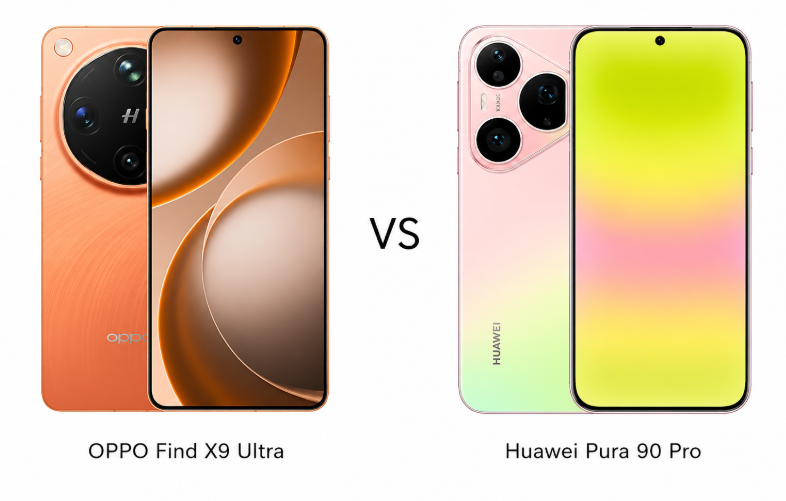
Two flagship giants have just stepped into the spotlight, the OPPO Find X9 Ultra and the Huawei Pura 90 Pro, and both are officially announced, with their market release scheduled for May 2026. This comparison matters because these devices represent two very different flagship philosophies: one pushing extreme hardware limits, the other refining a balanced premium experience. For buyers deciding where to invest, this clash highlights whether raw power or smart optimization delivers the better long-term value.
Major Features:
Feature
OPPO Find X9 Ultra
Huawei Pura 90 Pro
Winner
Build & Protection
Gorilla Glass Victus 2, eco leather option, IP68/IP69
Disclaimer: Specs are based on available data. Actual performance may vary. Verify details from official sources before buying.
Design and Display
Build and Feel
The OPPO Find X9 Ultra delivers a more premium and rugged feel with Gorilla Glass Victus 2, eco leather options, and IP68/IP69 protection. The design feels bold and flagship-focused, especially with its large camera module and premium finish. In comparison, the Huawei Pura 90 Pro keeps things more refined and minimal with a glass build and Kunlun Glass 2 protection. It feels cleaner and slightly more elegant, appealing to users who prefer subtle design over statement looks. The OPPO leans toward power-user aesthetics, while Huawei balances premium feel with practicality.
Display Quality
OPPO clearly pushes boundaries with a 6.82-inch LTPO AMOLED panel featuring 144Hz refresh rate, Dolby Vision, and extremely high peak brightness. It feels more immersive and future-ready. Huawei’s 6.6-inch LTPO OLED panel is still excellent, offering HDR Vivid and smooth visuals, but capped at 120Hz and slightly lower resolution. It remains sharp and comfortable for daily use but lacks the same visual punch.
Verdict
OPPO Find X9 Ultra wins with a more advanced and immersive display, while Huawei Pura 90 Pro suits users who prefer a balanced, elegant experience.
Specifications Including Battery
Performance
The OPPO Find X9 Ultra is powered by the Snapdragon 8 Elite Gen 5, making it one of the most powerful Android devices available. It handles gaming, multitasking, and AI-heavy tasks effortlessly. The Huawei Pura 90 Pro runs on the Kirin 9030S, which is efficient and smooth for daily use but does not match OPPO’s raw performance. OPPO feels more future-proof, while Huawei prioritizes stability and optimization through HarmonyOS.
Battery and Charging
OPPO dominates with a massive 7050mAh battery paired with 100W wired and 50W wireless charging. It is clearly built for heavy users who demand long endurance and quick top-ups. Huawei’s 6000mAh battery is still strong, with 66W wired and 50W wireless charging, delivering reliable all-day usage. However, OPPO’s battery setup feels more aggressive and power-focused.
Verdict
OPPO Find X9 Ultra leads with top-tier performance and battery tech, while Huawei Pura 90 Pro offers a more balanced and efficient approach.
Camera
Main and Secondary Lenses
OPPO takes a clear lead in hardware with its quad-camera setup, including dual 200MP sensors and advanced periscope zoom options. The versatility here is unmatched, especially for zoom and detail-heavy shots. Huawei, however, focuses on smart photography with its variable aperture 50MP main sensor and strong color tuning. While it lacks OPPO’s extreme hardware, it often delivers more natural and consistent images. OPPO feels like a camera powerhouse, while Huawei leans toward refined photography.
Selfie Camera
OPPO again offers stronger numbers with a 50MP front camera capable of 4K video, making it ideal for content creators. Huawei’s 13MP ultrawide selfie camera is more about convenience and group shots, but it lacks the same level of detail. OPPO’s approach feels more premium and future-ready.
Verdict
OPPO Find X9 Ultra wins on sheer camera hardware and versatility, while Huawei Pura 90 Pro focuses on balanced and natural photography output.
Pricing
The OPPO Find X9 Ultra is priced around $1150 (₹1,10,000), placing it firmly in the ultra-premium category. In contrast, the Huawei Pura 90 Pro comes in at about $800 (₹75,000), making it significantly more affordable. The price gap is noticeable and plays a major role in decision-making. OPPO targets users who want cutting-edge specs without compromise, while Huawei offers a more accessible flagship experience.
Is the Price Justified
OPPO justifies its higher price with top-tier performance, an advanced display, and one of the most powerful camera systems available. It feels like a no-compromise flagship. Huawei, however, delivers strong value by offering a premium build, solid performance, and a capable camera system at a lower cost. It feels like a smarter buy for users who want flagship features without overspending.
Verdict
OPPO Find X9 Ultra is worth it for power users, while Huawei Pura 90 Pro stands out as the better value-for-money option.
Conclusion
OPPO Find X9 Ultra stands out with its extreme camera hardware, massive battery, ultra-bright display, and flagship-level performance. It is clearly designed for users who want the best specifications available. Huawei Pura 90 Pro differentiates itself with HarmonyOS optimization, a refined camera system with variable aperture, and a more balanced overall experience. It feels more polished in day-to-day usage rather than spec-heavy.
Verdict
OPPO Find X9 Ultra is the better choice for users who prioritize performance, battery, and camera versatility. Huawei Pura 90 Pro makes more sense for those seeking a premium experience at a lower price with balanced features.
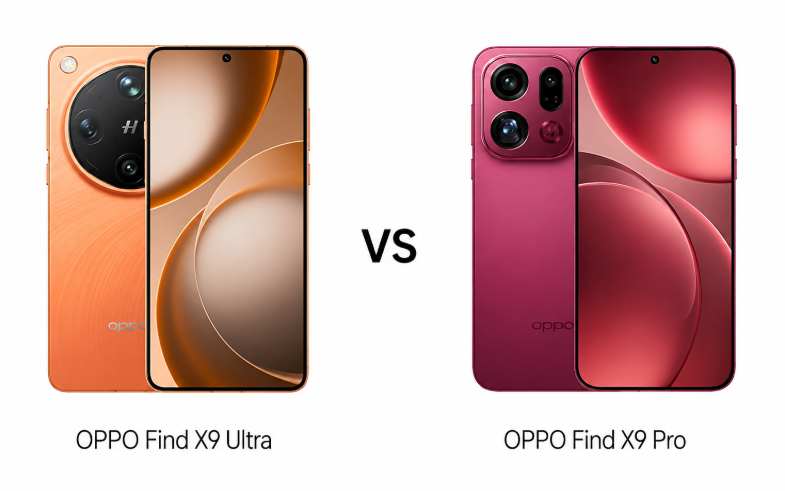
Flagship upgrades are no longer just about power; they’re about how intelligently a phone balances performance, camera innovation, and everyday usability. The OPPO Find X9 Ultra and Find X9 Pro 5G sit close in pricing but take slightly different approaches to what a premium smartphone should deliver. One leans toward pushing limits with cutting-edge hardware and camera versatility, while the other focuses on efficiency, endurance, and a more balanced experience. This comparison breaks down which one actually makes more sense, depending on how a flagship is used daily.
Major Features:
Feature
OPPO Find X9 Ultra
OPPO Find X9 Pro 5G
Upgrades
Build
Glass / eco leather back, aluminum frame
Glass back, aluminum frame
Ultra offers eco leather option for a more premium feel
Water Resistance
IP68/IP69
IP68/IP69
Same
Display Type
LTPO AMOLED, 144Hz
LTPO AMOLED, 120Hz
Ultra has higher refresh rate (144Hz vs 120Hz)
Resolution
1440 x 3168 (~510 ppi)
1272 x 2772 (~450 ppi)
Ultra has sharper display
Brightness
1800 nits (HBM), 3600 nits (peak)
1800 nits (HBM), 3600 nits (peak)
Same
Chipset
Snapdragon 8 Elite Gen 5 (3nm)
Dimensity 9500 (3nm)
Ultra uses higher-end Snapdragon chip
GPU
Adreno 840
Arm G1-Ultra
Ultra has stronger GPU
RAM/Storage
Up to 16GB / 1TB (UFS 4.1)
Up to 16GB / 1TB (UFS 4.1)
Same
Main Camera
200MP (1/1.12″)
50MP (1/1.28″)
Ultra has larger sensor and higher resolution
Telephoto
200MP 3x + 50MP 10x periscope
200MP 3x periscope
Ultra adds extra 10x zoom lens
Ultrawide
50MP
50MP
Same resolution
Video Recording
8K + 4K up to 120fps
4K up to 120fps
Ultra supports 8K video
Selfie Camera
50MP (f/2.4)
50MP (f/2.0)
Pro has slightly wider aperture
Wi-Fi
Wi-Fi 7 (tri-band)
Wi-Fi 7
Ultra specifies tri-band
Bluetooth
6.0 (aptX Adaptive, LHDC 5)
6.0 (aptX HD, LHDC 5)
Ultra adds aptX Adaptive
Battery
7050 mAh
7500 mAh
Pro has larger battery
Charging (Wired)
100W
80W
Ultra charges faster
Wireless Charging
50W
50W
Same
Reverse Charging
10W wireless + wired
10W wireless
Ultra adds reverse wired
Extras
—
Satellite connectivity (1TB model)
Pro adds satellite support
Price
$1150 / ₹110,000
$1000 / ₹100,000
Pro is more affordable
Disclaimer: Specs are based on available data. Actual performance may vary. Verify details from official sources before buying.
Design and Display
Build and Feel
The OPPO Find X9 Ultra brings a more distinctive upgrade with its optional eco leather back, giving it a more premium and functional grip compared to the standard glass finish on the Find X9 Pro. Both retain IP68/IP69 durability, but the Ultra feels more purpose-built, almost like a step closer to a professional-grade device. The Pro sticks to a cleaner, more traditional flagship design that feels polished but less unique. This difference subtly reflects their positioning: Ultra for standout appeal, Pro for refined simplicity.
Display Quality
The biggest upgrade comes with the Ultra’s 144Hz LTPO panel and higher 1440p resolution, making visuals sharper and smoother than the Pro’s 120Hz, lower-resolution display. While the Pro adds 2160Hz PWM dimming for eye comfort, the Ultra prioritizes raw visual clarity and fluidity. Both share similar brightness and HDR capabilities, but the Ultra’s panel feels more immersive, especially for gaming and high-quality video playback.
Verdict
The Ultra delivers clearer upgrades in display sharpness and smoothness, while the Pro focuses on comfort and balanced viewing.
Specifications Including Battery
Performance
A major upgrade on the Ultra is the Snapdragon 8 Elite Gen 5, offering stronger peak performance and better graphics handling compared to the Dimensity 9500 on the Pro. The Pro remains efficient and smooth, but the Ultra clearly targets users who want maximum power and longer-term performance headroom. This difference becomes noticeable in gaming and heavy multitasking, where the Ultra feels more aggressive and future-ready.
Battery and Charging
Interestingly, the Pro takes the lead in battery size with a 7500mAh unit, making it a clear upgrade for endurance compared to the Ultra’s 7050mAh. However, the Ultra counters with faster 100W charging, making it more convenient for quick top-ups. The Pro feels optimized for long usage cycles, while the Ultra leans toward speed and performance-driven usage.
Verdict
The Ultra upgrades performance and charging speed, while the Pro upgrades battery capacity and efficiency.
Camera
Main and Secondary Lenses
The Ultra introduces a significant upgrade with a quad-camera system, adding a second periscope lens for extended zoom versatility. This allows both mid-range and long-range optical zoom, something the Pro cannot fully match with its single 200MP periscope setup. The Pro still offers strong image quality, but the Ultra clearly pushes further in versatility and professional-level flexibility. This difference is especially noticeable in zoom photography and advanced shooting scenarios.
Selfie Camera
Both devices share similar 50MP selfie cameras, but the Ultra benefits slightly from improved processing and higher-end video capabilities. The difference isn’t dramatic, but the Ultra feels a bit more refined overall.
Verdict
The Ultra delivers a clear upgrade in zoom range and video capability, while the Pro remains strong but less versatile.
Pricing
The OPPO Find X9 Ultra is priced at around $1150 (₹110,000), while the Find X9 Pro comes in at about $1000 (₹100,000). The price gap is moderate, positioning the Ultra as a premium step-up rather than a completely different tier.
Value for Money
The Ultra justifies its higher price with tangible upgrades in display resolution, refresh rate, chipset power, and camera versatility. It feels like a device built to push limits. Meanwhile, the Pro offers better battery life and a more balanced overall experience at a slightly lower cost. For many users, those practical advantages may feel more relevant than extreme upgrades.
Verdict
The Ultra is worth it for those wanting noticeable upgrades, while the Pro offers stronger value through balance and efficiency.
Disclaimer: Prices are approximate and may vary based on country, region, launch timing, and applicable taxes. Always check whether the listed price is for a China unit or a global/international variant when purchasing.
Conclusion
The Find X9 Ultra stands out with its dual periscope zoom system, higher-resolution 144Hz display, and flagship Snapdragon chipset, clear upgrades that push performance and imaging further. The Find X9 Pro focuses on a different kind of upgrade with its larger battery, efficient performance tuning, and cleaner design approach. It feels less about extremes and more about consistency.
Verdict
The Find X9 Ultra is the better choice for users looking for clear, high-impact upgrades in performance and camera versatility. The Find X9 Pro, however, feels like the smarter option for those who value battery life, efficiency, and a more balanced flagship experience without chasing every top-end spec.
Disclaimer: This comparison is based on the specifications provided and is intended for general informational purposes. Actual performance, camera results, battery life, and overall experience may vary depending on real-world usage, software updates, and individual preferences.
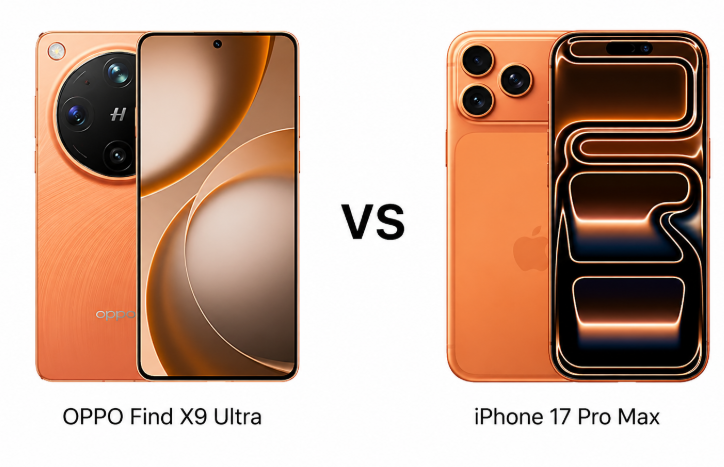
Flagship smartphones are no longer just about power; they’re about how that power translates into everyday experience. The OPPO Find X9 Ultra and iPhone 17 Pro Max represent two very different philosophies: one pushes hardware boundaries with aggressive specs, while the other refines performance through tight optimization and ecosystem strength. This comparison matters for buyers deciding between raw innovation and polished consistency, especially at premium price points where every detail shapes long-term value.
OPPO – Higher resolution and more zoom flexibility
Video Recording
8K@30fps, 4K@120fps, Dolby Vision, 10-bit, O-Log2
4K@120fps, Dolby Vision, ProRes, ProRes RAW
iPhone – ProRes and advanced video ecosystem
Selfie Camera
50MP, 4K video
18MP, 4K video, 3D depth
OPPO – Higher resolution sensor
Battery
7050mAh
4823–5088mAh
OPPO – Much larger battery
Charging
100W wired, 50W wireless, reverse wireless
Wired PD (50% in 20 min), 25W wireless, reverse wired
OPPO – Much faster wired and wireless charging
Connectivity
Wi-Fi 7, Bluetooth 6.0, NFC, IR blaster
Wi-Fi 7, Bluetooth 6.0, NFC, UWB
iPhone – UWB and satellite features
Biometrics
Ultrasonic in-display fingerprint
Face ID (3D)
iPhone – More advanced biometric system
Price
$1100 / ₹103,000
$1200 / ₹150,000
OPPO – Lower price for higher specs
Disclaimer: Specs are based on available data. Actual performance may vary. Verify details from official sources before buying.
Design and Display
Build and Feel
The OPPO Find X9 Ultra focuses on a premium yet slightly experimental design with options like eco leather alongside glass, paired with strong durability ratings, including IP68/IP69. It feels engineered for rugged flagship use while still maintaining a refined aesthetic. The iPhone 17 Pro Max leans toward a more polished and consistent premium finish with Ceramic Shield 2 and a clean aluminum frame. Apple’s design feels more familiar and predictable, while OPPO adds a bit more personality and versatility in materials.
Display Quality
OPPO pushes ahead with a sharper 1440p LTPO AMOLED panel and a faster 144Hz refresh rate, delivering smoother scrolling and slightly crisper visuals. Its peak brightness advantage also helps outdoors. The iPhone’s display, while limited to 120Hz, offers excellent color tuning, brightness consistency, and anti-reflective coating, making it easier on the eyes in daily use. Apple’s panel feels more balanced, while OPPO’s feels more aggressive and spec-driven.
Verdict
OPPO wins on raw display specs and smoothness, while the iPhone delivers a more refined and natural viewing experience.
Specifications Including Battery
Performance
The Snapdragon 8 Elite Gen 5 inside the OPPO Find X9 Ultra is built for peak Android performance, especially in gaming and sustained workloads. Paired with higher RAM options, it feels extremely future-ready. The Apple A19 Pro, however, continues Apple’s dominance in efficiency and real-world optimization. It handles heavy tasks effortlessly with consistent performance, and iOS tuning gives it an edge in fluidity. OPPO feels more powerful on paper, but Apple feels more stable in execution.
Battery and Charging
OPPO clearly dominates battery capacity with a massive 7050mAh unit, translating into longer endurance. Charging is also significantly faster with 100W wired and 50W wireless support. The iPhone focuses more on efficiency, offering reliable all-day usage but slower charging speeds overall. Apple’s approach feels safe, while OPPO’s feels aggressively convenient.
Verdict
OPPO leads in battery and charging, while the iPhone maintains a performance edge through optimization and efficiency.
Camera
Main and Secondary Lenses
OPPO takes a bold approach with dual 200MP sensors and multiple periscope zoom lenses, offering extreme versatility, especially for long-range photography. It feels designed for users who want flexibility and experimentation. The iPhone 17 Pro Max sticks to a more balanced triple 48MP setup, but enhances it with LiDAR and advanced video capabilities. Apple’s tuning produces more consistent and natural results, especially in mixed lighting, while OPPO focuses on pushing hardware limits.
Selfie Camera
OPPO offers a higher resolution 50MP front camera, delivering sharper selfies and more detail. The iPhone’s lower resolution sensor is supported by advanced depth sensing and video features, making it more reliable for video calls and content creation. Apple’s front camera feels more refined, while OPPO’s is more detail-focused.
Verdict
OPPO excels in hardware versatility and zoom, while the iPhone remains stronger in consistency and video performance.
Pricing
The OPPO Find X9 Ultra is priced around $1100 (₹103,000), while the iPhone 17 Pro Max sits higher at about $1200 (₹150,000). The price gap is noticeable, especially in markets like India, where Apple carries a premium markup. OPPO positions itself as a value flagship with aggressive specs, while Apple continues its premium pricing strategy.
Is the Price Justified
OPPO offers more hardware for the price, particularly in display, battery, and camera flexibility, making it feel like a better value on paper. The iPhone justifies its price through ecosystem integration, long-term software support, and consistent performance. It feels less about specs and more about experience.
Verdict
OPPO delivers stronger value for money, while the iPhone appeals to those prioritizing ecosystem and long-term reliability.
Disclaimer: Prices are approximate and may vary based on country, region, launch timing, and applicable taxes. Always check whether the listed price is for a China unit or a global/international variant when purchasing.
Conclusion
OPPO stands out with its massive battery, ultra-high-resolution camera system, faster charging, and higher refresh rate display. It feels like a device built to push limits and offer maximum features. The iPhone 17 Pro Max focuses on refinement with its powerful A19 Pro chip, advanced video capabilities, ecosystem benefits, and long-term software stability. Apple’s approach feels more polished, while OPPO’s feels more ambitious.
Verdict
The OPPO Find X9 Ultra is ideal for users who want cutting-edge specs, longer battery life, and camera versatility. The iPhone 17 Pro Max suits those who value consistency, video performance, and ecosystem integration. The better choice depends on whether raw hardware or refined experience matters more.
Disclaimer: This comparison is based on the specifications provided and is intended for general informational purposes. Actual performance, camera results, battery life, and overall experience may vary depending on real-world usage, software updates, and individual preferences.

 Login
Login