Login
Login
Every major flagship phone launched in 2026 so far

2026’s flagship race is already settled, at least on paper. The phones launched between January and April — from Samsung, Xiaomi, OPPO, Vivo, Honor, Motorola, Huawei, and iQOO — will define what a high-end Android phone looks like for the rest of the year.
New chipsets will come, but these are the devices most people will be comparing, buying, and arguing about through December. So here’s what actually shipped, and what each one is trying to do.
January
Motorola Razr Fold
Motorola introduced the Razr Fold at CES 2026 as its first book-style foldable. Unlike the Razr’s usual clamshell form, this one opens up like a tablet, with an 8.1-inch 2K LTPO inner display and a 6.6-inch cover screen. The cover screen is large enough that you can handle most everyday tasks without unfolding the device.

The camera setup is all 50-megapixel across the board: a Sony LYTIA main sensor, an ultra-wide with macro support, and a periscope telephoto with 3x optical zoom. There’s also a 32MP camera on the outer display and a 20MP shooter on the inner screen. Video recording supports Dolby Vision. The phone also supports Motorola’s Moto Pen Ultra stylus.
Honor Magic 8 RSR Porsche Design
Honor kicked things off with the Magic 8 RSR Porsche Design, which went on sale in China on January 23rd. The phone is what it sounds like: a high-end device made in collaboration with Porsche Design, with finishes called Slate Gray and Moonstone, and a back panel made of microcrystalline nano-ceramic material that Honor says has a Mohs hardness rating of 8.5.
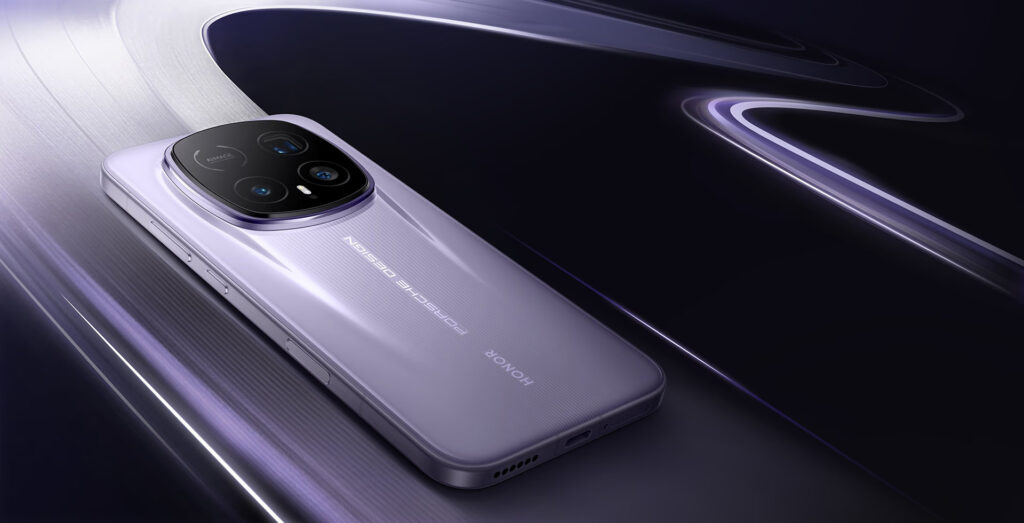
Inside, it runs Qualcomm’s Snapdragon 8 Elite Gen 5, with configurations going up to 24GB of RAM and 1TB of storage. The camera setup includes a 50MP main sensor, a 50MP ultra-wide, and a 200MP telephoto with 3.7x optical zoom and up to 100x digital zoom. Battery is 7,200mAh with 120W wired and 80W wireless charging. It also supports satellite communication and IP68/IP69K water resistance.
Honor is also selling an optional photography kit with a magnetic grip, filter adapter, and external telephoto lens. It runs MagicOS 10 with Porsche Design-themed UI elements layered on top.
February
Samsung Galaxy S26 Series
Samsung’s February Unpacked event brought the Galaxy S26, S26+, and S26 Ultra. The base S26 has a 6.3-inch FHD+ Dynamic AMOLED 2X display, while the S26+ bumps that up to 6.7 inches at QHD+ resolution. Both have 1-120Hz adaptive refresh rates and Gorilla Glass Victus 2.
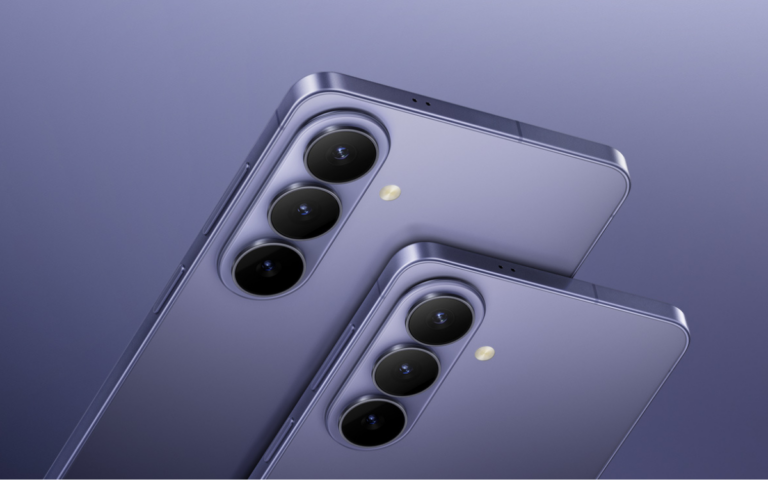
Depending on your region, these phones ship with either the Exynos 2600 or the Snapdragon 8 Elite Gen 5. The main camera across the standard models is a 50MP sensor, paired with a 12MP ultra-wide and a 10MP telephoto with 3x zoom. The S26 has a 4300mAh battery, the S26+ has a 4900mAh battery, and both support Qi2 wireless charging at 20W.
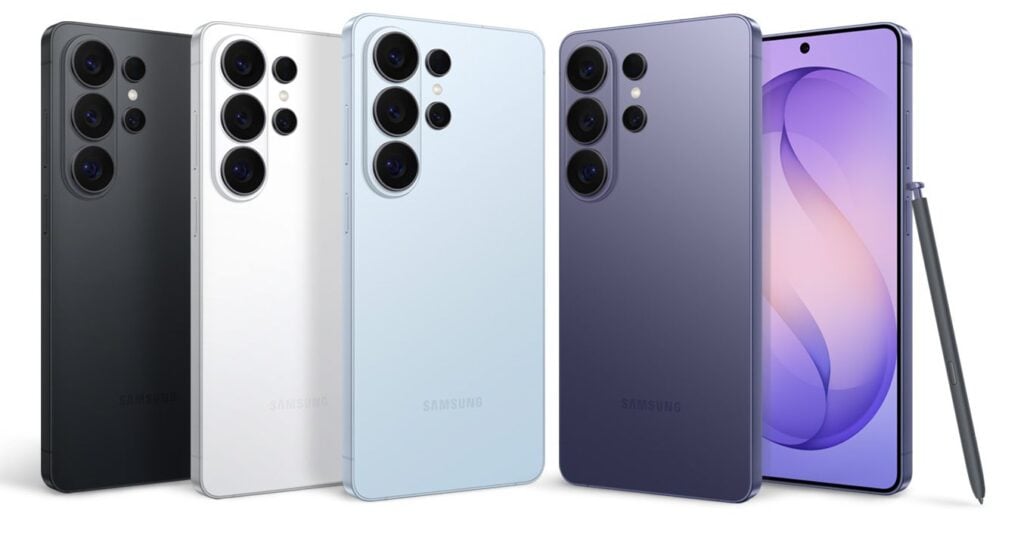
The S26 Ultra takes a different direction. It has a 6.9-inch QHD+ display with Gorilla Armor 2, runs exclusively on the Snapdragon 8 Elite Gen 5, and includes a 200MP main camera, a 50MP ultra-wide, a 10MP telephoto at 3x, and a 50MP periscope lens at 5x zoom. Battery is 5000mAh with Super Fast Charging 3.0. The S Pen is still here. The software on all three runs One UI 8.5 on Android 16, with AI features like Photo Assist, Now Brief, and Creative Studio built in.
Xiaomi 17 Ultra
Xiaomi launched the 17 Ultra in China in February, and it arrives with one of the more interesting camera setups of the year. The main camera uses a 1-inch Light Fusion 1050L sensor co-developed with Leica, shooting at 50MP. The telephoto is a 200MP Leica-certified lens that supports lossless optical zoom between 75mm and 100mm, going up to 400mm digitally. The ultra-wide is a 50MP sensor with 115-degree FOV.
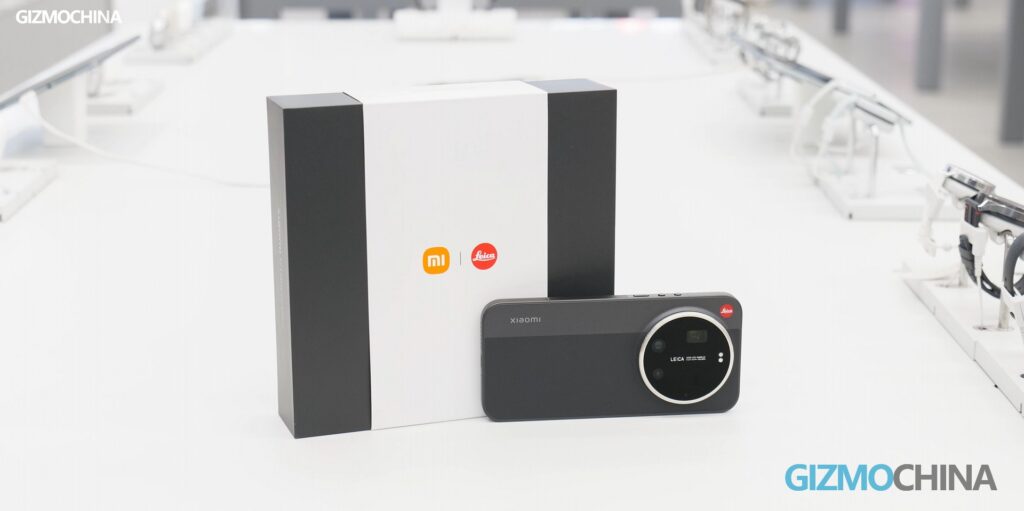
The display is a 6.9-inch OLED with up to 3,500 nits peak brightness, 1-120Hz adaptive refresh rate, and Dolby Vision support. It runs Snapdragon 8 Elite Gen 5, and Xiaomi says the phone can mirror and control Apple devices through its HyperOS 3.0 software.
The battery is 6,800mAh, the largest in any Xiaomi Ultra device. It charges at 90W wired and 50W wireless. Despite all of that, Xiaomi says the 17 Ultra is the thinnest Ultra device it has made, at 8.29mm.
iQOO 15 Ultra
The iQOO 15 Ultra is a performance-first phone, and it makes that clear from the spec sheet. The display is a 6.85-inch flat Samsung AMOLED at 2K resolution with a 144Hz refresh rate and 8,000 nits peak brightness. The touch sampling can go up to 4000Hz.
The phone runs Snapdragon 8 Elite Gen 5 alongside iQOO’s in-house Q3 esports chip, and the company claims an AnTuTu score of 4.51 million.
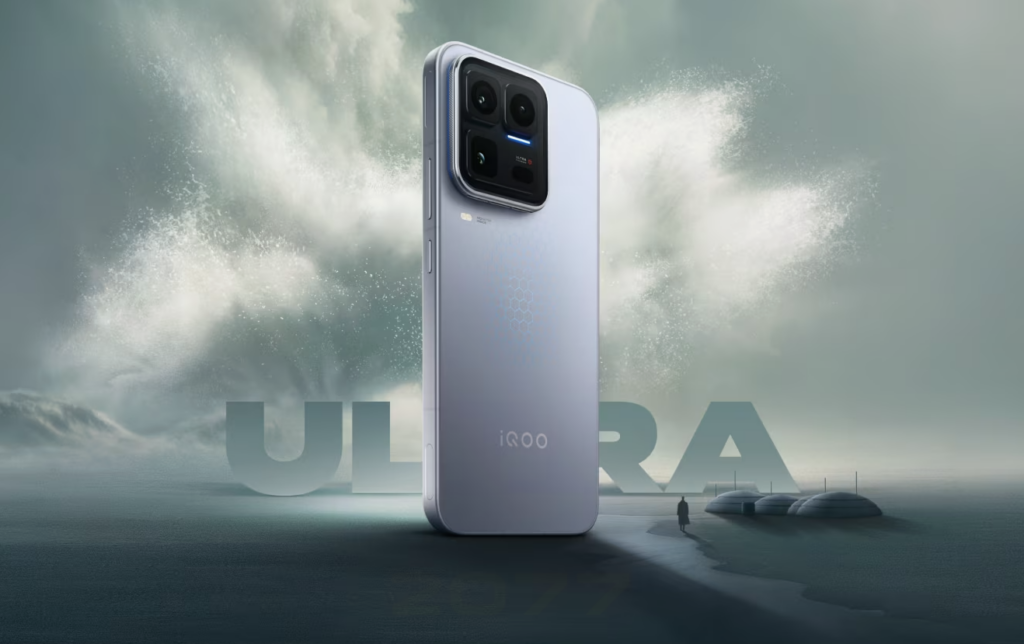
For cooling, it has a 59-blade fan and an 8,000mm² vapor chamber. The phone also includes pressure-sensitive shoulder triggers and a 500Hz gyroscope. Battery is 7,400mAh with 100W wired and 40W wireless charging.
On the camera side, it’s a triple 50MP system consisting of main, ultra-wide, and periscope telephoto with 3x optical zoom. Not the headline feature here, but solid. It runs OriginOS 6 on Android 16 and supports 8K video recording.
March
OPPO Find X9 Ultra
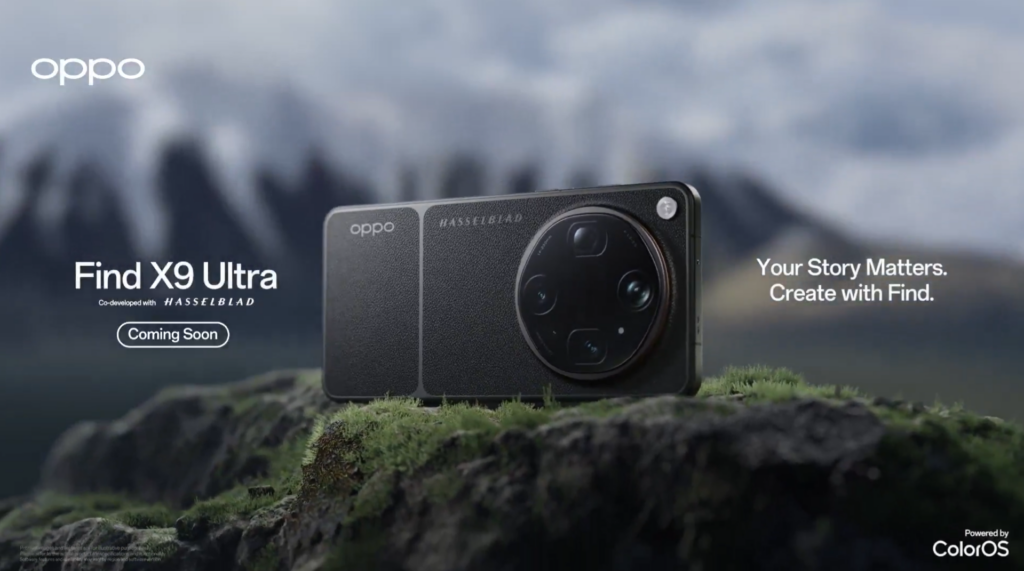
OPPO’s Find X9 Ultra is the most camera-forward device on this list. It’s the only 2026 flagship to use two 200MP cameras, one for main and another for 3x telephoto. Both deliver maximum detail in portrait and general photography. There’s also a dedicated 50MP 10x optical zoom telephoto and a 50MP ultra-wide.
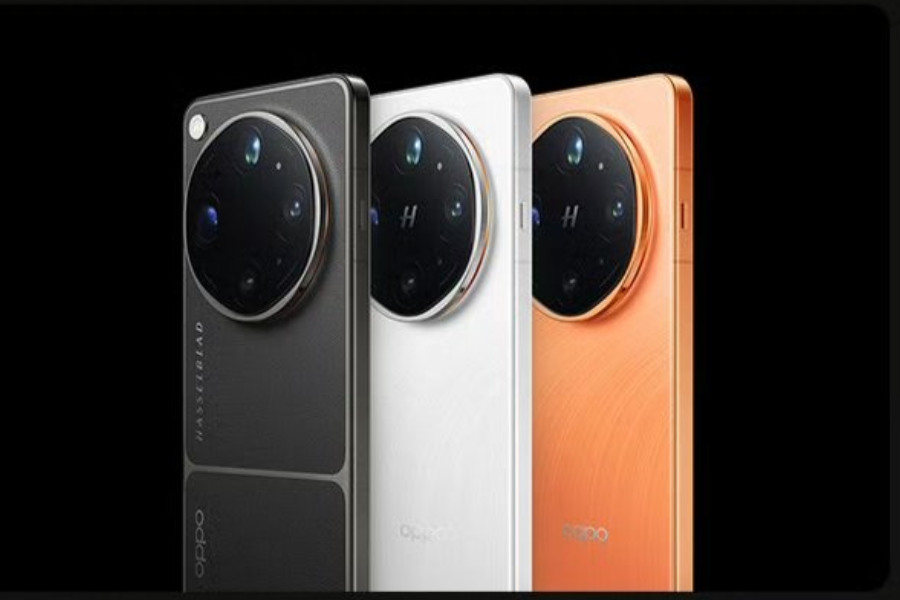
OPPO is leaning hard on the Hasselblad partnership here. The new Hasselblad Master Mode includes features like True Detail for 8K output across six focal lengths, a full-link ProXDR pipeline, and nine film presets that try to simulate real film color behavior rather than just slapping a filter on.
Video-wise, it supports 8K at 30fps and 4K at 120fps in 10-bit Log format, along with custom 3D LUT import and an ACES color management workflow. TILTA accessories like ND filters and manual focus grips are available for it. The phone runs Snapdragon 8 Elite Gen 5 with a 144Hz 2K display, a 7,050mAh battery with 100W wired and 50W wireless charging, and IP66/IP68/IP69 water resistance.
OPPO Find N6
OPPO’s Find N6 is pitching itself as the world’s flattest foldable, and the engineering behind that claim is genuinely interesting. The hinge uses a bionic four-axis structure built with chip-level polymer 3D printing, reducing surface unevenness to 0.1mm. Paired with memory glass that restores up to 99.9% flatness after folding, the crease situation is about as controlled as any foldable has managed. It’s TÜV certified for 600,000 folds.
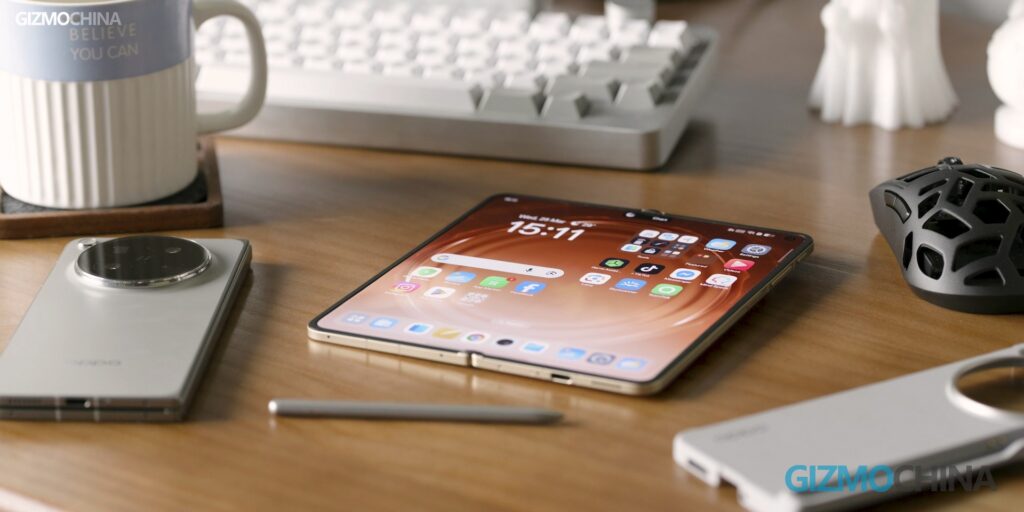
The inner display is an 8.12-inch QXGA+ foldable OLED, and the outer cover screen is a 6.62-inch FHD+ AMOLED, both running 1-120Hz adaptive refresh with 240Hz touch sampling. The outer panel peaks at 3,600 nits.
Cameras follow the same Hasselblad-partnership playbook as the Find X9 Ultra: a 200MP main with dual-axis OIS leads, supported by a 50MP ultra-wide, a 50MP 3x telephoto, and a dedicated Danxia color calibration lens. It supports 8K stills and 4K 120fps Dolby Vision video.
The chipset is the Snapdragon 8 Elite Gen 5, paired with a 6,000mAh battery, 80W wired and 50W wireless charging. It folds to 8.93mm and weighs 225g, with IP56/IP58/IP59 ratings.
Vivo X300 Ultra
Vivo’s X300 Ultra follows a similar camera-first philosophy as the Find X9 Ultra, but leans into a Zeiss partnership instead of Hasselblad. The camera array includes a 50MP ultra-wide (Sony LYTIA 818), a 200MP main camera (Sony LYTIA 901), and a 200MP telephoto (Samsung HP0) with gimbal-level stabilization.
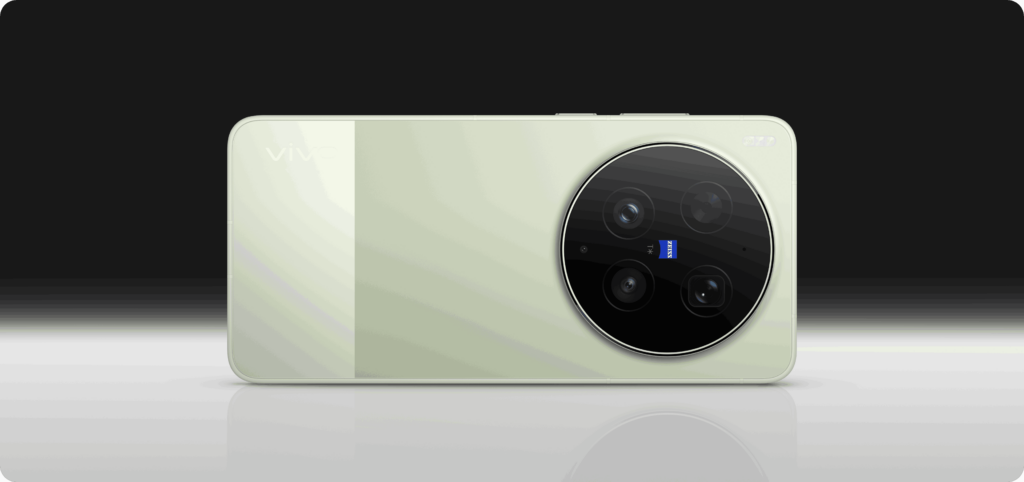
Vivo is also selling two external teleconverter modules, one for 200mm and one for 400mm. The imaging system supports 4K 120fps Dolby Vision and 4K 120fps 10-bit Log recording, along with 3D LUT imports and ACES workflows.
The display is a 6.82-inch 2K LTPO AMOLED at 144Hz. Battery is 6,600mAh with 90W wired and 40W wireless charging. It runs OriginOS 6 on Android 16 and carries IP68/IP69 ratings.
April
Huawei Pura 90 Pro and Pura 90 Pro Max
Both the Huawei Pura 90 Pro and 90 Pro Max share the same XMAGE imaging philosophy and a Red Maple multispectral lens, but the Pro Max gets better hardware meaningfully across the board.
The Pro Max camera system leads with a 50MP RYYB main sensor (1/1.28-inch) with OIS, LOFIC tech, and a variable aperture from f/1.4 to f/4.0. The telephoto is a 200MP RYYB periscope unit with 4x optical zoom, up to 8x optical-quality zoom, CIPA 7.0 stabilization, and what Huawei calls an industry-first three-in-one super concentrating prism. Rounding it out is a 40MP RYYB ultra-wide.
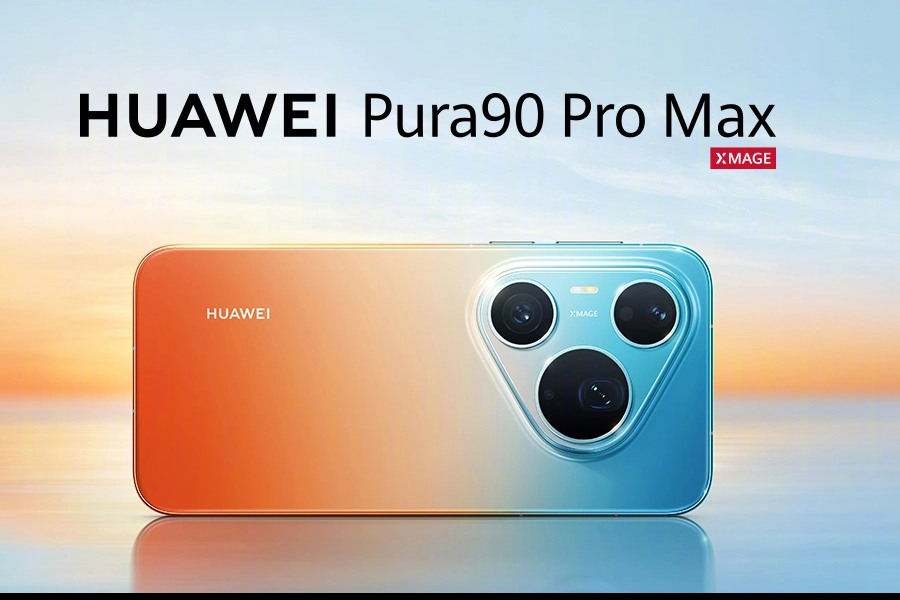
The standard Pro keeps the same main sensor and aperture setup but steps down to a 12.5MP ultra-wide and a 50MP periscope telephoto.
Both phones run on the Kirin 9030S, a step below the Kirin 9030 Pro found in the Pura X Max foldable. Huawei claims a 200 percent improvement in NPU image understanding over the previous generation, with gains in AI ISP color processing, telephoto video clarity, and stabilization accuracy. AI features are central to the software pitch — AI pose recommendations, composition assist, portrait retouching, and one-click photo creation are all present, alongside an upgraded Xiaoyi assistant with real-time pointing recognition and voiceprint detection.
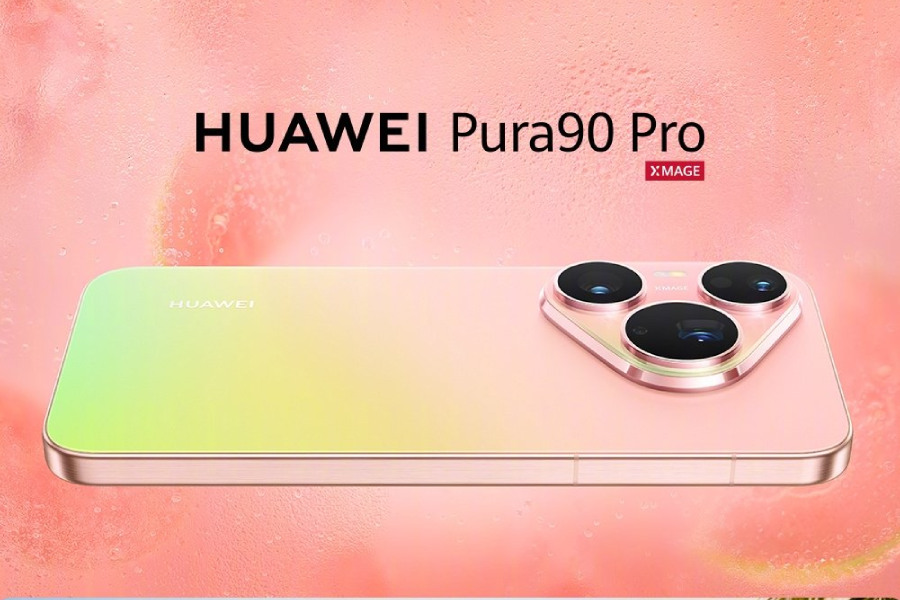
The Pro Max has a 6.9-inch display; the Pro gets 6.6 inches. Both use single-punch-hole cutouts. The Pro Max also gets Kunlun glass protection, which Huawei says cuts reflections by 70 percent and improves scratch resistance up to 16 times over standard glass. Both phones run HarmonyOS 6.1.
OnePlus Ace 6 Ultra
The OnePlus Ace 6 Ultra is squarely aimed at mobile gamers. It runs on the MediaTek Dimensity 9500, built on TSMC’s third-gen 3nm process, with OnePlus claiming a 32% performance uplift and 55% better power efficiency over the previous generation.
Keeping things cool is a 6,000mm² vapor chamber that sits alongside a Glacier Cooling System and a deeper integration of OnePlus’s Wind Chaser Gaming Kernel.
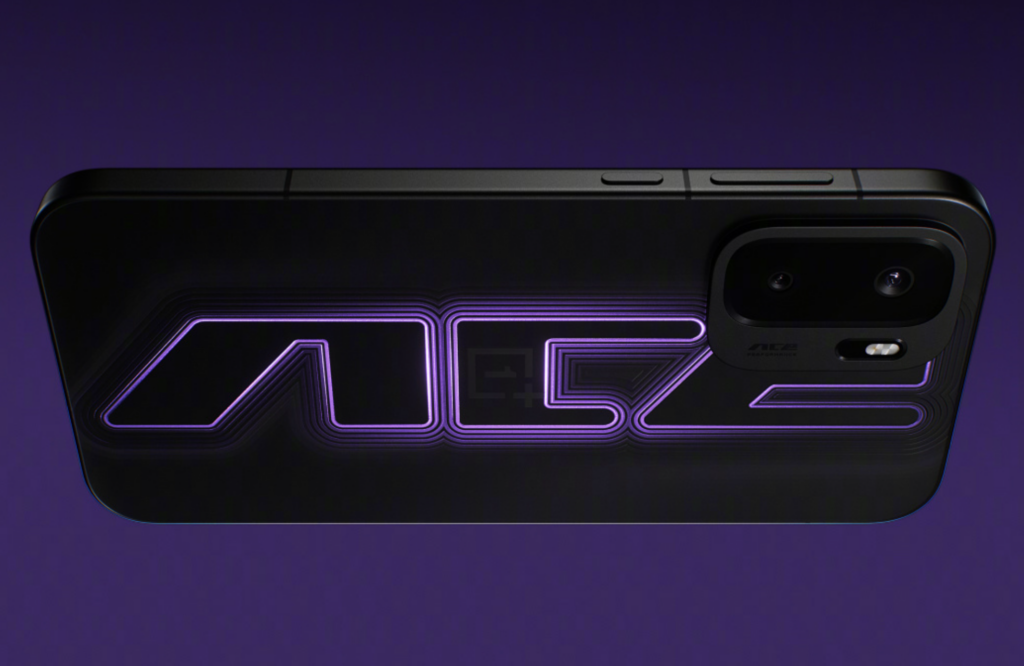
The headline accessory is an optional Strix Gaming Controller with a joystick-free layout, mechanical triggers rated at 1.8ms response time, a dedicated e-sports chip, and support for magnetic cooling modules. It’s the kind of peripheral ecosystem you’d more typically associate with a dedicated gaming phone brand.
The display is a 6.78-inch 1.5K LTPS OLED at 165Hz with 4,000Hz instantaneous touch sampling. As for cameras, it has a 50MP main with OIS and an 8MP ultra-wide unit. The battery is a large 8,600mAh dual-cell unit with 120W wired charging. It runs ColorOS 16 on Android 16, and carries IP66/IP68/IP69/IP69K ratings.
For more daily updates, please visit our News Section.
Stay ahead in tech! Join our Telegram community and sign up for our daily newsletter of top stories! 
The post Every major flagship phone launched in 2026 so far appeared first on Gizmochina.