❌

Reading view

Taiwanese Motherboard Market Faces Major Collapse in 2026
PC market 2026

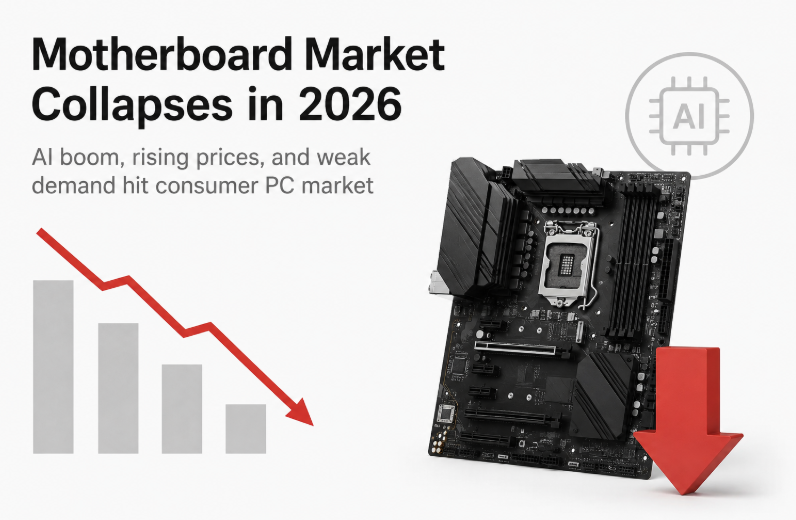
The consumer PC hardware market is reportedly heading toward one of its biggest downturns in years. According to a new report from DIGITIMES, major Taiwanese motherboard brands have sharply reduced their shipment targets for 2026 as rising hardware prices and weak demand continue to hurt the industry.Β 

Companies including ASUS, Gigabyte, MSI, and ASRock are all expected to see major shipment declines next year.
AI-generated image for representation only

AI Demand Is Hurting Consumer Hardware Supply

One of the biggest reasons behind the slowdown is the rapid expansion of the AI industry. Chipmakers like Intel and AMD are reportedly prioritizing production of high-profit server processors such as Xeon and EPYC chips instead of consumer CPUs. As a result, desktop and laptop processors are facing supply shortages and price increases. Reports also suggest that additional CPU price hikes may arrive later in 2026.

RAM and Storage Prices Continue to Rise

Memory prices have also increased sharply over the past year. Reports claim RAM and storage now account for over 30% of a PC’s total build cost, compared to around 15% previously. Because of these rising costs, many laptop makers have increased prices by 10–20%, while some affordable models are now offering weaker specifications to keep prices under control. This has reduced consumer purchasing power and slowed upgrade demand.

GPU Market Shows Little Excitement

The gaming GPU market is also struggling to attract buyers. NVIDIA has not introduced major RTX 50 series upgrades in 2026, while rumors suggest the RTX 60 series may not launch until 2028. GPU prices also remain high in many regions, making gaming PC upgrades less attractive for consumers. Many users are reportedly choosing to keep their older PCs longer instead of spending heavily on new hardware.

Motherboard Brands Face Shipment Declines

ASUS is reportedly struggling to maintain even 10 million motherboard shipments in 2026 after shipping around 15 million units in 2025. Gigabyte, MSI, and ASRock are also expected to see major declines in motherboard sales as the overall DIY PC market weakens further.

AI Servers Become the Main Revenue Driver

Despite weaker consumer PC sales, companies are still expected to remain profitable thanks to booming AI server demand. AI servers are now generating significantly more revenue than traditional consumer hardware, helping brands offset declining motherboard and graphics card shipments.

Read More:

(via)

The post Taiwanese Motherboard Market Faces Major Collapse in 2026 appeared first on Gizmochina.
Xiaomi’s New BE7200 Pro Router Brings Flagship WiFi 7 Features at a Shockingly Low Price

Xiaomi BE7200 Pro WiFi 7

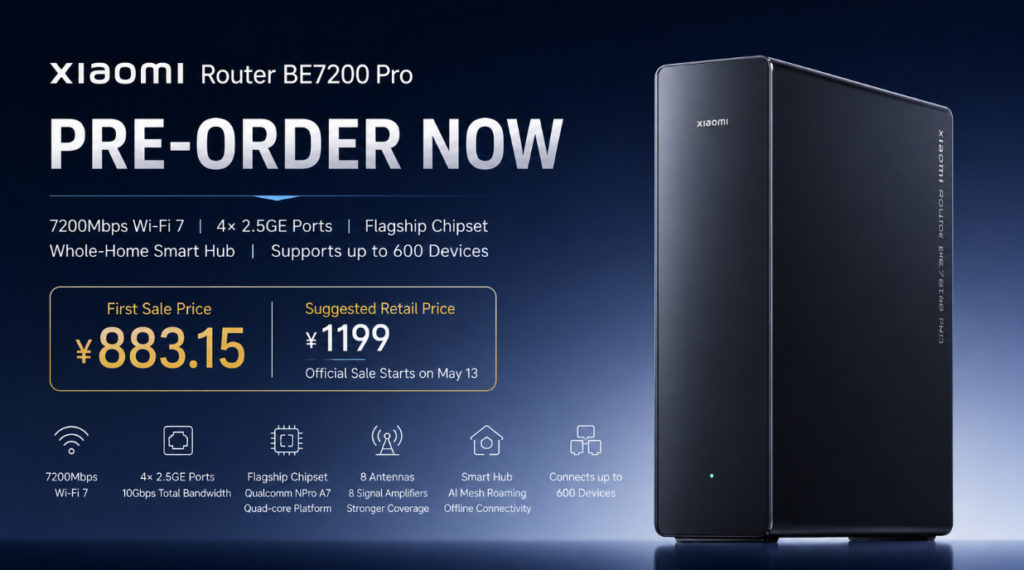
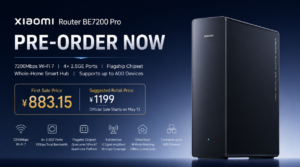
Xiaomi has officially launched the new Xiaomi BE7200 Pro WiFi 7 router in China. The company is positioning it as a more affordable flagship networking solution for users who want high-speed wireless connectivity without paying premium prices for top-end models like the BE19000 Pro.

The router is currently available for pre-order in China, while official sales will begin on May 13. Xiaomi has not yet confirmed any global launch plans for the device.

Pricing and Availability

The Xiaomi BE7200 Pro comes with a suggested retail price of 1,199 Yuan (around $176). However, Xiaomi is offering an introductory sale price of 883.15 Yuan (approximately $122) during the initial launch period.

With this pricing, the router targets gamers, smart-home users, and heavy internet users looking for next-generation networking features at a lower cost.

WiFi 7 Speeds and Hardware

The BE7200 Pro supports the latest WiFi 7 standard and delivers dual-band wireless speeds of up to 7,200Mbps. Xiaomi says the router is designed for demanding tasks such as 8K video streaming, cloud gaming, and handling multiple smart devices simultaneously.

Under the hood, the router is powered by Qualcomm’s NPro A7 quad-core platform. It includes 1GB DRAM and 512MB flash storage. Xiaomi has also added a large 72,348mmΒ² heat dissipation system to improve thermal performance during heavy workloads.

Connectivity and Smart Features

One of the key highlights of the router is its networking setup. The BE7200 Pro includes five 2.5GbE Ethernet ports with a combined transmission bandwidth of up to 10Gbps. This makes it suitable for multi-gig broadband connections, NAS systems, and high-speed wired gaming setups.

For wireless coverage, the router features eight built-in high-gain antennas along with eight signal amplifiers. Xiaomi claims this setup improves wall penetration, connection stability, and whole-home coverage.

The router also supports AI-powered bandwidth allocation, AI Mesh networking, seamless roaming, child protection tools, and anti-hacking security features. Xiaomi says the device can handle up to 600 connected devices, making it suitable for large smart-home ecosystems.

Read More:

The post Xiaomi’s New BE7200 Pro Router Brings Flagship WiFi 7 Features at a Shockingly Low Price appeared first on Gizmochina.
Samsung Galaxy Watch Can Predict Fainting Spells, Clinical Study Reveals

Samsung smart watch

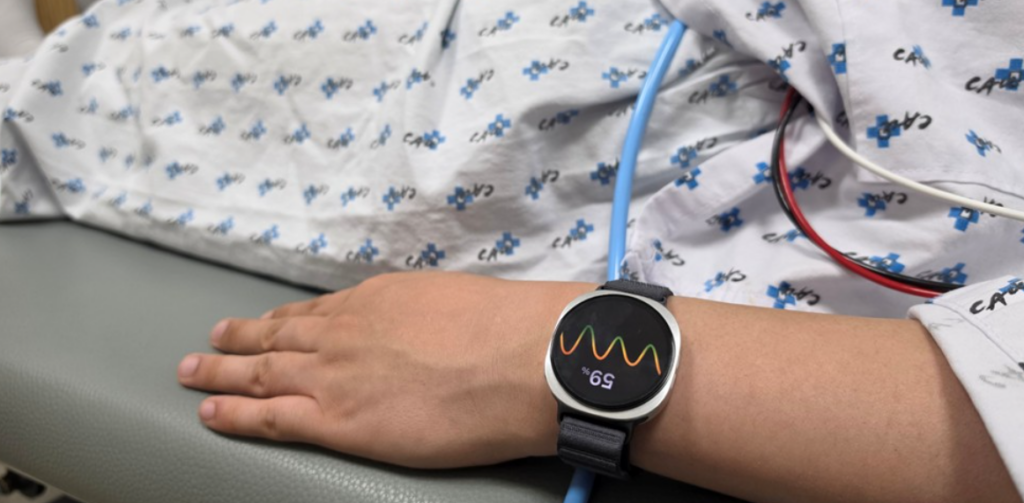
Samsung has announced a major advancement in wearable healthcare technology. A new clinical study conducted in partnership with Chung-Ang University Gwangmyeong Hospital in South Korea found that the Samsung Galaxy Watch6 can predict fainting episodes before they happen.

The research focused on vasovagal syncope (VVS), one of the most common causes of fainting. According to the study, the smartwatch was able to warn users up to five minutes before a fainting episode with an overall accuracy of 84.6%.

source: news.samsung.com

What is Vasovagal Syncope?

Vasovagal syncope occurs when a person experiences a sudden drop in heart rate and blood pressure. This can temporarily reduce blood flow to the brain, causing loss of consciousness.

Common triggers include stress, fear, emotional shock, anxiety, and pain. While fainting itself is usually not life-threatening, sudden falls can lead to serious injuries such as fractures, head trauma, and concussions.

Researchers noted that up to 40% of people may experience VVS at least once during their lifetime, while many patients suffer repeated episodes.

How the Galaxy Watch6 Detected Fainting Risk

The study involved 132 patients with suspected VVS symptoms. Under medical supervision, participants underwent induced fainting tests while wearing the Galaxy Watch6.

The smartwatch used its built-in photoplethysmography (PPG) sensor to collect heart rate variability (HRV) data. Researchers then analyzed the data using an AI-based prediction system.

The results showed:

  • 84.6% overall prediction accuracy
  • 90% sensitivity
  • 64% specificity
  • Up to 5 minutes of advance warning

Samsung says this is the world’s first successful demonstration of a commercially available smartwatch predicting fainting spells in advance.

Samsung Plans More Preventive Health Features

Professor Junhwan Cho, who led the research, said early warnings could give patients enough time to sit down, lie safely, or seek help before collapsing.

Samsung also stated that it plans to expand AI-powered preventive healthcare features in future Galaxy wearables. The findings of the study were published in the European Heart Journal, Digital Health.

Read More:

(via)

The post Samsung Galaxy Watch Can Predict Fainting Spells, Clinical Study Reveals appeared first on Gizmochina.

Qualcomm Snapdragon 6 Gen 5 and 4 Gen 5 Announced With Wi-Fi 7, 90FPS Gaming

Qualcomm Snapdragon 6 Gen 5

Qualcomm has officially introduced the new Snapdragon 6 Gen 5 and Snapdragon 4 Gen 5 chipsets, bringing several premium smartphone features to affordable and mid-range devices. Smartphones powered by these processors are expected to arrive in the second half of 2026.

Both chipsets are built on a 4nm process and focus on improving gaming, smoother UI performance, camera quality, and overall daily smartphone usage. Qualcomm says the new platforms are designed to deliver better graphics, faster app launches, and reduced lag during regular use.

source: Qualcomm

The Snapdragon 6 Gen 5 is the more powerful chipset of the two. It features four performance cores clocked at 2.6GHz and four efficiency cores at 2.0GHz. Qualcomm claims the chipset delivers 21% better GPU performance, 20% faster app launches, and 18% lower screen lag compared to the previous generation.

One of the biggest highlights of the Snapdragon 6 Gen 5 is the inclusion of Wi-Fi 7 and Bluetooth 6.0 support, features that were previously limited mostly to flagship smartphones. The chipset also supports AI-powered Night Vision photography, 100x AI zoom, Snapdragon Game Super Resolution, and cameras up to 200MP.

Meanwhile, the Snapdragon 4 Gen 5 is designed for budget and affordable mid-range smartphones. It includes two performance cores running at 2.4GHz and six efficiency cores at 2.0GHz. Qualcomm says the chipset delivers a major 77% GPU performance improvement along with 43% faster app launches.

The Snapdragon 4 Gen 5 also becomes the first Snapdragon 4-series chipset to support 90FPS gaming. It supports FHD+ 144Hz displays, dual-channel UFS 3.1 storage, and cameras up to 108MP.

Qualcomm has not yet revealed which smartphone brands will launch devices powered by these new chipsets.

Comparison Table:

FeatureSnapdragon 6 Gen 5Snapdragon 4 Gen 5
Process4nm4nm
CPU Setup4 Performance + 4 Efficiency cores2 Performance + 6 Efficiency cores
Peak Clock Speed2.6GHz2.4GHz
GPU Improvement21%77%
App Launch Improvement20% faster43% faster
Screen Lag Reduction18%25%
RAM SupportUp to 16GB LPDDR5/LPDDR4XLPDDR4X
Storage SupportUFS 3.1Dual-channel UFS 3.1
Display SupportFHD+ 144HzFHD+ 144Hz / HD+ 120Hz
Camera SupportUp to 200MPUp to 108MP
AI Camera FeaturesNight Vision, 100x AI ZoomBasic AI Camera
Gaming FeaturesGame Super Resolution, Adaptive Performance Engine 4.090FPS Gaming
Wi-FiWi-Fi 7Wi-Fi 5
BluetoothBluetooth 6.0Bluetooth 5.1
Peak Wireless Speed5.8Gbps2.8Gbps
USB SupportUSB 2.0 (480Mbps)USB 2.0 (480Mbps)
Target SegmentMid-rangeBudget/Mid-range
Expected AvailabilityH2 2026H2 2026
Disclaimer: Specifications and features mentioned above are based on Qualcomm’s official announcement. Actual performance may vary depending on the smartphone brand and device optimization.

Read More:

(via)

The post Qualcomm Snapdragon 6 Gen 5 and 4 Gen 5 Announced With Wi-Fi 7, 90FPS Gaming appeared first on Gizmochina.

Honor 600 China Variant Could Pack Up to 9000mAh Battery, Snapdragon 8 Elite

Honor 600

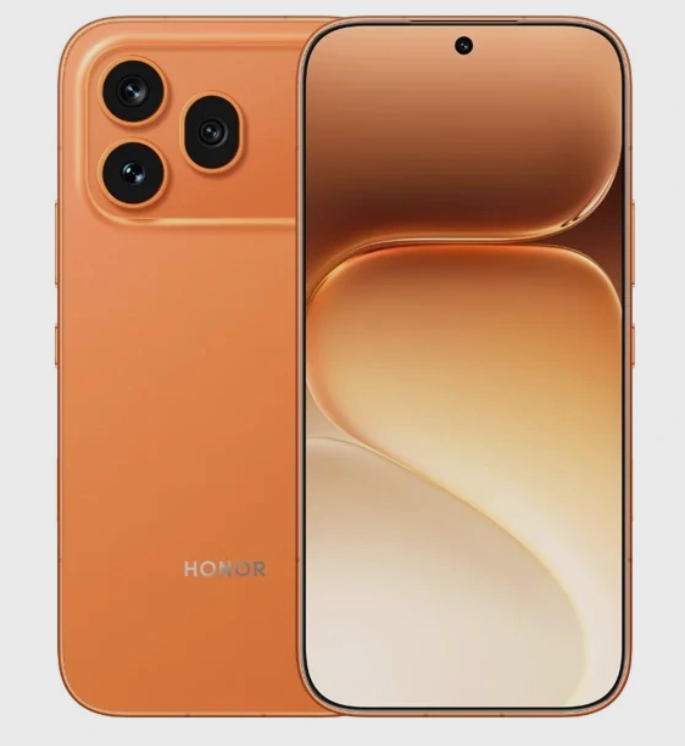
The upcoming Honor 600 series is gearing up for its China debut later this month, and new leaks have revealed some exciting upgrades. According to tipster Digital Chat Station, the China variant could bring major improvements, especially in battery capacity and color options.

One of the biggest highlights is the massive battery upgrade. While the global version already offers a large 7000mAh battery, the China model is expected to push this further to around 8500mAh to 9000mAh, making it one of the biggest batteries in a mainstream flagship-style smartphone. This suggests a strong focus on long-lasting performance and heavy usage without frequent charging.

In terms of design, the Honor 600 series will reportedly arrive in six vibrant colors, including Good Orange, Lucky Star, Jasmine White, Green Apple, Light Feather Blue, and Obsidian Black. The device is also said to feature a premium metal frame and high durability ratings, including IP68, IP69, and IP69K protection against dust and water.

The smartphone is expected to sport a 6.57-inch 1.5K flat display with a 120Hz refresh rate and ultra-slim 0.98mm bezels on all sides. It will also use 3840Hz PWM dimming technology, aimed at improving eye comfort during extended use.

Under the hood, the device is rumored to be powered by the flagship Snapdragon 8 Elite chipset, paired with MagicOS 10 based on Android 16.

For photography, the Honor 600 series could feature a 200MP main camera, along with a 12MP ultra-wide lens and a 50MP 3.5x periscope telephoto sensor. A 50MP front camera is also expected for selfies.

Overall, the China variant of the Honor 600 series appears to focus heavily on battery life while retaining flagship-grade performance and camera capabilities.

Read More:

(via)

The post Honor 600 China Variant Could Pack Up to 9000mAh Battery, Snapdragon 8 Elite appeared first on Gizmochina.

Samsung Turned Smartphone Screens Into Health Monitors: Blood Pressure, Heart Rate and More

samsung display health monitor

At SID Display Week 2026 in the United States, Samsung showcased a range of next-generation display technologies that could redefine how smartphones are used in daily life. The highlight of the event was the shift from traditional screens to multi-functional displays that combine visuals, health tracking, and privacy features.

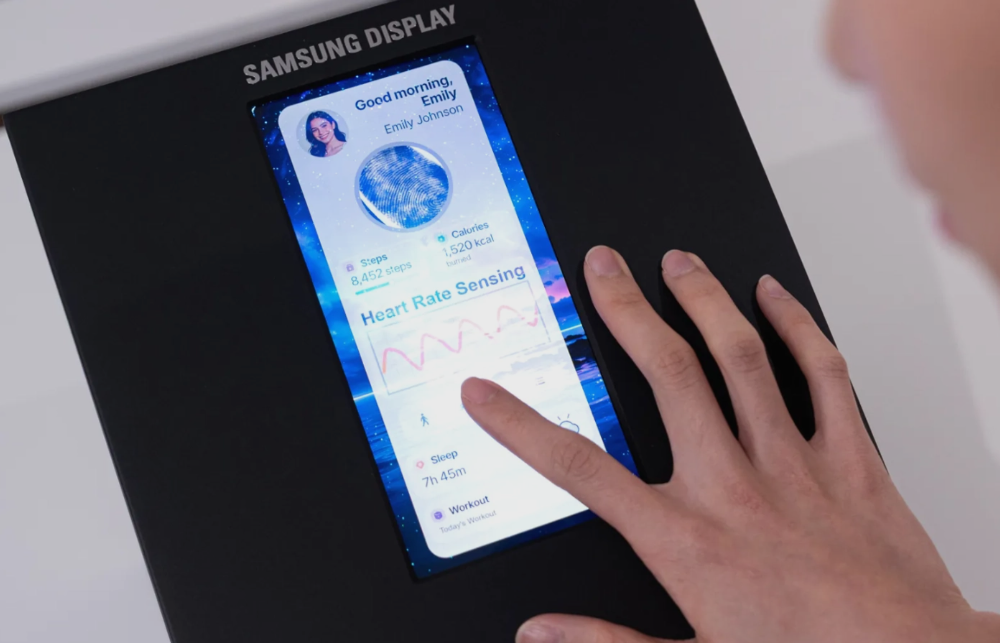
One of the most impressive innovations is the Sensor OLED display. This technology allows users to measure heart rate and even blood pressure simply by placing a finger on the screen. It works by using light emitted from the display, which reflects off the skin and is captured by built-in sensors. This removes the need for smartwatches or separate health devices, making smartphones more useful for quick health checks.

Samsung also introduced the Flex Chroma Pixel display, which focuses on brightness and color accuracy. It can reach up to 3,000 nits of brightness and covers 96% of the BT.2020 color range. The goal is to deliver richer colors while improving power efficiency, especially for future premium devices.

Another key feature is Flex Magic Pixel technology, designed for privacy. It limits viewing angles so sensitive content like messages or health data stays hidden from people nearby, without affecting the main viewing experience.

Samsung also showcased a stretchable Micro LED display aimed at automotive use, along with improvements in EL-QD display efficiency.

Overall, Samsung is pushing toward displays that do much more than just show content. Future smartphones could act as health monitoring tools, offer built-in privacy, and deliver better visual performance, all through a single screen.

Read More:

(via)

The post Samsung Turned Smartphone Screens Into Health Monitors: Blood Pressure, Heart Rate and More appeared first on Gizmochina.

❌