
 Login
Login
OnePlus Pad 4 vs Xiaomi Pad 8 Pro: Which Android Tablet Should You Buy in 2026?
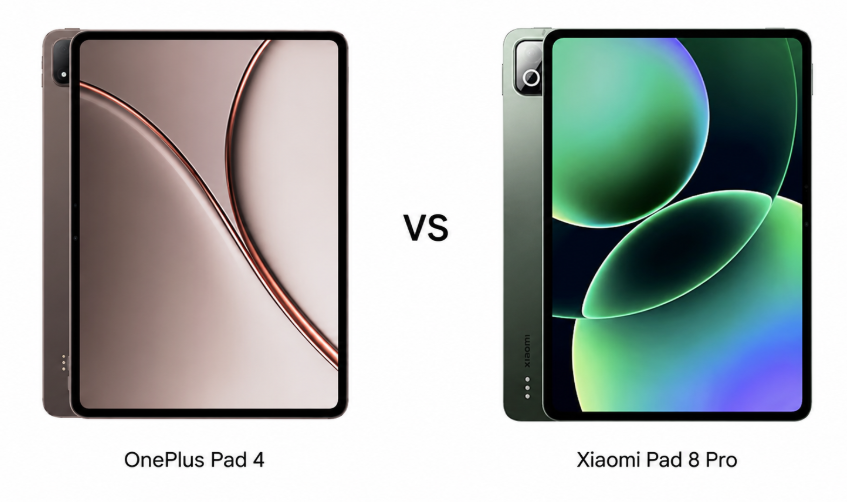
The Android tablet market is finally getting exciting again, and the OnePlus Pad 4 and Xiaomi Pad 8 Pro are proof of that. One focuses on delivering a massive laptop-like experience with flagship power and huge battery life, while the other aims to balance premium performance with portability and value. From gaming and multitasking to media consumption and ecosystem features, both tablets take very different approaches despite sharing high-end hardware.
Major Features:
| Feature | OnePlus Pad 4 | Xiaomi Pad 8 Pro | Winner |
|---|---|---|---|
| Display Size | 13.2-inch IPS LCD, 144Hz | 11.2-inch IPS LCD, 144Hz | OnePlus – Larger display feels better for multitasking and entertainment |
| Resolution & Sharpness | 2400 × 3392, 315ppi | 2136 × 3200, 345ppi | Xiaomi – Higher pixel density gives sharper visuals |
| Brightness | 1000 nits (HBM) | 800 nits peak | OnePlus – Brighter panel for HDR and outdoor use |
| Multimedia Support | Dolby Vision, 8 speakers | Dolby Vision, HDR10, HDR Vivid, 4 speakers | OnePlus – Superior speaker setup creates a richer media experience |
| Build | Aluminum frame & back | Aluminum frame & back | Tie – Both offer premium metal builds |
| Weight | 672g | 485g / 494g | Xiaomi – Much lighter and easier to carry |
| Chipset | Snapdragon 8 Elite Gen 5 | Snapdragon 8 Elite | OnePlus – Newer and more powerful flagship chip |
| GPU | Adreno 840 | Adreno 830 | OnePlus – Better graphics performance for gaming |
| RAM & Storage | Up to 12GB / 512GB | Up to 16GB / 512GB | Xiaomi – Higher RAM option improves heavy multitasking |
| Software | Android 16, OxygenOS 16 | Android 16, HyperOS 3 | OnePlus – Cleaner and smoother UI experience |
| Rear Camera | 13MP | 50MP with PDAF | Xiaomi – Significantly stronger camera hardware |
| Front Camera | 8MP | 32MP ultrawide | Xiaomi – Better for video calls and online meetings |
| Video Recording | 4K@30fps | 4K@60fps | Xiaomi – Higher frame rate recording support |
| Speakers | Stereo, 8 speakers | Stereo, 4 speakers | OnePlus – Louder and more immersive audio |
| Battery | 13,380mAh | 9,200mAh | OnePlus – Much larger battery capacity |
| Charging | 80W wired | 67W wired | OnePlus – Faster charging speeds |
| Reverse Charging | No | 22.5W reverse wired | Xiaomi – Extra utility for charging accessories |
| Fingerprint Scanner | No | Side-mounted | Xiaomi – More convenient unlocking method |
| Bluetooth | Bluetooth 6.0 | Bluetooth 5.4 | OnePlus – Newer connectivity standard |
| Price | ~$630 / ₹60,000 | ~$500 / ₹47,000 | Xiaomi – Better overall value for the price |
Design and Display
Build Quality
OnePlus Pad 4 and Xiaomi Pad 8 Pro both use premium aluminum bodies with slim profiles, but they target different users. The OnePlus Pad 4 feels more like a desktop replacement thanks to its massive 13.2-inch form factor and ultra-thin 5.9mm chassis. However, its 672g weight makes it noticeably heavier during long handheld sessions. The Xiaomi Pad 8 Pro is far more portable at under 500g, making it easier to carry for travel, gaming, and casual use. Xiaomi also adds a side-mounted fingerprint scanner and magnetic stylus integration, which improves convenience slightly.
Display & Multimedia
OnePlus clearly focuses on immersive entertainment. Its 13.2-inch IPS panel offers a sharper cinematic feel with Dolby Vision, 144Hz refresh rate, and up to 1000 nits HBM brightness. The 8-speaker setup also delivers a more powerful media experience. Xiaomi counters with a denser 3:2 display, HDR Vivid support, and better portability for reading and productivity. While the 4-speaker setup is good, it lacks the fuller soundstage of the OnePlus tablet.
Verdict
OnePlus Pad 4 wins for entertainment and large-screen productivity, while the Xiaomi Pad 8 Pro feels more practical for everyday portability and mixed usage.
Performance and Software
Processor & UI Smoothness
OnePlus Pad 4 ships with the newer Snapdragon 8 Elite Gen 5 chipset paired with Adreno 840 graphics, giving it a noticeable edge in raw performance. Heavy gaming, AI workloads, and multitasking should feel faster and more future-proof. OxygenOS 16 also tends to deliver cleaner animations and smoother transitions with minimal visual clutter. Xiaomi’s Snapdragon 8 Elite remains extremely powerful, though it sits slightly behind in GPU and CPU capability. HyperOS 3 introduces more ecosystem-focused features, but it can feel visually busier compared to OxygenOS.
Productivity & Multitasking
OnePlus benefits greatly from the larger 13.2-inch display for split-screen work, document editing, and laptop-style multitasking. The wider workspace simply feels better for serious productivity. Xiaomi, however, balances power with flexibility. The lighter chassis, optional 16GB RAM variant, and tighter ecosystem integration make it excellent for students and hybrid users. Both tablets support stylus accessories, though Xiaomi’s magnetic implementation feels slightly more refined.
Verdict
OnePlus Pad 4 offers stronger peak performance and better multitasking potential, but Xiaomi delivers a more balanced experience for users wanting portability alongside flagship power.
Battery and Accessories
Battery Life
Battery capacity is one of the biggest differences between these tablets. The OnePlus Pad 4 packs a massive 13,380mAh battery, which should comfortably handle long gaming sessions, media consumption, and full-day productivity workloads. Combined with 80W charging, it is built for power users who rarely want battery anxiety. Xiaomi’s 9,200mAh battery is smaller, but its more compact display helps maintain efficient endurance. The 67W charging remains quick enough for daily use, and reverse wired charging adds extra flexibility.
Stylus, Keyboard & Ecosystem
Both tablets support stylus accessories, but Xiaomi appears slightly more polished for ecosystem usage. HyperOS integration across Xiaomi phones, tablets, and accessories creates a smoother connected experience. The magnetic stylus implementation also feels more seamless. OnePlus focuses more on workstation-style usage with its larger display and accessory connector pins. Users looking for laptop-style workflows may appreciate the extra screen space more than Xiaomi’s ecosystem advantages.
Verdict
OnePlus Pad 4 wins battery life and long-session usability, while Xiaomi offers better portability and ecosystem convenience. The better choice depends heavily on whether mobility or endurance matters more.
Camera & Media
Rear and Front Camera
Tablet cameras are rarely a deciding factor, but Xiaomi clearly puts more effort into imaging hardware. The Xiaomi Pad 8 Pro includes a 50MP rear camera with PDAF and a 32MP ultrawide selfie camera, making it much stronger for video calls, scanning documents, and occasional content creation. The OnePlus Pad 4 uses a simpler 13MP rear sensor and 8MP front camera setup that mainly handles basic tasks. For professional meetings and online classes, Xiaomi’s front camera advantage is significant.
Video & Audio Quality
Xiaomi supports 4K recording at up to 60fps and includes HDR features for better dynamic range. However, OnePlus takes the lead in multimedia audio. Its 8-speaker stereo setup creates a far more immersive cinematic experience for movies and gaming. Dolby Vision support on the larger panel also enhances streaming quality noticeably. Xiaomi’s Dolby Atmos tuning is still strong, but the physical speaker limitation is noticeable during louder playback.
Verdict
Xiaomi Pad 8 Pro is the better choice for cameras and video calls, while the OnePlus Pad 4 dominates for movies, gaming audio, and large-screen entertainment.
Pricing
Xiaomi Pad 8 Pro delivers stronger overall value at around $500 / ₹47,000. It offers flagship-grade performance, excellent cameras, premium build quality, and multiple RAM/storage configurations at a lower price point. For most users, it hits the sweet spot between portability, power, and affordability.
OnePlus Pad 4 costs around $630 / ₹60,000, but the higher price mainly targets users wanting a larger display, bigger battery, stronger chipset, and superior speaker setup. It feels more like a premium productivity tablet than a traditional multimedia slate.
Users focused on value and portability will likely lean toward Xiaomi, while heavy multitaskers and entertainment-focused buyers may justify the higher OnePlus pricing.
Disclaimer:
Prices are approximate and may vary based on country, region, launch timing, and applicable taxes. Always check whether the listed price is for a China unit or a global/international variant when purchasing.
Conclusion
OnePlus Pad 4 stands out with its enormous 13.2-inch display, Snapdragon 8 Elite Gen 5 processor, huge 13,380mAh battery, and immersive 8-speaker system. It feels designed for users replacing a lightweight laptop or want a large-screen entertainment device.
Xiaomi Pad 8 Pro shines with portability, stronger cameras, a sharper pixel density, reverse charging, an optional 16GB RAM configuration, and tighter ecosystem integration. Its lighter design makes it more versatile for travel and daily carry.
Verdict
OnePlus Pad 4 is the better premium productivity and entertainment tablet, especially for power users who prioritize screen size and battery life. The Xiaomi Pad 8 Pro, however, offers the smarter overall balance for most buyers thanks to its lower pricing, lighter build, and well-rounded feature set.
Disclaimer: This comparison is based on the specifications provided and is intended for general informational purposes. Actual performance, camera results, battery life, and overall experience may vary depending on real-world usage, software updates, and individual preferences.
Read More:
- Motorola Razr Ultra 2026 vs Pixel 10 Pro Fold: Flip Phone or Foldable Tablet Wins?
- OnePlus Nord 6 vs Nothing Phone (4a): Which Phone Gives Better Value in 2026?
- OPPO Find X9 Ultra vs Google Pixel 10 Pro XL: Camera, Performance, Pricing Compared
The post OnePlus Pad 4 vs Xiaomi Pad 8 Pro: Which Android Tablet Should You Buy in 2026? appeared first on Gizmochina.
