❌

Reading view

'Bose features at a non-Bose price, for the first time': Skullcandy launches its most premium headphones ever, getting by with a little help from its friend

  • Skullcandy launches Crusher 1080 ANC, new premium over-ears
  • They mark the debut of three Bose-made features in a non-Bose product
  • Just launched and available right now, for $280 / AU$399.99 (about Β£210)

It is as I foretold: after we saw Skullcandy teases about new headphones, the brand has unveiled exactly the pair of cans I predicted. Meet the Skullcandy Crusher 1080 ANC; they're the pair that skate legend (and brand ambassador) Tony Hawk is pointing at in the picture above β€” yes, it really is him.

These are, according to the brand, its "best-sounding product" (although interestingly, not the most expensive because Skullcandy's Aviator 900 cans are a little pricier) and in case you didn't know, a 1080 in skateboarding involves three complete skateboard and body rotations performed either frontside or backside.

As a new member of its Crusher line-up, part of the draw will be the adjustable bass (see the big dial on the ear cup), but there's a lot more to celebrate besides that.

You can buy the Crusher 1080 ANC right now; they cost $279.99 / AU$399.99 (about Β£210) so they're a little cheaper than the likes of the $449 / Β£449 / AU$699 Bose QuietComfort Ultra Headphones (Gen 2) which they borrow features from.

They come in black, gray, brown, and pink, as you can see modelled sans Tony Hawk below. I rate them in the following order: brown, pink, gray, black, though I'd love to see a camo or floral redesign as Skullcandy is wont to do.

Colors aren't why you'll buy the Crusher 1080 ANC, though. No, it'll be because they offer three new Sound by Bose features at a non-Bose price...

That which we call a Bose by any other name would smell as sweet

Four different color models of Skullcandy Crusher 1080, hung up on a bar in a metro.

(Image credit: Skullcandy)

We've seen Skullcandy headphones with Bose features before, but the Crusher 1080 ANC are the first pair of cans not made by the brand which have three specific features. And these three features are a big selling point of the product.

The biggest will be Bose QuietControl ANC, which is a massive draw within Bose's own products (including the QuietComfort Ultra Earbuds 2nd Gen). The company's noise cancellation is best-in-class, and now that proprietary Bose technology is baked into Skullcandy's headphones too. To many, this could be a reason to buy the Crusher all on its own.

Bose's TrueSpatial audio with head-tracking (for surround sound profiles irrespective of source material) and WaveForm audio engine (for snappy digital signal processing) are also stepping foot off the Good Ship Bose for the first time with the 1080. These will be great little extras to refine and finesse what Skullcandy already offers.

And that's before we even mention the Sound by Bose tuning and SpeechClarity voice pickup, to improve the music you listen to and your call quality. The latter is new to Skullcandy, but we've seen the former on some earbuds like my beloved Method 360.

And what about the headphones themselves, beyond the Bose stuff? Skullcandy hasn't confirmed the drivers, but I'd guess they'll be 40mm and joined by woofer units.

The battery life is 60 hours with ANC off and 50 hours with it on, which is pretty impressive; there's a 5-band EQ and other features via the Skullcandy app (not Skull-IQ, which some of the firm's earbuds use). Pictures show a dial on the side of the headphones, amongst other physical controls; I'd wager this is a redesigned bass slider, and given how easy it is to miss this on my Crusher 540 Active, I appreciate the rethink.

Reading between the lines, and having tested the Method 540 earlier this year (a 540 is a one-and-a-half skateboard and body rotation performed either frontside or backside, which I cannot do), I get the impression that Skullcandy is undergoing a push to really level up.

The company doesn't seem to be abandoning the commitment to bass that's defined its products in the past (or its love of athletes as brand ambassadors), but seems to want to bring that into a better-rounded audio package with higher-fidelity music on offer. And if the Skullcandy Crusher 1080 ANC is the culmination of this process, I'm really intrigued to know how they sound.


Tony Hawk with laser eyes, reading a newspaper and wearing Skullcandy headphones

(Image credit: Skullcandy)

'Could blow Sony's Pro IEMs out the water': Sivga's new wired earbuds look beautiful and are packed full of drivers to turn buyers' heads

  • Affordable audiophile brand Sivga just unveiled new in-ear monitors
  • Lyrebird use four drivers for versatile sound
  • Sony's recently-released Pro rivals now have tough competition

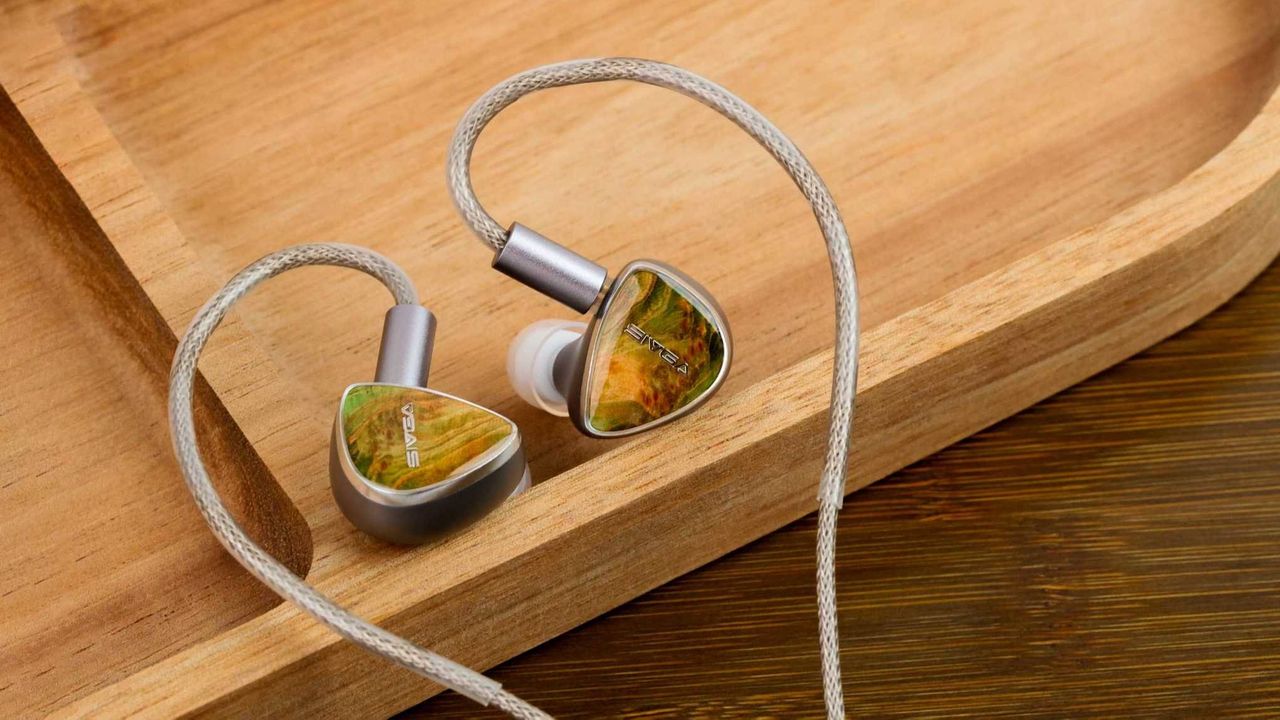
Sivga, a Chinese head-fi brand which has wowed us in the past with wood-design headphones, including the Sivga Robin and Sivga Oriole, has a new pair of wired earbuds it wants you to hear.

The Sivga Lyrebird are its new in-ear monitors (IEMs), and they've just been released for $149 / Β£149 (about AU$300). This isn't the cheapest price we've ever seen on this kind wired offering (Sivga itself has also released cheaper, more EarPods-style earbuds called the M260), but since audiophile-adjacent IEMs can sometimes costs thousands, it's still fairly affordable.

Not sure what IEMs are? They're wired earbuds, but aimed at professionals or audiophiles focused on detailed and natural sound. They often house an intricate array of drivers within their headshells β€” so they're often more expensive than your average wired buds as a result.

With the continued resurgence of wired earbuds, IEMs are seeing a boost in profile. Just last week, Sony unveiled its own IER-M500 Pro option, for a little less than the Lyrebird. When you look at the specs, though, Sivga's new option could blow Sony's Pro IEMs out of the water, on paper at least, with larger and more plentiful drivers.

And this lyrebird you cannot change

The buds of the Sivga Lyrebird.

(Image credit: Sivga)

Sivga has packed its Lyrebirds with four drivers (the Sonys have a single 5mm one). This is to offer a wide soundstage, while also allowing each driver to focus on a certain part of the frequency spectrum.

For the low-end there's a 10mm polymer composite dynamic driver, and it's joined by a balanced armature driver for vocals, micro planar for treble and 9.2mm piezoelectric ceramic driver for the higher frequencies.

The earbuds connect using a 120cm cable, which has silver- and gold-plated copper connectors and ends in a 4.4mm jack.

Sivga has continued its wooden design aesthetic with the Lyrebird, as you can see from the pictures. The earpieces are handcrafted, and coated in resin to ensure they're durable.

The announcement of the Sivga Lyrebirds coincides with CanJam London, which is bringing plenty of other audio announcements. So before the day is through, we may see many other IEMs to enjoy.

I love my Marantz CD player, and its new upgraded version was just unveiled β€” and the matching amp with aptX Bluetooth, HDMI and MM phono looks irresistible too

  • Marantz unveils replacements for the acclaimed PM6007 and CD6007 amp and CD player
  • Amp has HDMI ARC and high-quality Bluetooth streaming, plus phono MM input
  • From $750 / Β£499 / AU$1,000

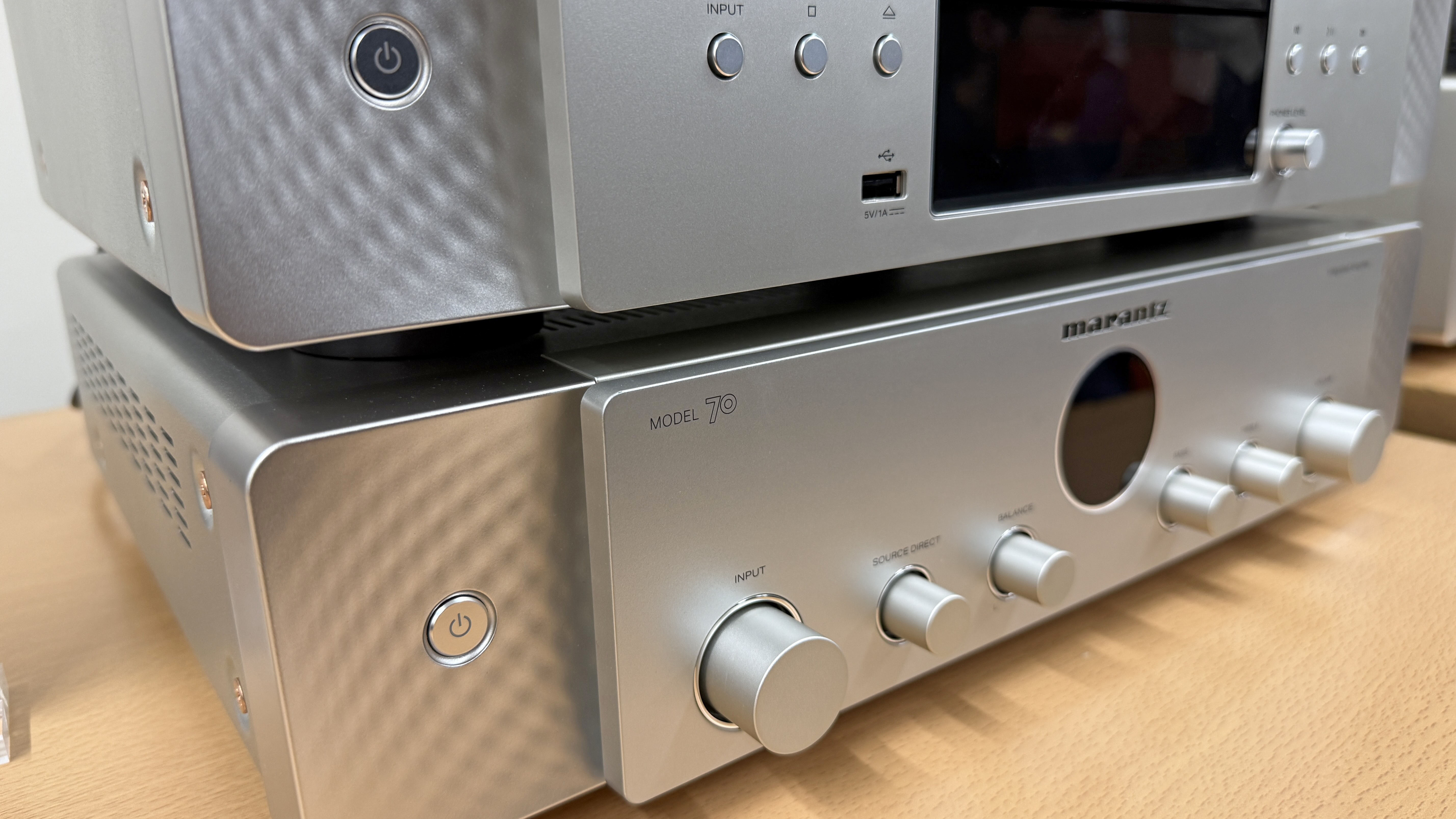
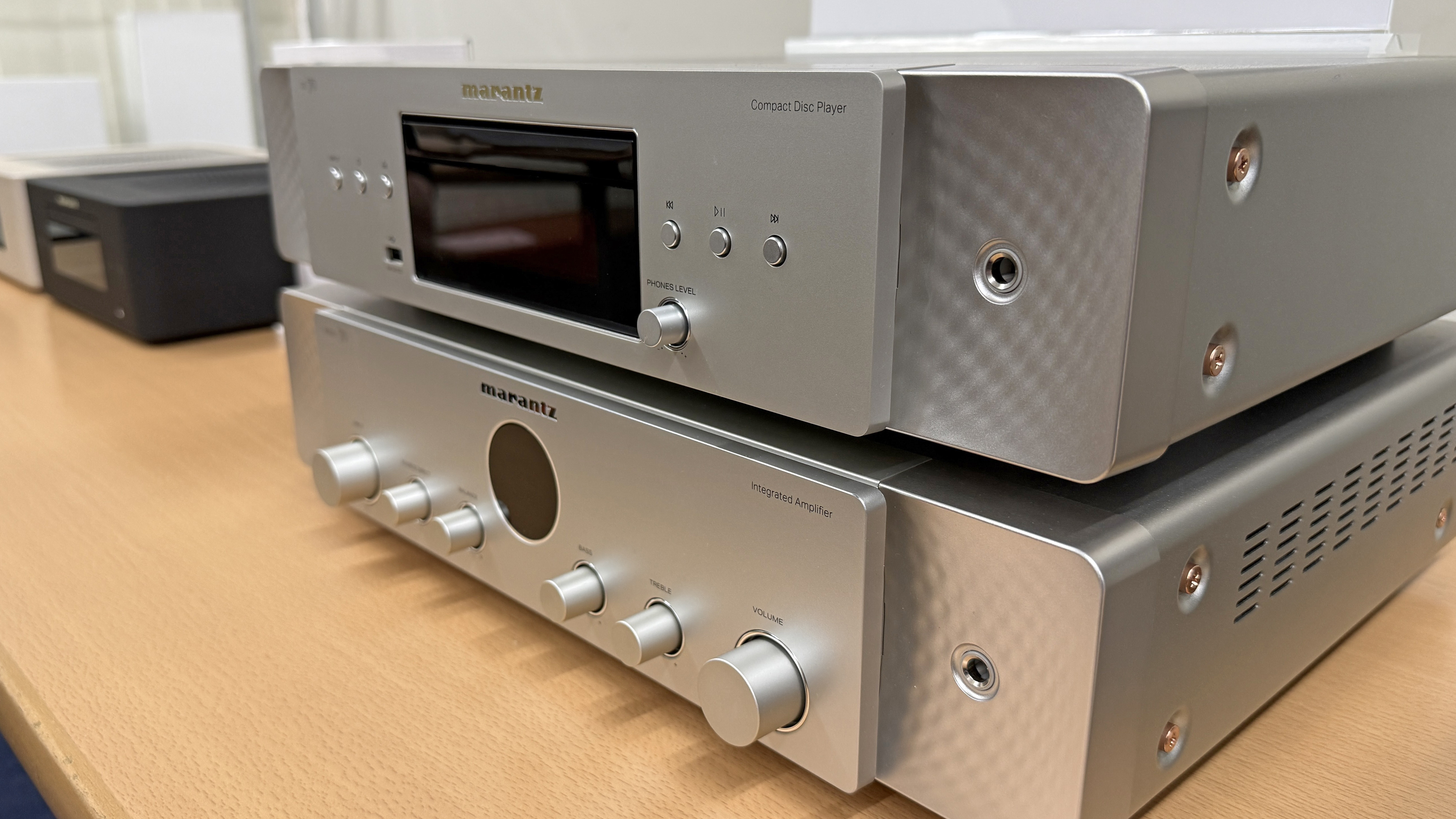
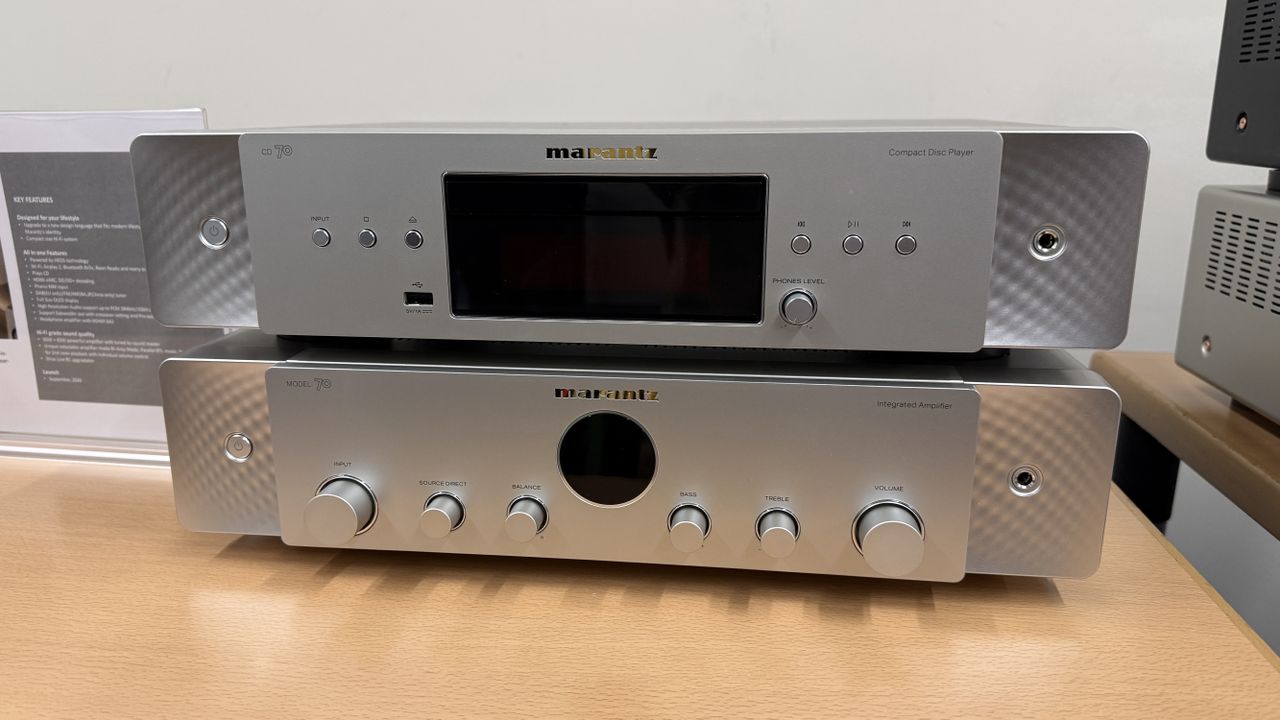
One of the things I love about quality hi-fi is that it's often made to be a treat for your eyes as well as your ears. The new Marantz Model 70 integrated amp and CD 70 CD player definitely come into that category: I think they look stunning.

I'm probably a little bit biased because my CD player is a Marantz (the CD6007 that this one makes obsolete, no less) and I love it dearly. But both new models promise serious substance to match their style.

The Model 70 and CD 70 are the successors to the acclaimed PM6007 and the aforementioned CD6007, and Marantz promises that both deliver what the brand calls its signature "warm, detailed and deeply musical" sound.

But there are significant upgrades that should make this new generation an even more luxurious listen.

Marantz Model 70 and CD 70: key features and pricing

The Marantz Model 70 is an integrated amp with HDMI ARC and Bluetooth, with the latter offering transmission and reception via aptX Adaptive, aptX HD, AAC and SBC. In addition to the usual audio connections there are preamplifier and subwoofer outputs.

Marantz Model 70 amp and CD 70 CD player on a wooden surface

(Image credit: Future)

The 50-watt Class A/B amplifier features an upgraded topology with an enhanced power supply and larger toroidal transformer, which Marantz says delivers greater dynamic expression, improved speaker control and increased authority across all kinds of speakers. It includes a high-quality MM phono stage for your turntable and a high-performance ES Sabre DAC for digital audio sources.

The Marantz CD 70 features the same DAC as the Model 70 plus additional proprietary HDAM (High Definition Amplifier Module) circuitry to deliver "detailed, expressive and emotionally engaging reproduction of compact discs, extracting every nuance from treasured music collections," Marantz says. There's a USB-A port on the front for your digital files, and support for hi-res formats including FLAC HD, ALAC, AIFF and DSD.

Marantz Model 70 amp and CD 70 CD player on a wooden surface

(Image credit: Future)

As with the Model 70 amp, the circuitry has been optimized to reduce noise and preserve detail; there's an upgraded power supply, "strategically deployed" copper hardware and a double-layered chassis base with rigid isolation feet.

As with their predecessors, the Model 70 and CD 70 aren't terrifyingly expensive. The official price of the CD 70 compact disc player is $750 / Β£499 / AU$1,000, while the Model 70 integrated amp is Β£749 / AU$1,455. Sadly, the latter isn't available in North America.

Both models will be available on August 15th, 2026.

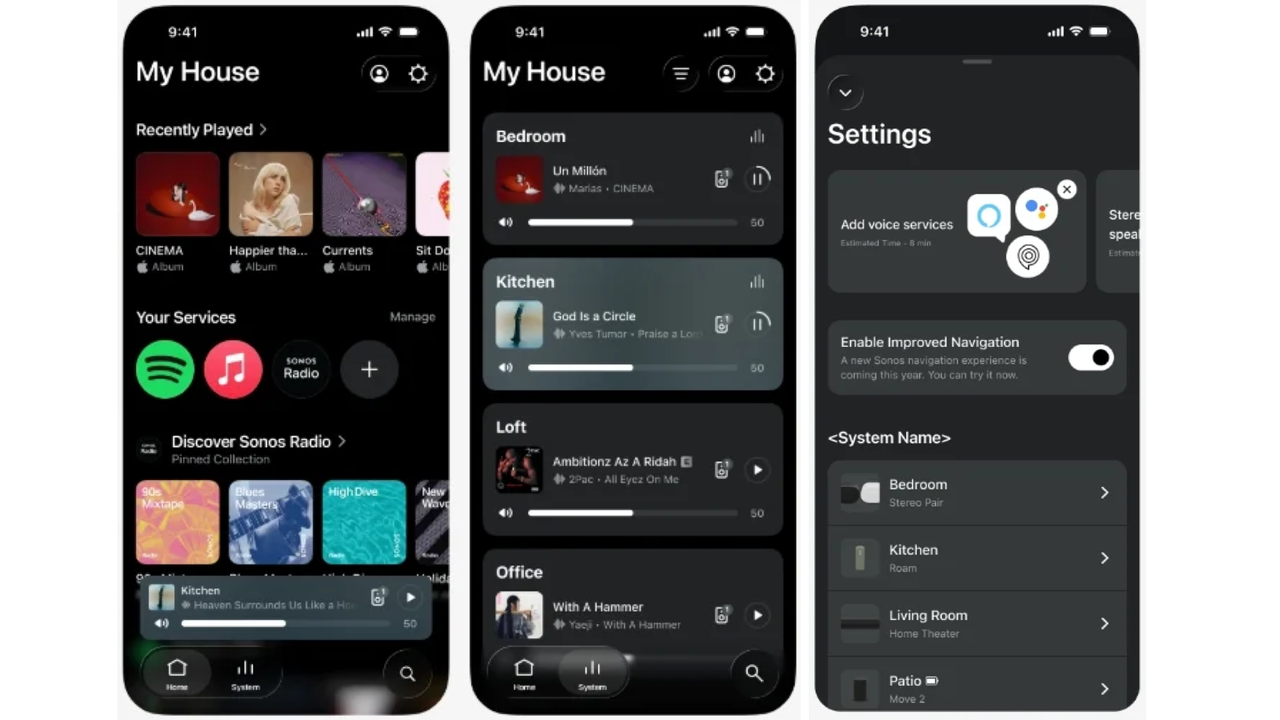
'I've been waiting for this for ages!': The Sonos app's new navigation, volume controls and speaker ordering are finally rolling out β€” though you might not get them right away

  • App update delivers tab navigation, speaker/room sorting, and Dynamic Volume slider for iOS
  • Phased rollout so it won't reach everyone simultaneously
  • May take up to two weeks to arrive

Sonos users may not need to keep creating alternative apps for their systems: the official app is getting a significant update that's rolling out now. It's a phased rollout, so not everyone will get it at once, but it should reach everyone's devices within the next fortnight β€” though it's also optional, so you need to manually turn the changes on (for now).

Posting on Reddit, Sonos said: "We have a new Sonos App update and it's a big one." In addition to the usual bug fixes, there are significant interface improvements and, on iOS, a new volume interface too.

According to ShaunFromSonos, you shouldn't have to wait more than two weeks for the update on iOS or Android, and the timescale is "likely sooner". Provided you have Automatic Updates enabled, you'll get it as soon as it's rolled out to your device β€” however, once you have version 87 of the app, you need to turn on "Enable Improved Navigation" in Settings.

Sonos says that it's not making it the default until it's been tested en masse, outside of a limited beta environment. If people use it, love it and don't encounter major technical issues, then it could become the default later in the year.

Sonos app update in July 2026: what's new?

The update is coming to the Sonos app and Player and delivers clear tabbed navigation that follows the standard design conventions of Android and iOS respectively, with buttons to clearly show what's been selected and more prominent Home, System, and Search options.

The app will also now let you reorder speakers and rooms directly. You can sort alphabetically, by frequency of use, and by which speakers are currently playing audio. You can also pin your favorite speakers for fast access. As with the interface changes, this is opt-in and requires you to enable the improved navigation.

On iOS, there's a new volume slider that gets bigger when you interact with it, and it displays the number within the slider so you can see exactly what volume level you've selected.

Initial responses seem pretty positive so far, with one poster noting that the search function seems much faster on Android. Sonos are actively seeking feedback here, so if you've got the update already they'd like to know what you think on the app update Reddit thread.

Sonos also says that Lock Screen playback controls are coming to iOS soon, a long-awaited feature that's already available on Android.

Thinking of buying a new TV?

Try our TV size and model finder! You tell it how far you sit from your TV, we'll tell you what size to buy based on viewing angle advice from image quality experts, and we'll recommend our three top TVs at that size for different prices.

Thought smart glasses were creepy? These bone conduction headphones have a tiny 4K camera β€” but luckily they're aimed at cyclists

  • The W&O X1 headphones come with a camera attached
  • They raise new concerns over illicit recordings
  • There is a recording light that turns on when the camera is active

The debate around smart glasses with cameras attached continues to rumble on β€” and apparently Meta still has plans for glasses that are constantly recording the world around them β€” and we now have a new pair of bone conduction headphones that lose the spectacles but keep the camera.

They're called the W&O X1 (via New Atlas), and of course they're packed with plenty of AI. This on-board assistant can help you navigate to locations, identify landmarks, look up facts and answers online, and even translate between languages. All this happens through voice control and spoken responses.

In order to provide some of that AI functionality, the W&O X1 headphones are fitted with a 4K video camera supplied by Samsung. It can take photos and videos with a tap or a voice command, which can then be saved and analyzed as needed β€” and in the interests of privacy, a small recording light shows when the camera is active.

The headphones can also double up as a miniature action camera, grabbing high-resolution video at 30 frames per second with a 130-degree wide angle view, with what looks like some impressive anti-shake technology built in too. Oh and did we mention they can play music and make phone calls too?

"Most headsets are made for listening," explains W&O in the product listing. " X1 is built for seeing, hearing, understanding, recording, translating, navigating, and staying connected in motion. It is a wearable AI system designed for the world outside the screen."

Privacy concerns

W&O X1

The X1 can give you directions while biking (Image credit: W&O)

The idea of wearable cameras is becoming even more popular now, with the growing capabilities of AI and the continued shrinking of the necessary components. There's something appealing about being able to capture memories instantly, without having to dig out a phone and find the camera app.

At the same time, there are real concerns when it comes to privacy. The smart glasses already on the market make it a little too easy to record surreptitiously, and a tiny camera attached to a pair of headphones is even harder to see. There's even now a BanRay movement calling for smart glasses to be banned from certain spaces.

To be fair to W&O, they seem to be targeting these headphones at cyclists, hikers, and other outdoor types, so it's more for solo photo and video recording. Still, together with other gadgets in the pipeline, it highlights a growing need for proper safeguards to be put around devices with tiny embedded cameras.

The W&O X1 have blasted through their $3,000 funding goal on Kickstarter many times over, and if you're interested in a pair you can put in a reservation for $139 (about Β£105 / AU$200) β€” with the usual Kickstarter caveat that crowdfunded hardware doesn't always end up reaching consumers.

There are some decent specs here: IP6X dust and water protection, a lightweight 48 gram build, support for Bluetooth and Wi-Fi, and 30 hours of music playback between charges thanks to an integrated 800 mAh battery.

We've tested 28 pairs of headphones this year β€” these are our favorite over-ears, from budget to blowout

We're just over half-way through the year, and of the 28 pairs of headphones we've had the pleasure of testing so far, there are a number of standout over-ears from both ends of the price spectrum. If you're looking for a new pair of cans, these are the models you should be checking out.

At the affordable end of things we have the Nothing Headphone (a), which manage to be both way better and much cheaper than their predecessors. We praised their "impactful and well-balanced sound, good active noise cancellation" and "excellent and truly useful app". A little pricier but still affordable are the retro-styled and ridiculously comfortable Marshall Milton ANC, and the clear-sounding JBL Live 780NC, with their never-ending battery life.

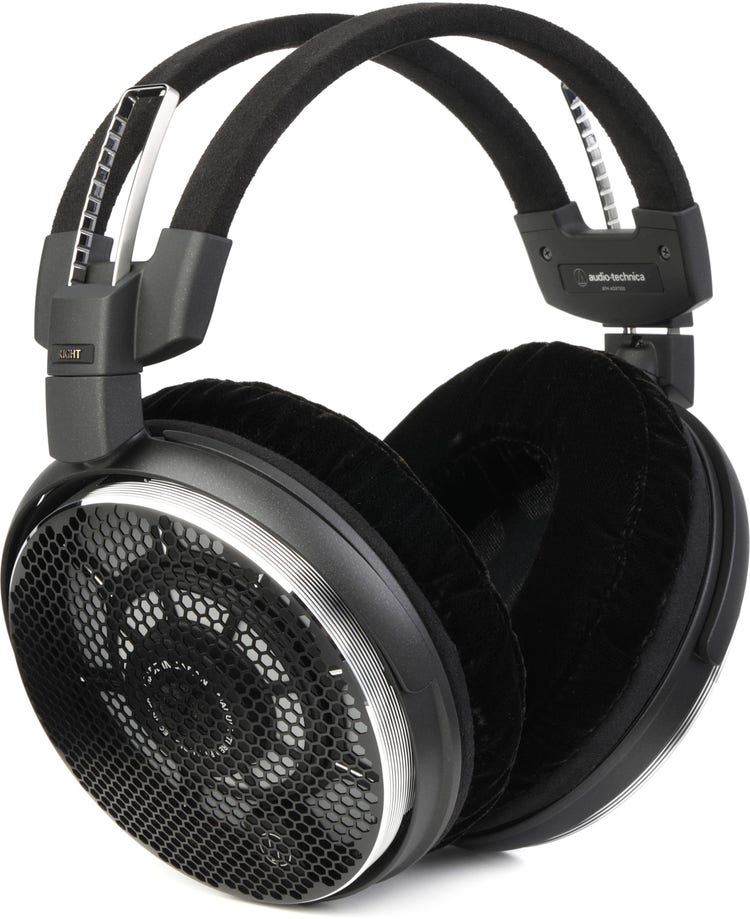
For true audiophiles with deep pockets, we've tested two blow-the-budget bangers. The Audio-Technica ATH-ADX7000 are the only pair of over-ears to earn a perfect five stars, with their "beautifully precise and engaging audio with exhilarating low-end performance" (here are all the five-star buys of the year so far, if you're interested). We were also blown away by the Grado Signature S750, a pair of handmade, open-back headphones that offer "an exceptional soundstage and excellent clarity", and sound "amazing" on well-produced music.

Scroll down for a comprehensive list of our top-rated over-ear headphones of the year so far β€” hit the 'View details' button for a summary of the main pros and cons of each one, plus a link to read the full review. Alternatively, head to our general best over-ear headphones list for a run-down of our favorite sets of all time.

Outstanding over-ears

Ath-Adx7000 Open-Air Dynamic Headphones

Audio-Technica
ATH-ADX7000

Pros

  • Beautifully detailed
  • Exceptional low end
  • Lightweight and comfortable

Cons

  • Very expensive
  • Very high impedance
Apple
AirPods Max 2

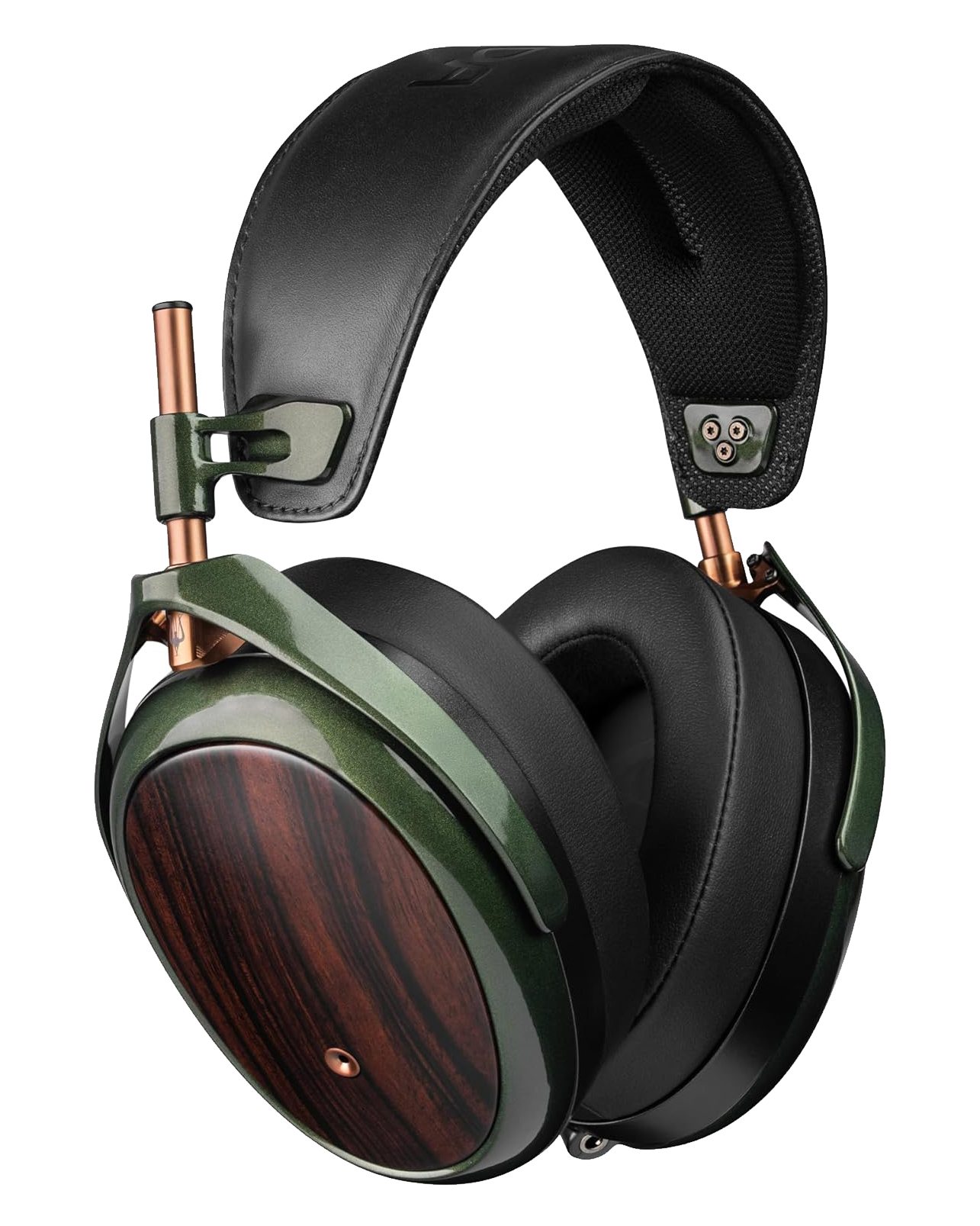
Meze Audio Strada

Meze Audio
Strada

Grado Signature S750 Headphones - Over-Ear, Open-Back, S2 50mm Driver, New B Cushion With 12 Conductor Detachable Cable

GRADO
Signature S750

Pros

  • Very wide soundstage
  • Excellent positioning and clarity
  • Amazing on well produced music

Cons

  • Relatively expensive
  • May be too bright for some
  • Divisive fit
Marshall
Milton ANC

Pros

  • Incredible comfort for on-ears
  • Clean, spacious sound
  • Fantastic battery life
  • Excellent, sustainable design

Cons

  • Bass is a little overzealous out of the box
  • ANC is a bit limited
  • No wear detection
JBL
Live 780NC
Nothing
Headphone (a)

Pros

  • Great sound that's a big upgrade over Headphone (1)
  • Fantastic on-ear control options and app
  • Gigantic battery life

Cons

  • Still heavy, with a strong clamping force
  • Some rivals offer better sonic detail
  • No auto-pause feature or case

❌