Reading view

Dodgers’ Alex Vesia Offers ‘DFA’ Response Amid Brutal Stretch

Los Angeles Dodgers v San Diego Padres

SAN DIEGO, CALIFORNIA - MAY 19: Alex Vesia #51 of the Los Angeles Dodgers looks on during the game between the Los Angeles Dodgers and the San Diego Padres at Petco Park on May 19, 2026 in San Diego, California. (Photo by Yuichi Masuda/Getty Images)

Getty Images

The Los Angeles Dodgers attempted to shore up their only real roster weakness from last season by acquiring All-Star closer Edwin Diaz.

Shortly into his tenure with the team, though, Diaz was sidelined with a significant injury. Initially, it seemed like the other relief options were going to fill in for him without much of a problem, but that effectiveness has suddenly been called into question.


FORBES | By Peter Chawaga
Giants’ 3-Time World Series Champ Sends Tony Vitello Message, Calls For Rebuild

Los Angeles Dodgers Relievers Endure Brutal Stretch After Key Injury

“The bullpen entered Sunday with a 6.71 ERA since ending that scoreless streak on May 25,” the Los Angeles Times’ Maddie Lee noted earlier this week. “Only the (San Francisco) Giants and (Colorado) Rockies produced a worse mark over that stretch. None of the Dodgers’ relievers have been dominant in recent games.”

Though the Dodgers should have several high-leverage arms to fill in for Diaz, virtually all of their relief options have struggled lately.

“Tanner Scott has been credited with three saves but also two losses,” Lee added. “Kyle Hurt’s ERA has risen from 0.60 to 4.22. (Jack) Dreyer, who went 10 straight games without giving up a run before landing on the injured list with left shoulder discomfort, has surrendered five home runs in seven appearances since returning on May 31.”

For a club with championship aspirations, every stumble draws scrutiny. And few areas have drawn more criticism than a relief corps that went from one of baseball’s hottest units to one struggling to protect leads and close out games.


FORBES | By Peter Chawaga
Dodgers Quickly Sign Cardinals Castoff Backstop After Will Smith Injury Setback

Los Angeles Dodgers’ Alex Vesia Offers ‘DFA’ Response Amid Struggles

As the Dodgers bullpen sees its fortunes turn, one key piece has now responded to fans’ growing anxiety.

Calls for the team to take some drastic action with its underperforming pitchers evidently irked veteran reliever Alex Vesia, who decided to send a response through the media.

“We clicked off 40-something (scoreless innings) then we had a couple tough ones and online everybody is supposed to get DFAed,” Vesia said on Wednesday, according to The Orange County Register’s Bill Plunkett. “We believe in our guys in here. I certainly do. We’re going to have ups and downs but I think it helps us grow so at the end of the day that adversity right now will help us in the postseason.”

Though Vesia made a rational point about ignoring the more drastic solutions proposed by some fans during the stretch, it isn’t too hard to imagine the Dodgers’ three-peat championship aspirations being derailed by a struggling bullpen.

Even with a stellar starting rotation and a lineup of superstar hitters, a World Series can be lost if the Dodgers remain liable to cough up leads in the final innings. And if the team can’t fix its bullpen woes sooner or later, some members might be designated for assignment.

This article was originally published on Forbes.com

WWE Has Found Its Next Main Event Star In Chad Gable

Monday Night RAW

Chad Gable is finally wrestling as himself after more than year as a masked luchador. (Credit: Craig Melvin/WWE via Getty Images)

WWE via Getty Images

WWE has caught lightning in a bottle with Chad Gable, but will the company actually capitalize on a golden opportunity?

In early 2025, Gable, whose had his fair share of ridiculous gimmicks in the past, undertook yet another one as “El Grande Americano.” Despite widely being considered one of the world’s best in-ring performers, Gable was left to perform as a faux luchador in a storyline that largely served comedic purposes.

When Gable underwent shoulder surgery in the summer of 2025, he was replaced temporarily by Ludwig Kaiser, who donned the El Grande Americano mask and gimmick. After missing roughly half a year of action, Gable ultimately returned to WWE at the 2026 Royal Rumble, doing so as the “Original El Grande Americano” and igniting a storyline against Kaiser in a “Battle of the Americanos,” if you will.

Little did WWE know that it had struck gold with a gimmick that had been set up to be midcard comedy fodder.


FORBES | By Blake Oestriecher
WWE Continues To Drop The Ball With LA Knight

The storyline between the two Americanos, taking place largely on WWE’s satellite lucha libre-focused brand AAA, reached its climax at AAA’s Nocha de Los Grandes earlier this month. That’s when AAA delivered a Mask vs. Mask match between Kaiser and Gable under the “Americano” masks. The match, won by Kaiser, forced Gable to reveal himself as the Original El Grande Americano and was widely and heavily praised by critics across the pro wrestling landscape.

The Wrestling Observer’s Dave Meltzer (h/t Cageside Seats) broke the traditional five-star scale and gave the instant classic a whopping 5.75 star, writing, “This was the best AAA match I’ve ever seen, arguably the best WWE match and a top tier match of all-time.” On CageMatch.net (h/t Sports Illustrated), fans instantly rated the match as a 9.67 out of 10, instantly catapulting it into the top 20 all-time.

Now, WWE is finally taking notice of Gable and his potential to be a main event star. According to a report from WrestleVotes Radio (h/t NoDQ), some WWE officials are advocating for Gable to receive a strong push immediately: “There is a strong internal push within WWE to feature Gable in a significant way. There is reportedly support for Gable to have a prominent role at SummerSlam 2026, as the event is scheduled to take place in his hometown of Minneapolis.”

Since Gable’s unmasking as Americano, he has turned babyface on Raw, where he’s been receiving massive crowd reactions after the incredible work he did in the Americano storyline. In addition, the bidding for his Americano mask on Fanatics blew away WWE officials. That seemingly would guarantee a monster push for Gable on WWE’s main roster, but the company’s history suggests that’s far from a sure thing.

Just recently, WWE fans have watched the company drop the ball with stars like LA Knight, Rusev, Drew McIntyre and essentially the entire men’s tag team division, just to name a few. In other words, there’s no such thing as a sure thing for Gable, despite his long-running reputation as an incredible in-ring performer and one of WWE’s most underrated and unappreciated stars.

The key, of course, is to strike while the iron is hot, which hasn’t been WWE’s strong suit in the Triple H-led creative era. Triple H has, oftentimes to the company’s detriment, played the long game with red hot storylines, waiting so long to pull the trigger on a major turn, title change or character development that it doesn’t have the same impact once he finally does.

That could happen with Gable too, but it shouldn’t.

As Gable, realizing his faults as the heel Americano, has been embraced by the same luchadores he once mocked, he’s quickly gotten over as one of WWE’s top fan favorites. What that should lead to is Gable defeating Penta, one of the greatest lucha libre stars of all-time, for the prestigious Intercontinental Championship at SummerSlam.

That’s a title Gable should have won two years ago and never did, so it would be a full circle moment if and when he finally captured IC gold. That title has recently been held by the likes of Gunther (who had a record-breaking reign), John Cena, Sami Zayn, Bron Breakker and Uso. It’s not a world title, of course, but it’s a potential stepping stone to bigger and better things for Gable.

The former Americano would instantly be presented as a top-level star if and when he ended Penta’s impressive IC title reign in front of his hometown fans at one of WWE’s flagship PLEs. From there, WWE could continue to portray Gable as a top babyface, elite in-ring worker and main eventer on par with the likes of Seth Rollins, Roman Reigns and CM Punk.

That’s a tall task and not necessarily a likely one, but given Gable’s soaring popularity, the least WWE can do is try.

This article was originally published on Forbes.com

Cubs Move Forward With Historic Changes To Wrigley Field

Cincinnati Reds v Chicago Cubs

CHICAGO, ILLINOIS - MAY 27: Chairman Tom Ricketts of the Chicago Cubs looks on before the game between the Chicago Cubs and the Cincinnati Reds at Wrigley Field on May 27, 2023 in Chicago, Illinois. (Photo by Quinn Harris/Getty Images)

Getty Images

The Chicago Cubs have spent much of the last decade balancing modernization with preservation around one of baseball’s most recognizable landmarks.

While Wrigley Field has undergone extensive renovations under the ownership of the Ricketts family, the organization has also worked to maintain the historic character that makes the ballpark unique.

That balancing act continued this week as the Cubs pushed forward with another significant change surrounding the stadium. Unlike previous renovations focused on infrastructure or fan amenities, this latest development centers on advertising and it looks like fans will surely notice the changes if and when they are implemented.

“Aldermen approved a Chicago Cubs-backed plan Wednesday to allow three new signs to go up on buildings overlooking iconic Wrigley Field,” Jake Sheridan reported for the Chicago Tribune. “The team will be allowed to add one new sign up to 69 feet tall on North Sheffield Avenue, as well as two new smaller signs on its West Waveland Avenue rooftops.”


FORBES | By Peter Chawaga
Giants’ 3-Time World Series Champ Sends Tony Vitello Message, Calls For Rebuild

Chicago Cubs Fans Set For New Experience At Wrigley Field

The decision marks another step in the Cubs' long-term effort to maximize the value of properties surrounding Wrigley Field.

Since acquiring the franchise in 2009, the Ricketts family has steadily expanded its footprint throughout the Wrigleyville neighborhood. That strategy has included purchasing rooftop properties and neighboring buildings while integrating them more closely into the club's overall business operations.

“During the time the Ricketts family has owned the Cubs, the team has begun purchasing buildings across the street from the ballpark, operating rooftops and erecting advertising across the street from the ballpark,” NBC 5 Chicago noted following the latest advertising approval. “It’s unclear when the new signs will be added, but it is expected the signs will replace banners advertising the Wrigley Field rooftops…”


FORBES | By Peter Chawaga
Dodgers Quickly Sign Cardinals Castoff Backstop After Will Smith Injury Setback

Chicago Cubs’ Historic Ballpark Presents Unique Advertising Challenges

Unlike many modern stadiums, Wrigley Field presents unique restrictions because of its landmark status.

“The ballpark is a landmarked space, making it difficult to add signs inside the stadium, but the advertisements will be profitable for the team,” Sheridan added. “The team has already fostered an environment with little intrusive advertising and created an open space for fans.”

That special designation limits the organization's ability to add new signage and advertising directly inside the ballpark, making nearby rooftop and building locations particularly valuable.

Though the team has not officially outlined its plans for the new ads, it seems all but certain that Cubs fans can expect a tweaked experience with new promotions visible from their seats in the near future.

This article was originally published on Forbes.com

College Softball TV Ratings: Top 10 most-watched teams during NCAA Tournament

© Brett Rojo-Imagn Images

The 2026 college softball season saw another surge in TV ratings, including record viewership for the NCAA Tournament. With that, Nielsen has released the Top 10 most-watched teams during the postseason.

This year’s Women’s College World Series capped off a strong TV ratings run for softball. Texas’ WCWS finals victory over Texas Tech scored the second-best viewership for the championship series on record, and Game 2 of the series became the most-watched college softball game on record.

[ $19.99 gets you a FULL year of On3 | Rivals national coverage ]

However, during the NCAA Tournament – which had games air on ABC, ESPN, ESPN2 and ESPNU – neither team took the top spot among the Top 10 most-watched teams, according to Nielsen. Here are the full rankings.

10. Oklahoma

For the first time since 2015, Oklahoma did not appear in the Women’s College World Series. The Sooners fell to Mississippi State in the Norman Super Regional, but still appeared on the Top 10 most-watched teams during the NCAA Tournament.

Oklahoma dropped the first game of the double-elimination regional before winning Game 2, which averaged 1 million viewers. However, Mississippi State got the 6-0 win to advance to the WCWS as Oklahoma ended the year with a 52-10 overall record.

9. Oklahoma State

While Oklahoma State didn’t advance to the Women’s College World Series, the Cowgirls still drew strong viewership through their Super Regional run. As a result, they became the ninth-most watched team in the NCAA softball tournament.

SUBSCRIBE to the On3 NIL and Sports Business Newsletter

Oklahoma State’s season-ending loss to Nebraska became one of the most-watched Super Regional games on record. An average of 1.1 million people tuned in as the Cornhuskers completed the two-game sweep in Lincoln.

8. Arizona State

Fueled by strong TV ratings in the Super Regional, Arizona State was the eighth-most watched college softball team during the NCAA Tournament, according to Nielsen. The Sun Devils fell to Texas that day in what became the top game of the round.

An average of 1.3 million viewers tuned in for the matchup, including a peak audience of 1.4 million. ASU’s Regional win over Texas A&M was also among the most-watched games of that round with 569,000 viewers.

7. UCLA

Led by Megan Grant, UCLA possessed one of the top offenses in college softball this year en route to a Women’s College World Series berth. The Bruins notably played in the second most-watched non-finals game in Oklahoma City, as well, which propelled them to No. 7 among the most-watched teams.

UCLA’s extra-innings loss to Texas Tech averaged 2.0 million viewers, including a peak audience of 2.6 million. The Bruins’ two other games also hit the 1-million mark – the loss to Alabama drew 1.35 million viewers while their win over Arkansas generated 1.25 million.

6. Arkansas

In its first-ever Women’s College World Series appearance, Arkansas dropped both games. But the Razorbacks still became one of the most-watched teams of the NCAA Tournament as they each topped 1 million viewers.

Arkansas’ WCWS opener against Nebraska brought 1.4 million viewers, which was the top viewership of the opening Thursday. The Razorbacks’ May 29 loss to UCLA also brought 1.25 million viewers as their season came to an end.

5. Tennessee

During the NCAA softball tournament, Tennessee helped bring strong TV ratings as the Lady Vols returned to the Women’s College World Series. They played in the third most-watched regional game with 665,000 viewers on average, as well, which helped propel the program to No. 5 on the list of most-watched teams.

Tennessee’s top game of the WCWS came against Texas Tech as 1.9 million people tuned in on average. Additionally, the Lady Vols’ opener against Texas averaged 1.0 million viewers to become the fourth most-watched opening Thursday game on record.

4. Nebraska

Nebraska was a huge TV ratings draw throughout the 2026 NCAA softball tournament and the Women’s College World Series. The Cornhuskers not only played in the third most-watched Super Regional game, but also had three highly rated games in Oklahoma City.

Nebraska’s season-ending loss to Texas led the way with 1.95 million viewers on ABC, followed by the loss to Alabama (1.5 million) and the win over Arkansas (1.43 million). Add in the 1.1 million who tuned in for the Super Regional win over Oklahoma State and the Huskers come in as the fourth most-watched team in the NCAA Tournament.

3. Texas

As Texas won its second straight Women’s College World Series title, the TV ratings followed suit. However, the Longhorns were not the most-watched team in the NCAA Tournament, despite holding the top two regional games and most-watched Super Regional game of the event.

Texas’ two WCWS finals games against Texas Tech averaged 1.9 million and 2.5 million, respectively. In fact, the Longhorns played in games with at least 1 million viewers throughout their run in Oklahoma City.

2. Texas Tech

During Texas Tech’s journey back to the Women’s College World Series, the Red Raiders played in four games that topped 2 million viewers. That helped the program come in as the No. 2 most-watched team throughout the NCAA Tournament, according to Nielsen.

Following the opening game against Mississippi State, Texas Tech’s games averaged more than 1.9 million viewers the rest of the way. That followed up strong Super Regional TV ratings with 1.3 million viewers tuning in for the victory against Florida.

1. Alabama

No. 1 overall seed Alabama led the way as the most-watched team during the 2026 NCAA softball tournament. The Crimson Tide played in front of at least 1.4 million viewers each game of the Women’s College World Series, including 2 million in each of the last two matchups.

Alabama’s losses to Texas Tech came before 2 million viewers each. The Crimson Tide’s wins over UCLA and Nebraska averaged 1.35 million and 1.5 million, respectively, to help the program take the top spot.

The 2026 college softball season saw strong TV ratings throughout both the regular season and postseason. ESPN said the Women’s College World Series capped a 28% year-over-year increase during the NCAA Tournament.

NBA Draft: North Carolina Big Man Would Be Good Fit If Knicks Lose Mitchell Robinson

North Carolina v VCU

GREENVILLE, SOUTH CAROLINA - MARCH 19: Henri Veesaar #13 of the North Carolina Tar Heels reacts after a dunk during the first half against the VCU Rams in the first round of the 2026 NCAA Men's Basketball Tournament at Bon Secours Wellness Arena on March 19, 2026 in Greenville, South Carolina. (Photo by Jared C. Tilton/Getty Images)

Getty Images

Now that the Knicks have won their first NBA championship in 53 years and celebrated with a parade on Thursday, attention turns to next week’s NBA Draft.

The Knicks own picks 24, 31 and 55 and are in position to fortify their bench, especially if owner James Dolan sticks to his edict of not going into the dreaded second apron, which would mean losing unrestricted free agent Mitchell Robinson and his oversized truck.

After transferring from Arizona, where he was a bench player, Veesaar became a star with the Tar Heels, averaging 17.0 points and 8.7 rebounds per game, while shooting 61% from the field, and 43% from three-point range.

ESPN’s Sean Farnham, for one, believes Veesaar would be a good pickup for the Knicks.

“Let’s assume that they make the decision and move past Mitchell Robinson, you’re going to need size,” Farnham said Thursday on “NBA Today.”

"Henri Veesaar is going to be available for them at the pick at 24 and you look at his numbers at North Carolina. He almost doubled his scoring average [from Arizona]. He was ultra efficient around the rim, 76% field goal percentage from there. And he had the second best three-point field goal percentage in college basketball with anybody that was over 6-11 with a minimum of 50 attempts from deep. He led North Carolina in double-doubles with 15.

“I think you’re looking at an older player, experienced player that could come off the bench and be your backup big that you need not only in the Eastern Conference, but once you get back to the NBA Finals at the Spurs or OKC.”

Another popular option in New York for the Knicks is St. John’s star Zuby Ejiofor, the 6-9 forward from Garland, Texas who is also expected to be available when they pick.

“I think he would fit. If you look at how they’ve built their bench," ESPN Draft analyst Jeremy Woo said Wednesday. "…These are all guys that had that level of grit, guys who don’t quit, guys who come in and you know what you’re getting. You trust them off the bench. I could see him fitting in really well [with the Knicks].”

This article was originally published on Forbes.com

WWE Continues To Drop The Ball With LA Knight

Monday Night RAW

LA Knight recently lost in the King of the Ring tournament quarterfinals. (Credit: Michael Marques/WWE via Getty Images)

WWE via Getty Images

LA Knight, no matter how close he gets to the top of WWE, always seems to fall just a little bit short.

“The Megastar” is a classic case of “always the bridesmaid, never the bride.” Or is it “always the best man, never the groom?” He’s entered the Money in the Bank match as a clear favorite multiple times only to never win it. He’s won the United States Championship twice and competed for a world title on more than one occasion but has never held onto world championship gold.

That’s why, for years, fans of Knight have labeled the man WWE once debuted as a manager named “Max Dupri” as one of WWE’s most underrated and unsung stars. In fact, even Knight himself recently told Insight with Chris Van Vliet (h/t What Culture) that he’s been “unappreciated” in pro wrestling: “No matter where I’ve gone, I've always felt under-appreciated in the wrestling business.”

The spot Knight has found himself in over the past few years in WWE isn’t exactly a bad one. He’s a fringe main eventer who’s almost always featured in a high-profile feud and consistently remains on TV. Yet, still it rarely feels like it’s enough. After all, it wasn’t that long ago that Knight was clearly one of WWE’s hottest stars.


FORBES | By Blake Oestriecher
WWE SummerSlam 2026 Match Card Predictions Ahead Of Night of Champions

Knight was WWE’s No. 8 merchandise seller for all of 2024, ahead of names like Randy Orton. At arguably his peak in the summer of 2023, he was the top merchandise mover in the entire company. Even into the fall of 2023, he was the No. 1 merchandise mover in WWE yet again.

But despite Knight’s undeniably strong merchandise sales and his incredible crowd reactions, WWE always seemed to get cold feet whenever it felt like the time was right to go all in on his push. Critics of Knight have pointed to his average in-ring skills, though that can be debated, or WWE’s crowded roster as possible explanations for his lack of a true world title push.

Knight has said a WrestleMania world title match is long “overdue,” but analysts and critics alike are suggesting that he will never actually win one. At 43 years old, Knight’s chances of winning one are not zero, but they’re not very good either. His crowd reactions, though still very good, aren’t quite what they used to be, as Knight has noted that his creative “trajectory," or lackthereof, is to blame.

As WWE Raw and SmackDown have recently seen an influx of new top-tier talent like Trick Williams, Bron Breakker and Oba Femi, Knight’s attempts to break through that proverbial glass ceiling will only prove to be more difficult. Just last week, WWE showed that the writing was on the wall with Knight’s singles push when he lost a Fatal 4-Way match in the quarterfinals that was ultimately won by, of all people, fellow controversial wrestler Jey Uso.

The Knight-Uso connection isn’t just happening on WWE TV as of late. It’s sparked debate in the Internet Wrestling Community after a misreported quote indicated that WWE thought Uso was a better in-ring worker than Knight. Though that was not reported as fact and was simply one wrestling reporter’s opinion, it’s actually a fair comparison.

Knight and Uso are similar in that they’re wildly popular characters but certainly a notch below WWE’s top in-ring performers like Seth Rollins, CM Punk and other former World champions. Yet, Uso won the 2025 WWE Royal Rumble and would go on to capture the World Heavyweight Championship at WrestleMania 41 while Knight is still seeking his first world title.

It’s worth wondering: why? Well, Uso has the major benefit of being a consistent presence in WWE’s longest-running storyline, The Bloodline family saga. With that comes more TV and a stronger push, something Knight hasn’t always gotten. Yet, despite consistently staying near the main event picture, Knight remains the closest thing a WWE star can be to a world champion without actually being one.

Outside of, say, Sami Zayn, there really isn’t another star like him on WWE’s roster, a wrestler who’s proven year after year how good he is only to fall just short of world title glory. After Knight’s latest big loss in the King of the Ring tournament, one that appeared to be set up for him to win, the question remains whether Knight will ever capture a world title.

Right now, WWE title gold appears unlikely for Knight, though his presence should continue to be felt near the top of the card. Just not at the very top.

This article was originally published on Forbes.com

Dodgers Quickly Sign Cardinals Castoff Backstop After Will Smith Injury Setback

Dodgers Brewers at Dodger Stadium.

Los Angeles, CA, Sunday, July 20, 2025 - Dodgers catcher Will Smith in the dugout during a game against tthe Milwaukee Brewers at Dodger Stadium. (Robert Gauthier/Los Angeles Times via Getty Images)

Los Angeles Times via Getty Images

The Los Angeles Dodgers have not only built their dynasty through veteran star additions at the top of the roster.

The team has also pulled from a deep collection of roster reinforcements at the lower levels of the organization, constantly restocking with young stars as they promote emerging players or trade away top prospects for talent from other teams.

Now the team has reloaded its lower level with a new catcher, who could one day become a key piece for the big-league roster as its veteran backstop endures a concerning injury setback.


FORBES | By Peter Chawaga
Dodgers’ World Series Champ Offers 2-Word Response On Reaching Career Best With Cardinals

Los Angeles Dodgers Acquire Promising Catcher After Cut From National League Rival St Louis Cardinals

As the Dodgers look to capture a third-straight World Series championship, they’ve had to navigate recent games without one of their most important players available.

“It was a rough Wednesday night for the Dodgers as they let a five-run lead slip away in a 9-8 loss to the Pirates at PNC Park, and a day later, three-time All-Star catcher Will Smith was placed on the 10-day injured list, retroactive to Monday, with neck inflammation,” John Perrotto reported for MLB.com. “Smith missed his fourth consecutive game because of the neck injury, leaving Dalton Rushing as the club's only healthy catcher.”

Immediately after that setback, the Dodgers placed rookie Rushing in the everyday role and the team called up Chuckie Robinson from Triple-A Oklahoma City to serve as the backup.

Then the team acquired a former St. Louis Cardinals farmhand to fill in at the lower levels, as the official transaction log indicated it had signed Chase Adkison and activated him at High-A Great Lakes.

That move came quickly after the St. Louis Cardinals cut ties with the 24-year-old catcher who they signed out of college in 2023.


FORBES | By Peter Chawaga
Giants Skipper Addresses Rafael Devers Tension After Red Sox Issues

Los Angeles Dodgers’ New Backstop Receives Fresh Opportunity After St Louis Cardinals Cut

While Adkison never reached the major leagues with St. Louis, he brings valuable upper-minors catching experience at a time when the Dodgers need organizational depth behind Rushing.

The signing also represents a fresh start for a player who had spent years working through the challenges of professional baseball development before being cut by the Cardinals.

“It’s a constant game of adjustments,” Adkison said of his professional journey after signing with the Cardinals, according to Andrew Ottosson of the Idaho County Free Press. “Every day you’re working on something new with your swing, you’re constantly striving to be stronger, faster, be in better physical shape. It’s really just everything being more well-rounded, just all around, defensively, offensively.”

Those adjustments now continue in a new organization that could be looking for a new big-league backstop sooner or later.

This article was originally published on Forbes.com

Why Samsung’s chip business is still losing money despite record Q1 – Exynos & Foundry update

Samsung’s System LSI division just delivered its best-ever first-quarter revenue. Sounds like great news, right? But there’s a catch – the company still expects to end the full year with losses in this part of its chip business.

President Park Yong-in recently talked about the challenges. He said Samsung needs bigger structural changes because demand is soft in several key areas. Even with strong memory (HBM) chip sales, thanks to AI demand, the non-memory side (foundry and System LSI) continues to struggle.

“We achieved the highest level of sales in the first quarter of this year” Park said at the briefing. Park said, “The System-on-Chip (SoC) business is difficult to convert into a surplus in the short term, but we will strive to improve the business body and improve profitability.” “We will create an environment where structural problems can be solved by management and members can focus on technology.”

The one chance? Development of the next flagship Exynos 2700 processor is moving along steadily. Samsung is expected to use it in the next Galaxy S-series phones.

Samsung is clearly treating its foundry business (making chips for other companies) and System LSI (mobile processors and more) as key parts for the entire company.

What’s the real issue? The mobile SoC market is super competitive, and AI demand has not helped every segment the same way. While memory chips are printing money, fixing the logic and foundry side will take serious time and effort.

For long-term success, Samsung is trying to balance its memory and non-memory chip businesses. Investors are watching closely to see if these changes start delivering real results soon.

The post Why Samsung’s chip business is still losing money despite record Q1 – Exynos & Foundry update appeared first on Sammy Fans.

AEW Dynamite Results For June 17, 2026 As Forbidden Door Nears

AEW Dynamite Logo

All Elite Wrestling

Credit: All Elite Wrestling

With Forbidden Door drawing near, another episode of AEW Dynamite took place on Wednesday, June 17, continuing the build toward the pay-per-view. The show was centered around the semifinals of the Owen Hart Foundation Tournament, with two more wrestlers looking to punch their tickets to All In and earn future world title opportunities.

That build continued with an in-ring segment between Will Ospreay and Swerve Strickland, further hyping their upcoming match and revisiting the history between them. Additionally, Mercedes Moné faced Hazuki for a spot in the women's tournament finals.

An all-star tag team match also headlined the show. Who would come out on top?

With that said, let’s take a look at what happened on Dynamite:

AEW Dynamite Results For June 17, 2026

  • Backstage, MJF is with the Don Callis Family. He says the AEW World MJF said the AEW World Championship is the only title that matters. Calling himself the best professional wrestler in the world, he addressed the growing list of challengers. He said he respects Kevin Knight before turning his attention to Swerve Strickland, mocking Strickland's claims of having "power." MJF said he wants to break Will Ospreay's neck at All In and laughed off the idea of Adam Page as a threat. He also told Kenny Omega to keep his name out of his mouth. Finally, MJF turned to Mark Briscoe and declared that Briscoe isn't a star.
  • Don Callis announced that Kevin Knight, Kyle Fletcher, Jake Doyle, Kazuchika Okada and Andrade El Idolo would compete in the All-Star main event. However, Andrade took offense to the idea of working alongside MJF, prompting Callis to tempt him with promises of money and future championship glory.
  • Kenny Omega def. Tony Nese by pinfall.
  • Bandido and Brody King def. Jon Moxley and Daniel Garcia by pinfall.
  • Backstage, Kyle Fletcher and Kazuchika Okada said they would bring the AEW International Championship back to the Don Callis Family. The camera then cut to Tomohiro Ishii laid out on the floor, ruling him out of Forbidden Door. Fletcher and Okada wished Mark Briscoe luck in finding a partner.
  • Backstage, Tommaso Ciampa said he could give Chris Jericho one reason why he hates him. He said he used to respect Jericho the innovator, but not the version of Jericho seen in 2026. Ciampa told Jericho that if he's going to bring that version of himself, he should stay home. But if the old Jericho is still in there, then "let's dance."
  • Backstage, the Dogs brawled with Adam Copeland and Christian Cage before the fight spilled into the ring. Cage said that even after winning the AEW World Tag Team Championship, he still has standards, joking that David Finlay and Clark Connors' tag team name sounded like it came from their mothers. Copeland said Finlay and Connors remind him of who he and Cage were 30 years ago, but they don't understand that they're still on the learning curve.
  • A video package hyped Thekla vs. Starlight Kid for the AEW Women's World Championship at Forbidden Door.
  • Backstage, Thekla said Starlight Kid's success has done nothing for her. She noted that Tony Khan once called Starlight Kid his favorite wrestler outside of AEW, and promised to defeat her at Forbidden Door before taking her mask.
  • Backstage, Bandido celebrated his and Brody King's victory. King said they are still one of the best tag teams in the world. Bandido said he saw Jon Moxley's AEW Continental Championship and wants a shot at it at Forbidden Door. Moxley and Daniel Garcia approached them, and Moxley encouraged Bandido to shoot his shot.
  • Owen Hart Foundation Women's Tournament Semifinal: Mercedes Moné def. Hazuki by submission.
  • A video package aired to hype Maya World vs. Athena in the AEW Owen Hart Foundation Tournament Semifinal.
  • Tony Schiavone welcomed Will Ospreay to the ring and congratulated him on his marriage. Ospreay got descriptive about his post-wedding activities before Swerve Strickland interrupted him.
  • Strickland said he has been keeping an eye on Ospreay and doesn't like what he's been seeing. Ospreay asked if they needed to have a conversation, and Strickland questioned why Ospreay has become close with the Death Riders.
  • Ospreay said he didn't see Strickland after everything that transpired in 2025, referencing their victory over The Young Bucks at All In Texas. He said he would run through a brick wall for Strickland and would do the same today, before asking where Strickland was when he was attacked last year. Ospreay then knocked the microphone out of Strickland's hand and said it has always been his dream to headline All In. He added that Strickland is standing in the way of that dream, and he won't hesitate to end Strickland's first.
  • Strickland said he had to listen to Ospreay claim it was Adam Page's time last year, and he went along with it. He said he helped Ospreay, but questioned where Page is now and argued that Ospreay's efforts were all for nothing. Strickland vowed that he wouldn't step aside and allow Ospreay to make it to Wembley Stadium. He said he would defeat Ospreay because Ospreay hasn't been able to beat him before, and he won't be able to do it now.
  • Ospreay struck Strickland, who responded by whipping a chain at him. The Death Riders then came out to back up Ospreay.
  • Backstage, Chris Jericho said he wants to meet Tommaso Ciampa face-to-face in the ring on Collision.
  • Backstage, Daniel Garcia fired Ospreay up over Strickland's comments. Jon Moxley reminded Ospreay that words are used when there's nothing else left to use, warning him not to lose his control or focus.
  • MJF, Kyle Fletcher, Kazuchika Okada, Kevin Knight, Jake Doyle and Andrade El Idolo def. Darby Allin, Kyle O’Reilly, Roddy Strong, Orange Cassidy, and Konosuke Takeshita by pinfall.

This article was originally published on Forbes.com

Justin Gaethje Handed 6-Month Suspension After UFC Freedom 250 Win Over Topuria

UFC Freedom 250 Post-Fight Press Conference

WASHINGTON, DC - JUNE 15: Justin Gaethje participates in a press conference with other fight winners and Dana White following UFC Freedom 250 at the JW Marriott in Washington, DC on June 15, 2026. (Photo by Nathan Posner/Anadolu via Getty Images)

Anadolu via Getty Images

Justin Gaethje will be sidelined for at least six months following his epic TKO victory over Ilia Topuria at UFC Freedom 250 on June 14. Like a few others who battled on that night, Gaethje was handed a 180-day medical suspension to heal the injuries he suffered in the scrap with Topuria. Let's talk MMA.

Key Facts at a Glance

  • Gaethje received a 180-day medical suspension after UFC Freedom 250, pending right-wrist and left-knee MRI clearance, plus 45 days of mandatory rest.
  • The term is listed as "up to" 180 days and can be shortened with clean scans.
  • Topuria also drew a 180-day suspension for facial injuries, so both winner and loser were sidelined.
  • Gaethje won the undisputed lightweight title with a fourth-round TKO as a heavy underdog.
  • A Gaethje-Topuria rematch is already being floated for 2027.

Why Was Justin Gaethje Suspended?

Gaethje suffered two injuries during the fight that were significant enough for the commission to force him out of action for six months.

Specifically, the 180-day term hinges on MRI clearance for his right wrist and left knee, with another 45 days of mandatory rest attached. The layoff is medical rather than disciplinary, the routine fallout of a five-round war instead of any misconduct.

When Can Justin Gaethje Fight Again?

Based on this timetable, Gaethje could fight as early as January 2027, but it's more likely to be the spring, all things considered. His opponent, Topuria, also drew a 180-day suspension, but seemed to have far more serious injuries with two fractured orbital bones. Topuria doesn't need surgery and theoretically, the two men could rematch in February or March 2027. However, the summer time seems more realistic for a rematch.

Because the suspension is capped at "up to" 180 days, clean scans on the wrist and knee could clear Gaethje sooner. That flexibility is why an early-2027 return stays realistic even with the six-month maximum on paper.

What Happened At UFC Freedom 250?

Gaethje put on a masterful performance scoring a fourth-round TKO win after Topuria's corner stopped the fight between the fourth and fifth frames. The fight was a back-and-forth barnburner and one of the best lightweight title fights in UFC history.

Gaethje entered as a sizable underdog and walked out with the undisputed lightweight title, capping the historic UFC Freedom 250 card on the White House South Lawn. The win is already being framed as a defining, Hall-of-Fame-level moment of his career.

What's Next For Justin Gaethje?

Gaethje is 37, so the end is likely near for him. However, he just put together one of the best performances anyone has seen in the Octagon. If he doesn't retire or wait for a rematch with Topuria, he could defend his title against long-time contender Arman Tsarukyan.

A Topuria rematch carries obvious stakes, though Topuria's recovery timeline points to 2027 at the earliest. If Gaethje would rather stay active, Tsarukyan has been the most vocal contender pushing for the next title shot.

This article was originally published on Forbes.com

2026 U.S. Open At Shinnecock Hills. $22.5 Million Prize Purse At Stake

2025 U.S. OPEN - Final Round

OAKMONT, PENNSYLVANIA - JUNE 15: J. J. Spaun of the United States celebrates with the trophy after winning during the final round of the 125th U.S. OPEN at Oakmont Country Club on June 15, 2025 in Oakmont, Pennsylvania. (Photo by Patrick Smith/Getty Images)

Getty Images

Winning the 2026 U.S. Open at Shinnecock Hills Golf Club comes with many perks. The iconic U.S. Open trophy of course goes to the winner, but a slew of exemptions and other benefits also await the player that comes out on top. Below is a list of exemptions this week’s winner will take home.

2026 U.S. Open Winner Exemptions

  • Exemption to the U.S. Open for the next ten years
  • Invitation to the Masters Tournament for the next five years.
  • Invitation to the Open Championship for the next five years.
  • Invitation to the PGA Championship for the next five years.
  • Invitation to the Player’s Championship for the next five years.
  • Exempt status on the PGA Tour for five years

The winner will also take home 600 FedEx Cup points, which will almost certainly get them into the Tour Championship at the end of the season at East Lake Golf Club.

Of course this is professional golf, so there is a substantial prize purse that goes along with one of golf’s largest and most historic tournaments. 2025 champion, JJ Spaun, took home $4.3 million dollars for the winner’s check at Oakmont. The United States Golf Association has increased the prize pool for 2026 by $1 million. This means that the 2026 champion will receive $4.5 million, while the USGA’s flagship championship will have a total prize purse of $22.5 million this week at Shinnecock Hills Golf Club.

"We'll play for a purse of $22,500,000, which means the winner will receive $4.5 million," USGA CEO Mike Whan said on Wednesday. "Last time we were here was 2018. The purse was $12 million. We're back in 2026 with a purse of $22.5 million. We're proud of keeping that pace as well."

The increase in purse to $22.5 million now matches it with the Masters Tournament for the game’s largest prize pool. Whan was asked about whether keeping pace with the Masters was a priority for the U.S. Open.

"Yeah, some of that's just personal pride. We want to be big. We want to be the best. We want to make sure it's life-changing in multiple ways," Whan said. "We also are not in a race. We're not chasing. ... We're proud of where we are. I couldn't tell you, and until I get some truth serum in here, how much farther we go in the years to come, but we think it's a measure of how we feel about our championship. It needs to be significant and stand out. We think $22.5 [million] does."

A total prize breakdown is listed below by finishing position.

2026 U.S. Open Prize Purse Breakdown

1 $4,500,000
2 $2,430,000
3 $1,512,274
4 $1,060,158
5 $883,010
6 $782,952
7 $705,863
8 $632,183

9 $572,149
10 $525,531
11 $479,595
12 $443,437
13 $413,193
14 $381,356
15 $354,068
16 $331,328

17 $313,135
18 $294,943
19 $276,750
20 $258,558
21 $242,867
22 $227,177
23 $211,941
24 $197,841
25 $185,561
26 $175,101
27 $167,142
28 $160,092
29 $153,270
30 $146,448
31 $139,626
32 $132,803
33 $125,981
34 $119,841
35 $114,839
36 $109,836
37 $105,060
38 $100,512
39 $95,964
40 $91,416
41 $86,868
42 $82,320
43 $77,772
44 $73,223
45 $68,675
46 $64,582
47 $60,489
48 $56,624
49 $54,350
50 $52,075
51 $50,711
52 $49,573
53 $48,664
54 $48,210
55 $47,754
56 $47,299
57 $46,845
58 $46,390
59 $45,936
60 $45,480

This article was originally published on Forbes.com

Stop Guessing What Your Subscribers Want: How Zero-Party Data Changes the Email Game

You’re sending emails to thousands of people who all look the same in your ESP.

Same list. Same segments. Same campaigns going out to everyone who bought a moisturiser in the last 90 days. And yet somewhere in that list, there’s the customer who bought it for dry skin, the one who bought it as a gift, and the one who’s been dealing with a specific skin condition for years.

Three completely different people. One generic email.

That’s the gap zero-party data closes.

Unlike behavioural data, which infers what people want by watching what they click, zero-party data is information your subscribers give you directly. They tell you their skin type. Their budget. Their biggest challenge. Their preference for hearing from you twice a week or once a month. No guesswork. No inference. Just answers.

And once you have those answers, you can build email programs that feel less like broadcast and more like conversation.

Short on time? Here are the key takeaways

  • Zero-party data is given, not inferred: Your subscribers tell you what they want directly, which makes your targeting more accurate and your emails more relevant.
  • Quizzes are the highest-leverage collection tool: A well-built quiz captures intent, preference, and context all at once, in a format people actually enjoy completing.
  • Surveys fill the gaps: Post-purchase surveys and single-question emails surface insights your analytics will never show you.
  • Preference centres give subscribers control: When people can manage what they receive and how often, they unsubscribe less and engage more.
  • The data is only as good as what you do with it: Collecting zero-party data without acting on it is just form-filling.

What Is Zero-Party Data (And Why Is Everyone Talking About It)?

The term was coined by Forrester Research, and it describes data that customers share intentionally and proactively, in exchange for something they value.

It sits in a different category from the data you’re probably already collecting.

First-party data is behavioural: purchase history, browse activity, email clicks. It tells you what people did, which you then use to infer what they want. Zero-party data skips the inference step entirely. When someone completes a skincare quiz and tells you they have oily skin and they’re looking for a daytime routine under $50, you don’t need to guess. You already know.

This matters more right now than it ever has. Third-party cookies are effectively finished. Tracking restrictions from Apple and Google have made first-party data harder to read accurately. The brands building durable, personalised email programs are doing it on the back of information their subscribers chose to share, not information quietly scraped from their browsing behaviour.

Zero-party data doesn’t just make your emails more relevant. It makes the whole relationship more honest.

Quizzes: The Highest-Return Data Collection Tool You’re Probably Underusing

A good quiz does three things at once.

It collects structured data you can act on. It creates an engaging experience that feels like value rather than data extraction. And it gives you a natural segmentation point before someone ever makes a purchase.

That last part is worth pausing on. Most email personalisation happens after the first buy, once you know what someone purchased. A pre-purchase quiz lets you personalise from the very first email, before a transaction has happened, based on what someone told you they need.

The format is straightforward. Someone lands on your site, gets prompted to take a quiz, answers five to eight questions, and lands on a results page with personalised recommendations. Meanwhile, their answers feed directly into your email platform and trigger a segmented welcome flow tailored to exactly what they told you.

What separates a high-performing quiz from a form with a progress bar is mostly intent. People take quizzes because they want a result, not because they want to answer questions, so every question needs to feel like it’s moving them toward a better recommendation. If the results page isn’t genuinely useful, the whole exercise falls flat.

The other thing worth getting right is the mapping. Every answer should do something in your email platform. If “I have oily skin” doesn’t trigger a different flow than “I have dry skin,” you’ve collected data you’re not using. And if your quiz is longer than eight questions, you’re losing people before they finish.

Platforms like Omnisend let you pass quiz data directly into subscriber profiles, which means the answers someone gives on day one can still be driving personalisation six months later.

Surveys: How to Keep Learning After the First Sale

Quizzes work best at the top of the funnel. Surveys do something different. They fill in the gaps that purchase data leaves behind.

A post-purchase survey sent 24 to 48 hours after delivery is one of the most underused tools in ecommerce email. Not an NPS score in isolation, but actual questions: why did you buy this? What were you hoping it would do? How did you find us?

The answers tell you things your analytics never could.

You might find that 40% of the people who bought your supplement were buying it as a gift. That’s a segment you didn’t know you had, and it changes everything about how you market to them. The re-engagement email you’d send to a repeat buyer who wants it for themselves is completely different from what you’d send to someone who bought it for their mother’s birthday.

Preference check-ins, sent to your existing list every few months, are worth building into your calendar too. Ask how often subscribers want to hear from you, what content they find most useful, and whether anything has changed about their needs. It reduces unsubscribes and tells you where your content is drifting.

And don’t underestimate the single-question email. One question, two or three answer options, the reply feeds directly into their profile. Low friction, surprisingly high response rate, and genuinely one of the most underrated formats in email marketing.

Preference Centres: Giving Subscribers Control Builds Trust You Can Bank On

Most ecommerce brands treat the unsubscribe link as the only exit option.

That’s a mistake.

Between “I want every email you send” and “remove me from everything,” there’s a wide middle ground. A preference centre lives in that space. It lets subscribers tell you exactly what they want to receive and how often, rather than forcing them into an all-or-nothing choice.

The engagement difference is significant. Someone who manages their preferences is actively investing in the relationship. They’re not tolerating your emails. They’re curating them.

At minimum, a preference centre should let subscribers choose their topics, their frequency, and ideally their format. The mechanics don’t need to be complicated. But the option needs to exist, and it needs to be easy to find. Link to it from every email, not just buried in the footer. The subscribers who update their preferences are giving you data and signalling that they want to stay. Both of those things are worth making easy.

Turning the Data Into Email Programs That Actually Convert

Collecting zero-party data is the easy part. The harder question is what you do with it.

Every piece of data you collect should map to a specific segment, flow, or content decision. If it doesn’t change what someone receives or when they receive it, you’re collecting it for no reason.

Quiz answers should feed segmented welcome flows. Someone who identifies as a complete beginner gets a different onboarding sequence than someone who’s been running paid ads for three years. Both are on your list. Neither should get the same emails.

Survey responses should update profiles and shape future communication. If someone flags in a post-purchase survey that they were disappointed with delivery times, that’s not just product feedback. It’s context worth carrying into the next email you send them.

And combining zero-party data with first-party signals gives you the most complete picture. What someone told you they want, paired with what they’ve actually been buying and clicking, is more useful than either source alone.

This is where Omnisend does its best work. The ability to store custom properties at the subscriber level, build dynamic segments from those properties, and trigger automations based on specific answers is what makes zero-party data actionable at scale, rather than sitting in a spreadsheet no one looks at.

Final Thoughts

The brands that win at email in the next few years won’t be the ones with the biggest lists.

They’ll be the ones with the most useful subscriber data, and the systems to act on it.

Zero-party data gives you something paid acquisition and behavioural tracking can’t: a subscriber who told you what they need. A quiz answer. A survey response. A preference they actively chose. That’s not just marketing data. It’s a signal that someone trusts you enough to tell you the truth about what they want.

Build the tools to collect it. Build the flows to use it. And treat the information your subscribers give you with the respect it deserves.

That’s where Omnisend comes in. With custom properties, quiz integrations, dynamic segmentation, and automation tools that respond to subscriber-level data, it gives you the infrastructure to turn what people tell you into emails they actually want to open.

And if you’re currently on another platform, switching costs less than you think. In five days, Omnisend’s migration team moves every flow, list, and template across for you, free. You just show up when it’s done. Same power as the big players, with SMS now starting at $0.007, which for most founders means up to 35% less than what you’re currently paying.

Foundr readers also get 50% off their first three months. Use code FOUNDR50 when you sign up and start building an email program that earns its place in the inbox.

The post Stop Guessing What Your Subscribers Want: How Zero-Party Data Changes the Email Game appeared first on Foundr.

How to Use Email to Build a Community, Not Just a Customer Base

Most email programs are built around one question: how do we get more people to buy?

It’s not a bad question. But it’s an incomplete one.

The brands that build lasting businesses aren’t just converting subscribers into customers. They’re converting customers into people who feel connected to something. People who recommend the brand without being asked. Who stick around when a cheaper alternative shows up in their feed. Who write in just to say they love what you’re doing.

That’s community. And email, used well, is one of the most underrated tools for building it.

Not because it’s the flashiest channel. It isn’t. But because it’s the one place where you have someone’s undivided attention, no algorithm between you and them, no competing posts in a sidebar. Used thoughtfully, that’s a significant advantage.

Short on time? Here are the key takeaways

  • Community is built through consistency and voice, not just frequency: The brands whose subscribers feel like insiders aren’t sending more emails. They’re sending more intentional ones.
  • Your email list already contains your most engaged people: The fact that someone subscribed at all is a signal worth building on.
  • Shared identity is more powerful than shared discounts: People stay loyal to brands they feel part of, not just brands that occasionally give them a deal.
  • Two-way communication changes the relationship: Asking questions, inviting replies, and responding when people write back turns broadcast into conversation.
  • The metrics that matter look different: Open rates, reply rates, and forward rates tell you more about community health than conversion rate alone.

The Difference Between a List and a Community

A list is a collection of people who gave you their email address.

A community is a group of people who feel like they belong to something.

The gap between the two isn’t about platform or tactics. It’s about how you think about the people on your list, and what you decide to give them beyond a reason to buy.

Most ecommerce email programs are built entirely around transactions. Welcome email, browse abandonment, cart abandonment, post-purchase, win-back. All of it optimised to move someone from one stage of the funnel to the next. That infrastructure is genuinely valuable and worth having. But if it’s all you’re doing, you’re leaving the most durable part of email’s potential completely untouched.

The brands that build community through email treat the inbox as a relationship channel first and a revenue channel second. Not because revenue doesn’t matter, it obviously does, but because they’ve worked out that the relationship is what makes the revenue repeatable.

Make Your Subscribers Feel Like Insiders

The fastest way to start building community through email is to make your subscribers feel like they’re on the inside of something.

This doesn’t require a loyalty program or a gated members area. It requires a shift in how you frame what you’re sharing.

Instead of announcing that a product is now available, tell subscribers why you made it, what problem you were trying to solve, what didn’t work in the three versions before the one they’re looking at. Instead of promoting a sale, tell your list about it before it goes live anywhere else. Instead of sharing a blog post, share the thinking behind it, including the idea you nearly went with but didn’t.

Insider access doesn’t have to be exclusive to be meaningful. It just has to feel like more than what a stranger gets.

Behind-the-scenes content tends to work particularly well here. Product development, packaging decisions, supplier visits, things that went wrong and how you handled them. People are more interested in the process than most founders expect, and sharing it creates a sense of shared investment in what you’re building.

Founder-led emails are worth experimenting with too. Some of the most engaging emails in ecommerce are written in a plain, personal voice, often with no images and no elaborate formatting. Just a genuine note from someone who cares about what they’re making. If you haven’t tried this format, it’s worth a single test before you write it off.

Ask Questions. Then Actually Listen.

Most email programs are one-directional. The brand talks. The subscriber receives.

Community requires the opposite.

The simplest way to change the dynamic is to ask questions and make it easy for people to reply. Not a twelve-question survey with a submission form. Just an actual question at the end of an email: what’s the one thing you’re still figuring out about this? What would you want us to make next?

When people reply, respond. Not with an automated acknowledgement, but with a real answer. This doesn’t scale to 50,000 subscribers, but for most ecommerce founders, even a handful of genuine email conversations per month has an outsized effect on how connected that part of your list feels to you.

Those people become your most vocal advocates. The ones who tell their friends, leave detailed reviews, and DM you when something lands for them. It all starts with being the kind of brand that actually listens when someone writes back.

Reply-based campaigns are a good format to build into your rotation. Send an email specifically designed to generate replies: “Tell us the one product you’d recommend to a friend” or “What’s the best thing you’ve bought from us, and why?” People enjoy being asked for their opinion, and the answers often surface insights you can use.

Community spotlights work well too, especially for brands whose products are tools, cameras, craft supplies, fitness gear. Featuring real customers in your emails creates social proof and signals that the brand is paying attention to the people actually using it.

Build a Voice People Recognise

Community coheres around identity. And identity in email comes from voice.

If your emails could have been written by any brand in your category, they won’t build anything beyond a transactional relationship. The subscribers who become genuine fans can usually identify a brand’s email from the first sentence. There’s a recognisable point of view. A consistent way of looking at things. A tone that doesn’t shift depending on whether this week’s email is promotional or informational.

Building that voice takes deliberate choices.

What does your brand actually believe about the space it occupies? What does it push back on? What does it refuse to do, even when competitors do it? What does it care about beyond selling product?

When the answers to those questions consistently show up in your emails, subscribers start to feel like they know you. Feeling like they know you is what makes them trust you enough to stay.

This doesn’t mean every email needs to be a manifesto. Most of them will still be promotional. But the voice should be consistent whether you’re launching a product or sharing a piece of content. The subscriber should feel the same presence behind every send.

The Metrics That Tell You If It’s Working

Community-building doesn’t always show up immediately in revenue. But it shows up in other numbers, and those numbers are worth tracking alongside conversion data.

Reply rate tells you whether the conversation is genuinely two-directional. If nobody is writing back, the door might not feel as open as you think it does.

Forward rate is one of the clearest signals in email marketing. When someone forwards your email to a friend, they’re endorsing you to someone they trust. A rising forward rate is a strong sign your content is hitting the mark.

List growth from referrals is worth tracking too. If you ask new subscribers how they found you, and a growing proportion say a friend sent them your email or shared it with them, that’s community operating as a growth channel.

And pay attention to unsubscribe patterns. A spike after a specific email type tells you something. Consistently low unsubscribes across content-led emails relative to purely promotional ones tells you something else. The brands that build community pay close attention to what keeps people around, not just what gets them to click.

Final Thoughts

The most successful ecommerce email programs aren’t built by the founders with the most sophisticated automation or the highest send frequency.

They’re built by the ones who made their subscribers feel like something more than a name on a list.

That’s achievable at any size. You don’t need a huge audience to build genuine connection through email. You need consistency, a real voice, and a willingness to treat the people on your list as participants rather than recipients.

That’s where Omnisend fits in. With segmentation tools that help you send the right message to the right people, automation that handles the transactional side so you have more space to focus on building relationships, and analytics that show you how your audience is actually engaging, it gives you the infrastructure to build both revenue and community at the same time.

Foundr readers also get 50% off their first three months. Just use code FOUNDR50 when you sign up and start building an email list that actually looks forward to hearing from you.

The post How to Use Email to Build a Community, Not Just a Customer Base appeared first on Foundr.

How Leila Hormozi Went from Six Arrests to a $250 Million Empire

This interview has been edited for length and clarity. Leila Hormozi doesn’t talk about her past to shock people. She talks about it because she thinks it’s the point.

The co-founder of Acquisition.com has been open about the six arrests, the addiction, and the moment she stood in front of a mirror and decided she didn’t want to be that person anymore. Not as a cautionary tale, but as proof that the same capacity for excess that nearly destroyed her is exactly what built a portfolio doing over $250 million in annual revenue by the time she was 30.
Foundr CEO Nathan Chan sat down with Hormozi to hear how a personal trainer with $5,000 in her bank account became one of the most respected operators in online business, and what she’s learned about leadership, execution, and telling people the truth even when it costs you.

Q&A with Leila Hormozi

Nathan Chan: You were arrested six times in eighteen months. What finally made something click?

Leila Hormozi: I think at that point I was being a victim of my life rather than taking responsibility for things in my life. A lot of things had happened with my family. I was just really angry. And so I drank, I did drugs.

On the sixth arrest, Hormozi woke up at her father’s house with no memory of what had happened. She came downstairs to find him waiting quietly.

LH: I was ready for him to just completely rail into me. And instead, he was sitting on the couch, he turned the TV off, and I sat down. And he was like, I’m not gonna tell you what to do. I just wanna tell you that I really think that you’re gonna kill yourself if you keep doing this.

It was the first time I realized that my actions had real consequences. I wasn’t a kid anymore and this was my fault. I went upstairs and I grabbed my stuff and I left. And I just remember looking at myself in the mirror when I got home and I was just like: I don’t wanna be this person.

NC: A lot of people would have known things needed to change long before that point. What made this moment different?

LH: It was at the point where the pain of change was less than the pain of remaining the same. That’s when humans tend to make a change. I didn’t know what was gonna happen, but I just said nothing is worse than how I feel right now.

She stopped drinking, stopped doing drugs, cleared her apartment of every piece of unhealthy food, and immersed herself in personal development material from Tony Robbins, Les Brown, and Jim Rohn.

LH: A lot of people are like, how did you do it? Where was the discipline coming from? And I was like, it wasn’t discipline. It was complete pain.

“It wasn’t discipline. It was complete pain.”

NC: You moved across the country, became a personal trainer, started from scratch. How did that phase build the operator you are today?

LH: I became a personal trainer. I walked to every gym that was within walking distance from where I lived. I got a job at the closest gym so I didn’t have to spend any money on gas. I had $5,000 in my bank and my rent was $1,500 a month. I just needed to make it work.

That period of selling, building client rosters from zero, and managing survival-level finances became the foundation for everything that followed.

Foundr plus dollar trail build business banner LH: I am such a fanatic about leadership, starting with self-leadership, because you cannot lead others unless you can lead yourself. And that’s what kicked me off on that journey. Starting a business is just a vehicle for how I can help other people better their lives.

“You cannot lead others unless you can lead yourself.”

NC: You and Alex met on Bumble, and he pitched you on Gym Launch on the first date. What made you say yes?

LH: I said, the worst case scenario is I end up right back where I am now, needing to build up my client rosters again. I can accept that. And when else in my life can I do this with very little consequences?

The early days of Gym Launch were marked by one disaster after another: a fraudulent business partner who drained their bank account, a merchant processor that locked their funds on Christmas Eve, and friends who had quit their jobs to work for a company that suddenly had no money.

LH: I had burner phones with different accounts on them because that worked at the time. We scrounged everything possible.

NC: You scaled Gym Launch from zero to $50 million in twenty months. But Glassdoor told a different story. What happened?

LH: We had a 4.9 Glassdoor up until I learned a very hard lesson, which is that you cannot let inexperienced managers make hiring projections. We hired 35 people. We only needed five. I had all of the same desire that I do now. I just want to make an amazing place for people to work. I had the desire. I didn’t have the skill.

The day before she was supposed to lay people off, her director of HR texted one person and told her she was going to get fired. That person told the whole team.

LH: My Glassdoor went from a 4.9 to a 2.2.

NC: You’ve talked about struggling with wanting to be liked, and how that actually failed the people around you. How did you work through it?

LH: I desperately wanted to be liked and I didn’t know it. I came from the side of being incredibly empathetic, incredibly understanding. I had to go through going from there to probably swinging too far on the other side, then finding my middle ground.

I realized it’s really not better to be nice in that way, because the two personalities have the same effect on people long term. Whether I’m yelling at my team, or I’m being so nice I don’t tell them the truth, the same result occurs. That person doesn’t know what they need to do better.

YouTube Video

The shift came when Hormozi had to let go of a close friend she had hired, someone she had failed to give honest feedback to until it was too late.

LH: I remember in the firing I said: if I could fire myself, I would, but I own the company. I hadn’t given them the feedback they deserved. And because of that, they lost respect from the teams.

I started following John Wooden’s stuff about seven years ago. I said, I’m the coach. What’s the coach’s job? The coach’s job is to tell you: you’re at a six. I need you at a ten. Here’s how to get there. And that changed everything for me.

“I was being deceptive to spare my own feelings of being uncomfortable.”

NC: There is a through line across everything you touch: Gym Launch, Alan, your SaaS company. Rapid, outsized growth is always the result. What drives that?

LH: There are two things you have to have. You have to be building what the customer wants: the offer, the money model, understanding the market. And on the other side, you have to say: how are we gonna make that happen? Most people put a lot of resources on the first side and completely underestimate how many they’ll need on the second.

When I think about business capacity, I think about financial capacity, personnel capacity, systems capacity, and thinking capacity. How many people wake up every morning thinking about this thing? You need all four in excess before you launch.

LH: Most businesses don’t fail because of a bad strategy. They fail because they have poor execution, and they have nobody to tell them what good execution looks like. Out of all the portfolio companies we’ve looked at, probably two of them were capped because of strategy. The other fifty, it was execution.

NC: You are obsessive about talent. What do most founders get wrong about building a team?

LH: A great environment can take a mediocre person and make them great. But if you are just starting your business and you don’t have that culture yet, guess who makes the culture? You are the culture. The CEO, the founder is the heartbeat of the business.

It was not until I realized that every single thing I did was heard through a megaphone and seen through a microscope by my team. They modeled all of my behavior. I’m thinking everywhere: they’re watching, and I’m teaching through my actions, not my words.

NC: How do you attract great people without a big brand or huge compensation packages?

LH: You have to know what your offer is to the marketplace as a small business owner. For me, I don’t want it to be money. I want it to be growth. In a fast growth company, if people don’t want to grow, they see every point of change as a threat rather than a challenge. I want people who see those inflection points as challenges.

I have a big people team: six people, looking to hire four more. A lot of companies would be triple my size before they had a team that big. But I believe in the employee experience the same way I believe in the customer experience.

Despite having no Ivy League pedigree and starting out at community college, Hormozi has built a team of former founders, seasoned executives, and high-growth operators drawn not by compensation but by culture.

LH: I just started these companies after I graduated from community college. But they come because of the offer we present: we are a place for people to grow, and we leave everyone better than they came in.

Leila Hormozi Foundr Magazine
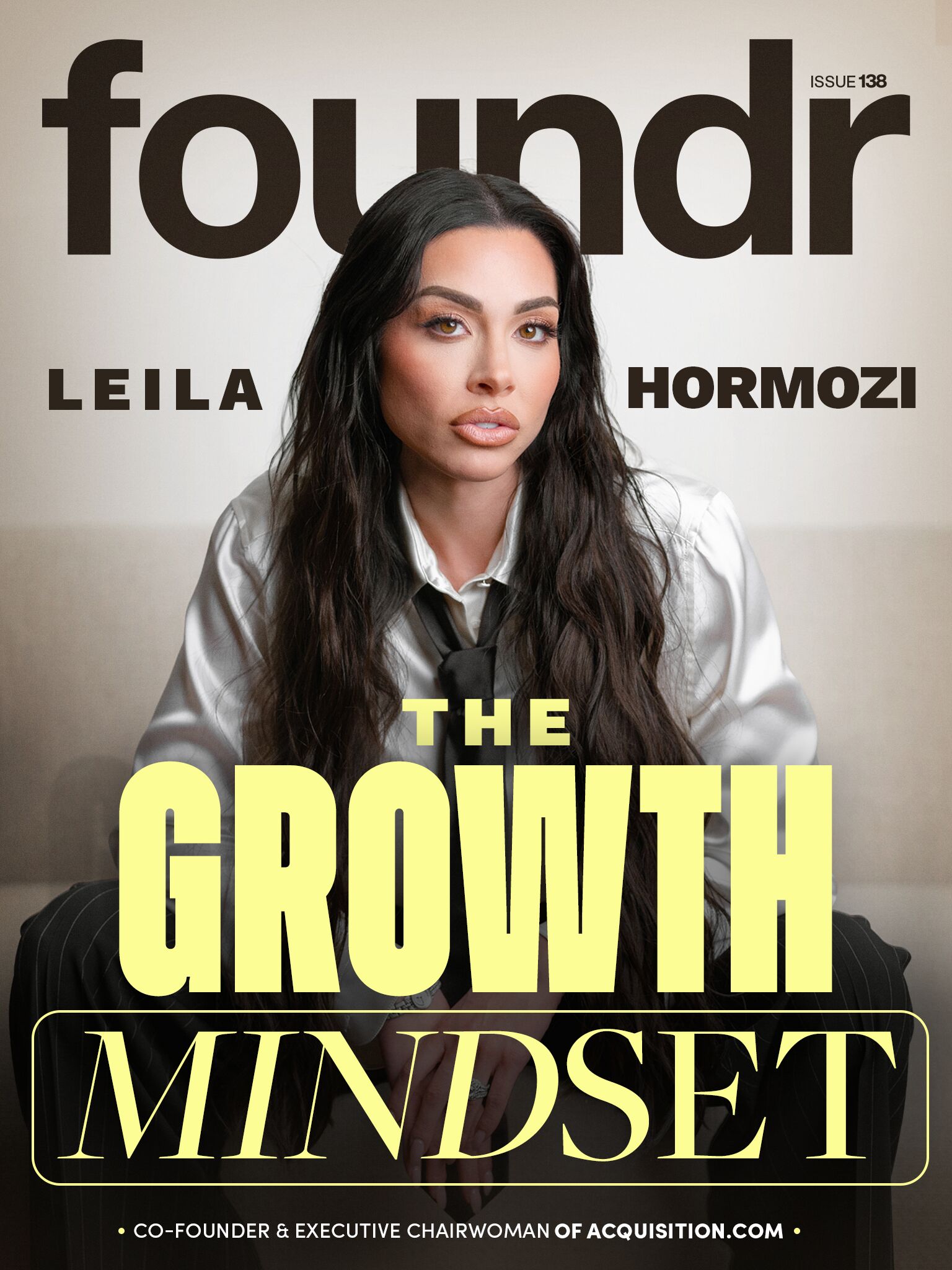
Leila Hormozi on the cover of Foundr Magazine Issue 138.

NC: Last question. What do you want people to take away from your story?

LH: Do you think we would have had the massive success without the massive failures? No. The same muscle that allows you to succeed at that level and take those risks also means you’re gonna fall on your face. It’s a rite of passage.

LH: I became obsessed with how to build an amazing team: a team that can get us not just to 50 million, but to 50 billion. And it all starts with understanding your team as much or better than you understand your customer.

From arrest warrants on kitchen tables to leading one of the most respected operator-founder duos in online business, Leila Hormozi’s story is ultimately about one thing: the moment the pain of staying the same outweighs the fear of change.

Foundr plus dollar trail footer

The post How Leila Hormozi Went from Six Arrests to a $250 Million Empire appeared first on Foundr.

Avoid the Spam Folder: Email Deliverability Tips You Can’t Ignore

You’ve done the hard part.

You’ve written a subject line that earns the open. You’ve crafted copy that actually sounds like a human wrote it. You’ve built the automation, scheduled the send, and hit the button with the quiet confidence of someone who knows what they’re doing.

And then it disappears into the spam folder.

Not because your email was bad. Not because your offer wasn’t compelling. But because something in the background, something invisible to most founders, decided your message wasn’t worth delivering.

That’s the brutal reality of email deliverability. You can have the best email strategy in the world, but if your emails aren’t reaching inboxes, none of it matters. Not the copy. Not the psychology. Not the perfectly timed automation. None of it.

The good news? Deliverability is fixable. And once you understand what’s actually driving it, protecting it becomes straightforward.

Short on time? Here are the key takeaways

  • Sender reputation is the foundation: Email providers score your sending behavior over time. Poor list hygiene, low engagement, and spam complaints quietly damage that score in the background.
  • Authentication is non-negotiable: SPF, DKIM, and DMARC aren’t just technical boxes to tick. They’re the proof that your emails are genuinely coming from you.
  • Your list quality matters more than its size: A smaller, engaged list will always outperform a bloated one full of cold or unverified contacts.
  • Engagement signals protect your inbox placement: When people open, click, and reply to your emails, you earn trust with email providers. When they ignore or report you, that trust erodes.
  • Content habits affect deliverability too: Spam filters are smarter than most people realize. The way you write and format your emails plays a bigger role than you’d expect.

What Is Email Deliverability (And Why Should You Care)?

Deliverability isn’t the same as delivery.

When an email is “delivered,” it just means it didn’t bounce. It reached the recipient’s mail server. Where it went after that, inbox, promotions tab, or spam folder, is a separate question entirely, and it’s the one that actually determines whether your campaign drives revenue.

Email deliverability refers to your ability to land in the inbox. It’s influenced by a combination of technical setup, sending behavior, list quality, and content, and it’s tracked and scored in real time by email providers like Gmail, Outlook, and Yahoo.

Get it right, and your emails land where they’re supposed to. Get it wrong, and even your best campaigns get quietly buried where your subscribers will never see them.

For ecommerce founders, this isn’t a marginal concern. If 20% of your emails are going to spam, you’ve effectively lost 20% of your list overnight, except the damage is invisible, so most people never notice until open rates start sliding and revenue quietly dips.

Your Sender Reputation Is Everything

Think of sender reputation like a credit score for your email program.

Every time you send, email providers are watching. How many people are opening? How many are ignoring? Are you getting spam complaints? Are your emails bouncing? Over time, all of that behavior adds up into a reputation score that follows your sending domain and IP address around.

A strong reputation means your emails are trusted. A weak one means they get filtered, deprioritized, or blocked entirely, sometimes without any warning.

The two things that damage sender reputation faster than anything else are high bounce rates and spam complaints. Bounces signal that your list isn’t clean. Complaints signal that your audience didn’t want the email in the first place. Either one tells email providers that something is off, and they respond accordingly.

This is why sending to a warm, engaged list is one of the most important things you can do for your deliverability long-term. The kind of engagement signals you build through thoughtful email automation don’t just drive revenue. They protect your reputation at the same time.

Authentication Is Not Optional

If sender reputation is your credit score, authentication is your ID.

SPF, DKIM, and DMARC are the three technical standards that prove to email providers that your emails are genuinely coming from you, not from a spammer impersonating your domain. Without them, even legitimate emails can get flagged, filtered, or rejected.

Here’s what each one actually does, in plain English:

  • SPF (Sender Policy Framework) is a DNS record that tells email providers which servers are authorized to send emails on behalf of your domain. If an email arrives claiming to be from you but it’s sent from a server that isn’t on your SPF list, that’s a red flag.
  • DKIM (DomainKeys Identified Mail) adds a digital signature to your emails that verifies the content hasn’t been tampered with in transit. It’s essentially a seal of authenticity that travels with every email you send.
  • DMARC (Domain-based Message Authentication, Reporting & Conformance) ties the two together. It tells email providers what to do if an email fails SPF or DKIM checks, whether to quarantine it, reject it, or let it through, and it gives you reporting so you can see what’s happening.

If you’re using a platform like Omnisend, these are either handled automatically or set up as part of the onboarding process. But it’s worth checking that all three are correctly configured for your sending domain. A missing or misconfigured DKIM record is one of the most common reasons legitimate emails end up in spam, and it takes less than 15 minutes to fix.

List Hygiene: The Unsexy Work That Actually Protects You

Nobody talks about list hygiene at dinner parties.

But it might be the most quietly powerful thing you can do to protect your deliverability.

Every email list accumulates dead weight over time. Old addresses that no longer exist. Contacts who signed up years ago and have never engaged. Typos that were never caught at the point of capture. Each of those sits on your list doing nothing except pulling your engagement rates down and pushing your bounce rates up.

The fix is straightforward: remove them.

Run a re-engagement campaign for contacts who haven’t opened or clicked in 90 to 180 days. Give them one last chance to raise their hand. Those who don’t engage get removed. It feels counterintuitive to shrink your list, but a smaller, healthier list consistently outperforms a bloated one when it comes to inbox placement.

You should also be suppressing hard bounces immediately and monitoring your soft bounce rate closely. Most reputable email platforms will handle hard bounces automatically, but it’s worth building a regular hygiene audit into your sending schedule, especially before major campaigns.

One more thing worth checking: how are people joining your list in the first place? Double opt-in isn’t the most glamorous growth tactic, but it produces subscribers who actively confirmed they wanted to hear from you. That confirmation makes a meaningful difference to both engagement rates and deliverability over time.

Engagement Signals Are Deliverability Signals

Email providers aren’t just checking whether your technical setup is correct. They’re also watching how people respond to what you send.

When subscribers open your emails, click your links, reply to your messages, or move your email out of spam, those are all positive signals. They tell providers that people genuinely want to receive what you’re sending, and that makes future emails more likely to land in the inbox.

The inverse is also true. Low open rates, ignored emails, and spam complaints tell providers the opposite, and they adjust your deliverability accordingly.

This is where content strategy and deliverability actually intersect. Writing emails your audience genuinely wants to receive isn’t just a conversion tactic. Every time someone engages with your email, they’re quietly voting for your inbox placement.

It’s also why getting your welcome series right matters more than most founders realize. The first few emails a new subscriber receives set the engagement tone for the entire relationship. Strong opens and clicks from new subscribers build sender reputation from day one. Silence from the start erodes it.

Content Habits That Quietly Trigger Spam Filters

Spam filters have come a long way from simply scanning for the word “free.”

Modern filters analyze hundreds of signals at once, including your sending history, your domain reputation, your HTML structure, and yes, certain content patterns that have historically been associated with spam.

A few habits worth checking in your own emails:

  1. Heavy image-to-text ratio. Emails that are mostly images with very little text can trigger filters, partly because spammers have historically used images to hide content from scanners. Aim for a balanced ratio with readable text that carries the message even if images don’t load.
  2. Excessive punctuation and capitalization. ALL CAPS SUBJECT LINES!!! look like spam because spam has trained us, and the filters, to treat them that way.
  3. Too many links. A single email crammed with 15 different links suggests bulk promotional content. Keep your calls to action focused. One primary CTA per email is almost always the right move.
  4. Misleading subject lines. Subject lines that don’t match the email content don’t just irritate readers. They generate complaints, which damage reputation, which affects future deliverability.
  5. Unsubscribe friction. If people can’t easily unsubscribe, they report you as spam instead. A clear, one-click unsubscribe link is not just a legal requirement in most markets. It’s a deliverability protection mechanism.

None of this means you need to strip the personality out of your emails. The psychology behind what makes emails convert still applies in full. It just means being deliberate about how you write and format, so the content you’ve worked hard on actually gets seen.

Final Thoughts

Deliverability isn’t a one-time fix. It’s an ongoing practice.

The founders who consistently land in the inbox aren’t the ones who got their DNS records right once and forgot about it. They’re the ones who treat list quality, sending consistency, and subscriber engagement as ongoing priorities, not afterthoughts.

The frustrating thing about deliverability is that it’s invisible until it breaks. By the time you notice the drop in open rates, the damage has already been done. The answer is to build habits that protect your reputation before problems appear.

That’s exactly what Omnisend is built for. With deliverability monitoring, authentication setup support, list health tools, and smart sending features that protect your sender reputation automatically, it gives founders the infrastructure to keep their emails landing where they’re supposed to.

Foundr readers also get 50% off their first three months. Just use code FOUNDR50 when you sign up and start building an email program that actually reaches its audience.

The post Avoid the Spam Folder: Email Deliverability Tips You Can’t Ignore appeared first on Foundr.

Seasonal Email Strategies That Drive Sales Without Feeling “Salesy”

We’ve all been there.

It’s Black Friday week, and your inbox looks like a warzone. “50% OFF EVERYTHING!” “LAST CHANCE!” “DON’T MISS OUT!” Every brand you’ve ever bought from (and a few you definitely haven’t) is screaming for your attention at the same time.

And what do you do? 

Delete, delete, delete.

But seasonal email campaigns don’t have to feel like a desperate pitch. Done right, they can actually strengthen your relationship with your audience, drive real revenue and leave your customers genuinely excited to hear from you, even during the busiest shopping periods of the year.

The secret? It’s not about selling less. It’s about selling smarter.

In this guide, I’ll walk you through proven seasonal email strategies that drive sales without making your subscribers want to hit “unsubscribe.” 

Short on time? Here are the key takeaways

  • Plan ahead: Map out your seasonal calendar early and mix promotional emails with value-driven content so your audience doesn’t feel bombarded.
  • Lead with story: Open with a personal angle, behind-the-scenes moment, or customer story and let the offer emerge naturally.
  • Segment your list: Even basic segmentation (new vs. returning customers) makes seasonal emails feel personal rather than mass-blasted.
  • Build anticipation, not panic: Replace “LAST CHANCE” energy with early access, limited editions, and countdown sequences that create genuine excitement.

Plan Your Calendar Before the Season Hits

If you’re scrambling to put together a Valentine’s Day email on February 13th, you’ve already lost.

(The same goes for getting your partner a gift, but I’ll save that story for another day!)

The best seasonal email strategies start weeks, often months, in advance. And I don’t just mean pencilling in “Black Friday campaign” on a sticky note. I mean building out a proper content calendar that maps every seasonal moment worth showing up for.

Now, that doesn’t mean you need to email your list for every obscure holiday on the internet (nobody needs a “National Sock Day” campaign. Unless you’re the CEO of Socks ‘R’ Us). But it does mean identifying the moments that genuinely matter to your audience and planning a mix of content around them.

Here’s a good rule of thumb: for every promotional email you send, aim to send at least two that educate, entertain, or inspire. That way, when the sales email does land, your subscribers are already engaged and far more likely to open it.

I call this the give-and-take approach. Each sales email you are ‘taking’ from your audience, offering little support, asking them to take action. Each educational or entertainment piece builds trust, offering readers value and asking for nothing in return. 

Psychologically speaking, this makes the reader much more likely to purchase when the sales email does come their way.

Lead With Story, Not the Sale

Here’s something most founders get wrong with seasonal emails: they lead with the discount.

“30% off for summer!” “Holiday sale starts NOW!” Sure, it’s direct. But it’s also exactly what every other brand in your subscribers’ inbox is doing. And when everyone is shouting the same thing, nobody stands out.

Instead, try leading with a story. A personal angle. A behind-the-scenes look at why you created a particular product, or a customer story that ties naturally into the season.

For example, instead of “20% off our summer collection,” imagine opening with something like, “We designed this piece for those long weekends where you want to look good without trying too hard.” The offer can still live in the email, but now it has context, personality, and a reason for existing beyond just shifting stock.

People remember stories far more than they remember sales pitches. In fact, research suggests that people retain around 63% of stories but only 5% of standalone statistics. So if you want your seasonal emails to stick, give your subscribers something worth remembering before you ask them to buy.

The discount is the cherry on top, not the whole cake.

Segment Your Audience for Relevance

Let me ask you something. 

Would you send the same Christmas gift to your best friend, your boss, and your grandma?

Probably not. So why would you send the same seasonal email to every person on your list?

One of the fastest ways to make your emails feel “salesy” is to blast the same generic message to your entire subscriber base. It screams, “I don’t really know who you are, but please buy something.” And your audience can feel that a mile off.

Even basic segmentation can make a huge difference. Splitting your list into new subscribers versus returning customers is a great starting point. A first-time buyer might need more of an introduction to your brand during a seasonal push, while a loyal customer might respond better to early access or a “thank you” discount that rewards their loyalty.

From there, you can get more specific. Segment by purchase history, engagement level, or even browsing behaviour. The more relevant your email feels, the less it reads like a sales pitch and the more it reads like something that was written specifically for them.

The good news? You don’t need to be a data scientist to do this. Tools like Omnisend make segmentation straightforward, even if you’re a solo founder juggling a hundred other priorities. A few smart filters and your seasonal campaign suddenly feels a lot more personal than the “Dear Valued Customer” approach.

Create Urgency Without the Desperation

Urgency works. That’s not up for debate. 

But there’s a big difference between creating genuine anticipation and making your subscribers feel like they’re being guilt-tripped into a purchase.

We’ve all seen the emails. “FINAL HOURS!” “You’ll regret missing this!” “This will NEVER happen again!” It’s the email marketing equivalent of a used car salesman following you around the lot. And honestly? Most people see right through it.

The good news is you can still create urgency without resorting to the all-caps panic approach. It just requires a little more thought.

Early access is a brilliant example. Instead of pressuring everyone at once, reward your most engaged subscribers by letting them shop before anyone else. It creates exclusivity rather than anxiety, and your audience feels valued rather than rushed.

Limited editions and seasonal exclusives work in a similar way. If a product is genuinely only available for a short window, that’s real urgency, and your subscribers will respect it because it’s authentic, not manufactured.

Lily, the founder of Luu Lounge, nailed this approach. Before her drops went live, she had her entire email and SMS list waiting for the launch date, the time, everything. By the time the product was available, demand had already built. She wasn’t chasing customers with “LAST CHANCE” subject lines; she had them queuing up because the anticipation had been earned through genuine excitement, not desperation.

That’s the kind of urgency that drives sales and keeps people subscribed.

Automate the Heavy Lifting (So You Can Focus on What Matters)

Seasonal emails shouldn’t feel like shouting into a crowded room. They should feel like a well-timed conversation with someone who already wants to hear from you. The founders who win at email marketing aren’t the ones with the biggest discounts or the loudest subject lines; they’re the ones who treat their subscribers like people, not transactions.

That’s exactly what Foundr students are doing right now, building real businesses with email and SMS strategies that work around their schedules, not against them. And with the right tool, it’s a lot more achievable than you might think.

If you want to start building seasonal campaigns that drive revenue without doubling your workload, Omnisend makes it practical. Foundr readers can also get 50% off their first three months, just use code FOUNDR50 when you sign up, and start turning your seasonal moments into your most profitable ones yet.


The post Seasonal Email Strategies That Drive Sales Without Feeling “Salesy” appeared first on Foundr.

How Lily Launched a Custom Clothing Brand Alongside a Full-Time Job

Lily didn’t set out to launch a clothing brand for the sake of fashion. The idea came from a daily frustration she couldn’t ignore. 

While working full-time in electric vehicle infrastructure, Lily found herself constantly battling pet hair.

“I work in electric vehicle infrastructure. It’s a nice eight-to-five, Monday through Friday. I have three dogs, and I was always just covered in fur all the time,” she explains.

The problem was simple, persistent, and personal.

“I pretty much thought to myself, how could I make clothes where the hair just doesn’t stick — or I could easily wipe it away?”

That question became the foundation of her brand. Lily began developing custom fabric designed to resist pet hair, committing to a process that would take far longer than a typical apparel launch.

“It’s been like over a year-long work in progress trying to find the right manufacturer because my clothes are made with the custom fabric,” she says.

Throughout that period, she chose to build in public, sharing the process openly as it unfolded.

“I was building in public, I put my idea out on TikTok, and it pretty much started going viral.”

What followed validated the demand she suspected was there all along. When her first drop went live, the response was immediate.

“When a drop came, I sold out in a couple of hours,” Lily recalls.

The challenge quickly shifted from proving interest to managing it — all while continuing to work a full-time job.

Learning Email Marketing From Scratch

As Lily moved closer to launch, she faced a new challenge beyond fabric and manufacturing: learning email marketing from the ground up while working full-time.

“Basically. I’m very new to email marketing,” she explains.

With a demanding Monday-to-Friday role, time was her biggest constraint.

“I needed something that was going to be easy enough for me to learn — something intuitive enough where I wouldn’t have to pour way too much time into it.”

She initially started with Klaviyo, intending to set up emails and automations herself.

“I started with Klaviyo first. Let me get on here, start making emails, and start doing my automations,” she says. 

But instead of clarity, the process became circular.

“I was kind of going in circles with it, and things weren’t looking like how I wanted them to look.”

As her audience grew, the frustration compounded.

“I felt like I was being punished for growing.”

That experience led her to switch to Omnisend — and the difference was immediate.

“That’s honestly how I felt when I made the switch to Omnisend, it was a lot easier to use,” Lily explains.

She moved quickly without overthinking the setup.

“I was able to pop all my automations together really quickly, and then things were also looking like how I wanted them to look.”

For a founder balancing a full-time job alongside a launch, that simplicity mattered. Omnisend helped Lily put essential systems in place without taking focus away from everything else she was building.

How Lily Uses Omnisend Day-to-Day

Day to day, Lily relies on Omnisend to keep customer communication running without demanding constant attention. With a full-time job and multiple priorities, the platform is something she can set up and trust.

“I’m glad I can just put it on and leave it so I don’t worry about it,” she explains, describing how email and SMS can run in the background once everything is in place.

Rather than managing campaigns manually, Lily uses Omnisend to support early access and launch coordination through straightforward automation. That hands-off structure is what allows Omnisend to fit into her routine.

Instead of pulling focus away from product development or fulfillment, her customer communication runs reliably in the background — helping her manage demand while balancing everything else.

The Impact Lily Is Seeing

For Lily, the impact of Omnisend shows up most clearly at launch. By building her audience ahead of time, she was able to start selling with demand already in place.

“I was around 3,000 when I launched,” she explains.

From there, growth continued as the brand moved out of development and into active drops. 

Also, that audience wasn’t passive. Lily used email and SMS to coordinate exactly when — and how — customers could access each release.

“I had everyone just sitting on that email list, waiting for their text or the email for the launch date, the time, everything,” she says, describing how anticipation built before products went live. 

Reflecting on the launch as a whole, Lily is clear about the role the platform played in turning preparation into results.

“Omnisend has been a big part of my launch,” she says, describing it as “definitely a major tool when it came to the early success of my brand.”

How Foundr Students Are Using Omnisend in Real Businesses

Lily’s experience reflects a broader reality for many Foundr students building businesses alongside full-time jobs. With limited time, energy, and margin for error, they need systems that are quick to learn, easy to implement, and reliable when it matters most.

Rather than treating email and SMS as separate, complex disciplines, founders like Lily integrate them directly into their launch process. By setting up essential automations early, they can build audiences in advance, coordinate demand, and manage access — without constant hands-on work.

That structure frees them up to focus on product development and fulfilment, while customer communication keeps running in the background.

If you want to build similar campaigns without doubling your workload, Omnisend makes it practical.Foundr readers can also get 50% off their first three months — use code FOUNDR50 when you sign up, and start creating emails that not only meet but exceed your customers’ expectations.

The post How Lily Launched a Custom Clothing Brand Alongside a Full-Time Job appeared first on Foundr.

How to Keep Your Customers Coming Back with Timely Emails

Most businesses obsess over getting the first sale. Far fewer think about what happens next.

After a customer buys, there is a quiet window where decisions are already being made. Will they remember you? Will they come back? Or will your brand slowly fade while something else grabs their attention?

This is where timely email makes the difference.

Not more emails. 

Not louder promotions. 

Just the right message at the right moment.

When emails arrive in context, after a purchase, during a pause, or exactly when a customer is ready to re-engage, they feel helpful instead of intrusive. And that is what turns one-time buyers into repeat customers.

In this article, I will break down how timely emails work, why they are so effective for retention, and how you can use them to keep customers coming back without increasing your workload.

Why Timing Matters More Than Frequency

When email performance drops, most businesses respond by sending more. More campaigns. More promotions. More reminders.

But frequency is rarely the real problem.

Customers do not disengage because they receive too few emails. They disengage because the emails arrive at the wrong time. A message that feels relevant today can feel annoying tomorrow. The difference is context.

According to Omnisend’s 2025 ecommerce data, automated emails, despite accounting for just a small fraction of all sends, drove a disproportionately large share of revenue. 

In fact, automated flows generated around 37% of email-driven sales from just 2% of email volume, highlighting how behaviour-triggered email at the right moment outperforms generic campaigns. 

Timing gives your email meaning. It connects what the customer has just done, or is about to do, with a message that feels useful rather than promotional. That relevance makes the content feel personal, even when it is automated.

This is also why sending fewer, better-timed emails often improves retention. Instead of competing for attention, your brand shows up when it makes sense. When customers feel understood rather than marketed to, they are far more likely to come back.

The Psychology Behind Timely Emails

Timely emails work because they align with how people think, not how marketers plan campaigns.

Most purchasing decisions are shaped by emotion, habit, and context. When an email arrives at the right moment, it feels relevant without needing to work hard for attention. The timing does the heavy lifting.

One of the strongest psychological drivers here is recognition. When a message reflects something a customer has just done, bought, or shown interest in, it signals that the brand is paying attention. That sense of being understood increases trust and lowers resistance.

Another factor is momentum. After a purchase or interaction, customers are already mentally engaged with your brand. A well-timed follow-up keeps that momentum going. Miss that window, and the emotional connection fades faster than most businesses expect.

Timely emails also reduce decision fatigue. Instead of asking customers to think about whether they want to re-engage, the email arrives when the decision is already half made. The action feels natural, not forced.

This is why retention-focused emails rarely feel promotional when they are timed correctly. They feel supportive, helpful, and easy to act on. And when customers associate your brand with ease rather than effort, coming back becomes the default choice.

The Email Moments That Bring Customers Back

Understanding the psychology behind timely emails is only useful if you know where to apply it. Retention is not driven by constant contact. It is built through a small number of moments where timing, relevance, and intent line up.

Email works best when it supports those moments rather than interrupting them.

Right after the first purchase is one of the most important windows. Customers are still emotionally invested, but they are also subconsciously looking for reassurance that they made the right decision. A timely email here should focus on confirmation and confidence. Setting expectations, offering helpful guidance, or reinforcing the value of what they bought can reduce buyer’s remorse and increase the likelihood of a second purchase.

Then comes the quiet period. This is where many brands go silent or default to generic promotions. Instead, this is an opportunity to stay present without selling. Emails that educate, inspire, or help customers get more value from what they already purchased keep the relationship warm while trust builds.

Finally, there is the re-entry moment. This is when a customer is naturally ready to return. It might be driven by time, usage, or behaviour. When your email arrives at this point, it feels intuitive rather than persuasive. The action feels obvious because the timing is right.

These moments do not require more emails. They require better timing. When your messages align with where the customer already is, coming back feels natural, not forced.

A Timely Email That Brings Customers Back

Imagine a customer who made their first purchase a few weeks ago. They have not returned yet, but they also have not disengaged. 

This is a perfect moment for a timely email.

Instead of sending a generic promotion, the message arrives with a clear purpose.

The subject line focuses on relevance, not urgency. It references the customer’s last interaction or hints at what comes next. The goal is to remind, not pressure.

Inside the email, the opening line acknowledges where the customer is. It reinforces the value of what they already bought and helps them get more out of it. There is no hard sell. The tone is supportive and confident.

The body of the email keeps things simple. It highlights one useful tip, one insight, or one next step that feels logical at this stage. The message is short enough to scan and clear enough to act on.

The call to action reflects the moment. It invites the customer to return in a low-friction way, such as:

  • Exploring a related product
  • Restocking a previous purchase
  • Seeing what other customers found useful next

Nothing feels forced. The email arrives when the customer is ready, and the action feels natural.

This is what an effective retention email looks like. Not louder messaging or deeper discounts, but thoughtful timing paired with relevance.

Final Thoughts

Customers don’t come back because they receive more emails. They come back because the right email shows up at the right moment.

When your messages are timed around real behaviour, not arbitrary schedules, email stops feeling like marketing and starts feeling like part of the experience. That is what builds trust, familiarity, and long-term loyalty.

If you want to keep customers coming back without increasing manual work, Omnisend gives you the tools to do it. With behaviour-based automations, dynamic personalization, and built-in social proof, it helps founders turn timely moments into repeat revenue.

Foundr readers also get 50% off their first 3 months. Just use code FOUNDR50 when you sign up and start sending emails that customers actually look forward to.

The post How to Keep Your Customers Coming Back with Timely Emails appeared first on Foundr.

Why Your Emails Aren’t Getting Clicked (And How to Fix That)

You spend hours crafting the perfect email. The subject line feels sharp, the copy is polished, and you’re confident this one is going to drive serious clicks.

Then it lands in inboxes… and nothing happens.

No spike in traffic. No sales. No meaningful engagement.

Just another email your audience scrolls past.

If this feels familiar, you’re not alone. Even the smartest founders and marketers struggle to turn opens into clicks. And while it’s easy to blame “email fatigue” or shrinking attention spans, the real problem usually comes down to a handful of fixable mistakes.

The good news? Small, strategic tweaks can dramatically boost your click-through rate. In this article, we’ll break down why people aren’t clicking your emails and exactly how to reverse it using proven psychology and practical best practices.

Ready to turn passive readers into active customers? Let’s dive in.

Why Your Emails Aren’t Getting Clicked

Before you can fix low click-through rates, you need to understand why people aren’t taking action in the first place. Most email performance issues stem from a few common patterns. If your CTR is flat or falling, chances are one of these culprits is to blame.

Your subject line isn’t pulling its weight

The subject line is your email’s first impression, and in a crowded inbox, you only get a split second to earn attention. If your subject line is vague, predictable, or overly salesy, people will skip right past it.

Strong subject lines spark curiosity, promise value, or tap into a specific desire. Weak ones blend into the noise. If you’re not making people want to open your email, you’ll never get them to click inside it.

You’re not connecting with the reader’s mindset

Most emails fail because they talk at the reader instead of speaking to where the reader is mentally or emotionally.

People click when something feels relevant.

They click when they feel understood.

They click when the message aligns with what they’re already thinking about.

If your email jumps straight into a pitch without context or empathy, the disconnect kills engagement long before the CTA appears.

The email feels generic or impersonal

Sending one blanket message to everyone on your list doesn’t work anymore. Subscribers are used to personalized recommendations, tailored content, and experiences that feel crafted for them.

If your emails feel mass-produced, readers treat them that way.

When the message doesn’t match their interests, stage in the buyer journey, or past behaviour, they simply won’t engage.

Your formatting makes it hard to read

Huge paragraphs, cluttered layouts, weak hierarchy, and buried CTAs all cause friction. And friction kills clicks.

People skim emails, especially on mobile. If they can’t quickly understand what the message is about and what’s in it for them, they won’t take the next step.

Your job isn’t just to write well. It’s to make the message effortless to digest.

You’re not using psychological triggers that drive action

Clicks don’t happen by accident. They’re a response to emotional cues.

Urgency, curiosity, social proof, reciprocity, fear of missing out, clarity of benefit. These are the levers that turn attention into action.

When your email lacks these triggers, the message may be pleasant but ultimately forgettable. A good email makes people nod. A great email moves them to click.

How to Fix It (Step by Step)

Fixing low click-through rates isn’t about reinventing your entire email strategy. It’s about tightening a few key elements so your message feels clearer, more relevant, and more compelling. Here’s how to turn your emails into high-performing assets your audience actually engages with.

1. Write subject lines that spark curiosity or promise value

Great subject lines earn attention by doing one of two things:

They make the reader curious, or they make the benefit irresistible.

Keep them short. Avoid clichés. And focus on what the reader gets, not what you’re sending.

A few reliable approaches:

  • Ask an intriguing question
  • Tease a solution to a known problem
  • Create an open loop that the reader wants to resolve

If the subject line earns the open, the content can earn the click.

2. Segment your audience and tailor the message

People click when the message feels made for them. Segmentation lets you send targeted emails based on behaviour, skill level, interests, or stage in the buying journey.

The more specific the message, the more relevant it feels. And relevance is the fastest route to clicks.

Start with simple segments such as:

  • New subscribers
  • Customers vs. non-customers
  • Highly engaged vs. inactive readers
  • Product interest groups

Even basic segmentation can double or triple click-through rates.

3. Personalize beyond first names

True personalization is about context, not just tokens.

Use behaviour, history, and preferences to shape your message. For example:

  • Recommend content based on what they previously read
  • Reference items they browsed
  • Follow up on something they downloaded
  • Tailor emails to the challenges of their specific niche or role

When readers feel like the email speaks directly to them, they’re far more likely to click.

4. Use psychology to guide your CTA

A strong call to action isn’t just well-worded. It’s strategically positioned, emotionally primed, and crystal clear.

To increase clicks:

  • Make the CTA benefit-driven
  • Use urgency that’s real, not force
  • Leverage social proof near the CTA
  • Reduce hesitation with risk reversals or guarantees

Your CTA should feel like the natural next step, not a hard sell.

5. Improve readability and layout

If readability improves, clicks improve.

Make your email effortless to skim by using:

  • Short paragraphs
  • Bullet points
  • Clear subheads
  • Bolded key lines
  • One primary CTA

And don’t underestimate design hierarchy. Your CTA should be impossible to miss, especially on mobile.

6. Test, Measure, Iterate

The most successful email marketers treat every send as data.

A/B test:

  • Subject lines
  • CTA placement
  • Send times
  • Button colour and copy
  • Email length and structure

What works for one audience may flop for another. Testing lets the numbers decide.

Quick Wins You Can Implement Today

You don’t need a full strategy rebuild to get more clicks. A few targeted adjustments can lift your CTR almost immediately.

Start by tightening your CTA. Vague prompts like “Learn more” or “Click here” don’t tell the reader what they’ll gain. Swap them for benefit-driven actions such as:

  • “See the full strategy”
  • “Download the guide”
  • “Start improving your results”

Next, move your primary CTA higher in the email. Most subscribers skim, and if the only action appears at the bottom, many will never see it. Place one CTA early, then repeat it for readers who scroll.

Shortening your email also helps. Cutting around 20% of the copy reduces friction and makes the core message easier to digest. A tighter email naturally draws more attention to the action you want people to take.

A quick curiosity line at the top can also boost engagement. A simple hook like “Most people miss this step” keeps readers moving long enough to reach your CTA.

Finally, preview your message on mobile. Over half of your audience reads on a phone, so spacing, CTA size, and readability all influence whether they click.

Final Thoughts

The emails that earn the most clicks aren’t the loudest or the flashiest. They’re the ones built around how people actually make decisions.

If you want to build these kinds of campaigns without doubling your workload, Omnisend gives you everything you need. With behaviour-based automations, dynamic personalization, and built-in social proof, it helps founders pair smart psychology with effortless execution.

Foundr readers also get 50% off their first 3 months. Just use code FOUNDR50 when you sign up and start creating emails that get clicked, not ignored.

The post Why Your Emails Aren’t Getting Clicked (And How to Fix That) appeared first on Foundr.

The Psychology Behind High-Converting Email Campaigns

Every great email campaign has one thing in common.

It makes people feel something.

It’s not just about clever copy or eye-catching design. The emails that drive serious revenue tap into how people actually think and behave, the subtle psychological triggers that move someone from scrolling to clicking “buy now.”

Because behind every open rate and conversion metric is a human brain making micro-decisions.

Do I trust this brand? 

Am I missing out?

Is this for me?

Understanding those instincts is what separates average campaigns from unforgettable ones.

In this article, we’ll unpack the four psychological levers that power the best-performing emails and make your emails stop feeling like promotions and start feeling like opportunities.

The Psychological Triggers Behind Every High-Converting Email

Before we dive into the mechanics of high-performing emails, and assuming you have already followed our steps to build your email list, it helps to understand one simple truth: people don’t make decisions logically; they make them emotionally.

Then they justify them with logic afterwards!

When someone opens your email, they aren’t analysing your layout or weighing up your CTA buttons. They’re responding to invisible forces that shape almost every buying decision they make:

  • Urgency: The instinct to act before an opportunity disappears.

  • Scarcity: The pull toward things that feel exclusive or limited

  • Social proof: The comfort of seeing others make the same choice

  • Personalization: The sense that a message was crafted specifically for them

These are the psychological levers that quietly guide behavior, and when you build your emails around them, everything converts better.

Urgency: Why timing triggers action

Urgency works because it taps into one of the most powerful human instincts. 

We all hate missing out on something good!

When a customer feels like they need to act now (not later, not “when I have time”), their decision-making shifts. The longer someone waits, the more doubts creep in. Urgency cuts through that hesitation by giving the moment weight.

That’s why phrases like “Ends tonight”, “Last chance”, or “Only a few hours left” consistently outperform softer messaging. They turn a passive reader into an active decision-maker.

But the key is authenticity. 

Fake urgency, like a flash sale every other day, trains customers to ignore you. Real urgency tied to a genuine deadline, product drop, seasonal moment, or limited bonus, creates momentum without damaging trust.

Scarcity: Why ‘limited’ can be so valuable

Scarcity isn’t about speed; it’s about value.

When something feels limited, exclusive, or hard to get, our brains automatically assign it more importance. 

We pay closer attention. 

We think harder about whether we want it. And once we want it, we want it more because we’re not guaranteed to have it.

In email, scarcity shows up in subtle but powerful ways:

  • Highlighting genuinely low stock
  • Launching limited-edition versions or seasonal items
  • Offering bonuses only available to a specific group
  • Giving early access to people on a particular list

The message isn’t “hurry.”

It’s “not everyone will get this.”

Suddenly, the product feels special. The customer feels like they’re part of something selective.

Social Proof: Why people trust people more than brands

If urgency moves people and scarcity elevates value, social proof removes doubt.

It’s the quiet psychological signal that says, “Others tried this, and it turned out well.”

In a world full of promises, customers are constantly scanning for clues that what you’re saying is actually true. Social proof gives them that reassurance. It bridges the trust gap faster than any headline, offer, or guarantee ever could.

This is why a single review can do more for conversion than a full paragraph of polished copy.

Why a real customer photo carries more weight than a studio shoot.

Why a quick video testimonial can overturn a shopper’s last remaining hesitation.

Social proof reduces the risk of buying.

In email, social proof works best when it’s woven naturally into the story you’re telling:

  • A short testimonial placed above the CTA
  • A customer photo beside a product feature
  • A “Loved by 12,000+ customers” badge
  • A case study snippet showing real results
  • UGC used as the hero image instead of a polished creative

You’re not trying to “prove” your worth, you’re letting your customers do it for you.

Personalization: Why People Pay Attention When It Feels Personal

Most inboxes feel generic. 

Same offers. Same templates. Same tone.

(Unless you’ve implemented our 5 ways personalization in eCommerce can enhance customer experience!)

That’s why genuine personalization stands out, because it breaks the pattern.

Personalization in email works because it answers an unspoken customer question:

“Why are you showing me this?”

If you can answer that naturally, engagement goes up immediately. For example:

  • Showing someone products that match their previous purchase.
  • Recommending items based on what they browsed.
  • Sending returning customers different content than first-timers.

Example email

Now let’s put all that into practise in this example email:

Subject: Your next match just got faster (limited sizes left)

Hi {{FirstName}},

You’ve been checking out our performance padel shoes lately, so we thought you’d want the heads-up on this:

Our new Velocity Pro 2.0 just dropped, built for players who want maximum grip, faster footwork, and a smoother slide on sand-based courts.

And early customers are already calling them a game-changer:

 “The stability is unreal. I’ve never moved this confidently at the net.” Mark R., Intermediate Player

Here’s why players are upgrading:

  • 40% improved traction in lateral movements
  • Lightweight cushioning for longer rallies
  • Reinforced toe box for durability on abrasive courts
  • Breathable upper to keep feet cool during tough matches

But a quick heads-up before you pick your size:

We’re already running low on the most popular sizes after the first 72 hours. Once they’re gone, they won’t be restocked until next month.

To make sure you don’t miss out, we’re giving subscribers early access for the next 24 hours only.

Your early-access link: [personalized link]

And because you’ve bought performance footwear from us before, this exclusive colourway comes with free shipping on your order, just for VIP customers like you.

See how they look on real players:

[UGC Gallery featuring the shoe in action]

Whether you’re working on your bandeja or powering through long defensive rallies, these were built to keep up with your game.

See the Velocity Pro 2.0 before your size disappears 

[CTA]

Catch you on court,

The PadelLab Team

Where the four triggers show up

  • Urgency: “24 hours only,” “early-access window,” gentle time pressure
  • Scarcity: Limited sizes, restock next month
  • Social Proof: A real review and  UGC gallery
  • Personalization: References past browsing and purchase behaviour plus VIP free shipping

Final Thoughts

The emails that convert best aren’t the ones with the loudest subject lines or the biggest discounts, they’re the ones that understand how people actually make decisions. 

When you blend urgency, scarcity, social proof, and personalization with intention, your campaigns stop feeling like promotions and start feeling like moments. Moments that move people, reduce hesitation, and guide them toward what they already want.

If you want to build these kinds of campaigns without doubling your workload, Omnisend gives you every tool you need. 

From behaviour-based automations to dynamic personalization and built-in social proof blocks, it helps founders pair smart psychology with powerful execution.

Plus, Foundr readers get 50% off their first 3 months. Just use code FOUNDR50 when you sign up and start creating emails that do more than just land in the inbox.

The post The Psychology Behind High-Converting Email Campaigns appeared first on Foundr.

Why the Future of Ecommerce Growth Belongs to Verified Voices, Not Ad Spend

Every founder knows the story.

You pour money into ads, tweak targeting, rewrite copy, and still watch your customer acquisition cost (CAC) creep higher each month.

No matter what you do, the tests you run, or the out-of-the-box ideas you try, that graph just keeps slowly climbing.

But it’s not (necessarily) that your product’s worse. It’s that your audience has changed.

Shoppers don’t just want to see your brand, they want to hear from people who’ve already trusted it.

Because today, attention is expensive. But trust? That’s priceless.

In this guide, we’ll break down how verified reviews and user-generated content (UGC) can build instant trust, lift your conversion rates and turn happy customers into your best-performing sales channel

Short on time? Here are the key takeaways

  • Trust is the new growth engine in ecommerce. Verified reviews and UGC are driving higher conversions than paid ads alone.
  • Your customers are your best marketers. Authentic voices (through written, photo, and video reviews) build credibility faster than any campaign.
  • Reviews are data, not just decoration. Analyse feedback trends, improve your CX, and use insights to drive repeat sales and loyalty.

Traffic Might Win Attention, But Trust Wins Sales.

There’s a point every founder hits. You’re getting clicks, your ads are sharp, and your traffic’s growing. But somehow, sales stay flat.

Perhaps you have spent a few sleepless nights checking the customer journey on your site or making sure every ad is running as planned, but in many instances, this approach will have no major impact on your conversion.

Why?

Because the reality is that it’s not that people aren’t interested, it’s that they don’t believe you yet.

The customer’s perspective

Put yourself in your potential customer’s shoes for a moment. You’ve been hit with an ad for something that is of interest. You head to the company’s website for the first time, having never heard of them before. 

Everything sounds great, from fast shipping to 24/7 customer service, but there’s still one major issue. All that information is coming from the company, not from it’s customers. Shoppers are smarter than ever, and they know when they’re being marketed to. They also know to take any and all promises from a brand with a grain of salt.

But when they hear it from an existing customer? That’s a game-changer.

Because when someone sees genuine reviews, unfiltered UGC, or a quick customer video, the story changes. It’s no longer your brand voice trying to convince them; it’s the voice of someone they can truly relate to.

While digital marketing is rapidly evolving, one constant that will continue to remain is that people sell to people, and there is no better form of marketing than word of mouth.

Customers can sell your product and brand better than you can. People trust people, not polished marketing messages. The customer’s voice validates what your brand is already saying—and that validation is what converts curiosity into confidence.

And that shift? That’s where growth really starts.

The data backing up this approach

According to a recent study from Dixa, as many as 93% of customers will search for online reviews before making a first-time purchase.

But not only that, 47% of those same people will also spread the word if they have a positive experience with a brand. And perhaps even more importantly, as many as 95% of them would let others know about a negative experience.

Your customers are your most important salespeople, and it’s important to use their words to build trust and convert new customers.

You only need to look at G2 to find the right tech for this, but when it comes to ease of use, REVIEWS.io is a clear standout. It’s simple to set up, flexible enough to fit into your existing stack, and backed by a team that genuinely cares (seriously, their support is next-level!). What they enable you to do (collect, verify, and showcase authentic customer voices) makes them a go-to for brands that want trust to be more than just a marketing line.

From written testimonials to photo and video reviews, it helps you showcase real voices that build instant credibility. By integrating directly with tools like Shopify, Klaviyo, and Omnisend, it ensures every potential customer sees proof, not promises, right when it matters most.

Your Customers Are Your Best Marketers. Let Them Convert for You

So, now you know just how important gathering customer reviews is for building trust and getting your customers’ voices heard, let’s look at some of the tools that can help you achieve that. 

Remember, your customers aren’t just leaving reviews; they’re creating some of your best-performing content. Real photos, quick unboxing clips, and short testimonial videos are the kind of proof that builds instant confidence.

The smartest founders and marketers treat this content like gold. They don’t just hide it on a “Reviews” page; they weave it throughout the entire customer journey.

Think:

  • UGC galleries that showcase real customers using your products in your homepage feed.
  • Social proof widgets that surface star ratings and review snippets right beside the “Add to Cart” button.
  • Video reviews that play directly on your product pages, breaking down that last bit of hesitation before checkout.

These tools turn the customer’s voice into a genuine sales engine, one that works quietly in the background, building trust, reducing hesitation, and giving every new visitor a reason to believe.

The Benefits of Leaning in to Review-based Marketing

When you start treating reviews as a growth channel, they quickly become one of your most valuable assets. 

Here’s how they impact every stage of your customer journey:

They help turn proof into conversions

Every shopper hesitates before buying from a brand they don’t know yet. Reviews bridge that gap. Real stories, photos, and experiences from actual customers give potential buyers the reassurance they need to take action. 

Instead of relying solely on ad copy or product claims, review-based marketing puts proof front and center, right where decisions are made. The result? Higher conversion rates without needing to increase ad spend.

They build trust that compounds

Each verified review adds another layer of credibility that future customers can see, search, and believe in. Over time, that social proof becomes part of your brand identity. After all, a public record of customer satisfaction that outlasts any campaign.

And because it’s built by your community, not your marketing team, it carries ten times the influence of any branded message.

They attract customers who come back

Reviews don’t just attract new customers, they also help you keep the ones you’ve already won. When founders actively engage with feedback, respond to reviews, and make improvements based on what customers say, they build loyalty that can’t be faked. 

It turns a one-time purchase into an ongoing conversation, and that ongoing dialogue becomes the foundation for repeat sales, referrals, and advocacy.

Final Thoughts

At its core, ecommerce growth has never really been about algorithms or ad hacks; it’s always been about people trusting people.

The brands that win aren’t the ones shouting the loudest. They’re the ones giving customers a reason to trust their claims, through verified voices, real stories, and proof that feels human.

If you can turn your customer feedback into a key part of your marketing strategy, you won’t just earn more clicks, you’ll earn lasting credibility. That’s what drives sustainable growth.

And if you’re ready to make that shift, REVIEWS.io gives you everything you need to start.

  • Collect verified reviews. 
  • Showcase them where they matter most. 
  • Bring photo and video UGC into your store and your marketing stack.

All without slowing down your team.

Explore REVIEWS.io today and start turning trust into your strongest growth channel.

The post Why the Future of Ecommerce Growth Belongs to Verified Voices, Not Ad Spend appeared first on Foundr.

How to Create Irresistible Email Offers Without Killing Your Margins

What’s the fastest way to boost sales from your next email campaign? Offer a discount.

It works, at least in the short term. Open rates jump, clicks surge, orders roll in. 

But there’s a hidden cost. Every time you rely on a discount to make a sale, you’re quietly training your audience to wait for the next one. Over time, that chips away at your profit and your brand perception.

The smartest ecommerce brands know how to walk the line, using offers that drive excitement without eating into margins.

In this guide, we’ll unpack how to create email offers that feel irresistible but still protect your bottom line. 

Why Discounts Work (and Why They’re Dangerous)

Let’s be honest, discounts are addictive.

For customers, they trigger instant gratification. The thrill of getting more for less. For brands, they deliver fast results. Inboxes light up, conversions spike, and the sales graph shoots upward.

That’s not by accident. Discounts play directly into core psychological triggers like scarcity, urgency, and reward bias. When people see a limited-time deal, their brain releases dopamine. It feels like a win. That’s why a simple “24-hour flash sale” can outperform a beautifully written product story.

But here’s the catch. That same emotional response can work against you over time.

When discounts become predictable, customers start to wait for them. They’ll abandon carts knowing a sale email is coming. They’ll skip full-price items because they’ve been trained to expect 20% off next week. 

What started as a short-term sales tactic becomes a long-term habit, one that eats into your profit and erodes your brand’s perceived value.

It’s a balance problem. You need offers strong enough to motivate action, but not so frequent or aggressive that they undermine your positioning.

That’s why smart founders use discounts strategically, not as the story, but as the hook for a bigger one. They time them around product launches, new collections, or brand milestones, and they always have a plan for what happens after the sale ends.

The Long Game: What Sale Periods Are Really For

Too many brands treat discount periods as quick fixes. They see it as a way to clear stock, hit a monthly number, or win back customers who’ve gone quiet.

But the best founders know a sale is more than a short-term bump. It’s actually a moment to build something bigger.

A good sale does three things. It grabs attention, drives action, and teaches you something about your audience.

Maybe your Black Friday sale reveals which products people really care about. Maybe your “End of Summer” offer brings back lapsed customers you can now re-engage. Or maybe your anniversary event shows you what messaging tone hits hardest.

The point is, a sale isn’t just about selling. It’s about learning.

And the brands that win long-term know how to play both games. The one happening now (cash flow, conversions, excitement) and the one happening later (retention, loyalty, predictability). They think in cycles, not spikes.

The Give and Take Theory of Email Offers

So how do you keep that momentum going between sales without constantly discounting?

This is where what I like to call the ‘Give and Take’ approach comes in clutch.

“Give” emails are your relationship builders. They share something useful, inspiring, or entertaining. So that could be a story about your brand, a behind-the-scenes look at a new drop, a quick tip that helps your audience get more from your product. They build trust, and trust is what makes every future sale easier.

“Take” emails are your asks. These are the moments when you lean in and say, Hey, it’s time to buy. A product launch, a limited-time bundle, a 24-hour discount. These are the spikes of energy that drive revenue, but they only work when they’re supported by enough goodwill from your give emails.

The mistake most founders make? They take too often. Every email becomes a pitch, and over time, that drains the list. Engagement drops, unsubscribes rise, and customers tune out, not because your offer was bad, but because it felt expected.

Treat your email offers a little bit more like a healthy relationship of give and take. Give first, take later. Offer guidance before you sell. If your audience learns something or feels something in between the offers, your next “take” will land twice as hard.

How to Build Offers That Feel Generous (But Protect Margins)

Another common myth is that the most effective email offers are always the biggest discounts, but that’s not strictly true. Instead, they’re the ones that feel generous while quietly protecting your bottom line. 

It’s all about perceived value. When customers believe they’re getting something special, the actual cost to you matters a lot less.

Start by rethinking what “value” means:

  • Bundle instead of slash. Pair complementary products and frame them as an exclusive set. That way, the customer saves, you move more inventory, and your average order value goes up.
  • Add, don’t subtract. Instead of cutting prices, add a bonus. That could be free shipping over a certain threshold, a free gift with purchase, or early access to a new drop.
  • Reward loyalty, not everyone. Your best customers shouldn’t get the same deal as a one-time buyer. Use segmentation to make loyal customers feel recognized while keeping margins tight.
  • Create “next time” incentives. Offers like “£10 off your next order” encourage repeat business and keep your revenue compounding over time.

Each of these strategies gives the customer a win without conditioning them to expect permanent discounts. You’re adding perceived value (exclusivity, reward, belonging) instead of subtracting margin.

Final Thoughts

Used strategically, offers are one of the most powerful tools in your marketing arsenal. They grab attention, drive urgency, and give your audience a reason to act now. But when every email leans on a discount, you’re not building a brand, you’re teaching people to wait for one.

That’s where Omnisend comes in. Built for ecommerce founders, Omnisend gives you everything you need to send smarter, not just more.

You can:

  • Build and automate your email flows with drag-and-drop ease
  • Segment customers based on purchase behavior and engagement
  • Test offers, incentives, and timing to see what really moves the needle
  • Integrate seamlessly with your store and scale without extra effort

And right now, Foundr readers get 50% off their first 3 months.

Click here and use code FOUNDR50 to start sending emails that sell.

The post How to Create Irresistible Email Offers Without Killing Your Margins appeared first on Foundr.

Email Automation 101: Scale Your Sales Without Lifting a Finger

What if your email list could sell for you while you sleep?

That’s the power of email automation. 

No manual broadcasts. No writing the same discount email over and over. Just smart, pre-built flows that turn browsers into buyers and buyers into loyal fans, automatically.

The best part? It doesn’t take a dev team, a giant list, or 10 hours a week to make it work. You just need to know what to send, when to send it, and how to set it up once so it runs on autopilot.

In this guide, I’ll walk you through:

  • The 7 essential email automations every ecommerce brand should have
  • What makes each one convert (without feeling robotic)
  • How to start small and scale fast, even if you’re short on time

Whether you’re just getting started with email marketing or you’re tired of sending one-off campaigns that don’t move the needle, this is how smart founders grow revenue without adding work to their week.

First Off – What is Email Automation?

Before we dive in, I wanted to quickly clear up what I mean by the phrase ‘email automation’.

After all, email automation isn’t just a time-saver, it’s one of the most powerful growth levers in your entire business.

Think of it like this: every time someone signs up to your list, abandons their cart, makes a purchase, or goes quiet, you have a chance to guide them toward the next step.

But most founders try to manually send emails one by one, or worse, miss these opportunities altogether!

That’s not scalable. That’s exhausting.

Automation flips that script. Instead of blasting out one-size-fits-all newsletters and hoping for clicks, automation lets you build email flows that are triggered by real customer behavior. 

Someone signs up? They instantly get a welcome series that introduces your brand, offers value, and nudges them toward a purchase. They add to the cart but don’t buy? They get a perfectly timed reminder, maybe with a small incentive. Loyal customers? They get thanked, rewarded, and reminded that your brand still cares.

According to Omnisend’s latest benchmark report, automated emails generate 320% more revenue per email than regular one-off campaigns. 

Open rates are higher, click rates are higher, and most importantly, conversion rates are significantly higher, especially for flows like abandoned cart, welcome series, and post-purchase follow-ups.

For time-strapped founders, that kind of efficiency is game-changing.

Instead of writing dozens of one-off emails every month, you can build just a few key automations and let them run in the background, earning while you sleep. It’s like hiring a round-the-clock sales team that never forgets to follow up, never misses a customer milestone, and never needs a day off.

The 7 Email Automations That Quietly Scale Your Sales

If email automation is your 24/7 sales engine, these are the gears that keep it running. You don’t need dozens of flows to start making an impact. You just need the right ones.

Below are seven essential automations every ecommerce brand should have. Together, they form a complete system that welcomes new subscribers, recovers lost revenue, builds trust, and reactivates dormant customers.

1. Welcome Series

Your welcome series is the handshake, the first impression, and the start of a relationship. It should trigger immediately after someone joins your list, whether through a popup, landing page, or lead magnet.

A great welcome flow isn’t just a “thanks for signing up” email. It’s a sequence (usually 3 to 5 emails) designed to introduce your brand, share your origin story, showcase your bestsellers, and deliver any promised incentive (like a discount code). 

This is also the best time to build trust. Show social proof. Explain your mission. Let people know they’re in the right place.

2. Abandoned Cart

This is the highest ROI automation in your entire stack.

Cart abandonment happens constantly, whether due to distraction, second thoughts, or unexpected shipping costs. But just because someone didn’t buy doesn’t mean they’re not interested. In fact, they’re very interested. They just need a little nudge.

An abandoned cart flow sends a timely follow-up when someone adds products to their cart but doesn’t complete checkout. The best-performing sequences typically include 2–3 emails: the first within an hour (when intent is still high), and a final one 24–48 hours later, often with an added incentive like a discount or free shipping.

3. Browse Abandonment

Browse abandonment is like cart abandonment’s quieter, younger brother, but it’s just as valuable.

This flow targets users who view a product or category but leave without adding anything to their cart. Maybe they weren’t ready. Maybe they were comparing options. Either way, they were interested enough to click, which makes this a perfect re-engagement opportunity.

The email can be simple: “Still thinking about this?” along with a reminder of the product they viewed, maybe paired with customer reviews or a few similar items.

4. Post-Purchase

Most brands stop talking after the sale. That’s a mistake.

Post-purchase automation is where loyalty starts. This flow reassures your customer that they made the right decision, reduces buyer’s remorse, and sets expectations around shipping and delivery. It also offers a prime opportunity to upsell, cross-sell, or introduce them to your loyalty program.

Think: thank-you message, order summary, a follow-up with product tips or how-tos, and eventually, a gentle nudge toward their next purchase.

5. Win-Back Flow

No one wants to be ghosted—especially by someone who once cared. That’s what the win-back automation is for.

This flow targets customers who haven’t opened, clicked, or purchased in a set timeframe, usually 60 to 120 days. It’s your chance to reignite the relationship before they slip away for good.

Keep it honest and personal. Remind them what they loved about your brand. Offer an exclusive discount, ask for feedback, or give them a reason to come back. Even a simple “We miss you” can be enough to drive action.

6. Review Request

Social proof fuels ecommerce. Your happy customers are your best marketers—if you give them the chance.

This flow triggers a few days after a product is delivered, asking the customer to leave a review. You can make it easy with a direct link, offer a small reward (like 10% off their next order), and showcase examples of other customer reviews to set the tone.

7. Birthday or Anniversary

This one’s optional, but incredibly powerful.

Celebrating a customer’s birthday, signup anniversary, or even first-purchase milestone adds a personal touch that builds brand loyalty. It reminds them they’re more than just a transaction.

Whether it’s a one-time discount, a surprise gift, or early access to a new product, these milestone-based emails perform incredibly well, not just because of the offer, but because of the timing and emotional connection.

Don’t Set and Forget

Once those core flows are live, the real work begins: making them better.

The brands seeing the biggest returns from automation don’t stop at setup. They test, tweak, and improve constantly, because even a 2% lift in open rate or a 5% bump in conversion, when scaled across hundreds or thousands of sends, adds up fast.

Start simple. Look at how each flow performs. If your abandoned cart emails get opened but not clicked, test the CTA or add a review section. If your welcome series trails off after email #2, try changing the order or cutting it shorter.

Focus on one variable at a time: subject lines, timing, CTA copy, and offer format. Use a basic A/B test or the 20/20/60 split to see what actually moves the needle.

And don’t forget to check your timing. A cart email sent after one hour might be too soon. A second follow-up with a small incentive at 24 hours? That might seal the deal.

You don’t need to overhaul your flows every week. Just revisit them quarterly. 

Final Thoughts

Email automation isn’t about doing less; it’s about doing it smarter.

With just a handful of well-built flows, you can turn casual visitors into loyal customers, recover abandoned revenue, and build brand trust that compounds, all while you focus on the bigger picture.

You don’t need a massive list. You don’t need to write 100 emails a week. You just need the right strategy, the right flows, and the right tool to bring it all together.

That’s where Omnisend comes in.

Built for ecommerce founders, Omnisend gives you everything you need to automate smarter:

  • Pre-built workflows
  • Drag-and-drop builders
  • Deep segmentation
  • A/B testing tools
  • And seamless integrations with your store

The best part? Foundr readers get 50% off their first 3 months. Simply click here and use code FOUNDR50.

The post Email Automation 101: Scale Your Sales Without Lifting a Finger appeared first on Foundr.

How to Create the Perfect Welcome Series and Grow Customer Loyalty

Most brands obsess over getting more subscribers. 

But what happens after someone joins your list? 

That’s where the real money (and loyalty) is made.

Your welcome series is the first impression of your brand at scale. It sets the tone, builds trust, and guides a new subscriber toward becoming a paying customer. 

Done right, it’s one of the highest-performing flows in your entire email strategy.

In this guide, I’ll show you how to build the perfect 3–5 part welcome series that not only introduces your brand, but builds long-term loyalty and revenue. 

Whether you’re launching your first flow or optimizing an underperforming one, this is how smart founders turn signups into superfans.

Short on time? Here are the key takeaways

Info

Why Your Welcome Series Matters More Than You Think

You only get one shot at a first impression. In email marketing, that moment is your welcome series.

And it matters. A lot.

According to GetResponse, welcome emails have an average open rate of 83.63%, compared to just 19% for typical promotional emails. That makes them the most opened emails you’ll ever send. 

Yet most brands blow this opportunity with a generic “thanks for signing up” message that does nothing to build trust, tell a story, or encourage a next step.

Here’s why a proper welcome series is a growth asset, not a formality:

  • High intent, high attention: Your new subscriber just raised their hand and said, “I want to hear from you.” The next few emails either validate that decision—or make them regret it.
  • Sets the tone for your brand: The welcome series is your chance to show personality, build credibility, and differentiate from the dozens of other brands crowding their inbox.
  • Drives faster first purchases: A structured welcome flow that educates and incentivizes often converts first-time buyers within 24–72 hours.
  • Builds long-term loyalty: You’re not just after one sale. You want to create a relationship. That starts by showing your brand understands, supports, and serves your customer, not just sells to them.

Think of your welcome series as onboarding for your brand. The better the experience, the more likely they are to stick around and come back.

The best part? Once it’s built, it runs on autopilot, welcoming every new subscriber like your best customer, 24/7.

The Anatomy of the Perfect 5-Part Welcome Series

This isn’t a random sequence. It’s a tested, high-converting structure designed to build trust, drive early sales, and turn new subscribers into loyal fans.

Whether you’re running a DTC brand, a digital product store, or a service-based business, this 5-part flow can be adapted to fit your goals.

Email 1: The Welcome and What to Expect

Timing: Immediately after signup

Goal: Confirm subscription, deliver any promised incentive, and set expectations

What to include:

  • A warm, on-brand welcome message
  • Delivery of discount code, lead magnet, or freebie
  • Clear summary of what’s coming next (how often you’ll email, what type of content)
  • Optional soft CTA to browse or follow on socials

Pro Tip: Use personalization here. First name, product interest, or “Hey, welcome to the crew” tone. The goal is human, not salesy.

Email 2: The Founder Story or Brand Mission

Timing: 1–2 days after Email 1

Goal: Build emotional connection and brand affinity

What to include:

  • Short, punchy founder origin story or brand mission (not a novel)
  • High-quality founder photo or intro video
  • Relatable messaging around shared values (“We started this because we were tired of X…”)
  • Optional CTA to “Learn more,” “See what we stand for,” or shop a curated category

Why this matters: People buy from brands they believe in. This is where you make them feel like they’re part of something bigger.

Email 3: Highlight Your Bestsellers or Categories

Timing: 1–2 days after Email 2

Goal: Showcase products they’re most likely to buy

What to include:

  • 2–4 high-performing products or categories
  • Customer favorites, “as seen on,” or trending picks
  • Short testimonials or social proof (if available)
  • CTA to “Explore” or “Shop Now”

Optional: If you’re using segmentation, tailor this email based on what they browsed or how they signed up.

Email 4: Build Trust With Reviews or UGC

Timing: 2–3 days after Email 3

Goal: Reinforce credibility and reduce purchase hesitation

What to include:

  • Star reviews, quotes, or customer photos
  • “Real stories from real customers” approach
  • Option to include before/after content or influencer shoutouts
  • Soft CTA to view the product or see the collection

Trigger: People trust people. This email creates FOMO in the best way.

Email 5: The Nudge (Offer and Urgency)

Timing: 2–3 days after Email 4

Goal: Push toward first purchase

What to include:

  • Reminder of welcome discount or first-purchase incentive
  • Deadline or urgency element (“expires in 48 hours”)
  • Reassurance copy (easy returns, fast shipping, 1000+ 5-star reviews)
  • Strong, clear CTA

Bonus: You can use this final email to invite them into a loyalty program, VIP list, or referral incentive. Keep the relationship going.

What Makes a Welcome Series Convert?

A welcome series isn’t just a checklist of emails; it’s a psychological journey. If you want your sequence to drive action and loyalty, you need to hit the right emotional triggers, at the right time, in the right way.

Here’s what separates a high-converting welcome flow from one that gets ignored.

  • Timing is everything: The first email needs to land within seconds (not hours) of someone signing up. Why? Because intent fades fast.
  • Design for mobile first: Over 60% of ecommerce emails are opened on a mobile device. If your welcome series isn’t mobile-friendly, you’re already losing.
  • Clarity beats cleverness: Your subscriber just opted in. Don’t confuse them with cute wordplay or 9-button menus. 
  • Use emotion to build connection: People don’t fall in love with products, they connect with stories. Inject emotion where it counts:
  • Social Proof over self-promotion: You’re not the hero, your customer is.
  • Consistency builds trust: Too many brands fire off one welcome email, then disappear for weeks. That silence breaks momentum and erodes trust.

Final Thoughts

Your welcome series isn’t just about saying hi. It’s your one shot to make a lasting impression. Nail those first few emails, and you don’t just get a sale… you start building a relationship.

The best part? Once it’s live, your welcome flow works in the background, greeting every new subscriber, telling your story, and driving revenue while you sleep.

But to make it work, you need the right tools.

That’s where Omnisend comes in.

Built specifically for ecommerce founders, Omnisend makes it effortless to:

  • Build automated welcome sequences
  • Segment your list based on behavior
  • A/B test your emails for better performance
  • Connect with your audience, without tech headaches

Foundr readers get 50% off their first 3 months with code FOUNDR50.

Claim your discount now and start turning new subscribers into loyal customers.

The post How to Create the Perfect Welcome Series and Grow Customer Loyalty appeared first on Foundr.

Why You Should Always Be A/B Testing (And How to Do it Well)

There’s a common yet very important saying in digital marketing.

What worked yesterday won’t always work tomorrow.

Attention spans shift, inboxes get noisier, and what you think is a great subject line means nothing if your audience doesn’t agree. That’s why A/B testing isn’t just a “nice to have”, it’s a non-negotiable.

Smart entrepreneurs don’t rely on hunches. They test everything: subject lines, CTAs, send times, even who the email appears to come from. 

Why? Because small wins compound. A 5% lift in open rates here, a 10% bump in clicks there, suddenly your same email list is generating 30% more revenue, without spending a dollar more on growth.

In this article, I’ll break down why you should always have at least one test running, the high-impact elements worth experimenting with, and how to do it without burning time or getting lost in the data. 

Whether you’re scaling your ecommerce brand or optimizing a lean SaaS funnel, these tactics will help you get more out of your existing audience.

Short on time? Here are the key takeaways

  • A/B testing is non-negotiable if you want to increase opens, clicks, and conversions without growing your list.
  • Always test high-impact elements like subject lines, CTAs, send times, and sender names. Small tweaks can lead to big results.
  • Only test one variable at a time so you know what’s actually driving performance.
  • The right platform makes it easy. Omnisend helps you automate, segment, and A/B test faster, with no clunky tech stack.

Why A/B Testing Isn’t Optional Anymore

Most founders obsess over growth, but often the real opportunity is right in front of them: conversion optimization. 

If you’ve built even a small email list, A/B testing is how you unlock consistent gains, without growing your list or budget.

The stats behind email optimization

Omnisend’s recent analysis of billions of emails shows average open rates rose from 22.9% in 2022 to 25.1% in 2023 among its merchants, and click rates rose from 1.2% to 1.5%, all driven by better testing and segmentation.

Automated emails delivered even stronger results. They had 52% higher open rates, 332% higher click rates, and a staggering 2,361% better conversion rate than regular campaigns. 

That means triggered flows like welcome messages and abandoned cart emails are massively more efficient at turning opens into sales, but only when they have been optimized through AB testing.

When small lifts compound

Even a 5% uplift in opens or a 10% boost in clicks doesn’t sound revolutionary, until it rolls through your entire funnel. Omnisend customers testing abandoned cart flows reported extra monthly sales gains of around $5,000, with small but consistent increases in open and click rates over just a few months of testing.

Better subject lines, smarter CTA copy, optimized timing, every improvement multiplies.

Real readers outpace assumptions

A staggering 43% of people decide to open an email solely based on the subject line. And poor copy? About 69% of users mark an email as junk based on subject alone, impacting both engagement and future deliverability.

Omnisend also confirms personalized subject lines boost open rates by up to 26%, especially when paired with segmentation and automation.

What You Should Be TestingWhat you should be A/B testing

A/B testing isn’t just about finding “better” subject lines or button colors, it’s about deeply understanding your audience so you can serve them the right message, at the right time, in the right way. 

Here are the high-leverage elements every founder should be testing regularly:

Subject Lines

Goal: Improve open rates

Why it matters: If your email doesn’t get opened, nothing inside it matters.

What to test:

  • Curiosity vs. Clarity (“You won’t believe this…” vs. “Your 15% discount ends today”)
  • Personalization (first name, location, or purchase behavior)
  • Emojis vs. plain text
  • Urgency and scarcity language

CTAs (Call-to-Action)

Goal: Increase click-throughs

Why it matters: This is where opens become actions, like clicks, purchases, signups.

What to test:

  • Button copy: “Shop Now” vs “Claim Your Offer”
  • Button vs. hyperlinked text
  • CTA placement: top, middle, or bottom
  • Number of CTAs per email (single vs. multiple offers)

Send Time and Frequency

Goal: Maximize visibility and engagement

Why it matters: Even the best content gets ignored if sent at the wrong time.

What to test:

  • Weekdays vs. weekends
  • Early morning vs. afternoon vs. evening
  • Time zone segmentation
  • Frequency: daily, weekly, biweekly

Sender Name & Preheader Text

Goal: Boost trust and curiosity

Why it matters: The “from” field and preheader often influence opens more than the subject line.

What to test:

  • Sender name: brand vs. personal (“Acme” vs. “Sarah from Acme”)
  • Preheader style: benefit-driven, curiosity-based, or instructional
  • Pairings: How subject + preheader work together

Audience Segments

Goal: Boost relevance and conversions

Why it matters: Blanket emails don’t convert. Micro-targeted ones do.

What to test:

  • First-time customers vs. loyal customers
  • High spenders vs. inactive users
  • Product category affinity (e.g. men’s vs. women’s items)
  • Cart abandoners vs. browsers

Why There Should Always Be One Test Running

Testing isn’t a one-off tactic; it’s a system. The best-performing brands don’t just test when they’re stuck; they make testing part of their everyday process. Here’s why that mindset matters, and how to bake it into your workflow.

Your audience is always changing

People don’t open, click, or buy the same way forever. Preferences shift based on seasonality, inbox fatigue, competitive offers, and even economic conditions. What crushed it last month might fall flat today. A/B testing helps you stay in sync with your audience.

Example: A subject line that wins in July (“Stay cool with this 1-day offer”) might flop in October when priorities have shifted. Testing gives you real-time insight into what’s actually resonating.

Test small, win big

Testing doesn’t require huge budgets or dev-heavy funnels. You can get statistically relevant results with:

  • An email list as small as 1,000, using a 50/50 split
  • Testing just one variable (e.g. subject line) per send
  • Running the test until at least 25–30% of your total list has engaged

Small tweaks lead to big outcomes.

Testing builds intelligence, not just results

Every test gives you data you can reuse across emails, ads, landing pages, and beyond.

Learning that “curiosity-based subject lines” outperform benefit-driven ones for your audience? That applies everywhere. This is how small brands move fast and punch above their weight.

How to Run a Smart A/B Test Without Wasting Time

A/B testing only works if it’s set up right. Otherwise, you’re just comparing guesses. Here’s a simple, repeatable framework to follow every time:

1. Start with a hypothesis

Don’t test randomly. Know what you’re trying to learn.

Bad: “Let’s try a red button.”

Good: “We believe a benefit-driven CTA (‘Get My Discount’) will increase clicks by 10% over a generic one (‘Learn More’).”

2. Test one variable at a time

To know what caused the result, isolate a single change:
✔ Subject line
✔ CTA copy
✔ Send time
✘ Subject line, CTA, and design (you won’t know what moved the needle)

3. Pick the right metric

Your test goal should match what you’re changing:

  • Testing subject line? → Measure open rate
  • Testing CTA? → Measure click-through rate
  • Testing landing page copy? → Measure conversion rate

4. Send to a big enough sample

Avoid false positives. Most platforms (like Omnisend) recommend testing with at least 1,000 recipients per version to get meaningful results.

If your list is small, consider a 20/20/60 split:

20% see Version A, 20% see Version B, and the winning version goes to the remaining 60%.

5. Document and apply learnings

What worked? What didn’t? Why?

Track every test and result. Over time, this becomes your competitive advantage, a private library of what your audience actually responds to.

Final Word

You don’t need to overhaul your entire marketing strategy to get better results. You just need to test one thing consistently, and with intention. 

Whether it’s your subject line, CTA, or timing, each small experiment brings you closer to what actually works for your audience.

That’s where Omnisend makes a difference. Built for ecommerce brands that move fast, it lets you automate smarter flows, segment with ease, and optimize every send, without juggling multiple tools or workflows.

Foundr readers get 50% off their first 3 months with code FOUNDR50.

Start testing smarter. Start converting more. Claim your discount now.

The post Why You Should Always Be A/B Testing (And How to Do it Well) appeared first on Foundr.

How to Write Emails Your Audience Actually Wants to Read

You know the kind of email we’re talking about.

The subject line sounds like a corporate announcement. The body reads like a blog post with a call to action duct-taped to the bottom. 

And the CTA? Something like “Check it out!” (No thanks.)

The truth is: most marketing emails get ignored. Not because email is dead, but because the writing is.

That’s good news for you. Because writing emails your audience actually wants to read isn’t about being a wordsmith. It’s about knowing what grabs attention, what holds it, and what gets people to click without feeling like they’ve been sold to.

In this guide, I’m pulling back the curtain on the email strategies used by successful creators, ecommerce brands, and consultants who turn inboxes into income streams.

Whether you’re sending newsletters, launch emails, or “just checking in” messages, this article will help you stop second-guessing your copy and start sending emails people look forward to.

Short on time? Here are the key takeaways

  • Structure matters: Use proven email copywriting frameworks like Story–Lesson–Offer or PAS to keep your message clear, engaging, and conversion-ready.
  • Write for your reader, not your brand: Ditch the “we’re excited to announce” intros. Focus on what your audience cares about and how you can help them, fast.
  • Your subject line is everything: If they don’t open, they don’t read. Test curiosity, value, and specificity-driven subject lines and don’t forget the preheader.

What Makes People Open (and Read) Your Emails?

Writing emails that get opened (and actually read) starts with one uncomfortable truth.

Nobody cares about your email.

At least, not at first.

People don’t open emails because you sent them. They open them because there’s something in it for them, like a benefit, a hook, or a reason to be curious.

Here’s how to give them that reason.


Email isn’t a mini blog post

You’re not writing a masterpiece. You’re writing a moment.

Long paragraphs, big intros, and “In today’s email, we’ll discuss…” intros? Skip it. People scan.

You have maybe five seconds to hook them before they swipe away, so don’t waste valuable digital real estate on content that doesn’t get to the point!

Reader-first vs brand-first copy

Picture this: You’re at a party, and someone walks up and immediately starts listing all their accomplishments. No context, no question, no interest in you. Just… “me, me, me.”

That’s how most emails sound.

If your email starts with “We’re excited to share…” or “Our latest feature…” you’ve already lost them.

The fix? Flip the lens.

Make the reader the hero of the story: their pain point, their curiosity, their goal. Speak directly to that.

Instead of “We’ve launched a new course on productivity.” Try “Still wasting hours on to-do lists that don’t actually get done? Here’s a fix that works.”

Know your email’s job

Not every email needs to sell.

In fact, this approach is one of tne of the fastest ways to lose subscribers is treating every message like a pitch.

Smart email marketers understand that every email serves a purpose. Before you write a single word, ask yourself:

  • Is this email meant to build trust?
  • Is it educating?
  • Is it promoting something?
  • Is it just showing up and reminding them you’re human?

Trying to do all of that in one email? You’ll confuse the reader, and a confused reader doesn’t click.

Here’s a simple framework:

Email Type Goal What It Sounds Like
Nurture Build trust and affinity “Here’s a lesson I learned the hard way so you don’t have to.”
Educational Deliver value “3 ways to fix [common problem] starting today.”
Sales/Promotional Drive action “Spots are filling, here’s how to grab yours.”
Relationship Start conversations “Got a quick question for you…”

When you get clear on the why behind your email, the tone, CTA, and structure fall into place naturally. You stop overexplaining. You start writing like someone with a mission, not just an Omnisend login.

And that’s when people start reading all the way to the bottom.

Proven Copywriting Frameworks for Emails

Here are three battle-tested frameworks that work especially well in email, and how to adapt them to your style.

The “story – lesson – offer” method

Best for: Nurture emails, launches, newsletters

This one’s gold for creators and service pros who want to connect before they convert.

Break it down:

  • Story: A real, relatable moment. Something that happened to you or a client.
  • Lesson: What it taught you, and why it matters to your reader.
  • Offer: A natural segue into your CTA (download, reply, book, buy, etc.)

Example:

“Last week, I almost missed a deadline because I was so deep in busywork. Sound familiar? Here’s how I fixed it with one 10-minute tweak I now use daily. If you want the full system, it’s inside this week’s workshop.”

This approach builds trust fast because it feels like a conversation, not a pitch.

PAS: Problem – agitation – solution

Best for: Short, punchy promo emails

Simple. Powerful. And when done right, wildly effective.

  • Problem: Name the pain. Be specific.

  • Agitation: Twist the knife a little (not too much, this isn’t clickbait).

  • Solution: Show how your product/service/idea is the fix.

Example:

“Still hitting snooze five times before dragging yourself into the day? That 3 a.m. scroll habit might be why. Here’s a better morning routine, one that starts the night before.”

PAS is all about empathy. You’re not selling a solution. They’re relieved to find it.

4Ps: Promise – picture – proof – push

Best for: Sales and launch emails

This one’s great when you need your email to convert, not just get clicks.

  • Promise: Lead with the big benefit.

  • Picture: Help them imagine the result.

  • Proof: Show a testimonial, stat, or quick case study.

  • Push: What’s the next step?

Pick one structure, tailor it to your voice, and write like you’re talking to one person, not your entire list.

How to Write Subject Lines That Don’t Get Ignored

You’ve written a killer email. It’s helpful, clear, and the CTA sings.

But none of it matters if no one opens it.

Subject lines are your first impression. And in a sea of inbox noise, you’ve got one shot to stand out, not by being gimmicky, but by being genuinely worth the click.

The anatomy of a great subject line

A strong subject line usually checks one or more of these boxes:

  • Sparks curiosity
  • Offers clear value
  • Feels personal or emotionally resonant
  • Creates urgency (but not fake FOMO)
  • Sounds like it came from a person, not a marketing department

Here’s what that looks like in real life:

Type Example
Curiosity “This email isn’t for everyone…”
Specificity “How I doubled my open rate in 7 days (with one tweak)”
Cliffhanger “The lesson that nearly cost me $12K”
Question “Still stuck on what to send your list this week?”
Urgency “Enrollment closes tonight (and won’t reopen this year)”

Don’t sleep on preheader text

If the subject line is the headline, the preheader is the sneak peek. It’s your chance to reinforce the hook or add context.

For example:

Subject: “Why I stopped sending weekly emails”

Preheader: “(And what happened to my sales after I did)”

This is prime real estate, don’t waste it on “View this email in your browser.”

Keep testing (but test the right things)

A/B testing your subject lines? Good. But don’t just swap a word or throw in an emoji and call it a day. Test types, not just tweaks:

  • Curiosity vs. clarity
  • Short vs. descriptive
  • Emotional vs. benefit-driven

And make sure you track more than opens. High open rates with low click-throughs? That subject line might be clickbait in disguise.

Write Emails They’ll Look Forward To

You don’t need a team of data analysts or a 47-step tech stack to make email marketing work.

You just need the right platform behind you, and that’s where Omnisend shines.

Built with e-commerce in mind, Omnisend makes it incredibly simple to send smarter emails. Segment your list, automate your flows, and drive real revenue without bouncing between five different tools.

From welcome sequences to abandoned cart nudges to VIP exclusives, it’s all there. Easy to build. Easy to scale.

Foundr readers get 50% off their first 3 months with code FOUNDR50.

Start sending better emails (and finally watch them convert).

Claim your discount today.

The post How to Write Emails Your Audience Actually Wants to Read appeared first on Foundr.

How Founders Can Leverage AI Without Writing a Single Line of Code

Think AI is only for Silicon Valley engineers and hoodie-wearing coders? 

Think again.

Artificial intelligence is no longer locked behind walls of complicated code or reserved for billion-dollar tech startups. Today, it’s available to anyone with a laptop or mobile phone, a solid idea, and the willingness to experiment, even if you’ve never written a single line of code.

From writing emails to building websites to analyzing customer data, AI is quickly becoming the ultimate co-founder. 

And the best part? You don’t need a computer science degree to use it.

In this guide, I’ll break down exactly how you (yes, you!) can start using AI in your business right now. Whether you’re a solopreneur building your first MVP or a founder looking to scale smarter, I’ll walk you through time-saving tactics and prove AI isn’t just the future, it’s the advantage founders need today.

Short on time? Here are the key takeaways

Info

Isn’t AI Too ‘Techy’ For Some Founders?

If you’ve ever caught yourself saying, “I’d use AI, but I’m not technical,” you’re not alone. But here’s the truth: being non-technical is no longer a barrier.

In fact, it’s an advantage so long as you play it right.

Because you don’t need to know how to build AI or become an AI content expert, you just need to know how to use it strategically.

Think of AI like a team member. It’s not perfect, it needs direction, and it won’t magically fix a broken business model. 

But with the right prompts and tools, it can handle tasks that used to take hours in just a few clicks. For all the entrepreneurs currently reading this, I know that improved productivity and efficiency are music to your incredibly busy ears!

Your role as a founder isn’t to dive into backend code or train neural networks. Your job is to be the architect, to understand the big picture and use AI tools as building blocks. 

The good news? You already have the skills to do this. Founders are creative problem solvers by nature. AI just gives you more leverage.

Here are a few examples:

Brainstorming new business ideas

Use ChatGPT to simulate customer personas and test value propositions. For example, if I were building a company in the fitness apparel space, I could get this information with a prompt like this:

I’m starting a fitness apparel company, focusing on providing consumers with great quality clothing that is built to last and keep up with their exercise habits. Brands I look up to in the space include Nike, Adidas, Under Armour, and GymShark. Using that information, please can you outline three main target audiences I should be looking at, including their goals, pain points, and the best platforms to reach them on.

Here’s the result:

Content design

Where you once needed the support of a designer, you can now use various tools to help produce product mockups, social content, and even your brand logo. Using the example above, I asked ChatGPT to mock up some logo examples, based on my favorite brands.

Mock up a logo that would match this brand’s goal, taking into account the brands I look up to

Sure, it might not be perfect, but it’s a strong starting point and can be improved with more detailed prompting.

Customer insights 

For better customer insights, you can feed your survey responses into an AI model to pull out patterns without digging through spreadsheets, saving you countless hours, improving your brand’s knowledge and also laying the foundations for excellent future content.

Prompt Engineering: The New Skill Every Founder Must Master

If AI is your new team member, prompts are your instructions.

You don’t need to be a developer, but you do need to know how to talk to AI tools in a way that gets results. That’s where prompt engineering comes in.

At its core, a prompt is just a well-worded request. But when done right, it can unlock insanely powerful outputs (think business plans, investor emails, product copy, or even customer support replies in your brand voice).

And the best part? 

You already do this every day. If you’ve ever written a brief for a freelancer, sent a detailed email, or jotted down a task in a project management app, you’ve written a prompt.

What makes a great prompt?

Here’s a simple formula that works almost every time:

Role + Task + Context + Style + Format 

For example:

“You are a marketing strategist [Role]. Write a 3-part welcome email sequence for a new fitness app [Task]  targeting women 25–35 who want short home workouts. [Context] Keep the tone friendly and motivating. [Style] Each email should include a CTA.[Format]

That one prompt could save you days of copywriting or hundreds in freelancer costs.

Founders are already using prompts like these:

  • Market Research: “Summarize the top 5 pain points for solopreneurs trying to launch an online course.”

  • Sales Emails: “Write a follow-up email for a cold outreach campaign where the lead clicked the link but didn’t reply.”

  • Product Validation: “List 10 potential objections a user might have before signing up for a subscription-based productivity app.”

  • Customer Service: “Respond to a customer asking for a refund due to a delayed shipment, in a polite but firm tone.”

Pro tip: Create a prompt library

As your business grows, save your best prompts in a Notion doc or Google Sheet. You’ll build a personal playbook that you can reuse or hand off to a virtual assistant (VA) or team member later.

Avoiding Pitfalls: What Not to Automate (Yet)

AI is powerful, but it’s not perfect.

When you start using AI more regularly, it’s easy to fall into the trap of overreliance.

Yes, it can write your emails, summarize your meetings, and help you build a landing page in an afternoon. 

But just because you can automate something doesn’t always mean you should, especially if it comes at the cost of clarity, trust, or connection.

As a founder, you need to know where to draw the line.

Pitfall #1: Automating too early

Before you hand off tasks to AI, ensure you’ve validated the process or message first.

For example, don’t automate your entire cold email outreach before you’ve tested which subject lines get replies. 

Pitfall #2: Replacing the human touch in high-stakes moments

Your first few customer interactions? They should feel personal.

Early investor outreach? Customize every message.

Negative feedback or refund requests? That’s where real empathy counts.

AI can help draft, but don’t let it become a wall between you and your users.

Pitfall #3: Blind trust in AI outputs

AI is confident, even when it’s wrong (which is far too often!). It might quote fake data, invent case studies, or misunderstand the tone if your prompt isn’t clear.

I had a genuine interaction with ChatGPT yesterday where I asked it for a quote about love from one of my favourite book series, The Thursday Murder Club by Richard Osman. ChatGPT confidently gave me an answer, my fiancé found it so wholesome she shed a tear, only for us to discover that it was completely made up and not in any of the four books!

And you definitely don’t want to find yourself in a situation like the Chicago Sun-Times, which printed an AI-generated summer reading list featuring books that don’t exist.

Always:

  • Double-check facts
  • Run outputs through plagiarism tools (especially if you’re publishing content)
  • Sanity-check AI recommendations with real-world logic

Pitfall #4: Losing your brand voice

AI tools like ChatGPT are great at “sounding professional”, but they’re not you. If everything you publish sounds like a generic LinkedIn post, you risk blending in with everyone else using the same tools.

Make AI Your Competitive Edge

The most successful founders aren’t the ones who know how to code; they’re the ones who know how to adapt.

You don’t need to become an AI expert. You simply need to understand how to apply it to your business more effectively, efficiently, and creatively than the next person. That’s your edge.

Currently, most entrepreneurs are either overwhelmed by AI or ignoring it altogether. That gives you a massive opportunity: to become the founder who knows how to think like a strategist and execute like a team of ten, all with smart tools and a few sharp prompts.

AI won’t write your vision. It won’t build your network. It won’t hustle on your behalf.

But it will help you:

  • Launch products faster
  • Market smarter
  • Run leaner
  • Learn faster than your competition

And it’s not just about saving time. It’s about buying back your focus so that you can stay in your zone of genius as a founder.

Get the AI Edge Your Startup Needs for Just $1

Ready to start using AI to work smarter, move faster, and scale without the overwhelm?

For just $1, unlock access to over 30 expert-led courses and 1,000+ lessons inside Foundr+, covering everything from building your first MVP with no-code tools to automating your marketing and creating AI-powered workflows that save you hours every week.

Whether you’re a solo founder or leading a lean team, you’ll learn how to harness AI like a pro, with no tech background required.

Join Foundr+ today and take the first step toward building your AI-enhanced business.

The post How Founders Can Leverage AI Without Writing a Single Line of Code appeared first on Foundr.

How to Build a Profitable and Sustainable Business Model from Day One in 2025

If you’re launching a business in 2025 and a sustainable business model isn’t built in from day one, you’re already behind.

Today’s customers demand more than great products. They want values-aligned brands they can believe in. Investors are pouring capital into climate-positive ventures. And the most forward-thinking founders are proving you don’t have to sacrifice profit for purpose.

But here’s the kicker: building a sustainable business isn’t about slapping a green label on your packaging or offsetting your carbon footprint after the fact. 

In this guide, we’ll break down how to design a business that is both profitable and future-proof, from your very first customer to long-term scale. 

Whether you’re bootstrapping your way to freedom or pitching a mission-driven startup to VCs, this is your blueprint for building smarter, leaner, and greener.

Let’s get into it.

Redefining Sustainability for Modern Founders

Forget the outdated idea that sustainability is just a “nice-to-have” or a luxury reserved for large corporations. In 2025, sustainability is a strategy, and founders who integrate it early are building a competitive edge from day one.

So, what does sustainability really mean in a startup context?

At its core, sustainability isn’t just about reducing harm; it’s about creating value that lasts. That means:

  • Financial sustainability – building a model that can survive lean months, economic shifts, and scale smartly.
  • Environmental sustainability – reducing your footprint, managing waste, and designing products or services with the planet in mind.
  • Social sustainability – treating people (customers, employees, suppliers) as stakeholders, not just transactions.

Why founders can’t afford to ignore it:

  • Consumers want brands to help them live more sustainably.
  • Regulations are tightening globally on emissions, waste, and ethical sourcing.
  • Investors are prioritizing ESG metrics when evaluating early-stage ventures.

If you’re still building your business model, now is the perfect moment to map your value creation against impact. 

Founders who do this not only de-risk their ventures; they also open new doors, including loyalty, press, partnerships, and often, better margins.

Sustainability is no longer a buzzword. It’s a blueprint for a resilient, modern business.

Choosing the Right Business Model Framework

Before you start building products, hiring talent, or pitching investors, you need to make one decision that will shape everything else.

Your business model framework.

Why? Because not every model scales well with sustainability in mind. And not every sustainable idea is financially viable without the right monetization strategy baked in.

Your two-lens filter

When choosing a business model in 2025, founders should evaluate ideas through two lenses:

  1. Scalability – Can this model grow without requiring exponentially more capital, time, or emissions? 
  2. Sustainability – Does this model inherently reduce waste, extend lifecycle value, or contribute to social impact?

Common business models that align well

Model Type Why It Works for Sustainability
Direct-to-Consumer (DTC) Greater control over the supply chain and materials, faster feedback loops for reducing waste.
Subscription / Membership Encourages long-term customer relationships and predictable revenue; great for circular products.
Productized Services Minimal environmental overhead, scalable, and efficient.
Marketplace / Platform Enables sharing economies (e.g., rentals, resale, recommerce).
Circular or Regenerative Models Built specifically to reduce or reverse environmental impact.

Design for Profit and Purpose

Building a sustainable business isn’t just about doing good, it’s about doing good business. The most successful founders in 2025 are designing business models where purpose is a growth engine, not a constraint.

Let’s break that down.

Start with your value proposition

Your value prop isn’t just “what you do”, it’s why it matters and who it’s built for. In a sustainable business model, this means answering:

  • What problem are you solving without creating new ones (e.g., waste, overconsumption)?
  • How does your product or service create long-term value for the customer and the planet?
  • Would people miss your product if it disappeared? That’s product-market-purpose fit.

Pick your partners

Choose vendors who align with your mission, local, renewable, or ethical. This not only reduces your environmental impact but also builds trust with conscious consumers.

The product lifecycle

Can your product be reused, refilled, repaired, or recycled? Brands like Patagonia and Fairphone built loyalty by designing products people keep, not toss.

Your revenue model

Your revenue model matters too. Consider moving away from endless one-time transactions. Subscription models or rental systems can create more predictable income and reduce overproduction.

Build community, not just a customer base

Let your audience become part of the mission, whether that’s through education, co-creation, or even user-led advocacy. Purpose-driven brands win when their customers feel like stakeholders, not just buyers.

Building a Circular or Regenerative Value Chain

The traditional “take-make-waste” business model is broken, and in 2025, founders who build circular systems are not only reducing harm, they’re unlocking entirely new revenue opportunities.

A circular value chain is designed to keep resources in use for as long as possible. Instead of creating products destined for landfills, you create systems where materials, components, or products are reused, repaired, or returned into the loop.

Here’s what that looks like:

  • Reuse: Designing durable products that can be repurposed or redistributed (think: secondhand, refurbished).
  • Repair: Enabling customers to extend the life of your product, offering repair services, spare parts, or how-to content.
  • Resell: Launching your own resale marketplace or partnering with one.

Regenerative vs. sustainable

If sustainability is about doing less harm, regeneration is about doing more good.

Regenerative brands build supply chains that restore ecosystems, strengthen communities, and increase biodiversity.

This might look like:

  • Partnering with farms that use regenerative agriculture (e.g., improving soil health, carbon drawdown). 
  • Funding reforestation, clean water access, or education as part of your product’s lifecycle. 
  • Designing product models that directly improve the environment or community they interact with.

How to start building a circular system:

  • Map your waste: Where are you leaking time, money, or materials? Can those be reused or recovered?
  • Talk to your suppliers: Are there recycled or upcycled inputs you could switch to?
  • Design for durability: What if your product were built to last 5x longer?
  • Create an incentive loop: Offer customers discounts, credit, or perks for returning used goods or packaging.

Circular models aren’t just better for the planet, they’re sticky, defensible, and increasingly expected. If you can close the loop on value, you create something bigger than a transaction: you build trust, repeat business, and long-term growth.

Marketing Your Mission Without Greenwashing

You can build the most sustainable business in the world, but if you can’t communicate it authentically, you’ll lose trust faster than you gain traction.

In 2025, consumers and regulators are calling out greenwashing. They’re not interested in vague claims like “eco-friendly” or “natural.” They want proof, specificity, and a clear sense of why your sustainability efforts matter.

What greenwashing looks like today

  • Using buzzwords without backing them up (e.g. “green,” “clean,” “planet-friendly”)
  • Highlighting one sustainable action while ignoring a harmful core process
  • Overstating the impact or using misleading imagery
  • Lack of transparency in sourcing, operations, or carbon offsets

What to do instead

  1. Be specific: Say, “Made from 90% post-consumer recycled plastic” Not “Eco-conscious packaging”
  2. Be transparent: Share your wins and your work-in-progress. Customers respect brands that admit what they’re still working on.
  3. Show the data: Use certifications (like B Corp, Fair Trade, CarbonNeutral), LCA reports, or emissions reduction targets.
  4. Make it relatable: Show the human, environmental, or emotional impact of your efforts. Turn your sustainability into a brand narrative, not just a compliance report.
  5. Educate, don’t preach: Empower your audience with tools, tips, or ways they can join your mission. Make it easy for them to care and act.

Final Thoughts

Building a sustainable business model isn’t a side project. It’s the foundation of long-term success in 2025 and beyond. But strategy alone isn’t enough.

If you’re serious about launching or scaling a brand that’s profitable and purpose-driven, you need the right tools, tactics, and mentorship.

For just $1, unlock access to 30+ expert-led courses and 1,000+ lessons tailored for modern founders, covering everything from building a sustainable brand to driving traffic, mastering growth, and funding your mission.

Learn how top entrepreneurs are balancing impact with income, and how you can, too.

Join thousands of founders who are building smarter, greener, and more resilient businesses.

Sign up for Foundr+ today.

The post How to Build a Profitable and Sustainable Business Model from Day One in 2025 appeared first on Foundr.

The Importance of Audience Segmentation For Your Email Marketing Campaigns in 2025

Ever find yourself spending hours crafting the perfect email, only to have it ignored by most of your list?

You’re not alone.

With inboxes more crowded than ever and customers expecting tailored content, the old “spray and pray” email strategy just doesn’t cut it anymore. That’s where audience segmentation comes in, arguably the most underrated tool in your email marketing arsenal.

The importance of audience segmentation cannot be understated. At its core, audience segmentation means breaking your email list into smaller, targeted groups based on traits like behavior, interests, or buying stage. 

The result? Your messages actually feel relevant, and that’s what drives opens, clicks, and conversions.

In this guide, we’ll unpack why segmentation matters more than ever, how to get started (even if you’re not a data geek), and how smart founders are using it to build stronger relationships and boost revenue, one email at a time.

Short on time? Here are the key takeaways

  • Audience segmentation means grouping your email list by shared traits or behaviors, so you can send more relevant, higher-converting messages.
  • Generic, one-size-fits-all emails often get ignored. Segmentation boosts engagement, builds trust, and increases conversions.
  • Start with five simple segments: new subscribers, past purchasers, cart abandoners, inactive subscribers, and VIP customers.
  • Use behavior-based triggers (like product views or clicks) to place subscribers into the right segments automatically.

What Is Audience Segmentation (and Why It’s a Game-Changer)?

At a glance, audience segmentation sounds technical. But it’s really just a fancy way of saying: Send the right message to the right people at the right time.

Instead of blasting one email to your entire list, segmentation lets you group subscribers based on things like:

  • What they’ve bought (or haven’t bought yet)

  • How often they open your emails

  • Where they live or what they’re interested in

Imagine walking into a store where the clerk already knows your favorite products and what you looked at last time. That’s the experience audience segmentation creates in the inbox, and why it drives better results.

And the results speak volumes. According to Omnisend’s 2025 report, automated emails (which often utilize segmentation) achieved an impressive 40.55% open rate, significantly higher than the average open rate of 26.6% across all industries.

Why Generic Emails Are Costing You (And Your Brand)

It’s tempting to think that more emails = more sales. 

However, if you continue to send the same message to every subscriber, you may be doing more harm than good.

Today’s consumers expect personalization. They want emails that feel like they were written for them, not for your entire list. 

When your emails miss that mark, people tune out. 

Or worse, unsubscribe.

Here’s what happens when you ignore segmentation:

  • Your open rates drop because your content doesn’t match your audience’s interests.

  • Your click-through rates flatline because the CTA feels irrelevant.

  • Your brand reputation suffers, especially if people feel like you don’t “get” them.

Put simply, sending the wrong message to the wrong person costs you conversions. For early-stage founders, every sale counts.

The 5 Types of Audience Segments You Should Be Using

So now you know that sending the same email to everyone is costing you opens, clicks, and real revenue.

The good news? 

You don’t need complex data or advanced tools to start segmenting. Just a few smart, simple groupings can dramatically improve your email performance.

Here are five audience segments that every founder can (and should) start using today:

New subscribers

These people are brand new to your world. Don’t hit them with a sales pitch right away; use this window to build trust and make a strong first impression.

Imagine you run an online tea brand. When someone signs up, you can easily set up a three-part welcome series that shares your founder’s story, how to brew the perfect cup, and offers a discount on their first order.

Past purchasers

They’ve already bought from you once. Now’s the time to turn that one-time buyer into a repeat customer by showing them what’s next.

Let’s pretend a customer bought a yoga mat from your store. A week later, you should send a follow-up email featuring resistance bands, foam rollers, and a video series on recovery routines, adding post-purchase validation and value, while also upselling them other products you sell.

Cart abandoners

These users came close to making a purchase, but didn’t. They’re clearly interested, and a well-timed reminder could be all they need. For example, someone added a handmade leather wallet to their cart but didn’t complete the checkout process. 

A day later, you send an email that says, “Still thinking about it?” with a photo of the wallet and a free shipping offer.

Inactive subscribers

These are people who haven’t opened or clicked your emails in a while. Rather than ignore them or delete them outright, try to win them back with a re-engagement campaign.

For example, if you ran a skincare brand, and some subscribers have gone cold, you could send a message with the subject line: “Still into self-care?” and highlight new product drops or a limited-time promo just for them.

VIP customers

These are your most engaged and valuable customers, also known as those who open every email, make frequent purchases, or spend a significant amount. Treat them like insiders.

Let’s say you sell digital courses. For VIPs who have taken multiple trainings, consider sending them early access to your next launch or inviting them to a private Q&A session with the instructor.

Tools and Tactics to Start Segmenting Today

Knowing who your audience is doesn’t help much unless you can act on it. That’s where the right tools and a bit of strategy come in.

You don’t need to be a tech expert or have a team of data analysts to build effective segments. Most email platforms already provide these features. It’s just a matter of using them with intention.

Step 1: Choose the right platform for your business model

If you’re running an e-commerce brand or a product-based business, Omnisend is one of the most effective tools available for segmenting your email audience without overwhelming complexity.

It’s designed specifically for high-growth businesses that want to do more than just send newsletters. With Omnisend, you can create detailed customer segments based on real-time behavior, no code, no friction.

Here’s what you can do with the platform:

  • Pre-built segments for new subscribers, repeat buyers, cart abandoners, inactive users, and more, ready to launch from day one.
  • Event-based automation that responds to customer actions on your site, such as browsing a product or abandoning checkout.
  • Multi-channel integration, so your segments stay synced across email, SMS, and push notifications.
  • Shopify and WooCommerce integration, making it easy to target users based on purchase history, order value, or frequency.

Step 2: Start simple and segment based on behavior

You don’t need a dozen categories to get results. The most powerful (and actionable) segments are based on what your subscribers do, not who they are.

  • Clicks: If someone clicks on a product category (e.g. “Coffee Beans” vs. “Cold Brew Gear”), tag them accordingly and tailor follow-ups to that interest.
  • Purchases: Segment by specific products bought, total orders, or time since last purchase.
  • Engagement level: Separate frequent openers/clickers from dormant subscribers. You’ll write differently to each group.
  • Lead magnet origin: Did they sign up for your webinar, your PDF guide, or your launch waitlist? Their entry point reveals what they care about.

Step 3: Automate flows that react in real time

Segmentation doesn’t mean constantly creating new campaigns. When done right, it powers automations that run quietly in the background, delivering personalized content based on subscriber behavior.

  • Welcome Flow: When someone signs up, automatically send a series of emails introducing your brand, product benefits, and what they can expect next.
  • Cart Abandonment Flow: Trigger an email 1–2 hours after someone leaves items in their cart. Include a product image, a benefit reminder, and a gentle nudge (not always a discount).
  • Post-Purchase Flow: Based on what they bought, send care tips, tutorials, or cross-sells a few days later.
  • Re-engagement Flow: If someone hasn’t clicked in 30+ days, automatically trigger a “We miss you” email with updated content or a small incentive to come back.

Step 4: Measure, iterate, and refine

Segmentation isn’t a one-time setup. It’s a system that evolves as your audience grows and your product offerings change. What worked when you had 500 subscribers might not work as well at 10,000.

The key is to treat your segments like experiments. Set hypotheses, track results, and make adjustments.

Here’s what to look at regularly:

  • Open rate by segment: Are certain groups more responsive than others? If your VIPs are clicking like crazy but new subscribers aren’t opening at all, your welcome sequence may need work.
  • Click-through rate (CTR): Segment-level CTR helps you spot what content or offers resonate with each group. If cart abandoners aren’t clicking, test subject lines or swap your CTA.
  • Conversion rate: This is the metric that pays the bills. Don’t just track if people open, track if they buy (or take the next step).
  • List health: Are some segments full of dead weight? Prune inactive contacts periodically to keep deliverability high.

Start Smart, Segment Small, and Save

You don’t need a huge team or complicated data systems. You just need the right strategy, and the right tools behind you.

That’s where Omnisend comes in.

Built specifically for ecommerce brands, Omnisend gives you everything you need to segment your audience, automate the right messages, and drive real revenue, all from one easy-to-use platform. 

Whether you’re welcoming new subscribers, recovering abandoned carts, or rewarding VIP customers, Omnisend helps you make every email count.

Foundr readers can get 50% off their first three months of Omnisend when you use code FOUNDR50 at checkout.

Activate your discount and start growing today.

No more generic emails. Just the right message, to the right people, at the right time.

The post The Importance of Audience Segmentation For Your Email Marketing Campaigns in 2025 appeared first on Foundr.

6 Ways to Build and Grow Your Email List Without Paid Ads in 2025

Looking for ways to build and grow your email list without paid ads?

Many people are quick to point out the benefits of having a large email database to contact, and the many ways you can do so.

However, when it comes to offering actionable ways to actually grow an email list, there are significantly fewer useful insights available.

Here, I’ll run you through 6 ways to build and grow your email list in 2025. The best bit? All of these strategies are completely free, allowing you to spend your precious marketing budget on other pressing matters.

Short on time? Here are the key takeaways

  • Give them what they want: Create an eye-catching lead magnet that is sure to make your target audience sign up for emails to access.
  • Strategic sign-ups: Popups are your friend, so don’t be afraid to add them everywhere it makes sense on your website.
  • Additional downloadable resources: Take your best-performing blog posts and add a bonus download that’s related to that post, only available by signing up to your email list.
  • Run a free challenge: Invite people to a 5-day challenge, free bootcamp, or educational email course for your niche. 
  • Don’t be anti-social: turn your followers into subscribers.
  • Add your email link…everywhere: Don’t keep your email link locked up on your website; get it added to all the other places you have a digital footprint.
  • Collaborate: Team up with people in your niche for cross-audience success.

The Importance of a Big, Healthy Email List6 Ways to Build and Grow Your Email List Without Paid Ads in 2025

But first, I want to quickly explain why having a big, healthy email list is so important for almost any brand, regardless of the industry.

For starters, having a large email database gives you direct access to your audience, taking out the volatility that can come from relying on social media algorithms, varying PPC costs, and the dreaded Google algorithm updates.

You own the channel, which means you have complete control of what gets sent to your audience, when it gets sent to them, and how your messaging is viewed.

Additionally, the ROI for email is significantly better than other marketing channels. According to The 2025 State of Marketing Report, an annual report produced by HubSpot, the average ROI for email marketing campaigns is 36 times. That means you can earn an average of $36 in pure revenue for every dollar you spend on your email marketing efforts, a return that other marketing avenues can only dream of!

But email marketing isn’t just about profit and topline numbers. It is also a fantastic way to build relationships, improve trust, and develop loyal, repeat customers. Think about the best brands out there right now. They all have highly personalized, insightful, friendly welcome programs, as well as excellent re-engagement tactics and educational content.

Building trust through email is one of the best ways to turn one-off customers into repeat purchasers, shoring up the long-term success of your business.

Lastly, a healthy email list allows for advanced segmentation. You can tailor your messaging based on user behavior, interests, or demographics, making your emails more relevant and more likely to convert. It’s one of the only marketing channels that gives you full autonomy over which customers receive what content, and when.

6 Ways to Build and Grow Your Email List Without Paid Ads

As you can see, there are a ton of reasons why you need a large active email list. However, founder budgets are often tight, so any opportunity to save on outreach should be snapped up with both hands! With that in mind, here are six tried and tested ways to build and grow your email list without the need for paid ads.

Give them what they want

One of the most successful ways to build your email list is through giveaways. Sometimes, you’ve got to give a little to get a lot.

However, if you don’t have the marketing budget to give away an expensive prize, you could also do so by providing something for free, such as a checklist, template, mini course, or even an eBook.

Just make sure that whatever you choose, it’s specific to your audience and genuinely useful. I see a lot of examples of brands going down this avenue, whipping up a resource on ChatGPT in five minutes, and then wondering why they have a high rate of users subscribing and then immediately unsubscribing from their email list.

If you’re asking readers to hand over their personal information, then you need to ensure that what you’re providing is genuinely insightful, offers expertise they couldn’t otherwise find themselves, and goes above and beyond the answers they could get themselves with a couple of well-worded prompts.

Strategic sign-up placements

It’s easy to focus on the content of your email opt-ins, but it’s also just as easy to forget about the placement of them.

Don’t just limit your email opt-in messaging to a singular place on your website. Consider adding it to your homepage, any blog posts you publish, your website footer, about page, and even via pop-up messaging.

Most email service providers allow users to easily set up pop-ups anywhere on the website, either after a set time spent on the website, or after a particular action, such as scrolling, or moving the mouse away from the website.

However, I’d strongly advise you to use popups sparingly. It can be tempting to put them everywhere, but it’s important to remember that you want the experience on your website to be a fun one, and too many popups can feel very intrusive and frustrate some visitors.

It’s a fine line between maximizing the options you have on your website and not overdoing it, so always keep track of metrics like bounce rates and time spent on your site.

Run a free challenge

Another excellent way to engage your audience and build trust is by inviting them to a brand-specific challenge or boot camp. These experiences feel interactive and valuable, and the only investment required is your time and expertise.

For example, if you run a wellness brand, you could host a 7-Day Wellness Reset Challenge, helping participants improve their energy, focus, and overall well-being.

If you’re a beauty brand, consider launching a 7-Day Skin Glow Challenge, sending daily skincare tips and routines directly to their inbox.

Own a fitness brand? Run a 7-Day Strength Challenge with simple workouts and motivational content.

Promote your challenge across your social media channels, inviting your audience to sign up for free. Each day, deliver valuable, actionable tips straight to their inbox, strengthening your relationship, showcasing your expertise, and priming your audience for future offers.

Don’t be anti-social

Speaking of social channels, why not turn followers into subscribers? These people are already actively engaging with you on social media, so there’s a good chance you could convert them into email list subscribers as well.

To do so, tease your lead magnets, free challenges, or other offerings in stories, posts, or lives, and use “link in bio” tools to drive people to your opt-in.
Don’t be afraid to promote your email opt-in as your social audiences grow and new people become exposed to your brand.

Add your email link…everywhere

However, your social media bio shouldn’t be the only external avenue you use to get your email opt-in link out there! There are also tons of other locations you can add it without damaging the consumer experience, such as your email signature, LinkedIn bio, your business cards, and even as part of a guest post outreach strategy.

Essentially, you should view any platforms that you have as an opportunity to funnel people into your list, so that you can contact them in the future.

Collaborate

Lastly, building your email list as an entrepreneur can feel like a very daunting task, and one that can seem hard to do as a solo effort.

But it doesn’t have to be a solo effort!

There are a ton of other entrepreneurs out there who will be interested in collaborating with you, sharing their audience with you in return for you sharing yours, a total win-win.

Team up with people in your niche for co-branded lead magnets, joint webinars, newsletter swaps, or guest blog posts.

How to Make the Most of Your Email List

Nurturing your email list

Now you have all the free tools and tactics you need to grow your list. Don’t expect this to happen overnight, but a prolonged and multichannel approach will certainly gain traction over time.

However, it’s important to also consider what to do once you have grown your email list. After all, it’s one thing to grow your list, but it’s another to keep them engaged and excited about what you send them.

To cover this topic in great detail, we probably need to create a whole new article, but here’s a quick breakdown of the most important things to consider once your list has begun to grow:

  1. Nurture, don’t just sell: People join your list for value, not just sales pitches. Focus on building a relationship with educational content, personal stories or behind-the-scenes, curated resources, and thoughtful opinions.
  2. Segment your audience: Not all subscribers want the same thing. Group your list by interests, purchase behavior, and (most importantly) engagement levels.
  3. Automate your welcome series: When it comes to a great email setup, triggered communications are your best friends. A welcome series is the perfect place to start, as he first few emails you send help set the tone and manage reader expectations. Create a welcome sequence that introduces your brand, provides instant value, sets expectations, and builds anticipation.
  4. Track what works: One thing I was taught at the start of my email marketing journey? You should always be testing something. Use your email platform’s analytics to monitor open rates, click-throughs, unsubscribes, and conversions, and don’t be afraid to test and try new things.

Learn How Omnisend Can Maximize Your Email List’s Potential

Of course, you can only do all that with a brilliant email and SMS marketing service provider in your corner.

That’s where Omnisend comes in.

Omnisend is built for eCommerce brands that want to grow smarter, not harder. With powerful tools for email and SMS automation, intuitive drag-and-drop builders, and advanced segmentation options, Omnisend helps you turn your email list into a high-performing revenue driver.

Not only that, but when you use code FOUNDR50 at checkout, you also get 50% off your first three months of a paid plan. Simply copy the code and enter it at checkout to activate your discount. Click here and start today

The post 6 Ways to Build and Grow Your Email List Without Paid Ads in 2025 appeared first on Foundr.

6 Payment Systems For Small Businesses to Consider in 2025

Trying to decide which payment system you should be using?

Fortunately, there are plenty of payment systems for small businesses to consider in 2025, so whether you’re unhappy with your current provider or setting up for the first time, you’ve got plenty of choice.

Almost too much choice!

So, I’ve decided to make the process easier for you, testing several of the most popular options and identifying the top seven options to consider.

Short on time? Here are the key takeaways

  1. Stripe: Offers a flexible, developer-friendly platform with powerful tools for online payments, subscriptions, and global scalability.
  2. PayPal: Provides a trusted, easy-to-integrate payment solution with broad consumer recognition and built-in buyer protection.
  3. Authorize.net: Gives small businesses a reliable gateway for accepting credit cards and e-checks with strong fraud protection and recurring billing options.
  4. Amazon Pay: Enables small businesses to boost checkout conversions by letting customers pay quickly using their existing Amazon accounts.
  5. Square: Offers an all-in-one solution with easy-to-use hardware, software, and payment processing for both online and in-person sales.
  6. WePay: Backed by J.P. Morgan, provides seamless integrated payment solutions that are ideal for platforms, marketplaces, and SaaS businesses.
  7. SecurePay: Delivers simple, secure online payment processing with customizable fraud prevention and flexible integration for small businesses.

What is a Payment System?

Before we jump straight in, let me quickly clarify what I mean when I say ‘payment system’.

A payment system is a platform, network, or technology that facilitates the transfer of money between a buyer and a seller, enabling transactions in exchange for goods or services.

Payment systems can include credit card processors, online payment gateways, mobile wallets, and even bank transfer networks, all designed to securely and efficiently move funds.

Payment systems aren’t:

  • Banks: Payment systems move money but don’t hold deposits or offer loans like traditional banks.
  • Accounting platforms: They process transactions but don’t handle bookkeeping, taxes, or full financial reporting.
  • Marketplaces: Payment systems enable transactions but don’t create listings, sell products, or match buyers and sellers.
  • Payment methods: A payment system supports methods like credit cards or Apple Pay, but isn’t a method itself.

Key Factors to Consider When Selecting a Payment Method

Now we’ve got the housekeeping out of the way, let’s take a look at the key factors to consider when selecting a payment method.

These are the key factors that I considered in my research when narrowing down this list to the top seven options.

Payout times.

Firstly, I wanted to look at solutions that provided reasonable payout times. When a customer makes a transaction, it actually takes a little time for a payment gateway to get those funds from the user and into your account. Each payment solution has its own time frames, but for small businesses and founders, budgets can be tight, so quick payment times are essential.

Ease of payment.

However, fast payments are pointless if they aren’t easy for consumers to make! You also need a payment solution that makes it as easy as possible for customers to check out, or you risk ending up with some extremely high bounce rates and less than ideal profits.

Accessibility.

Are you selling locally or aiming to appeal to a global audience? While some payment solutions allow for debit and credit card payments around the world, others only allow them in specific countries.

Price structures.

It’s no secret that the industry of processing payments has some very complex pricing systems, based on volumes, variable rates, and a heck of a lot of head scratching. The price structure for each payment system varies, so you need to choose one that suits the trends and purchasing habits of your target audience.

Security.

Lastly, but perhaps most importantly, I made sure that this list only includes the safest and secure solutions. Each of these solutions complies with PCI-DSS, so you can be confident taking recurring payments, credit and debit card information, and processing payments for your customers.

6 Payment Systems For Small Businesses to Consider in 2025

With those key factors in mind, here are six online payment methods to consider for your business, each with its own benefits and drawbacks to be aware of.

Stripe

Pros:

  • Highly customizable and developer-friendly.
  • Supports global payments and multiple currencies.
  • Strong recurring billing and subscription management tools.

Potential drawback:

  • Requires technical expertise for advanced setup.

Pricing

  • Online transactions: 2.9% + $0.30 per transaction
  • In-person transactions: 2.7% + $0.05 per transaction
  • ACH payments: 0.8% per transaction (capped at $5)
  • Subscription billing fee: 0.7% of recurring charges

First on the list (and probably my favorite solution) is Stripe. The reason I think Stripe is such a great option for small businesses is that it’s incredibly easy to install and maintain, both of which are crucial for owners that have a thousand other important tasks to get to.

Unlike other popular solutions like PayPal, Stripe provides customers with a seamless payment process, keeping users on the website while making a purchase, reducing friction, potential for bouncing, and improving the customer experience along the way.

Just be aware that if you want a more advanced setup for your business, you will need to invest in a technical expert to do so effectively.

PayPal

Pros:

  • Extremely trusted and widely recognized by consumers.
  • Easy to set up and integrate with most platforms.
  • Offers buyer and seller protection programs.

Potential drawback:

  • Higher transaction fees compared to some competitors.

Pricing

  • Online checkout transactions: 3.49% + fixed fee (varies by currency)
  • Standard credit/debit card payments: 2.99% + fixed fee
  • QR code payments (in-person): 2.29% + fixed fee

Could I really do this list without including PayPal as an option? It’s by far and away one of the most popular solutions, and for a good reason.

PayPal lets you accept payments in several currencies across the world, as well as being a very well-known (and therefore trusted by customers) solution.

Authorize.net

Pros:

  • Very reliable for traditional credit card processing.
  • Includes advanced fraud protection features.
  • Supports recurring billing and invoicing.

Potential drawback:

  • Monthly gateway fees can be costly for very small businesses.

Pricing

  • Monthly gateway fee: $25
  • Transaction fee: 2.9% + $0.30 per transaction
  • eCheck (ACH) processing: $0.75 per transaction

When I started researching this list, Authorize.net really stood out to me, most notably due to it’s extremely developer-friendly API. It offers great versatility, allowing users to offer a unique, satisfying user experience.

It also offers advanced fraud protection features, which adds a level of reassurance to both you as the seller, and your customers as the buyers.

Amazon Pay

Pros:

  • Increases conversion rates by leveraging Amazon’s trusted checkout experience.
  • Easy integration with many eCommerce platforms.
  • Secure payment processing backed by Amazon’s infrastructure.

Potential drawback:

  • Only available to businesses selling online (not for in-person payments).

Pricing

  • Web and mobile transactions: 2.9% + $0.30 per transaction
  • Alexa voice transactions: 4.0% + $0.30 per transaction
  • Cross-border fee: Additional 1.0% per transaction

When you think of Amazon, your mind may not instantly think of Amazon Pay. However, it is rapidly becoming one of the preferred payment methods for small businesses.

It also offers an in-depth fraud protection solution, and (as you can imagine!) it integrates easily with almost any eCommerce platform.

Not only that, but customers often feel safe and your brand seems trustworthy as they recognize the Amazon brand.

Square

Pros:

  • Simple, all-in-one solution with hardware and software.
  • Transparent pricing with no monthly fees for basic services.
  • Excellent for both in-person and online sales.

Potential drawback:

  • Limited customization for online checkout compared to other processors.

Pricing

  • In-person transactions: 2.6% + $0.15 per transaction
  • Online transactions: 2.9% + $0.30 per transaction
  • Manually keyed-in transactions: 3.5% + $0.15 per transaction

Another extremely popular solution for small businesses with a physical store is Square. Infact, if most of your business is done via in person payments, this would be my number one recommendation for you!

The best solution Square offers is it’s virtual terminal, which allows users to accept payments from almost any device, making it ideal for stores that require an on-site payment solution, but don’t necessarily have the busiest online store.

SecurePay

Pros

  • Easy to set up for small and mid-sized businesses.
  • Customizable fraud prevention and risk management features.
  • Offers flexible API integration for online stores.

Potential drawback:

  • Less brand recognition compared to Stripe or PayPal, which can affect customer trust.

Pricing

  • Domestic Visa/MasterCard transactions: 2.4% flat rate
  • Setup fees: None
  • Monthly fees: None

Finally, don’t forget to consider SecurePay! It’s a very useful alternative for small businesses and startups as it offers all available payment options, and has a very handy free trial that you can try before you buy.

It’s another solution that’s very easy to setup, with some great API integration features, which is essential for eCommerce businesses, especially those that aren’t set up on the most popular platforms like Shopify.

The biggest downside to SecurePay is that most people have never heard of it! That might not seem like a big deal, but it can actually have quite a significant impact on customer trust, especially for new customers who are already wary of parting with their hard-earned cash.

Gain Other Essential Business Tips For Just $1

Choosing the right payment system is just the start. If you want to level up your business in 2025, mastering payments, marketing, and online growth is essential.

For just $1, unlock access to 30+ expert-led courses and 1,000+ lessons designed to help small business owners and entrepreneurs build, scale, and streamline their brands.

Learn everything from selecting the right payment system to driving traffic, increasing customer loyalty, and building a powerful online presence.

Join thousands of entrepreneurs growing smarter and faster.

Sign up for Foundr+ today.

*I pulled the latest pricing information available as of early 2025. Most of these rates are correct for standard accounts (no heavy customization, no negotiated enterprise deals). However, payment processors frequently change pricing (sometimes even quarterly!) depending on new features, local regulations, volume-based discounts, and other key factors. Before picking a provider, I’d highly recommend double-checking each provider’s official site or support documentation to check the rates still stack up.

Frequently Asked Questions About Payment Methods

What is the best payment processing software for small businesses?

The best payment processing software for small businesses offers easy integration, transparent fees, and support for multiple payment methods. Options like Square, Stripe, and PayPal are popular because they allow small businesses to accept in-person and online payments with minimal setup.

How do mobile payments and contactless payments work for small businesses?

Mobile payments (like Apple or Google Pay) and contactless payments allow customers to pay using smartphones, smartwatches, or contactless cards by tapping or scanning at a payment terminal. Small businesses can accept these payments by using point-of-sale (POS) systems or card readers that are NFC-enabled.

What are payment service providers and why are they important for small businesses?

Payment service providers (PSPs) like Stripe, Square, and PayPal simplify the payment process by handling card transactions, fraud protection, and deposits into your business bank account, making it easier for small businesses to accept payments without needing complex merchant accounts.

Do small business payment systems charge monthly subscription fees?

Some small business payment systems charge monthly subscription fees for premium features like advanced reporting, lower transaction rates, or additional hardware support, while others offer free plans and charge only per transaction.

The post 6 Payment Systems For Small Businesses to Consider in 2025 appeared first on Foundr.

The 6 Best HR Software For Small Businesses in 2025

As your business grows, so does your responsibility to your employees.

As a solo entrepreneur, you can (and often need) to work quickly, putting in the long hours needed to get your business up and running.

But you also need to make sure that you’re taking care of your employees.

To do that, you need the HR software solution in your corner.

However, with so many options to choose from (and likely a limited amount of time to do your research!), finding the right HR software can be hard.

With that in mind, I’ve done the hard yards for you! Here are 6 of the best HR software solutions for small businesses.

Short on time? Here are the key takeaways

  • Gusto: Offers an all-in-one payroll, benefits, and HR platform that’s simple and affordable.
  • Zoho People: Offers highly customizable HR management tools at an affordable cost.
  • Homebase: Specializes in easy scheduling, time tracking, and team communication.
  • Deel: Streamlines global hiring and payroll for small businesses looking to easily expand their remote or international teams.
  • Connecteam: Delivers an intuitive mobile-first platform for workforce management.
  • Rippling: Combines HR, IT, and payroll into one powerful system that scales as you grow.
  • BambooHR: Offers a user-friendly HR software focused on employee experience.

What is HR Software?

But before we jump straight in, let’s quickly look at what an HR software solution is, and also what it isn’t.

HR software (also known as Human Resources software) is a digital solution that helps businesses automate, organize, and optimize their human resources processes.

It encompasses a wide range of functions, including recruiting and onboarding new employees, managing payroll and benefits, tracking performance, storing employee records, ensuring legal compliance, and enhancing internal communication.

For small businesses, HR software is especially valuable because it streamlines administrative tasks, reduces human error, saves time, and allows business owners to focus more on growth and leadership rather than paperwork.

HR software doesn’t:

  • Conduct interviews or evaluate candidates: It can schedule interviews and track applicants, but humans still need to assess skills and ensure a cultural match.
  • Onboard and train new employees: HR software can manage documents and checklists, but real onboarding requires human interaction.
  • Resolve workplace conflicts: It can log complaints or track incidents, but managers or HR leaders must actually handle disputes.
  • Understand employee emotions or morale: Some tools can measure engagement scores, but spotting burnout, dissatisfaction, or motivation still requires human intuition.

Key Factors to Consider When Selecting an HR Software Solution

Now the basics are covered, I want to take a moment to highlight the key factors that I considered when compiling this list.

After all, there are several ‘non-negotiable’ factors that any good HR software must have. I’ve listed them below, and they are the foundations of the companies I have selected for you to consider.

Ease of use

For starters, the right HR system should be simple and intuitive for both admins and employees. As a small business owner, you want to ensure that HR tasks aren’t taking up too much of your time, as you also have several other important tasks to focus on to make the business a success.

Core features

The right human resource management software also needs to cover all the basics you need. That means picking a platform that offers payroll processing, onboarding new employees as the business grows, and employee management.

Scalability

Choose a system that can grow with your business, not one you’ll outgrow in a year. As you continue to successfully grow your brand, you want to ensure that your HR operations can keep up with the rest of your business.

Integration and compatibility

The right HR management software should also easily connect with your existing tools, like accounting, scheduling, performance management tools, and communication platforms.

This goes back to focusing on ease of use. I’m a strong believer in ensuring small businesses meet all the necessary employee standards, but that they do so in a way that doesn’t slow down their brand’s growth or cause unnecessary issues.

Security and compliance

Lastly, you can’t ignore security and compliance! Small businesses need an HR portal that offers strong data protection and helps with legal compliance, both of which are non-negotiable.

The 6 Best HR Software For Small Businesses in 2025

Now that you know the benchmarks I used to build out this list, let’s dive straight into the best solutions for you to consider.

Gusto

Pros:

  • Easy-to-use interface perfect for non-HR experts
  • Strong payroll and benefits management, especially for U.S. teams
  • Transparent pricing with no hidden fees

Potential drawback:

  • Limited international support compared to some competitors

Pricing

  • Simple – $49 per month (plus $6 per month per person)
  • Plus – $80 per month (plus $12 per month per person)
  • Premium – $180 per month

Gusto is a top choice for small businesses looking for an easy-to-use, all-in-one HR platform. It offers full-service payroll, benefits management, hiring tools, and employee onboarding in a straightforward dashboard, making HR tasks much easier for busy small business owners.

Known for its friendly interface and transparent pricing, Gusto is particularly well-suited for U.S.-based businesses that want to stay compliant and support their expanding teams.

However, it’s worth noting that Gusto has limited support for international employees, which could be a drawback for businesses planning to expand globally.

Zoho People

Pros:

  • Highly customizable workflows and modules
  • Affordable pricing plans, especially for small teams
  • Seamless integration with other Zoho apps

Potential drawback:

  • Some users find the interface less intuitive and outdated

Pricing

  • Free Plan: Available for up to 5 users
  • Essential: $1.50 per employee per month (or $1.25 when billed annually)
  • Professional: $2.50 per employee per month (or $2.00 when billed annually)
  • Premium: $3.50 per employee per month (or $3.00 when billed annually)
  • Enterprise: $5.00 per employee per month (or $4.50 when billed annually)
  • People Plus: $10 per employee per month (or $9.50 when billed annually)

Zoho People is a flexible and affordable HR software solution that’s perfect for small businesses requiring customizable workflows and strong employee management tools.

It offers features like time tracking, leave management, onboarding, and performance reviews, all integrated with the broader Zoho ecosystem.

Zoho People is ideal for businesses seeking a highly adaptable system without a substantial price tag. However, some users find the interface less modern and occasionally challenging to navigate compared to newer competitors.

Homebase

Pros:

  • Excellent free tier for basic scheduling and time tracking
  • Great for managing hourly and shift workers
  • Simple team communication tools built in

Potential drawback:

  • Payroll features cost extra and are U.S.-only

Pricing

  • Basic: Free for one location with up to 20 employees
  • Essentials: $24.95 per location per month
  • Plus: $59.95 per location per month.
  • All-in-One: $99.95 per location per month

Homebase is a user-friendly HR platform tailored for small businesses, especially those with hourly employees in sectors like retail, hospitality, and food service. It offers a comprehensive suite of tools, including employee scheduling, time tracking, team communication, hiring, onboarding, and labor cost management, all accessible through a mobile-friendly interface.

While Homebase is excellent for small teams, it may not be ideal for larger organizations or those requiring advanced customization. From my experience, there were some limitations in configurability and scalability, which could pose challenges as your business grows. ​

Deel

Pros:

  • Simplifies global hiring, compliance, and payroll
  • Built-in contractor and employee management for multiple countries
  • Strong compliance and legal document handling

Potential drawback:

  • Overkill (and pricey) if you only hire domestically

Pricing

  • Contractor Management: Starting at $49 per contractor per month
  • Employer of Record (EOR): Starting at $599 per employee per month
  • Global Payroll: Starting at $29 per employee per month
  • Deel HR: Free for teams with up to 200 people

Deel is a comprehensive global HR platform designed to simplify international hiring, payroll, and compliance for businesses of all sizes. It enables companies to hire full-time employees and contractors in over 150 countries without the need to establish local entities, making it an ideal solution for small businesses aiming to expand globally.

While Deel offers a robust solution for global HR management, I noticed a few issues with customer support responsiveness and occasional system complexities. Additionally, the cost is higher compared to other platforms that made the list, which could be a consideration for small businesses with limited budgets.

Connecteam

Pros:

  • Mobile-first design that’s easy for field employees to use
  • Affordable plans tailored to small teams
  • All-in-one app covering scheduling, forms, chats, and task management

Potential drawback:

  • Feature depth may feel shallow compared to specialized tools

Pricing

  • Free Plan: Available for businesses with up to 10 users
  • Basic Plan: Starting at $29 per month (billed annually)
  • Advanced Plan: Starting at $49 per month (billed annually)
  • Expert Plan: Starting at $99 per month (billed annually)

Connecteam is a mobile-first HR and workforce management platform designed for small businesses, particularly those with deskless or frontline teams in industries like retail, construction, hospitality, and field services.

It offers a comprehensive suite of tools, including employee scheduling, time tracking, task management, internal communication, and HR functionalities such as onboarding, training, and document management.

While Connecteam excels in managing deskless workforces, it may not be the ideal choice for businesses seeking advanced payroll functionalities or extensive desktop-based operations.

Not to mention the fact that researching pricing made my head hurt!

Rippling

Pros:

  • Combines HR, IT, finance, and payroll management in one place
  • Scales easily as your business grows
  • Automates onboarding and offboarding tasks efficiently

Potential drawback:

  • It can get expensive quickly as you add more modules

Pricing

  • Base Platform: Starts at $8 per user per month
  • Core HR Features: From $21 to $29 per employee per month, depending on the selected modules
  • Additional Modules: IT management features can add $5 to $20 per employee per month

Rippling is a comprehensive HR platform that unifies HR, IT, and finance systems into a single, easy-to-use solution. It offers a wide range of features, including payroll processing, benefits administration, time and attendance tracking, device management, and expense management.

Rippling’s modular approach enables businesses to tailor their plans by selecting only the features they need, making it scalable for companies of all sizes. Its intuitive interface and automation capabilities streamline complex processes, reducing manual work and improving efficiency.​

While Rippling offers a robust and flexible platform, I did find that the pricing structure can become complex and potentially costly as additional modules are added. Additionally, customer support is primarily chat-based, with phone support available only for clients with over 150 employees, which may be a limitation for smaller businesses seeking immediate assistance. ​

Gain Other Essential Business Tips For Just $1

Choosing the right HR software is just the beginning. If you want to scale your business in 2025, mastering HR, leadership, and team growth is essential.

For just $1, unlock access to 30+ expert-led courses and 1,000+ lessons designed to help small business owners and entrepreneurs hire smarter, build strong teams, and streamline operations.

Learn everything from selecting the best HR tools to managing employee data, boosting retention, and creating a thriving company culture.

Join thousands of entrepreneurs growing smarter and faster.

Sign up for Foundr+ today.

Frequently Asked Questions About HR Software

What are the main HR functions in a small business?

The main functions of HR include recruiting, onboarding, managing employee data, handling payroll and benefits, ensuring compliance, and fostering employee engagement.

Why is managing employee data important in HR?

Accurate employee data management is crucial for tracking performance, maintaining legal compliance, streamlining payroll, and making informed business decisions.

How can small businesses create effective HR processes?

Small businesses can create effective HR processes by clearly defining workflows for hiring, onboarding, time tracking, performance reviews, and employee offboarding.

What types of HR data should small businesses track?

Small businesses should track HR data like employee personal information, job history, time-off records, performance evaluations, and compensation details to support operations and compliance.

The post The 6 Best HR Software For Small Businesses in 2025 appeared first on Foundr.

The 10 Slides You Must Have in Your Pitch Deck for 2025

Trying to work out which slides you must have in your pitch deck for 2025?

Perhaps you’re at the start of your business journey, and you want to bring your product to market.

Or maybe you’ve started to make some sales, and you want to scale your brand up and take it to the next level.

Here, I will talk you through the 10 slides you need to include in your pitch deck, as well as the key points you need to include in each slide.

Short on time? Here are the key takeaways

  1. Title slide: Include your company name, tagline, and contact info to make a strong first impression.
  2. Problem slide: Highlight the pain point you’re solving. Keep it clear and relatable.
  3. Solution slide: Show how your product or service solves the problem effectively.
  4. Product or service slide: Give a quick overview of your offering: features, visuals, and benefits.
  5. Business model slide: Explain how you make money and why it’s sustainable.
  6. Go-to-market slide: Outline how you plan to attract and retain customers.
  7. Competitor slide: Show who else is out there and what makes you stand out.
  8. Team slide: Highlight your team’s relevant experience and why you’re the right people.
  9. Finances slide: Share key numbers and funding needs—keep it simple and realistic.
  10. Why now slide: Explain why this is the right time for your business to take off.

10 Must-Have Slides You Need For An Impressive Pitch DeckThree people preparing a pitch deck

Let’s dive straight into the essential slides you need in your pitch deck to turn your business idea into a business dream.

A great title

First off, what’s a good pitch deck without a great title slide?

Think of the title slide as your first opportunity to impress. A great title slide can be the make or break for some investors, as you have a split second to capture their attention or lose them for the entire presentation.

A great title slide commonly features your brand name, logo for professionalism, and a strong tagline that highlights your mission statement.

That tagline should highlight what you will cover in your pitch deck and not overly promise and underdeliver.

What’s the problem?

Once you’ve nailed your title slide, it’s time to consider your problem side.

What is it that your product or service is trying to resolve?

The pain point slide should identify the common problem that your target audience faces and also highlight why there should be some major urgency put towards solving it. You want to create a sense of urgency and highlight the true significance of the problem your audience is experiencing.

How can it be solved

Once the problem has been identified, it’s time to explain how your product or solution solves it. Here, spend time going into details where necessary, forming a clear narrative that your business solves this issue, is of high demand, and is a no-brainer when it comes to profitable investments.

How your product or service does just that

But you can’t just tell your audience that you can solve the problem with your product or service, you need to show them.

In this slide, you can identify and explain the benefits, key features, and unique selling points of your particular solution.

The business model slide

Money talks, and that’s exactly what the business model slide is all about. Investors want to understand how your company plans to generate profit. Use this slide to break down your revenue streams, pricing model, and sales channels. It’s your chance to prove that your venture is financially sound and built for long-term success.

The go-to-market slide

Your customer acquisition strategy is key, and that’s the focus of the go-to-market slide. Use it to outline how you’ll market, sell, and distribute your product and how you plan to win over and keep your ideal customers. This slide gives investors a clear view of the actionable steps behind your growth plan.

What about the competition?

The competition slide shows you know the landscape (and how you stand out!). Acknowledge your competitors, then highlight what sets you apart. This slide proves you understand the market and have a clear edge in your positioning.

Who are they investing in?

While understanding the competitive landscape is important, it’s not as important as ensuring potential investors understand your team.

After all, that’s who they’re going to invest in, so you need to ensure they are confident in the experience, passion, and skillset your team has to offer.

Focus on aspects that investors want to see, such as experience, success stories, and any additional value they bring to the business (think, acquiring customers, creative marketing, and so on).

The financial projections

Okay, so far, you’ve likely highlighted the problem, impressed with your business model, team, and market research, and investors are seriously considering working with you.

Now it’s time to seal the deal with your financial projections. That means showing off detailed revenue forecasts, expenses, and your break-even point. Venture capitalists want to ensure there is an exit strategy in place and that they can be confident that they’ll make their money back and more.

When pitching your potential revenue model, don’t be afraid to use detailed competitive analysis to back up any statements.

Why now?

Lastly, you need to finish your pitch deck with a sense of urgency.

After all, if you’ve just made a killer pitch, now is the time to strike while the iron is hot! The last thing you want is to lose the momentum you’ve generated and ultimately lose sales or investors.

That’s where the why-now slide comes in, highlighting marketing trends, outlining why this market opportunity needs to be taken now to gain a competitive edge, and pushing venture capitalists to act now.

The Importance of a Great Pitch DeckTwo men shaking hands

Having a high-quality pitch deck ready is something you certainly shouldn’t take lightly. A winning pitch deck can be the difference between potential investors backing your business venture and walking away from the negotiating table.

Venture capitalists want to ensure you have a true competitive advantage and have conducted the relevant market research. A pitch presentation is the perfect place to convince investors of your unique selling proposition, raise money to take your business model to market, and turn your business dreams into a reality.

Take Your Go-to Marketing Strategy to the Next Level for Just $1

Ready to level up your eCommerce strategy in 2025? Learn how to drive more traffic, captivate your audience, and build a standout brand with Printful.

For just $1, you can access 30+ expert-led courses and 1,000+ lessons designed to help you launch and scale a thriving print-on-demand business. From mastering Printful and social media to building a powerful online presence, everything you need is here—alongside a supportive community of ambitious entrepreneurs.

Join Foundr+ today and take the first step toward launching your Printful-powered brand.

The post The 10 Slides You Must Have in Your Pitch Deck for 2025 appeared first on Foundr.

What is Printful? The Definitive Guide

What is Printful?

Perhaps that’s a question you often find yourself asking when you read about other entrepreneurs and their production line processes.

Or perhaps you have been searching for a new solution to some current supply line issues, and you want to see if Printful is the right option for you or whether the services offered aren’t quite up to scratch.

Here, I will discuss Printful in more detail, helping you understand if it’s the right option for your print needs.

Short on time? Here are the key takeaways

  • Printful simplifies eCommerce for creators: Printful is a user-friendly print-on-demand platform that lets you design, sell, and ship custom products without holding inventory. It integrates seamlessly with major e-commerce platforms, making it ideal for entrepreneurs, creators, and small businesses.
  • Low risk, high flexibility: With no setup fees, minimum orders, or upfront costs, Printful is a low-risk way to test new product ideas and grow your brand. It’s perfect for early-stage founders looking to scale without worrying about warehousing or fulfillment logistics.
  • Some limitations to keep in mind: While Printful is convenient and accessible, profit margins are lower than with wholesale, and customization options can be limited. Quality control is also in the hands of Printful, not you—something to consider when building customer trust.

What is Printful?Printer printing color

First off, let me explain what Printful is!

In simple terms, Printful is a print-on-demand service that allows users to create, print, and sell their products quickly and easily.

The platform can easily be integrated into your store whether that’s Amazon, Etsy, or even eBay, and offers a wide variety of customizable print products.

Some of the most commonly chosen product ideas include:

  • Bags
  • Clothing
  • Stationary
  • Posters
  • Tech accessories.

Not only that, but unlike other competitor apps in the world of print on demand, it also offers a built-in design feature, making it even easier to develop products quickly.

Plus, if you’re unsure how you can improve on a design, the Printful design tool also offers several useful recommendations.

The benefits of Printful for founders

One of the biggest benefits of Printful is the fact that you don’t have to hold any inventory.

You can opt to keep a few extras if you feel it’s necessary, but ultimately, when a customer purchases an item, Printful then makes it and delivers it, meaning you don’t have to worry about order fulfillment.

Not only that, but delivery is incredibly fast, too! Once you receive an order, Printful automatically starts creating the custom products without you needing to do anything.

As mentioned already, Printful seamlessly connects with major e-commerce websites like Shopify, Etsy, and WooCommerce, and also offers global fulfillment, meaning you can sell products across the U.S, Canada, Europe, and even further afield.

One of the biggest benefits for founders is that Printful doesn’t require a minimum order amount, making it ideal for testing new products and growing your brand without the pressure of extra products sitting on the shelves.

Another major benefit for customers is that Printful stays behind the scenes; your brand takes the spotlight.

Lastly, it’s important to highlight the quality of the products. From my experience, Printful does a fantastic job on this front, providing companies with the quality their audience has come to expect.

The drawbacks to be aware of

Of course, you can’t have all those benefits without a few drawbacks to be aware of!

The biggest drawback (one that almost all print-on-demand systems have) is the profit margin.

Margins are often significantly lower compared to bulk ordering from wholesalers, making revenue growth much slower.

There is also quite significant limits on customization, as some design placements and customization options are restricted.

The other major issue with opting for a print-on-demand platform is that quality control is completely out of your hands.

Mistakes (though rare) can happen during fulfillment, and no matter how much great marketing and advertising you do, it can be very hard to regain customer trust and create loyalty if you aren’t able to sort issues quickly when they arise.

Is Printful Right For You?Man at desk working a color printer

Ultimately, whether or not Printful is right for you depends entirely on your brand, goals, and the products you want to sell.

If you want to sell these types of products on your site, Printful could be a good option for you to consider before moving on to a wholesaler when you have a built-in audience for better product margins.

For example, you could use Printful for about two years, gain a loyal following, and then move to a system that offers better profits when you’re confident you won’t be left with stock collecting dust.

Get All the Advice Your Startup Needs for Just $1

Looking to elevate your eCommerce game in 2025? Discover how to attract more traffic, engage your audience, and grow your brand using Printful.

For just $1, unlock access to over 30 expert-led courses and 1,000+ lessons focused on building and scaling a successful print-on-demand business. Learn the ins and outs of using Printful, mastering social media, and creating a strong online presence—all within a thriving community of modern entrepreneurs.

Join Foundr+ today and take the first step toward launching your Printful-powered brand.

Frequently Asked Questions About Printful

Can you create custom products with Printful?

Yes, you can create custom products with Printful. The platform lets you design and sell a wide range of products, like t-shirts, hoodies, mugs, and more, using your own artwork, logos, or text through an easy-to-use mockup generator.

Is Printful free?

Yes, Printful is free to use. There are no setup costs, monthly fees, or minimum order requirements. You only pay when a customer places an order, covering the product and fulfillment costs.

Who pays for shipping on Printful?

The end customer typically pays for shipping. As the store owner, you set your retail prices, including shipping fees. Printful charges you their shipping rate, and you can either pass that on to the customer or include it in your product pricing.

What is the minimum order for Printful?

There is no minimum order requirement on Printful. You can sell and fulfill orders one at a time, making it ideal for startups, small businesses, and creators testing new designs.

The post What is Printful? The Definitive Guide appeared first on Foundr.

Does Dropshipping Work in 2025? The Definitive Guide

If you’re reading this, chances are you already know about dropshipping, how it works, and some of the profits other people have made.

But one big question may still remain.

Does dropshipping work in 2025?

After all, the concept of dropshipping is no longer new. Now, with more dropshippers joining the party every day, there is more competition than ever, with some being quick to claim that ‘dropshipping is finished.’

But that’s not entirely true. Instead, you need to be savvy, calculated, and driven to see success. Here, I’ll show you that dropshipping continues to be profitable in 2025 and how you can get started today.

Short on time? Here are the key takeaways

  • While dropshipping is certainly more saturated than it was a decade ago, it can still be extremely profitable for the right products, brands, and marketing.
  • The key to a successful dropshipping business is to choose the right products and niches that meet several important criteria, such as profit, ease, and audience size.
  • Successful branding can help differentiate yourself from others in your niche.

Dropshipping in 2025Does Dropshipping Work in 2025? Woman shopping online.

It’s easy to understand why some people think dropshipping is dead in 2025. After all, there are more people than ever trying their hand at it.

Anecdotally speaking, I was in Bali recently, and I would say one in every three people I met was doing dropshipping!

However, there’s a reason why people continue to give it a go. Here are some of the most notable dropshipping statistics for you to be aware of, highlighting just why it’s still a profitable endeavor.

  1. $85 billion in sales are made via dropshipping. That’s almost 23% of all online sales. 
  2. Dropshipping stores with at least one social media account tend to generate 32% more revenue. 
  3. The dropshipping market is expected to be valued at $372.47 billion in the year 2025. 
  4. The e-commerce market share of the US is expected to reach 19.4% in 2025.

How to Start DropshippingDoes Dropshipping Work in 2025? Woman shopping online.

With that in mind, let’s take a look at the steps you need to take to start your dropshipping business.

Choose a business model

First off, you need to decide what business model you are going to opt for. Are you going to niche down and select a store that focuses on a very small but fiercely loyal community? Are you going to try and set up a general store that appeals to a larger audience but comes with more competition? Or are you going to go down the ‘one-product store’ approach?

Each option comes with its own pros and cons, so it’s important to identify a route and ensure everything you do helps you achieve that goal.

Want to understand niche markets in more detail? Check out this article.

Research your niche

Once you have decided on your niche, whether it’s a very specific or broader one, it’s important to swat up on everything you can about it. This will help you understand what your competition is selling, what your audience is looking for, where they shop and engage with brands on the internet, and any potential pain points you could look to exploit for quick success.

To do this, tools like TikTok, Instagram, Amazon Best Sellers, and Google Trends are all excellent options. They will help you understand what the competition is doing well and also what you could do better than them, allowing you to carve out a much-needed USP, especially in a saturated market.

Another important factor to consider at this stage is profit margins and feasibility. If you can’t find a way of making a profit from your chosen niche, then it’s essentially a non-starter. You need to be confident that sales will at least cover your costs at first and have the potential to scale smoothly, thanks to easy shipping.

As a dropshipping company, not handling inventory can seem excellent, but it does also come with some downsides, most notably, if there are issues with shipping, it can have a major impact on your brand’s perception as it can be tricky to rectify issues that are out of your control.

Find a reliable supplier

Firstly, you need to find a reliable supplier. I cannot stress enough how important this step is. So much so that everything else from this point becomes significantly less impactful if you fall at this hurdle.

Some of the most popular options include AliExpress, DSers, Zendrop, CJ Dropshipping, and Spocket, but we also have a fantastic video training course on this subject.

If you’re planning on dropshipping on Amazon, you need to be really careful who you partner up with. Amazon has some pretty strict policies on suppliers and wholesale distributors, so I strongly recommend checking out their list of vetted candidates.

Once picked, take time to order samples, making a note of the product quality, delivery speed, and other important aspects of the customer experience.

Set up your online store

Once you’re happy with the supplier you opted for, it’s time to consider where you’re going to set up your online store. 

The most popular options tend to be Shopify or Amazon, each of which comes with its own benefits.

Shopify is an excellent option as it offers a lot of excellent eCommerce features, it’s easy to set up, and it gives you control over the design of your page and branding.

However, it is trickier to get people to find and purchase from your brand at first, especially when compared to setting up on Amazon.

As you can imagine, setting up on Amazon means you open yourself up to a much bigger target audience automatically, which is very attractive for new dropshippers.

However, Amazon is also aware of the many benefits they offer you and that your choices are minimal due to their market dominance. As such, they often take significant fees, monthly costs, and a percentage of sales.

Fortunately for you, I’ve compiled a list below of some excellent Shopify guidance, ensuring you give yourself the best chance of success:

Sort the boring bits

Okay, calling them ‘the boring bits’ might be a bit harsh, but I know I would much rather be working on the creative aspects of a brand rather than setting up policies for shipping, returns, and refunds.

However, these pieces of legislation are all absolutely crucial for protecting yourself in case of any issues, which can get quite complicated as a drop shipper.

You also need to consider other important aspects like basic liability insurance or whether you want to set up as an LLC or a sole proprietor.

Luckily, you can learn a bit more about all that here: Sole Proprietorship vs. LLC: Everything You Need to Know.

Optimize

Now that those bits are out of the way, it’s time to optimize your website. That means writing compelling product descriptions that are SEO-friendly and what the consumer wants to see. Focus more on the benefits of your products rather than the features.

Does a consumer want to know that your vacuum has powerful 26kPa suction? No, probably not. Do they want to know that it has the power needed to suck up everything, even dog hair? Yes!

You should also focus on using other important user-focused features, such as high-quality imagery. It makes your brand look professional and your products more valuable.

Lastly, test out different urgency elements, such as highlighting limited stock and countdowns; just make sure not to overdo it.

Launch marketing campaigns

Once all your foundations are in place, it’s time to get your brand in front of your target audience.

Start getting an email list in place for future discounts and new products by adding pop-ups to your website and promotions on social media.

Use micro and macro influencers to promote your product, ensuring you work with influencers specifically within your niche.

Tips and Tricks for SuccessDoes Dropshipping Work in 2025? Woman shopping online.

While it’s easy for almost anyone to set up a dropshipping business in 2025, making it a success is a different matter altogether. Here are a few tips and tricks I recommend that will help you ensure your brand gets off to a great start and builds sustainable long-term success.

Branding

For branding, it’s absolutely crucial that you invest time and effort into this early on. Use websites like Fiverr to get a quality logo made, ensure you have a consistent color palette in place, and don’t be afraid to lean into the story of how your brand came to be and what you want it to represent.

Consumers also want to see other trust signals, especially those who haven’t purchased from you before. That means collecting legitimate reviews, laying out a detailed frequently asked questions page for customer support, and adding real photos of the products you’re selling.

Marketing and ads

When it comes to marketing, it can be very tempting to spend big in the hopes of attracting new customers.

However, the best approach is to actually start small, testing each route before identifying where you are seeing the most success and then spending more in those areas.

Mindset and strategy

Dropshipping is not passive income.

I can’t stress this enough: Anyone who tells you it is passive either doesn’t do dropshipping themselves, or if they do, they don’t do it successfully!
You have to treat your dropshipping like a real business, focusing on long-term strategies like focusing on customer experience.

Always be learning

Lastly, it’s important to know that once you’ve done all of the above, the work doesn’t stop there! Dropshipping and eCommerce as a whole are rapidly evolving, and staying up to date with the most recent trends, success stories, and products is a must for long-term success.

There are plenty of great resources, such as r/dropshipping on Reddit, but for the very best results, joining Foundr’s community is the best solution, as it will put you in touch with authentic, current eCommerce business owners and dropshippers, allowing you to learn and grow with each other.

Get Started Today For Just $1

Ready to build a successful dropshipping business in 2025? Learn how to drive high-converting traffic, grow a loyal customer base, and turn your store into a powerful brand.

For just $1, unlock instant access to 30+ expert-led courses and 1,000+ lessons on Shopify, Amazon, social media marketing, and online branding. Join thousands of ambitious dropshippers and digital entrepreneurs inside Foundr+—your ultimate resource for eCommerce success.

Sign up for Foundr+ today and start scaling smarter.

The post Does Dropshipping Work in 2025? The Definitive Guide appeared first on Foundr.

Grants for Small Businesses: Grants You Should Be Taking Advantage Of in 2025

For most founders, securing funding to get started is often one of the most difficult hurdles to overcome.

Often, it can be hard to get the credentials required for a business loan, and in many cases, owing someone money or handing over business equity is not very appealing!

That’s where grants for small businesses come into play!

In this article, I’ll take you through the grant programs you should be capitalizing on this year, helping you get the funding you need without the strings attached.

Short on time? Here are the key takeaways

  • Small business grants can be an excellent way to get more cash into your business without giving away any of your ownership.
  • Grants are available and can be industry-specific or targeted toward particular demographics, such as women-owned or underrepresented businesses.
  • There are a wide variety of grants available to certain small businesses, but you will need a robust and enticing business plan to access them.

What is a Small Business Grant?

First off, let me quickly explain when I refer to a small business grant, as there is often a little confusion between the difference between a loan and a grant.

A small business grant is a form of funding provided by government agencies, private foundations, or corporations to support the growth and development of small businesses.

Unlike loans, grants do not require repayment and typically come with specific eligibility criteria and designated purposes, both of which I will discuss in greater detail later in this article.

For a comprehensive guide to bootstrapping vs. external funding, check out our recent article!

The benefits of small business grants

There are a ton of benefits that small businesses can get from a successful grant application. Most notably, grants provide funding that doesn’t have to be repaid, reducing financial stress during early growth phases.

Not only that but you can also maintain the full control of your business, as no equity stake is taken. However, there are also some less obvious benefits to securing a grant, such as the credibility and visibility it can offer your brand.

Securing a grant often signals that an external party believes in your business, which can boost credibility with investors and customers.

Grants for Small Businesses

With that in mind, let’s take a look at some of the most common grants that small businesses can attempt to take advantage of.

Federal grants

Federal agencies could be handy places to start your search! Federal grant programs like the Small Business Innovation Research (SBIR) and Small Business Technology Transfer (STTR) are excellent options for any startup that has launched a tech-focused company.

The added benefit of these grants is that they don’t just offer funding, but they also help you validate your technology or service.

State grants

However, while federal grants can be very beneficial for certain businesses, they are tricky to acquire for most businesses, especially for those not focused on technology.

State grants could be a solution to that issue, as many local governments offer unique grant programs to promote entrepreneurship and economic development in their area.

These grants also tend to target specific industries based on their needs at that time, but it’s always worth reaching out to their small business administration to see what may be on offer.

Corporate-sponsored grants

As a small business owner, it can sometimes feel hard to compete with the larger companies in your industry. However, large companies tend to help give you a leg up occasionally, running grant competitions to foster innovation in sectors they care about.

These may be technology-based, but they can also be for a wide range of industries, such as businesses that support community services.

Foundation and nonprofit grants

For nonprofit organizations, there are specific grants you can go after, such as the Ewing Marion Kauffman Foundation or local economic development nonprofits. These grants are often relied on by nonprofits to stay afloat, and as such, there are likely plenty of options to look into in your area.

Women-owned business grants

There are also plenty of funding opportunities in place for anyone who starts a women-owned small business, with numerous programs focusing specifically on promoting women’s business ownership.

Eligible businesses will need to prove their ownership is women-led, but with more small business loans and grants becoming available, it’s an avenue worth looking down.

Underrepresented founder grants

For eligible small businesses, there are also minority and veteran-owned grants to consider. Often, these grants don’t just offer funding, but also mentorship and networking opportunities.

Innovation funding

If you’re shaking up an industry with a potentially ground-breaking technology, you may be eligible for grants that cover research and development expenses, which can be a game changer.

These opportunities help reduce the financial risk of innovation without taking on debt or equity dilution, allowing you to truly test your thesis, create product prototypes, and get them to market.

How to Get a Grant For Your Business Ventures

Lastly, let’s talk about how you go about enquiring about potential grants, as the routes for nonprofit organizations and for-profit businesses differ slightly.

The best place to start your search is with good ol’ Google! Search for ‘government grants for small businesses,’ and you’ll be able to see specifically what is on offer in your area. As I mentioned earlier, local areas tend to provide grants with different criteria unless you’re interested in federal contracts.

However, as the local or federal government isn’t your only option, you should also attempt to identify private companies and foundations that support entrepreneurial ventures.

For women entrepreneurs, minority-owned ventures, or industry-specific initiatives, these grants aren’t always clearly advertised, so don’t be afraid to reach out to someone you think may be able to help.

When you have uncovered a potential grant opportunity, it’s important to spend time learning the requirements.

Each grant comes with specific requirements, so make sure your business qualifies before investing time in the application.

Determine if the grant is intended for research and development, expansion, marketing, project costs, or another specific area. Tailor your application to show how the funds will meet these goals.

If you think you meet the criteria in question, then it’s time to craft your pitch! After all, you can’t expect an entity to just give you money because you asked for it.

Within your plan, include clear objectives, detailed financial projections, and measurable outcomes. Demonstrating a well-thought-out strategy reassures grantors of your business’s viability and dramatically improves your chances of a successful application.

Final Thoughts

Small grants can provide a vital boost, but they’re only one piece of the entrepreneurial puzzle. To build a thriving business, you need comprehensive guidance that covers everything from branding and design to eCommerce and marketing.

That’s where Foundr+ comes in. For just $1, you’ll get instant access to 30+ expert-led courses and over 1,000 lessons designed to guide you through every aspect of setting up and growing your business.

Whether you’re learning how to secure grants, perfect your brand identity or master digital marketing strategies, Foundr+ equips you with the tools, insights, and community support you need to succeed.

The post Grants for Small Businesses: Grants You Should Be Taking Advantage Of in 2025 appeared first on Foundr.

What is Canva? 6 Ways to Use It For Your Business in 2025

What is Canva?

As a business, it is crucial that your website and marketing collateral match the high quality of your services or products.

However, with your time and effort getting pulled in multiple directions, taking night classes to become a master at graphic design probably isn’t too high on your to-do list!

That’s where Canva can help.

But what is Canva? Here, I’ll explain what Canva is, and how you can use it for your business in 2025.

Short on time? Here are the key takeaways

  • Canva is an excellent alternative to more advanced (and more expensive) alternatives like Adobe Illustrator.
  • The Canva Free version is very inclusive, allowing you to do most things other than access specific premium templates or create transparent backgrounds.
  • To get the most out of Canva, I recommend signing up for the free version of the tool first, getting comfortable with the user interface, and then investing in the affordable pro version for maximum impact.

What is Canva? Everything You Need to Know

Canva Logo

Firstly, what is Canva?

Canva is a fantastic design tool that businesses can use to create high-quality marketing materials, regardless of their design skills.

The tool uses a clever drag-and-drop interface, making it much more simplistic (but also significantly easier to use!) than more advanced tools like Adobe Illustrator or Photoshop.

As a result, it is a much more accessible tool for creating professional designs, especially given the pricing. ‘Canva Free’ is an incredible free version of the tool that lets you access almost every aspect of the platform at no cost whatsoever.

I have used Canva myself for several years, and only started paying for Canva Pro in the last year or so to access some of the premium templates. It’s a brilliant tool for people like me who are not advanced enough to get the most out of Adobe products but still need to be able to produce the odd Instagram post and blog header from time to time.

What is Canva and How Can It Be Used For Business?

And on that note, let’s take a look at how Canva can support your design process, helping you create a range of forms of content for your marketing efforts.

For brand assets

Canva can be a brilliant tool to start brainstorming your potential brand assets. If you’re like me, you would count yourself as creative but sometimes need a little bit of extra support to get kickstarted. With Canva, you get that little bit of help and so much more!

Simply log in, click Create New Design, and search ‘brand’.


Using Canva for brand assets

As you can see, the first option that comes up is ‘Brand Board’ click on that and you’ll immediately be shown some brilliant brand templates.

Canva templates

Let’s say I’m starting a new game company that focuses on video editing and graphic design for gaming companies, called ‘Gaming Graphics.’ A quick scroll and a few tweaks, and we have a great starting point for our brand!

Canva gaming brand example

For social media content

Canva is also brilliant for creating social media posts, with templates for TikToks, Instagram posts, stories, and Facebook posts.

Using our Gaming Graphics example, here are a few quickly worked-up posts based on our branding from above and the templates available in the platform.

Canva social posts exampleCanva social posts example 2

For blog headers and additional visuals

When it comes to creating high-value, truly engaging blog content, you need to be able to produce excellent blog headers and additional visuals, such as tables and infographics.

These keep your readers engaged, and also act as useful SEO signals for the Google algorithm as well!

With Canva, you can use the infographic or blog header Canva templates to create high-quality content, even if you don’t have a graphic design background.

canva infographic example

For lead magnets

Another essential aspect of any marketing effort is a strong lead magnet, such as a free eBook. Again, it is essential that these pieces of marketing collateral look the part, and Canva can help ensure your work looks professional and of the highest quality.

Canva lead magnet example

Fun fact: If you want to ensure your whole team has access to Canva, there are multi-person subscriptions available as well, called Canva Teams and Canva Enterprise (ideal for large organizations.).

Learn About More Great Tips and Tricks For Just $1

In conclusion, Canva is a fantastic design tool, and one you should definitely consider adding to your marketing suite.

But to truly harness Canva’s potential, you need comprehensive guidance that covers all aspects of running a successful business.

That’s where Foundr+ can help.

For just $1, gain instant access to over 30 expert-led courses and 1,000+ lessons on branding, marketing, eCommerce, and beyond.

Ready to elevate your business in 2025? Take the next step and unlock your entrepreneurial potential with Foundr+ today.

The post What is Canva? 6 Ways to Use It For Your Business in 2025 appeared first on Foundr.

What Is Linktree? How to Set One Up in 2025

Trying to show off all your great digital content on social media can be tricky at the best of times.

Should you direct followers to your company website? What about a current offer? Or even your other social accounts?

Well, you have to choose, as you can only put one link in your bio!

Or can you?

With Linktree, you can create a landing page that your target audience can use to seamlessly move around your brand’s digital pages, allowing you to promote new offers, YouTube videos, a company contact page, and everything in between.

Here, I will answer the question ‘What is Linktree?’ As well as showing you how to set one up for your brand this year.

Short on time? Here are the key takeaways

  • Linktree allows multiple links in a single bio, making it easier to share content across social media.
  • Linktree is free to use, with a paid version offering more customization and analytics.
  • Setting up a Linktree is quick and simple, requiring just a few steps to add links and personalize your page.
  • Linktree can boost engagement by directing users to your website, offers, social profiles, or content.

What Is Linktree?

First off, let me explain what a Linktree is for those that are not aware. For those who already know this, you can skip to the next bit!

Linktree is a tool designed for social media users to add personalized links to their platforms, acting as a jumping-off point for their many other digital content.

You might think your favorite social media channel features multiple links, but most of them only allow one, making it hard for users to pick the right one to promote.

Linktree takes away that issue, taking fans and viewers to a Linktree landing page, where social media celebrities and brands can show several different links.

Linktree (not ‘link tree’) has a free and paid version, with the paid version offering advanced customization options, as many links as you want, and in-depth analytics data.

How to Set Up a Linktree

Fortunately, it’s incredibly easy to set up a Linktree landing page and start promoting various links.

  • Go to www.linktree.com and create a free subscription.

  • Input the information requested about your account.
  • Choose your plan (we recommend testing the free tool first before paying out for the paid version.)
  • Alter and tweak your page appearance (we suggest altering it to match your own website. That way, any direct traffic that comes through won’t be surprised by the disparity!)
  • Add at least one single link.
  • Select a header, title, and thumbnail.
  • Copy your unique URL and put it into your chosen social media channels as in your one bio link spot.

Should Linktree Be Part of Your Marketing Plan?

Now that you know how to set up your Linktree link, one important question remains: is it actually worth doing? Does your website need all the important links in your Instagram bio, or can you make do with one link in bio?

The benefits of setting up a Linktree URL

One of the biggest and most obvious benefits of implementing a Linktree as part of your social media marketing efforts is that all of your links are easily accessible in one simple location.

Rather than asking customers to come through to your website and then try to get them to follow your other accounts, check out product drops, and other actions, you can do all of that from your brand’s Linktree landing page.

The other major benefit is that you can use Linktree to add links to almost every social media platform. Instagram, X, YouTube, and TikTok all only allow one bio link as standard, so this link-in bio tool really can come in handy!

Another major benefit? It’s completely free! For startups that are keeping their budget tight, you’ll be pleased to hear that you can set up and start using a Linktree account without spending any money. You will have to deal with the Linktree logo on your Linktree page, but as soon as you see the platform bringing you success, you can always upgrade to a pro version to customize colors, branding, and fonts.
One of the reasons I particularly like the Linktree website compared to the alternatives is that it has some very detailed tracking data and analytics.

Much like when your executing search engine optimization marketing, you want to ensure that your social media marketing efforts are actually driving traffic and conversions.

Linktree lets you gather insights into how many users are clicking each link, as well as where those link clocks are coming from.

As a paid plan user, you can also prioritize and schedule lists, ensuring certain ones go live at specific times and also get removed automatically at a later date. This is a fantastic tool for brands running offer periods where they want to launch a limited-time deal to generate interest.

Linktree alternatives to consider

Of course, if Linktree isn’t quite to your liking but you’re still interested in the concept in general, there are a few other options to consider:

Milkshake: The best alternative, in my opinion, as I feel like the user interface is the easiest, especially on mobile, where most of your clicks will be coming from.

Beacons: Another good option, mainly as it offers some minor customizations as part of a free plan, as well as arguably providing more advanced analytics than Linktree.

Koji: Not my personal favorite, but it offers customizable storefronts as well as some interesting built-in mini-apps.

How to Make Your Linktree a Success

Creating a Linktree? Piece of cake.

Making it a success? That takes a little more skill!

After all, if you’re going to go through the effort of setting one up, then you must ensure it is optimized for maximum engagement and conversions.

To do this:

  • Prioritize the most important lists: Stick your most important links at the top of your page.
  • Customize it to match your brand: Opt for colors and fonts that match your branding.
  • Catch attention with titles and thumbnails: Make links stand out with fun and engaging text. Make the CTA’s compelling and unique.
  • Regularly check analytics: Don’t forget to track performance, adjusting your strategy and Linktree order accordingly.
  • Promote it everywhere: Add your link to all your social pages, as well as other places like email signatures, business cards, and even website footers.

Gain Other Essential Marketing Tips For Just $1

Want to maximize your online presence in 2025? Learn how to drive traffic, increase engagement, and grow your brand.

For just $1, get instant access to 30+ expert-led courses and 1,000+ lessons designed to help you master Linktree, social media marketing, and online branding. Join a community of forward-thinking entrepreneurs who are building powerful digital presences.

Sign up for Foundr+ today.

Frequently Asked Questions About Linktree

Can you set up multiple links on Linktree?

Yes, Linktree allows you to add multiple links to your profile. You can customize the order, add thumbnails, and include icons to make all your links more engaging.

Is there a free version of Linktree?

Yes, Linktree offers a free version that includes basic features like unlimited links and some customization options. However, premium plans provide advanced features like analytics, custom branding on your Linktree landing page, and integrations.

What social media platforms can you use Linktree on?

Linktree can be used on Instagram, TikTok, Twitter (X), Facebook, YouTube, LinkedIn, and other platforms where you can share a single bio link. It helps you share multiple links in one easy-to-access landing page for social media users.

The post What Is Linktree? How to Set One Up in 2025 appeared first on Foundr.

What is Ghost Commerce? The Definitive Guide

What has no physical presence and haunts every entrepreneur’s dreams?

No, I’m not talking about actual ghosts.

I’m talking about building a ghost e-commerce brand!

Many entrepreneurs dream of opening their own ecommerce store, selling products and services online, and growing their own businesses in the process.

However, one major barrier is that a physical inventory can be too much of an upfront cost, not to mention the issues that can arise with inventory management.

But what about exploring a simpler business model like ghost commerce?

Here, I will take you through the concept of ghost commerce business, as well as highlight some of the major upsides and potential drawbacks to consider before going all in on this unique twist on traditional ecommerce.

Short on time? Here are the key takeaways

  • Ghost commerce can be an incredibly effective way to get into the world of ecommerce without taking on large volumes of inventory.
  • Customer satisfaction must be a top priority to build trust and encourage repeat business.
  • Common challenges of ghost commerce include high competition, reliance on third-party suppliers, limited brand control, and difficulties in customer retention.
  • Success in ghost commerce requires a strong online presence, strategic marketing efforts, and a willingness to invest in marketing efforts.

What is Ghost Commerce? Everything You Need to Know

First, let me explain what I mean by the term ‘ghost commerce.’ Ghost commerce is the phrase used to describe running an online store that has no physical store for shoppers to visit or any physical inventory to manage.

Instead, a ghost commerce business sells products or services from third-party manufacturers.

The benefits of starting a ghost commerce business

When reading that description of ghost commerce, chances are a few benefits immediately come to mind.

First and foremost, the barrier to entry is almost non-existent! You have the potential to run a ghost commerce store from anywhere, without worrying about creating a product, managing inventory, or even fulfilling orders.

That means the upfront costs are significantly lower than traditional ecommerce businesses.

You can also act much quicker and adapt to changes in trends, rotating products in and out based on consumer behavior.

Rather than waiting for manufacturers to create new products and set up the line of production, ghost commerce business owners can simply host another third-party product at a minute’s notice.
Lastly, the ghost commerce business model is also ideal for anyone searching for the holy grail: passive income.

While no business venture is ever truly passive, ghost commerce requires minimal day-to-day maintenance, as you can automate the process of passing order information to suppliers and vice versa.

The potential drawbacks of ghost commerce to be aware of

Sounds pretty great, right?

Well, there are some potential drawbacks to consider as well.

For starters, ghost commerce means you have much less control over the quality of the products and shipping process, which means you’re relying heavily on the partners you work with.

In many instances, this won’t be an issue, but a bad customer experience could lead to negative feedback and a lack of repeat purchases.

As you’re not the owner of the products, you also need to adjust your expectations when it comes to profit margins.

As a ghost commerce owner, you’ll only be able to charge a small markup, meaning you’ll need to grow to become a large brand before the income earned becomes significant.

How to Create a Profitable Ghost Commerce Business Model

With that in mind, let’s take a look at the steps you need to take to give your ghost commerce business the best chance of succeeding. With tight profit margins, ensuring you put your brand in the best possible position is crucial.

Opt for a niche that you know well

First and foremost, look for a niche that you know very well or at least feel very passionately about.

Niching down can sometimes feel like a limiting decision as it cuts down your audience size, but as a new brand, it is often impossible to compete with a generalist approach. Instead, focus on trying to build a loyal customer base within your niche. The key to long-term success is repeat business and word of mouth, both of which can be achieved by choosing a specific niche.

Not only that, but picking a niche you know well will ensure you remain passionate about your business venture and also allow you to use your inside knowledge of current trends to promote products you know your target audience will want to see.

Optimizing now will make your life much easier later

Optimizing whilst you go through the online store setup is crucial for getting all your digital ducks in a row early. It can be tempting to quickly set up your store, skipping key aspects like meta descriptions and alt-tag text on imagery, in an attempt to go live as quickly as possible.

However, optimizing as you go ensures you won’t need to go back and troubleshoot issues after going live, which can be difficult to do and will cost you valuable time. Take the necessary steps to conduct search engine optimization during the setup process, and your future self will be very grateful!
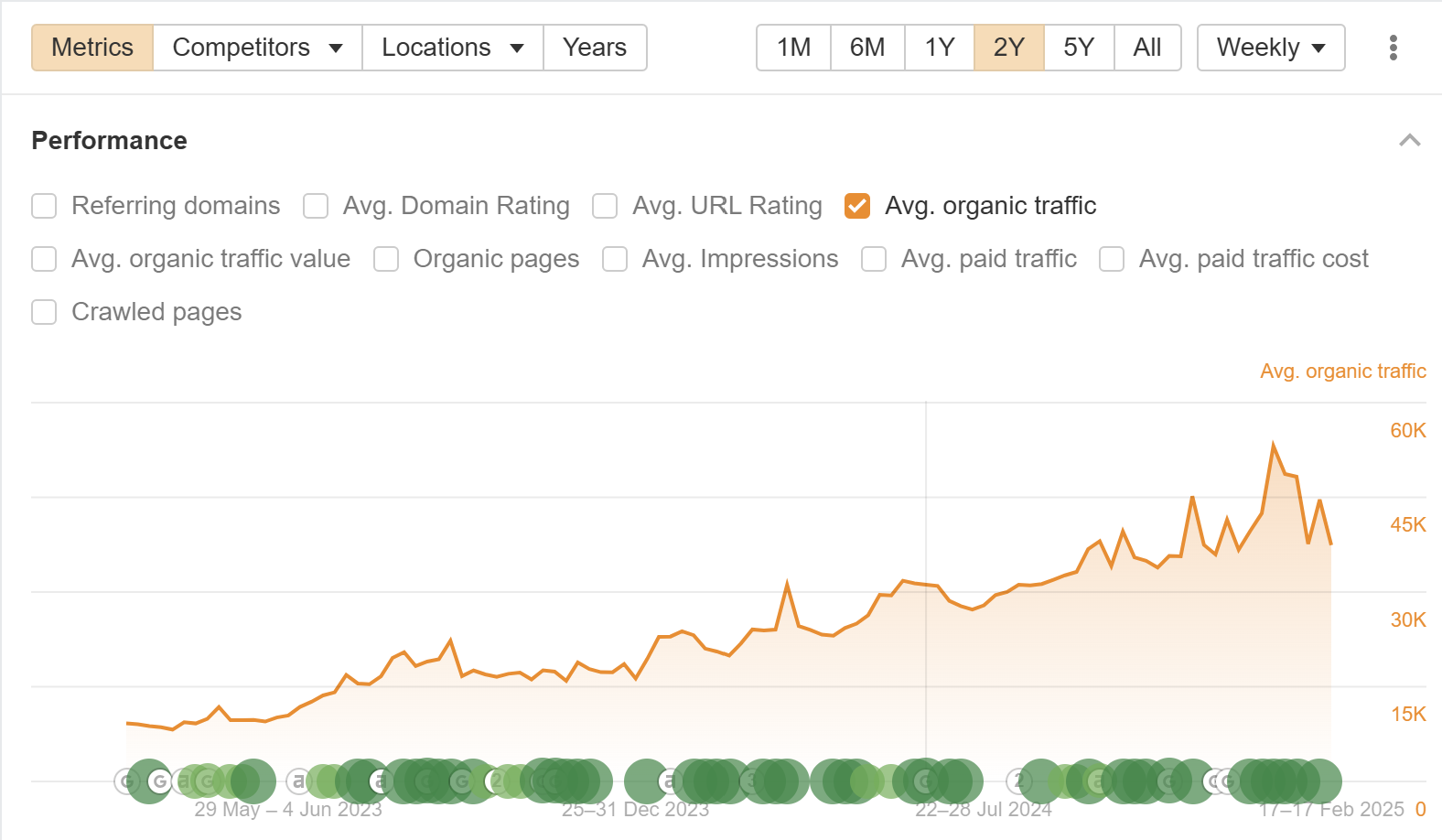
Identify reliable suppliers

Another crucial step in ensuring your setup for success is to partner yourself with reliable suppliers. As mentioned above, as a ghost commerce business, you have minimal control over the delivery of your products, yet any negative customer reviews will impact your business and not the manufacturer.

Therefore, you must control the controllables! If a manufacturer’s rates or lead times seem too good to be true, it’s best to steer clear and stick to suppliers that have a strong track record for hitting their deadlines and meeting customer expectations.

Tailor marketing strategies specifically for your target audience

Laslty, ensure that all of your marketing strategies are tailored specifically to your target audience. It can be tempting to try and attract the most people with your efforts, but that generalist approach will likely mean you attract no one.

Instead, lean heavily into your niche, conducting targetted social media ads that reach them specifically, and focusing on PPC topics that they search.

One of the most obvious examples is via your SEO efforts. If, for example, your ghost commerce business is selling functional fitness sneakers, it can be tempting to write content for your website that focuses on the keyword phrase ‘sneakers.’
After all, as you can see below, there is plenty of traffic for that search term:

However, it is also a very competitive keyword (56) and you will be competing with leading brands like Adidas and Nike.

Instead, opt for a search term like ‘functional fitness’ which has less search volume (4.1k) but also much lower competition (23).

As a new website, your domain rating will be very low, so tackling topics with less difficulty is crucial as you grow your brand.

Learn All You Need to Know About Setting Up an Online Store for Just $1

Ghost commerce is one of the most low-risk, high-reward ways to start an online business—no inventory, no upfront stock costs, and no need to handle logistics. But to succeed, you need the right strategies, suppliers, and marketing tactics to make it work.

That’s where Foundr+ comes in. For just $1, you’ll get instant access to 30+ expert-led courses and 1,000+ lessons on eCommerce, branding, digital marketing, and supplier sourcing—everything you need to launch and scale your ghost commerce brand.

Start building your ghost commerce brand today for just $1.

Frequently Asked Questions About the Ghost Commerce Business Model

What are the cons of ghost commerce?

  1. High Competition
  2. Market Saturation
  3. Dependence on Third Parties
  4. Lack of Brand Control
  5. Limited Customer Relationship & Loyalty

How do I identify a target audience for my online business?

To identify your target audience, you must evaluate your competitor’s content marketing strategies, see who they’re going after, and identify common traits that you can then bake into your ideal customer profiles. As you start to make sales, you can then look for common traits in your purchasers to make more specific target audiences.

How do I get more people to visit my online store?

Ecommerce ghost commerce only works with a strong online presence and plenty of visitors. To get more people to your site, ensure your content marketing efforts are aligned, and you must be willing to spend on advertising through social media accounts or via PPC.

The post What is Ghost Commerce? The Definitive Guide appeared first on Foundr.

How to Make Money Fast in 2025: 6 Easy Options

Interested in learning how to make money fast in 2025?

The good news is, it’s not as difficult as you may think.

And no, this isn’t another article about how you can ‘earn passive income by buying our AI software’.

These are real, unique ways that you can tap into online money making opportunities that will help you earn quickly, and also for the long-term.

Short on time? Here are the key takeaways

  • Drop new products with limited stock: By limiting stock, you create urgency for your products, which generates more demand.
  • Trendspotting and fast-moving inventory: Set up an online store that tracks trends and turns them into relevant, fast-moving products.
  • Niche subscription boxes: Niche markets are a great starting point for earning extra cash, and can become a very steady income stream.
  • Buy local, but sell national: Use the local aspect of your products as a digital marketing tactic, allowing you to make more money from attracting a global audience.
  • Branded merch: If your online business already has loyal customers built-in, they may be interested in branded merch.
  • Sell in bulk to businesses: While many people try to earn money by selling to consumers, why not try selling in bulk to other businesses?

Making Money Quickly (The Right Way)

Before I dive into some clever ways that you can make money quickly in 2025, I just want to quickly explain how I researched and pulled together this list.

After all, there are lots of ways to make money online quickly, but some of those are not quite as morally correct (think crypto rug pulls, sports gambling, or selling online courses that are just a collation for freely accessible content).

I wanted to provide you with real ways to make money fast, and from my market research, I’ve come up with six options that are not only great for short-term gains but also long-term success.

Many of the below also require limited additional knowledge, and all you need is a strong internet connection, a few digital marketing skills, and some old-fashioned hard work!

How to Make Money Fast in 2025 in 6 Unique Ways

With that in mind, let’s take a look at six unique ways to earn money online. Some have minimal upfront investment, whereas others will require you to put in some additional extra money and time. However, these ideas all aim to provide you with unique ideas for your own online store rather than simply telling you to sell online courses or take part in dropshipping.

There’s a ton of information on how to earn money in those ways, so let’s take a look at some more interesting options!

Drop new products with limited stock

It can be difficult to get your products to stand out in today’s overcrowded digital marketplace. Sometimes new products can take a while to gain the traffic, reputation, and customer reviews needed to become a popular product.

However, there is a way that you can skip the digital queue.

Brands have seen great success limiting stock, drumming up demand through scarcity, and earning money fast.

Not only that but limiting stock also ensures you never get caught out with a lack of stock compared to demand, which is a lovely bonus!

The fitness shoe company R.A.D has done this really well, rising from relative obscurity to become the must-have functional fitness shoe in just a couple of years.

Here’s an example of their upcoming drop, where the product is not currently available and will sell out in a matter of minutes, much like coveted gig tickets for a Dolly Parton reunion tour would.

And here’s a traffic graph highlighting the brand’s growth in recent years since taking this approach to product launches.

Trendspotting and fast-moving inventory

Another way to help get your foot in the digital door and start making money quickly is by focusing on trend-specific products.

Rather than setting up an online business that focuses on one specific niche or industry, one way to ensure traffic is to quickly adapt to current trends, selling products or services that are in high demand. One of the benefits of being small team or independent business is that you can be much more flexible, adaptable, and quick than market-leading businesses.

Thanks to advances in technology, you don’t need any web development skills to quickly set up a high-quality shop with sites like Shopify. For this venture to be successful, you’ll need to ensure you keep abreast with any new trends, and also find yourself a reliable supplier than can produce the products you need, at a timeframe that ensures they are still relevant.

For example, remember fidget spinners? One entrepreneurial teen managed to make hundreds of thousands of dollars by jumping on the craze, setting up an online shop and gaining large volumes of traffic almost overnight.

Niche subscription boxes

However, if the generalist approach isn’t right for you, niching down could be a great alternative. Creating a business model that focuses on a very specific niche can seem limiting, but it’s a fantastic way to build a strong online presence and brand loyalty.

For example, your brand may start as one that focuses on high-quality coffee beans, but in the future that can easily branch out into a brand that focuses on all kinds of coffee, tea, and other relevant products.

Subscription boxes are also an excellent choice because they help brands get a much better understand of monthly demand, not to mention a consistent income each month. They take a little bit of effort and upfront costs, but one of the benefits of subscription models is that once everything is in place, the process requires minimal tweaks and time managing.

I actually covered How to Build a Subscription Box Business in a separate article, which dives into the subject in greater detail.

Buy local, but sell national

The allure of purchasing local produce has never been more attractive for consumers.

It is easier than ever for consumers to get a taste of any part of the world, without ever having to leave their home!

As a brand, the best way to capitalize on this is to lean into your local produce, and sell it on a global scale.

For example, if you’re based Texas, a quick ChatGPT search can help you identify what type of products could gain quick traction.

Who is going to resist the chance to purchase BBQ sauce, made and distributed directly from the Lone Star State?

Branded merch

For companies that already have a following of sorts, one way to quickly capitalize on that is by created branded merch.

For several customers, purchasing branded merch is their way of showing their support for the brand, while also getting their hands on something unique that helps them show off their style and interests.

I recently explained How to Make and Sell Merch For Your Brand in this detailed article. If your business is in a position to start profiting from branded products, be sure to check it out!

Sell in bulk to businesses

Lastly, while every other business is trying to sell to customers, why not flip the script, and focus on selling to other businesses instead?

For example, you could start selling custom office supplies for other startups, or branded packing for small businesses.

One of the biggest benefits of pitching your products to businesses is that they are much liklier to purchase in bulk, ensuring you can earn money quickly that can then be reinvested back into your business.

Get All the Insights You Need to Earn a Consistent Monthly Income, For Just $1

If you’re serious about making money online and want expert guidance to help accelerate your success, then Foundr+ is the perfect solution. For just $1, you’ll get 14 days of live coaching, direct support from real experts, access to an engaged community of 30,000+ entrepreneurs, and over 30 business courses designed to fast-track your business growth.

Whether you’re launching a niche subscription box, branded merch, or a trend-driven online store, having the right strategies in place can make all the difference.

Claim your $1 trial now and start scaling your business today.

Frequently Asked Questions About Making Money Online Fast

Is it possible to make passive income by selling courses online in 2025?

While it is possible, it is very difficult, most notably due to the saturation of the market, plus the bad reputation that online courses have gained after many poorly put-together courses have let consumers down before.

How can I identify my target audience and what they need?

For businesses that already have a following, you can identify your target audience by tracking common traits in your existing customer base. For businesses that are still starting out, use a combination of ChatGPT and your competitor’s customer base to identify who your ideal audience is.

Should I quit my full-time job to set up my own website?

Each person’s situation is completely different, but we would recommend that you only take this step if you are confident that your essential payments are all covered, at least until your new business is up and running.

The post How to Make Money Fast in 2025: 6 Easy Options appeared first on Foundr.

How to Make and Sell Merch For Your Brand in 2025

When running a startup or small business, finding new revenue avenues can be significantly beneficial.

After all, building a brand isn’t always cheap, so any way that you can generate additional income should be welcomed with both arms.

That’s exactly what high-quality merch can do for you! Here, I’ll show you how to make and sell merch for your brand in 2025, expanding your business and making some additional funds along the way.

Short on time? Here are the key takeaways

  • Step 1: Build a brand identity: Start by identifying what your brand is popular for and how that can be reflected in your merchandise.
  • Step 2: Know your audience: Next, understand the buying habits and traits of your audience, as this will impact marketing efforts and designs.
  • Step 3: Choosing what to sell: Select what type of products have a good profit margin and meet audience expectations.
  • Step 4: Design time: Once selected, start designing the style you want to see from your merchandise.
  • Step 5: Test and learn: Get samples of your first design efforts and ask friends and family for feedback.
  • Step 6: Choose a manufacturer: Once you’re happy with them, organize manufacturing and start stocking your merch, ready to sell.

Firstly, What is Merch?

Before we jump straight in, I wanted to quickly touch on what I mean by the term merch. Merch is a common abbreviation for merchandise, and you’ll likely hear influencers, YouTubers, and streamers refer to it as one of their main sources of income.

In simple terms, the phrase ‘merch’ refers to any products that are branded in line with a company or popular personality and sold to fans of that business or person.

While it has often been popular with social media celebrities, it has become more and more popular option for more mainstream businesses as well, most notably coffee shops, bookstores, or other locally run businesses.

Why is merch so popular?

The popularity of merch doesn’t just come from one key reason; there are actually several reasons why customers would opt to purchase a brand’s merchandise.

One of the main reasons is that it is a great way to show support and loyalty to that brand and allows them to feel a little bit closer to the inner workings of the business.

That’s why merch is so popular with shops that operate locally in the community, as people appreciate that running a small business can be challenging and purchase merch as a show of their appreciation.

It also offers sentimental value, as it can be seen as a memento from a memorable experience, such as a t-shirt from a concert of your favorite brand. Speaking from experience, I have several Sam Fender t-shirts that fill this reason, and also a t-shirt from a coffee shop I have many fond memories for that closed down in 2020.

It also allows customers to not just show support but also personality. People want to wear clothes that represent who they are and what they like, and what better way to do that than by purchasing merch from their favorite brands?

As you can imagine, setting up a successful merchandise shop can be incredibly successful. Because of this, many brands and influencers are also attempting to get into the merch game, so it is crucial that you create the sort of products your audience want to see, or you will struggle to get a foothold in the market.

Your 6-Step Plan to Selling Merch Successfully

With all that in mind, here is a very quick six-step process that you can follow to start selling merch successfully. For a more detailed approach to selling and scaling, be sure to check out Gretta’s fantastic course on the subject in this free training video.

1. Build a brand identity

Before you go ahead and plunge valuable funds into your merch adventure, you need to ensure that you have an audience that will be receptive to what you put out.

After all, your customers might be happy with your IT solutions, but that doesn’t necessarily mean they want your brand plastered on their tote bags and mugs.

You must, therefore, ensure you have established a clear and exciting brand identify first. That’s more than just an eye-catching logo, though. It’s also the image and personality that is related to your brand and what people think about when they see your branding.

Some of the most successful merch sellers are trendy coffee shops, popular influencers, and cool content creators. That’s because merch for these brands allows customers to show off their love of the brand while also projecting to other people that they are cool because they are fans of those brands and personalities.

Here’s a quick guide to creating a quality, authentic brand.

  • Define your core values: Identify the principles that guide your brand and ensure they align with your mission and audience expectations. Authenticity comes from staying true to these values in all aspects of your business.
  • Know your audience: Understand your target market’s needs, desires, and pain points. Speak their language and create content that resonates with them on a deeper level.
  • Craft a unique brand voice: Develop a distinct tone and messaging style that reflects your brand’s personality. Consistency in voice builds trust and recognition.
  • Design a memorable visual identity: Your logo, colors, and typography should reflect your brand’s essence and make a lasting impression. Cohesive visuals help reinforce brand identity.
  • Tell a compelling story: Share your brand’s origin, purpose, and journey in a way that connects emotionally with your audience. People engage more with brands that feel human and relatable.
  • Be consistent across all platforms: Whether it’s your website, social media, or packaging, maintain a unified look, voice, and experience. Consistency builds trust and recognition.
  • Engage and listen to your community: Foster meaningful interactions by responding to comments, gathering feedback, and showing appreciation. A strong community reinforces brand loyalty.
  • Deliver on your promise: Quality and reliability are key to building an authentic brand. Ensure your products, services, and customer experience align with your brand’s messaging.
  • Showcase real people and experiences: Highlight customer testimonials, behind-the-scenes content, and real-life brand applications. Authenticity is strengthened through transparency.

2. Know your audience

Once you’ve nailed down your branding, it’s time to get more familiar with your audience. Understanding your audience’s behavior, wants, and needs will greatly help when it comes to choosing the type of products you should be selling.

If you already have a group of loyal customers, gathering this information should be quite simple and can be done by reviewing feedback, reviews, and engagements on social media.

If you haven’t got a large dataset just yet, you can pull together all the information you have on your existing audience, running it through ChatGPT to glean more insights and expand on the limited data you have available.

If you do have the audience size necessary, running surveys or asking for comments on social posts is a great way to take the guesswork out of product selection.

Failing that, review your current customers, establish their other likes and dislikes in your industry, and see what those competitors seem to be selling and to what level of success they are doing so.

3. Choosing what to sell

Next, it’s time to pull those product ideas together and identify what you want to sell. While most of the information you will use for this will be based on audience preference, you will also need to factor in costs, profit margins, and availability.

Melisa Vong has a fantastic free masterclass on How to Find a ‘Hot Productthat you should definitely check out for inspiration!

Here’s a quick breakdown of some of the most popular choices that many businesses and individuals opt for:

  • Hats
  • T-shirts
  • Mugs
  • Phone cases
  • Hoodies
  • Sweatshirts
  • Tote bags

4. Design time

This step is perhaps the trickiest, as it doesn’t matter what merch you have lined up if the designs are no good! Create designs that you know will resonate with your target audience, leaning heavily on your brand colors and only using the highest quality imagery and graphics.

I always suggest to brands that they keep things as simple as possible, focusing on clear and easy-to-read fonts and easy-to-recognize designs.

5. Test and learn

Once you’re happy with your designs, it can be very tempting to quickly rush to get your products to market, but this is one of the biggest mistakes that you can make.

After all, what if you’ve made a horrific spelling error? Suddenly, your ‘Getting Your Ducks in a Row’ hats might not be so child-friendly!

To prevent such expensive problems from arising, chat to friends and family for honest advice on your efforts. You need to choose people that you trust will tell you what they really think, as purchasing stock is not cheap.

Feedback is the best way to identify what is most likely to work and what isn’t, and gives you the confidence you need to sell your products online.

6. Choose a manufacturer

Once you’ve got your honest feedback, swallowed your pride, and made any necessary changes, it’s time to turn your merch ideas into tangible products!

When it comes to producing and stocking your merch, you have two main options to choose from: Print on demand or via a Manufacturer.

Each has its own benefits, so it’s important to research both in as much detail as possible. Print-on-demand allows you to keep costs low and reduces any inventory concerns you may have, which can be very helpful for anyone who is unsure how well their merch will be received.

For those who are confident they will sell their merch quite quickly, you may want to opt for a manufacturer, as purchasing in bulk is often significantly cheaper than a print-on-demand alternative.

Want to learn more about creating the perfect product blueprint? Check out Kian Golzari’s brilliant course on this subject.

Create and Sell Your Own Merch with Foundr+

Want to launch a successful merch brand? Foundr+ gives you everything you need to make it happen. For just $1, you’ll get instant access to 30+ expert-led courses and 1,000+ lessons covering branding, design, eCommerce, and marketing.

From crafting standout designs to choosing the right suppliers and growing your audience, Foundr+ equips you with the tools, strategies, and community support to build a profitable merch business.

Don’t wait—start creating and selling your merch today.

The post How to Make and Sell Merch For Your Brand in 2025 appeared first on Foundr.

8 Unique Side Hustles to Try This Year

Starting a business can be tricky.

Not only does it require a lot of time and effort, but it can also be very daunting to consider quitting your 9-5 without knowing whether or not you’ll be successful.

With that in mind, I’ve pulled together eight unique side hustles for you to try this year. The aim is to provide you with potential side hustle ideas that you can scale and grow into full-time businesses over time.

That way, you can build an audience and an income stream before taking the ultimate leap and laying the foundations for your future success.

Short on time? Here are the key takeaways

  1. Create an e-course: A high-value niche course can still provide a great form of passive income.
  2. Social media management: With more brands expanding their social media marketing efforts, you could use your expertise to manage multiple channels.
  3. AI automation consultant: The rise in AI capabilities has left a gap for skilled experts to consult and support.
  4. Domain flipping: As it’s easier than ever to create a website, hunting for domains is also more popular.
  5. Ghostwriting for CEOs & influencers: Thought leadership is becoming increasingly important, but often, people don’t have the time to do it properly
  6. Local drone photography and videography: Drones are a great way to get memorable shots and videos, and they only cost a small amount upfront.
  7. Personalized embroidery business: Personalization is a fantastic way to diversify yourself from the competition.
  8. Subscription-based coffee roasting business: Subscription-based businesses are a great way to manage inventory and growth in line with demand.

8 Unique Side Hustles to Try This Year

Create an e-course

eCourse

Pros: 

  • Limited upfront costs
  • The main investment is time
  • Once live, minimal work to maintain

Cons: 

  • There are a lot of other eBooks to compete with
  • There is a generally negative perception of eBooks
  • Building your initial reputation takes time

Firstly, you could opt to create an online course to make a little bit of extra money on the side. Creating an eCourse is easier than ever, with minimal upfront costs other than your time and effort in researching and writing.

Plus, once your course is live, there’s minimal upkeep required, just quick edits and amends where necessary when information changes.

Of course, it’s important to note that the internet is flooded with average, at best, eCourses, so it’s very important that you produce something that doesn’t just regurgitate already available knowledge. Instead, focus on providing true value, accept that this will take a little longer in the short term, and you’ll slowly build a library of popular eCourses that provide you with a healthy monthly income.

Social media management

Social Media

Pros: 

  • Completely remote and easy to scale
  • High demand due to increasing brand awareness of social media marketing
  • Posts can be scheduled to meet client time zones

Cons: 

  • Requires a level of skill, qualification, or experience to start
  • It can be difficult to find initial clients
  • Constant work to upkeep, manage, and expand

Another popular side hustle you could consider is social media management. One of the biggest benefits of this approach is that you can do the work completely remotely and use tools to schedule content in advance, ensuring it meets client deadlines without taking over your entire life.

Plus, thanks to increased awareness of the value of having a brand presence on social media, there is plenty of opportunity here to scale up your efforts and turn it from a side hustle to a full-time business.

AI Automation Consultant

AI Automation

Pros: 

  • Extremely topical
  • Scope for growth as the technology develops
  • Company concern and lack of understanding are driving high demand

Cons: 

  • Requires certain skills and experience
  • Must maintain constant learning to stay on top of the newest innovations
  • Convincing brands it’s necessary can be tricky

I don’t know about you, but I don’t think I’ve gone a day without hearing about the advancements or capabilities of AI so far this year!
However, while some of those advancements either seem minimal at best or hard to understand, the evolution of AI has led to companies desperately searching for ways it can increase production and improve profit margins.

That’s where an AI consultant can help. There’s a ton of scope for growth with this role as the technology develops and becomes even more mainstream, and although it requires consistent upskilling to keep up with the updates, this side hustle could be very profitable.

Domain Flipping

Domain Flipping

Pros: 

  • More and more demand for good domains
  • Easy to do at a time of the day that suits you

Cons: 

  • Turnover is minimal per domain
  • It can be hard to find good domains without taking a gamble
  • Difficult to scale without investing more time and money

Domain flipping is another from-home side hustle that can quickly start to make you a nice little second income. 

As it becomes easier and easier for people to create websites, web domains are also becoming more sought after, increasing the demand (and therefore competition) for good quality domain names.

However, I would be wary of expecting this to turn into a full-time role. It can be hard to pick domains that will one day be worth a lot more than you paid from them, and it can be difficult to scale without investing more time and money.

Ghostwriting for CEOs & Influencers

Ghost writing

Pros: 

  • Fully remote and can be done at a time that suits you
  • Potentially high-paying clients
  • High demand for quality work that differentiates from the norm

Cons: 

  • Hard to expand by investing more time
  • Some clients can be very specific or critical
  • Establishing rates will likely vary per client

The rise of generative AI would have many people thinking that the role of a ghostwriter is no longer needed. In actual fact, high-quality writing is now more important than ever!

High-quality content is now a significant differentiator for brands, and especially for CEOs and influencers, whose personal brand is absolutely critical for business growth.

You can offer this service fully remotely and work at a time that works for you around other commitments, although it is worth noting that rates will often be dictated by clients somewhat, so income may vary.

Local Drone Photography and Videography

Drone

Pros: 

  • Drones are now much cheaper than when they first launched, making the startup costs cheaper
  • Provide a service normal photographers can’t
  • High demand for beautiful imagery and aesthetics thanks to social media growth

Cons: 

  • There is a startup cost to factor in
  • Work is not remote, and travel is required

When drones first became available, many people (myself included) scoffed at the price. However, now they have been in the market for several years, drones are much more affordable, and as such, have become a very useful tool for setting up a photography or videogreaphy business. 

Whether you specialize in weddings and work your side hustle at the weekends, or work with brands that want more marketing collateral, drone-based photography and videography can be very attractive for many businesses in your area.

Personalized Embroidery Business

Embroidery

Pros: 

  • Customers demand personalization
  • Personalization can help differentiate from other services
  • Turn a craft into a source of income
  • Patterns can be produced on a ‘set and forget’ service

Cons: 

  • Time-consuming and often demanding delivery times
  • Requires specific skills and resources

When launching an eCommerce brand, it can be tricky to show audiences your USP. After all, what separates your brand from others in the industry?

One way to truly differentiate is to offer a personalization-based service. It could be embroidery, it could be metalwork, it could be anything in between! The main thing is that you adhere to a specific type of customer, building a loyal audience that people will make repeat purchases from, helping you grow your side hustle into a business.

Subscription-based coffee roasting business

Coffee

Pros: 

  • Subscription businesses are easy to scale and manage inventory
  • The packaging is small, making it easy to store at home until you scale
  • Simple to setup, with minimal upfront costs for equipment

Cons: 

  • It will take time to build a consistent audience
  • Requires time and effort to continue running

Lastly, I wanted to include a subscription business as part of this list, as they are an excellent option for founders who want to track consistent sales and manage inventories on a budget. The reason I chose coffee subscriptions is that it is a commodity that coffee lovers are willing to spend money on, it’s a product that people frequently use each month, and it’s a product that has been proven to be popular for generations.

All of that ensures that coffee-roasting brands are not going anywhere any time soon and that there is a built-in market ready to taste your delicious concoctions.

Final Thoughts

Looking to start a unique side hustle this year? Foundr+ provides the perfect resources to help you turn your ideas into reality. For just $1, you’ll gain instant access to over 30 courses and more than 1,000 lessons, all taught by industry experts. 

Whether you’re launching a passion project or building a profitable business, Foundr+ equips you with the skills, strategies, and community support you need to succeed.

Don’t wait—take the first step toward your next side hustle today. Sign up now.

The post 8 Unique Side Hustles to Try This Year appeared first on Foundr.

How Businesses Can Thrive on TikTok Shop in 2025

Traditionally, new businesses would need to set up a brick-and-mortar shop in the middle of their city to start making sales.

But the world has changed significantly since then, with more avenues than ever available for launching a brand.

One such avenue is the TikTok shop, which can be incredibly successful for some brands but also difficult to understand.

Here, I will discuss how businesses can thrive on TikTok Shop in 2025 and successfully grow their brand.

Short on time? Here are the key takeaways

  • Promote urgency: Try to capture your audience’s attention before they decide to swipe and move on.
  • Don’t be afraid to discount: TikTok exclusive discounts are a great way to promote action from your viewers.
  • Limit volume: By limiting volume, you ensure that viewers will act due to the fear of missing out.
  • Engage with your audience: Audience engagement is essential to make your viewers feel heard and seen.
  • Focus on the visuals: Your background and setup must be eye-catching, as TikTok is a video-first platform.
  • No dead air: The more dead air on your page, the more chances you give for your audience to consider moving on.

What is TikTok Shop?

TikTok Shop is a feature within the TikTok app where users can make purchases while browsing the social media app.

It is well known that TikTok shop is one of the most popular social media apps, especially with the younger generation, and being able to reach them where they already are is much easier than convincing them to come across your website or social channels.

If you use TikTok yourself, you’ll notice that TikTok shops appear infrequently as you’re scrolling, showing up in between the content you follow and what the algorithm recommends and sends your way.

The videos are often of a very passionate seller, confidently communicating and engaging with the chat while also promoting products, regularly with some form of urgent discount.

For those of you reading who are old enough to remember, it is the closest thing to a modern-day version of the TV shopping channels you’d stumble upon when flicking through terrestrial TV channels.

The stats

All that sounds great, but what’s really impressive is the numbers behind TikTok Shop. In 2024, there were as many as 264,500 TikTok shops, with the gross merchandise value sitting at just over 11 billion dollars!

The main winners are fashion and beauty brands, with beauty and personal care (22.50%), Womenswear & Underwear (12.56%), and Menswear & Underwear (8.06%) dominating the market.

However, other industries like Health (5.42%) and Phones & Electrics (3.88%) also have plenty of market share.

You can see plenty more insights and data in this great report from AfterShip.

How to Be Successful on TikTok Shop

Now that you know some of the incredible numbers behind TikTok Shop, let’s discuss how to be successful on the platform. After all, simply setting up a TikTok Shop does not guarantee success. You need to ensure your shop is well set up and you’re doing everything you can to bring in new customers.

Promote urgency

The first tactic to be aware of is the need to promote urgency when selling on TikTok. User’s engagement time per post is so short that you need to capture their attention immediately by promoting the need to act urgently.

Not only that but the more time you give your viewers to weigh up and consider whether they should purchase from you, the more chance there is that they opt to swipe and move on without buying from you.

Of course, I’m not saying you should lie to promote urgency to your audience, but you should use incentives to motivate quick action.

Don’t be afraid to discount

One of the best ways to do that is by offering a ‘here and now’ discount that isn’t available on your website. This tactic is very common on TikTok and motivates viewers to act now rather than wait or move on from your shop.

Not only that, but you could also run occasional giveaways for those who comment on the live video. People love the idea of winning free stuff, even when it isn’t something they need! Plus, by doing this through the comments section of the video, you also please the TikTok algorithm gods with your consumer interaction, which in turn will mean your shop is shown to more potential customers, and the cycle continues.

Limit volume

Another way to promote action is to limit volume. You’ll notice that most of these suggestions are all focused on not only keeping your audience for longer but also driving them to take action.

By limiting the volume (aka, stating you only have three left in stock), you tug on people’s fear of missing out. This approach will push some people who were unsure about purchasing into purchasing out of fear that if they don’t act now, they’ll miss out.

Again, it’s important to keep the ethical aspect of your business in mind here. If you say you’re only selling 10 items at a specific price, it’s important that you stick to that and not expand the offer or lie about the volume.

Not only is this unethical, but your audience will quickly see what you’re doing and move on while also no longer trusting you in the future.

As a founder of a small business, trust is everything, and building a loyal customer base is the first step to achieving long-term sustainable growth.

Engage with your audience

Another essential tip for success on TikTok Shop is to engage with your audience. Keep an eye on the comments that are coming in, as they are likely questions about your product, similar to what you would see answered on an FAQ page.

Not only will this turn those potential customers into paying ones, but it also shows other viewers that you’re listening and engaging, which adds authenticity and trust, two essential signals for new brands trying to get a foothold in the market.

Focus on the visuals

Next, it’s important not to forget the importance of visuals on TikTok Shop. According to DigiDay, as many as 75% of social media users scroll their apps with the sound on mute.

Therefore, the only way to capture their attention is by providing them with an interesting and engaging visual.

That means being conscious of the backdrop you are streaming live from, as well as the lighting situation and where you are positioned within the frame.

This all might seem like little things, but they all add up to ensure more people stay on your video for longer.

It’s also important to show physical copies of the product that you’re selling. Not only will this excite viewers, but it also makes them more trustworthy that you will deliver the product if they make a purchase.

No dead air

Lastly, any dead air is an opportunity for your audience to swipe and move on. Practice your talking to the camera by doing the same in the mirror, cutting out any empty space in your selling, and trying to cut out any mumbling or filler words like ‘um’.

Unfortunately, this just comes more naturally to some people compared to others! But it is also a skill that you can work on.

After all, practice makes perfect!

Final Thoughts

Looking to leverage TikTok Shop to drive your business growth in 2025? Discover proven strategies and expert tips with Foundr+.

For just $1, unlock instant access to over 30+ expert-led courses and 1,000+ lessons tailored to help you excel on TikTok and beyond. Join a vibrant community of forward-thinking founders who are mastering the art of online selling.

Sign up for Foundr+ today.

The post How Businesses Can Thrive on TikTok Shop in 2025 appeared first on Foundr.

What Is a Niche Market And How to Find One For Your Brand

Do you have a grasp on the potential niche your brand might operate within?

While niche markets are much smaller than broad ones, successfully tapping into them can be incredibly lucrative in the long run.

In this article, I will show you the value of moving into niche markets, and how to reach the target audience of your chosen one.

Short on time? Here are the key takeaways

  • For brands with little reputation or awareness, niching down can be a fantastic way to get a foothold in their desired market by building a loyal customer base.
  • Niche markets can be found by reviewing competitor behavior, as well as selecting broader categories and niching down from there.
  • Niche markets may seem like a step back because they are smaller, but a loyal following is vital for any startup brand to gain traction in a broader market.

What is a Niche Market?

But first, I should start by defining what I mean by a ‘niche’ market. In simple terms, a niche market is a smaller segment of a much larger market. For example, the broader market could be male trainers, and the niche market would be Olympic-lifting male trainers.

The audience for these trainers is much smaller but also much more specific. Catering to this particular group of consumers means adhering to their specific needs and preferences, which in this example would be trainers with a flatter sole and a wide toe box.

When deciding whether or not you have identified a niche market, here’s a quick checklist you can use:

  • What is the size of the market? Niche markets tend to be much smaller than broader ones.
  • What is the target audience? For a niche market, you should be able to identify a well-defined group of customers with shared interests, characteristics, and needs.
  • Does this audience show signs of brand loyalty? Customers in nice markets are often incredibly loyal to brands that cater to their unique needs.

Why Are Niche Markets so Important for Startups?

Now I know what you’re probably thinking. ‘Why on earth would I cut my target audience by as much as 75%? Surely, as a new brand, I should be trying to reach as many people as possible?”

Well, the truth is that if you take a generalist approach to your targetted audience, you will struggle to meet any of their needs completely, making it hard to sway them to change from their usual brand purchases.

Remember, as a founder, you are fighting a fun (albeit uphill) battle as you are competing with established brands, trying to convince their customers to jump ship and give you a try.

So, put yourself in your target audience’s shoes. If you are not meeting their specific requirements, why would they change their consumer behavior?

Instead, by focusing on fully meeting a select few’s needs, you stand a much better chance of turning them into loyal repeat customers, which can then set the foundations for your business to grow into a larger marketplace in the future.

How to Reach a Niche Market

With that in mind, let’s take a look at how you can reach a niche market.

Start niching down from broader categories

The best place to find a niche market is by starting in a broad one! Let’s say, for example, you’re interested in creating a new clothing brand. You can start by looking at male and female clothing and niche down from there.

For example, you could close in specifically on male and female sports clothing, and from there, you could niche down into specific clothing within specific sports.

You could become the go-to brand for brand-new golf trousers before venturing further into other golf clothing further down the line, and then other sports, and so on.

A great example of this in action is Three Putt Golf Clothing, a brand that has niched down from the broader apparel market into the intersection of golf and streetwear culture. Rather than trying to compete with the major sportswear giants across all categories, they’ve focused on a specific audience of golfers who want something different from the traditional, corporate look that dominates the sport.

You may know Amazon as one of the biggest brands in the world, offering almost everything under the sun, but that isn’t how it started. 

Instead, it started focusing on the niche market of selling second-hand books online and has gone from strength to strength since then.

Identify niche market keywords

Once you’ve identified your nice, it’s time to reach your target audience. Using our golf trousers example, you can then search for related golfing terms that will attract the right audience to your brand, writing SEO-friendly content that suits their needs.

Another benefit of going after a niche market is that the ranking difficulty becomes much easier. 

Take a look at this data from Ahrefs, using the golf example once more.

Keyword term: Golf

Keyword difficulty: 84

Search volume per month: 81,000

Keyword term: Golf clothing

Keyword difficulty: 56

Search volume per month: 5,300

Keyword term: Golf

Keyword difficulty: 84

Search volume per month: 81,000

Keyword term: Golf trousers

Keyword difficulty: 5

Search volume per month: 7,500

As you can see from this snapshot of data, the term ‘golf trousers’ is much easier to try and rank for than ‘golf’ and still provides plenty of traffic potential for new brands.

As a new business, Google needs to see that you are a legitimate company before providing you with what’s known as a high ‘Domain Rating’. Without a high DR, it doesn’t matter how great your content is; Google won’t rank it highly in the results.

However, that issue largely disappears for low-competition keywords, and as more customers come to your site from these sources, purchase from you, and leave reviews, your DR will increase, and then you can tackle larger terms.

Identify potential groups on social media

Another way of reaching your niche market is via social media, either by creating content they want to see or even by DMing them directly. It’s a tactic several of our founders have used to build hype and expectation before brand launches and to great success.

Engage with your target audience in a friendly manner, and try not to be too pushy or ‘salesly’ in your messaging. This can be a big turn-off for potential customers, as they are often bombarded by brands trying to get their attention.

Track competitor performance

Lastly, a great way to identify and contact your niche market is to track competitor performance and behavior. Identify brands in your niche, find their social media profiles, and note down their followers. 

As your competition, you know these followers are already interested in the product or service you provide, so reaching out to them is likely to be much more successful.

Found Your Niche? Now it’s Time to Grow Your Brand

If you’re seeking advice on how to plan a marketing strategy or need a personal coach to discuss the best business practices for growth, consider Foundr+. By signing up for just $1, you gain instant access to over 30 courses and more than 1,000 lessons led by top experts, including multi-millionaire Gretta van Riel. Sign up here.

The post What Is a Niche Market And How to Find One For Your Brand appeared first on Foundr.

How to Develop Leadership Skills in 2025 With These Top Tips

As a founder, there are many things you have to consider, such as product development, marketing, accounts, and much (much!) more.

Understandably, it can be easy to get caught up in the day-to-day requirements and not think enough about the steps you need to take to future-proof your business.

One such step is developing excellent leadership skills. In this article, I’ll share with you some great tips you can use to develop leadership skills in 2025 and ensure you are perfectly placed to grow and scale your business effectively.

Short on time? Here are the key takeaways

Work on your emotional intelligence: The best leaders are receptive to the needs of their team.

Think flexibly: As the leader of a small team, flexibility is key for continued success.

Challenge regularly and respectfully: Don’t be afraid to challenge your team, but do so in the right manner.

Understand incentives: Not all of your team will be incentivized by the same rewards and goals.

Overcommunicate: In a small dynamic team, there is no such thing as too much communication.

Why is Leadership so Important for Founders?

First off, let’s touch on why leadership is so important for company founders. After all, as a founder, you may not currently have a team working for you, and your primary focus is on more short-term objectives, such as product ideation and building a community.

However, while most of your efforts certainly should be on the near-term success of your business, you should also have at least one eye toward the future.

It’s much better to have high-quality leadership skills in place BEFORE you onboard members of staff or work with freelancers on a regular basis rather than losing valuable time trying to learn after they’ve joined.

The difference between great and weak leadership can have a monumental impact on the success of your brand, and given it is still in its infancy, you need to give yourself every chance of success!

4 Ways to Improve Your Leadership Skills

With that in mind, let’s take a look at a few ways you can improve your leadership and ensure you’re prepared to be the founder that your team needs you to be.

Think flexibly

Just as you have to think flexibly and adapt quickly to get a successful brand off the ground, you also have to be flexible with your leadership.

As a founder of a small, growing business, hiring the right people for your team is absolutely crucial. You need someone who is able to work in a small team, highly driven, and open to learning on the job.

After all, you may hire someone to do a specific role, but that role will likely change and differ day to day, depending on your needs.

Therefore, you must be flexible with how you hire, as this will greatly improve the quality of the candidate you take on, making your role as a leader much easier.

Once you have onboarded someone, you also must be flexible with your expectations as they get their feet under the table. Remember, you founded the business, so you know everything inside out. Before it even became a brand, you had a full understanding of it in your head!

Understand that it may take some team members longer to adapt to the business you have created, and try to provide them with the time and resources they need to succeed.

Challenge regularly and respectfully

As a leader, it can sometimes feel difficult to challenge those that work for you. After all, you don’t want them to take any constructive feedback personally, and you definitely don’t want to demotivate them.

However, if you aren’t challenging your team to strive for the absolute bust on a regular basis, you will struggle to continue growing your brand quickly and effectively.

That’s why you need to develop the art of challenging without offending. When providing feedback, ensure that you call out your employee’s great work as often as you challenge things you’d like to be done differently.

Plus, when you do challenge things, do so in a completely pragmatic manner, ensuring none of your feedback can be taken personally.

It’s also important to ensure any challenges are conducted as a discussion, where your team feels confident pushing back, adding their own thoughts, and contributing to changes. Businesses that allow their team to feel like they are heard and their opinions are validated tend to be significantly more successful. That is especially true for small businesses, who need to be highly adaptable and flexible.

Lastly, remember that each person is unique in how they like to receive feedback or constructive criticism. What works for you may not be right for them, so always be mindful of what they prefer and try to make them as comfortable as possible with the process.

Understand incentives

It’s also very important to factor in what incentivizes your team. A good leader will do everything in their power to understand their staff’s incentives, as this can greatly help improve productivity and output.

After all, while your passion may be the success of your business, that may not be the case for your staff, and it’s important to understand that is absolutely okay!

Instead of trying to get them to be incentivized by the business’s top line, ask them what they would like to see as rewards for achieving performance goals. It may be more time off, it may be more work-from-home flexibility, it may even be more pay. 

Whatever the case, you can then use that as your incentive for achieving goals and exceeding expectations, as this will have a much greater effect than simply asking them to care more.

For many people, a job is a job. Some people are meant to start a business, and others aren’t. Once you realize this, and realize there is no problem that, and with the right incentives these members of staff can be very productive, you will see much greater results.

Overcommunicate

Lastly, there’s no such thing as overcommunication for a leader of a small business. Small businesses require employees to wear many different hats, and as such, it’s easy for things to get missed.

A great leader ensures that not only does everything stay on track but also that staff members have the time and support they need to succeed, and that only comes from constant lines of communication.

That doesn’t mean you should be asking for constant updates on projects and digitally looking over their shoulder all the time, though. That’s called micro-management, and no employees will stick around for a long time if you’re conducting yourself in this way!

However, it does mean you ensure you push your team to keep you updated where possible and make them feel like they can ask any questions they need to succeed.

Final Thoughts

To enhance your leadership skills effectively, explore the resources available at Foundr+. By signing up for just $1, you gain immediate access to an extensive collection of over 30 courses and more than 1,000 lessons, all led by industry experts. F

oundr+ offers valuable educational content and connects you with a community of forward-thinking entrepreneurs. To start your journey towards becoming a stronger leader, register now.

The post How to Develop Leadership Skills in 2025 With These Top Tips appeared first on Foundr.

What are the Different Types of Business Ownership? Everything Entrepreneurs Need to Know

Owning a business can be a complicated and long journey.

Especially when you get stuck at the first hurdle: knowing the different types of business ownership and picking the right one for you!

Here, I’ll provide you with all the information you need to set your startup up for success, picking the right business ownership type for your specific needs.

Short on time? Here are the key takeaways

  • Sole proprietorship: A single owner controls the business and is personally responsible for all debts and liabilities.
  • Partnership: Two or more individuals share ownership, profits, and liabilities based on their agreement.
  • Private limited company (LTD): A legally separate entity from its owners, offering limited liability and restricting share transfers.
  • Non-profit: An organization that reinvests profits into its mission rather than distributing them to owners or shareholders.

What is Business Ownership?

First off, before I dive into the different types of business ownership structures, let’s quickly touch on what I mean by the term ‘business ownership.’

In simple terms, business ownership covers the legal control and structure of a business, identifying who owns the brand, what percentage they own, and the legal structure they must adhere to.

For many founders, that can seem quite confusing (if not rather boring as well!), but it is something you should be aware of, as each type of business ownership comes with its own pros and cons.

Types of Business Ownership Structures

Sole proprietorship

A sole proprietorship is one of the most commonly chosen options, mainly due to how simple it is to set up. For those working as solo entrepreneurs, this option is a good one as everything is owned by one person.

The main advantages of a sole proprietorship are that all the income and business assets are owned by the individual, you don’t have to worry about corporation tax, and you get to make all the decisions.

On the flip side, it also means that you are completely responsible for all business debt or losses, and there is very little to differentiate between business and personal income, which can cause problems when it comes to paying taxes at the end of the year.

Partnership

Another business ownership option you may want to consider is a partnership, which can come in two different forms: a general partnership or a limited liability partnership.

For a general partnership, all partners are responsible for making joint decisions and handling finances, whereas an LLP protects each partner against the potential debt of another partner.

This is a much clearer way to share profits and division-making compared to a sole trader, but it does mean you can be held liable for the actions of your partners on behalf of the business.

Private limited company (LTD)

Private limited companies are incorporated businesses that are owned and controlled privately. The ownership of an LTD is split by shares in the brand, allowing multiple people to own a part of the business.

One of the biggest advantages of choosing a private limited company is that it offers owners limited liability, keeping their personal assets protected from any liabilities the business incurs, which means no more sleepless nights worrying about your mortgage!

The other benefit of an LTD is that it can continue to exist after the death of any owner, making it the best option for passing the business on to a family member or friend.

Unfortunately, it is more expensive to set up an  LTD due to legal and administrative costs, and you also need to factor in other aspects, such as corporation tax, but it’s a small price to pay for the security of the business and your finances.

Non-Profit

Lastly, in specific instances, you could set up a non-profit organization, so long as you have set up your business for purposes other than profit.

In this instance, any profits the business makes don’t go to you as an owner but instead go to the cause you set it up for.

Aspects to Consider When Picking a Business Structure

With all that in mind, here are a few important aspects to consider when choosing the right business structure for you. While each business ownership type has its pros and cons, choosing the right one for you will depend entirely on your specific situation.

Start-up finance

As a founder, keeping on top of your budget is absolutely crucial. After all, regardless of how you’re funding your business, you need to ensure you are maximizing your money, and setting up a business can be quite expensive, depending on which business structure you choose.

Liabilities

One of the major issues with sole proprietorships and partnerships is the unlimited liability, which can cause some anxious entrepreneurs several sleepless nights. For many owners, they would rather not be liable for any debts that their business incurs, and for good reason!

If you opt for a limited liability company or a corporation, you can build your brand with limited liability, although there are other caveats to consider, such as corporation tax.

How many owners are there?

Are you starting your entrepreneurial venture alone or with a group of like-minded individuals? The number of owners you have as part of your structure will also be a major factor in which structure you choose. You don’t want to set up as a sole proprietor on paper, with a verbal agreement to share ownership, only to end up having some difficult conversations down the line.

Transferring the business ownership

The last thing to consider is how long you plan to own your business. After all, sole proprietorship businesses rely heavily on the owner and rarely outlive them.

Is it important to you that the business continues running after you’ve finished with it? If you want to pass it on to family or friends, it’s important you choose an ownership that makes that easy and seamless.

Final Thoughts

Choosing the right business entity can feel overwhelming, but understanding your options can make all the difference in your success. From sole proprietorships to corporations, the structure you choose will impact everything from liability to taxes and decision-making power.

For more expert guidance on business ownership, financing, and scaling your venture, check out Foundr+. Learn from successful entrepreneurs, including industry leaders like Alexa von Tobel, through our exclusive courses and insights.

Get full access to expert-led courses and invaluable resources with a Foundr+ membership—try it for seven days for just $1.

The post What are the Different Types of Business Ownership? Everything Entrepreneurs Need to Know appeared first on Foundr.

Brand Marketing Trends in 2025

Being one of the first brands to adapt to a new trend can have monumental benefits.

And as a new brand, you should always be looking for ways to differentiate yourself from the competition!

In this article, I’ll take you through the importance of marketing trends for startups and some key trends you should consider in your marketing this year.

Short on time? Here are the key takeaways

  • As generative AI continues to take center stage, brands will be able to use human touch as a unique selling point.
  • As a founder in 2025, you need to consider clever and out-of-the-box ideas to get ahead of the competition.
  • With people searching and interacting with brands in new ways, you need to ensure your brand is ready to adapt to those changes.

A Word on Marketing Trends

Before we dive into the trends you should consider this year, let’s talk about the importance of marketing trends for founders specifically. Jumping onto a marketing trend effectively as a brand can have significant benefits, especially for a brand that is just starting out and looking to gain a foothold in the market.

The main reason for this is that lots of marketing efforts at this time are either very expensive or won’t have an impact until much further down the line.

For example, you can write some very high-quality SEO-friendly blog content as a new brand, but without any Domain Reputation or authority in your industry, then Google will not rank your content as high as it maybe should be ranked based on quality alone.

So instead, you’re forced to focus on paid marketing avenues like PPC, which can quickly eat into your budget and take valuable resources.

So, if you are able to jump on a marketing trend, that can lead to a quick boost in awareness, which can have a notable knock-on effect on all your other marketing efforts.

Of course, marketing trends do have their limitations, which is why I’ve focused on picking ones that are more long-term than suggestions like ‘jump on TikTok trends quickly.’ But with that said, staying aware of the most effective trends for the year is a great way for Founders to gain an edge in 2025.

4 Marketing Trends in 2025

With that in mind, let’s take a look at four marketing trends that you should consider for your brand in 2025.

The rise of AI will lead to… a craving for humans?

There’s plenty of chatter at the moment about the rise in AI and what it can do for your company, and I did wonder about including all the potential benefits to brands that engage with generative AI and AI agent capabilities.

But then I also figured you likely can see that information on any other website! Instead, I want to talk about the potential of using human touch as your USP in 2025.

As a small brand or solo entrepreneur, you are in a unique position that larger brands can’t compete with you on, and that is customer care.

Rather than forcing your brand to chat to chatbots and engage with AI agents on your website, why not take advantage of the fact you’re a small brand and build true customer loyalty by personally responding to queries and concerns>

In a world where AI responses are becoming the norm, this approach can be a major benefit for those who are willing to put the time in.

A new social channel may take center stage

There has been a lot of talk in recent months about social media channels, most notably X and it’s ‘eccentric’ owner, and also the lingering potential TikTok ban in the US.

Not to mention Australia’s recent move to ban social media for children under a certain age.

As a result, 2025 could easily be the year we see a new social media channel reach the mainstream. One current contender is BlueSky.

Bluesky is a decentralized social media platform that prioritizes user control over their data and the content they see. Users can customize their feeds using various algorithms, enhancing privacy and offering a tailored browsing experience. 

It’s risen in popularity due to many X users claiming the platform is not as enjoyable as it once was, but we’re yet to see whether or not it will truly take off.

However, as a founder it’s important to keep your eye on these trends, as regular posters on these platforms will put themselves in a great position to gain lots of traffic if consumers flood to the website and other brands play catch up.

Community will be more important than ever

Speaking of communicating with customers, building a community will also be a major USP in 2025. Brands that are able to work and chat with their customers will reap the rewards this year, and there are several ways to do so.

While influencers can still play a large role in your marketing efforts, several brands are moving toward customer collaborations instead, with the influencer world becoming slightly oversaturated and consumers becoming more familiar with that form of marketing.

Not only that, but Google has also introduced a new feature within the search results that highlights the best discussion forums on any given topic. If you’re able to meet your brands in their digital communities, not only will you improve that relationship, but you’re also putting yourself in the shop window for new, like-minded customers.

Optimize for voice search

Lastly, I wanted to include a slightly ‘out there’ suggestion to try and give you as many potential options as possible to stand out from the crowd!
With voice search consistently rising each year, tailoring your content to suit this new approach could be a good way to outperform in the search results.

It’s become increasingly hard to rank for competitive keywords as a new brand using traditional measures, so optimizing for voice search could be the way to go.

But how do you optimize for voice search?

In simple terms, take a more conversational tone with your content. For example, rather than writing an article that focuses on the keyword phrase ‘fitness,’ focus instead on an article surrounding ‘how can I get a bit fitter this year.’

The reason for this is that people are much more conversational in their voice search than in traditional typed search, so accommodating that in your writing will benefit your performance.

Final Thoughts

If you’re looking to stay ahead in the ever-evolving world of brand marketing, especially as we navigate through 2025, Foundr+ offers a strategic advantage. For just $1, gain access to 14 days of live coaching tailored to the latest marketing trends. 

You’ll also receive support from industry experts, connect with a vibrant community of over 30,000 professionals, and explore over 30 courses designed to fast-track your learning and business growth. Dive into Foundr+ and propel your brand to new heights this year.

The post Brand Marketing Trends in 2025 appeared first on Foundr.

How to Build Discipline in 6 Easy Ways

There are many aspects of starting a business. 

People will be quick to tell you about the importance of marketing, different sales techniques, and everything you need to know about getting a product to market.

But in truth, without the necessary discipline, all the information becomes much less important. However, discipline is not something you are born with. It takes constant work and dedication, but the results are significantly more success and better obstacle management.

Here, we will look at six ways you can improve your self-discipline and give you all the skills you need to become a productive entrepreneur.

Short on time? Here are the key takeaways

  • Reframe the concept of ‘discipline’: Many people see discipline as punishment. Reframing it will help you build it.
  • Start small: Elite-level self-discipline isn’t born overnight.
  • Establish clear (and reasonable) expectations: Expectations are great to aspire to, but only if they’re feasible.
  • Make a list: Nothing beats a good to-do list!
  • Make conscious steps to minimize distractions: Removing distractions is a great way to help pave the way for self-discipline. 
  • Technology is your friend: When used correctly, technology can greatly aid your journey to self-discipline.
  • Each temptation is an opportunity to grow stronger: Discipline is something you will always have to work on.

The Importance of Discipline for Founders

The world of a founder is certainly a rollercoaster ride! There are days when the business thrives and others where you are faced with challenges you may never have even considered.

However, with the help of discipline, founders can ensure consistent progress, even in the face of adversity.

I for one, often find myself caught out by distractions or unforeseen circumstances that need resolving. But it is the discipline that ensures those situations don’t derail you. Remember, building a business is not a sprint. It’s a marathon that requires structure and focus, which are two things that discipline can provide.

Entrepreneurship is fraught with obstacles, and a disciplined mindset will let you remain composed under pressure, assess situations, and make pragmatic decisions.

6 Ways to Become More Disciplined

Reframe the concept of ‘discipline’

First off, it’s important to address the term discipline. Ever heard of a child getting ‘disciplined’ for bad behavior? 

Or perhaps a teenager who people describe as lacking discipline when they show bad behavior? There are countless examples of these interactions when we grow up, and as such, we often see discipline as a response to bad behavior or something we don’t want to do.

But building self-discipline shouldn’t focus on making yourself do things you don’t want to. Instead, it should be viewed as making positive changes for future success.

For example, if you were trying to become more helpful, you would have much more success if you opted for healthy habits you enjoyed. The same can be said for business. Opt for habits and goals that you are truly passionate about first to help instill self–discipline as an ingrained habit.

Start small

It’s also important to start small and not try to work on everything all at once. Going back to our health and exercise example from before, if you’ve ever tried to increase exercise, improve your diet, and reduce your alcohol intake all in one go, then you’ll know how hard that can be!

Sure, you might be able to keep it up for a short time, but ultimately, one aspect will likely slip, demotivating you to the point where you give up.

Instead, you’d like to have much more success by focusing on one of these aspects first, engraining it as a habit, and then moving on to the next. 

The same can be said for business. Rather than aiming to run the perfect business overnight, focus on small wins. Start by working on your project consistently each day at the same time in the morning. A small accomplishment like this is great for setting the tone and showing immediate progress.

Make a list

Next on the list? Make a list!

One of the most important aspects of self-discipline is understanding what needs doing. There is nothing more satisfying than ticking things off your to-do list, and that act alone can add valuable motivation as you continue to work through it.

If you’re not used to acting with self-discipline, you may find yourself scratching your head, trying to work out what to do next. 

The best way to overcome this is to start the day by writing down everything you want to achieve. As you become more self-disciplined, you may even expand your to-do list to cover a week or a month in advance. 

There are several tools that can help you make such a list, but my personal preference is a simple Google Sheet, where I list out my plans per hour, per day, per week, and per month. 

It isn’t a perfect system, but then no list-making system is! The important thing is that it gives a great jumping-off point to know you’re being productive and disciplined with your time.

Make conscious steps to minimize distractions

I don’t know about you, but I often find myself looking at the time on my phone, only to see that a solid 20 minutes have passed since I started scrolling through social media.

Mobile phones aren’t the only distraction founders face, but they can be a big one. Unless you are expecting a call or working on your social channels, try leaving your phone outside your office while at work. Little steps like this can greatly minimize your distractions and keep you focused on the matters at hand.

Another solution is to set alarms for certain projects during the day; this will prevent your whole day from getting wiped out by one that overruns.

Technology is your friend

While some technology can cause distractions, other technological tools can also benefit you on your journey to self-discipline. Platforms like Trello are great for organizing your tasks, ChatGPT can be a brilliant tool for content ideation and brand brainstorming, and there are plenty of others that can help speed up your productivity and motivate you to continue being disciplined. When tasks take time it can lead to distractions seeming more tempting, but the right technology can help ensure tasks are resolved quickly, allowing you to move on to the next project without any unnecessary breaks.

Each temptation is an opportunity to grow stronger

Lastly, it’s important to remember that self-discipline is not easy. After all, if it was, everyone would practice it! 

That said, each temptation you avoid helps you train your discipline muscle, making it easier to avoid the next temptation.

Removing temptations where you can in life will make a huge difference to the effort you are able to instill into your business ventures and is sure to help you turn your fledgling idea into a roaring success.

You Have the Discipline, Now Get the Resources You Need

Seeking advice on how to attract customers to your website? Or perhaps you’d like a one-on-one coach to guide you through proven business strategies to grow your brand? Foundr+ can help. For just $1, you’ll gain access to more than 30 courses and 1,000 lessons led by top industry experts. You’ll also join a growing community of like-minded founders. Sign up today to get started.

The post How to Build Discipline in 6 Easy Ways appeared first on Foundr.

5 Steps to Buying a Business in 2025

Considering joining one of the millions of small businesses by purchasing an established brand?

Congratulations, you’re on step one to becoming a business owner!

That said, while there are many benefits to purchasing an established business as a startup or entrepreneur, there are also lots of things to factor in along the way.

In this article, I will take you through the steps you need to consider when buying a business in 2025, to help you decide whether or not it’s the right idea for you.

Short on time? Here are the key takeaways

Step 1. Find a Business to Buy: Search for a business that meets your requirements regarding price, industry, and profitability.

Step 2. Establish a Budget: Make a budget to ensure you don’t overspend or walk away from negotiations too early.

Step 3. Do Your Homework: Buying a business is a big purchase, so make sure you’re doing plenty of due diligence beforehand.

Step 4: Value the Business: Don’t just take a seller’s valuation at face value. Get the business valued independently.

Step 5: Create a Business Sale Agreement: Work up a detailed business sale agreement to ensure you receive all assets and avoid future issues.

Why Would You Consider Buying a Business?

Now, you might be asking yourself, why would I buy a business? I’m an entrepreneur. I’m looking to start one!’

Well, buying a business doesn’t necessarily mean you aren’t starting it, and can also come with several benefits that starting from scratch can’t offer.

For example, perhaps you buy the domain and trademarks associated with a specific name before turning it into a completely different business. Or maybe you are interested in launching a new product or service in an industry, and you want to start with an established customer base.

Buying a business comes with some costly upfront costs, but access to customer information, existing infrastructure, and brand recognition can save you a lot of money and time (and headaches!) down the line.

It also ensures you can start generating revenue much quicker than starting from scratch, which will help you invest more back into your business and scale quicker.

5 Steps to Buying a Business in 2025

Step 1. Find a Business to Buy

First things first, you need to a find a business you want to buy! 

The easiest way to start would be to search ‘business for sale,’ but that advice is about as good as saying, ‘just Google it.’

Instead, start by narrowing down these important questions.

  • What knowledge do you have? While it can be tempting to move into a brand new industry because of the profit margins, if you don’t understand the inner workings, you will struggle to continue or improve on that success without a steep (and likely expensive) learning curve.
  • What do you feel passionately about? However, it’s not just about your knowledge, it’s also what you care about! After all, many people start a new business venture because they don’t enjoy the industry they’re currently working in, so there’s no point in buying a business that is in that same industry just because it is comfortable. It’s much easier to succeed in business if you enjoy going to work.
  • What is the end goal? Lastly, consider what it is you want to get out of purchasing your business. Is the aim to build up the business and run it yourself, or do you plan to sell it for a profit in the future? Is the goal to become self-sufficient or build a global empire? 

Once you’ve answered those key questions, you can start searching for the right business that meets those key points. 

However, I still wouldn’t recommend doing this on Google! Instead, look at online marketplaces like Upflip, Flippa, or MotionInvest. Or, consider working directly with a business broker. They’ll likely charge a big fee, but they will also significantly reduce any risks involved.

Step 2. Establish a Budget

Next, it’s also important to establish your budget. For some, this may actually act as step one, but personally, I think it’s best to scope out what you are looking for first. After all, if you finish step one and realize you don’t want to buy a business and would prefer to launch your own, then you don’t need to worry about pulling a budget together to buy one!

Creating a budget is crucial for purchasing a business as it prevents you from overspending and making emotional decisions rather than ones based on analytics.

Make a note of your current financial picture, and think about how you plan to purchase your chosen business. For some, all funds will come from savings and personal accounts, but for others, it may be that investment comes from external sources, such as angel investors or a bank.

When you’re doing your budget, don’t just focus on purchase prices. You also need to factor in how much income you hope to make, how much you might lose if you’re leaving a 9-5 to start your business and any large monthly expenses the business may require, such as commercial rent.

Step 3. Do Your Homework

Now that you’ve followed steps one and two let’s say you’ve found a business that meets all your expectations. It’s in your ideal industry, it’s got all the potential in the world, and it’s coming in under budget.

Now it’s time to get to work. Buying a business shouldn’t be something you rush, and doing your due diligence is crucial for ensuring everything is as it seems. By conducting thorough research, you ensure there won’t be any nasty surprises when you take the leap.

Doing your homework also gives you more time to get familiar with the ins and outs of running that business and deciding whether or not you still want to sign on the dotted line.

Step 4: Value the Business

If the chosen business passes all your checks, it’s time to get it valued. Sure, the person selling the business will give you a price, but it’s always necessary to conduct your own valuation, even if you think what they are asking for is fair.

Many small business owners have never had their financials audited, making it difficult to be sure you are getting an honest view of the business performance.

You need to see a few years of financial records, cash statements, and balance sheets to truly understand what’s going on behind the scenes. 

Ask your own accountant or bookkeeper to go through the documents as well to ensure nothing is getting hidden from you.

Fortunately, there are several laws in most countries around disclosing certain business information. It’s worth swatting up on what sellers must tell you before engaging in negotiations to see whether or not your chosen business sellers are acting in good faith.

Step 5: Create a Business Sale Agreement

If everything lines up as it should and your accountant is happy with the business records, you’re ready for the final stage: creating a business sale agreement.

Your business sale agreement needs to include every detail of the sale, regardless of how small, ensuring the transfer of ownership goes off without a hitch.

That might sound quite complex, and that’s because it is! However, you need a detailed business sale agreement to ensure you are protected from any potential issues. I’d always recommend getting a lawyer to help create or review your agreement, but that isn’t always the most cost-effective approach. 

There are also platforms like nolo.com or lawdepot.com that offer templates for sales agreements that you can then tweak to suit your needs.

Before You Buy, Why Not Try?

Looking to attract more customers to your website or need expert guidance to refine your business strategy and grow your brand? Foundr+ is here to help! 

For just $1, you’ll unlock instant access to 30+ courses and 1,000+ lessons led by industry-leading experts. 

Whether you’re starting a business from scratch or considering buying one, you’ll gain actionable insights to accelerate your success.

The post 5 Steps to Buying a Business in 2025 appeared first on Foundr.

The Top 5 Accounting Software for Startups: Keep Your Brand on Track in 2025

As an entrepreneur, your time and energy are likely getting pulled in several different directions.

While you may get energy from the passion you have for designing products, planning marketing, and setting up your store, you may not have that same energy when it comes to bookkeeping!

But it is just as important as any other aspect of your business and should be treated as such. In this article, I will take you through the top 5 accounting software opportunities for startups to ensure you play by the book and play to win.

Short on time? Here are the key takeaways

FreeAgent: For anyone who wants an affordable and user-friendly platform.

QuickBooks: For those who want a scalable platform for growing businesses.

Wave: For anyone searching for cheap options.

Zoho Books: For anyone who wants software that integrates with other business tools.

Xero: For anyone searching for a highly popular and trustworthy brand.

What Decided This List

But first, I wanted to quickly take you through the criteria I considered when collating this list. After all, there are a ton of articles out there pushing affiliate links to convince you to choose their preferred options!
So, I wanted to put it on record that all of the below suggestions have come from first-hand research, and none of these brands have paid for promotion.

Instead, these accounting software options were hand-picked based on pricing, user-friendliness, simplicity, and any unique selling points that ensure they’re a good fit for startups and entrepreneurs!

The Importance of Paying Your Taxes on Time

As a business owner, you may be asking yourself, ‘Do I really need to pay taxes when I haven’t even sold any products yet?’ and the answer is, yes!
I learned this the hard way when I first set up my business and ended up getting hit with a rather annoying fine.

But a fine is just one of the issues that can come from not paying taxes correctly or on time. In the worst case scenarios, you could end up with much more serious issues, potentially even jail time.

The Top 5 Accounting Software for Startups

With all that in mind, let’s take a look at five of the best accounting software that you can consider for your new business venture.

FreeAgent

Accounting software you'll love - FreeAgent


Link: https://www.freeagent.com/ 

Pricing: $40 per month 

User-friendliness: 9/10

The first software on this list is FreeAgent, as it is my go-to choice for accounting software. From my experience using the tool, it’s extremely simple to track income and expenditure and categorize that income and expenditure as you go. That way, when it comes to paying taxes at the end of the year, everything is ready to be shared if required.

It’s ideal for solo entrepreneurs who are looking for a platform that suits their accounting needs while also having the capabilities to scale up as their business grows.

QuickBooks

What Is QuickBooks And How Does It Work For Business

Link: https://quickbooks.intuit.com/ 

Pricing: $35 per month

User-friendliness: 8/10

Another great option is QuickBooks, which offers all of the same features you’d expect from FreeAgent and other leading accounting software brands. One of the big benefits of using QuickBooks is the brilliant offers that they tend to run for new customers. In the UK, for example, you can get a whole year for just £35! After your first year, that price jumps significantly, but Quickbooks is hoping to convince you it’s easier to stay with them than move again. Those offers also differ depending on which country you are based in.

However, for startups looking to save vital cash for other aspects of their business, look out for great discounts where you can.

Wave Financial - Wikipedia

Image

Link: https://www.waveapps.com/ 

Pricing: From free

User-friendliness: 8/10

For those who really want to keep the purse strings tight, Wave can be an excellent option, as the core accounting features are completely free! As you might expect, the actual features and design are not as detailed as the paid versions on this list, but for basic bookkeeping and invoicing, it’s a fantastic option.

One thing I love about Wave is that the free plan really is free! You can produce an unlimited amount of invoices, and even the paid version with more detailed features is just $16 per month.

Zoho Books

Zoho Books Review | PCMag

Link: https://www.zoho.com/books/pricing/ 

Pricing: From $0 per month

User-friendliness: 6/10

Zoho Books also offers a free version of its accounting software, but in the form of a free trial rather than a free subscription. That said, the paid versions of this platform are still very low. One of the biggest benefits I found when looking into Zoho Books is that it is part of the much bigger company, Zoho, which also offers several other software solutions that could benefit your business.

For some startups, having accounting, CRM, Payroll, and more all in one place can be a lifesaver.

Xero

Xero - Seamless and Real-time Integration with Veryfi

Link: https://www.xero.com/ 

Pricing: From $20

User-friendliness: 7/10

If you’ve done any research into accounting software, chances are you will have heard of Xero! Xero is one of the largest accounting software companies, and is a great option for any startups that have raised significant investment to launch their business and need a platform that reflects the size of their launch.

It isn’t the easiest to use for small startups, but if you’re a big startup that wants to put the right professional foot forward, this could be a great option for you.

Grow Your Business Today

Looking to attract more customers to your website? Or need a dedicated coach to guide you through proven strategies for building your brand? Say hello to Foundr+!

For just $1, you’ll unlock instant access to over 30+ expert-led courses and 1,000+ lessons designed to help you scale your business. Plus, you’ll become part of a thriving community of ambitious founders just like you.

Ready to take your business to the next level? Sign up today!

The post The Top 5 Accounting Software for Startups: Keep Your Brand on Track in 2025 appeared first on Foundr.

How Pinterest Can Drive Sales for Your Brand in 2025

When it comes to social media marketing, you’d be forgiven for forgetting about Pinterest.

After all, there’s so much more noise surrounding Instagram, Facebook, TikTok, and even LinkedIn.

But more noise also means more competition, and for that reason, it might be worth considering Pinterest as part of your social media strategy.

Here, we’ll break down how Pinterest can drive sales for your brand in 2025 and offer insights into a different way to get your brand name out there.

Key Takeaways 

  1. Be shiny – Pinterest is ultimately a visual board, so your images need to be eye-catching and appealing! 
  2. Make shopping on Pinterest as easy as clicking ‘BUY ME NOW’ – add quick links to your products.
  3. Pinterest may be a visual platform, but SEO is massively important, too – put as much effort into your keywords as you do your imagery. 

Ways That Pinterest Can Drive Sales for Your Brand

Pinterest is often overlooked for business purposes in comparison to other, more prominent platforms like Instagram or LinkedIn. 

However, there are plenty of ways Pinterest can help increase brand sales. Here are a few of my favorites.

1. Make engaging pins

Like any social media content, it needs to be engaging. Sometimes with content marketing, brands get sucked into thinking that simply ticking it off their to-do list is enough. In reality, one well-thought-out, engaging pin will be worth more to your brand than 100 bland, uninspiring ones.

To create the most engaging pins, utilize a multi-pronged approach of well-planned topics, visual appeal, and optimization for discovery. Opt for clear and high-resolution imagery, ideally with vibrant colors that will catch users mid-scroll.

2. Nail your SEO strategy

However, while Pinterest is an image-based social media platform, it also requires a level of SEO to gain true traction. That means writing descriptive titles that include relevant keywords for searchability and also adding informative descriptions with relevant hashtags. 

Not only does this help with SEO, but it also provides much-needed context and allows Pinterest to categorize your content accordingly, ensuring your target audience sees it.

3. Utilize rich pins

Rich pins automatically sync important information about your brand to your pin, including additional information that potential customers may need to convert.

For example, if you used a Product Pin, you can provide your audience with availability, pricing, and where to buy information, making those pins much likelier to drive sales by breaking down any potential barriers to purchase.

To implement a rich pin, you need to ensure everything on your website is ready to go and in line with Pinterest’s specifications. Otherwise, the information may not pull through correctly. You can find those specifications here.

Once your brand has been approved for Rich Pins, your site content will automatically sync, making it easy for you to create great pins and for your audience to understand your brand’s positioning.

4. Run Pinterest ads

Another option available to you is to run ads, much like you can do on other social media platforms. For brands without much of a social presence, the paid ad approach can be a good way to boost online presence and drive more traffic to your site.

Pinterest ads (aka Promoted Pins) ensure your content reaches a wider audience while still keeping it within your target demographic, thanks to the filters within the setup process.

As you may have guessed, this approach comes at a financial cost, so I suggest testing content organically first, getting comfortable with the platform and what resonates with your brand’s audience. 

That way, you can ensure that when you do opt for a paid approach, you know you’re promoting the right content to maximize exposure and interactions.

5. Engage at every opportunity

There’s no such thing as too much engagement for new brands and startups!

It’s a theme we’ve constantly seen across multiple successful founder stories. Brands that launch successfully don’t have audiences fall into their lap. Instead, they spend hours responding to comments, DMing potential customers, and building a fiercely loyal community.

This approach can be used on any social media platform and is extremely effective on Pinterest. Brands have built entire businesses off their Pinterest audiences, and one of its biggest benefits is how loyal the platform users are to brands that take time to engage. Use that to your advantage.

Invest in Your Businesses Future Today

If you would like some personalized business coaching to help skyrocket your Pinterest and your business, then look no further. You can get access to Foundr+ for just $1. This gives you access to 14 days of live coaching, real-life human support, a community of over 30,000+ like-minded professionals, and over 30 business courses to fast-track your learning and business growth. 

FAQs

What type of content should I post on Pinterest?

Use vertical images (2:3 aspect ratio) that are visually appealing. Or try step-by-step instructions or infographics that provide value.

How can I optimize my pins for search?

Include relevant keywords in your pin descriptions, titles, and board names. Consider what your audience might search for.

How often should I post on Pinterest?

Consistency is key on Pinterest! Ideally, aim to post 5-10 new pins per week to maintain visibility and engagement. However, it’s essential to focus on quality over quantity.

The post How Pinterest Can Drive Sales for Your Brand in 2025 appeared first on Foundr.

Attract New Customers to Your Website With These Creative Approaches

Trying to get traffic to your website is trickier than ever.

With more and more content to compete with, it can often feel like there is no single approach that can get people to come to your website.

And in truth, there isn’t!

But there is a combined approach you can take, each with its own creative flair that is sure to get you noticed.

Here, I’ll take you through several ways you can attempt to attract new customers to your website. Some you may have heard of, and some are a little more ‘creative’ for startups looking to gain a foothold in the market.

Key Takeaways

  • Make it more user-friendly: Ensure that your website loads quickly, navigates easily, and provides a pleasant user experience, optimizing for both user satisfaction and search engine rankings.
  • Build a lead magnet: Offer high-quality, free content like eBooks or exclusive guides to entice visitors to your site, which also helps in gathering their email addresses for future engagement.
  • Chat to competitor audiences: Engage with individuals who interact with your competitors by connecting with them on social media, encouraging them to explore what your brand has to offer.
  • Build your email list: Develop your email list by offering unique discounts and exclusive content to subscribers, making it an attractive proposition despite the common reluctance to provide personal information.

Ways to Attract Customers to Your Website

As you are already aware, attracting customers to your website is essential. After all, how else are they going to go through the incredible purchasing funnel you’ve created?

With that in mind, here are four different ways to do just that.

Make it more user-friendly

First off, you need to ensure that your site is as user-friendly as possible. That might sound obvious, but you’d be amazed at how many websites I see that load too slowly, have pages that contain broken links, and aren’t well-optimized for users.

Some marketing experts will tell you that you need to optimize for Google, but really, you need to optimize for your users. 

For starters, not all of your traffic will come from Google, so your site needs to be set up to accommodate users who find you from other avenues. 

Secondly, optimizing for users IS optimizing for Google! Sure, Google values certain keywords in particular places, but its main indicators are user experience, such as time spent on the site, users clicking on other pages from your home page, and so on.

So the first thing you should do is a complete audit of your website, from the shoes of your customer. Click through from an ad, imagine you’re trying to learn more or make a purchase, and make a note of the experience.

Build your email list

Another way to ensure more people visit your website is to build up your email list. That way, you can contact people when there is new content to consume, new products launched, or offer periods that are underway.

However, people are not going to sign up to your email list because you tell them to. After all, many people are bombarded with emails every day, so adding another email sender to their list does not come easily.

People are reluctant to part with this information unless they absolutely have to, and for good reason.

However, that doesn’t mean it’s impossible to get them to do so. Take advantage of offering unique discounts and incentives for opted-in customers, such as 15% off your first order or ongoing offers that are specific to email users.

You could also create a waitlist before product launches, offering unique insights, behind-the-scenes, and updates that other non-email customers won’t get. This tactic has been extremely successful for other startup entrepreneurs, such as Alicia Scott, who went on to turn her business into a billion-dollar venture.

Build a lead magnet

Another way to incentivize website traffic is to give something away for free. It could be a digital eBook, a unique guide, or even a detailed study. Whatever it is, it needs to be your highest quality content, as you can then plaster it all over your various platforms and advertising channels, pushing people to come and get something for free.

This action will also ensure you get more email addresses on your list, which will help with the point above, so it’s a win-win!

But let’s go back to my point about the quality of the content for a second. When creating free content, it is tempting to rush it or just get something out there. Of course, something is better than nothing, but your lead magnet really should be your very best work.

Put yourself in your potential customer’s shoes. They’re not expecting it to be that good because it’s free, so if you knock their socks off with a fantastically useful resource, just imagine how highly they will value your product or service. 

‘If this company gives me this for free, imagine what their paid product/service is like!’

Chat to competitor audiences

Lastly, don’t be afraid to get a little creative with your competitor’s audiences. Of course, you can gain a lot of insight from tracking your competition and seeing how they gain traffic and attention, but there’s also another tactic you can use.

Look at who is engaging with your competition, make a list, and start interacting with them directly, likely via social media. This will help get your brand name out there and also incentivize your target audience to go learn more about what you have to offer.

These are the people you want to come and visit your website, so why not go to them instead? If your product of service is to their liking, they’ll be sure to follow you back to your website from there.

Invest $1 in Your Future

Need more advice on how to attract customers to your website? Or maybe you want a 1-2-1 coach to talk you through the best business strategies to build your brand? Well, look no further than Foundr+! When you sign up for just $1, you will receive instant access to 30+ courses and 1,000+ lessons led by top experts. You’ll also join the growing community of like-minded founders. Sign up here.

The post Attract New Customers to Your Website With These Creative Approaches appeared first on Foundr.

8 Steps to Mapping Out a Monthly Marketing Budget

For most business owners and marketers, deciding how to allocate a marketing budget across various channels is a tricky balancing act. It’s challenging to make sure each dollar goes towards efforts that will move the needle, especially in a crowded, ever-evolving digital landscape. To help simplify the process, here’s an 8-step guide to creating a monthly marketing budget that will help you spend strategically, align with your goals, and maximize ROI.

Key Takeaways

  • Businesses that have a clear, documented budget and track their ROI see a 43% higher return on marketing investment.
  • 48% of small businesses allocate a significant portion of their marketing budget to digital channels, often without a structured plan, which means many opportunities for optimization are missed. 
  • Setting SMART goals will help map out your long-term and short-term marketing plans as well as help guide what channels you spend your dollars on!

8 Steps to Mapping Out a Monthly Marketing Budget

By breaking down marketing spending into clear, actionable steps, businesses of all sizes can make the most of their budgets, track progress, and pivot as needed to achieve meaningful results. A strong budget isn’t just about numbers—it’s about aligning spending with your brand’s vision and goals for lasting impact.

Step 1: Set Clear Marketing Goals

Your marketing goals should guide every aspect of your budget. Start by identifying what you want to achieve over the month. This could be:

  • Increasing website traffic by a specific percentage
  • Driving a certain number of qualified leads
  • Boosting conversion rates on a new product or service

Once you’ve set your SMART (specific, measurable, achievable, relevant, and time-bound) goals, you’ll have a much easier time determining how much to allocate to each channel. Struggling to set SMART goals? Look no further. Read this guide! Studies show that goal-setting increases marketing effectiveness by up to 10%, so don’t skip this step!

Step 2: Know Your Total Budget and Get Creative

Plan your business finances and work out your total budget available per month. The U.S. Small Business Administration recommends that small businesses spend 7 – 8% of their revenue on marketing if they’re generating less than $5 million annually and have a profit margin in the 10–12% range.

So, if your monthly revenue is $50,000, that means a marketing budget of $3,500–$4,000 is advisable. But remember, this is just a guideline. You’ll need to adjust based on your unique situation, industry, and goals. 

Also, don’t be afraid to get creative to make your budget go further! Instead of overspending on traditional advertising, Airbnb invests heavily in content marketing and user-generated content. Their budget prioritizes building a strong community, fostering user trust, and creating shareable content, such as their “Live There” campaign. By focusing on content and UGC, Airbnb achieved 4.5x higher ROI on its marketing spend compared to competitors relying on paid media. As of 2023, Airbnb reduced its overall marketing spend to focus more on unpaid strategies, helping the company grow revenue by 40% year-on-year! 

Step 3: Analyze Past Performance

Benchmarking is vital when it comes to reviewing your budget and performance. Review the previous month’s data to see which channels or campaigns delivered the highest ROI. Struggling to calculate your ROI? Read this article for some top tips! Many marketers get caught up in spreading funds across all channels evenly, but this can dilute the effectiveness on the platforms that perform better. Statistics show that 76% of businesses experience wasted spend on ineffective channels – don’t be one of those businesses! 

Analytics tools like Google Analytics and Facebook Insights can be used to identify which campaigns drove traffic, conversions, and engagement. Make sure you have a baseline for key metrics like cost per lead, customer acquisition cost (CAC), and return on ad spend (ROAS). Nike leverages data analytics to allocate marketing dollars efficiently across digital, social media, and experiential marketing. They shifted a significant portion of their budget from traditional TV ads to digital channels to better target younger audiences. Nike’s 30% increase in digital marketing spend drove a 59% growth in online sales in 2022, contributing to their overall revenue increase of 13%. Digital now accounts for over 50% of Nike’s total marketing budget, a strategy that aligns with their direct-to-consumer focus. 

Step 4: Break Down Your Budget by Channel

Once you’ve analyzed past data, allocate your budget according to channel performance. Here’s a simple breakdown of how your marketing budget could be spent: 

  • Digital ads: 40%
  • Content marketing: 25%
  • Social media: 15%
  • Email marketing: 10%
  • Other (print, events, etc.): 10%

Keep in mind that these percentages are only starting points and will vary depending on the size, audience and industry of your business. 

Step 5: Allocate for “Always-On” Marketing

Some marketing efforts need consistent funding, regardless of monthly goals. “Always-on” marketing ensures that your brand stays visible and relevant to your audience. Here are a few common “always-on” strategies:

  • SEO efforts (5 – 10%): Organic traffic often takes time to grow, but this is budget-friendly, so invest in SEO continuously to support long-term organic traffic goals. SEO is a marathon, not a sprint. 
  • Social media management (5 – 10%): Maintaining active profiles across social channels helps build brand trust and can be a constant driver of engagement.

Studies show that businesses with “always-on” marketing grow their leads by up to 70% over those with sporadic campaigns. Coca-Cola allocates the majority of its marketing budget to brand-building campaigns rather than short-term promotional efforts, spending 6–7% of its revenue on marketing globally, which amounted to $4 billion in 2021! They focus on storytelling and emotional branding to maintain their status as one of the world’s most valuable brands. As a direct result of this strategy, Coca-Cola has held its position as the 6th most valuable brand in the world, with an estimated value of $57 billion! 

Step 6: Allocate for Short-Term Campaigns

Aside from “always-on” marketing efforts, make room for short-term or seasonal campaigns that align with monthly business goals. These might include:

  • Product launches
  • Seasonal promotions
  • Targeted ads for specific events

For example, if you’re launching a new service this month, allocate 10 – 20% of your budget to promoting it across relevant channels, particularly ones with high engagement rates like paid social media or Google Ads. 

Step 7: Plan for Testing and Adjustments

It’s smart to keep 5 – 10% of your budget flexible for testing new strategies or as a contingency plan in case a campaign is running particularly well or, not so well. Testing can include anything from trying out a new ad platform to running A/B tests on emails or landing pages. You can read more about A/B testing here. In fact, companies that regularly experiment see up to a 30% higher ROI than those that don’t. 

If you’re allocating $4,000 for the month, set aside around $200 – $400 for testing. This will give you the chance to try out different strategies and adjust your approach based on what’s working.

Step 8: Track, Measure, and Reallocate

Tracking your budget throughout the month is key to making sure you’re on track with spending and performance. Set weekly check-ins to review campaign results, which will ensure nothing is running over budget; you can highlight areas for improvement quickly and can equally add a little extra spend into channels that are working well.  

Reallocate funds to high-performing channels if possible. For instance, if a social media ad campaign is driving tons of traffic but costing less than anticipated, you might decide to put more dollars there. Businesses that continuously reallocate marketing budgets to match performance see a 20% higher marketing ROI

Crafting a monthly marketing budget takes careful planning, but the payoff is worth it. By breaking down your budget into clear, goal-aligned steps, you’ll be able to stretch every dollar for maximum impact! Remember to make data-driven decisions and align your test and learn strategy with your monthly marketing budget. 

Need more advice on how to plan a marketing strategy? Or maybe you want a 1-2-1 coach to talk you through the best business strategy to maximize your growth? Well, look no further than Foundr+! When you sign up for just $1, you will receive instant access to 30+ courses and 1,000+ lessons led by top experts like multi-millionaire Gretta van Riel. Sign up here

FAQ: 

How much should I allocate to my monthly marketing budget?

The ideal monthly marketing budget varies depending on factors like your industry, company size, growth stage, and revenue. A common guideline is to allocate 7-8% of your revenue to marketing if your annual revenue is under $5 million and you aim for a 10-12% profit margin. However, if you’re in a competitive market or in growth mode, you may want to invest more—up to 10-15% of revenue.

How can I make sure I’m getting a good ROI on my marketing spend?

To maximize ROI, track key performance indicators (KPIs) for each campaign. These might include cost per lead,  customer acquisition cost, and return on ad spend. Set measurable goals and adjust your budget based on performance data. Regularly reallocating funds from underperforming channels to high-performing ones can boost ROI significantly—businesses that do this can see up to 20% higher returns.

How often should I revisit or adjust my marketing budget?

A monthly budget doesn’t mean you set it once and forget it! Weekly check-ins on spending and performance are essential to stay agile. If certain channels exceed expectations, consider reallocating additional funds mid-month. Businesses that frequently adjust their budgets based on real-time data generally see better returns and can adapt to shifts in consumer behavior faster.

The post 8 Steps to Mapping Out a Monthly Marketing Budget appeared first on Foundr.

8 Project Management Tools That Can Lead to Better Efficiency

Project management tools can be a game-changer for any business struggling with productivity, organization, and effective communication. 

Whether you’re a one-man band, part of a small team, or a large organization, having the right tools in place will help streamline your workflows, improve team collaboration, and track progress effectively. All of these factors can save you time and money, helping make your business more effective and profitable. 

Key Takeaways 

  • Picking the right project management tool for your business can improve efficiency by 30%! 
  • Organizations that invest in project management tools see an average ROI of 20% on their projects – tools enable better budget management and resource allocation, reducing costs and improving the overall financial performance of projects.
  • Project management software can reduce project costs by up to 15% due to better planning and efficient task management – with clear task assignments, fewer delays, and automated workflows, companies can minimize overheads and reduce costly project setbacks.

8 Project Management Tools To Make You More Efficient

Never used a project management tool before? Or maybe you have, but it became more of a hindrance than a help? Well, picking the right tool all depends on personal preference and what you need it for. 

Here’s a curated list of the top 8 project management tools to help you optimize team performance and achieve better project outcomes and ROI. If you want to learn more about how to calculate your ROI, click here.

1. Asana

One of the most popular project management tools – Asana is free for basic use, is fairly user friendly, and is great for visual projects. 

  • Price: Free for Basic, Premium at $10.99/user/month, Business at $24.99/user/month
  • Pros:
    • User-friendly interface
    • Great for visual project tracking (timeline, board views, ability to color code)
    • Offers automation for recurring tasks
  • Cons:
    • Limited reporting in the free version
    • Overwhelming for very small teams due to a variety of features
  • Best For: Teams of all sizes, especially those focused on task management and collaboration.
  • Example of Use: Marketing and product teams use Asana to manage campaign tasks and product launches, ensuring smooth collaboration and meeting deadlines.

2. Trello

Trello is widely used and is easy to use. You are able to link ‘cards’ and projects to each other in a user-friendly path. This is a great project management tool if you like a clear, visual representation of complex projects. It is easy to link documents and tag your colleagues, making this a great option if you’re new to using this type of software. 

  • Price: Free for Basic, Standard at $5/user/month, Premium at $10/user/month, Enterprise at $17.50/user/month
  • Pros:
    • Intuitive and easy-to-use boards with easily editable ‘card’ features 
    • Power-ups and integrations for added functionality
    • Good for visual organization
  • Cons:
    • Limited features for advanced project management
    • Hard to manage large projects with many tasks
  • Best For: Small teams and individuals, especially those with simple task-tracking needs.
  • Example of Use: Creative agencies often use Trello to brainstorm and manage ideas visually, enhancing team communication and creative workflow.

3. Monday.com

You may recognize Monday from their extensive marketing campaigns! It is a great tool, slightly on the more expensive side; however, if you’re a larger business or looking to scale up, this a great project management tool that can handle complex projects. It also has a mobile app for ease of access to your projects. This is ideal for Project Managers and business owners. 

  • Price: Basic at $8/user/month, Standard at $10/user/month, Pro at $16/user/month, Enterprise upon request.
  • Pros:
    • Highly customizable workflows
    • Multiple view options (Gantt, calendar, Kanban)
    • Strong collaboration tools with file sharing and comments
  • Cons:
    • Pricey for smaller teams or businesses
    • Some customization options are overly complicated 
  • Best For: Medium to large teams with complex workflow needs.
  • Example of Use: Software development and customer service teams use Monday.com for project tracking, customer service task prioritization, and collaborative work.

4. ClickUp

ClickUp has a wide range of project management features that are great for more complicated projects and give the wider team visibility on complex workflows. 

  • Price: Free for Basic, Unlimited at $5/user/month, Business at $12/user/month, Enterprise upon request
  • Pros:
    • Versatile with many features, including goal tracking, task management, and easy document sharing 
    • Customizable to fit various workflows
    • Affordable pricing
  • Cons:
    • Interface can be complex and overwhelming
    • Limited integrations in lower plans
  • Best For: Growing teams and businesses looking for an all-in-one solution.
  • Example of Use: Remote teams use ClickUp to manage projects and communicate effectively across time zones with all tasks and documentation in one place.

5. Smartsheet

Smartsheet is like a giant spreadsheet (shock, right?!) – it is good for large projects with unlimited users; however, it can get quite complicated if you’re not used to working with a lot of data and Ghant chart style project management tools for larger, more complicated projects. 

  • Price: Pro at $7/user/month, Business at $25/user/month, Enterprise upon request
  • Pros:
    • Spreadsheet-like interface for ease of use
    • Strong reporting and data visualization capabilities
    • Automated workflows and reminders
  • Cons:
    • Higher pricing compared to other tools
    • Limited customization on lower-tier plans
  • Best For: Data-heavy projects and teams that enjoy spreadsheet-based tools.
  • Example of Use: Construction companies use Smartsheet to track project costs, timelines, and updates to enhance efficiency.

6. Notion

Notion is free for personal use, which is always a win if you’re a freelancer, sole trader, or just looking to test various tools! It’s pretty simple to use and has an app version that allows you to work from your phone or tablet. It’s basic but really handy for smaller or simple projects. 

  • Price: Free for personal use, Team plan at $8/user/month, Business at $15/user/month
  • Pros:
    • Highly versatile with note-taking, database, and task management
    • Customizable templates for various project needs
    • Affordable and flexible
  • Cons:
    • Lacks some advanced project management features
    • Limited offline capabilities
  • Best For: Creative teams, startups, and remote teams that prioritize documentation. If you’re interested in learning more about how to win funding for your start-up, look no further! 
  • Example of Use: Remote teams use Notion to manage project documentation, team notes, and brainstorming sessions in one place.

7. Basecamp

Basecamp is a great tool with a lot of functions, such as chat, message boards, deadline reminders, lists, and document sharing. It has an app as well as a desktop version, which means you can easily log in and work on the go. 

Again, it is quite basic, so it may not be the right choice for massively complex projects. However, it’s a great tool for collaboration between teams. 

  • Price: $15/user/month, free for educators and students
  • Pros:
    • Simple and straightforward interface
    • Strong collaboration tools, including messaging, task lists, and file sharing
    • Flat-rate pricing, great for large teams
  • Cons:
    • Limited advanced features like Gantt charts or time tracking
    • Not ideal for complex workflows
  • Best For: Small to medium teams and businesses with straightforward project management needs.
  • Example of Use: Agencies use Basecamp to manage client communications and keep team tasks organized.

8. Teamwork

As the name suggests, it’s great for collaborative working. It’s simple to use, which means your clients will have full transparency over projects. Read more about how collaboration and teamwork are integral to growing a business (with data to back it up!) here. 

  • Price: Free for Basic, Deliver at $9.99/user/month, Grow at $17.99/user/month, Enterprise upon request
  • Pros:
    • Excellent time-tracking and budgeting features
    • Client-facing features for project transparency
    • Detailed task management and tracking
  • Cons:
    • Interface can feel dated compared to newer tools
    • Higher price point on advanced plans
  • Best For: Agencies and teams that work with external clients and need time tracking.
  • Example of Use: Marketing and design agencies use Teamwork to manage client projects, track time spent, and create client-access portals for project updates.

Choosing the Right Tool for Your Business

Each tool offers unique features and pricing models that fit different team sizes, project scopes, and workflow requirements. Consider factors like team size, the complexity of your projects, collaboration needs, and budget when choosing the best tool for your team. 

Implementing the right project management tool can lead to streamlined processes, improved productivity, and better project outcomes.

If you’re looking for ways to make your business more efficient, enable quick pivots, and become more profitable, sign up for Foundr+ for just  $1 a month

You will also gain access to over 1000+ lessons that will accelerate your business growth and development, and you’ll be able to ask your business coach questions directly! If this sounds like the support you need – get access here. 

FAQs: 

What features should I look for in a project management tool?

The features you need depend on your team size, project complexity, and workflow requirements. However, the most useful features generally include:

  • Task and project tracking: Visual tracking options like Kanban boards, Gantt charts, and lists.
  • Collaboration tools: Real-time messaging, commenting, and file sharing.
  • Time and resource management: Tools for tracking time spent on tasks and managing workload.
  • Automations: Automate repetitive tasks like status updates and reminders.
  • Reporting and analytics: Dashboards and reports for tracking progress and performance.
  • Integration options: Ability to integrate with other tools you use, such as Google Workspace, Slack, or CRM software.

Can small businesses benefit from project management tools?

Yes, small businesses can significantly benefit from project management tools. These tools provide structure, help manage resources, and reduce manual administrative tasks, which are essential for small teams that may have limited time and resources. Additionally, many project management tools offer affordable pricing plans or free versions that are suitable for smaller teams. By improving organization and collaboration, these tools enable small businesses to operate more efficiently and scale more effectively.

What is a project management tool, and why is it important?

A project management tool is software that helps teams organize, plan, execute, and track tasks and projects from start to finish. It includes features like task tracking, time management, collaboration, document sharing, and reporting. These tools are crucial for businesses because they improve productivity, streamline communication, and enhance project visibility, helping teams complete projects on time and within budget.

The post 8 Project Management Tools That Can Lead to Better Efficiency appeared first on Foundr.

SEO for Startups: Clever Ways to Grow Organically

Starting a new business is exhilarating, but it can also be daunting – especially when it comes to building your online presence. With a tight budget, limited resources, or SEO expertise, you might be wondering how to get your brand noticed. SEO, or Search Engine Optimization, is a cost-effective way to attract your target audience, but it’s also scalable as your business grows. 

There are specialists and search engine wizards who understand the intricacies of gaining online visibility. However, if you don’t have the budget or technical knowledge, don’t fret. There are simple steps that you can follow to help get you started and offer some clarity on what SEO is and how it all works.

Key Takeaways

  • SEO is a cost-effective way to drive organic traffic to your website. In fact, it can boost your organic traffic by up to 1,000% compared to social media campaigns
  • Patience is key. SEO can take 6 – 12 months to get going, so don’t be disheartened if you don’t see massive results straight away. 
  • Don’t panic if you don’t have a large budget – there are a lot of free tools like Google Search Console, UberSuggest, and Google Keyword Planner that can help you with technical SEO, keyword research, and competitor analysis. 

Why SEO Matters for Start-Ups

Did you know that 93% of online experiences begin with a search engine? This statistic highlights the importance of SEO for startups who are looking to grow organically. 

By optimizing your website for search engines, you can significantly increase your visibility and drive organic traffic without the hefty price tag of paid advertising. 

Plus, SEO is a long-term strategy. Once you establish a solid foundation, the results can be exponential. But how do you get there? Here are six key tips… 

1. Put ‘The Key’ into Keyword Research

Understanding what your audience is searching for is crucial. Use tools like Google Keyword Planner, SEMrush, or Ubersuggest to identify relevant keywords in your industry. Look for long-tail keywords (phrases with three or more words) that have lower competition but high search intent. 

For example, instead of targeting “shoes,” aim for “comfortable running shoes for beginners.” This approach will help you attract a more specific audience that’s ready to convert.

2. Content Marketing: Create Value

Content is king – especially for SEO. Start a blog or resource center on your website where you can share valuable insights, how-to guides, and industry news. Not only will this position you as an authority in your field, but it also provides opportunities to naturally incorporate your keywords. 

Remember, Google loves fresh, relevant content, so aim to post regularly. A study by HubSpot found that companies that blog generate 97% more links to their websites. If you need more advice on how to create solid content, read this guide!

3. Build Quality Backlinks

Backlinks (links from other websites to yours) are a key factor in how search engines rank your site. Focus on building relationships with industry influencers and bloggers who may be interested in linking to your content.

You can start by guest posting on their blogs or collaborating on projects. Even local businesses can be a great source of backlinks. According to Moz, backlinks are one of the top three ranking factors in Google’s algorithm.

4. Optimize for Technical SEO

Don’t overlook the technical aspects of your website. Ensure your site is mobile-friendly, loads quickly, and has a clear, organized structure. Tools like Google PageSpeed Insights and Mobile-Friendly Test can help you identify areas for improvement. 

Remember, a well-optimized site enhances user experience, which can significantly improve your rankings. In fact, 53% of mobile users abandon sites that take longer than three seconds to load, so by optimizing for technical SEO, you can reduce your bounce rates. And reducing bounce rates means a higher ranking on Google Search! Winning. 

5. Utilize Local SEO

If your startup serves a local audience, optimizing for local SEO is essential. Claim your Google My Business listing and ensure your name, address, and phone number (NAP) are consistent across all platforms. 

Encourage satisfied customers to leave reviews, as positive feedback can boost your local rankings. Studies show that 76% of consumers trust online reviews as much as personal recommendations.

6. Monitor and Adapt

SEO isn’t a set-it-and-forget-it strategy. Use tools like Google Analytics and Google Search Console to track your performance. Monitor which keywords are driving traffic and which pages are underperforming. Adjust your strategy based on your findings. The digital landscape is always changing, and staying adaptable is key to long-term success.

Chase Bank is a prime example of how they have adapted to the change in search engines. Many large companies have neglected to develop their online presence and have seen their market share shrink as a result, overtaken by young, technology-driven companies. 

Chase Bank has put a lot of emphasis on the online user experience and has integrated a lot of relevant content on its website, notably through its blog. In this respect, the articles published on the site, far from being purely financial, offer a glimpse into a lifestyle to which Chase’s customers aspire.

7. Don’t Just Blog — Build Lead Magnets That Work for SEO Too

Blog content is a powerful way to attract organic traffic, but if visitors land on your site, read a post, and leave, you’ve missed an opportunity. This is where lead magnets come in — and the good news is they can pull double duty as both a conversion tool and an SEO asset.

A lead magnet is a free resource or interactive experience that provides genuine value in exchange for an email address. Think downloadable guides, checklists, templates, or interactive quizzes. The key is to make them closely aligned with the search intent that’s already bringing people to your site.

For example, if you’re running a golf apparel brand and driving traffic through blog content about improving your game, an interactive course management quiz that gives players a personalised score is far more engaging than a generic “sign up to our newsletter” pop-up. It directly serves the visitor’s intent, captures their email, and creates a reason for them to come back.

From an SEO perspective, lead magnet pages can rank in their own right — especially interactive tools and quizzes, which tend to earn longer dwell times and higher engagement signals. They also attract backlinks naturally, because other sites are far more likely to link to a useful free tool than a standard blog post.

Common SEO Challenges for Start-Ups

Despite its benefits, startups often face unique challenges when it comes to SEO. Limited budgets, lack of expertise, and time constraints can make it difficult to implement an effective strategy. Here are some practical tips to overcome these hurdles:

Prioritize Your Efforts: Focus on the strategies that will yield the highest return on investment. For example, if you have a limited budget, concentrate on keyword research and content marketing, which can be done relatively inexpensively.

Use Free Tools: Take advantage of free resources to learn and implement SEO strategies. Websites like Moz, HubSpot, and Neil Patel offer a wealth of knowledge to help you get started without breaking the bank.

Learn Continuously: SEO is constantly evolving, so stay updated with the latest trends and algorithm changes. Follow industry blogs, attend webinars, and network with other startups to share insights and strategies.

SEO is an invaluable tool for startups seeking to establish their online presence and attract their target audience without incurring massive costs. By implementing these actionable strategies and overcoming common challenges, you can set your business up for long-term success. So, roll up your sleeves, start optimizing, and watch your startup soar!

Need more advice? Still baffled by the complexities of SEO?  Sign up to Foundr+ for a 1-2-1 coach to talk you through the best business strategy to maximize your organic growth and build your brand. When you sign up for just $1, you will receive instant access to 30+ courses and 1,000+ lessons led by top experts. Sign up here

FAQs:

How do I get found on Google?

First things first, you’ve got to make sure your website is crawled and indexed if you want to climb the search engine echelons. Verify your site with Google Search Console, which is a free service provided by Google for website owners. Verifying your website with GSC is considered an SEO best practice and will make it possible for Google to understand you are the site owner.

What are SEO keywords?

Keywords are two to five-word phrases that your potential clients would type into a search engine when looking for you or a business like yours. Choosing and inserting the right terms in your content is crucial since it will help Google’s bots to understand your website better and identify you as a relevant result for a specific search.

How do I optimize text for SEO?

Once you’ve got your keywords, the main places where you want to put these are your SEO title, your URL, your page content, and image descriptions (if possible). Don’t forget your blog posts.

The post SEO for Startups: Clever Ways to Grow Organically appeared first on Foundr.

How to Optimize YouTube Videos for Maximum Reach

Users in the U.S. spend around 26.20 hours on YouTube each month. That’s a whole lot of minutes that you can tap into if you know how to optimize your YouTube videos to maximize your reach! 

Whether you’re an aspiring content creator looking to build a following and establish a presence on YouTube, a small business owner looking to harness the power of YouTube as a marketing tool to broaden your reach, or whether you’re a Digital Marketing Manager with the goal of maximizing the impact of your video content on Youtube, this article has you covered! 

Key Takeaways 

  1. YouTube is extremely effective for driving conversions, with an average of 70% of viewers making a purchase based on seeing an advert on the channel. 
  2. SEO isn’t just for webpages and blog posts; it’s also a huge factor in the YouTube Algorithms. Make sure you use this to your advantage. 
  3. Become friends with YouTube’s dashboard; it has loads of vital information about who is watching your content and how to optimize it further. 

How to Optimize YouTube Videos for Maximum Reach

YouTube is a bustling hub of creativity, with millions of videos uploaded every day. So, how do you ensure that your content doesn’t get lost in the shuffle? Optimizing your videos is the key to maximizing reach, improving engagement, and ultimately boosting those subscriber numbers. If you want to learn more on How To Increase Your YouTube Channel, read this! Now, let’s dive into some practical tips that can help make your videos stand out and thrive…

SEO Best Practices for YouTube

First things first, let’s talk about YouTube SEO. Just like Google, YouTube needs to know what your video is all about to rank it appropriately. Here’s how to do it right:

  • Keyword Research: Identify keywords and phrases that your target audience is searching for using tools like Google Trends, Ubersuggest, or even good ol’ YouTube’s search bar (just type in a relevant phrase and see what autocomplete suggests).
  • Titles, Tags, and Descriptions: Use your main keyword in the title (preferably at the beginning). In your description, provide a detailed overview of the video content and sprinkle in those keywords naturally. Tags can help classify your video, so use a mix of broad and specific tags to give it a better chance of being discovered. 90% of marketers use YouTube for video marketing, and 78% consider it an effective channel if optimized well! So, use your SEO wizardry to ensure your content gets seen. If you need some extra help, read this guide on YouTube SEO

Pro Tip: A well-optimized title could be the difference between a few views and virality! Think “5 Easy Recipes for Busy Moms” rather than just “Recipes.”

Thumbnail and Title Optimization

Your thumbnail and title are the first things viewers see. They need to be compelling!

  • Creating Thumbnails: Make your thumbnails eye-catching! Use bright colors, bold text, and high-quality images to grab attention. Tools like Canva and Photoshop can be lifesavers.
  • Crafting Titles: Your title should be engaging and descriptive, ideally under 60 characters to avoid being cut off in search results. Use powerful words or numbers to pique interest, like “Top 10” or “Ultimate Guide.”

Quick Fact: Custom thumbnails get 60% more clicks than generic ones, so invest that time!

Engagement Tactics

Once people click on your video, it’s all about keeping them engaged and encouraging interaction:

  • Calls to Action (CTAs): Ask viewers to subscribe, like, or leave comments—don’t be shy! Phrases like “If you enjoyed this video, hit that like button!” can create a sense of community and encourage interaction. YouTube Shorts averages 70 billion views per day so you have to be super snappy and eye-catching to keep your audience’s attention and stand out! If you want to know about YouTube Shorts: What They Are And How To Use Them, read this. 
  • Questions and Polls: Encourage discussions by asking questions in your video. You can also use YouTube’s poll feature to get viewers involved and provide feedback on what they want to see next.

Remember: The more interaction your video receives, the more likely YouTube’s algorithm will favor it, pushing it to other viewers.

Content Strategy Development

To keep your audience coming back, you need to develop a content strategy that resonates with them:

  • Know Your Audience: Use YouTube Analytics to understand who your viewers are and what they like. Tailor your future content based on their preferences and demographics. 87% of marketers say video has directly increased sales for their business because they know who and how to target their audience. 
  • Trending Topics: Keep an eye on trends within your niche and capitalize on them. Creating timely content can set you apart as a go-to creator.
  • Consistency is Key: Establish a regular uploading schedule; your audience should know when to expect new content. Whether it’s every week or bi-weekly, consistency helps build loyalty.

Fun Tip: Build a series around specific themes so viewers have a reason to return!

Analytics Utilization

YouTube Analytics is your best friend; it offers valuable insights into your video’s performance:

  • Monitor Key Metrics: Focus on watch time, audience retention, and engagement rates. High retention rates mean viewers are enjoying your content, which boosts your video in the algorithm.
  • Understand Viewer Behavior: Review where viewers drop off in your videos. Use this data to refine your content, making it more engaging from start to finish.

Reminder: Regularly checking your analytics will help you adapt and improve over time!

Cross-Promotion Techniques

Don’t just rely on YouTube to get the word out—leverage other platforms:

  • Social Media Sharing: Promote your videos across all your social media channels. Tailor your posts to fit each platform’s style – think short clips for Instagram and detailed posts for Facebook.
  • Collaborations: Partner with other creators in your niche for shoutouts or joint projects on YouTube. This can expose you to new audiences who may just love your content! 
  • Email Newsletters: If you have a mailing list, share your latest videos directly with your subscribers – they’re likely your biggest fans!

Optimizing your YouTube videos is not just about putting content out there; it’s about making it discoverable, engaging, and shareable. By following these actionable strategies, you can improve your chances of getting noticed and maximizing your reach. 

Need more advice on how to optimize YouTube videos? Or maybe you want a 1-2-1 coach to talk you through the best business strategy to maximize your growth on all social channels? Well, look no further than Foundr+! When you sign up for just $1, you will receive instant access to 30+ courses and 1,000+ lessons led by top experts like multi-millionaire Gretta van Riel. Sign up here

FAQs:

How Do I Optimize My YouTube’s SEO?

 Like any search engine, YouTube wants to deliver content that answers the searcher’s query. For instance, if someone searches for “how to tie a tie,” YouTube won’t deliver a video titled “how to tie your shoelaces.” As you try your hand at YouTube SEO, think about how you can incorporate terms and phrases used by your target audience.

How Do I Increase YouTube Subscribers? 

There are a lot of ways to optimize your content and your channel; however, here are a few other ideas to help you out! 

  • Creating engaging and informative content
  • Creating and publishing videos frequently
  • Creating high-quality videos
  • Adding a subscriber watermark to your videos so that when you  repurpose your content on other channels, your watermark will still appear

What Is The Most Engaging Content On YouTube?

According to the YouTube Creators Academy, a few of the most popular YouTube video topics include:

  • Entertainment.
  • Food.
  • Gaming.
  • Beauty and Fashion.
  • Music.
  • Sports.
  • Science and Technology.
  • Travel.

The post How to Optimize YouTube Videos for Maximum Reach appeared first on Foundr.

❌