Login
Login
5 amazing tools built with GPT-5.6 that people are showing off to Sam Altman — from a wardrobe assistant to Pokémon Go for cats
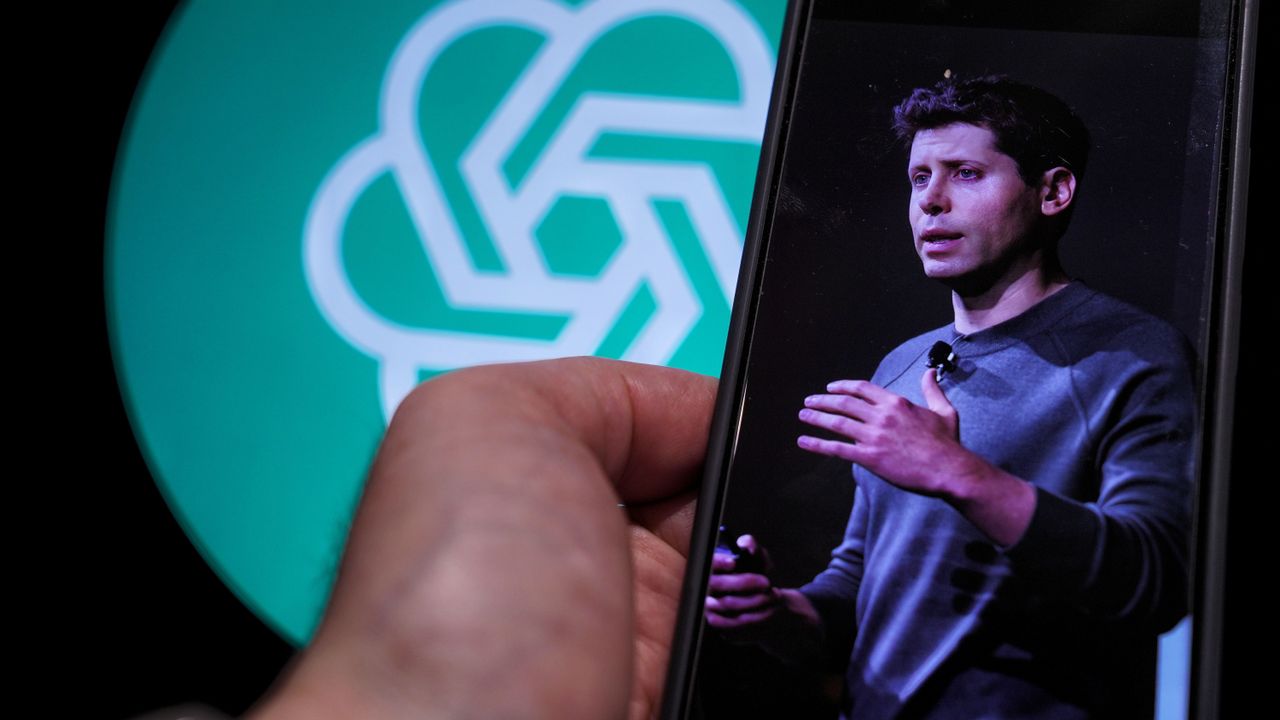
OpenAI's debut of the new GPT-5.6 model prompted the usual ritual of benchmark charts and arguments over whether it is really smarter than the last version, but CEO Sam Altman asked for a little more this time. He publicly asked to see what people actually built with it.
i'd love to see interesting things people have built with 5.6 sol.i will send the person who made the coolest thing a special gift from the openai archives.July 12, 2026
That led to a much more interesting showcase. Developers responded with all kinds of ideas, pilot projects, and even complete services. It makes sense, since OpenAI claims GPT-5.6 is better at coding and more reliable for long tasks. Seeing them turn into real software says much more than a release blog ever could. Here are five that stood out among the deluge.
ChatGPT coworker
A new way to interface with AI pic.twitter.com/7ip7JPijLOJuly 12, 2026
The demo from Kitsune Agent Lab almost makes the chat window feel old-fashioned. The AI agent is given a goal and gets on with the job, moving between different tools, making decisions, and keeping track of what it has already done.
The interesting part is how motivated the AI agent appears to keep going and how good it is at remembering what it's done before. Developers have been asking for something like this for a while. AI is far more useful when it can finish the work instead of simply suggesting how you might do it yourself.
Financial chatter
Hi @sama I built a gameboy emulator for NYC that streams real-time city data (subways, weather, ferries, etc) all layered on a 3d map of NYC! All data exists in a spatial intelligence layer that agents can use to experience your fav places in the city!Should I do SF next? pic.twitter.com/uo0niBRvR5July 13, 2026
One of the most charming projects makes New York City look like it belonged inside an original Game Boy. It comes complete with chunky pixel graphics but runs on a live digital map of New York that pulls in real-time information, including subway trains, weather conditions, and ferry movements. Instead of wandering through a fictional RPG world, you're exploring a tiny, pixelated version of the city.
A project like this requires far more than generating a few lines of code. It brings together live data feeds, mapping, interface design, and plenty of problem-solving into something that feels polished rather than experimental. It's one reason developers are feeling excited about GPT-5.6
Wardrobe AI
i gave 5.6 sol access to my camera roll and had it extract pictures of every piece of clothing i own from my photosthen, told it to find new outfits for me and render them on me with gpt-image!its kinda cool to see your entire wardrobe in a collection like this https://t.co/pkLTjtn7xL pic.twitter.com/SV796uScrBJuly 13, 2026
This project uses GPT-5.6 to create a polished AI wardrobe assistant that organizes clothing, suggests outfits, and presents everything through an interface that feels more like a premium consumer app than an experimental AI demo.
It's an impressively complete experience. The application gives users a visual, interactive way to browse their clothes and receive recommendations based on what they already own. The demo also highlights GPT-5.6's strength in developers building entire applications instead of isolated features. It brings together interface design, image generation, organization, and intelligent recommendations that would normally require stitching together several complex systems. GPT-5.6 appears to handle much of that heavy lifting.
Pokémon Go, but for neighborhood cats
I made a mobile game https://t.co/J1xWyutGk4 🐱July 13, 2026
One developer made a whole real-world-based game called CatchCat. It's like a digital expansion to a scavenger hunt for cats. Point your phone at a real cat, let the app verify the sighting with its camera, and turn that encounter into a collectible digital cat card with its own personality, rarity, and place in your growing album. It is essentially a creature-collecting game in which the creatures are the neighborhood cats you meet.
Players can build collections, explore community sightings, compete with friends, and gradually fill a living scrapbook of feline encounters, all wrapped in a polished interface that would not look out of place on the App Store or Google Play. Building something like CatchCat means juggling computer vision, mobile development, backend services, and game design.
Tasteful travel
Built Atlas Mode for Pearl, an interactive globe that integrates data on the world’s best places + your taste profile to discover and book restaurants, hotels, bars, wineries, and flights. Used 5.6 Sol Ultra + GPT Voice 2.1 pic.twitter.com/b4LlPC7BZRJuly 13, 2026
One of the most ambitious projects, Atlas Mode for Pearl, is an interactive globe that turns travel planning into something closer to exploring a living map. Instead of typing destination names into a search box, users can spin the globe, discover places visually, and receive recommendations for restaurants, hotels, and more matched to their personal tastes.
It has an impressive number of moving parts running behind the scenes. The app combines geographic data with an individual taste profile, then layers AI recommendations directly onto an interactive globe. It even has an audio aspect thanks to GPT Voice 2.1. You can talk through vacation ideas instead of endlessly tweaking search filters.
That is a recurring theme among the projects developers rushed to show Sam Altman. The AI is no longer the product itself. Increasingly, it is the engine quietly powering products that people might actually want to use.