
 Login
Login
Why broad targeting makes creative your best qualifier
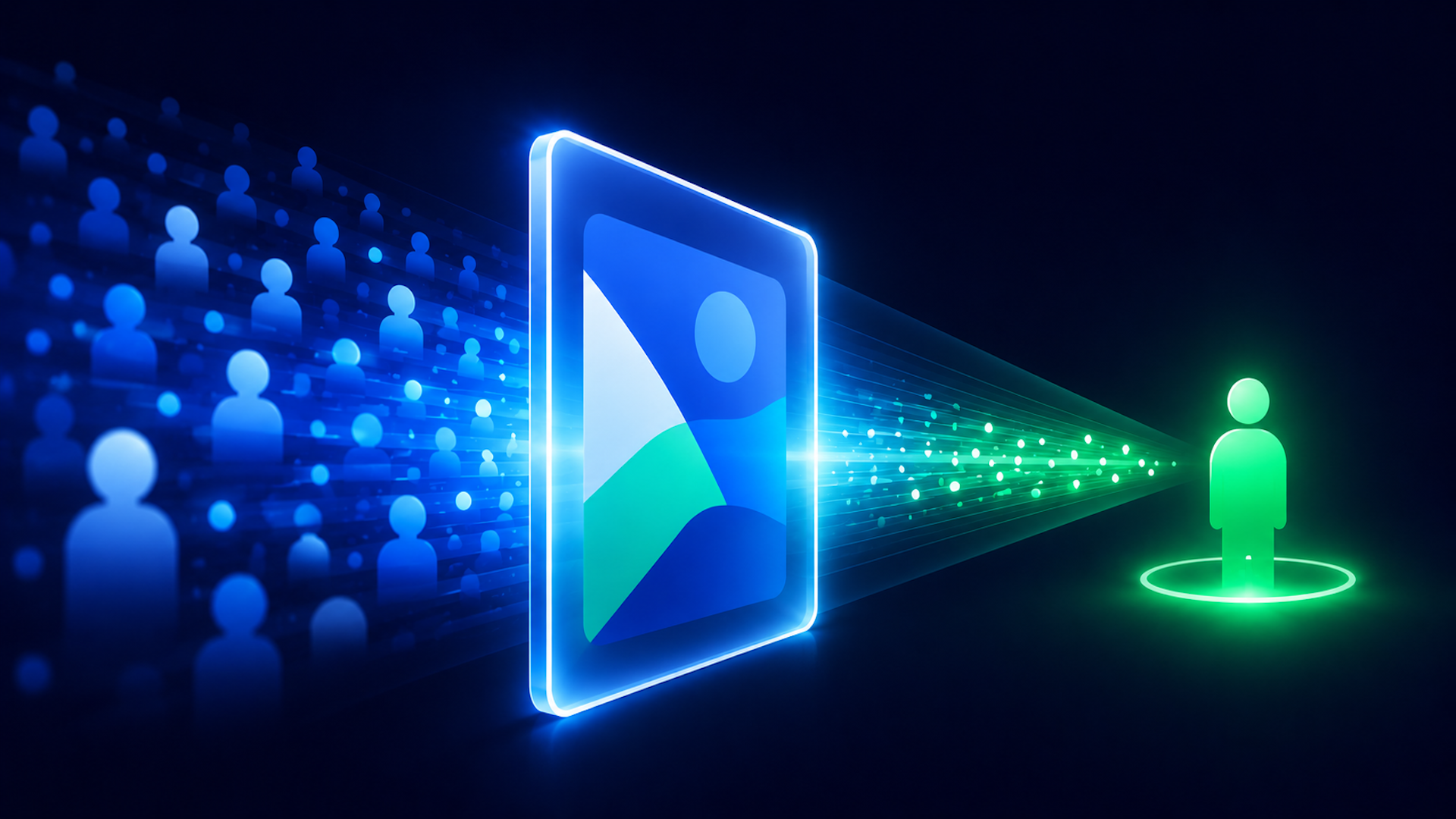
Across Google Ads, Meta, and TikTok, platforms are pushing you toward broader, AI-driven targeting. Performance Max, Advantage+ campaigns, and TikTok’s automated audience expansion give algorithms more room to find converters while reducing your control over who sees an ad.
This is fundamentally changing how campaigns are qualified.
As targeting broadens, creative has become one of the most important signals for both users and algorithms. Identifying the right audience is moving out of audience settings and into the message itself.
Broad targeting is making creative your best qualifier.
The shift from audience qualification to creative qualification
For years, performance marketers treated targeting as the primary lever for improving lead quality:
- Need prospective graduate students? Layer education interests, demographics, and remarketing audiences.
- Need patients seeking specialized care? Build audiences around health-related behaviors and intent signals.
- Need insurance shoppers? Narrow targeting by age, life stage, and consumer interests.
These approaches aren’t disappearing, but their influence is shrinking. Platforms increasingly ask you to provide broad audience inputs, strong conversion signals, and compelling creative, then let machine learning determine who’s most likely to convert.
Meta’s Advantage+ ecosystem, Google’s Performance Max campaigns, and TikTok’s recommendation engine all operate on this principle.
The challenge is that algorithms still need signals.
Conversion data remains the strongest signal, but creative is becoming more important in helping platforms understand who should engage with an ad. Every headline, image, video, and call to action provides context about the intended audience and desired action.
Creative is no longer just a persuasion tool.
It’s now a targeting signal.
Why broad targeting requires more intentional creative
Many advertisers still create ads as if targeting will qualify the audience.
Messaging often stays broad because you assume audience settings will narrow who sees the ad. But when platforms expand beyond tightly defined segments, vague creative can attract engagement from people unlikely to become qualified leads.
The consequences are familiar:
- Lower lead quality.
- Increased cost per qualified lead.
- Less efficient optimization.
- Noisier conversion data.
Instead, you need creative that clearly communicates who the offer is for—and just as importantly, who it isn’t for.
The goal isn’t simply more clicks or video views.
The goal is engagement from the right people.
When creative clearly identifies the audience, users can self-select. Qualified prospects lean in. Unqualified prospects move on. Both outcomes improve campaign performance and give machine learning systems cleaner signals.
Higher education: When creative becomes the targeting layer
Higher education marketers are already seeing this shift.
Historically, campaigns relied heavily on demographic filters, education interests, degree status, and segmented audience lists to reach prospective students.
Today, many strong-performing campaigns use broad lookalike audiences, Advantage+ audiences, or broad prospecting structures designed to maximize audience size and algorithmic learning.
But broader audiences create a challenge.
If a university is promoting an online Master of Science in Data Analytics program, it doesn’t need just any prospective student. It needs prospective students who meet specific admission and career criteria.
- Perhaps they already hold a bachelor’s degree.
- Perhaps they have professional experience.
- Perhaps they want to move into leadership or pivot into a more technical career path.
Rather than relying only on targeting settings to communicate those distinctions, build them directly into the creative.
Consider the difference between these two headlines:
Generic:
- “Advance your career with a Data Analytics degree.”
Qualifying:
- “Built for bachelor’s degree holders ready to advance into leadership – earn your online M.S. in Data Analytics.”
The second example immediately signals who the program is for. Undergraduate prospects are less likely to engage, while qualified graduate prospects are more likely to click, convert, and reinforce positive optimization signals.
The creative itself becomes the qualification mechanism.
Google Performance Max: Creative guides the algorithm
Google Performance Max may be the clearest example of this industry-wide shift.
Despite the name, audience signals are not strict targeting controls. They’re starting points that help Google’s systems learn. Ultimately, Google determines where and to whom ads are shown across Search, YouTube, Display, Discover, Gmail, and Maps.
Because advertisers have less direct control over audience selection, creative assets become increasingly important in helping Google’s systems understand who should respond.
Imagine a healthcare provider promoting orthopedic services.
A generic headline might read:
- “Expert Care for Your Health Needs.”
While technically accurate, it offers little context regarding the intended audience.
A more effective alternative might be:
- “Persistent Knee Pain? Meet with Our Orthopedic Specialists.”
The second headline identifies a specific need, a specific audience, and a specific solution. Users immediately understand whether the message applies to them, and Google’s systems receive stronger engagement signals from people actively experiencing that problem.
The same principle applies across insurance, legal services, financial services, and education.
When Performance Max creative clearly identifies the audience and their need state, advertisers help Google’s machine learning systems learn faster and optimize toward more qualified outcomes.
TikTok: The first three seconds matter more than ever
TikTok has always relied heavily on content signals to determine who sees a video.
As the platform continues investing in automation and audience expansion, creative becomes even more critical.
The opening seconds of a video often determine not only whether a user continues watching but also how TikTok categorizes and distributes the content.
For lead generation campaigns, qualification should begin immediately.
A graduate program might open with:
- “Already have a bachelor’s degree and looking for your next career move?”
An insurance provider might start with:
- “Shopping for Medicare coverage this year?”
A law firm specializing in workplace injury cases could lead with:
- “Were you injured on the job within the last 12 months?”
These openings accomplish two objectives simultaneously.
First, they quickly tell viewers whether the content is relevant to them.
Second, they provide TikTok’s algorithm with stronger behavioral signals about who engages with the video. Qualified prospects are more likely to continue watching and take action. Unqualified viewers are more likely to scroll past.
That self-selection process improves audience learning over time.
Creative is now a performance lever
One of the biggest mistakes you can make today is treating creative as something that happens after strategy and targeting are finalized.
In increasingly automated advertising environments, creative is strategy.
The message, visuals, hooks, and calls to action no longer serve only a branding or conversion role. They help platforms determine who should see the ad in the first place.
That means creative and media teams must work together more closely than ever.
When building campaigns, marketers should ask:
- Does this creative clearly identify who the offer is for?
- Does it communicate relevant qualifications or prerequisites?
- Would an unqualified prospect immediately recognize that the message isn’t intended for them?
- Are we helping both users and algorithms understand our ideal audience?
If the answer is no, the campaign may be relying too heavily on targeting to solve a problem that creative is now better positioned to address.
The future of qualification is creative
As Google, Meta, and TikTok keep expanding AI-driven targeting, you’ll likely have even less control over audience selection than you do today.
Qualification doesn’t disappear—it shifts into the creative itself.
What once happened primarily through audience settings is increasingly happening through messaging, visuals, and creative strategy.
You must embrace that shift to thrive in this environment. That means:
- Writing headlines that identify the intended audience.
- Creating videos that establish audience fit in the first few seconds.
- Building qualifications, prerequisites, and intent signals directly into the message.
Every ad speaks to two audiences at once: the user and the algorithm.
Platforms are handling more targeting than ever, but they still need direction.
Increasingly, that direction comes from creative. In a world of broad targeting, creative isn’t just the message — it’s the qualifier.
