Reading view

Elon Musk's Starlink releases smaller and lighter V5 residential kit — offers speeds of up to 375 Mbps and almost half the power consumption of V4

The SpaceX satellite internet service Starlink has just introduced its latest residential kit, letting users connect to the satellite network using a smaller and lighter terminal. The company announced the Starlink V5 on X, saying that it could hit up to 375+ Mbps for “streaming, video calling, gaming, and more.” It’s currently available in select areas only, though, with wider availability expected later as the company ramps up production.

Download speeds

Antenna

Field of View

Dish Weight

Environmental Rating

Operational Temperature

Mounted Wind Speed

Snow Melt Capability

Average Power Consumption

Power Indicator

Starlink V5

Up 375+ Mbps

Electronic Phased Array

110 degrees

2.4 lbs. (1.1kg)

IP67 Type 4

-22 deg F to 122 deg F (-30 deg C to 50 deg C)

165 mph (265 kph)

Up to 1.6 in. per hour (40mm per hour)

35 to 50 watts

LED / Starlink Top Face

Standard 4

Up to 400+ Mbps

Electronic Phased Array

110 degrees

6.4 lbs. (2.9kg)

IP67 Type 4

-22 deg F to 122 deg F (-30 deg C to 50 deg C)

60 mph (96 kph)

Up to 1.6 in. per hour (40mm per hour)

75 to 100 watts

LED / Router Face Plate

Mini

Up to 300+ Mbps

Electronic Phased Array

110 degrees

2.43 lbs. (1.1kg)

IP67 Type 4

-22 deg F to 122 deg F (-30 deg C to 50 deg C)

60 mph (96 kph)

Up to 1 in. per hour (25mm per hour)

25 to 40 watts

LED / Starlink Rear Face Plate

The new unit is significantly smaller and lighter than the Standard 4 used in most home deployments, and brings it close to the Starlink Mini, which is designed for both fixed and portable use. However, the Starlink V5 still requires a router (included), whereas the Mini can work without one, providing a wireless connection using its built-in Wi-Fi antenna. Still, the former is faster, offering speeds of up to 375+ Mbps. Although this is 25 Mbps slower than the 400+ Mbps that the Standard 4 is rated for, it’s still higher than the up to 300+ Mbps that SpaceX has set for the Mini.

The changes that SpaceX made to the Starlink V5 would make it much easier to set up, which is especially helpful for users who prefer to DIY their Starlink setup. Another interesting update to the new terminal is that it can handle faster wind speeds while mounted despite being lighter than the Standard 4. This should help it withstand tougher meteorological conditions, especially in areas frequently battered by storms and tornadoes.

Starlink V5 contents

(Image credit: Starlink)

The much lower average power consumption, which is just about half of what the previous-generation Starlink terminals consumed, would also help power stations last longer, making it ideal for keeping communications alive, especially during emergencies. This is exactly what Japan is experimenting with, as Tokyo has started putting up Starlink antennas on fire hydrant signs to provide emergency Wi-Fi.

Although SpaceX and its owner, Elon Musk, are no strangers to controversy, Starlink has proven useful in various situations. Aside from being useful for first responders in disaster zones, it also helped Ukraine stay connected during the height of Russia’s invasion of the country in 2024. It has even gotten to the point that China simulated a Starlink blockade over Taiwan because of how useful the service is in keeping a government online and communicating with its allies during times of distress.

Elon Musk’s Colossus 2 data center installed 59 natural gas turbines without permission, report claims — thousands of tons of pollutants reportedly impact black communities in Mississippi already suffering from elevated lung disease rates

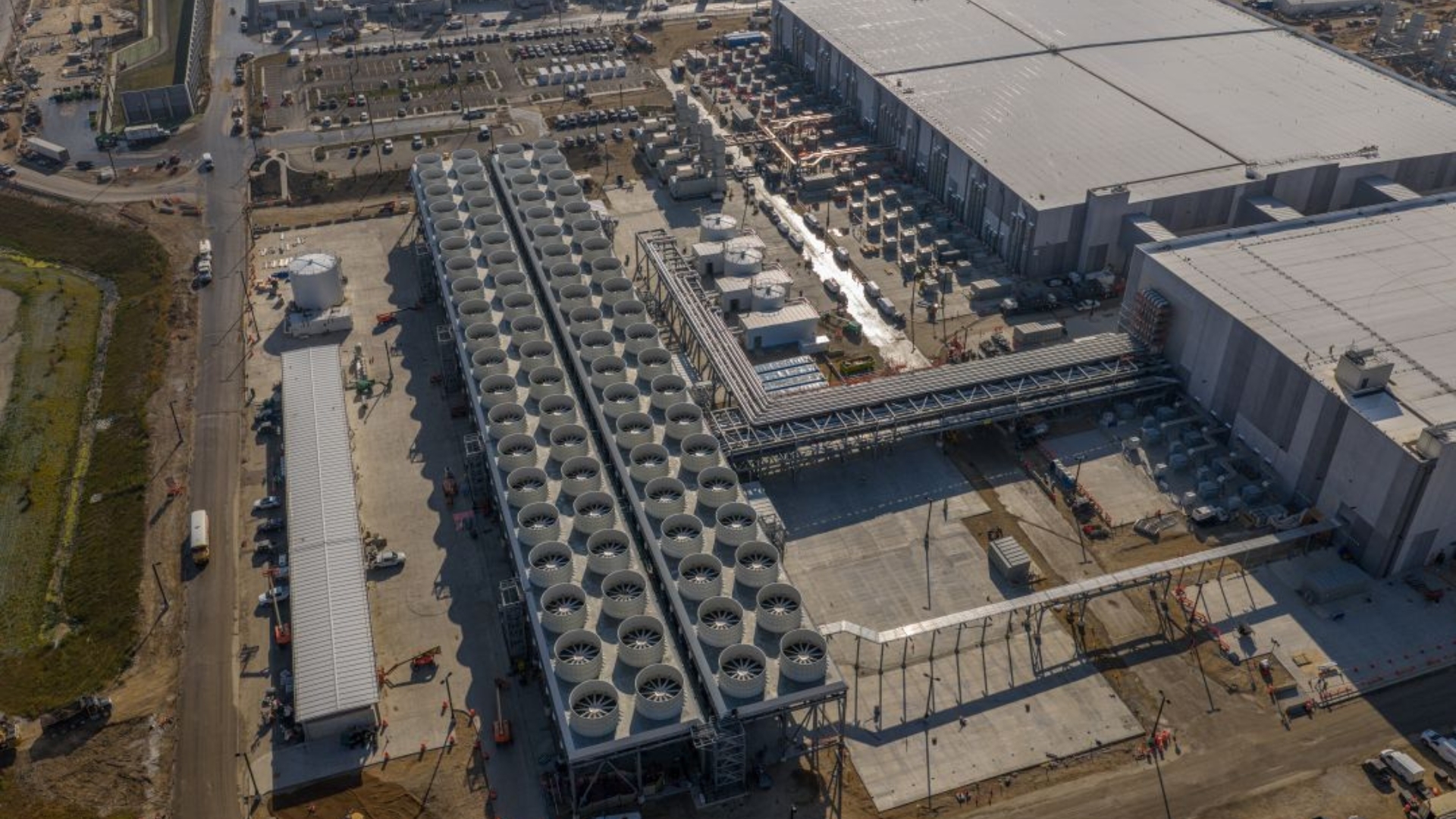
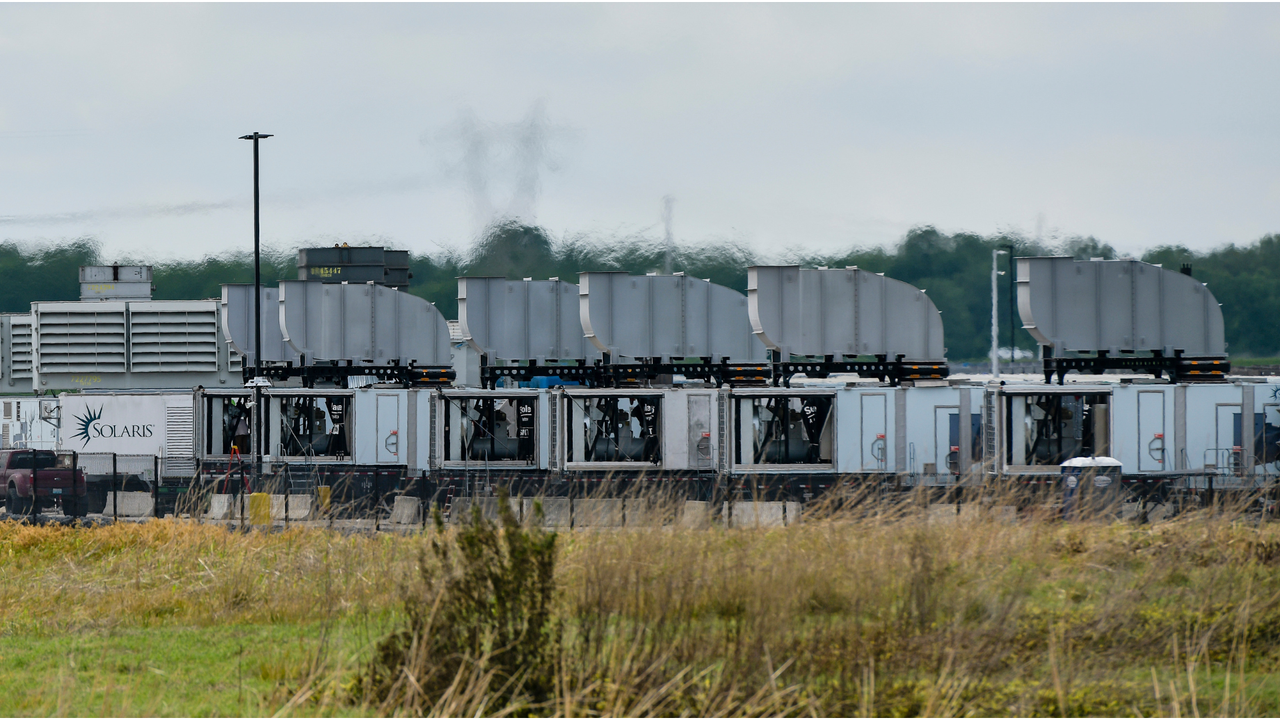
Elon Musk's Colossus 2 xAI data center, which runs independently of the power grid through on-site natural gas turbines, is said to be releasing thousands of tons of nitrogen oxide and carbon monoxide every year. According to Reuters, the company has installed 59 temporary, mobile natural gas turbines without permission, and these unpermitted portable units mostly heavily affect the communities surrounding the site, which happen to be predominantly black and are already suffering disproportionately high lung disease rates. xAI has claimed that it’s running 27 turbines without any permits, saying that it’s exempted because of their temporary nature.

Elon Musk’s alleged use of illegal turbines isn’t a new issue, with the community discovering that it’s been using over 30 gas turbines on the site, despite only having an ongoing application for 15 in July 2025. The company said that these turbines are exempted from the permitting process, as they are not permanent installations and will be moved within 364 days. The Environmental Protection Agency (EPA) issued a ruling earlier this year that removed all exceptions, but told Reuters that “it’s considering changes allowing ‘regulatory flexibilities’ for portable units while continuing to protect public health.”

The Colossus data centers were put up in record time, and Musk had to bring his own energy sources to achieve this. That’s because connecting to the grid could take years, especially if the grid must be upgraded to deliver his 1-GW capacity target. However, the Clean Air Act permitting process could take a similarly long time, with the report suggesting xAI bypassed it completely just to achieve its goal. Adding to the complexity, while the data center is located in Tennessee, Reuters reports that "at least" 57 of the 59 turbines are actually located just over the state line in Mississippi, which issued a permit for 41 permanent turbines in March. xAI and Mississippi environmental regulators claim the turbines are mobile and therefore don't need permits, but they also aren't covered by the permit for 41 permanent turbines.

This did not sit well with the communities surrounding the data centers, especially Colossus 2, which sat near the border of Tennessee and Mississippi. Because of this, xAI (now called SpaceXAI after its recent merger with Space X) is facing a lawsuit from the NAACP, which alleges that the operation of these unpermitted turbines resulted in an 111% increase in nitrogen oxide exhaust, an 83% increase in PM2.5 airborne particles, and an 88% increase in formaldehyde emissions. The Reuters investigation says that just 30 of the 59 turbines listed could emit 2,500 tons of nitrogen oxide, 4,000 tons of carbon monoxide, and 22 tons of formaldehyde annually — way above the 100-ton nitrogen oxide threshold that the Clean Air Act set for turbines to operate without a permit.

These pollutants are proven to have adverse effects on the health of the people living within a five-mile radius of the source, and census data showed that the residents living in the affected area are predominantly black. Since Colossus 2 straddles a state boundary, the publication listed the data for two counties — DeSoto County, Mississippi, and Shelby County, Tennessee. Statistics show that about 46% of the population in the former and 94% in the latter are black, which is significantly higher compared to the 33% and 52% in the rest of the counties.

While the report did not say that these communities were deliberately targeted, it also pointed to a 2022 study that showed that areas once redlined by banks still suffer in the present day from higher air pollutant emissions. SpaceXAI recently announced an automatic 50% discount and free hardware rentals on Starlink plans for people living near Colossus 1 and 2, with SpaceX VP for Starlink Michael Nicolls saying on X, “The unique capabilities of the Colossus datacenters could not be accomplished without the partnership and support from the local Memphis community.” While this may bring some benefit to already existing Starlink users, some say that this is merely a PR stunt to help give the company a better image as the community is battling the air and noise pollution they bring to the area.

New York enacts one-year data center ban on projects larger than 50 megawatts — first US state to implement moratorium; will also pursue repealing tax exemptions

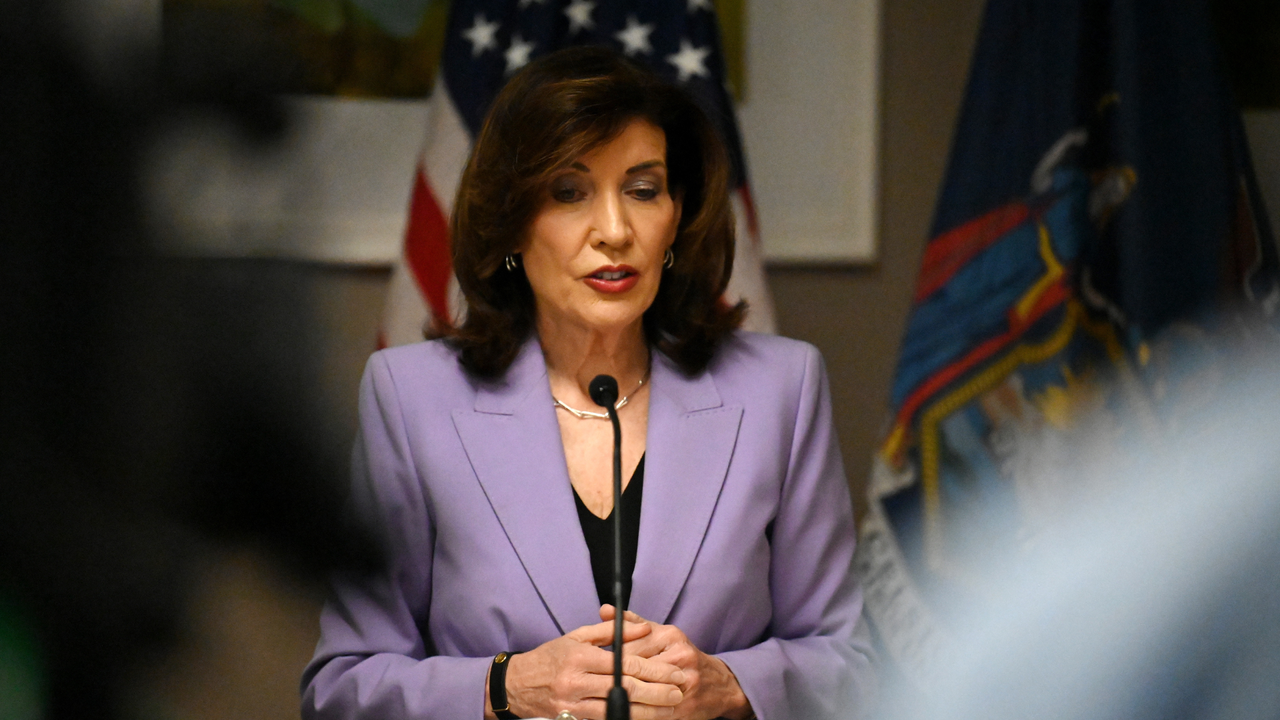
New York Governor Kathy Hochul signed into law Senate Bill S10642 today, also called the Responsible Data Center Development Act, which would put a one-year moratorium on all data center developments in the state. According to Reuters, this is the first temporary ban to be enforced statewide in the U.S. Maine’s legislature was actually the first one to pass a statewide moratorium, but Maine Governor Janet Mills vetoed the measure after it failed to exempt a data center project “that enjoys strong local support from its host community and region.”

"As data center development threatens ⁠to hike up utility bills, deplete our natural resources, and create uncertainty for New Yorkers, it's my responsibility to take ​action and lead," Hochul said in a statement. She also said that she’s pursuing legislation to repeal tax exemptions for large data centers. The moratorium will apply to data center projects with a capacity of 50 megawatts or more, with the New York Department of Environmental Conservation not issuing any more permits to projects that haven’t been completed yet.

Hochul said that the state will build a Generic Environmental Impact Statement (GEIS) so that future data center developments are held to “consistent standards,” while also looking at how the construction and operation of these projects will impact the environment. Although the data center moratorium is set for one year, the governor’s office said that it will be lifted once the state has finalized the GEIS.

President Donald Trump has been pushing for the development of AI technologies, with the White House releasing the ‘AI Action Plan’ to accelerate infrastructure build-out. While this policy encouraged the development of AI data centers, the numerous large projects also resulted in memory and storage chip shortages, as well as negative impacts in the communities and regions where they’re located. For example, Monitoring Analytics, which oversees the largest power grid operator in the U.S., attributes an “irreversible” 76% price hike to increased data center demand, while a Virginia county has asked government offices to conserve power because of AI-driven price hikes. There have also been multiple issues with various data center projects relating to water consumption and air and noise pollution, which is why 70% of Americans now oppose having a data center built near their home.

All this pushback has resulted in many jurisdictions passing data center moratoriums. More than 75 projects have already been delayed in the first half of this year, amounting to $130 billion, with New York state being the first one to pass a state-wide temporary ban. Before this, Seattle, which plays host to the headquarters of Amazon and Microsoft, passed a similar one-year moratorium last month.

While delays like this will likely negatively impact the future availability of compute within the U.S., it’s also forcing tech giants to speed up innovations and governments to pass laws that protect their constituents. Multiple startups have started unveiling or even turning on their small modular reactor (SMR) prototypes, which could deliver the power needed by data centers without increasing air pollution or straining the local power grid. AI tech companies like Microsoft and Nvidia are also working on solutions that will cut data center energy use and water consumption, while Oregon’s POWER Act increased data center bills by 30% while cutting residential costs by 1.3%.

Nvidia slashes list of authorized customers in Asia in a bid to reduce AI chip smuggling, report claims — company sent field inspectors, called customers to check if business is genuine after pressure from Washington

AI tech giant Nvidia, which builds some of the most coveted AI chips in the world, has reportedly created a new “whitelist” of verified companies to help prevent its products from getting smuggled into China. According to the Financial Times, this roster cuts the number of authorized clients by more than half, with those remaining having passed tougher compliance inspections to ensure that they are genuine businesses, not shell companies designed to forward Nvidia GPUs and servers into China. Some of the steps that Nvidia took to help safeguard its chips reportedly included sending staff to customer data centers, contract verification, and interviewing end users.

Sources told the publication that the company made this move after Washington pressured it into tightening its legal compliance, which comes months after the arrest of Supermicro co-founder Yih-Shyan “Wally” Liaw, alongside two other suspects, for allegedly smuggling $2.5 billion worth of Nvidia hardware into China. This clampdown also extended into Singapore, which saw the seizure of a $42-million mansion tied to alleged AI GPU smugglers, and Taiwan, where authorities raided the offices of Supermicro and two supply-chain partners as part of a chip smuggling probe. Nvidia was not immediately available for comment on the news.

Although the U.S. has banned the latest AI GPUs for export into China since 2022, various investigations showed Chinese companies could still easily get their hands on these coveted chips until recently. Washington’s and its allies’ crackdown on AI GPU smuggling have cut supply in China, which is now making it harder for AI companies to procure the processors they need. President Donald Trump took a 180-degree turn in December 2025 and finally allowed Nvidia to export its H200 GPUs to select customers in the region, which would have alleviated the situation. However, Beijing refused to allow Chinese companies to buy these AI processors — instead, it’s banking on domestic semiconductor manufacturers to make up for the shortfall, but it’s apparently still not enough. One tech executive even told the Financial Times that all domestic suppliers are sold out and that they’re even considering less powerful chips, as long as they could be put to use.

As Nvidia reportedly cleaned up its verified list of clients and made it harder for non-vetted companies to acquire its chips, the company has also told its partners to fix their export control compliance. “We insist our partners are compliant,” Nvidia CEO Jensen Huang told the media last May after Taiwan started its operations against AI chip smuggling into China. “We hope that they will enhance and improve their regulation compliance and prevent that from happening in the future.”

FCC approves orbital space mirrors, first test satellites will launch this year — large spacecraft reflects sunlight to Earth’s surface for construction sites, search-and-rescue lighting, and more

Reflect Orbital, a California startup that markets itself as “The Sunlight Company” and aims to make “clean, abundant energy available on demand,” has just received approval from the Federal Communications Commission (FCC) to launch the Eärendil-1. According to Space News, this is a low-earth orbit satellite equipped with four 18-meter (~60ft) thin-film reflectors designed to reflect sunlight on specific areas on Earth. This deployment will test the spacecraft’s capabilities in extending daylight for several minutes, which can be used from lighting construction sites and search-and-rescue operations to increasing solar farm energy production.

“We’re grateful to the FCC for recognizing the importance of testing novel technologies in space,” Ben Nowack, chief executive of Reflect Orbital, said in a statement. “This license is the first step toward rigorously testing our technology’s efficacy and the safeguards we have developed.” While the company envisions launching two satellites into space this year, it says on its website that it wants to deploy more than 50,000 satellites by 2035, allowing it to provide “up to 36,000 lux for hours comparable to daylight” or “up to 100 lux 24/7 comparable to indoor working areas.”

This idea is similar to the Icarus satellite developed by the antagonist in the James Bond movie Die Another Day, which was supposed to deliver “light and warmth to the darkest parts of the world” and “grow crops the year round, bringing an end to hunger.” The Reflect Orbital satellite could potentially achieve the same things, but experts from various fields are concerned about its potential adverse effects.

Astronomers from across the world criticized the project, saying it would make it harder to observe the night sky and could even be dangerous to sensitive instruments and people using telescopes. The Chief Scientist of the Vera C. Rubin Observatory, Tony Tyson, said that this plan to light up the ground using orbital mirrors was “even crazier” than the Starlink satellite constellations that have been affecting nighttime observations. The European Southern Observatory (ESO), which operates several telescopes in the Chilean desert, said that Reflect Orbital’s full deployment “would increase the background sky brightness at its facilities by a factor of three to four, limiting the ability of telescopes to detect faint objects.”

The orbital space mirror’s potential for disrupting astronomy is even greater than the threat posed by Elon Musk’s planned million-satellite Orbital Data Center and China’s planned competing project. But aside from making it harder for astronomers and scientists to survey the night sky, environmentalists also raised their reservations, saying that artificially extending daytime could disrupt the day-and-night cycles that the biology of living beings — from plants and animals to humans — rely on.

Unfortunately, the FCC said that scientific and environmental concerns were outside its jurisdiction. The government regulator only deals with “interstate and international communications by radio, television, wire, satellite and cable in all 50 states, the District of Columbia and U.S. territories.” Instead, it appears that the project’s critics should reach out to the EPA and NASA, as these are the relevant agencies that deal with concerns regarding space and astronomy. But even if the FCC had authority over the issues raised by its critics, it seems that the project will still push through as it considers that “…it is in the public interest to make spectrum available to encourage companies to test new and innovative space activities, as it promotes American innovation and the new services and economic growth that come from that innovation.”

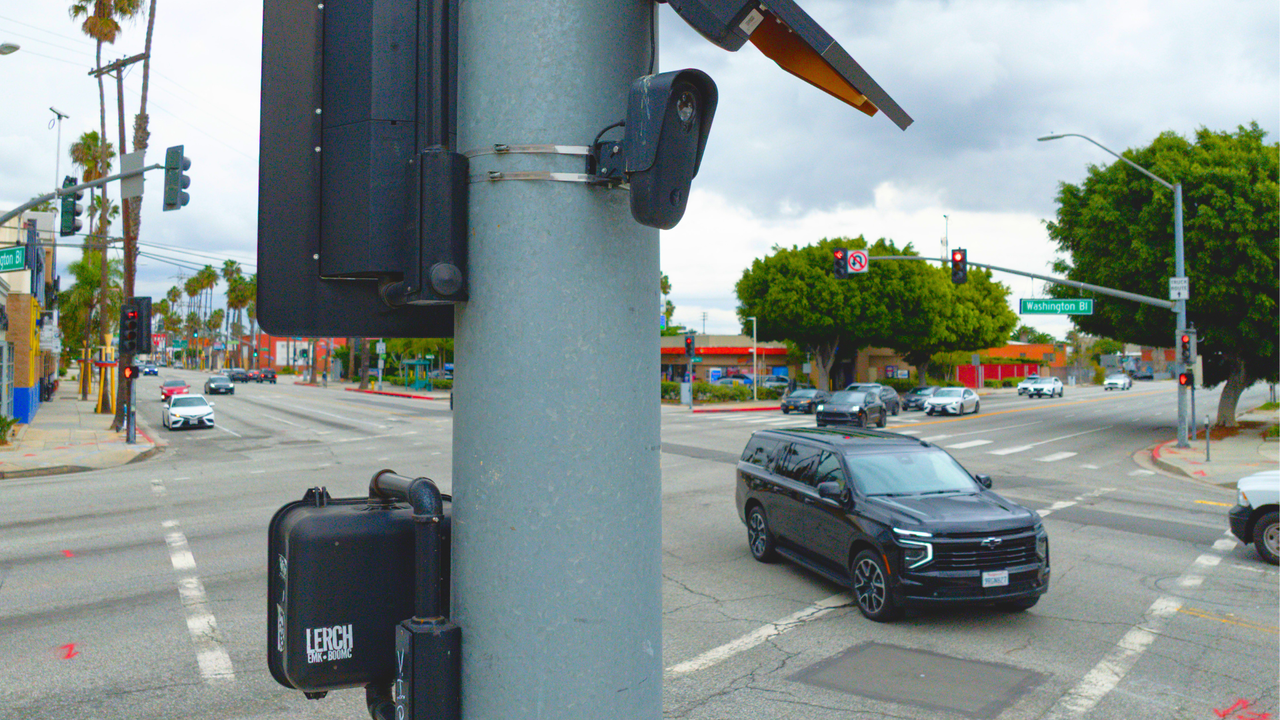
Flock cameras mistakenly track car reviewer over 'stolen' tags — police ambush tester in store parking lot and detain him for an hour

A data entry error in Flock’s system has resulted in a car reviewer getting boxed in by police cars in a parking lot on suspicion that he was driving a vehicle with stolen tags. The Drive reviewer and Director of Content and Product, Joel Feder, was driving a $155,000 loaner Range Rover when police surrounded his vehicle.

When he asked why he was stopped (and by four police cars, nonetheless), the officers said the car’s plate had been reported stolen and that they’d been tracking him for days using the Flock app. After about an hour of trying to figure out why he was stopped, it turned out that a different plate with similar characters had been misplaced and had to be reported stolen in California, which triggered a nationwide alert on Flock.

The core of the issue is that the New Jersey plates on the Range Rover read 34 10 DTM, with the number 10 written in smaller font. This is a non-standard design used by New Jersey for manufacturers, with VEHICLE MFR written on the bottom of the tags. The missing plate was 34 03 DTM, but unfortunately, the LAPD police report only listed 34 DTM.

Another issue with the Flock system compounded this reporting error. Since the New Jersey manufacturer tags weren’t standard, it only read the larger numbers and letters and disregarded the smaller “10” on Feder’s plate. Because of this, it flagged all vehicles with the 34 ## DTM plate as stolen and alerted partner police forces whenever it detected a similar plate on the road. Feder even said that four other vehicles with a similar plate were being tracked throughout Minnesota, and it just so happens that he was the first to be intercepted.

The police said they had been tracking the vehicle for days using Flock’s AI cameras, but kept losing it because Feder parked it in his covered garage. So, when he stopped at a retail store, the authorities jumped on the chance and boxed him in to ensure that he did not escape. Thankfully, the issue was resolved on the spot with the officers, although it took an hour to verify with Jaguar Land Rover that the car or the plates Feder had were not stolen. Still, the journalist was advised to go straight home, as other police agencies using Flock might not be aware of the situation, which could lead to him getting stopped again on suspicion of driving a stolen luxury car.

These two errors compounded together to create a rather harrowing experience with the police. Thankfully, the incident did not turn into something serious, especially as the Plymouth Police told Feder that the cops would have stopped him with guns drawn if he were in Minneapolis.

This event adds to the numerous controversies that Flock AI has been facing, with one of the biggest issues the company faced recently being when several police officers were arrested for misusing the service to stalk romantic partners. This has led citizens to push back against the service, especially as news like this makes them lose trust in the authorities. It has even gotten to the point where a Texas town council member broke into a tantrum, proposing a total ban on cellular and GPS devices, after community pressure led to the cancellation of the service.

Tencent is reportedly in talks to acquire Manus from Meta, following Beijing intervention — company expects to remain independent of Chinese tech giant

Meta’s surprise purchase of Manus, a Chinese startup known for its advanced AI agents, caught Beijing by surprise and ordered the two companies to unwind the $2 billion deal. The Chinese tech giant Tencent, which was among the startup’s initial investors during early funding rounds, is taking the lead in buying back the startup at the same price. According to the Financial Times, other former investors, including ZhenFund and HSG — China-based venture capital firms — while former U.S. investors like Benchmark are unlikely to join the potential consortium.

This move marks Beijing’s increasing protectiveness of its AI companies and experts, which it considers strategic assets in its heated rivalry with the U.S. We can see this in the Chinese government’s five-year plan, which is doubling down on technological self-reliance. It has even gotten to the point that AI experts, even those working in private firms, are now required to secure approval before traveling internationally.

U.S. tech giants are investing billions of dollars to develop their AI models, even dangling hundred-million-dollar bonuses to hire AI experts — one AI founder even claimed that Meta offered a $1.25-billion bonus. It seems that China is trying to avoid a situation where its experts are enticed to work for American AI tech companies, with the Financial Times reporting that Chinese officials are calling Meta’s acquisition of Manus “a conspiratorial attempt to hollow out China’s technology base.” The order to undo the deal means that Meta cannot use Manus’ intellectual property, nor can it have its founders and employees working for the company. Still, the U.S. tech giant has had a few months to study its models and engineering expertise.

Meta has already agreed to undo the deal, with most of Manus’ operations reportedly running independently of the company. However, the Chinese startup still needs to break financially from the American tech giant by paying back the $2 billion the latter spent to purchase it. Even though Chinese companies are also investing massive amounts in AI tech, it’s still not easy to raise this amount of capital in such a short period.

Tencent, which owns the WeChat platform used by China’s 1.4 billion population for messaging, social networking, mobile payments, ride-hailing, food delivery, and more, believes that Manus would be an asset for the company. Aside from reaching an annual revenue of $500 million, its AI agent would also mesh well with the company's increasing AI focus. “Beyond foundation models, it has become increasingly evident that agentic AI represents a breakthrough use case,” Tencent president Martin Lau said in its May earnings call. “Our platform inherently has many benefits of hosting AI agents.”

❌