What's really irking me and countless other gamers is the expected blow to game preservation.
This is exactly the sort of combo knockout that the Video Game History Foundation (VGHF) has been dreading and warning gamers about for years. The VGHF's director, Frank Cifaldi, wrote a lengthy response to the news on Bluesky.
Statement from VGHF director Frank Cifaldi on the discontinuation of physical PlayStation media, and the closure of the PS3 and PSP digital storefronts.
Cifaldi notes that "museums and archives have been preparing for this future for a while," and that console games pressed to discs have long been a poor way to preserve due mainly to day-one patches downloaded from the cloud (which might not always be available).
Cifaldi's frustration isn't exactly directed at Sony, but rather at the gaming industry as a whole, and what it expects comes next for institutions like the VGHF.
If platforms like PlayStation and Xbox are going to retire physical media and kill old storefronts, the least the games industry could do is help find a legal way to preserve old titles.
Ahh, the good old days of gaming. (Image credit: Getty Images | Portland Press Herald)
Instead, groups like the Entertainment Software Association (ESA) have "repeatedly opposed the efforts of cultural heritage institutions to reform digital copy protection laws to make it easier to do this work."
Alongside the Software Preservation Network (SPN), the VGHF has been putting in work in recent years to create some sort of DMCA exemption for historic archives and libraries.
No one thinks game preservation is wrong; the disagreement is over who should be trusted to solve the problem, and so far, there's no clear answer.
What's left for game preservation but piracy?
What happens when discs are completely eliminated from the console ecosystem? (Image credit: Windows Central)
I'm certainly not the only one who thinks that, in the face of blocked legal efforts, piracy is the only real way to preserve video games.
Responding to a post on Bluesky stating that "piracy is the only extant form of media preservation that exists in games right now," Cifaldi said, "This is accurate."
As the director of a historical video game preservation institution, and someone who has dedicated his entire adult life to this cause, this is accurate. We have attempted to work with the industry's trade organization to find a legal path forward, but they refuse to offer a meaningful alternative.
I can see an obvious contrast here to the platform I imagine most of our Windows Central readers are already thinking about.
PC gaming has long been a digital medium, but the end of discs was more like a retirement after many years of dutiful service rather than an abrupt end as decided by industry giants.
Because of how open PC gaming has always been, it's much easier to preserve games. GOG does a great job of keeping old games alive. There are plenty of storefronts available with different and overlapping titles. Community efforts and modding revive old games all the time, and emulation is only growing.
The PC I built a few months ago can usually run the games I grew up on decades ago. Consoles, increasingly, can't promise the same thing. Nowhere close, especially with how gated everything is.
With one of the biggest perks of console gaming gone, what's left? Ease of use? Sure, but PCs are quickly catching up with Windows Xbox Mode and SteamOS. Low cost? Maybe, but next-gen consoles are going to cost a lot more than I think most people can fathom.
Would you rather see older video games disappear than see them pirated? Do you agree that when there's no legal path forward, the only answer is to break the law? Let me know in the comments section below!
Join us on Reddit at r/WindowsCentral to share your insights and discuss our latest news, reviews, and more.
HP's OmniBook lineup includes a wide range of laptops targeting a wide range of users, and the OmniBook 3 16" is one of the most affordable of the bunch.
Assuming you aren't maxing it out with RAM and storage, you can get a Snapdragon X chip and a large 16-inch screen for around $500, often less with the right discount. Unfortunately, with higher-spec'd models, the display, build quality, and features don't quite measure up to other PCs competing in the same price range.
I've been using HP's OmniBook 3 for a couple of weeks to get to know it inside and out; here's what you need to know before buying.
HP had no input, nor saw the contents of this review, prior to publication.
How much does the HP OmniBook 3 cost?
HP's OmniBook 3 16" starts as low as $699.99 without any discounts; however, HP basically designed this PC to be on sale almost all the time, and you can usually get this baseline model for a lot less.
At the time of writing this review, a model with Snapdragon X (X1-26) System-on-Chip (SoC), 16GB of LPDDR5x RAM, 512GB M.2 PCIe 4.0 NVMe SSD, and 2K IPS display costs $399 at Walmart.
The model I'm reviewing represents a significant upgrade in a couple of key areas. It has a 2K OLED display, 32GB of LPDDR5x RAM, and a 1TB SSD. For some reason, HP omits the OLED display as an option in its configurator, so I can only give a price for this same setup with an IPS touch display. It's regularly $1,729.99, but is down to $1,259.99 at the time of writing.
That's not exactly cheap, and as I found, this is sort of a tale of two tiers. On one hand, if you're buying the laptop for around $500, it's a great deal. On the other hand, if you're spending around $1,500, you could do better elsewhere.
Here's a look at the exact specs that are in my OmniBook 3 16" review unit.
HP OmniBook 3 16" (As reviewed)
CPU
Qualcomm Snapdragon X (X1-26)
GPU
Qualcomm Adreno (integrated)
RAM
32GB LPDDR5x (integrated)
Storage
1TB M.2 PCIe 4.0 NVMe SSD (upgradeable)
Display
16 inches, 1920x1200 (FHD+), OLED, 60Hz, 0.2m response time, 300 nits, 100% DCI-P3, HP Eye Ease
14.12 x 9.91 x 0.58 inches (35.8cm x 25.1cm x 1.47cm)
Weight
3.65 pounds (1.65kg)
The best deal I could find at the time of writing this review comes from Walmart, where you can pick up an OmniBook 3 16" with 16GB of RAM, 512GB SSD, and an IPS display for just $399.View Deal
Sleek design, but a bit creaky
For a 16-inch laptop, the OmniBook 3 is fairly thin and light. (Image credit: Future)
The OmniBook 3 is a 16-inch laptop that's sized more like a 14-incher, and it's relatively thin at 0.58 inches (1.47cm). Thanks to a mix of aluminum and plastic, it weighs in at about 3.65 pounds (1.65kg), a respectable number for a device this size. Despite its large display, it's actually quite easy to tote around.
There's quite a bit of flex to the body, and when pressed, it creaks loudly. It's a shame, because it's really a sleek laptop. Thankfully, the lid seems to have a lot more rigidity, helping protect the OLED panel.
Port selection benefits multi-monitor setups
The laptop's HDMI port helps with external monitors.FutureA 3.5mm audio jack is always nice to have, and it's not always available on smaller laptops.Future
The thermal setup is ideal, with cool air pulling in through a large intake on the bottom and exhausting out the back edge, just behind the hinge. There's no hot air blowing on your hands, and because it's a Snapdragon chip inside, the system doesn't get particularly hot. More on that below.
On the left side of the PC is an HDMI 2.1 port for native video support, one USB-A (5Gbps), and dual USB-C 3.2 (Gen 2) ports at 10Gbps each. Of course, I wish these ports were at least USB4 β Thunderbolt 4 is generally reserved for Intel systems β for faster transfers. Still, they support DP 1.4 video if you're looking to run multiple external displays.
The right side of the laptop is home to an additional USB-A (5Gbps) port and a 3.5mmaudio jack.
So-so speakers, nice webcam
The OmniBook's 1080p webcam has a physical privacy shutter. (Image credit: Future)
Dual speakers installed on the underside of the laptop, toward the front, fail to impress. They're not particularly loud or full, and other budget laptops do a way better job of audio.
The 1080p webcam, on the other hand, offers a clear picture that only gets better with Windows Studio Effects powered by the laptop's NPU. An IR sensor allows for facial biometric security via Windows Hello, upping security.
A full keyboard and large touchpad make for easy productivity
The OmniBook 3's keyboard has a bright backlight.FutureA full number pad helps with productivity.Future
The OmniBook 3 has a keyboard that's above average for a laptop that starts at such a low price. Key travel is excellent, the backlight is bright, and the number pad makes for easy productivity.
And although the touchpad isn't haptic, a feature reserved for premium laptops, it has a satisfying click and tracks without issue.
The only thing I'll mention is that HP doesn't offer the backlit version of the keyboard as the default in all models. For some reason, you have to manually select it when configuring. It doesn't add any costs from what I can see, and I don't know why it's not just a default feature.
Colorful OLED display struggles with glare
The OmniBook 3's OLED display struggles to handle bright lighting despite an anti-glare finish. (Image credit: Future)
My review unit features a 16-inch OLED non-touch display with a 1920x1200 (FHD+) resolution. This is the screen I'd recommend everyone get, but unfortunately, it seems like touch and non-touch IPS panels at the same resolution are far more common.
The bezels are fairly thin, although they're of the raised plastic sort rather than a seamless glass covering.
Testing the OLED display with a SpyderX Pro colorimeter, I got back 100% sRGB, 92% AdobeRGB, and 99% DCI-P3 color reproduction, all excellent results, especially for a budget laptop. Color and contrast are indeed superb, and you'll be missing out on it if you're forced into the IPS options.
Brightness could be better, with the OLED screen topping out just higher than 300 nits. That seems to be the limit for the IPS panels as well. Despite an anti-glare finish, the display struggles in bright rooms.
Last-gen Snapdragon still delivers incredible battery life
The OmniBook 3 offers some of the best battery life I've ever seen. (Image credit: Future)
There's no other way to say it; the OmniBook 3 16's battery life is incredible. Yes, my review unit has the slightly more power-efficient OLED display that seems very hard to find right now, and yes, the PC is using one of Qualcomm's most affordable chips.
Regardless, the larger chassis fits a sizable 68Wh battery, and because the Snapdragon X sips power, I was seeing full β and I mean full β days of mixed use without needing a charge.
I was seeing full β and I mean full β days of mixed use without needing a charge.
For example, I began streaming a YouTube video at noon. That night, it was still going strong, and the battery hadn't yet dipped below 70%. I left it going, and it was still playing the next morning.
The official Windows battery report suggests about 38 hours of life from a charge, but of course, my streaming test skewed that result. I'd put it at around 25-30 hours, and that's being conservative.
Snapdragon X performance is also impressive
The Snapdragon X chip inside the OmniBook 3 is more than enough for casual users. (Image credit: Future)
Qualcomm's Snapdragon X chip is indeed efficient, but it's also now a generation behind the X2 hardware released earlier this year.
For most users, that shouldn't matter. The chip competes quite well with Intel's Core Ultra 7 256V CPU in Geekbench 6, both for single- and multi-core scores. Better yet, I saw almost no performance drop when switching from AC to battery power.
Cinebench also delivered surprising results, with the Snapdragon X again coming out ahead of the Core Ultra 7 256V and Ryzen 7 8840U.
A rather quick M.2 PCIe 4.0 NVMe SSD rounds out the performance hardware, hitting 7,073MB/s read and 5,705MB/s write speeds in CrystalDiskMark.
The laptop runs cool and quiet no matter what, and I don't actually recall hearing the fans kick on until I was running benchmark software.
Should you buy the HP OmniBook 3?
HP's OmniBook 3 16" is a great laptop if you find it at the right price. (Image credit: Future)
You should buy this if ...
β You can find a great deal for somewhere around $500-$700 (or less).
β You need a 16-inch screen and a number pad to better handle multitasking and productivity.
β You want a laptop with outstanding battery life.
You should not buy this if ...
β You're looking for a PC with a discrete graphics card.
β You don't often use a number pad and want a more compact PC that's easier to fit into a bag.
On one hand, you can sometimes find models with 16GB of RAM and 512GB storage for as little as$399. Such is the case at Walmart at the time of writing this review. That's an outstanding deal, and at this price, it's an easy recommendation.
Anywhere around $500 to $700 (or less), and I'd say you have yourself a new PC.
On the other hand, if there aren't any discounts available, you might be looking at spending $1,500+ if you spec up the RAM and storage. I know that component prices are high, but I don't think this PC has the build or feature quality to warrant that type of price. I'd suggest looking at alternatives before making a final decision.
The fact that most models now come with an inferior IPS display that's not as bright or colorful β I really hope OLED returns as a common option when configuring β doesn't help.
Windows on Snapdragon
HP
OmniBook 3 16"
HP's OmniBook 3 16" is an above-average laptop in the $500 to $700 range, and you can often find it for even less with the right discount. A strong Snapdragon X CPU, exceptional battery life, and a number pad are all perks. If it's not on sale, make sure you're not overspending when there are so many other great laptops available for $1,000 to $1,500.
Join us on Reddit at r/WindowsCentral to share your insights and discuss our latest news, reviews, and more.
The PC market is in shambles these days, and it's so bad that you don't have to be an enthusiast builder to feel the effects of RAM and storage shortages. Heck, even my less-tech-savvy parents are asking what's going on.
It essentially boils down to the global supply of DRAM being so short and the demand for AI datacenters being so high that it will likely take until 2028 to see any easing at all, while more pessimistic views extend the crisis into the 2030s.
I mentioned that I wasn't explicitly calling out collusion on the part of the three big DRAM producers who control 90% of the world's supply, but I might have been wrong.
Samsung is one of a trio of manufacturers that produces around 90% of the world's DRAM supply. (Image credit: Daniel Rubino / Windows Central)
Samsung, SK hynix, and Micron are facing a class-action California federal lawsuit alleging that they've been deliberately fixing prices and squeezing supply to drive up costs for regular consumers like you and me.
The lawsuit, reported by Law360 (via VGC), accuses the three memory makers of working together to reduce production of DDR3 and DDR4 memory while at the same time dialing their DDR5 production towards High Bandwidth Memory (HBM) that's used in AI data centers.
Citing the ongoing "RAMpocalypse," the lawsuit alleges that the "DRAM oligopolists" raised prices "with mind-blowing scale and rapidity." The lawsuit has been filed by a "class of individual and business consumers."
The three companies make almost all the world's supply of dynamic random access memory and have since 2022 fixed the supply and prices for DRAM, driving the price up some 700% over the past four years, according to the complaint filed by a proposed class of individual and business consumers.
Lauren Berg (Law360)
The lawsuit's argument is fairly straightforward. A healthy market with actual competition would see increased supply alongside rising prices. If RAM gets more expensive, it makes sense for RAM manufacturers to produce more in order to capture demand and undercut each other.
That isn't currently happening. The lawsuit alleges that the three big DRAM companies all moved in the same direction at the same time, and prices kept rising. Hard to argue with that claim.
The suit also says that "consumer purchasers of conventional DRAM and devices incorporating it have paid supracompetitive prices and have otherwise suffered the impacts of a distorted market crippled by the behavior of DRAM oligopolists." Again, I can't argue with that.
Why this lawsuit matters for regular PC users ... and practically everyone else
Xbox Series X prices recently went up, and not by a small amount. (Image credit: Daniel Rubino)
The global DRAM crisis isn't just affecting PC builders. Memory prices affect practically every device out there, and it's becoming increasingly difficult to find any shelter from the storm.
None of these price increases happened just 'cause, and the lawsuit indeed argues that artificially constrained DRAM supply is a significant part of the reason.
Can any new DRAM makers challenge the current oligopoly?
Memory and storage prices have gone up due to global DRAM shortages. (Image credit: Future)
The lawsuit also raises concerns regarding how insulated the three big DRAM producers have become over time. Building even one DRAM fabrication plant costs billions of dollars and takes years, never mind the expertise required to keep one running.
Although Chinese DRAM manufacturers like CXMT and YMTC are slowly picking up Steam, export and supply controls imposed by the US don't help the situation.
The result? It's almost impossible for anyone to step in and compete with the big three manufacturers.
The DRAM oligopoly has been in legal trouble before
SK hynix has been in trouble for price fixing in the past. (Image credit: Windows Central)
As noted in the lawsuit filing, Samsung, SK hynix, and Micron are not strangers to DRAM price fixing.
Samsung and SK hynix were accused by the US Department of Justice of price fixing between 1998 and 2022. Samsung ended up paying a $300 million fine, while SK hynix paid a $185 million fine.
Micron managed to avoid a similar fine after it reported "the conspiracy" and cooperated with officials.
It's well worth pointing out that nothing has been proven in court regarding this new lawsuit. As far as I can see, none of the three companies has offered a public statement, either.
Do you think Samsung, SK hynix, and Micron have indeed been conspiring to keep RAM prices high? Or is it just a lucky coincidence? Let me know what you think in the comments section below!
Join us on Reddit at r/WindowsCentral to share your insights and discuss our latest news, reviews, and more.
In what I can only assume is one of the first of many similar projects, a 3D-printed Steam Machine clone is making the rounds online. The custom gaming PC comes from Jacob Terkelsen, an AMD AI GPU engineer who recently posted his personal creation on X.
The Terk Box v1.1, as it's known, is a compact mini-ITX build that uses a custom 3D-printed case that you, too, can download and try out if you're so inclined. It's available on Printables alongside a parts list, which was created by a user named 3DCatt.
Here she is, Terk Box v1. 1I'm working with the designer about future improvements, but for a first major revision and she's now "complete"We added more ventilation in the back so the RTX 5060 is no longer choked.HMU if you want me to build you one. pic.twitter.com/PAt0WaBXGXJune 24, 2026
The custom chassis measures 167mm x 168mm x 225mm (6.5 x 6.6 x 8.8 inches), which puts it very close to the Steam Machine's dimensions. According to the parts list, the custom gaming PC uses a mini-ITX motherboard with a 400W FlexATX power supply unit (PSU).
Jacob Terkelsen's custom Terk Box v1.1. (Image credit: Jacob Terkelsen (@theterk))
It's unclear exactly what performance hardware and cooling solution was used for the build, but, as Terkelsen points out, additional ventilation had to be added to the back of the custom PC to keep the RTX 5060 GPU from thermal throttling.
Terkelsen notes that he's working with 3DCatt to improve the design, so it's highly likely that this neat little project will continue to evolve over time.
Considering the Steam Machine's custom AMD GPU with 8GB of VRAM can be lined up with an RTX 3060, the RTX 5060 in the Terk Box represents a rather huge performance uplift. However, it's not all sunny days.
Steam Machine or a custom PC? It might be harder to choose than you think
Valve's Steam Machine certainly has a much more refined look. (Image credit: Valve)
Since Terkelsen's tweet has been receiving a lot of attention, he returned to add some context about the overall project.
He notes that the cost of this custom Steam Machine is "nowhere close to $1000," which refers to the $1,049 price that Valve set for its new PC. He adds, "People fail to grasp how difficult SFF builds are..."
1. My employer has nothing to do with this personal project.2. The cost of the build isn't close to $1000 - the site never asked for comment, which I would have declined.3. I recommend the fully-engineered solution Valve has designed, from the software to the mechanical design.β¦ https://t.co/pDJTrVQIx6June 28, 2026
Terkelsen also clearly states that he recommends "the fully-engineered solution Valve has designed, from the software to the mechanical design."
It's not hard to see why. The Terk Box v1.1 is an interesting project that enthusiasts will get a kick out of, while the Steam Machine is a commercial product that underwent years of revisions and careful tuning. It arrives ready to play, no assembly required.
One last thing β the Terk Box v1.1 runs on Windows 11 with Xbox Full Screen Experience (FSE). In reply to some comments, Terkelsen says that "Linux is far better these days, and this build would support Bazzite or CachyOS." Let me know in the comments section below if you agree.
Valve's SteamOS so far only works with AMD GPUs, but Valve has publicly stated that it's working with NVIDIA to bring support to RTX GPUs.
It's clear that we're in the early days of Steam Machine knockoffs, and I expect there to be plenty more arriving in the near future.
If there ever was a golden age of cheap memory and storage, I'm sorry to tell you that it's over.
The 2TB NVMe SSD you bought early last year? It now costs three times what you paid. The 32GB kit of DDR5 RAM that was $90 last summer? It's now somewhere between $300 and $500, if you can find it for sale at all.
The worst part of this whole RAMpocalypse? No one really knows when it's going to end.
Why are memory and storages prices still going up?
Memory prices are sky high ... get it? (Image credit: Ben Wilson | Windows Central)
So what happened? AI happened. The way the world's memory market is set up relies on three major companies to supply everyone else with DRAM for consumer memory and storage.
Samsung, SK hynix, and Micron realized early on in the AI boom that they could make a whole lot more money by moving away from consumer memory and into high-bandwidth memory (HBM) that's used in AI datacenters.
Profit margins are enormous on the other side, and I really don't find it surprising that these massive corporations made the shift, as companies like Microsoft, Google, and Amazon have essentially offered blank checks to buy up as much memory as possible.
The fallout of these moves by the three big memory manufacturers, of course, is a strangulation of the consumer memory market. And this isn't a typical supply crunch like we've seen in the past that can be remedied by a new manufacturing plant coming online.
This time around, the memory crisis is a reallocation of the world's DRAM manufacturing capabilities, and there's no real end in sight.
I don't think RAM and SSD prices will drop anytime soon
My collection of old RAM and storage becomes more valuable by the day. (Image credit: Future)
I'm not expecting to see tech prices drop anytime soon, and you don't have to take my word for it.
Counterpoint Research confirmed in February that memory prices rose in Q1 2026 by 80% to 90% compared to Q4 2025. Late last year, Kingston noted that it had seen a 246% increase in NAND wafer pricing compared to the start of 2025, the steepest ever in the company's 29-year history.
In February 2026, Gartner released findings suggesting that, by the end of 2026, DRAM and SSD prices could surge by 130% compared to 2025, which could raise PC prices by 17%. I believe we're already seeing that estimation come into play, and this same study predicts that global PC shipments could fall by 10.4% this year.
By the end of 2026, DRAM and SSD prices could surge by 130% compared to 2025, which could raise PC prices by 17%.
It gets worse. Micron CEO Sanjay Mehrotra signaled earlier this year that the RAM crisis would continue beyond 2026. This week, Micron announced that most of its DRAM has been bought up via long-term contracts through 2030, and that there's almost certainly no end to the crisis.
SK hynix, another one of the three big DRAM players, stated in 2025 that its HBM, DRAM, and NAND manufacturing capacity is sold out through 2026.
Micron's Idaho fab won't be ready until the end of 2027. (Image credit: Getty Images | NurPhoto)
OK, I know that's a lot of numbers, but I'm trying to drive the point home: the RAM and SSD crisis isn't likely to end in 2026. It probably won't end in 2027, either. 2028 could be our lucky year, but that's relatively far into the future and harder to predict.
The problem is compounded by the fact that it takes a very long time to create new fabrication plants, not to mention the billions of dollars required to get the project going.
Samsung and SK hynix, meanwhile, are focusing on raising production in their existing plants, as new fabs won't be ready until the late 2020s.
Most of the analyst forecasts I've read rightfully point to some relief coming no earlier than late 2027, and I'm not talking about 2024-era prices. If those prices ever return, it will be at the end of a long, slow decline as the market levels out.
If memory prices drop, will PC prices also fall?
Surface prices went up recently, and not by a small margin. Will they come back down?
I certainly enjoy entertaining more conspiratorial ideas, and the one question that I don't think enough people are asking is about PC prices after memory and storage markets return to normalcy.
Will the laptops, PC components, consoles, tablets, and other affected tech products drop in price once RAM and storage markets return to normal?
If I'm being optimistic, then yes, I do believe that a correction in component costs would also lead to a correction in PC and console pricing.
If I'm being optimistic, then yes, I do believe that a correction in component costs would also lead to a correction in PC and console pricing. History suggests that this isn't out of the ordinary. There was a glut of memory and storage in 2023 and 2024, and I recall consumer prices did soften a bit.
However, I don't think 2026/2027/2028 is at all the same as years gone by. PC makers are expecting to see a major hit in worldwide PC shipments in 2026. As mentioned, Gartner predicts a 10.4% decline. IDC research points to an 11.3% decline.
The twist is that by raising prices for consumers, the PC market is still expected to grow by hundreds of billions of dollars in the coming years.
The new Dell XPS 13 showcased at Computex starts at $699 ($599 for students), and even that price might not stick around for too long.
This is what I find particularly frightening. If the volume of sales drops but profits keep growing, is there really any financial pressure that will make PC makers drop prices?
I don't think most PC makers will care that entry-level buyers are priced out of the market when enthusiasts and enterprise customers continue to shovel money their way. Why bother with discount laptops at thin margins?
I'm very glad I bought an RTX 5070 Ti when I did. (Image credit: Future)
I can reference the GPU price spikes from a few years ago during the crypto boom and pandemic shortages. GPU prices went up, the market leveled off, and GPU prices came back down. But they didn't go all the way back down, resetting at a higher baseline than before.
Consumers had become used to paying inflated GPU prices, and there was really no incentive to drop prices back to 2019 levels. I think the same logic applies to the PC market.
The Chinese wildcard could save us all
Will Chinese DRAM manufacturers save the global market? (Image credit: Getty Images | Anton Petrus)
Competition is likely the only thing that can save us, barring a collapse of the AI boom and a bursting of the market bubble.
Samsung, SK hynix, and Micron currently control about 90% of the world's DRAM production, which makes it painfully easy to coordinate pricing. I'm not saying it's explicit collusion, but it's certainly something.
Samsung, SK hynix, and Micron currently control about 90% of the world's DRAM production, which makes it painfully easy to coordinate pricing.
The best chance of breaking up this oligopoly comes from China. Companies like YMTC and CXMT have been steadily growing their share of the NAND market with newfound production and new fabs.
If these competitors can indeed scale up production and get their products out to international buyers, I don't see how that wouldn't disrupt the oligopoly. It's not exactly smooth sailing for China's manufacturers, though, as issues with exports, access to advanced equipment, and geopolitical concerns are all hurdles they must pass.
What does this mean for you and your next PC?
Rising prices are making a new PC a tough buy for a lot of people.
Gartner expects PC lifetime for regular consumers to increase by 20% by the end of this year. The cheap PC upgrade cycle has all but come to an end.
When new DRAM factories do come online, I expect them to serve AI customers first. Consumers will get the scraps, just like they are currently. Chinese DRAM makers might enter the international market and force prices to fall, but I doubt by enough to make a serious impact.
If you're waiting for the RAM crisis to be over before you buy your next device, I have some bad news. The most optimistic predictions put easing as early as late 2027 or 2028, while the most pessimistic push the dates into the 2030s.
Should you need a new PC now, I recommend buying one that will last for years to come. What some thought was a brief blip on the PC market's graph has some serious staying power. What it will look like, if it ever returns to normal, is anyone's guess.
Join us on Reddit at r/WindowsCentral to share your insights and discuss our latest news, reviews, and more.
Amazon Prime Day has entered its fourth and final day, and I know that some of you are probably tired of the sheer amount of deals floating around social media and your favorite websites.
I get it. There are countless deals to sift through, and the fatigue is real. However! I figured it was worth throwing together a collection of the deals that our readers here at Windows Central seemed to love the most.
At the top of the list, and no surprise in the current console pricing climate, is Seagate's 2TB Storage Expansion Card for the Xbox Series X|S. Although the original Amazon deal expired, you can still save $55 at Newegg.
Several other popular sales, including the Xbox Series X, Surface Laptop 7, and Seagate's other capacity expansion cards, are long gone, but the following deals are confirmed to be all in stock as of noon ET on June 26.
Most popular Prime Day deals according to Windows Central readers
Seagate
2TB Storage Expansion Card for Xbox Series X|S
Geekom
A7 Max
Microsoft
Surface Pro 11
Beelink
SER9 Pro
Samsung
Odyssey G55C
Samsung
990 PRO 2TB
SteelSeries
Arctis Nova Pro Wireless
SteelSeries
Arctis GameBuds
Geekom
A8
More details about the most popular deals at Windows Central
This is by far the favorite deal out there right now for Xbox Series X|S owners, especially now that console prices have gone up again. It's a fairly cheap way to add 2TB of storage, giving you more room for your favorite games.View Deal
Geekom's A7 Max is a stellar mini PC featuring a Ryzen 9 7940HS CPU, 16GB of DDR5 RAM, 1TB SSD, and plenty of ports.View Deal
The original Surface Pro 11 deal sold out, but you can still save $300 on a model with a Snapdragon X Plus SoC, 16GB of LPDDR5x RAM, 512GB SSD, and a 2.8K touch display.View Deal
Beelink's SER9 Pro is one of our favorite mini PCs ever, owing to its Ryzen 7 255 CPU, massive 24GB of LPDDR5x RAM, and 500GB SSD.View Deal
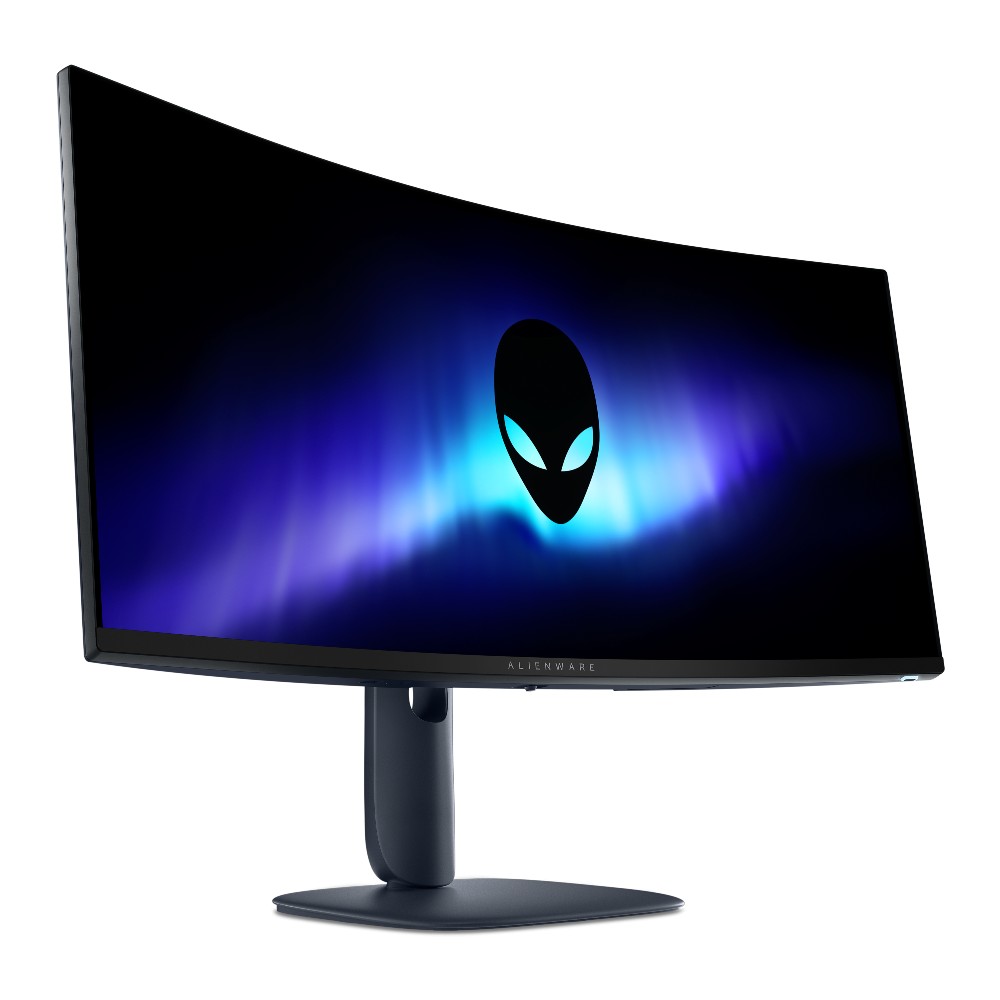
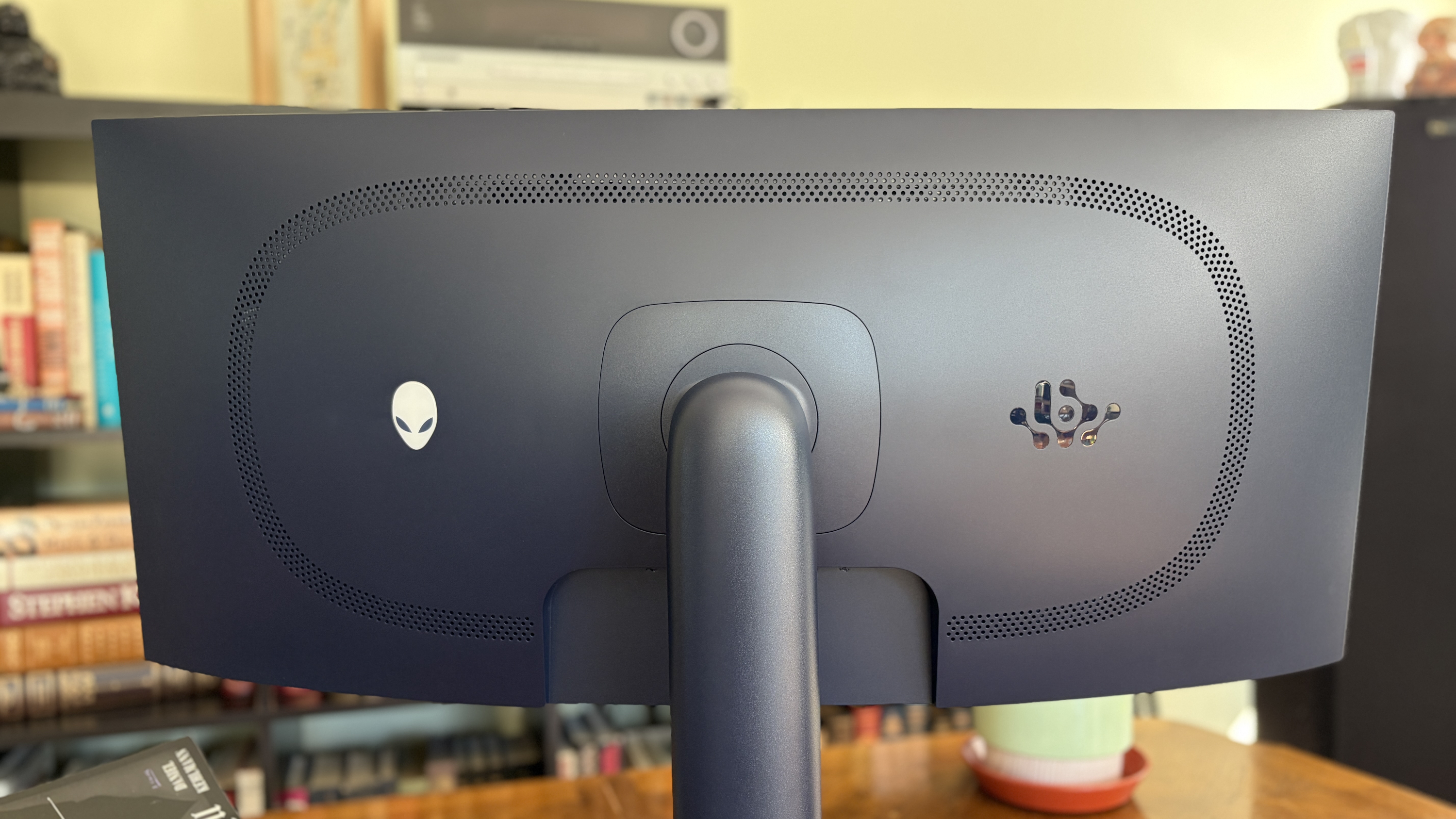
If you're a PC gamer, this 32" curved gaming monitor features a QHD resolution, 165Hz refresh rate, 1ms response time, and AMD FreeSync support.View Deal
Storage prices are still out of control, so deep 42% discounts like this one on arguably the best PCIe 4.0 NVMe SSD out there are understandably super popular.View Deal
Gaming headsets seem to fall apart rather quickly, but this one bucks the trend. It's one of the absolute best you can buy for Xbox or PC, and it's 34% cheaper than normal.View Deal
Not everyone wants an over-ear gaming headset, and these SteelSeries Arctis GameBuds are the solution. Expect long battery life and excellent sound.View Deal
Geekom's A8 is yet another quality mini PC that's getting a lot of attention thanks to its Ryzen 7 8745HS CPU, 16GB of upgradeable DDR5 RAM, and 1TB M.2 PCIe 4.0 NVMe SSD.View Deal
A couple of days ago, I wrote an article about how researchers discovered an "AI stigma" affecting Steam games that disclose the use of AI during development. For me, the most shocking piece of data revealed that established studios with a positive track record see a "catastrophic" 40% to 60% drop in sales when they use AI.
This stat, as well as others proposed in the research by Ross Burton at Game Oracle, raised a big question that our readers have been discussing in the original post's comment section: Is the perceived AI stigma warranted?
In a recent interview with PC Gamer, Sweeney offered his opinion about Valve's AI disclosure policy. As Sweeney sees it, these disclosures are a "Scarlet Letter" that results in a "hater community trying to kill the game."
It's a rather harsh comparison, but I'm finding it hard to disagree.
Epic's CEO makes some good points about Steam's AI disclosure policy
Call of Duty: Black Ops 6 AI disclosure statement (Image credit: Windows Central / Steam)
Let me preface this: Epic Games does not have a strict AI disclosure policy on games that it sells.
As Sweeney explains, his specific grievance with Steam's AI disclosure policy is that developers who want maximum visibility for their game are essentially required to list it on Steam, such is the power and visibility of Valve's storefront.
When that game is listed on Steam, any AI used during development must be disclosed and displayed on the game's Steam page. As noted, Sweeney sees this as something that can lead to sabotage by those opposed to AI.
It's unfortunate that so many developers now are put into this position. If you want to launch a game, and get it as widely publicized as possible, you've got to put it on Steam so people can wish list it, and if you want to play it on Steam, then you have to get this Scarlet Letter of AI attached to your product, and now there is a hater community trying to kill the game.
Tim Sweeney, Epic Games CEO (via PC Gamer)
Sweeney explains that this method is "irresponsible of Valve" and that "it makes it much, much harder for a game developer to have a chance of success." Developers are essentially stuck in between two poor choices: not using tools that speed up productivity or using tools that result is a stigma against your product.
The choice that Sweeney highlights here is exactly what the Game Oracle research piece set out to uncover. Sweeney isn't defending AI just because he likes AI. He's defending its use by smaller studios that wouldn't otherwise be able to survive.
The Fortnite example explains a lot
Fortnite is a game that has never suffered from a lack of funding or talented developers. (Image credit: Epic Games)
Sweeney unsurprisingly understands that some games fail just because they're junk. Like the Game Oracle study, he posits that it's becoming ever more difficult for developers to compete with massive studios that have seemingly unending budgets.
If you look at a game like Fortnite, we've been improving the game constantly with a large development team for nine years now. Epic has invested billions of dollars into building an awesome content base, not only for ourselves but for creators, too. Now imagine being a startup which has 100 people, investor funding, and you have to launch a game that can appeal to a gamer audience that also has Fortnite available.
Tim Sweeney, Epic Games CEO (via PC Gamer)
AI tools are perceived as a "great equalizer" in this case, and without them, Sweeney predicts a future where those smaller studios simply die off without receiving aid from AI. "There will always be the exceptions," says Sweeney, but it's the economics of the gaming market that are driving his thoughts.
Oversimplification of how AI is used isn't helping developers
AI use in game development varies greatly, and an oversimplification could be further harming developers. (Image credit: Getty Images)
Sweeney definitely knows how games get made, and he notes that a lot of what developers do all day can be considered "drudge work." He notes that at Epic Games, the most useful implementation of AI is to offload those types of tasks, leaving time for more important software and creative development.
This is where there's a noticeable gap between developers and gamers. Sweeney acknowledges that there's some legitimate anger about AI stemming from bad practices early on.
It's unfortunate that so many of the AI companies operating early on had such shitty practices, you know, like one of them was found by a court to have gone off to a BitTorrent site and downloaded terabytes of data, that's ridiculous, they shouldn't do that.
Tim Sweeney, Epic Games CEO (via PC Gamer)
Larian, the studio behind Baldur's Gate 3, is used as an example of how this situation can play out.
Larian was using AI to eliminate drudge work and to create early concepts, but gamers largely didn't accept the nuance. They saw AI, they cried foul, and Larian immediately backtracked.
Do I care if a studio creating games as good as Larian does uses AI to speed up productivity in the early stages of development? Not really. Let me know in the comments below if you disagree.
Epic's CEO has his own stake in AI development
I think Sweeney gets a lot right in this interview, especially surrounding the economic asymmetry that many studios have to overcome by using AI. I'm also on board with the idea that AI disclosure often harms the studios that can least afford a failure.
It's well worth noting that there's some background tension regarding Sweeney and AI. Unreal Engine, which is an Epic product, is used by countless studios. Unreal Engine 6, the latest version, includes deep AI integration, and those AI tools are being pitched to any developer who will listen.
Bottom line? The more accepted AI is in game development, the better off Sweeney's UE6 will do.
My final thoughts on AI use in game development
My RTX 5070 Ti uses AI to run games ... is there that big of a difference between that and development? (Image credit: Future)
I honestly can't say if Steam's forced AI disclosures are the correct way forward. I value transparency, and in the current climate, I can imagine a ton of AI witch hunts happening if there wasn't a place where you could reliably check if AI was used.
Sweeney makes good points about AI's reputation problem and how AI disclosures mark certain games for failure, and I wonder if clearer information about how AI is used would help at all.
Let me know what you think about the AI disclosure situation. Is it hurting games that would otherwise be a huge success? Is it rightfully causing pushback against games? Sound off in the comments section below!
Join us on Reddit at r/WindowsCentral to share your insights and discuss our latest news, reviews, and more.
It's Prime Day, and that means there are some great Windows laptops on sale not only at Amazon, but also at all major competing retailers. What makes this year's laptop sales more important than others is the fact that all PCs have gone up in price recently due to component shortages.
It's almost unbelievable that I'm seeing up to 54%off laptops using DDR5 RAM, but the proof is in the roundup I've assembled below. These are some of the biggest discounts I've seen in all my 10 years of covering these types of sales.
What makes these deals even sweeter is the fact that Apple just raised the prices of all of its MacBooks this morning. If you want an incredible deal on a new Windows laptop, this is the place to check first.
Powerful CPU, lots of RAM and storage, number pad, and a huge 17.3-inch display make this laptop a boon for any multitaskers out there, and it's now 54% cheaper than usual.
A brand new AMD Ryzen CPU paired with 16GB of RAM and a 1TB SSD is a sweet deal. The 16-inch display hits a 2K resolution and has a 120Hz refresh rate with 400 nits brightness.
This 18-inch gaming laptop has plenty of cooling for its RTX 5070 GPU and Ryzen 7 260 GPU. Display has a 2560x1600 resolution with a 240Hz refresh rate.
Gaming on a laptop's touchpad just doesn't work. Logitech's G305 Lightspeed is a mouse I've used for countless hours of gaming, and it's 46% cheaper than usual.
MacBook Air models with 512GB of storage have gone up from $1,099 to $1,299, while the MacBook Pro with 1TB of storage has increased from $1,699 to $1,999.
Has there ever been a better time to invest in a discounted Windows laptop with loads of memory and storage?
Which countries are taking part in Prime Day 2026?
While Windows Central primarily covers Amazon Prime Day sales in the United States and the United Kingdom, the event takes place in 26 countries, including Canada and Ireland.
Do I need an Amazon Prime membership for Prime Day?
Yes, Amazon's rivals are running competing events, including Best Buy's "Tech Fest", Newegg's "FantasTech Sale", and Walmart's "Deals & More", which all end on June 28, 2026. Each retailer can offer its own membership perks, such as My Best Buy Plus / Total and Walmart Plus, and it's important to remember that Amazon does not always offer the best deal during Prime Day. Windows Central will compare prices across retailers, so you can choose the best fit for you.