Reading view

Apple iPhone 20 may introduce quad-curved design, renders leak

Apple iPhone 20 is expected to debut next year, bringing radical changes in terms of display, camera and processor. Apple may skip the iPhone 19 branding because of the number “9” and the new models would mark a 20th-anniversary lineup.

iPhone 18 Pro series is yet to be unveiled, but leaker Jon Prosser from FPT revealed the potential design changes of the iPhone 20.

During the device showcase, the leaker also talked about some of the key specifications, which could see upgrades in 2027. It includes quad-curved display technology, sleek yet polished appearances, A21 processor and advanced RAM.

The quad-curved display is the main highlight of the iPhone 20 design overhaul. Samsung is reportedly developing the advanced display technology for Apple. The adoption is expected later this year, starting in the iPhone 20 series.

Apple iPhone 20 Render

Image – Apple iPhone 20 Render | Source – Front Page Tech

Prosser specifically talked about the iPhone’s return to a polished, jewelry-like aesthetic, featuring advanced display technology, an A21 chip, and innovations in battery and RAM, which align with the future of Mobile AI.

Apple may bring physical controls to the display, rumors claimed. Some leaks even pointed out that the screen might not be curved from the edges, but the software will play a key role in displaying an edge-like appearance.

Apple iPhone 20 Render

Image – Apple iPhone 20 Render | Source – Front Page Tech

Note that the renders are based on early information and supply chain inputs.

Starting with the Galaxy S24 Ultra, Samsung has stopped using curved displays. It received positive feedback from the majority of consumers. Galaxy S25 Ultra and the latest Galaxy S26 Ultra also feature flat display panels.

The post Apple iPhone 20 may introduce quad-curved design, renders leak appeared first on Sammy Fans.

Apple Intelligence 2.0 is what happens when version 1.0 becomes a meme

Apple Intelligence upgrades, which were promised in the year 2024, were already delayed, and now we’re seeing rumors linked to Apple Intelligence 2.0, potentially shipping with the iOS 27 update later this year.

iPhone fans spent the better part of 2025 defending the first wave of Apple Intelligence features. Meanwhile, most of the rollout felt incomplete, delayed, or strangely limited for a company that marketed AI as iPhone’s next defining chapter.

Apple Intelligence 2.0 is Galaxy AI of 2024?

Apple is reportedly preparing a major “Apple Intelligence 2.0” push for iOS 27, complete with a smarter Siri, generative photo tools, AI wallpapers, live subtitles, and natural language shortcuts.

I, honestly, find the branding unintentionally funny. At this point, Apple Intelligence 2.0 sounds less like a breakthrough and more like Samsung’s 2024 Galaxy AI roadmap recycled for iPhone users two years later.

Take Siri, for example. Rumors suggest Apple wants deeper app control, on-screen awareness, and multi-step task handling powered by large language models.

That sounds impressive until you remember Samsung already integrated Gemini into Galaxy devices to handle contextual AI interactions, summaries, and conversational commands long ago.

Apple is leaning on Google’s Gemini models for several upgrades. Samsung partnered with Google early and shipped practical AI features fast. Apple spent months hyping AI, only to end up relying on the same ecosystem.

Samsung Galaxy AI Apple Intelligence

Samsung Galaxy AI Apple Intelligence (Credit – Samsung, Apple)

The rumored “Extend” feature for Photos is another example. Apple may finally allow users to generate image content using AI. Galaxy AI introduced generative photo editing in 2024 with object movement, background filling, and AI-powered edits.

Same story with generative wallpapers and system-wide subtitles. Samsung already normalized AI customization, live translations, transcription tools, and Interpreter features years ago.

Samsung pushed features aggressively, improved them over time, and made AI part of the everyday phone experience. Apple moved cautiously, delayed features, and is now trying to reposition catch-up features as a major new era.

The post Apple Intelligence 2.0 is what happens when version 1.0 becomes a meme appeared first on Sammy Fans.

Galaxy Watch 9 may debut Samsung’s unified AI health score feature

Samsung AI Health Index, a score that would summarize sleep, stress, recovery, and activity data pulled from devices like the Galaxy Watch and Galaxy Ring, could arrive as early as July or August through a Samsung Health app update.

Korea’s Maeil Business Newspaper reports that the Samsung AI Health Index feature is being reviewed for a launch window that lines up almost perfectly with the upcoming Galaxy Watch 9 unveiling, expected in July 2026.

Unified health score atop AI analyzing

The Health Index would pull from heart rate readings, blood oxygen levels, sleep patterns, and stress indicators, then feed all of it through AI to spit out a single numerical score.

Samsung already runs a related feature called Energy Score inside Samsung Health, which tracks sleep, heart rate variability, and previous day activity. The Health Index appears to be that concept scaled up considerably.

The company could further strengthen personalized exercise, diet, and sleep coaching recommendations based on the Health Index.

Longer term, Samsung has signaled interest in chronic disease risk prediction, hospital integration, and eventually subscription healthcare services.

Samsung’s wearable business is repositioning. Hardware specs stopped winning the smartwatch war a couple of years ago. What wins now is whether the platform makes you feel genuinely managed, not just measured.

Apple figured that out early with the Apple Watch’s recovery ecosystem. The Cupertino company unveils its Watch Series 12 in September, and Samsung is rushing to introduce a new AI trick as part of the Watch 9 series.

The post Galaxy Watch 9 may debut Samsung’s unified AI health score feature appeared first on Sammy Fans.

Galaxy S27 Pro: You won’t have to buy S27 Ultra for camera specs

Leaks about Galaxy S27 Pro continue to arrive, and a new one suggests that the phone will offer the same camera specs as the S27 Ultra.

Samsung offers its best camera experience with the Ultra model. For example, the Galaxy S26 Ultra brings a 200MP main camera, a 50MP ultra-wide, 50MP telephoto, and a 10MP secondary telephoto. On the other hand, the S26+ ended up offering a 50MP main camera, a 12MP ultra-wide, and a 10MP telephoto camera.

The disadvantage here is that the Ultra has large sensors, thus taking clearer and brighter images than its younger siblings. This is a usual practice for a flagship lineup, where the top tier is stuffed with big specs. However, the Galaxy S27 Pro may change this practice.

Samsung never had a ‘Pro’ in its Galaxy S-series, but next year might be different. Also, this is not the first time leaks have surrounded this new release. In fact, we saw similar leaks during the S26 series launch, but it never made it to the conference.

Yet, the changing landscape in mobile business is forcing Samsung to do something different. In that case, limiting the high-end camera specs with the Ultra model doesn’t make sense any longer. Therefore, Samsung could bring the new Pro model with the same main and ultra-wide-angle camera specs as the Galaxy S27 Ultra.

This move aligns with a more modern approach. On one hand, the Pro will give users high-quality main, ultra-wide, and telephoto cameras. On the flip side, the S27 Ultra would bring an additional telephoto for that extra price. Features like S-Pen are likely to stay limited to the Galaxy S27 Ultra.

Apple has been using this camera strategy on its Pro and Pro Max models, offering similar quality on both devices. Eventually, if Samsung is planning to launch a Galaxy S27 Pro, it could become a reason for many consumers to skip buying the S27 Ultra.

The post Galaxy S27 Pro: You won’t have to buy S27 Ultra for camera specs appeared first on Sammy Fans.

Leak previews Galaxy Z Fold 8 Wide to offer better experience than Huawei foldable

Pura Max of Huawei is here, but Samsung’s upcoming Galaxy Z Fold 8 Wide looks to be offering a far better hands-on experience. A new leak featuring screen protectors of the two devices shows the display design and why Samsung is right.

Apple and Samsung are working on new foldable phones with wider screens than the legacy models. Huawei, as always, is a step ahead of the Global titan, which already unveiled its Pura Max with a similar screen ratio.

Tipster IceUniverse leaked an image of the Galaxy Z Fold 8 Wide phone’s cover screen protector. In a separate post, the leaker shared a side-by-side comparison of the screen protectors of the wide foldables from Huawei and Samsung.

The picture of the cover screen protector previews a potential hands-on experience. The new foldable model from Samsung will be much taller, like the Fold 7, while the extended width makes the cover screen more useful.

Huawei embarked on a familiar path, but the cover screen is smaller. You may find the aspect ratio better, but Samsung is right here. The Wide 8 Fold will deliver a better experience on the cover screen than its Huawei counterpart.

Samsung Galaxy Z Fold 8 Wide screen protector leak

Left – Huawei Pura Max vs Galaxy Z Fold 8 Wide | Right – Galaxy Z Fold 8 Wide

Samsung will unveil the Galaxy Z Fold 8 Wide alongside the Fold 8 and Flip 8 in July 2026. The new model is joining the lineup before Apple enters the segment. It’s more a pre-emptive answer to Apple than a product debut.

Are you excited for the Galaxy Z Fold 8 Wide or still believe the Fold 7 does the design better? Share your feedback with us tagging @thesammyfans on X.

The post Leak previews Galaxy Z Fold 8 Wide to offer better experience than Huawei foldable appeared first on Sammy Fans.

One UI 9 will fix Samsung Pass language issue from One UI 8.5

After the One UI 8.5 beta update, some Samsung Galaxy users, mainly Galaxy S23 Ultra, started facing an issue related to login details alerts in Samsung Pass. Now, Samsung has confirmed that One UI 9 will resolve this Samsung Pass issue.

According to reports, whenever users try to log in to apps or websites, a pop-up appears asking if they want to save their login details. Normally, this message should appear in the user’s selected language, but after the update, it is showing only in English.

This change was first noticed during the beta stage and surprised many users. But even after the stable version of the update was released, the issue did not go away. Users expected it to be fixed automatically, but the Samsung Pass prompt still appears in English. 

A community moderator responded to these reports and confirmed that Samsung is already aware of the issue. The company has checked it internally and successfully reproduced the bug. This means Samsung has clearly identified what is causing the issue and understands it.

The moderator also mentioned that a fix is currently being worked on. However, it will not come in the immediate updates. Instead, Samsung plans to include the solution in a future major software release. According to the update plan, the fix will be part of the next OS update, which means One UI 9 based on Android 17.

Samsung pass issue One UI 9

Aside from this, Samsung has already started the One UI 9 Beta Program for the Galaxy S26 series. It is currently live for a limited countries and could expand soon. This shows that Samsung is actively working on the next version of its software. The upcoming update will bring improvements along with bug fixes, like this Samsung Pass issue. Stay tuned.

The post One UI 9 will fix Samsung Pass language issue from One UI 8.5 appeared first on Sammy Fans.

Galaxy S27 Ultra needs a competitive telephoto camera

Galaxy S-series has evolved with high-quality camera specs, especially the Ultra lineup. However, in the most recent editions, Samsung showed a mediocre approach rather than innovation. On that note, the Galaxy S27 Ultra has a chance to undo Samsung’s past mistakes, such as using the 200MP camera the right way.

The Galaxy S-series has rapidly changed since the S9 era, which introduced only two 12MP sensors. Next comes the Galaxy S10+, which added a telephoto sensor.

However, the S20 Ultra took a major leap with its 108MP camera and 48MP telephoto. Samsung maintained the 108MP camera but added dual-telephoto lenses in the next two generations.

Now comes the 200MP, the Galaxy S23 Ultra switched to this new sensor, bringing more resolution and a wider aperture for brighter images. This camera has been praised industry-wide, and it was worth the upgrade that Samsung promoted.

In the next version, Samsung gave the telephoto a 50MP sensor with 5X optical zoom. Meanwhile, the Galaxy S25 Ultra brought a 50MP camera, but the rest of the sensors remained unchanged. The most recent S26 Ultra rebranded the main sensor with an even larger f1.4 aperture, and it really worked well for low-light photos and videos.

The progress of the main sensor ranges from 12MP > 108MP > 200MP. Now, the 200MP has become a standard for the Galaxy Ultra devices. Still, each of the past flagship models offers a 12MP mode by default. That means, the majority of the time, you are capturing images with this resolution until you change it manually.

The point here is that Samsung really improved the way you take photos with the camera using a larger aperture, without using the 200MP resolution.

iPhone 17 Pro uses a 48MP main camera, and it offers a 24MP default resolution. Most importantly, it processes those 24MP shots with lightning speed. The Galaxy S26 Ultra does offer a 24MP camera, but you have to enable it separately via Camera Assistant.

Another fact the image quality of Galaxy S26 Ultra lags behind iPhone 17 Pro Max in color composition and dynamic range. So, what’s the point in using the 200MP main camera, while you can achieve the same results with a 50MP sensor?

Telephoto

That leaves us to the other way around – Zoom. The evolution to 50MP is praiseworthy, but it’s no longer the industry standard. The recent jump to the ALoP sensor confirms that Samsung has changed its way from the periscope used in the S25 Ultra.

This approach saves internal space inside the frame, but it still offers the same pixel quality as the predecessor. Basically, the zoom quality hasn’t moved a bit. That’s where the perspective changes.

Nowadays, Chinese smartphone companies are streamlining the 200MP telephoto camera and not the main camera. In fact, they don’t even bother about putting this many pixels in the wide lens.

The Vivo X300 Pro has a 50MP main, 50MP ultra wide angle, and a 200MP telephoto zoom with a larger f2.67 aperture. Combining lossless zoom with a larger aperture generates bright and high-quality zoomed shots. Xiaomi 17 Ultra takes the same approach but with an even larger f2.39 aperture. What to notice is that Xiaomi has employed Samsung’s HPE image sensor.

Oppo went for a more dynamic approach; its Find X9 Ultra brings dual 200MP cameras, one is the main sensor with a f1.5 aperture and a f2.2 aperture telephoto sensor. That’s not it, it has a secondary 50MP ultra telephoto camera with f/3.5 aperture.

Phone reviewers loved the thing that Oppo did with this phone, from main to ultrawide, to its exceptional telephoto quality; the Find X9 Ultra brings everything to the table.

Conclusion

Samsung has tried the 200MP sensor for the main camera, but it failed to awe the users, especially in 2026. On the other hand, the competition is evolving, like Chinese phone makers, which continue to make a good example of how the 200MP could be used in a flagship.

Other than that, iPhone is also showing that it doesn’t need those bulky numbers. Instead, you can get exceptional camera quality with a 48MP camera setup.

So, there are two things Samsung can do to align with the current competition. First, the Galaxy S27 Ultra can retain the 200MP main camera and introduce a 200MP telephoto. If size is a concern, it can remove the 200MP main camera with a 50MP sensor and put it behind the telephoto camera.

Either way, Samsung can offer a real telephoto camera experience with the Galaxy S27 Ultra by using the 200MP where it belongs. Will Samsung play safe or come up with a challenge to competitors? We’ll find out.

The post Galaxy S27 Ultra needs a competitive telephoto camera appeared first on Sammy Fans.

Galaxy Enhance-X update delayed but Samsung confirms it’s coming

Some Samsung users are still waiting for the Galaxy Enhance-X app update. Earlier, the community moderators said that the new app would be available within three days, but the update has still not appeared for many people. Due to this, users started asking questions online and wondering if there was a problem with their phones.

The issue became more noticeable after several Galaxy users reported that they could not find the Enhance-X app in the Galaxy Store. This is also happening on the Galaxy S25 Edge, where the app is currently not live yet.

After multiple complaints, a Samsung Community moderator responded with an official update about the situation. According to the moderator, Samsung delayed the rollout because the company is still working on optimization and stability improvements for the app.

Samsung explained that additional preparation is needed to make sure the Enhance-X app works properly and delivers a smooth user experience. The company is carefully preparing the app so users do not face bugs, crashes, or performance issues after installation. 

Samsung Galaxy Enhance-X moderator reply

This response confirms that the issue is not related to hardware issues or faulty devices. Instead, the delay is connected to Samsung’s internal testing and app improvement process. The company has not shared an exact new release date yet, but it confirmed that the Enhance-X app update is still on the way.

For now, users of supported Galaxy devices may need to wait a little longer until Samsung officially releases the stable version of the Galaxy Enhance-X app update globally. Stay tuned.

The post Galaxy Enhance-X update delayed but Samsung confirms it’s coming appeared first on Sammy Fans.

Xiaomi 17 Max integrates Samsung’s advanced 200MP imaging sensor

Xiaomi recently launched the Xiaomi 17 Max smartphone, which highlights strong camera performance. Along with several powerful features, it comes with Samsung’s advanced 200MP imaging sensor, which is used in the primary rear camera. This sensor helps the phone capture extremely detailed and sharp images with high clarity.

Samsung’s 200MP HPB sensor is built to improve image quality in mobile phones. It can take photos with a very high level of detail because it contains 200 million pixels.

Moreover, it also supports features like Optical Image Stabilization (OIS) and a large ƒ/1.65 aperture. These help improve photo quality in both bright and low-light conditions. A reliable tipster, Ice Universe, shared some images taken via Xiaomi 17 Max.

Xiaomi 17 Max camera

Aside from this, Xiaomi 17 Max pairs this 200MP Samsung camera with a complete triple-camera setup, including a 50MP telephoto lens with 3x zoom and macro capability, and a 50MP ultrawide lens for wider shots. This makes the phone more flexible for different photography styles.

The device also brings a strong overall package. It is powered by the Snapdragon 8 Elite Gen 5 processor and comes with up to 16GB RAM and 512GB storage. It features a large 6.9-inch AMOLED display with a 120Hz refresh rate and very high brightness levels.

Samsung’s advanced sensor improves the camera experience, while Xiaomi combines it with strong hardware to create a powerful and modern phone.

The post Xiaomi 17 Max integrates Samsung’s advanced 200MP imaging sensor appeared first on Sammy Fans.

Samsung’s Galaxy Z Fold 8 Wide may be incredibly thin and light

Samsung is getting ready to launch a new foldable phone that could become one of the best in the market. The phone is being called the Galaxy Z Fold 8 Wide, and according to the famous tech leaker Ice Universe, it will be unbeatable in terms of thinness and weight.

The tipster did not share many details, but the claim of a slimmer design of the Galaxy Z Fold 8 Wide has already created excitement among smartphone fans. Samsung is expected to focus on making the device slimmer, lighter, and easier to carry compared to older foldable phones.

Based on early leaked renders, the phone may measure 4.9mm when opened and 9.8mm when folded. Even though these numbers are impressive, the device may not become the thinnest foldable phone ever. Reports suggest that the upcoming OPPO Find N6 could still be thinner.

Samsung Galaxy Z Wide Fold Renders

Image via Android Headlines

Samsung is also expected to improve the overall design and make the phone more comfortable for everyday use. A lighter foldable device would be easier to hold, carry, and use for long periods.

The company is likely to launch the phone in July during its big Galaxy event. The Samsung Galaxy Z Fold 8 and Galaxy Z Flip 8 are also expected to be announced at the same event. If the rumors are correct, Samsung’s new wide foldable could bring a big improvement to foldable phone design and portability.

The post Samsung’s Galaxy Z Fold 8 Wide may be incredibly thin and light appeared first on Sammy Fans.

Samsung Galaxy Watches to support new wear widgets in Wear OS 7

Google introduced a new update for Wear OS smartwatches at Google I/O 2026. The company announced that Wear OS Tiles will now be Wear Widgets. This is Google’s plan to make widgets look and work similarly across Android phones, tablets, smartwatches, and cars.

The new Wear Widgets are made to improve the smartwatch experience. Google showed new widget designs in different sizes, such as 2×1 and 2×2 layouts. These widgets can show more information on the screen and are easier to use. They also have smoother animations and faster performance.

Google explained that some popular apps will support Wear Widgets first. These apps include Spotify, WhatsApp, Peloton, and Todoist. With these widgets, users can quickly check messages, control music, track workouts, or view tasks directly from their smartwatch screen without opening full apps.

Wear OS 7 widgets

The biggest improvement is battery saving. Google explained that the new widgets use a technology, Remote Compose. This system allows widgets to work smoothly without running apps in the background all the time. Because of this, smartwatches can use less battery power and last longer during the day.

Google also confirmed that the new Wear Widgets will work on devices running Wear OS 4 and newer versions. This means many older smartwatches can also get the new features without needing new hardware.

Samsung Galaxy Watch users may also get more customization options. Google said that third-party Wear Widgets can now appear inside Samsung’s Multi-Info Tiles, which earlier only supported Samsung’s own widgets.

In addition, Google previewed widgets for Android Auto, which will arrive later this year. The new Wear Widgets are designed to make smartwatches simpler, faster, more useful, and better for battery life. Stay tuned for more information.

The post Samsung Galaxy Watches to support new wear widgets in Wear OS 7 appeared first on Sammy Fans.

Samsung users are unhappy about missing video filters in One UI 8.5

One UI 8.5 is literally a feature-packed update, but it looks like Samsung has unintentionally removed camera filters from the video mode.

Samsung users report missing video filters after updating their phone to the One UI 8.5 update. It’s a big blow to those who often utilized the feature. Samsung did not clarify any such change during the Beta Program.

Galaxy phones running One UI 8.0 still have at least ten preinstalled video filters. Next to the last filter, there’s a download button, which redirects right to the Camera and photo effects page on the Galaxy Store app.

Like the Photo mode, Samsung phones support filters in the Video mode too. However, the official One UI 8.5 update has entirely removed that tool. Users now have no option but to make custom edits after recording the video.

There are plenty of reports on the web (Reddit and TikTok, via PiunikaWeb) regarding the removal of video filters. Users say the filters are no longer there in the camera app, where they existed before updating to the One UI 8.5.

We checked our phones, and the filters are still available in the One UI 8.0 version. However, the Filters don’t work with every resolution and frame rate either.

In the video mode, the Quick controls icon that appears in the viewfinder showcases the Filter icon. It’s next to the stabilization and before the smoothness options. In One UI 8.5, the interface remains the same, but the icon of Filters isn’t there.

This was a basic yet useful section in the Galaxy Camera app. If the removal is intentional, Samsung should formally inform users about the changes. If it’s driven by a bug, the filters section should be reinstated on Galaxy devices.

Samsung One UI 8.5 video filters

The post Samsung users are unhappy about missing video filters in One UI 8.5 appeared first on Sammy Fans.

Samsung boss snatched TSMC’s MediaTek chip production share?

MediaTek may allocate some of chip production work from TSMC to Samsung Foundry, with speculations started to emerge as the latter firm’s boss had a business trip to the former’s headquarters in Taiwan.

Shortly after the wage deal with company unions, Samsung boss touched down in Taiwan and headed straight to MediaTek HQ for a closed-door meeting with CEO Rick Tsai and senior management.

After landing foundry deals with Tesla and Qualcomm last year, Samsung is now eyeing a significant contract in Taiwan, and MediaTek is the obvious target.

SEDaily sources close to the situation suggest the talks also touched on MediaTek shifting some production away from TSMC to Samsung Foundry, which would be a serious blow to the world’s dominant chip manufacturer.

Samsung has quietly been loading more MediaTek Dimensity processors into Galaxy phones and tablets, a cost-cutting move that also builds mutual dependency. So when Lee walks into that boardroom, he isn’t just a customer.

The yield problems on Samsung’s advanced nodes are real. The geopolitical exposure of building in Korea isn’t nothing. Lee flew to Taiwan himself, the day after settling a near-strike, because he knows the window won’t stay open.

The post Samsung boss snatched TSMC’s MediaTek chip production share? appeared first on Sammy Fans.

US court rejects ban on Samsung product sales

On May 17, Judge Rodney Gilstrap of the Eastern District of Texas denied a request from Collision Communications to permanently ban Samsung from selling products in the US that allegedly infringe on its wireless patents.

The backstory is genuinely strange.

The patents at the center of this case trace back to military technology developed by BAE Systems, the British defense contractor, designed to keep communications stable in congested signal environments.

A small New Hampshire company called Collision Communications bought those patents roughly 15 years ago and tried to commercialize them for the cellular industry.

Collision approached Samsung around 2011. The two sides negotiated for three years, then the talks collapsed. Collision says Samsung walked away from the table and quietly baked similar technology into Galaxy phones, tablets, and laptops.

In October last year, eight jurors unanimously found that Samsung willfully infringed four Collision patents and awarded exactly what Collision asked for: $445,494,160.

After that verdict, Collision pushed harder. In December, the company asked Gilstrap to permanently ban Samsung from importing and selling infringing products in the US.

Samsung’s defense had two threads.

  1. The patents were invalid, and the technology was independently developed.
  2. Samsung argued that a ban would damage US jobs and supply chains.

Collision couldn’t prove the balance of hardships favored an injunction, or that blocking Samsung sales would serve the public interest, leading to its sales ban request being denied.

Related article:

The post US court rejects ban on Samsung product sales appeared first on Sammy Fans.

Samsung may downgrade Galaxy S27 display just to save $5

We heard in the past that Chinese vendors were trying to have some share in Samsung’s next-gen flagships. A new report brings more details: Chinese OLED maker BOE is attracting Samsung with $5 cheaper display panels for the Galaxy S27.

BOE, a Chinese OLED vendor, is reportedly offering Samsung display panels for the Galaxy S27 at a $5 difference from Samsung Display.

Industry assumes that Samsung is exploring the possibility of diversifying its OLED supply chain for the flagship models. China’s BOE is the strongest contender, and the standard model may debut a cheaper panel in 2027.

OLED screen is one of the cost-defying components in smartphones. With memory prices continuing to surge, smartphone makers are trying hard to save component costs by other means to stay relevant in the competition.

Reports suggest Apple has already purchased enough memory for future iPhone models. The company buys components at scale and lands deals with supply partners for the long term, giving it an edge in negotiation.

Samsung Electronics has its own subsidiaries, which help it avoid pressure. Meanwhile, the Mobile Division is looking to save some costs. That said, the standard Galaxy S27 may enter the mid-range territory in display reliability.

When it comes to OLED, Samsung Display is an undisputed leader. The company supplies OLED panels to most of its rivals, including Apple. That said, adopting a BOE made display in a flagship would ruin the image.

Samsung’s premium mid-range phone, the Galaxy A57, also features OLED displays from China’s CSOT. While the share of Samsung Display remained high, the supply chain has been diversified by including a Chinese vendor.

The post Samsung may downgrade Galaxy S27 display just to save $5 appeared first on Sammy Fans.

Samsung employees to receive massive $340k chip bonus each

Samsung Electronics will distribute 40 trillion won, roughly $26.6 billion, as a chip bonus to employees in its semiconductor division.

The company reached a last-minute agreement with its South Korean workers’ union yesterday, and the numbers are genuinely staggering. Average payout per worker: 513 million won, or about $339,000, with some estimating closer to $396,000.

Under the tentative terms, Samsung will hand over 10.5% of profits as stock bonuses, plus 1.5% in cash. The union had originally demanded 15%, close enough, as the deal narrowly killed a strike that had been scheduled to begin May 21.

The program runs for ten years, provided Samsung hits specified profit targets. Employees can sell a third of their shares immediately, with the rest distributed in installments over two years.

Samsung didn’t exactly invent this playbook. SK Hynix cut a similar deal last September, committing 10% of annual operating profit directly to employees for the next decade, with no bonus caps.

Bloomberg projects Samsung’s 2026 operating profits will multiply sevenfold to 330 trillion won, around $218 billion. The bonuses are extraordinary by any corporate standard.

Samsung’s chip workers aren’t just assembling components. They’re assembling the infrastructure layer of a technological shift that’s minting money faster than anyone projected.

The post Samsung employees to receive massive $340k chip bonus each appeared first on Sammy Fans.

Galaxy S25 FE, A56, Fold 4 and more grab May 2026 update

One UI 8.5 rollout is in full swing, but Samsung is also expanding its May 2026 security update to Galaxy devices, with the S25 FE, A56, Fold 4, and more joining the party in the latest wave.

Over the past two days, Samsung has rolled out the One UI 8.5-based May 2026 security update to the Galaxy S25 FE and Galaxy A56. The update had also arrived for the Z Fold 4, Z Flip 4, A26, A73, and M53 smartphones.

In addition, several flagship, mid-range, and budget phones have also received the latest patches. The list includes, but is not limited to, the Galaxy S26 series, S25 series, S23 series, A33, A53, A54, A55 and A57 smartphones.

The May 2026 update has 10 One UI-specific fixes for Samsung devices. These improvements come alongside the Android CVEs, which could 29 this month.

Here are the build versions:

As always, Samsung is rolling out these updates sequentially. Don’t panic if your device doesn’t show up in this release in the updates section. You have to wait a little longer as the software expansion takes some time.

Security patches are routine updates, and they don’t always carry new features. Still, you should install the latest update for your device’s security. To check for updates, navigate to Settings, followed by Software update > Download and install.

The post Galaxy S25 FE, A56, Fold 4 and more grab May 2026 update appeared first on Sammy Fans.

T-Mobile brings AI Call Translation to every phone in the US

T-Mobile officially introduced its Live Translation in Beta Program, which brings the AI calling capability to almost every phone, including Samsung Galaxy.

Network operators in the US have already proved that next-gen communication technologies can be offered without requiring modern hardware. It is indeed a requirement, but the approach should be consumer-centric.

T-Mobile says its new service doesn’t require you to purchase a new phone with modern hardware, software updates, or any additional apps. The translation work will be done directly into the carrier’s wireless network.

The carrier has “embedded contextual-aware and real-time AI services directly into its network infrastructure.” Translations happen during the call itself in real-time without relying on third-party apps or extra downloads.

Simply put, any phone connected to the T-Mobile network service (from the newest smartphone to a classic flip phone) is eligible for Live Translation.

Additionally, there’s no need for both parties to have a T-Mobile connection. The carrier confirmed that only one person on the call needs to be a T-Mobile customer to use it.

How it works:

T-Mobile customers dial *87* during a call. The system begins to translate the conversation in your own voice in real time with over 80 supported languages. During the beta, translation is free to use for selected participants.

Samsung phones come with the Galaxy AI-powered Live Translate feature. However, it requires a flagship processor to perform the task on-device. T-Mobile has ended the need by assigning its server the translation job.

  • No need for the newest smartphones
  • No need for additional devices like headphones
  • No additional apps to download
  • No compromise on performance
  • Access to more than 80 languages and counting

While Samsung phones offer the native Live Translate free of cost, you may need to pay for T-Mobile’s service. It might come bundled with routine plans with an additional fee or you may be charged separately once the Beta ends.

T-Mobile AI Call Translation

The post T-Mobile brings AI Call Translation to every phone in the US appeared first on Sammy Fans.

Samsung TV Plus introduces Monthly SM Concert for global K-pop fans

Samsung TV Plus is bringing the Monthly SM Concert, benefitting from its partnership with SM Entertainment. This move delivers new live concert performances from different artists to global K-pop fans.

On May 22, Samsung announced that the SMTOWN channel on the Samsung TV Plus platform has added Monthly SM Concert, delivering new live concert performances from different artists every month.

Last year, Samsung TV Plus added live broadcast of the SMTOWN LIVE 2025 in L.A. The response was strong, favoring an expanded collaboration to bring monthly concert performance content featuring new artists.

The service will be available in five countries, including South Korea, Australia, New Zealand, Brazil, and Mexico, where interest in K-content has been rapidly growing.

“Monthly SM Concert” will air exclusively every Saturday at 7 PM on Samsung TV’s dedicated channel STN (Samsung TV Network) and the SMTOWN channel.

The first performance will feature NCT WISH’s first concert tour encore show, INTO THE WISH: Our WISH ENCORE IN SEOUL, which will premiere on May 30.

Choi Jun-heon, head of the TV Plus Group at Samsung’s Visual Display Business division, said: “Following last year’s exclusive live broadcast of SMTOWN LIVE, we have now established a foundation where global fans can continuously enjoy K-pop concerts through ‘Monthly SM Concert.’ We will continue expanding differentiated entertainment content based on Samsung TV Plus’ technology and connected experience.”

The post Samsung TV Plus introduces Monthly SM Concert for global K-pop fans appeared first on Sammy Fans.

Samsung halts strike but faces growing internal tensions

Samsung avoided a major employee strike after reaching a last-minute bonus agreement with its workers’ union. The deal was made only 90 minutes before the strike was supposed to begin. Even though the strike was stopped, many workers are now unhappy about the huge difference in bonuses between divisions.

Employees in Samsung’s semiconductor division, mainly those working in memory chips, will receive very large bonuses this year. If the division earns high profits, some workers could get bonuses worth more than 560 million won through incentives and company shares.

However, workers in Samsung’s smartphone and consumer electronics division will receive only around 6 million won each. Many of them believe this is unfair. They say their division helped the company during difficult years when the semiconductor business was weak. Angry comments quickly spread online, with employees saying Samsung’s reward system is no longer fair.

Samsung conductive Key button patent

The situation became more controversial because even employees in loss-making semiconductor businesses, such as foundry and system LSI, will still receive large bonuses close to 200 million won. Some workers believe the company is rewarding divisions too differently.

There is also growing tension inside the semiconductor division itself. Employees outside the memory business feel ignored because memory workers are getting much bigger rewards. Some workers worry Samsung is focusing too much on memory chips while not supporting future businesses enough.

The agreement may stop the strike for now, but it could create long-term problems inside Samsung. Many believe the large bonus gap may hurt employee morale, teamwork, and trust within the company in the future. Stay tuned for more information.

The post Samsung halts strike but faces growing internal tensions appeared first on Sammy Fans.

Samsung advances OLED technology with 90% yield for upcoming MacBook displays

Samsung Display is making a new type of OLED screen for laptops. These screens, Gen 8.6 OLED, will be used in future laptops, including new MacBook Pro models.

Right now, Samsung Display is using only one production line. This line can make about 7,500 glass sheets per month, even though its full capacity is planned at 15,000. The company has another same line, but it is not running yet. If more customers want OLED laptops, Samsung may start the second line too.

The company is doing very well in making good-quality screens. More than 90% of the screens made are working properly, as per TheElec report. In some steps of production, the success rate is even around 95%. This is very good because making big laptop OLED screens is difficult. They must be bright, clear, and last a long time without damage.

Samsung Display OLED 2025

Samsung Display is expected to start sending these screens soon. These screens will likely be used in new MacBook Pro laptops made by Apple. It is expected that about 2 million screens may be supplied this year if everything goes well.

At the same time, other companies are also trying to enter this market. BOE Technology Group is also making similar OLED screens. It plans to supply them to laptop companies like ASUS and Acer. But BOE is still working on improving quality, so it cannot produce large amounts yet.

Samsung Display wants to get more customers and grow its business. If OLED laptops sell well, the company will increase production and may start its second line. Stay tuned for more information.

The post Samsung advances OLED technology with 90% yield for upcoming MacBook displays appeared first on Sammy Fans.

Samsung Galaxy Watch eligibility for Wear OS 7: What we know so far

Wear OS 7 is official, and it would make its public debut with the next-gen Samsung Galaxy Watch lineup. The new wearable platform introduces widget support, Live Updates, and improvements driven by Gemini AI.

Samsung has already completed the rollout of Wear OS 6-based One UI 8 Watch software update. With Wear OS 7 becoming the latest, Samsung would also jump to the new version, starting with Beta Program soon.

If history is an indication, Samsung will launch One UI 9 Watch, based on Wear OS 7. The software will officially arrive with the Galaxy Watch 9 and Watch Ultra 2 later this year, but the Beta testing would open early.

Galaxy Watch 8 and Classic are the strongest contenders for the One UI 9 Watch Beta Program. Users in select countries, including the US and Korea, may be invited to test the latest changes and help developers shape the software.

Samsung Galaxy Watch eligibility for Wear OS 7

Samsung will not just keep the Wear OS 7 limited to the next-gen Watch models. The company will bring it to plenty of compatible versions launched so far. The list is pretty significant now and carries almost a dozen variants.

Confirmed

Samsung Watch models released in the past three years are confirmed to receive the Wear OS 7 update later this year. The list includes:

  • Galaxy Watch 8 (40mm, 44mm, and 46mm)
  • Galaxy Watch Ultra
  • Galaxy Watch 7 (40mm and 44mm)
  • Galaxy Watch FE
  • Galaxy Watch 6 (40mm and 44mm)
  • Galaxy Watch 6 Classic (43mm and 47mm)

Samsung Galaxy Watch 6 Classic

Likely (uncertain)

Samsung’s OS support spans four years, making the Galaxy Watch 5 also compatible with the Wear OS 7 upgrade, though the upgrade remains uncertain.

  • Galaxy Watch 5 (40mm and 44mm)
  • Galaxy Watch 5 Pro

Unlikely

One UI 8 Watch was already a surprise on the Watch 4 series, and another major upgrade isn’t very likely until Samsung amends its support strategy.

  • Galaxy Watch 4 (40mm and 44mm)
  • Galaxy Watch 4 Classic (42mm and 46mm)

Wear OS 7-based One UI 9 Watch may be released on July 22. New features and changes of this version may gradually expand to older models later this year.

Disclaimer: The wearable device list and release date are prepared by SammyFans staff purely based on Samsung’s software release pattern and industry (supply chain) inputs. Neither the device list nor the release date is confirmed by Samsung.

The post Samsung Galaxy Watch eligibility for Wear OS 7: What we know so far appeared first on Sammy Fans.

Samsung elevates fan experience at BTS Las Vegas activation

Samsung has announced a special fan event, Samsung Galaxy x BTS WORLD TOUR ‘ARIRANG, in Las Vegas from May 20 to May 31. The event is being held with HYBE, the company behind BTS, and gives fans a fun way to enjoy BTS-themed activities while trying the new Samsung Galaxy S26 Ultra smartphone.

The event takes place at Allegiant Stadium and includes six different activity areas for fans. Each area is designed to show off the phone’s camera and smart features in a creative and exciting way. Fans can take photos with BTS-inspired backgrounds, including scenes that look like music videos or concert moments such as crowd surfing.

Samsung Galaxy S26 Ultra BTS world tour

Image via Samsung

The most exciting feature is Samsung’s Photo Assist tool, which helps users edit and improve their photos easily. Fans can also use the Interpreter feature on the Galaxy S26 Ultra to send messages to BTS in different languages. This makes the experience more personal and interactive.

People attending the event can also take mirror selfies with the BTS logo and receive printed souvenir photos to keep as memories. Samsung is also offering a special gift for the first 500 visitors who complete a short survey. They will receive a limited-edition Samsung and BTS collectible bag.

The Las Vegas event is part of BTS THE CITY, a larger project that brings together music, technology, and fan experiences. Through this partnership, Samsung wants fans to enjoy new technology, express themselves creatively, and make unforgettable memories connected to BTS and Galaxy devices.

The post Samsung elevates fan experience at BTS Las Vegas activation appeared first on Sammy Fans.

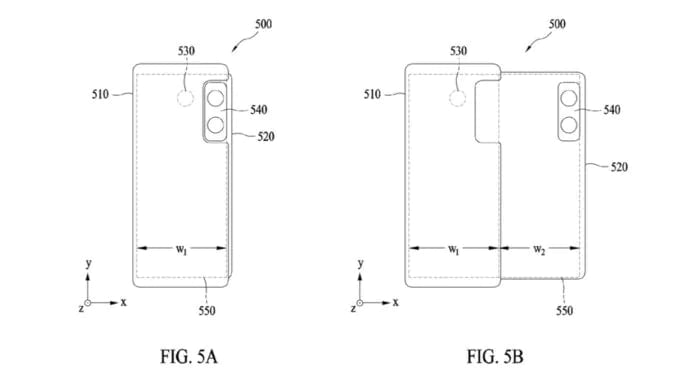
Samsung’s new patent hints at the next step after foldable phones

Samsung is working on new ideas for smartphones again. This time, the company is thinking about phones with rollable screens. A new patent shows that Samsung may want to make phones that can grow bigger by pulling the screen out.

The Korean tech giant is already famous for foldable phones like the Galaxy Z Fold and Galaxy Z Flip. These phones can fold in half. Now Samsung is trying something different. Instead of folding, the screen could roll out and become larger.

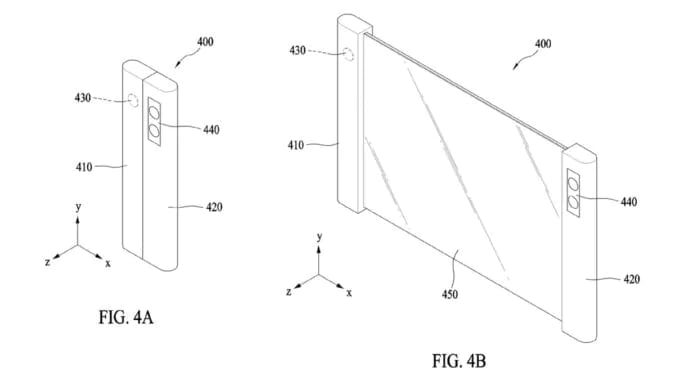
The patent shows two new ideas (via Android Authority). The first phone looks like a normal smartphone. But when users need a bigger screen, they can pull the display sideways. The phone then becomes wider, almost like a small tablet.

Another interesting thing is the design. The screen stays hidden inside the phone. The phone has two sides that can be pulled apart. When the user pulls the phone open, the display slides out from inside the device. When closed, the screen stays protected inside the body of the phone.

Samsung Phone Patent

The patent also says the phone may have sensors. These sensors can understand how far the screen has been pulled out and how fast it moves. This would help the phone adjust apps and screen size smoothly.

Right now, this is only a patent. Samsung has not announced a product yet. Many companies create patents for ideas that never become real devices. Still, this shows Samsung is thinking about the future of smartphones. Rollable phones may seem unusual today, but they could become popular in the future. Stay tuned for more information.

The post Samsung’s new patent hints at the next step after foldable phones appeared first on Sammy Fans.

Samsung confirms fix for frustrating scrolling bug in Members app

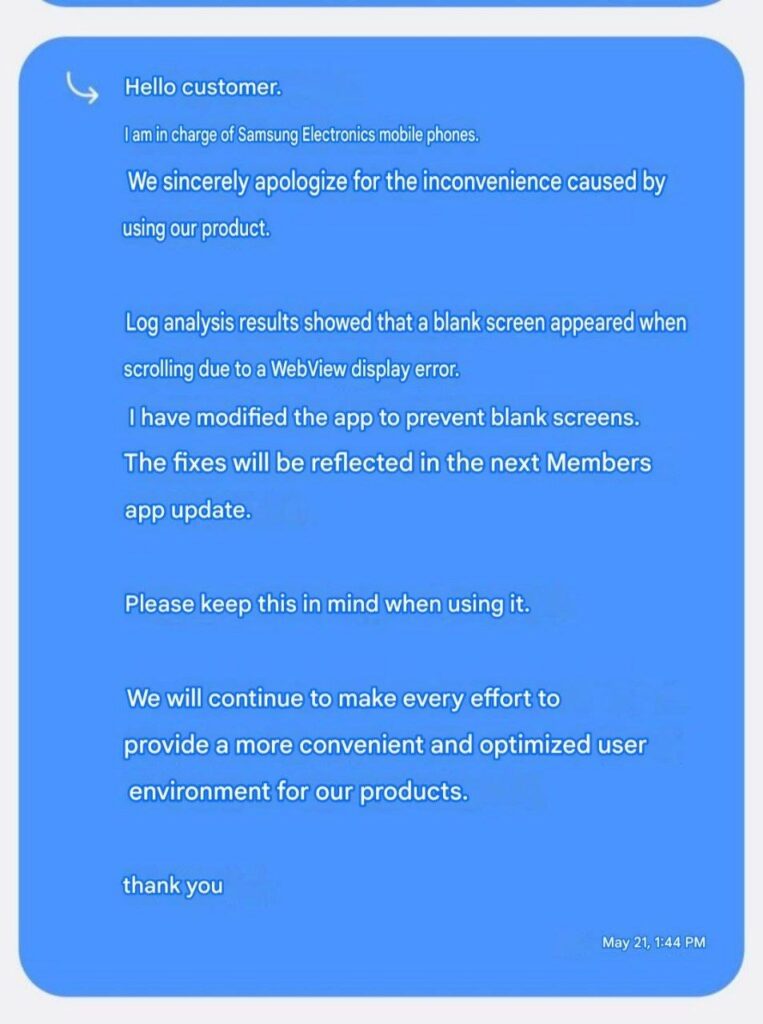
Samsung has officially responded to the scrolling issue reported by many users in the Samsung Members app. The issue is that the app sometimes showed a blank screen while scrolling through posts and pages. After several reports from users, Samsung investigated the issue and has now confirmed that a fix is on the way.

Many Samsung Members users noticed that while scrolling inside the app, the screen suddenly turned blank. This made it difficult to read posts, access community pages, or continue using the app normally. The issue mainly appeared during scrolling and affected the overall experience of the Samsung Members platform.

As per Samsung, the issue was caused by a WebView display error. WebView is a system component that helps apps display web-based content. Because of this error, some pages inside the Samsung Members app failed to load properly while users were scrolling.

Samsung’s support team replied to affected users and confirmed that the company had analyzed the app logs to identify the issue. After the investigation, Samsung developers modified the app to stop the blank screen issue from happening again.

Samsung Members issue fix

The company also apologized for the inconvenience caused to users. Samsung stated that the fix will be included in the next Samsung Members app update. Users are advised to install the upcoming update once it becomes available.

The post Samsung confirms fix for frustrating scrolling bug in Members app appeared first on Sammy Fans.

May 2026 security update makes Galaxy S22 series more stable and ready for One UI 8.5

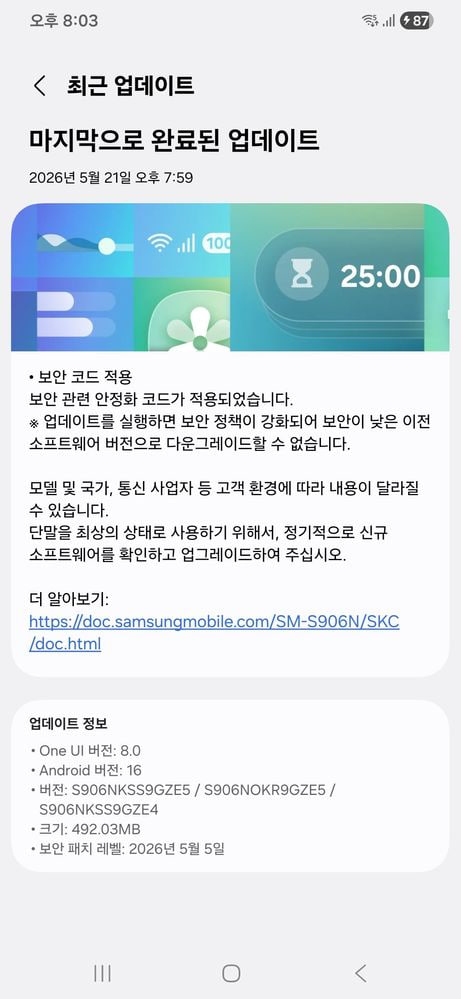
Samsung has begun releasing an Android 16-based May 2026 security update for the Galaxy S22 series. This update is currently available for users in South Korea and will soon reach more countries through a phased rollout.

Users of the Samsung Galaxy S22 series can verify the May 2026 security update via the One UI build version given below.

  • S901NKSS9GZE5 – Galaxy S22
  • S906NKSS9GZE5 – Galaxy S22 Plus
  • S908NKSS9GZE5 – Galaxy S22 Ultra

The new update comes with a download package size of around 500MB. It is a regular security maintenance update. It brings security improvements, system upgrades, and updated apps to improve the overall phone experience.

Samsung says the update fixes 39 security issues found in Android and Samsung’s own software system, One UI. These fixes help protect your phone from bugs and possible security threats. They also make your device safer when using apps, browsing the internet, and storing personal data.

Samsung Galaxy S22 May 2026 update

Along with security improvements, the update also makes the phone more stable. This means the Galaxy S22 series should run smoother with fewer crashes or glitches. 

The update is based on Android 16, and the device is already eligible for the One UI 8.5 update. The next update is expected to be One UI 8.5. The current software update makes the device ready for future updates, so install it now. 

To install the update, users can go to Settings >> Software Update >> Download and install on their phone. Download the update now to enjoy a better Galaxy experience.

The post May 2026 security update makes Galaxy S22 series more stable and ready for One UI 8.5 appeared first on Sammy Fans.

Galaxy A36 and A56 start receiving stable One UI 8.5 update in more countries

Samsung has started releasing the stable One UI 8.5 update for the Galaxy A36 and Galaxy A56 in more countries. The update first launched in South Korea, and now Samsung is expanding it globally.

Galaxy A36 users in Turkey are now getting the One UI 8.5 update. At the same time, Galaxy A56 users in Malaysia, Indonesia, and several European regions have also started receiving the new software update. This shows that Samsung has officially started the worldwide rollout for both devices.

One UI 8.5 update comes with a download size of around 3GB. Since it is a major update, users are advised to connect to a Wi-Fi network before downloading it. The update is expected to improve the overall user experience with smoother performance, better animations, improved battery optimization, and stronger security features.

Samsung Galaxy A36

Users can identify the update through the firmware version numbers. For the Galaxy A36, the firmware version ends with CZDD. Meanwhile, the Galaxy A56 update carries a firmware version ending with CZDR.

Samsung releases updates in phases, so some users may receive it earlier than others depending on their country or carrier. If the update has not arrived yet, users may need to wait a few more days.

To check for the update manually, users can go to Settings, then tap Software Update, and select Download and Install. With the One UI 8.5 rollout now expanding globally, more Galaxy A36 and Galaxy A56 users are expected to receive the update very soon.

The post Galaxy A36 and A56 start receiving stable One UI 8.5 update in more countries appeared first on Sammy Fans.

❌