Huna Totem Corporation has dramatically scaled back its plans for a private cruise ship dock in downtown Juneau, citing tariffs, rising construction costs and a yearlong legal delay.
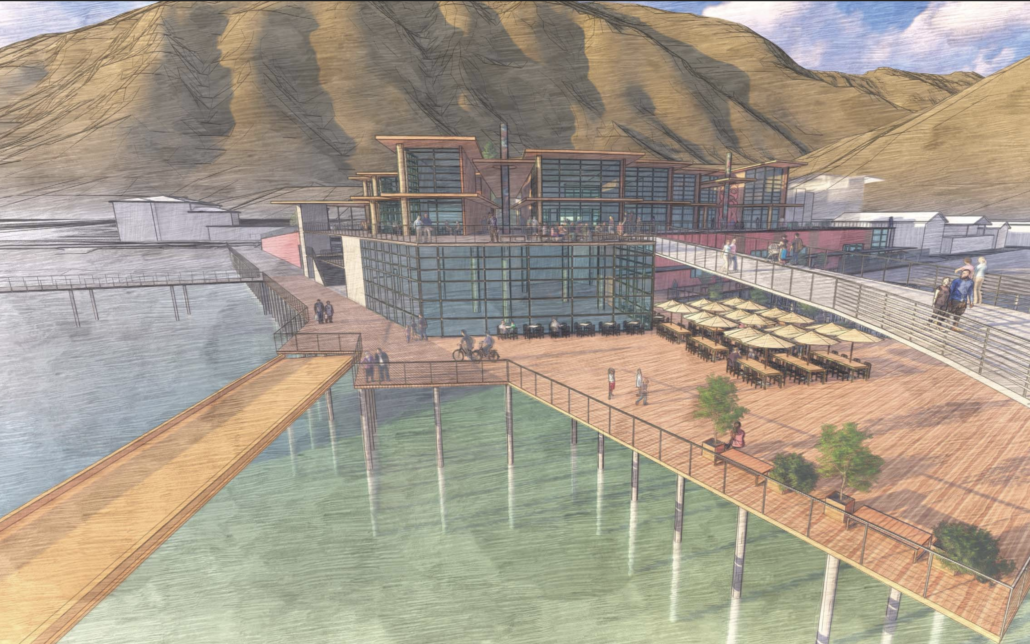
Rendering of the proposed buildout in Juneau
The project, known as Aak’w Landing, was originally set to include up to 50,000 square feet of multistory retail and commercial space with underground parking and extensive development on pilings over the water.
The revised plan cuts that down to about 18,000 square feet across single-story buildings, eliminates underground parking entirely, and pulls construction back from the shoreline.
Susan Bell, Huna Totem’s vice president of strategic initiatives, said the company is still aiming to deliver the same core guest experience despite the smaller footprint.
“We just scaled back to the property as it exists now and scaled the buildings down, and still feel it’s going to be an excellent guest experience and an excellent place for residents,” Bell said.
The project will still include a welcome center, retail space, waterfront dining and a cultural center, along with an extension of Juneau’s Seawalk. Bus staging parking stays the same, though general guest parking has been reduced. The 38 spaces planned still exceed the city’s minimum requirement of 20.
Why the cuts
Huna Totem says development costs climbed from about $150 million in 2023 to more than $250 million now.
The company points to four factors — a legal appeal of the project’s permit that delayed construction for about a year, time spent restarting public engagement once that appeal was resolved, tariffs that drove up the cost of steel and other materials, and a geotechnical analysis that found the original waterfront design too costly to build safely.
Because the changes are so drastic, the project has to go back through Juneau’s Planning Commission for a modified permit before construction can begin.
Huna Totem still hopes to open the dock in time for the 2028 cruise season, though Bell has acknowledged that the permitting process and materials sourcing could push that timeline back.
The company says its goal is to keep the project’s cost near the original $150 million estimate, despite the increases seen so far.
The dock is designed to handle one large cruise ship at a time, with a capacity of up to 4,500 passengers.
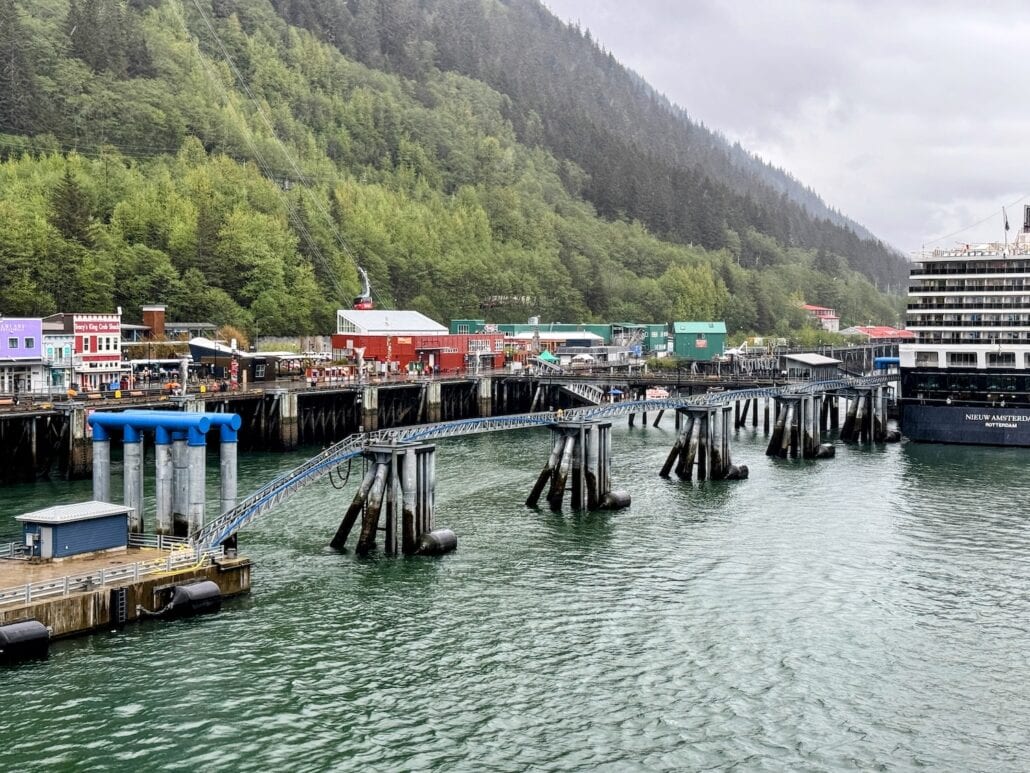
Supporters say it would let passengers walk straight into downtown Juneau instead of tendering in from ships anchored in Gastineau Channel, and would let vessels plug into shore power once it’s available.
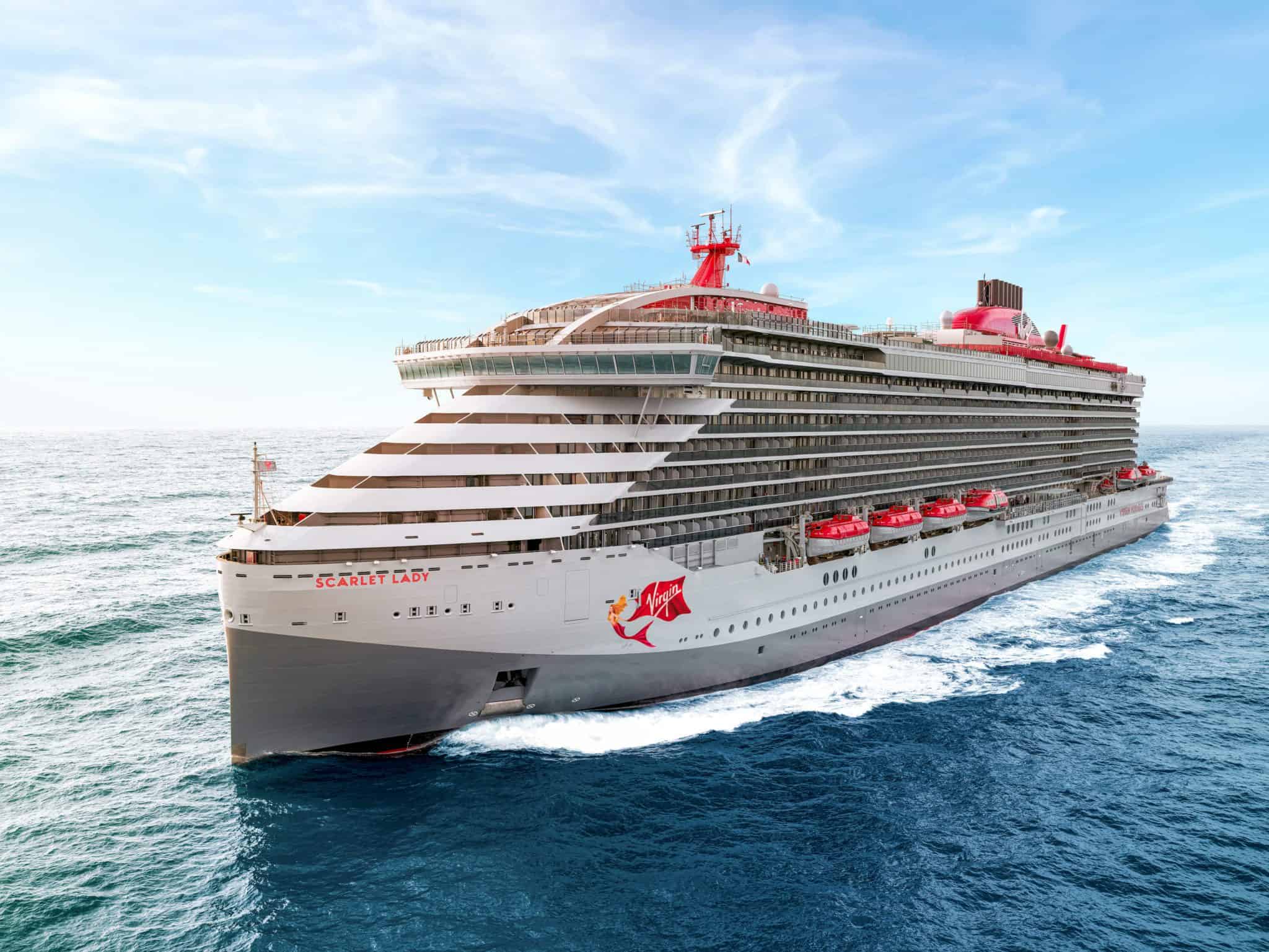
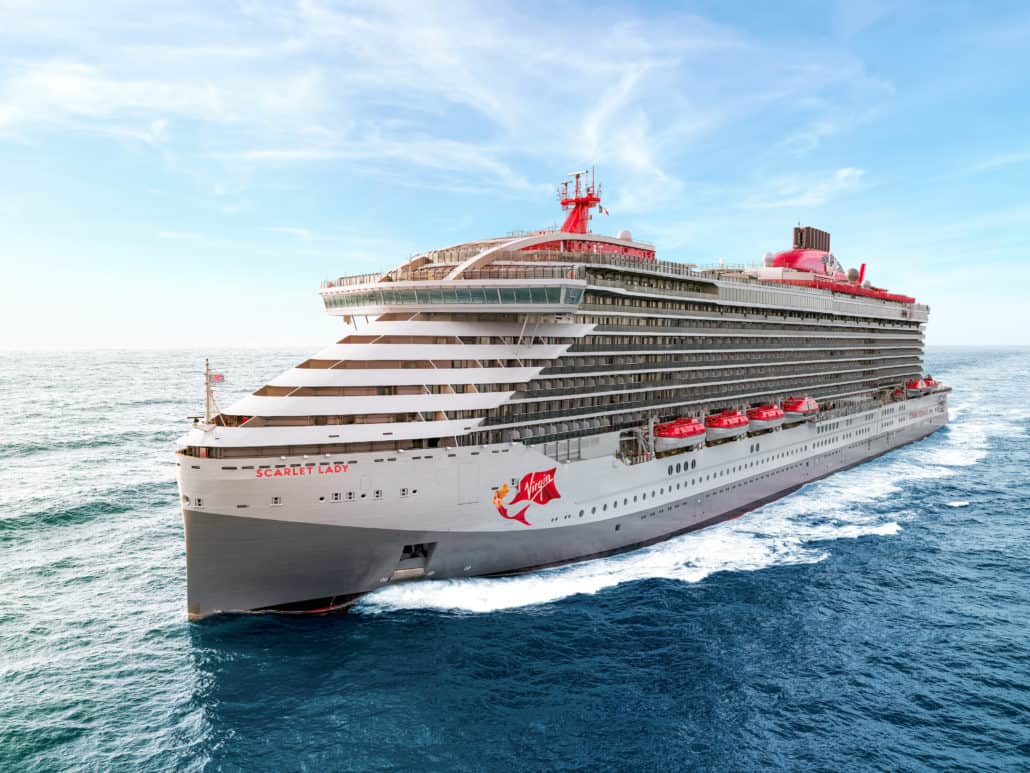
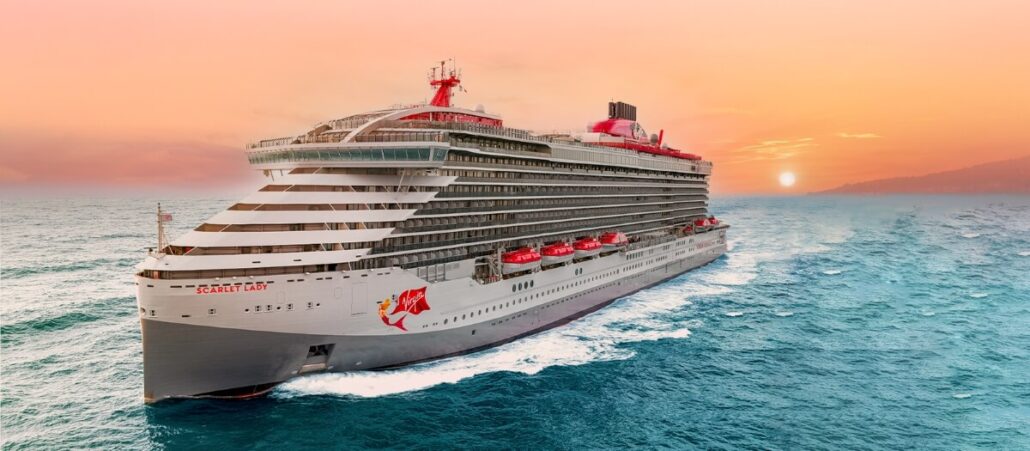
A 35-year-old passenger from Spain was arrested and removed from Virgin Voyages’ Scarlet Lady after the ship’s security team found cocaine and cannabis in his possession, and he was not permitted to rejoin the sailing.
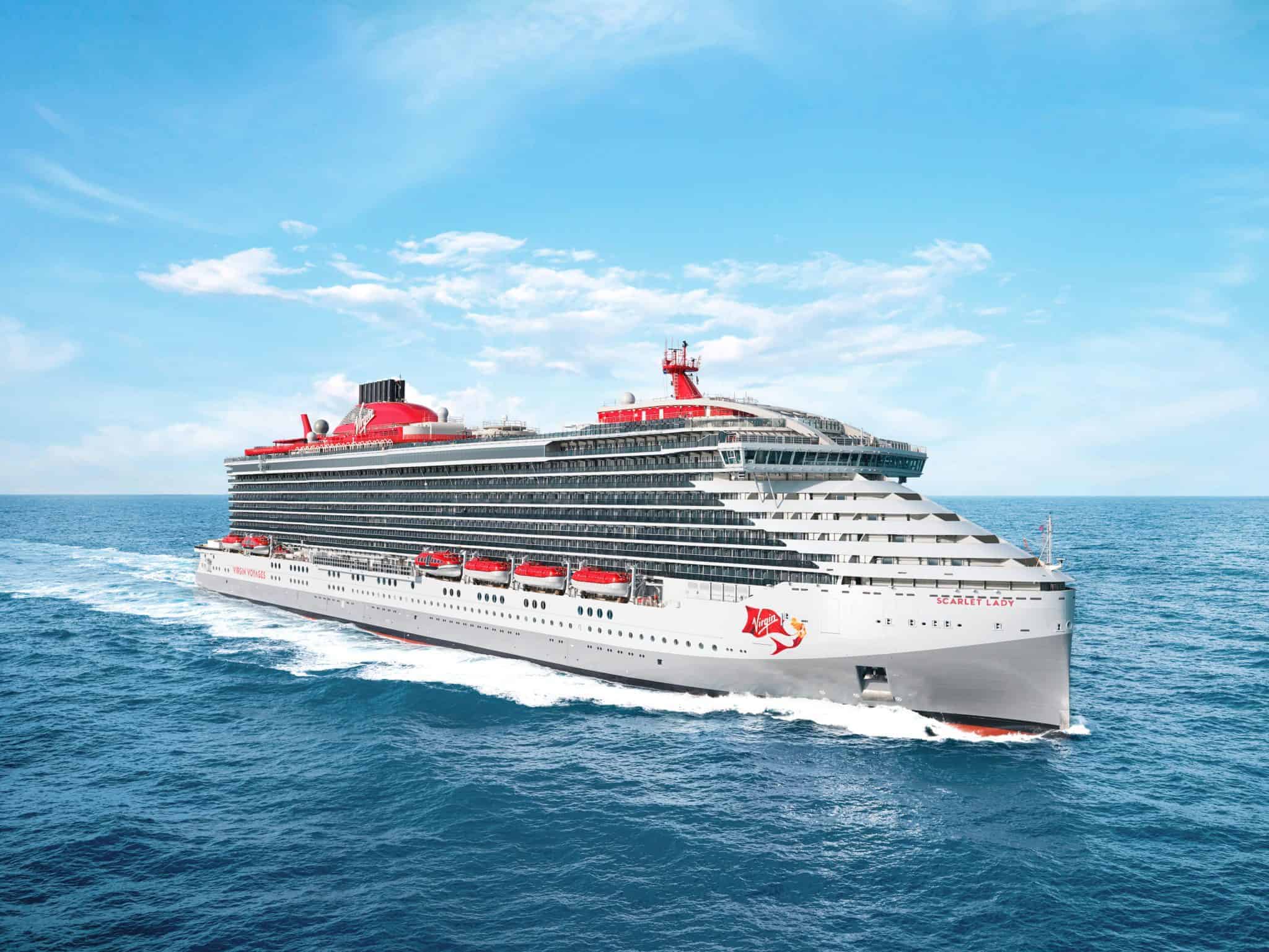
Scarlet Lady (Photo courtesy of Virgin Voyages)
The arrest was reported July 13, 2026, during a stop in Souda, Crete, a port that wasn’t on the ship’s original schedule.
Scarlet Lady ended up there after both Turkey and Egypt denied the vessel entry earlier in the voyage, a charter run by Atlantis Events for a 10-night, 2,770-passenger LGBTQ+ sailing that departed Athens July 5 and is scheduled to end in Trieste, Italy, on July 15.
What happened onboard
According to Greek news outlets, the ship’s onboard security team discovered the drugs and immediately contacted the Chania Port Authority. When Scarlet Lady tied up at the pier, Hellenic Coast Guard officers boarded, searched the passenger and took him into custody.
A local prosecutor ordered his release shortly afterward. Greek law tends to treat minor possession for personal use leniently, often resulting in release or a suspended sentence rather than prosecution.
Release from custody didn’t mean a return to the ship. Virgin Voyages refused to let him back onboard for the remainder of the sailing.
The rules that applied
Some cruisers assume drug laws don’t apply once a ship is in international waters or registered under a foreign flag.
The moment a vessel enters a country’s territorial waters or ties up at a pier, everyone onboard is subject to that country’s laws, regardless of where the ship is registered or where the passenger is from.
Virgin Voyages’ own prohibited items policy is unambiguous on this point. The list states that “all illegal drugs, non-prescribed controlled substances, medically prescribed marijuana or synthetic marijuana and CBD products, as well as certain uncontrolled substances wrongfully used to cause impairment” are banned onboard.
Part of a rough stretch for this charter
This is the third disruption in a little over a week for the same sailing.
Turkish authorities refused Scarlet Lady’s scheduled calls at Kuşadası and Istanbul, citing concerns about the passengers’ “moral values.”
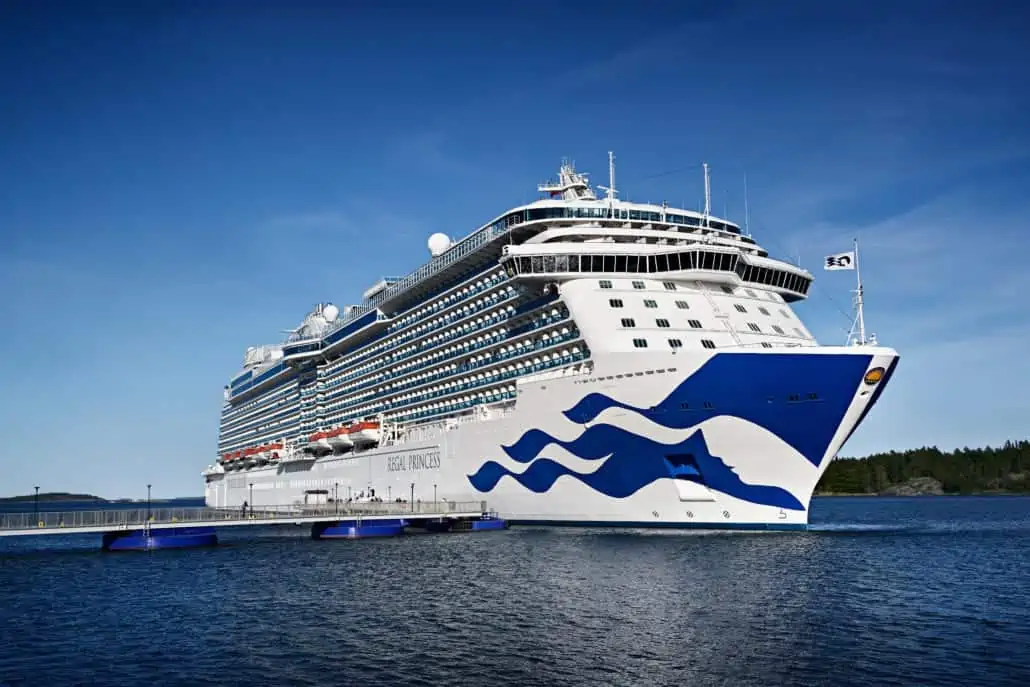
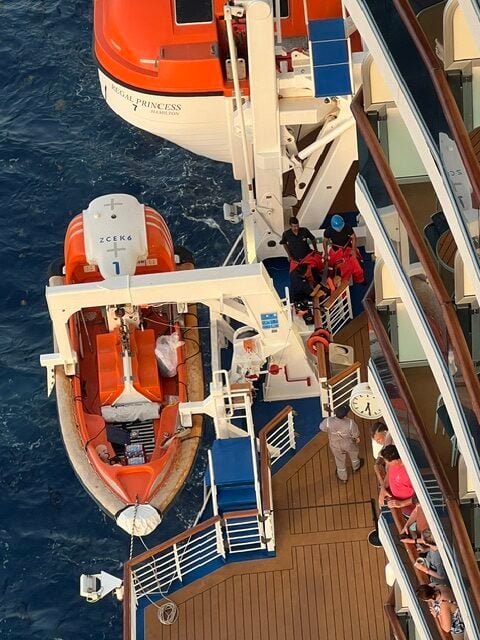
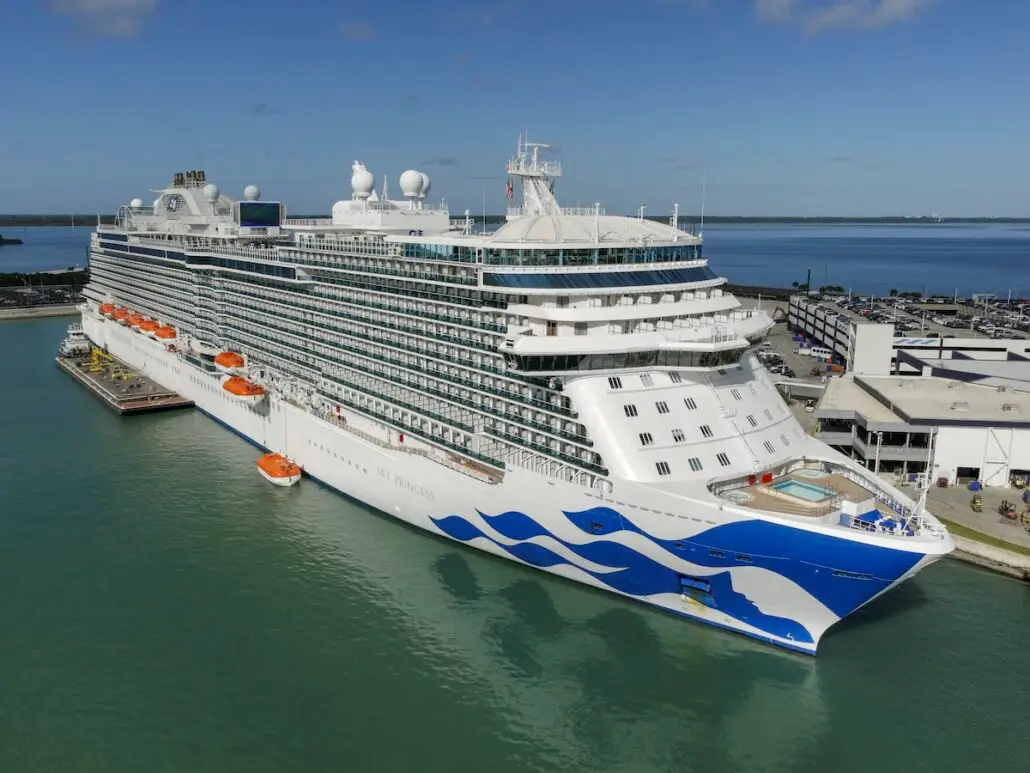
A crew member aboard Regal Princess died after going overboard near Cancun, Mexico, Princess Cruises confirmed Monday, capping a five-hour search across two areas.
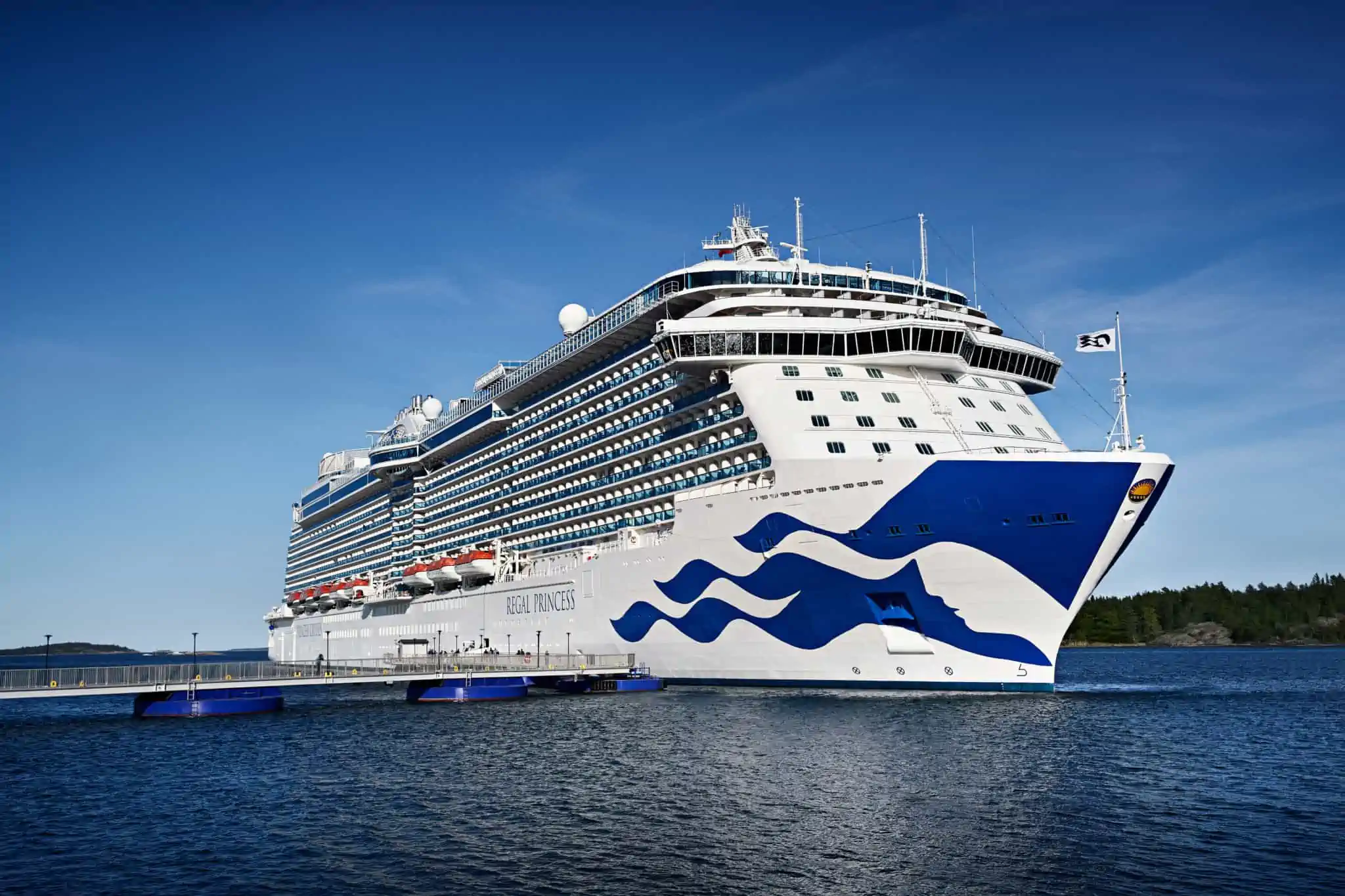
View of Regal Princess (Photo courtesy of Princess Cruises)
“Regal Princess is conducting man overboard right now,” a passenger wrote to Cruise Radio’s tip line early Monday. “We were woken up by captain’s all ship announcement. Crew member is missing. We are now have turned around and is sailing at 25 knots!”
Vessel data shows Regal Princess reversed course at 4:02 a.m., about 524 nautical miles from Port Everglades, then covered 30 nautical miles before reaching an initial search area at 5:39 a.m. local time.
A missed port
At 8:30 a.m., the passenger reported another bridge update.
Captain just made announcement: they’re continuing to search and have recalculated their best guess on location of missing crew member,” the passenger wrote. “Cozumel will be delayed by several hours and maybe cancelled altogether. Originally supposed to be docked already.”
The crew member was never found.
“They did not find crew member, search for many hours, lost Cozumel port today,” the passenger wrote, adding that the captain said the ship would make up the stop on the way back. “Captain did many updates to passengers throughout the day and was respectful to the crew and professional and kept us updated.”
Princess confirms the death
The rescue operation during the man overboard (Photo via Doug Sader)
Princess Cruises is deeply saddened to confirm the passing of a Princess crew member who has gone overboard today from Regal Princess. Our heartfelt condolences go out to the crew’s family and friends during this difficult time.
It went on to say, “Grief support services are being offered to guests and crew members affected by this event. Princess Cruises thanks the local maritime authorities and our colleagues from Carnival Jubilee who assisted in search and rescue efforts.
Regal Princess is due in Belize July 14 as planned. Cozumel will be made up July 16, and the ship remains on schedule to return to Fort Lauderdale July 18.
A fall on a cruise ship deck is not handled the way a fall in a grocery store parking lot is handled.
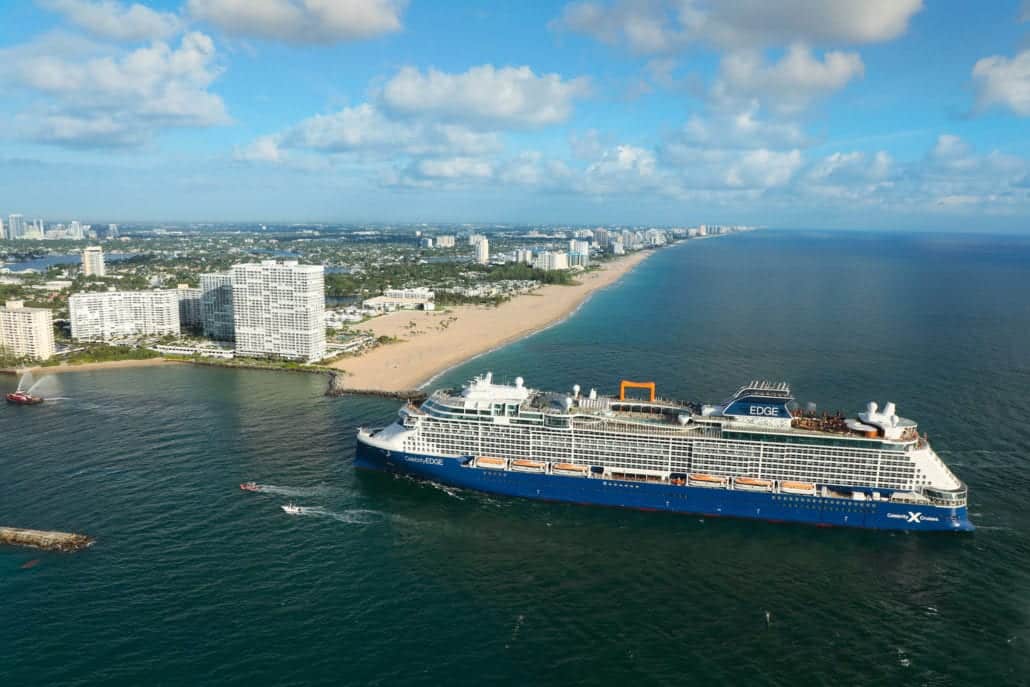
Celebrity Edge arrives in Port Everglades (Photo courtesy of Celebrity Cruises)
Different court, different deadline, different rulebook. Most passengers never learn this until they are already hurt and the clock is running against them.
The numbers are not small. The U.S. Coast Guard counted 2,170 injuries across 3,887 boating accidents in 2024 alone.
Cruise ships add their own tally: 2024 brought 19 reported man-overboard cases across the major lines, on top of the routine slips, trips, and shore-excursion mishaps that rarely make the news.
If you spend time on the water, it helps to know how the law treats an injury out there, because it treats it very differently from an injury on land.
The water runs on its own body of law
Injuries that happen on navigable water fall under maritime law (also called admiralty law), a separate legal system that predates most state injury statutes. It carries its own rules about who is responsible, where you can sue, and how long you have to do it.
A local attorney who is excellent with car accidents can still miss the maritime deadlines, because those deadlines live in federal law and in the contract you agreed to when you booked.
Passengers and crew are not covered by the same rules
(Photo courtesy of Carnival Cruise Line)
Two very different sets of rules apply, depending on who got hurt.
If you are a passenger, the cruise line owes you reasonable care under the circumstances. When a wet deck, a broken railing, or a poorly run tender boat causes an injury, that can be negligence. But your ticket contract shapes almost everything about how you pursue it (more on that below).
If you are crew, a deckhand, a commercial fisherman, a dock worker, or a diver, you are likely covered by the Jones Act, a 1920 federal law that lets injured maritime workers sue their employer for negligence. The bar to show the employer played a part is famously low, which is one reason maritime workers should never sign anything from an insurer before talking to a lawyer.
The fine print on your ticket can decide your case
Here is the part that surprises people most. The contract printed on the back of a cruise ticket, or buried in the online booking terms, usually does two things that can sink a claim:
It tells you where you are allowed to sue, often a single court in one state, no matter where you live or where you got hurt.
It shortens the deadline. Federal law lets cruise lines require written notice within six months and a filed lawsuit within one year, far less time than most state injury deadlines allow.
This is not theoretical. In the case of Carnival Cruise Lines v. Shute, a passenger slipped on a deck mat and the Supreme Court held her to the forum clause on her ticket, forcing the case to Florida even though she had bought her ticket in Washington. Miss the window or file in the wrong court, and a strong case can be over before it starts.
What actually hurts people on the water
Most injuries are not dramatic overboard events. They are:
Slip-and-fall on wet decks, pool areas, and stairs
Tender boats, gangways, and dock transfers
Shore excursions and watersports run by third-party operators
Foodborne illness and norovirus outbreaks
Boating collisions, where the Coast Guard names operator inattention and inexperience as the top causes
One figure is worth keeping in mind: in 2024, 87 percent of the people who drowned in boating accidents were not wearing a life jacket. A life jacket is the cheapest legal protection you will ever buy.
If you are injured, do these five things
Report it to the ship’s medical center or the vessel operator, and ask for a written incident report.
Get treated onboard and keep every record, receipt, and discharge note.
Document the scene: photograph the hazard and your injury, and collect the names of witnesses and crew.
Keep your ticket and booking terms. Your real deadline is hiding in that document.
Talk to a maritime attorney early, before you give a recorded statement or accept a quick settlement.
When it is worth calling a maritime lawyer
(Photo courtesy of Canaveral Port Authority)
For a minor scrape, it usually is not. For anything involving a hospital, a lasting injury, or a death in the family, it is.
A boat accident attorney who works in maritime law can read your ticket contract, pin down the true deadline, name the right defendant, and file in the court the contract requires.
Those are the exact steps a general-practice lawyer is most likely to miss. Because the notice period can run as short as six months, waiting to see how an injury heals is often the most expensive choice an injured passenger makes.
BoatLaw, LLP has represented cruise passengers, commercial fishermen, and other maritime workers since 1977, across Washington, Oregon, California, and Alaska. The point here is not fear of the water. It is simpler: the water keeps its own rules and its own clock, and the people who protect their claim are the ones who learn both before they ever need them.
A Mediterranean cruise chartered by Atlantis Events was denied port entry twice in the same week, first in Turkey and then in Egypt, forcing organizers to rework the itinerary on a single 10-night sailing aboard Virgin Voyages’ Scarlet Lady.
(Photo courtesy of Virgin Voyages)
Turkey cancels two port calls
The Athens to Venice cruise, chartered by US-based Atlantis Events, departed July 5 with stops originally planned in Kusadası and Istanbul. Turkish authorities canceled both calls, saying the charter did not meet the country’s moral standards, according to CNN.
Aydın province, home to the Kusadası port, said there was “absolutely no possibility of the group in question visiting our province for an event of this nature,” adding that the charter was “known for behaviors incompatible with the fabric of our society and our moral values.”
Rich Campbell, president and CEO of Atlantis Events, called the decision “pretty stunning” and said the company had made repeated attempts to get Turkish authorities to reverse course. “It’s very concerning to me when a country decides they can pick and choose which tourists are allowed in and which are not,” he told CNN.
Campbell told USA Today the ship posed no different a presence in port than any other vessel. “It’s not like we’re not a gay pride rally, we’re not a march, we’re not an organization, we’re not a political statement in any way,” he said, adding that the cruise had been advertised a year in advance.
Atlantis has chartered cruises to Istanbul and Kusadası 13 times over the past 25 years without incident, according to Campbell.
Roughly 1,100 of the ship’s approximately 1,900 passengers are from the United States, with the rest coming from the UK, Canada, Australia and elsewhere, per CNN.
In place of the Turkey stops, Atlantis added calls in Alexandria, Egypt, and Crete, Greece.
Egypt pulls the plug hours before arrival
Days later, Egyptian authorities denied the ship entry to Alexandria, just hours before it was due to dock, according to USA Today.
“We were given full approval to arrive in Egypt and just four hours before we picked up the pilot and customs officers, we were told that the ship would not be allowed to enter the harbor,” Campbell said. “No explanation was given for this decision and we are very disappointed.”
Campbell said Atlantis has brought chartered cruises to Egypt at least five times without incident. “Last year we brought 2,500 guests to Alexandria and the year before 1,200, both without incident,” he said. Egyptian port authorities have not publicly stated a reason for the denial.
What’s next
With Alexandria off the itinerary, the ship is now scheduled to call at Kotor, Montenegro.
Virgin Voyages said it was “incredibly disappointed” by both denials and is working to ensure guests still have a strong trip. Atlantis Events said it hopes the situation is isolated and that both countries will welcome all guests without conditions in the future.
Most people pack for Alberta thinking about mountains, the Calgary Stampede, and the long drive between Banff and Jasper. Almost nobody packs with a thought about whether they can legally put twenty dollars on a hockey game from their hotel room. Yet that question comes up more than you might expect, especially among travelers who are used to betting freely back home and assume the rules travel with them.
They do not.
Gambling law in Canada is set province by province, the way drink prices change the moment your ship clears one country’s waters and enters another’s.
What was perfectly normal on the last leg of your trip can be a gray area the moment you cross a line on the map.
If you have spent time on cruise ships, you already understand this instinct better than you think. The casino on deck eleven stays roped off until the ship is far enough offshore, and the staff will tell you plainly that port rules and sea rules are two different things.
Alberta works on the same logic, just with provincial borders instead of a coastline. Before you assume your usual betting app will behave the way it does at home, it helps to read the local rulebook the same way you would read a port guide.
This guide is built for the visitor, not the resident. It walks through who can bet, what identification you need, where the line between legal and illegal actually sits, and the small practicalities that trip up out-of-towners.
None of it is complicated once you see the pattern, but the pattern is not the one most travelers expect, and the cost of guessing wrong ranges from a frozen account to a deposit you cannot easily get back.
The clearest plain-language reference I leaned on while sorting this out was Legal Sports Report’s breakdown of provincial betting laws, which lays out how Alberta’s framework differs from the rest of Canada without burying you in legal jargon. Keep something like that bookmarked, because the one constant in Canadian betting law is that it keeps changing.
The One Rule That Surprises Visitors Most
Here is the thing that catches travelers off guard: in Alberta, you do not have to be a resident to bet legally. What matters is where your feet are. If you are physically inside Alberta’s borders and you meet the age requirement, you can open an account and place a wager, even if your driver’s license was issued two thousand miles away.
That sounds generous, and in a sense it is. But it cuts both ways. The moment you leave the province, the permission leaves with you.
Drive into British Columbia or Saskatchewan and the same account may behave very differently, because each of those provinces runs its own system. The bet you placed from a Calgary coffee shop is not something you can casually continue from a rest stop across the border.
This is the cruise-ship logic almost exactly. Your sea pass works beautifully while you are aboard and in the right waters.
Step off in a foreign port and the casino card in your pocket means nothing on dry land. Location, not identity, decides what you are allowed to do. Once a visitor internalizes that single idea, most of Alberta’s other rules start to make sense.
How Old You Have to Be
Alberta sets the minimum gambling age at 18. That applies to sports betting, casino games, lottery products, and the provincially run online platform. It is worth saying plainly because the number is not the same everywhere in Canada.
Several provinces use 19 as the cutoff, so a 18-year-old who could legally bet in Alberta might be turned away the moment they cross into a neighboring province.
For families traveling together, this matters more than it first appears. A college-age traveler old enough to bet in Alberta is not automatically old enough elsewhere, and the reverse is true too.
Treat 18 as an Alberta-specific fact, not a Canadian one, and you will avoid an awkward situation at the worst possible moment.
The age check is not a polite suggestion either. Licensed platforms verify your date of birth before they let you do anything, and there is no informal workaround for a traveler who left identification in the hotel safe.
Plan to prove your age, every time, the same way you would expect to show a passport at a gangway.
What Identification You Actually Need
Age verification in Alberta is mandatory at sign-up, and it is more thorough than the casual swipe of a card you might remember from older systems. When you register on a licensed platform, you provide personal details and supporting identification so the operator can confirm two separate things: that you are old enough, and that you are who you say you are.
For a visitor, this means bringing the kind of identification you would carry for any cross-border trip anyway. A passport, a government-issued driver’s license, and the address details tied to your accounts all help the verification go smoothly.
Out-of-province and out-of-country travelers sometimes hit a snag here, not because they are barred, but because the verification system is calibrated for documents it recognizes quickly. Give it a clean, current ID and the process is usually painless.
There is a second layer that travelers rarely anticipate: geolocation. Licensed platforms confirm your physical location with each wager, using location technology on your device rather than relying on the address you typed during sign-up.
So even after your account is verified, the system still checks, quietly, that you are actually in Alberta when you tap to place the bet. A traveler whose phone is set to the wrong region, or who is sitting just over a provincial line, can find a perfectly valid account suddenly refusing to cooperate.
Image by Greer Donovan
Where Betting Is Legal, and Where It Quietly Is Not
The legal channels in Alberta are narrower than the flood of advertising might suggest. As of 2025, the province’s own platform, Play Alberta, is the established legal route for online sports betting and casino play. It is run under provincial authority, which is part of why it has been the safe default answer for anyone asking where a visitor can bet without worrying about the rules.
That picture is changing, and travelers in 2026 should know the timeline. Alberta passed the iGaming Alberta Act in 2025, creating a new corporation to oversee an open, competitive online market, the way Ontario did before it.
The regulated open market is scheduled to launch on July 13, 2026, after which privately operated, provincially licensed sportsbooks will join the field. If you are visiting around that date, expect a noisier advertising environment as new operators compete for attention, and remember that more choice does not mean fewer rules. The age requirement, the identity check, and the location check apply to every licensed operator equally, established or brand new.
For a visitor, the practical takeaway is simple: stick to platforms that are clearly licensed in Alberta, and be skeptical of any app that promises to work everywhere with no questions asked. An offshore site that ignores your location is not a convenience, it is a sign you have wandered outside the legal lane.
The licensed platforms may feel slightly more bureaucratic at sign-up, with their verification steps and location prompts, but that friction is the whole point. It is the difference between a system that has to answer to a regulator and one that answers to no one if your money or your bet ever goes missing.
Physical, in-person betting follows the same principle. Licensed casinos and venues operate under provincial oversight, and the protections that come with that, fair-play standards, dispute channels, self-exclusion options, only exist inside the regulated system. The unregulated alternatives may look identical on the surface, but they sit outside every safeguard a traveler might one day be glad to have.
A Traveler’s Checklist for Betting in Alberta
The fastest way to sort out whether you are on solid ground is to match your situation against the rule and the action. Use this before you place anything, not after.
Your situation
The rule in Alberta
What to do
You are a visitor, not a resident
Residency does not matter; physical location does
Bet only while physically inside Alberta
You are 18, traveling with family
18 is the minimum here, but not in every province
Confirm the age rule again before crossing into another province
You left your ID at the hotel
Verification is required before any wager
Carry government-issued photo ID whenever you intend to bet
Your phone’s location is off or spoofed
Geolocation is checked on every bet
Enable location services and turn off any VPN
You found an app that “works anywhere”
Legal play runs through Alberta-licensed platforms
Avoid offshore sites; use clearly licensed options
You are about to drive into BC or Saskatchewan
Each province runs its own separate system
Treat your Alberta access as ending at the border
Keep this mental list the way you would keep a packing list. It is short, and every line on it has tripped up a confident traveler at some point.
The Cruise Analogy, Spelled Out
It is worth lingering on the comparison because it is genuinely useful, not just a cute framing. On a ship, three things govern whether you can gamble: your age, proof of who you are, and the vessel’s position in international waters. Miss any one of them and the casino doors stay shut. Alberta runs on the same three hinges, with the province standing in for the ship.
Anyone who has sorted out the logistics of a port-heavy itinerary already has the right reflexes for this.
The same care you put into checking documents and arrival logistics, the kind of planning behind a good guide on how to get from the airport to the cruise terminal, is exactly the mindset that keeps a betting question from turning into a problem. You read the local rules, you carry the right paperwork, and you do not assume the last stop’s rules apply to this one.
The biggest mental adjustment for travelers is accepting that the permission is tied to the place, not to you. Your home account, your home habits, and your home assumptions do not board the plane with you in any legally meaningful way. Alberta decides what happens in Alberta. Cross out, and you are under someone else’s rules again.
Money, Currency, and Practical Friction
Travelers tend to forget that betting is also a money-movement activity, and money movement across borders carries its own small frictions.
Wagers and any winnings on an Alberta platform are handled in Canadian dollars, so a visitor funding an account from a foreign card should expect currency conversion and possibly a foreign-transaction fee from their own bank. None of this is unique to gambling, but it is easy to overlook when you are focused on the bet itself.
Withdrawals deserve a moment of thought too. If you open an account, fund it, and bet during a short visit, you want to be sure you can actually retrieve any balance after you leave.
Verified accounts generally allow this, but the process is smoother when your identification and payment details were clean from the start. The traveler most likely to hit trouble is the one who set everything up in a hurry on day one and then tried to cash out from an airport on day five.
A sensible habit is to treat any betting account the way you treat a travel-money card: fund it modestly, keep your documentation consistent, and do not leave a balance stranded behind a verification step you never finished. The goal of a vacation wager is a bit of fun, not a logistical knot to untangle from home a month later.
It also helps to think about timing. A short trip leaves little room to resolve a verification hiccup, so if you intend to bet at all, set up and confirm the account early in the visit rather than on the last evening. That way, if the system asks for an extra document or a clearer photo of your identification, you have days to respond instead of minutes.
The travelers who run into real frustration are almost always the ones who treated a regulated financial account like a casual app download, expecting instant access and instant cash-out with no checks in between. Alberta’s system is not built for that, and neither, frankly, is any responsible one.
Image by Greer Donovan
Staying on the Right Side of the Line
The single most reliable way to stay legal as a visitor is to use only platforms that are clearly licensed in Alberta and to keep your location honest.
Everything else, the age rule, the identification, the geolocation, follows naturally once you commit to that one discipline. The regulated system exists precisely so that a traveler does not have to become a legal expert; the safeguards are built in, but only inside the lines.
For the authoritative version of how this framework is governed, the Alberta Gaming, Liquor and Cannabis regulator publishes the province’s gaming legislation and policies, including the statutory framework, compliance standards, and the self-exclusion program that sits behind every licensed platform.
It is dry reading, but it is the source of truth, and it makes clear what the marketing around any individual app cannot.
If you remember nothing else, remember the cruise rule. Age, identity, location. Get all three right and you are fine. Miss one and the doors stay closed, no matter how loud the app on your phone insists otherwise.
Frequently Asked Questions
Can I bet on sports in Alberta if I am only visiting?
Yes. Residency is not the deciding factor; your physical location is. As long as you are inside Alberta’s borders and meet the minimum age, you can register on a licensed platform and place a wager. The permission ends the moment you leave the province, so do not plan to continue from across a border.
What is the legal gambling age for travelers in Alberta?
The minimum age in Alberta is 18, and it applies to sports betting, casino games, and the provincial online platform. Be careful not to assume that number works elsewhere in Canada, since several provinces use 19. Treat 18 as an Alberta-specific rule rather than a national one.
What identification should I bring if I want to bet during my trip?
Carry the same government-issued photo identification you would already bring for travel, such as a passport or driver’s license, plus the details tied to your payment method. Licensed platforms verify your age and identity at sign-up, and a clean, current ID makes the process fast. Without it, you will not be able to complete registration.
Why does my betting app stop working when I leave my hotel?
Licensed Alberta platforms use geolocation to confirm you are physically in the province on every wager, not just at sign-up. If your device location is disabled, set to the wrong region, or routed through a VPN, the system can block the bet even on a verified account. Enable location services and switch off any VPN before you play.
Is it safe to use an app that says it works anywhere in Canada?
Be very skeptical of any platform that claims to work everywhere with no location checks. Legal play in Alberta runs through provincially licensed platforms, and an app that ignores your location is likely operating outside the regulated system. Sticking to clearly licensed options is what keeps the built-in player protections available to you.
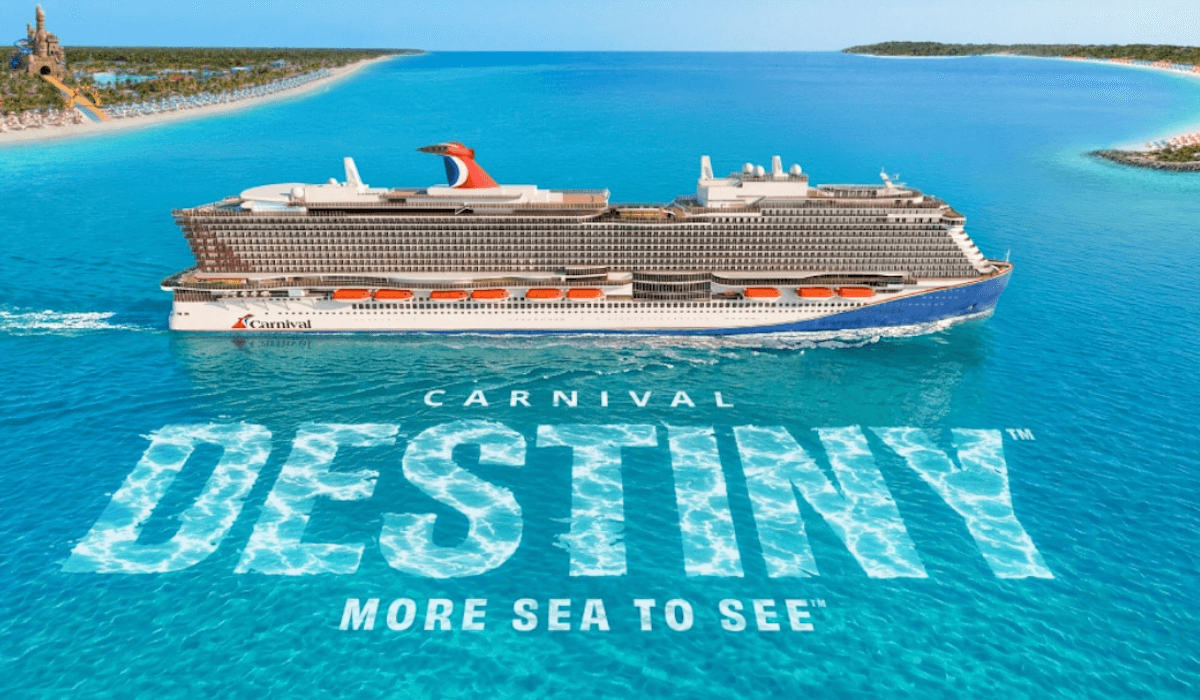
When it comes to Carnival Cruise Line’s next class of ship, the company is leaning heavily into the theory that bigger is better. After all, the newly-announced Carnival Destiny will carry nearly 1,500 more passengers than the biggest ship in their current fleet. Read on to see the other ways in which Carnival expects the first of her class to be a game changer.
How Big Will Carnival Destiny Be?
In announcing the new Ace class of ships, Carnival Cruise Line president Christine Duffy shared that the first of three — Carnival Destiny — would debut in 2029. Her as-yet-unnamed sister ships are expected to enter service in 2031 and 2033.
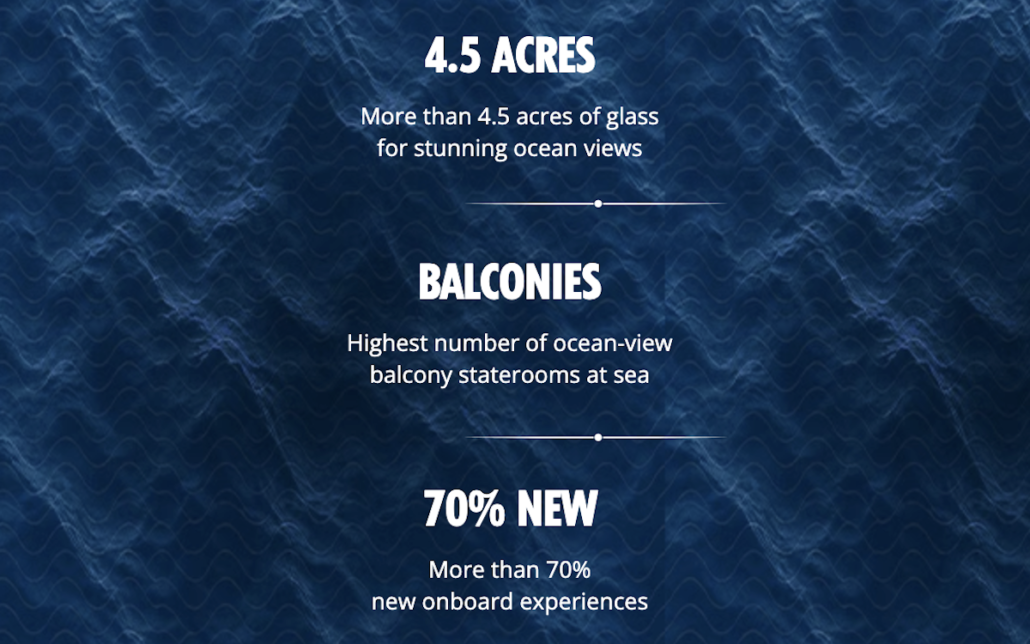
So just how big will the ship be? Destiny will weigh in at around 230,000 gross tons and carry an estimated 8,000 passengers. For comparison, the biggest ships currently sailing for Carnival are the Jubilee and Celebration, each of which come in at around 180,000 gross tons and carry 6,600 guests at maximum capacity.
What Does ‘More Sea to See’ Mean?
Even as the ship’s construction was getting under way, Duffy rolled out the Ace class ship’s motto: “More Sea to See.” In explaining the catchphrase, Duffy said the new class was “designed to change how guests will experience the sea while on their cruise.”
Carnival Destiny stats via Carnival Cruise Line
In essence, this means that Destiny will offer more access to the ocean than any other ship in Carnival’s fleet. How will this be accomplished? By featuring everything from a re-imagined lanai deck to what the exec said was “the most balcony cabins with ocean views at sea.”
If that phrasing seems unusual, it is clearly designed that way. Why? Keep in mind that many modern ships, including Royal Caribbean’s Oasis and Icon class, have balconies which overlook the center of the ship as opposed to the ocean. Translation: While those ships may have more total balconies, Carnival Destiny will have the largest number of, as they said “balcony cabins with ocean views.”
Duffy emphasized that the new concepts would “create ocean views from more places on board, bringing the ocean into constant view and redefining how guests will connect with the sea.”
Carnival Destiny’s Other Big Offerings
While details were few, it was also announced that Destiny would be introducing new concepts at every turn. “More than 70 percent of our dining, entertainment and signature guest experience will be delivered brand new.”
Already, Carnival is in the process of making major changes where dining is concerned. A new menu is being rolled out across the entire fleet, and the upcoming Carnival Festivale and Carnival Tropicale will feature four new-to-Carnival dining venues.
What’s unclear at this point is whether these new venues are included in the plans for Carnival Destiny.
Where Will Carnival Destiny Sail To?
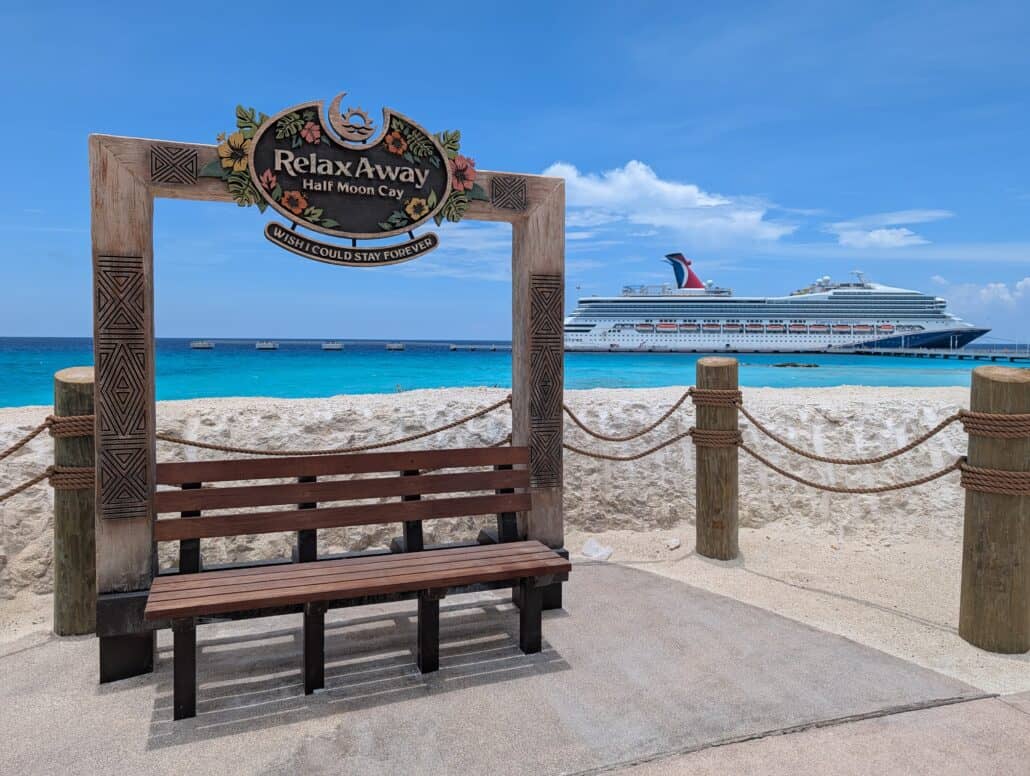
Welcome to Relax Away, Half Moon Cay (Photo by Doug Parker/Cruise Radio)
One thing Carnival did not mention with regards to Destiny’s future is exactly where the ship will be homeported. They did, however, reveal that the ship will be visiting Carnival’s Paradise Collection offerings in the Bahamas and Caribbean.
No word as of yet when bookings for the new ship will go on sale.
If the recent Carnival Corporation data breach caught your attention, it raises a bigger question that doesn’t get talked about enough: what happens when a cyberattack targets not just passenger data, but the ship itself?
Modern cruise ships are essentially floating smart cities. Navigation, propulsion, cargo systems, passenger Wi-Fi, and crew communications are all wired together into one connected digital environment. That connectivity makes your cruise experience smoother, but it also introduces vulnerabilities that the shipping industry is still scrambling to address.
The Systems at Risk Onboard
Today’s vessels rely on a web of interconnected technology that was not originally built with cybersecurity in mind.
Navigation systems, engine controls, ballast management, and satellite communications can all be linked. A weakness in one system can become a doorway into others.
Add to that the growing use of remote monitoring, where shore-based teams can access onboard systems for diagnostics and maintenance, and the number of potential entry points for a bad actor multiplies.
The concern isn’t hypothetical. Shipping companies have been hit by ransomware that disrupted operations across multiple ports.
GPS spoofing incidents have caused vessels to report incorrect positions, creating real navigational hazards at sea. Port infrastructure attacks have led to delays and congestion affecting thousands of passengers.
What the IMO Is Doing About It
Carnival Celebration leaving its homeport of Miami, Florida.
The International Maritime Organization, the United Nations body that sets global shipping standards, has taken notice. Its guidelines now require cruise lines and other operators to formally incorporate maritime cyber security into their existing safety management systems.
That means identifying which onboard systems are critical, protecting them from unauthorized access, having plans in place to detect and respond to an incident, and being able to recover quickly if something goes wrong. For cruise lines operating in international waters, this is no longer a voluntary best practice. It is a regulatory expectation.
Why Cruise Ships Are a Particularly Complex Target
What makes cybersecurity uniquely challenging on a cruise ship is the mix of systems on board. There are IT systems handling passenger data, bookings, and communications, and there are OT systems, meaning operational technology, controlling physical processes like navigation and engine management.
Traditionally these were kept separate. On modern ships, they increasingly talk to each other. A breach that starts with a phishing email targeting a crew member could, in a worst-case scenario, reach systems that affect how the ship operates.
Older ships are especially exposed because legacy equipment was never designed to handle modern cyber threats, and patching or updating those systems mid-voyage isn’t always practical.
What the Industry Is Doing to Keep Up
Cruise lines are investing in crew training, network segmentation, and incident response planning to close these gaps.
Classification and inspection bodies like Bureau Veritas work with cruise operators to assess onboard digital systems, verify that cybersecurity measures meet industry standards, and help integrate security protocols into broader safety management frameworks.
Independent verification matters here because the stakes are high. Passengers trust that the ship they board is safe in every sense of the word, and cyber resilience is increasingly part of that picture.
What This Means for Passengers
The short answer: the industry is aware of the risk and actively working on it, but the threat is real and growing. As cruise ships get smarter and more connected, the attack surface gets wider.
The best protection for passengers is booking with established lines that take compliance seriously, understanding that breaches like Carnival’s are reminders that no organization is immune, and knowing that regulators are now holding the industry to a higher standard than they were even five years ago.
Cyber threats in shipping may be invisible. The impact, as the industry has already learned, is not.
I have sailed every Holland America ship except the Zaandam. Across those sailings I have been on older R-Class ships, newer Pinnacle-class flagships, and everything in between.
So when someone asks me whether Holland America is worth booking, I can give them a real answer.
Here it is: Holland America is one of the best values in cruising, but it is not for everyone.
If you book it expecting Carnival or Royal Caribbean, you will be disappointed. If you book it knowing what it actually is, you will likely come back. I was in the first camp, and the returned because I fell in love with just how laid back the cruise line is.
Who Actually Enjoys Holland America
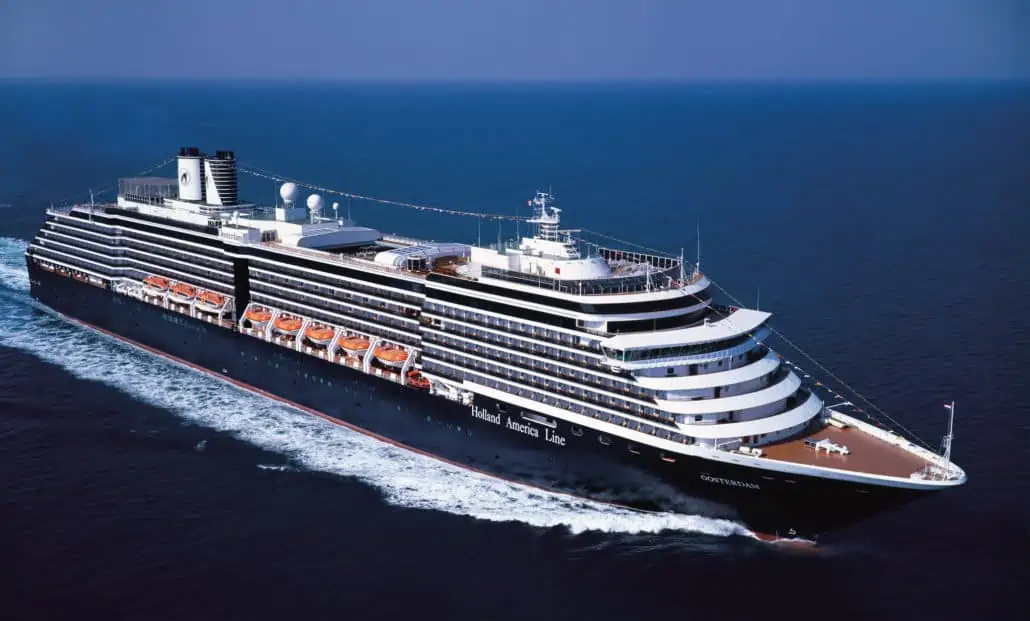
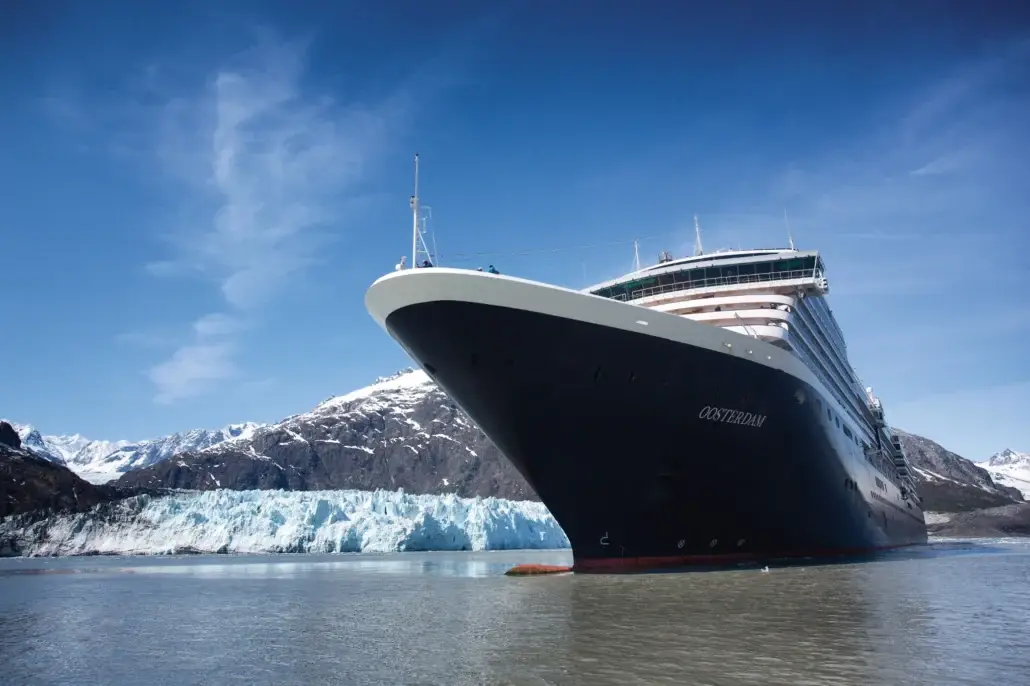
Oosterdam (Photo courtesy of Holland America)
The typical HAL passenger is 50 or older, experienced, and more interested in where the ship is going than what is happening on the pool deck.
Live music, good food, destination lectures, and scenic sailings drive the experience onboard.
That said, the demographic shifts. Alaska season and holiday sailings bring out multigenerational families, particularly groups where grandparents and grandkids are traveling together. HAL handles those groups well. There have been holiday cruises when the kids club is full, and other times where there are under a dozen kids onboard.
If you want late-night parties, Vegas-scale production shows, or a ship that never sleeps, look elsewhere. If you want to actually feel like you went somewhere, Holland America is hard to beat.
The Ships
HAL operates 11 ships. No new vessels are on order, so what you see is what you get for the foreseeable future. For a full breakdown by age and class, see our Holland America ships guide.
The three newest ships are the Pinnacle Class: Rotterdam (2021), Nieuw Statendam (2018), and Koningsdam (2016). These are the best ships in the fleet. Each carries around 2,650 passengers, features the Music Walk entertainment corridor, the World Stage theater, and the Grand Dutch Cafe.
The two Signature Class ships, Nieuw Amsterdam and Eurodam, sit in the middle of the fleet in both age and size, carrying around 2,100 passengers each. Solid ships, well maintained.
The four Vista Class ships, Oosterdam, Zuiderdam, Westerdam, and Noordam, were all built between 2002 and 2006.
They are starting to show their age in places but are still well-run. These are the six ships getting a full bow-to-stern overhaul under HAL’s $500 million Evolution program.
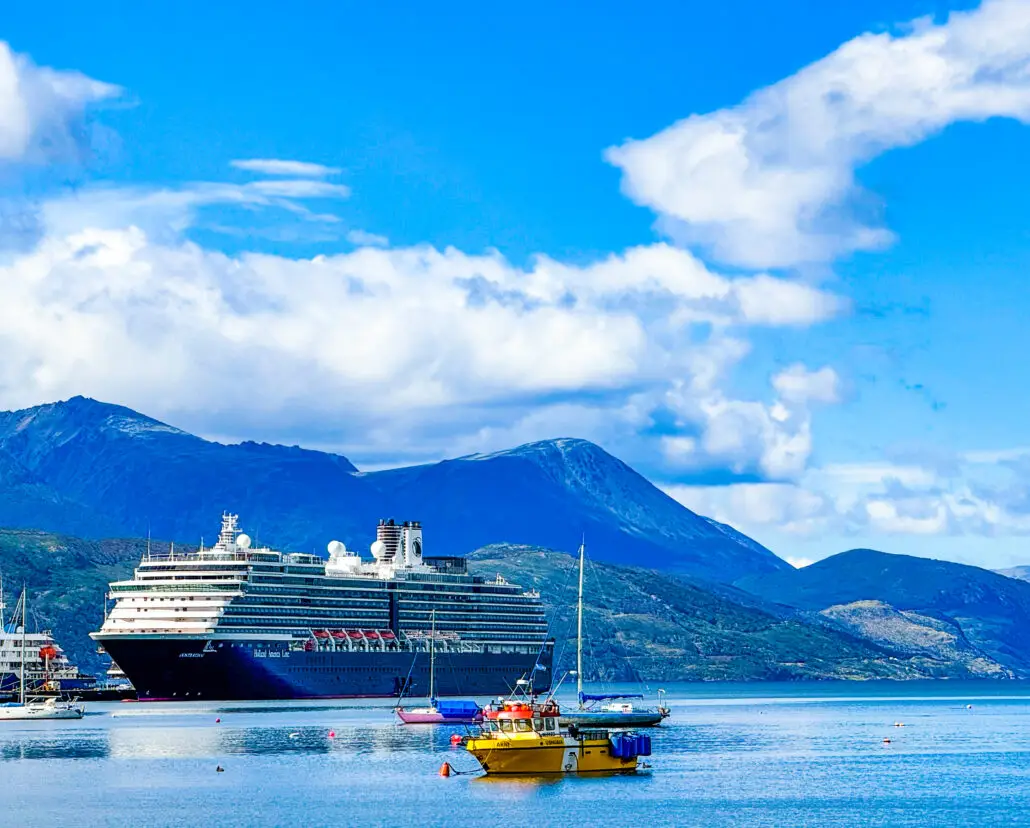
Sailboats and Holland America cruise ship Oosterdam in calm harbor in the city of Ushuaia, Argentina, with the Martial Mountain Range in the distance. The base of the mountain range can be reached by foot from the heart of the city. It’s located on the Tierra del Fuego archipelago, the southernmost tip of South America, nicknamed the “End of the World.”
The two oldest ships are Volendam and Zaandam, both from 1999. They carry around 1,400 passengers and are not getting the Evolution treatment.
I sailed the Volendam earlier this year on a Southeast Asia itinerary and came away impressed, not because it competes with the newer ships on amenities but because the smaller size, the attentive service, and the storage space built for long voyages reminded me what cruising used to feel like.
Read my full Volendam review if that ship is on your radar. Just temper your expectations on the finishes.
One important note: if you are stepping from a Pinnacle-class ship to anything older in the fleet, reset your expectations at the gangway. The gap is real.
Where It Goes
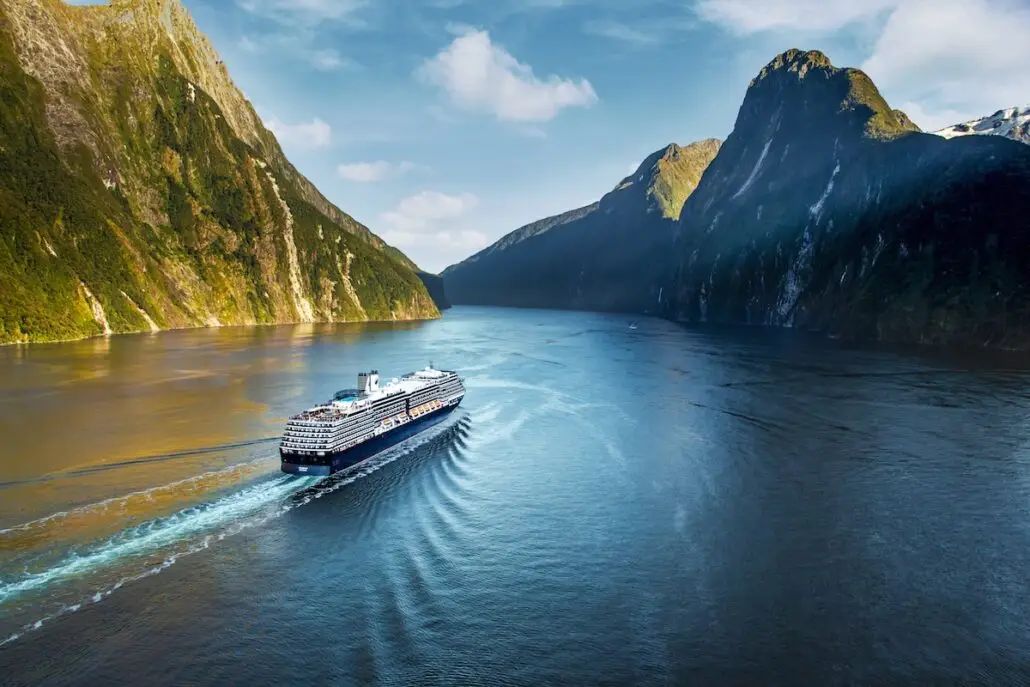
Alaska is HAL’s strongest destination and has been for nearly 80 years. No other cruise line has been sailing Alaska longer. If Alaska is on your list, Holland America should be near the top of it.
HAL also offers a Glacier Guarantee on Alaska sailings, and has added Glacier Day as a dedicated programming day on itineraries that include scenic cruising. Both are worth knowing about before you book.
The CruiseTour program, which combines the sailing with rail travel and nights at Denali National Park, is worth considering if you have the time.
Beyond Alaska, HAL sails extensively in Northern Europe, the Mediterranean, the Caribbean, Canada and New England, the Panama Canal, and Hawaii.
For those who want more than a week, the line’s Legendary Voyages run 27 to 45 days and are some of the best itineraries in the fleet. HAL has also recently opened 35 new voyages to Hawaii and Mexico for the 2027-2028 season if you are planning ahead.
Most homeports are seasonal.
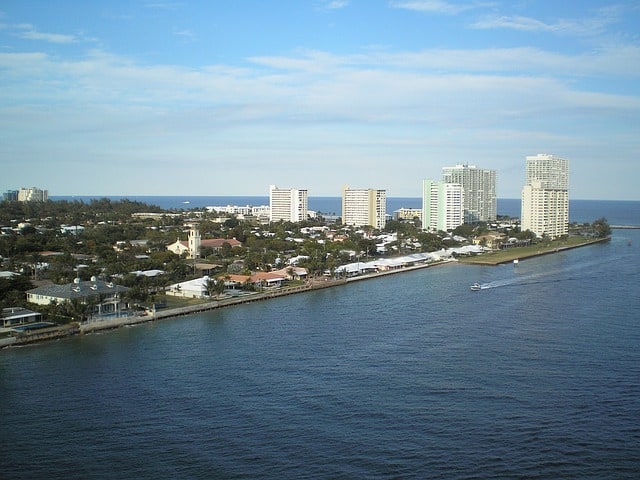
Fort Lauderdale
Fort Lauderdale is the only North American port with year-round sailings.
Summer deployments span Seattle, Vancouver, San Francisco, San Diego, Boston, New York, Montreal, and Quebec City.
Internationally the line homeports from Rotterdam, Barcelona, Rome, Venice, Lisbon, Athens, Copenhagen, Singapore, Sydney, Brisbane, and Yokohama.
What Is Included
Your base fare covers meals in the main dining room, the Lido buffet, and casual spots like the pizza and the Dive In burger venues.
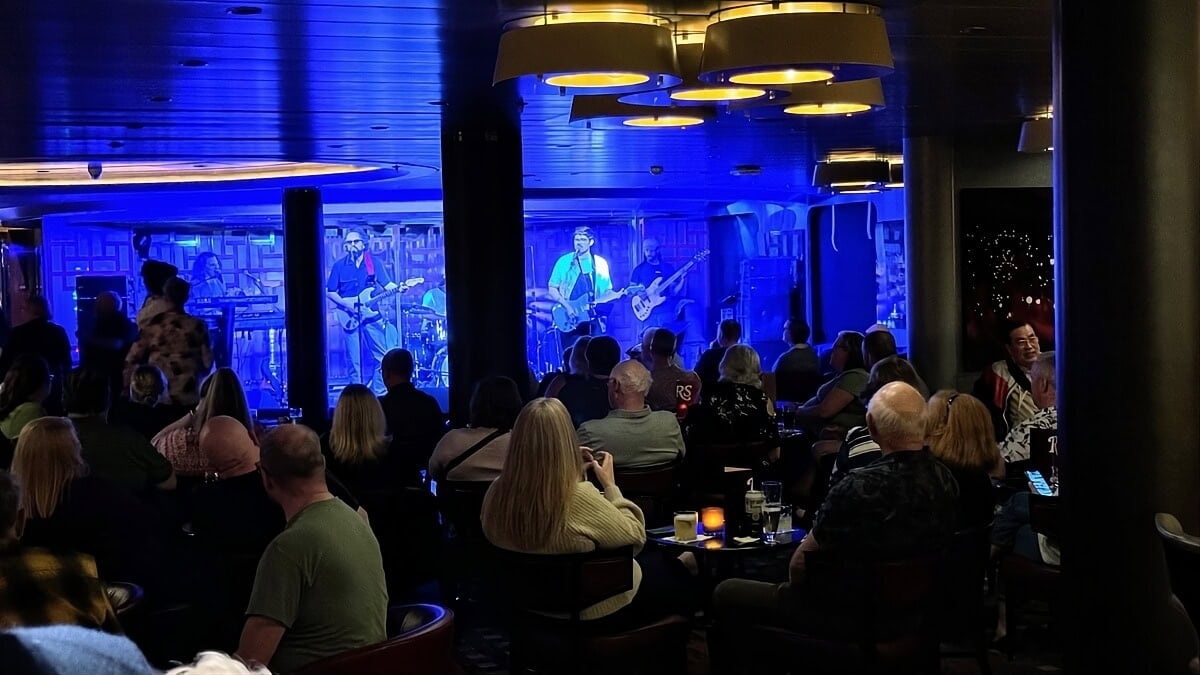
Coffee, tea, lemonade, and water are included. All entertainment at the main venues is included: Lincoln Center Stage, Rolling Stone Lounge, Billboard Onboard, Crow’s Nest programming.
The gym, pools, daily cabin service, and room service are all included in the price of the cruise.
HAL’s Have It All package bundles shore excursions, specialty dining, a beverage package, and Wi-Fi into the fare. Worth pricing out depending on how you cruise.
What Costs Extra
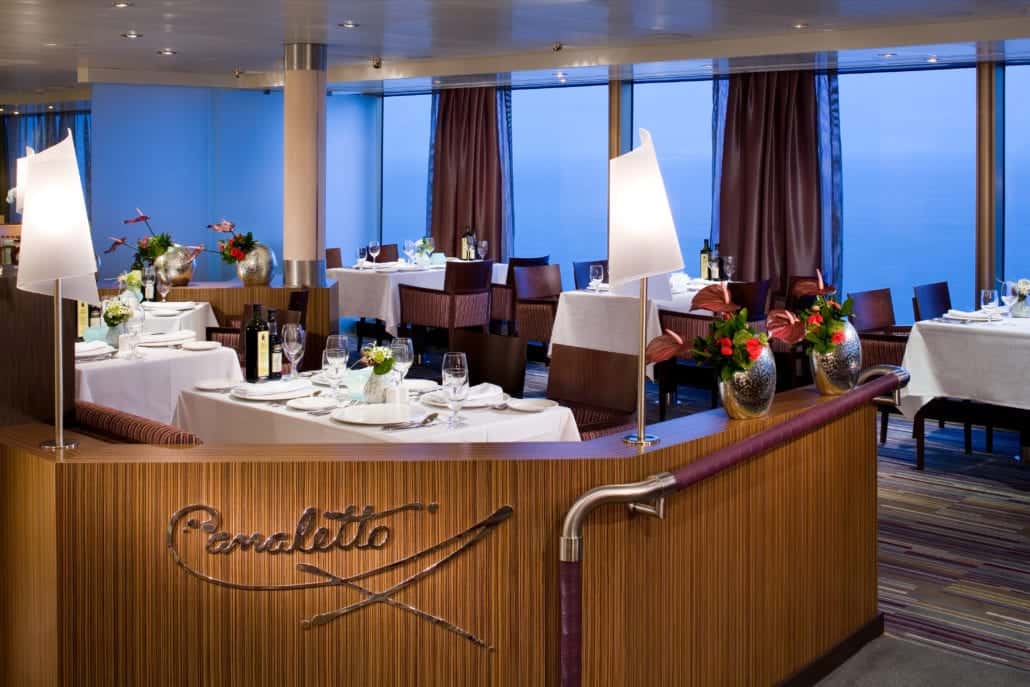
Canaletto Italian restaurant on Eurodam (Photo courtesy of Holland America Line)
Specialty dining at the Pinnacle Grill, Canaletto, and Tamarind carry an upcharge. Alcohol is not included. Gratuities, spa treatments, casino, and specialty coffees are all extra.
There are also classes you can take that have a fee, think whisky or wine tasing classes during sea days.
The Entertainment
Music Walk on the Pinnacle Class ships is one of the better entertainment concepts at sea. Three distinct live music venues in one corridor: Billboard Onboard with dueling pianos, Rolling Stone Lounge for rock and classic hits, and Lincoln Center Stage for classical performances.
On a good night all three are running simultaneously and you just wander between them. I wrote about what that experience is actually like during a seven-night Alaska sailing on Koningsdam if you want a sense of how it plays out in practice.
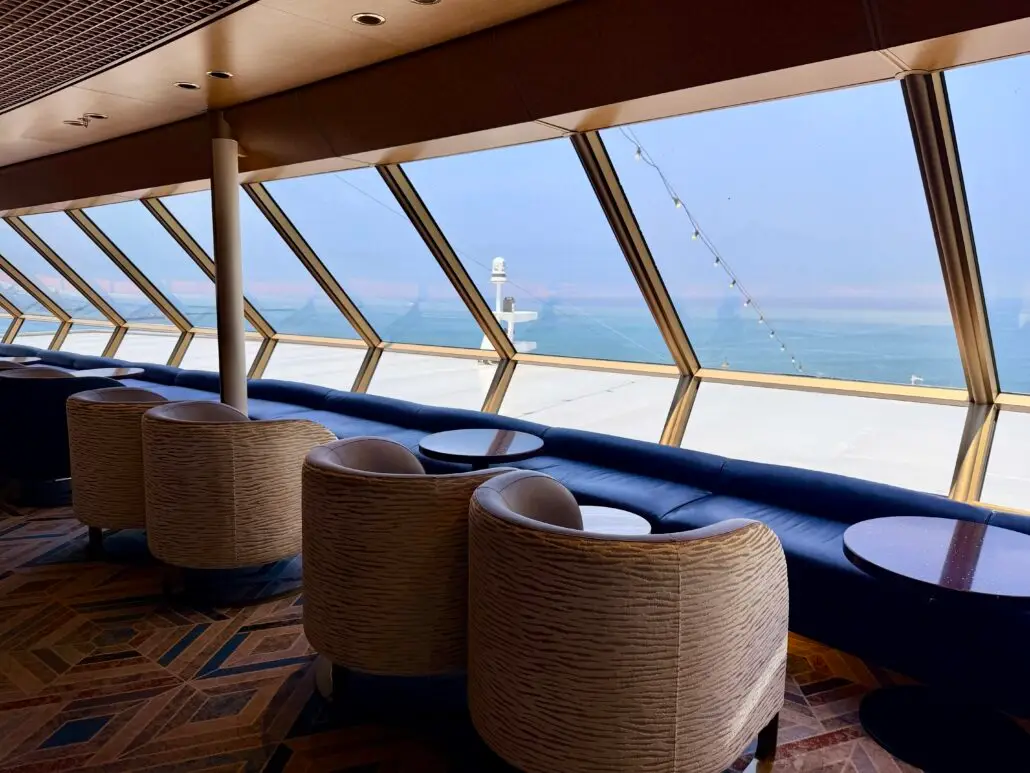
The Crow’s Nest is one of the most underrated spaces on any HAL ship. Panoramic views, a quiet atmosphere, and programming that includes destination lectures and enrichment talks.
It is where you go when you want to actually think on a cruise.
Cancellation Policy
For bookings made after November 5, 2025, on Summer 2026 sailings and beyond, here is how refunds work on cruises 13 days or under: cancel 90 or more days out and you get a full refund. Between 89 and 83 days out, you get a full refund minus your deposit. Inside 75 days, there is no refund.
For cruises 14 days and longer, the window extends. Cancel 120 or more days out for a full refund. Between 119 and 113 days, full refund minus deposit. Between 112 and 76 days, 50 percent back. Inside 75 days, nothing.
Always verify directly at hollandamerica.com before booking. Cancellation terms vary by sailing length and booking date and they do change.
Holland America’s Cancellation Protection Plan starts at $79 per person and covers cancellation for any reason up to 24 hours before departure. The Platinum version bumps reimbursement to 90 percent and adds medical and trip interruption coverage. Buy travel insurance regardless of which plan you choose.
Cancellation policies, fees, and itineraries are subject to change. Always confirm current details at hollandamerica.com before booking.
The Bottom Line
(Photo via Holland America Line)
Holland America rewards travelers who care about where they are going, eat well, and appreciate live music played by actual musicians in actual venues. It is not the flashiest product on the water and it does not try to be.
I keep going back. That probably tells you what you need to know.
The first time I paid real attention to a free-to-play slots app, I had just gotten off Carnival Celebration in PortMiami.
Like a lot of cruisers, I booked the cheaper afternoon flight home, figuring I’d have plenty of time after debarkation.
Instead, I found myself sitting at the gate for more than three hours after multiple delays. My gate changed twice, and the paperback I’d packed for the trip was already finished.
The woman next to me was tapping at a colorful screen full of spinning symbols, and when I asked what it was, she said something that stuck with me: “It is not gambling, it is more like a sweepstakes.”
Having already felt bad for being nosy, I nodded the way you nod when you do not actually understand.
It took me flying back to Texas to figure out what she meant, and to decide whether one of these apps deserved a spot alongside my podcasts, downloaded shows, and my daily Wordle streak (I’m a nerd!).
Image by Esme Hartley
This is a cruise passenger’s review, not a gambling column. I spend a lot of dead time in transit, at the gate, on sea days when the ship is pointed at nothing but water, and I treat the apps I carry the way I treat a carry-on: everything has to earn its place.
LuckyLand Slots is one of the better known names in the sweepstakes category, so it made a fair test case.
Before I loaded a single reel, I sat in my cabin with the ship’s slow internet and read through a plain-language social casino platform guide from Lineups, which explained the dual-currency setup without the breathless marketing you find on the operator’s own pages.
That hour of reading changed how I approached the whole thing, and it is the reason this review reads more like a vetting process than a star rating.
What follows is how I actually evaluate an app like this from a hotel bed or a deck chair, what I look for, what makes me close the tab, and where LuckyLand landed for me as a way to fill the hours that travel hands you whether you want them or not.
What a free-to-play slots app actually is
The single most useful thing a cruiser can understand before downloading anything in this category is that a sweepstakes app is not an online casino in the real-money sense, and the difference is not a technicality.
A real-money online casino takes a deposit, lets you wager that money directly, and pays out cash you can withdraw.
Those exist legally in only a handful of states, and they are geofenced tightly. A sweepstakes or social casino works on a different legal footing entirely, which is why LuckyLand can operate in most of the country while a real-money casino app cannot.
The mechanism is a two-currency system. Gold Coins are the play-for-fun currency. You can spin all day with them, you can run out and grab more, and none of it has any cash value. You cannot redeem Gold Coins for money, gift cards, or anything else, no matter how many you pile up.
Sweeps Coins are the other currency, and they are the ones that carry weight, because they can be redeemed for cash prizes once you meet certain conditions.
The app gives you Sweeps Coins through promotions, free daily entries, and as a bonus attached to Gold Coin purchases, which is the legal hinge the entire model turns on: you are never actually buying the chance to win.
If you live in or are sailing out of California, a point of accuracy matters here. Online casinos are not legal in California. A sweepstakes or social casino is a separate, free-to-play model, and it is wrong to lump the two together. Knowing which one you are holding keeps your expectations honest and keeps you from assuming a regulatory protection that does not apply.
Image by Esme Hartley
Why travel downtime is the natural test environment
I trust my read on these apps more when I am traveling than when I am at home, and the reason is that travel strips an app down to its essentials.
At home, a slots app competes with my couch, my kitchen, and a hundred other comforts, so I never really test it. On the road, the competition is honest: a delayed gate, a long transfer, a sea day between ports, the slow hour after dinner when the show does not start until nine. Those are the moments an app either holds up or gets deleted, and there is no pretending otherwise.
Travel also surfaces the friction points fast. A glitchy app reveals itself the moment you are on weak hotel Wi-Fi. A pushy one shows its hand when it nags you for a purchase the first time you are bored and a little jet-lagged.
A confusing redemption process becomes obvious when you are trying to sort it out in a time zone where customer support is asleep. The conditions that annoy a traveler are exactly the conditions that expose a weak product, which makes the road a better laboratory than the living room.
So my review is built on that footing. I am not asking whether LuckyLand is the most generous app in some abstract sense. I am asking whether it earns the few minutes of attention I can spare between a missed connection and a boarding call, and whether it does so without creating problems I will regret later.
How I vet an app before the first spin
Here is the part that does the heavy lifting. Before I spin once, I run any free-to-play app through a short checklist, the same way I check a rental car for scratches before I drive off the lot.
The goal is not to find the perfect app, which does not exist, but to catch the things that turn a harmless time-filler into a headache. The table below is the exact rubric I used on LuckyLand, and you can carry it into any app in the category.
Factor
What to look for
Red flag
Currency model
Clear split between play-only coins and redeemable coins, explained in plain terms
Vague promises of “real winnings” with no mention of how redemption actually works
Cost to start
Genuinely free to register and play, with purchases optional
A required payment, deposit, or card on file just to open an account
Redemption terms
Stated minimum, a fixed coin-to-dollar value, and a published payout timeline
Hidden thresholds, shifting values, or “contact us to learn more” instead of numbers
Identity checks
Standard verification before a cash redemption, not before play
A request for bank or Social Security details before you have won anything
Pressure level
Calm prompts you can ignore
Countdown timers and urgent “act now” nudges aimed at impulse purchases
Support and rules
Findable terms, a real support channel, and a clear sweepstakes rules page
No published rules, dead links, or a support form that goes nowhere
Connectivity needs
Works on weak or intermittent connections, or has an offline-tolerant mode
Constant high-bandwidth demands that fail the moment your signal dips
LuckyLand cleared most of these without drama. Registration was free, the currency split was spelled out, the rules page existed and was findable, and nothing demanded my financial information before I had earned anything to redeem. The two factors that need a traveler’s attention are the redemption terms and the connectivity needs, and both of those deserve their own section because they are where the road tests an app hardest.
Reading the redemption rules before you care about them
I always read redemption rules before I have any Sweeps Coins worth redeeming, because that is the only time I can read them calmly.
Once you have a balance you are excited about, every rule feels like an obstacle, and that is precisely when people make mistakes.
So I sat with the LuckyLand sweeps rules cold, with no skin in the game, and here is what they say as of the most recent terms I reviewed. Treat these as current-at-time-of-writing rather than carved in stone, because operators do adjust them.
The headline numbers are straightforward. You need a minimum of 50 Sweeps Coins before you can request a redemption, and each Sweeps Coin is valued at one dollar when redeemed for prizes.
Sweeps Coins you win directly through gameplay are generally redeemable right away, while Sweeps Coins you receive free through promotions carry a one-time playthrough requirement, meaning you have to play them through once before they become eligible. Redemptions are processed through ACH or the Coins App option, and the published window is roughly two to seven business days depending on the method and on how far along your account verification is.
The stated maximum redemption sits at fifty thousand dollars, which is a number most casual players will never approach but which tells you the system is built for real payouts rather than novelty credits.
None of that is unusual for the category, and none of it is a trap. What matters for a traveler is timing.
A two-to-seven-day window means a redemption you start at the airport is not money you will see before the trip ends, so I never treat any of this as travel spending money. It is a slow, occasional thing that might deliver a small prize weeks later, not a way to fund a shore excursion. Anyone who tells you otherwise has misunderstood the model, or wants you to.
Image by Esme Hartley
The connectivity problem at sea and in the air
Here is the factor that almost nobody warns travelers about: these apps need a connection, and travel is where connections go to die. A sweepstakes app is not much use on a transatlantic flight with no Wi-Fi, and on a ship it lives or dies by what you are paying for internet. That makes connectivity a real part of the review rather than an afterthought, and it changes the calculus depending on how you travel.
On a cruise specifically, your internet quality is often tied to your loyalty tier, and the lines have been reshuffling those benefits constantly. Celebrity, for instance, recently overhauled its Captain’s Club program, and the changes to its loyalty program tiers include premium Wi-Fi minutes baked into the higher levels.
If your status gets you reliable onboard internet, a sweepstakes app becomes a viable sea-day filler. If you are paying by the day for a shaky connection, the math shifts hard, and you are better off with downloaded entertainment that asks nothing of the network. I have learned to check my Wi-Fi situation before I assume any connected app will be part of the trip at all.
In the air, the rule is simpler: assume it will not work unless you have confirmed paid Wi-Fi, and even then expect it to stutter.
LuckyLand handled intermittent hotel and port-area connections well enough, recovering after a dropped signal without losing my session, which is more than I can say for some apps. But no amount of good engineering beats the basic fact that a dead connection means a dead app, and a traveler who plans around that is never disappointed.
Identity verification, and why it is not the red flag it looks like
One thing trips up a lot of first-time users, and I want to address it head-on because it sits right next to a genuine scam signal.
At some point, usually when you go to redeem, a legitimate sweepstakes operator will ask you to verify your identity. That can mean a government ID, proof of address, or similar documentation. To a cautious traveler this can feel alarming, because we are trained to guard our personal data, especially on hotel and ship networks.
The distinction is about timing and purpose. A legitimate operator asks for verification before paying out a cash prize, to confirm you are who you say you are and old enough to participate. That is normal, and it is the same reason a bank or a payout processor asks.
The actual red flag, the one to run from, is any request for financial or sensitive personal information before you have won or before you can even play, or any demand that you pay a fee to “release” a prize.
LuckyLand’s verification fell into the normal bucket: nothing was asked of me until redemption was on the table, and nothing involved paying to collect. If an app inverts that order and wants your bank details up front, close it.
Budgeting it like any other line on the trip
I budget a sweepstakes app the same way I budget a coffee habit on a trip, which is to say I decide the number before I am tired, bored, or a little too relaxed by the pool. The free-to-play structure means you can spend exactly nothing and still play, and on most trips that is what I do. The optional purchases are real, though, and they are designed to be easy in a moment of downtime, so the discipline has to come from you, not the app.
My rule is that any optional spend on an app like this comes out of the same mental envelope as a souvenir or a second cocktail, never out of anything that matters. On a cruise, the dangerous comparison is the onboard account, where every charge is frictionless and the total only becomes real on the last morning.
A few dollars of Gold Coins is a rounding error against tickets, excursions, and dining; the risk is never the average case but the outlier who lets one easy line item creep. I check the proportion the same way I check my onboard balance midway through the week, and if it looks off, I stop.
That discipline is not just bookkeeping: research on free-to-play casino apps finds that spending real money on virtual coins is the strongest predictor of moving on to real-money gambling, which is exactly why I keep any optional spend boxed off from the start. An app that lets you set those limits and respects them passes; one that fights you on it fails, regardless of how fun the games are.
Image by Esme Hartley
Where the real scams hide
Because this category sits next to a lot of genuine fraud, a traveler should know the difference cold, since you are often making these judgments alone in an unfamiliar place with no one to ask. The good news is that the warning signs are consistent and well documented. Consumer-protection agencies lay out the tells plainly in their guidance on fake prize and sweepstakes scams, and they map almost perfectly onto the checklist I run.
The core rule is that a real prize is free. If you are told to pay a fee for taxes, shipping, processing, or customs to release your winnings, it is a scam, full stop. If you are pressured to act immediately, that urgency is a tactic, not a deadline. If an outfit asks for your bank account or Social Security number to “claim” something, walk away. And if a message impersonates a real agency or invents an official-sounding bureau, treat it as a fraud signal rather than a credential.
A legitimate sweepstakes app like LuckyLand does none of these things; it does not pay you to chase you, and it does not demand money to give you money. Carrying that distinction in your head is the single best protection a traveler has, because the scams that imitate this category are far more dangerous than the apps themselves.
A traveler’s verdict on LuckyLand Slots
So where did it land for me. As a way to fill the unavoidable dead time of travel, LuckyLand Slots earned a spot in my rotation, with conditions. It is genuinely free to play, the currency model is honest once you understand it, the redemption terms are published in real numbers, and the verification process behaves the way a legitimate one should. Those are the things I needed to confirm before I trusted it on a hotel or ship network, and it confirmed them.
The conditions are the traveler’s conditions. Connectivity decides whether it is usable at all, so check your Wi-Fi situation before you count on it, especially at sea. Redemptions are slow, so never treat any balance as trip money. And the optional spending is easy by design, so set your number before you are tired and stick to it.
Handled that way, it is a fine digital equivalent of flipping channels at the gate, no more dangerous than that and occasionally more fun. Handled carelessly, like anything that mixes money and boredom, it can become a problem, and the responsibility for that sits with the user, not the app.
For a cruise passenger who keeps it in proportion, it passes the only test I really care about: it earns the few minutes I can spare, and it does not cost me anything I will miss.
Frequently Asked Questions
Can I actually win real cash on LuckyLand Slots while traveling?
Yes, through the Sweeps Coins currency, which can be redeemed for cash prizes once you reach the minimum threshold and meet any playthrough conditions.
The catch for travelers is timing, since redemptions take roughly two to seven business days to process, so any prize is not money you will have in hand during a short trip.
Will LuckyLand Slots work on a cruise ship or a flight?
Only if you have a working internet connection, which is the real limiting factor at sea and in the air. On a ship your connection quality often depends on your loyalty tier or what you pay for Wi-Fi, and on a flight you should assume it will not function unless you have confirmed paid Wi-Fi, so plan to have downloaded entertainment as a backup.
Is a sweepstakes app the same as an online casino?
No, and the difference matters legally and practically. An online casino lets you wager deposited money directly and exists in only a few states, while a sweepstakes app uses a free-to-play dual-currency model that is available in most of the country, including states like California where online casinos are not legal.
Why does the app ask me to verify my identity?
Legitimate operators ask for identity verification before paying out a cash prize, to confirm your age and identity, which is standard and not a warning sign. The actual red flag is any request for financial details before you can play or win, or any demand that you pay a fee to release a prize, both of which point to fraud.
How much should I budget for an app like this on a trip?
Treat any optional spending the way you would a souvenir or an extra drink, decide the amount before you are bored or tired, and keep it well separated from money that matters. The structure is free to play, so spending nothing is always an option, and the discipline has to come from you rather than from the app’s prompts.
When it comes to seeking out information on their upcoming voyages, cruisers have a whole lot of options. Most are literally at their fingertips, given the vast amount of information that can be found on the internet. For many, Facebook has — for all its flaws — become a forum on which they can not only plan their trips but compare notes on everything from pricing to dinner plans.
How to Find Your Facebook Cruise Group
For nearly every sailing of a mainstream cruise line, you can pretty easily find a Facebook group. We’re not talking about pages devoted to a line or a ship, but rather to each individual sailing. Doing so is as simple as typing in a few words.
Generally speaking, you can find your sailing by typing in the name of the ship and the embarkation date. (For example, Norwegian Aqua August 29 2026.) In some cases, it takes a bit of experimentation. For example, this particular sailing could have been listed on Facebook as NCL Aqua and the date might show as 8/28. But with that basic information, you’ll be able to find and join the Facebook cruise group you’re looking for.
And that, friends, is where the fun — or trouble, depending on one’s perspective — begins!
Why Join a Facebook Cruise Group?
It’s safe to say that millions of people cruise every single year without bothering to find — let alone join — a corresponding Facebook group. So why might you consider doing so?
For many, Facebook groups provide an opportunity to extend their pre-cruise excitement. They get to chat with other people who will be on the same sailing. But it can also be a fantastic research tool, especially for those who are either first-time cruisers or perhaps trying a line which they’re not familiar with.
In nearly every case, there will be people in (or even monitoring) the group who have experience which might prove useful. It’s a great place to ask for everything from restaurant recommendations to disembarkation-day tips.
(Photo via Virgin Voyages)
Facebook cruise groups are also a fantastic way to make plans with others. Often, someone will be organizing a slot pull, pub crawl or other socially-oriented event. Others might post messages hoping to connect with other solo cruisers.
When it comes to Facebook cruise groups, you never know what you’ll find. Of course, this can also lead to problems.
The Downside of Facebook Cruise Groups
Not everyone has great experiences in these types of groups, it’s worth noting. One very important factor which can influence every aspect of your Facebook group experience is the administrator or moderator who happen to be running the page. While most provide an environment in which people are excited to meet new people and have a good time, others assume what can only be called a more dictatorial stance.
The more controlling a moderator, the less fun a group is likely to be. While a good moderator will keep an eye out for scammers and spammers, making sure both get blocked, some take their duties a little too seriously.
It’s also important to be wary of exactly what you share in a Facebook group or on social media as a whole. Back in 2024, we reported on a woman who learned this lesson the hard way: After posting a photo which included her booking number, someone used that info to cancel her $12,000 sailing!
How to Get the Most Out of a Facebook Cruise Group
If you decide that you’re interested in joining a group, we have a few tips that might help you get the most out of the experience… and avoid some of the pitfalls!
• Join Quietly: Before you start sharing information or getting too friendly with complete strangers, get a feel for the vibe of the group. Make sure it’s right for you! If not, you can always exit just as quietly as you entered.
• Avoid Troublemakers: If someone is stirring up drama, do not engage. You might, however, check out their profile in order to make sure you steer clear of them once on board!
• Proceed With Caution: Remember, as more and more people join the group, you can’t be 100 percent sure with whom you’re interacting. Bad eggs have been known to infiltrate sailings they won’t actually be on for nefarious purposes ranging from sneaking into your direct messages to try and sell you something to tracking who’ll be out of town, leaving their home vacant and vulnerable!
• Be Active As You’re Comfortable With: Some people do little more than lurk, rarely posting or responding, while others dive in to organize events and chat with anyone and everyone. There is no right or wrong approach, it’s all about what you’re looking to get out of the group.
• Know When to Exit: When the cruise is over, connect with the people you’d like to keep in touch with… and then exit the group. We tend to find the exit shortly after boarding. Why? If there’s one thing we know, it’s that people love to post complaints. We’d just as soon not hear other people’s woes, especially about a trip we’re enjoying!
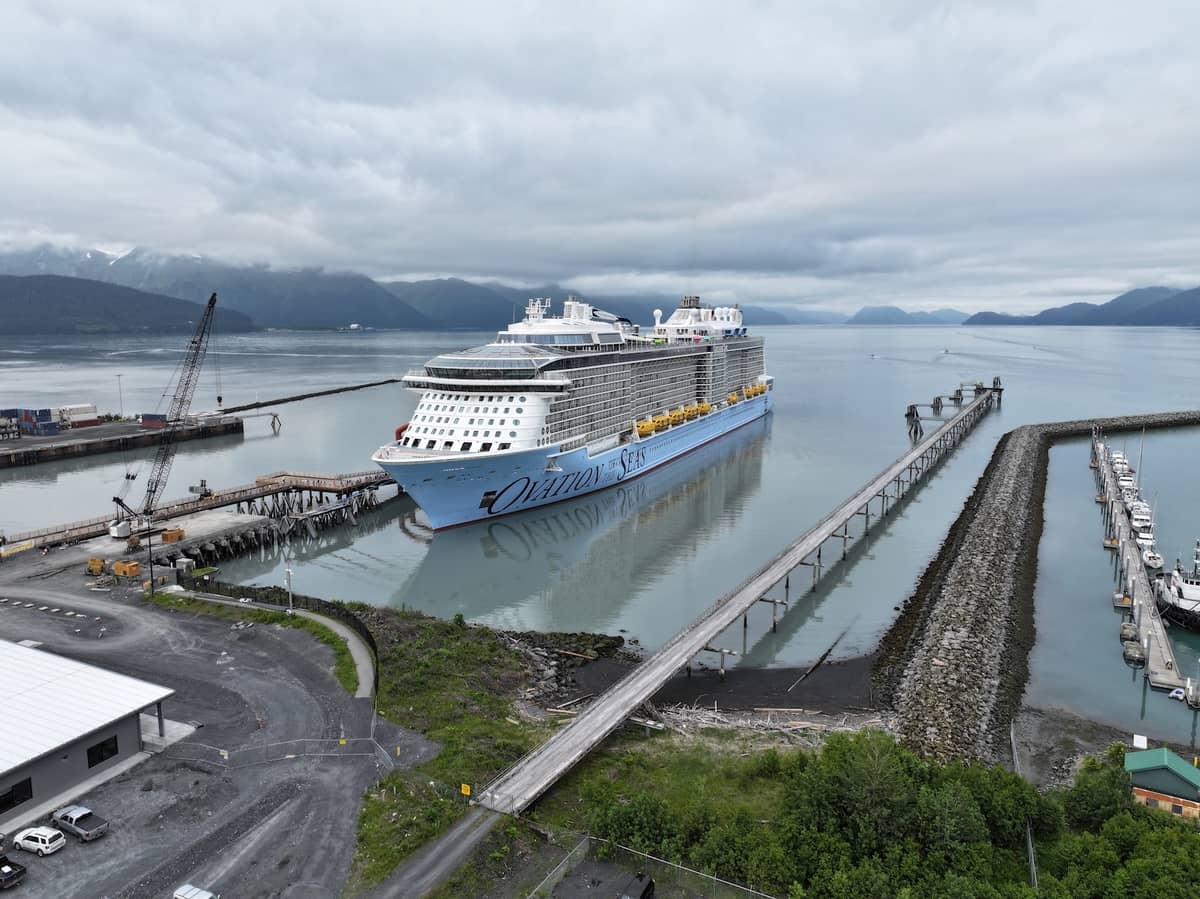
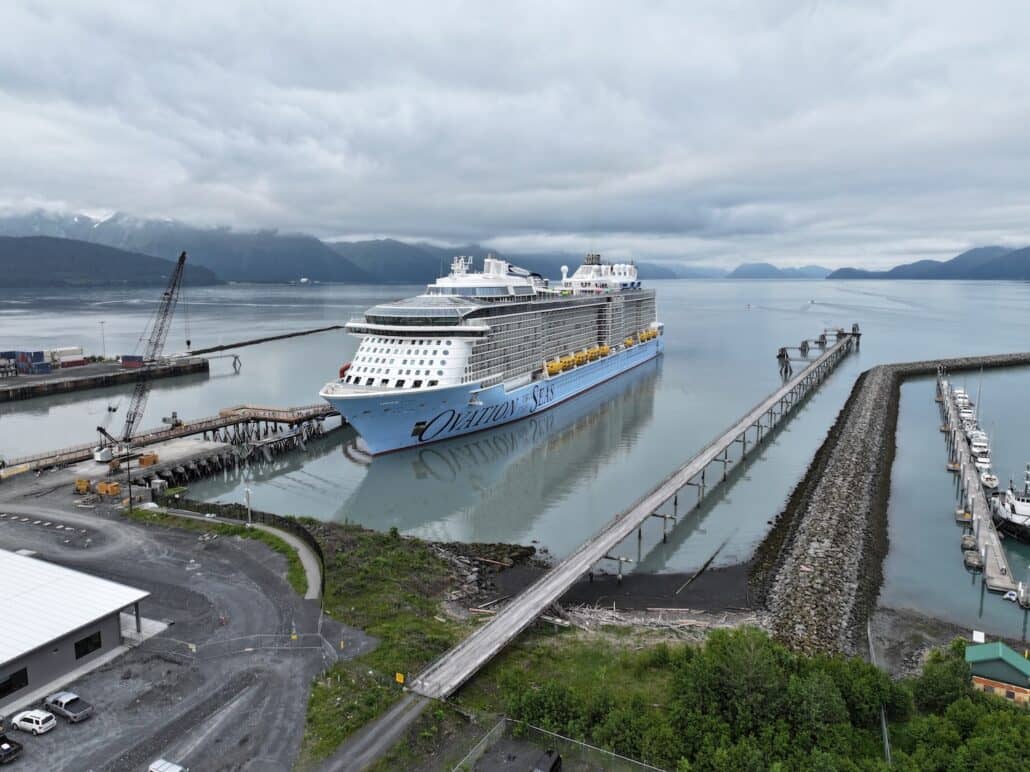
Royal Caribbean’s Ovation of the Seas arrived in Seward, Alaska, on June 19 with a dead fin whale draped across its bow.
A necropsy found the whale, a pregnant 61-foot female, had blunt force trauma consistent with a vessel strike, according to NOAA Fisheries Alaska.
She was freshly dead and in good health beforehand, so she wasn’t already sick or injured. An official cause of death is still pending further lab testing.
Fin whales are endangered, and vessel strikes are a leading cause of large whale deaths worldwide.
Royal Caribbean acknowledged the strike in a statement, saying it was “deeply saddened” and is cooperating with NOAA’s investigation.
The speed question
The Center for Biological Diversity, an environmental advocacy group, analyzed the ship’s AIS tracking data and estimates Ovation of the Seas was traveling 15 to 20 knots through waters where whales gather.
That’s the group’s own estimate, not a confirmed NOAA finding, and AIS data can contain gaps.
The group cites a 2007 peer-reviewed study showing every 1-knot speed increase raises the odds of a fatal whale strike by about 1.5 times.
Under that study’s model, the odds a struck whale dies rise from about 21% at 8.6 knots to roughly 79% at 15 knots.
The Center sent Royal Caribbean a letter on June 24 urging a voluntary 10-knot speed limit in whale habitat.
The company hasn’t responded to the speed reduction request, though it did separately address the while strike itself.
Why it’s getting attention now
The strike happened days after Seward’s new $137 million cruise terminal, now the largest in Alaska, officially opened on June 10 with Ovation of the Seas as its first homeported ship.
Royal Caribbean has committed to bringing at least 140,000 passengers through Seward each season, meaning more ship traffic through the area going forward.
There’s currently no mandatory speed limit for cruise ships in most Alaska waters.
Glacier Bay National Park has one, and voluntary 10-knot slowdowns off California cut whale strikes roughly in half in 2021, according to NOAA.
For passengers, nothing changes right now since no mandatory rule is in place, but if ships are required to reduce speeds, it could impact itineraries.
Vancouver’s Canada Place cruise terminal is heading into its busiest stretch ever.
(Photo courtesy of Cruise Radio)
The Vancouver Fraser Port Authority expects around 290,000 passengers to pass through in July, the highest single-month total on record, with August running close behind.
For the full 2026 season, the port is projecting roughly 1.4 million passenger visits and 360 ship calls, about 30% more traffic than in 2019.
That growth comes from Vancouver’s role as a full-service homeport for Alaska sailings. Passengers embark and disembark here, and ships provision between cruises, which means each visit brings real money into the local economy.
According to the 2025 Cruise Passenger Survey from the Pacific Rim Cruise Association, cruise visitors now spend an average of $1,144 locally on hotels, restaurants, shopping and tours, and more than three-quarters of travelers are spending time in Vancouver before or after their cruise, up from 70% in 2023.
Why boarding hasn’t turned into a bottleneck
A surge like this could easily mean longer lines at the terminal, but Vancouver has spent the past two summers preparing for this.
In June 2024, Canada Place became the first cruise terminal in North America to use facial recognition for embarkation rather than disembarkation.
The port authority has said the system can process around 1,000 passengers per hour during those peak windows, while supporting up to three vessels boarding simultaneously.
What it means for passengers this summer
With July and August set to be the two busiest months in the cruise terminal’s history, and FIFA World Cup 2026 events adding extra congestion to downtown Vancouver, the faster boarding process is likely to matter more than usual.
Passengers sailing from Canada Place this summer should still budget extra time for downtown traffic and crowds getting to the terminal, even if the boarding line itself moves faster than in past years.
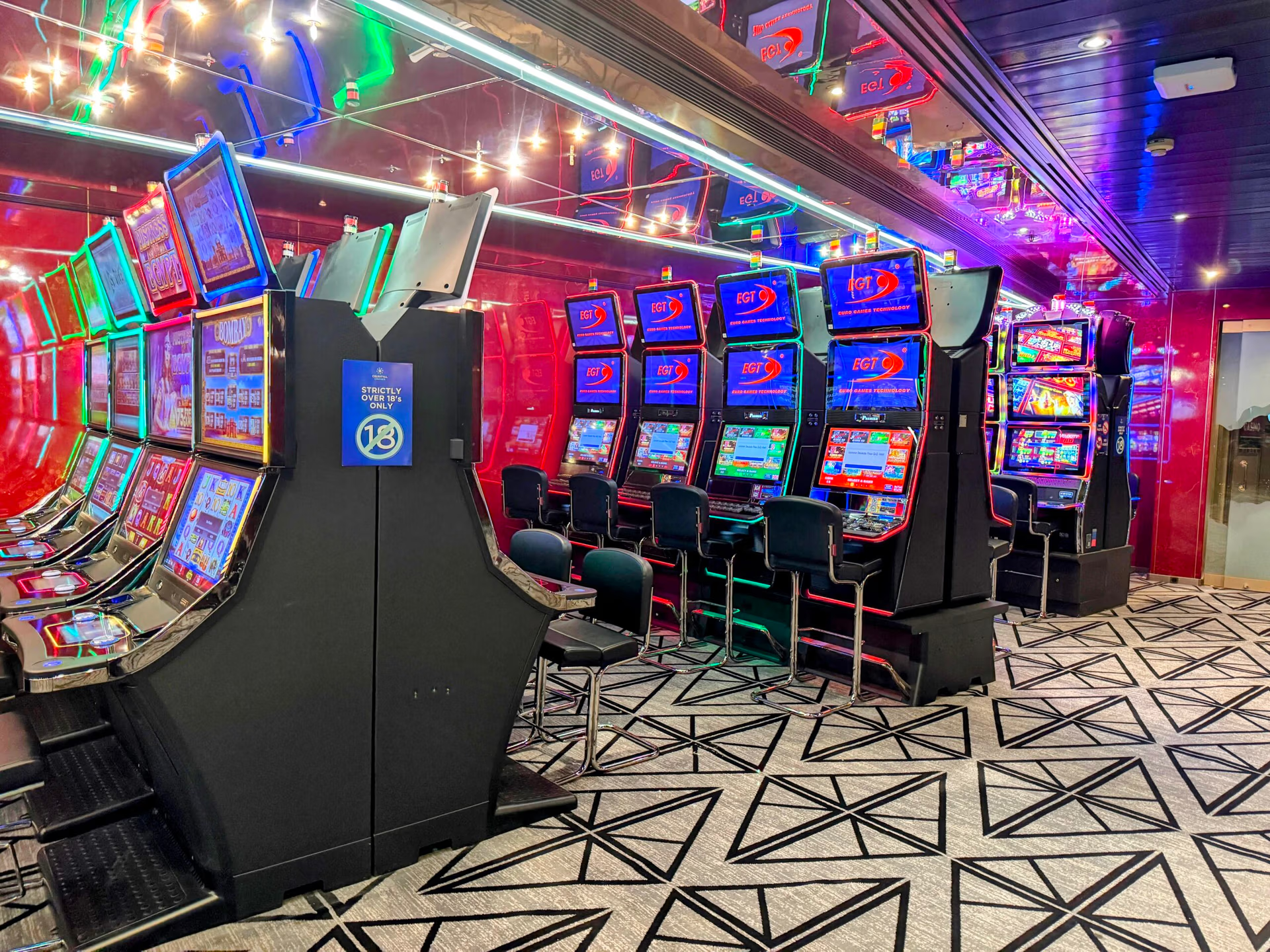
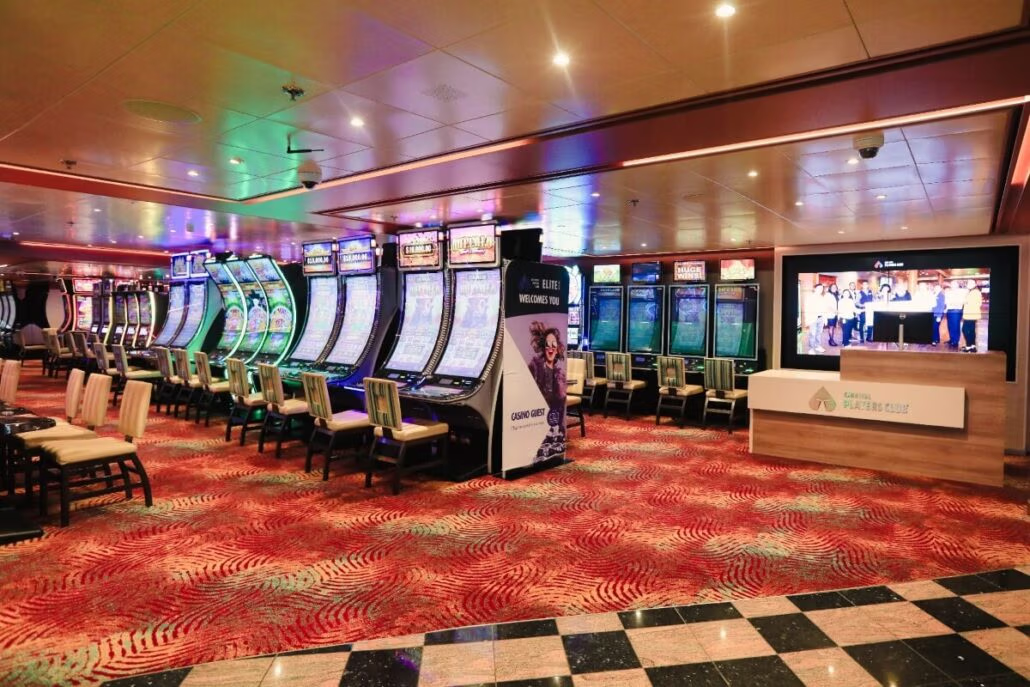
Cruise casino etiquette begins with knowing that the onboard casino is entertainment, not a guaranteed way to win money. This is important.
(Photo courtesy of Carnival Cruise Line)
Most cruise casinos open only when the ship is at sea or in international waters, and they usually close while docked in port.
Many cruise lines note that sea days are prime casino times because casinos must close in port with few exceptions which can vary by cruise line.
Know the Age Rules Before You Play
Cruise casino age rules must be checked before you sit at a slot machine or table. Carnival and Norwegian list 18 as the minimum gambling age, while Royal Caribbean allows guests 18 and older except on Alaska sailings, where guests must be 21.
Do Learn the Basics Before Joining a Table
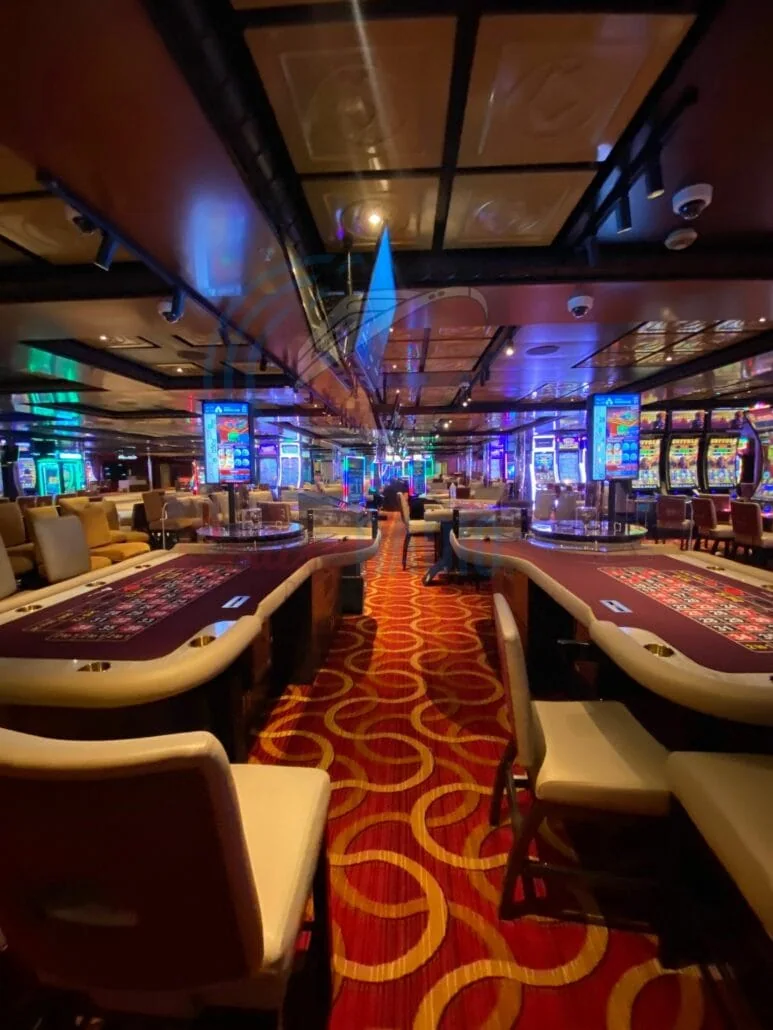
Casino table games move faster than many first-time passengers expect. Blackjack, roulette, poker-style games, baccarat, and craps all have their own flow, so watch a few rounds before buying in.
Place chips clearly, wait for the dealer’s signal, and avoid interrupting a hand already in progress. Using proper hand signals at blackjack and keeping phones off the table are standard casino manners.
Don’t Touch Bets, Cards, or Chips at the Wrong Time
Table etiquette protects the game and the other players. Once cards are dealt or the wheel is spinning, do not move your wager unless the dealer tells you to.
Face-up blackjack cards should not be touched, and cash should usually be placed flat on the felt instead of handed directly to the dealer.
Do Buy In and Cash Out Properly
Buying in properly keeps the table organized. Wait until a round ends, place your cash or cruise card where the dealer can see it, and let the dealer convert it into chips. Royal Caribbean says guests can use cashless wagering at slots and tables through their SeaPass account, while Norwegian notes that casino credit and onboard ATMs may be available.
Don’t Slow Down the Game
Cruise casino games are social, but they are still structured. Do not ask for long strategy debates during live hands, argue with other players’ choices, or delay the dealer while deciding every move. New players are welcome, but the best etiquette is to ask quick questions before the next round begins.
Do Respect Dealers and Other Passengers
Dealers manage the pace, payouts, and rules of the table. Speak politely, accept corrections calmly, and never blame the dealer or another passenger for a losing hand. Gambling is based on chance, and bad manners can ruin the atmosphere faster than a bad card.
Don’t Drink Beyond Your Limit
Alcohol can make a casino feel more relaxed, but it also affects judgment. Free or discounted drinks may be tied to casino loyalty programs on some lines; Carnival, for example, says Players Club benefits can include free drinks while playing for guests 21 and older.
Do Understand Smoking and Personal Space
Smoking rules vary by cruise line and ship, so passengers should follow posted signs and crew instructions. Even where smoking is allowed in a casino area, keep ash, smoke, drinks, bags, and elbows away from other players’ space. A cruise casino is smaller than many land-based casinos, so courtesy matters more.
Don’t Treat Online Casino Habits as Cruise Casino Rules
Wildz online casino and similar online platforms may feel familiar to digital players, but cruise casinos follow onboard procedures, dealer instructions, ship policies, and local or maritime restrictions. Online habits such as fast clicking, private play, or switching games instantly do not always translate to a live table shared with other passengers.
Do Set a Budget Before You Start
A cruise casino budget should be decided before the first bet. Bring only what you are comfortable losing, separate gambling money from excursion or dining money, and stop when your limit is reached.
CLIA says member cruise lines must maintain gambling regulations designed for fairness, transparency, and internal audits, but personal bankroll control is still the passenger’s responsibility.
Final Dos and Don’ts Checklist
Cruise casino etiquette is simple when passengers remember the basics: follow the posted rules, respect the dealer, wait your turn, use chips correctly, tip when appropriate, and play for fun.
Do not touch active bets, pressure other players, chase losses, bend age rules, or assume every ship has identical casino policies. Good manners help the game run smoothly and make the casino more enjoyable for everyone onboard.

 Login
Login