Reading view

Xiaomi is pre-installing crypto apps on new phones, whether you want it or not

Xiaomi-and-Sei-partnership-to-install-crypto-apps

Xiaomi has quietly signed a deal to preinstall new apps (bloatware) on its smartphones. Starting in 2026, the company will begin shipping new phones with a crypto wallet and discovery app developed by Sei Labs, as part of a new global partnership focused on pushing blockchain technology to more people.

The app is tied to Sei, a Layer 1 blockchain designed specifically for digital asset trading. It will come pre-installed on all new Xiaomi phones sold outside mainland China and the United States. And that is a lot of devices. 

Xiaomi is currently the world’s third-largest smartphone brand after Apple and Samsung, covering more than 13 percent global market share. In numbers, that is around 160 million devices.

The Sei app works as a crypto wallet and a gateway to Web3 services. According to Sei, users will be able to send peer-to-peer payments, interact with decentralized applications, and explore other blockchain-based products without downloading anything extra. 

Sei is also planning to expand this partnership beyond smartphones. The company says it wants to enable stablecoin payments across Xiaomi’s 20,000-plus retail stores, starting with Hong Kong and parts of the European Union. This will eventually allow customers to buy Xiaomi products using stablecoins like USDC, with transactions settled on the Sei blockchain.

It’s just another bloatware

In a press release shared with CoinDesk, Sei says the deal could introduce crypto to millions of people, especially in markets where Xiaomi has a dominating presence. 

For instance, the company holds 36.9 percent of the smartphone market in Greece, and around 24 percent in India. 

However, for users, this is just another bloatware.

Preinstalled apps have long been a sore point for Xiaomi phones. The situation was particularly bad a few years ago, as the phones came loaded with apps most people never asked for. 

Xiaomi has since tried to be more transparent and has made some improvements, but this partnership feels like a step backward. Installing crypto apps by default that most users are not aware of or won’t use is not right. 

For more daily updates, please visit our News Section.

Stay ahead in tech! Join our Telegram community and sign up for our daily newsletter of top stories.

(Source | Via)

The post Xiaomi is pre-installing crypto apps on new phones, whether you want it or not appeared first on Gizmochina.


Honor confirms its new e-sports smartphone series “Win”

Honor-Win-series-teaser-official

Honor is officially teasing a brand-new smartphone lineup, and yes, it’s really called the Win series. After months of rumors, the company has now confirmed the name by sharing its first teaser on its official Weibo handle.

Honor announced today that it will host a communication event for its new e-sports-focused phones on December 16th, which is tomorrow. The event carries the slogan “Exceptional Strength, Born to Win.” 

The teaser image posted on Honor’s official website shows a screen filled with the word “WIN,” leaving little doubt that this is the branding the company is moving forward with.

For those unaware, the Honor Win series is set to replace the Honor GT lineup, which itself only debuted in 2024. The next phone that many expected to launch as the Honor GT 2 will now reportedly arrive under the Win name instead. In other words, GT is out, and Win is in, at least for now.

Two devices powered by Snapdragon chips

According to rumors, the line will have two devices, called the Honor Win and Honor Win Pro. 

We have also seen images of both phones sporting a rectangular camera module with Win branding placed at the bottom-right corner. The module appears to include three cameras on both sets.

Honor Win render

The standard Honor Win is said to come in multiple colors, including beige, black, white, and cyan.

Meanwhile, the Honor Win Pro also has a built-in cooling component next to the top camera lens.

Honor Win Pro render

On the hardware side, the Honor Win could be powered by the Snapdragon 8 Elite, while the Win Pro may use the more powerful Snapdragon 8 Elite Gen 5. Both phones are expected to feature a 1.5K OLED display, a 50-megapixel main camera, and a massive 8,500mAh battery with 100W fast charging support.

For more daily updates, please visit our News Section.

Stay ahead in tech! Join our Telegram community and sign up for our daily newsletter of top stories.

The post Honor confirms its new e-sports smartphone series “Win” appeared first on Gizmochina.

ChatGPT’s long-rumored Adult Mode now has a launch window

chatgpt

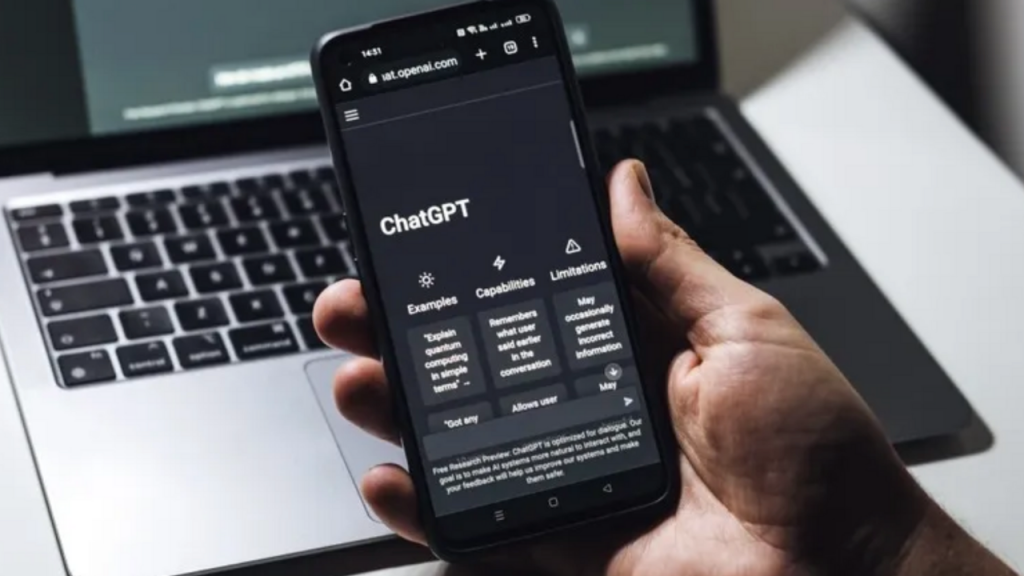
OpenAI has been hinting for a while that ChatGPT would eventually loosen its strict content rules for adult users. Now, the company has finally put a timeline on it. According to OpenAI, ChatGPT’s much-discussed “Adult Mode” is expected to launch in the first quarter of 2026.

The update was revealed during a recent briefing on the GPT-5.2 model, where Fidji Simo, OpenAI’s CEO of Applications, shared new details about how and when the feature will arrive. 

FILE PHOTO: OpenAI and ChatGPT logos are seen in this illustration taken, February 3, 2023. REUTERS/Dado Ruvic/Illustration/File Photo

For years, ChatGPT has been criticized for being overly restrictive, especially when it comes to mature topics, sexuality, or adult-oriented conversations. While those guardrails were designed to keep users safe, many adults have complained that the chatbot felt “less useful” or even “less enjoyable” because of them. 

Adult Mode will change that by allowing more open, mature conversations, including erotica and less filtered language, for verified adults. But OpenAI says the biggest challenge isn’t the content itself, it’s making sure minors don’t access it.

Age verification is the real hurdle

Before Adult Mode can go live, OpenAI needs a reliable way to tell whether a user is under 18. Simo stressed that the company’s top priority is accuracy, especially avoiding a situation where adults are mistakenly flagged as teenagers, or worse, minors slip through the system.

Right now, OpenAI is in the early testing phase of its age prediction model. The system uses AI to analyze user behavior and estimate age, rather than relying only on simple “Are you 18?” checkboxes. According to Simo, testing is already underway in select countries to see how well the system identifies teenage users while minimizing false positives for adults.

In some regions, OpenAI may also introduce government ID verification through third-party services, adding an extra layer of protection where required by law.

Opt-in, not automatic

Importantly, Adult Mode won’t be switched on by default. Even after the feature launches, users will need to explicitly opt in and pass the age verification process to unlock it. Teen users, meanwhile, will remain under stricter safety rules and content limitations.

OpenAI says this cautious approach is necessary given the risks involved. Traditional age verification systems have often failed to stop minors from accessing explicit content online, and the company is trying to avoid repeating those mistakes.

If everything goes according to plan, ChatGPT will have Adult Mode in early 2026. We hope OpenAI takes the necessary steps to ensure that it’s used in the way it should be.

For more daily updates, please visit our News Section.

Stay ahead in tech! Join our Telegram community and sign up for our daily newsletter of top stories.

The post ChatGPT’s long-rumored Adult Mode now has a launch window appeared first on Gizmochina.
AMD could use Samsung’s 2nm process as it looks beyond TSMC

AMD Zen 5c chips Samsung 4nm technology

TSMC’s dominance in advanced chip manufacturing has been good for consistency, but it also comes with downsides. When one company controls most of the cutting-edge process nodes, chipmakers have fewer options, and that usually means higher prices. 

TSMC has also revealed its plans to raise foundry prices over the next three years, which puts even more pressure on companies that rely on it.

So it’s not surprising that brands are looking elsewhere, and Samsung seems to be a safe bet for many. The company recently signed massive deals with Apple and Tesla, and a new report suggests AMD could be its next client.

AMD could use Samsung’s 2nm fabrication

According to reports from South Korea, AMD might use Samsung’s 2nm process for some future chips. In fact, Samsung chairman Lee Jae-yong is expected to meet AMD CEO Lisa Su to discuss the partnership.

This isn’t entirely out of the blue. Su has hinted before that AMD wants more manufacturing options, but Samsung’s past issues related to yields made it a hard sell. For a long time, Samsung’s leading-edge nodes didn’t inspire enough confidence for large, high-value orders.

AMD Zen 5c chips Samsung 4nm technology

That seems to be changing at 2nm. Samsung’s manufacturing process is now more stable, with its first 2nm chip receiving a positive response in terms of yield and performance, at least so far.

More importantly, AMD isn’t expected to jump in at the very start. Instead, the company is said to be targeting Samsung’s second-generation 2nm node, known as SF2P. 

This is the higher-performance version of the process and comes with noticeable improvements. Samsung claims SF2P delivers better performance, significantly lower power consumption, and a smaller chip footprint compared to its first 2nm offering.

Mass production of SF2P is expected to begin in 2026, followed by an improved SF2P+ version in 2027. If talks go well, AMD and Samsung could finalize a deal as soon as next month. For Samsung, AMD would become another high-profile customer for its 2nm line after Tesla.

For more daily updates, please visit our News Section.

Stay ahead in tech! Join our Telegram community and sign up for our daily newsletter of top stories.

(Source)

The post AMD could use Samsung’s 2nm process as it looks beyond TSMC appeared first on Gizmochina.
Realme 16 Pro has a MediaTek chipset that performs inferior than last year’s Snapdragon

Realme 16 Pro Gold Teaser

Realme has just shown off the Realme 16 Pro series in four stunning colors. The phone is designed by renowned designer Naoto Fukasawa, who, if you remember, also worked on the 2021 Realme GT Master Edition

At this point, most of the Realme 16 Pro’s hardware isn’t much of a mystery. The device has already surfaced on China’s TENAA certification, which has revealed nearly all of its key specifications. 

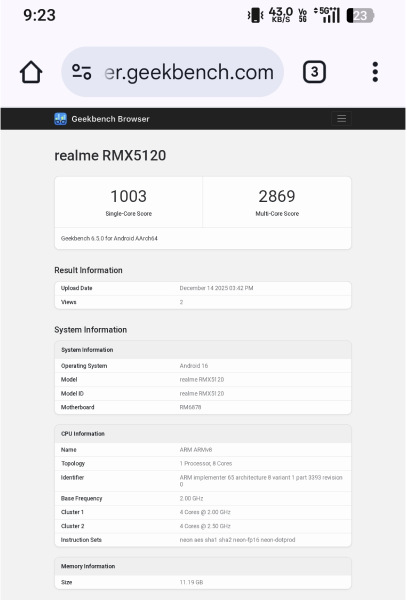
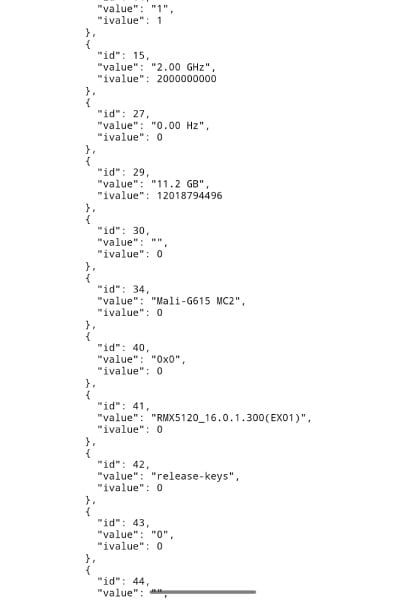
The main missing detail was the chipset, and that gap has now been filled thanks to a recent Geekbench listing.

Realme 16 Pro could use Dimensity 7300

The Realme 16 Pro showed up on Geekbench under the model number RMX5120. The listing reveals an octa-core processor with four performance cores clocked at 2.5GHz and four efficiency cores running at 2.0GHz, paired with a Mali-G615 MC2 GPU. Based on those details, the phone is likely powered by MediaTek’s Dimensity 7300 chipset.

What’s interesting is that Realme 15 Pro is powered by Snapdragon 7 Gen 4, a more powerful SoC than what’s on its successor. In other words, the newer model may take a step back in raw performance, at least on paper.

That said, Realme has already confirmed that the higher-end Realme 16 Pro+ will use a Snapdragon chip. 

As for the rest of the hardware, the Realme 16 Pro features a 6.78-inch OLED display with a 1.5K resolution. The rear camera setup is a pair of a 200-megapixel primary sensor and an 8-megapixel secondary camera. Up front, there’s a 50-megapixel selfie camera.

Software-wise, the device is expected to ship with Realme UI 7 based on Android 16. The Realme 16 Pro also packs a large battery. TENAA lists its rated capacity at 6,830mAh, which likely translates to a typical capacity of around 7,000mAh. It will charge via an 80W adapter. 

The certification listing also mentions an ultrasonic in-display fingerprint sensor and an IR blaster. 

For more daily updates, please visit our News Section.

Tech enthusiast? Get the latest news first! Follow our Telegram channel and subscribe to our free newsletter for your daily tech fix! ⚡

(Source)

The post Realme 16 Pro has a MediaTek chipset that performs inferior than last year’s Snapdragon appeared first on Gizmochina.

Xiaomi lines up 7+ product launches ahead of Spring Festival: Xiaomi 17 Ultra, Redmi Turbo 5 included

Xiaomi 17 Ultra triple camera sensors confirmed

Xiaomi’s upcoming release cycle seems fairly packed. According to digital blogger Digital Chat Station, the company is prepping to launch everything from flagship smartphones to wearables and IoT devices ahead of the Spring Festival in China.

According to DCS, the upcoming lineup includes a Snapdragon 8 Elite Gen 5-powered imaging flagship, two midrange smartphones powered by MediaTek Dimensity chips, a new smartwatch, two pairs of earbuds, a midrange tablet, and several IoT devices.

Here’s what’s coming

Unsurprisingly, the Snapdragon-run flagship is the Xiaomi 17 Ultra. The phone is reportedly set to be announced as early as next week, with a full release planned for later this month.

The 17 Ultra will feature a 1-inch Leica main camera, which is likely a domestically produced OmniVision OV50X sensor. It joins a 50-megapixel ultra-wide lens and a 200-megapixel periscope telephoto lens on the rear.

Xiaomi-17-Ultra-photography-kit-renders

Xiaomi is also expanding its midrange portfolio with two new devices. The Redmi Turbo 5 is expected to be the first smartphone to use the Dimensity 8500 chip. Whereas the Redmi Turbo 5 Pro will move further up the stack with Dimensity 9500e. 

Wearables aren’t being left out either. The new Xiaomi smartwatch has been revealed to run Android with Xiaomi’s HyperOS and feature a 930mAh battery. It also supports eSIM technology via an independent eUICC chip, making it fully capable of functioning without a smartphone.

Rounding out the lineup are two pairs of earbuds, a midrange tablet, and several IoT devices, though details on those remain sparse.

It’s still unclear whether all of these products will launch at the same time or across multiple events. Xiaomi is likely to plan a dedicated launch for the 17 Ultra, and if not all, we expect some of the other devices to debut on the same day.

For more daily updates, please visit our News Section.

Stay ahead in tech! Join our Telegram community and sign up for our daily newsletter of top stories.

(Source)

The post Xiaomi lines up 7+ product launches ahead of Spring Festival: Xiaomi 17 Ultra, Redmi Turbo 5 included appeared first on Gizmochina.

Vivo’s first action camera is launching in 2026, likely alongside X300 Ultra

GoPro Hero 13 Black

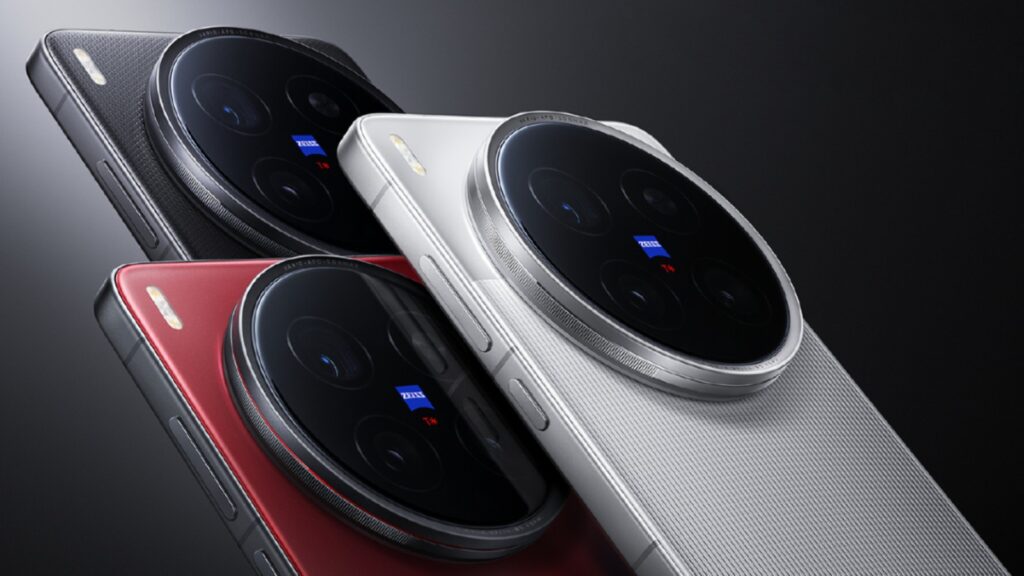
Vivo has already completed the global rollout of its X300 and X300 Pro smartphones, but the lineup is not finished yet. In 2026, the company will add a third model to the mix, called the Vivo X300 Ultra.

Powered by the Snapdragon 8 Elite Gen 5 chip, the talk of this phone is the camera. It is expected to have a pair of 200MP lenses, one for wide and another for telephoto duties, along with a  50MP ultrawide unit. 

But the X300 Ultra might not be the only imaging product Vivo has planned for next year. According to a prominent tipster, Digital Chat Station on Weibo, the company is also working on a standalone action camera. 

Vivo action camera incoming in 2026

The device is said to be tentatively scheduled for launch in the first half of 2026. Although not certain, there’s a possibility that it could debut alongside the X300 Ultra. The tipster refrained from sharing any technical specifications of the action cam, though. 

Still, Vivo entering the action camera space wouldn’t be entirely out of character. The company was among the first smartphone brands to experiment with hardware-based stabilization, debuting a micro-gimbal system on the Vivo X50 Pro

Vivo continued to use gimbal-based stabilization on its rear cameras until the X80 series. However, the technology was phased out as camera sensors became physically larger and heavier to be moved by previous micro-gimbal mechanisms.

So the history suggests Vivo already has meaningful experience in both hardware and software stabilization — two of the most critical elements of any action camera. Turning that expertise into a dedicated product feels like a logical next step.

Given Vivo’s recent success in smartphone camera innovation, it will be interesting to see what the brand brings to the action camera market.

For more daily updates, please visit our News Section.

Stay ahead in tech! Join our Telegram community and sign up for our daily newsletter of top stories.

The post Vivo’s first action camera is launching in 2026, likely alongside X300 Ultra appeared first on Gizmochina.

Oppo undecided on 200MP vs 50MP telephoto camera for Find X9 Ultra

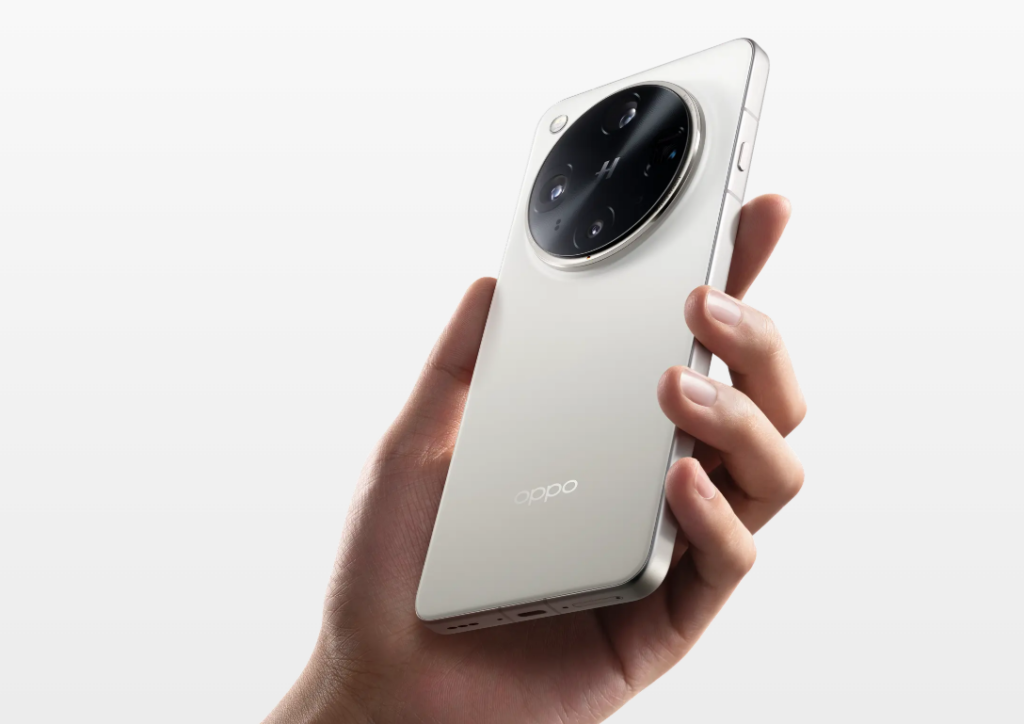
The Oppo Find X9 Ultra has already been rumored to feature a rear camera setup that includes a 200MP main sensor, a 50MP ultrawide, and two 50MP periscope telephoto cameras. This information is from back in October, but a new leak suggests Oppo may be rethinking part of that setup.

According to tipster Digital Chat Station, Oppo is considering replacing one of the telephoto cameras with a higher-resolution 200MP sensor. If that plan moves forward, the Find X9 Ultra’s rear camera system could look something like this:

  • 200MP 1/1.12” main camera
  • 50MP ultrawide
  • 200MP 1/1.3” mid-telephoto
  • 50MP super-telephoto
Oppo Find X9 Ultra 200MP telephoto rumor

That said, this configuration doesn’t appear to be locked in yet. The leak suggests that mass production of a 200MP telephoto sensor is still uncertain. So if supply issues persist, Oppo may fall back on the previously rumored 50MP telephoto camera instead.

For selfies, the company is expected to use another 50MP unit. 

Oppo Find X9 Ultra: other specs

While the Oppo Find X9 and Find X9 Pro feature the MediaTek Dimensity 9500 chipset, the Ultra variant is tipped to be powered by the Snapdragon 8 Elite Gen 5.

Reports also claim that the Oppo Find X9 Ultra will sport a large 6.8-inch 2K OLED display with a 120Hz refresh rate and an ultrasonic in-display fingerprint sensor. The phone is expected to run ColorOS 16 based on Android 16 out of the box.

It is also said to pack a sizable cell of around 7,000mAh. In fact, it could be the Ultra-phone with the largest battery in 2026. Like the Pro model, it may support 80W wired charging and 50W wireless charging.

The smartphone is likely to launch in China in early 2026, while the global debut is expected by late Q1 2026.

For more daily updates, please visit our News Section.

Stay ahead in tech! Join our Telegram community and sign up for our daily newsletter of top stories.

The post Oppo undecided on 200MP vs 50MP telephoto camera for Find X9 Ultra appeared first on Gizmochina.

❌