Reading view

MSI unveils limited-edition MEG X870E GODLIKE X motherboard with just 1,000 units worldwide

MSI-MEG-X780E-GODLIKE-X-EDITION-Launch-Specs-Price

MSI has unveiled a new and gorgeous MEG X870E GODLIKE X EDITION motherboard on the occasion of the 10th anniversary of the company’s GODLIKE series. And as the name suggests, this is not a mass-market product.

MSI says it will produce just 1,000 units worldwide, and each motherboard will feature a unique serial number along with a numbered gold nameplate.
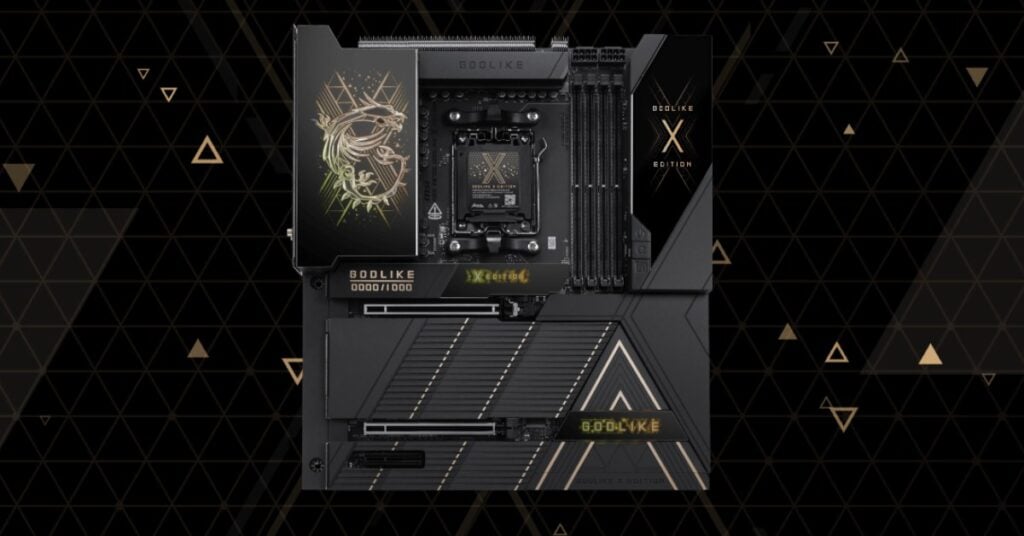
The X imprint and gold accents on the board make it clear that this is a limited-edition release. The motherboard also features a 3.99-inch Dynamic Dashboard III display that plays a dedicated 10th-anniversary animation when powered on.

MSI is bundling the motherboard with several limited-edition accessories, such as a numbered M.2 Frost Armor matching the motherboard’s serial number, a custom display stand, and even a limited-edition black dragon plush toy.

MSI MEG X780E GODLIKE X EDITION Specifications

Under the hood, the MEG X870E GODLIKE X EDITION sticks closely to what you would expect from a no-compromise AM5 motherboard. The power delivery system uses a 24 (110A SPS) + 2 + 1 phase design, paired with dual 8-pin CPU power connectors and third-generation titanium inductors. 

MSI says this setup is designed to provide stable power for AMD’s Ryzen 9000 series processors, including scenarios involving extreme overclocking.
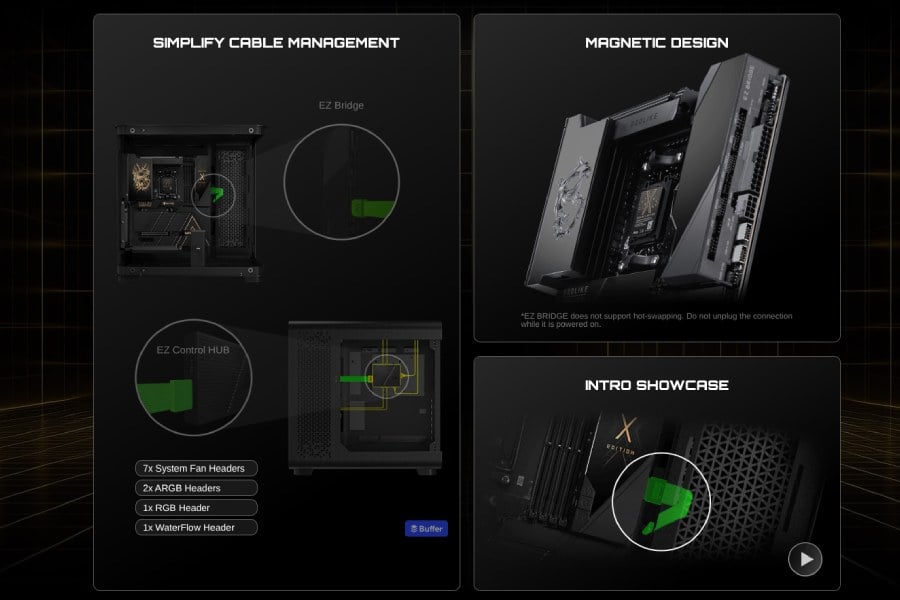
Memory support includes four DDR5 slots in a dual-channel layout, with MSI claiming support for memory speeds of up to 9000+ MT/s. And for storage, the motherboard includes five onboard M.2 slots, and MSI bundles an M.2 XPANDER-Z SLIDER GEN5 expansion card. 

Moreover, expansion options include two PCIe 5.0 x16 slots and one PCIe 4.0 x4 slot, enough for multi-GPU setups or specialized add-in cards. 

To keep everything running reliably, MSI has designed an extensive cooling solution. This includes a second-generation magnetic M.2 Frost Armor system, dense finned heatsinks, cross-shaped heat pipes, and thermal coverage across the VRM, chipset, and storage areas.

MSI has also added several EZ DIY features, such as a graphics card quick-release button, tool-free M.2 clips, and an EZ Bridge interface. 

As for connectivity, you get 10G and 5G Ethernet, Wi-Fi 7, and Bluetooth 5.4. Audio is handled by a fifth-generation esports audio module with 7.1-channel output, and you can tweak all the software settings through MSI Center. 

The MEG X870E GODLIKE X EDITION is now available in China for 8,888 yuan. Whereas, MSI’s US store lists it at $1300.

For more daily updates, please visit our News Section.

Don’t miss a thing! Join our Telegram community for instant updates and grab our free daily newsletter for the best tech stories!

(Source)

The post MSI unveils limited-edition MEG X870E GODLIKE X motherboard with just 1,000 units worldwide appeared first on Gizmochina.


Big Apple leak reveals 30+ products in prep for launch in 2026 and beyond

Apple products leak for 2026 and beyond

Apple’s product roadmap for 2026 and beyond may have just leaked in unusually broad detail, and yes, it includes Apple’s long-rumored first foldable iPhone. The information, unearthed by MacRumors, reportedly comes from an Apple prototype device running an early build of what we now know as iOS 26.

According to the report, the prototype device was sold, after which the buyer shared access to the beta software. The build carries the version number 23A5234w and is internally labeled as iOS 19, not iOS 26. This discrepancy actually helps confirm its age. It is an early beta of the operating system that eventually shipped as iOS 26.

Apple products leak for 2026 and beyond

What makes this discovery notable is the sheer scope of unreleased hardware referenced inside the software.

MacRumors was able to extract a lengthy list of unannounced Apple devices — spanning iPhones, iPads, Macs, wearables, home products, and even future silicon. Several of the codenames and model identifiers align with existing rumors, adding weight to the rumor. 

Below is the full list of products referenced in the beta.


AirTags and Home Devices

  • AirTag 2 — B589
  • Apple Studio Display 2 — J427, J527
  • Apple TV — J355
  • HomePas (base variant) — J490
  • HomePad (mounted variant) — J491
  • Possible smart home camera — J229
  • Tabletop robot — J595
  • HomePod mini 2 — B525

iPads

  • iPad 12 — J581, J582 (Wi-Fi and Cellular)
  • M4 iPad Air (11/13-inch)  — J707, J708, J737, J738 (Wi-Fi and Cellular)

iPhones

  • iPhone 17e — V159
  • iPhone Air 2 — V62
  • iPhone 18 Pro — V63
  • iPhone 18 Pro Max — V64
  • Foldable iPhone — V68

Macs

  • Low-cost MacBook (A18 Pro) — J700
  • M5 Pro / Max MacBook Pro (14/16-inch) — J714c, J714s, J716c, J716s
  • M5 MacBook Air (13/15-inch) — J813, J815
  • M5 Mac Studio (M5 Max / Ultra) — J775c, J775d
  • M5 Mac mini (M5 / Pro) — J873g, J873s
  • M6 14-inch MacBook Pro — J804
  • M6 Pro / Max MacBook Pro (14/16-inch) — K114c, K114s, K116c, K116s

Wearables and Spatial Devices

  • Vision Air — N100
  • AR glasses prototype — N421
  • Mac-connected AR glasses — N107
  • Cheaper Vision Pro / second-generation Vision Pro — N109
  • AI smart glasses — N50 / N401
  • Apple Watch Series 12 — N237, N238 (Wi-Fi and Cellular)
  • Apple Watch Ultra 4 — N240

Chips

The beta also references several upcoming Apple silicon projects:

  • U3 (Ultra Wideband) — T2034
  • M5 Pro / Max / Ultra — T6050
  • M6 — T8152
  • A20 / A20 Pro — T8160
  • S11 — T8320

Unknown Codenames

Several identifiers appear without clear links to existing rumors:

  • N110
  • N209
  • N216
  • J349
  • J190
  • J226

For more daily updates, please visit our News Section.

Stay ahead in tech! Join our Telegram community and sign up for our daily newsletter of top stories.

(Source)

The post Big Apple leak reveals 30+ products in prep for launch in 2026 and beyond appeared first on Gizmochina.
FEVM unveils a 1-liter mini PC with AMD’s latest Strix Halo chip

FEVM FAEX1 Launch Specs Price

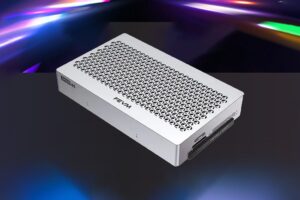
FEVM, a China-based brand focused on compact mini PCs, has launched its second system, the FAEX1. The new machine adopts a familiar cheese-grater aesthetic reminiscent of Apple’s designs, but incorporates a 16-core AMD APU and up to 128GB of LPDDR5X-8533 memory into a compact 1-liter chassis.

FEVM FAEX1 Specifications 

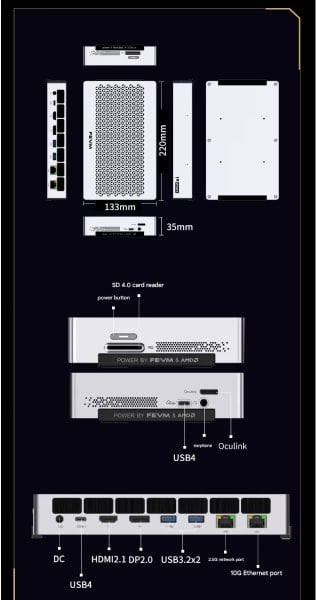
The FAEX1 measures 220 × 133 × 35mm and uses a CNC-machined aluminum alloy shell to achieve its glossy, industrial look. Despite its size, the mini PC is unusually generous with ports. 

Both the front and rear panels include two USB-C 40Gbps ports, two USB-A 10Gbps ports, HDMI 2.1, DisplayPort 2.0, an SD 4.0 card reader, a 3.5mm headphone jack, and an OCuLink 4i port for connecting external GPUs.

For connectivity, FEVM sticks to the latest standards. The FAEX1 supports dual-band Wi-Fi 7 and Bluetooth 5.4, alongside a 2.5GbE RJ45 port for wired networking.

Powering the system is AMD’s Ryzen AI Max+ 395 “Strix Halo” processor. It’s a 16-core APU built on AMD’s Zen 5 architecture, offering 32 threads, a Radeon 860S GPU with 40 RDNA 3.5 compute units, and an integrated XDNA 2 AI accelerator for on-device AI workloads.

To keep all of that in check, FEVM says the FAEX1 uses a 160W cooling solution that combines two active fans with a large vapor chamber. According to the company, this setup allows the mini PC to maintain peak performance even under sustained heavy loads.

Memory options include either 64GB or 128GB of soldered RAM, and storage is handled through three PCIe 4.0 x4 M.2 2280 slots for SSDs.

In China, the FAEX1 starts at 10,999 yuan for the 64GB barebones configuration with no SSD. The 128GB version costs 13,999 yuan, which roughly translates to $1,550 and $1,970, respectively, at current exchange rates.

For more daily updates, please visit our News Section.

Stay ahead in tech! Join our Telegram community and sign up for our daily newsletter of top stories.

The post FEVM unveils a 1-liter mini PC with AMD’s latest Strix Halo chip appeared first on Gizmochina.
China equips traffic police with AI smart glasses for real-time vehicle checks

Chinese-traffic-poilce-using-AI-glasses

Traffic police usually rely on radios, handheld scanners, and a lot of manual checks to keep roads moving. But in Changsha, China, that job is starting to look very different. 

Local traffic officers are now taking help from AI-powered smart glasses to identify vehicles and driver details in a matter of seconds. 

According to an official announcement from the Changsha Traffic Police on December 13, the Changsha Municipal Public Security Bureau Traffic Management Detachment has equipped its frontline officers with new AI-powered glasses. 

Traffic police in China are using AI glasses for vehicle monitoring 

The device is lightweight and looks like a normal pair from a distance. But what it does best is show the vehicle’s information at a glance in one or two seconds. Officers can read the details on a built-in display without breaking their stride. 

The glasses are equipped with a 12MP wide-angle camera and a predictive image-stabilization algorithm designed to keep images clear, even when officers are on the move or working in heavy traffic. On a full charge, they are rated to operate continuously for up to eight hours.

One of the most important features of these glasses is automatic license plate recognition. The system works offline with an accuracy rate of over 99% and delivers results in under one second. It’s also designed to work reliably in different lighting conditions, whether it’s bright daylight or nighttime traffic.

Once the system identifies a vehicle, the glasses connect to the public security traffic database in real time and pull up details such as registration information, inspection status, and violation records. 

The glasses extend beyond vehicle tracking. They also support facial recognition, real-time voice translation in more than 10 languages, and on-site video recording for law enforcement.

Thanks to this system, inspection time for a single lane has reportedly dropped from about 30 seconds to just one or two seconds. It also reduces manual work, lowers stress for officers, enables non-contact enforcement, and helps make roadside checks safer and more accurate.

For more daily updates, please visit our News Section.

Don’t miss a thing! Join our Telegram community for instant updates and grab our free daily newsletter for the best tech stories!

(Source)

The post China equips traffic police with AI smart glasses for real-time vehicle checks appeared first on Gizmochina.

Xiaomi increases tablet prices by up to 20%, and the reason is obvious

Xiaomi Pad 8 Pro

There’s an uncomfortable reality that tech buyers are slowly being forced to accept. Products are getting expensive even when the hardware itself is not worth it.

We’ve been talking about rising component costs for a while now, especially memory. RAM prices, in particular, have become a recurring headache for manufacturers and consumers alike. And sooner or later, its effect is set to show on store shelves.

Guess what? That buffer period is over now.

Not long after reports surfaced that Samsung may raise its smartphone prices, several Xiaomi products quietly became more expensive in mainland China. The increases range from 100 to 200 yuan, depending on the model.

The affected models

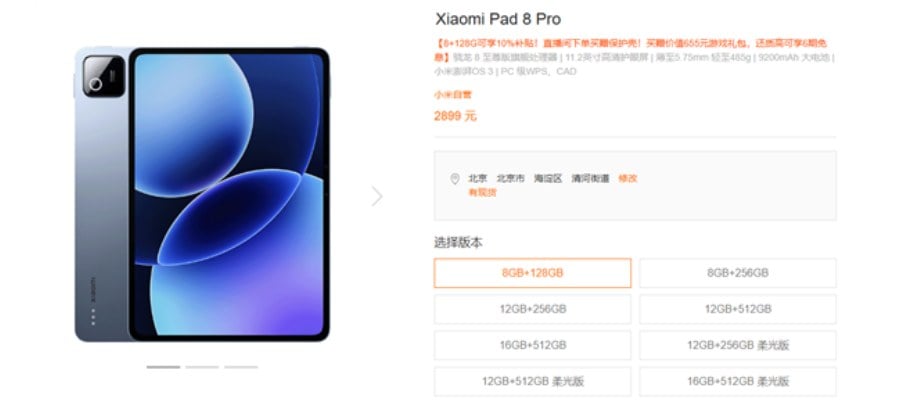
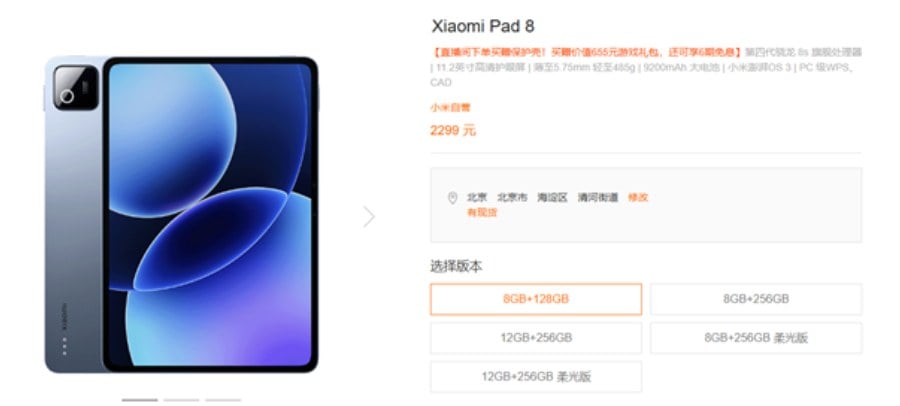
The price hike affects the Xiaomi Pad 8 series as well as every configuration of the Redmi Pad 2. The base Xiaomi Pad 8 now starts at 2,299 yuan, up from 2,199 yuan. Meanwhile, the higher-end Pad 8 Pro has seen its starting price climb from 2,799 yuan to 2,899 yuan.

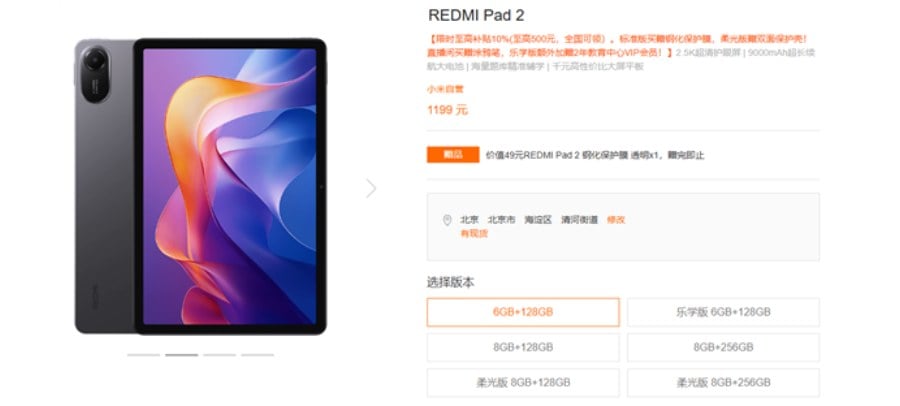
The entry-level Redmi Pad 2 has been hit the hardest, with all models increasing in price by 200 yuan. It now starts at 1199 yuan.

Xiaomi Pad 8 Pro Price Hike in China
Xiaomi Pad 8 Price Hike China
Redmi-Pad-2-Price-Hike-in-China

According to industry analysts, the sudden adjustment is largely driven by the continued surge in memory and storage chip prices. 

Xiaomi president Lu Weibing previously warned that storage costs had risen far beyond expectations, and a recent TrendForce report predicts another significant increase in storage prices in the first quarter of 2026.

A major factor behind the trend is the rapid expansion of the AI industry. DRAM production capacity is increasingly being redirected toward data centers, creating a supply-and-demand imbalance for chips used in traditional consumer electronics. 

Those cost pressures are now rippling through the supply chain, and Xiaomi’s tablet price increases offer a small but telling example of how the industry is absorbing the shock.

Don’t miss a thing! Join our Telegram community for instant updates and grab our free daily newsletter for the best tech stories!

For more daily updates, please visit our News Section.

The post Xiaomi increases tablet prices by up to 20%, and the reason is obvious appeared first on Gizmochina.

❌