Login
Login
Portugal Tourism Faces Delays as New European Border Control System Causes Airport Disruptions: What You Need to Know
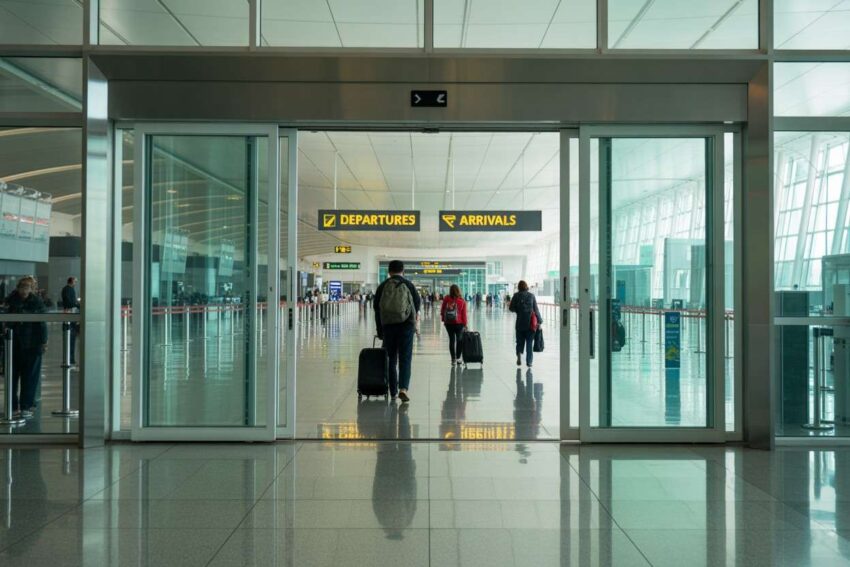
Portugal is facing major challenges at its international airports following the introduction of the European Union’s new border control system for non‑EU citizens, with long waiting times reportedly affecting tourism arrivals and airport operations. The situation, acknowledged by the Minister of Internal Administration, Maria Lúcia Amaral, has spotlighted the complexity of implementing large‑ scale digital border management systems across the Schengen Area.
Since October 12, 2025, Portugal has been part of the EU Entry/Exit System (EES) rollout, a new framework designed to enhance border security, record entry and exit data for non‑EU travelers, and strengthen the integrity of Schengen border management. However, implementation issues have led to severe passenger delays, particularly at Lisbon Humberto Delgado Airport, which handles the bulk of international traffic into the country.
Long Delays Reported at Lisbon and Other Airports
According to the Ministry of Internal Administration (MAI), delays began escalating in May 2025, following the initial integration of new database infrastructure linked to the Schengen Information System (SIS) and EURODAC. The transition marked the first stage in digitalizing border control processes, which included the purchase and installation of new biometric equipment.
By October, the disruptions intensified when the EES officially became operational, introducing real‑ time biometric verification for all non‑EU arrivals and departures. This system requires travelers to provide fingerprints and digital photographs, stored in a centralized database accessible across all Schengen countries.
Average waiting times at Lisbon Airport have since tripled, peaking at six hours during high‑traffic periods, as the system’s dual verification process, both digital scanning and manual checks by PSP (Public Security Police) officers, slowed throughput.
Airports in Porto and Faro have also experienced operational bottlenecks, though on a smaller scale. The ANA Aeroportos de Portugal authority has confirmed that infrastructure and staffing expansions are underway to reduce passenger congestion and mitigate the impact on tourism services.
Coordination Among Multiple Agencies
The Portuguese government clarified that the system’s difficulties cannot be attributed to a single agency. Responsibility lies among several entities, including:
- The PSP National Unit for Foreigners and Borders (UNEF), which oversees border enforcement at airports.
- The Internal Security System (SSI), managing cybersecurity and software integrity.
- ANA Aeroportos de Portugal, overseeing airport logistics and infrastructure.
- Private contractors tasked with equipment supply and digital integration.
The minister emphasized that the current turbulence reflects the complexity of synchronizing multiple systems and databases. The transition is part of a broader EU-wide modernization goal, governed by the European Commission’s Smart Borders Package, which aims to enhance both security and tourism mobility management across the Schengen zone.
Impact on Portugal’s Tourism Sector
Tourism represents a major pillar of Portugal’s economy, accounting for approximately fifteen percent of GDP and employing over four hundred thousand people, according to the Turismo de Portugal national authority. The prolonged delays have therefore raised concerns within the tourism industry, particularly for the Lisbon, Algarve, and Madeira regions that depend heavily on international arrivals.
Long queues at border control impact visitor satisfaction, flight connections, and overall travel experience, potentially influencing destination competitiveness in the short term. The World Tourism Organization (UNWTO) recognizes smooth border crossing as a key component of sustainable tourism development, reinforcing the need for efficient immigration systems that balance security with traveler convenience.
Officially, the Ministry of Economy and Maritime Affairs, through its Directorate-General for Economic Activities, is collaborating with ANA, Tourism of Portugal, and airlines to implement an airport crisis response mechanism. The system includes real-time monitoring hubs, additional PSP staff rotations, and technical support teams stationed at Lisbon Airport to manage passenger flows.
Introduction of the Biometric Phase
As part of the second implementation phase, launched on December 10, 2025, the system now requires the collection of biometric data, digital photographs and fingerprints, from non‑EU travelers. This data supports the automated verification process upon entry and exit within the Schengen Area.
While the goal is to streamline cross-border management and reduce document fraud, the introduction of new procedures has temporarily increased processing times. The European Union Agency for the Operational Management of Large-Scale IT Systems (eu-LISA) oversees the technical operations of the EES across member states, ensuring uniformity and cybersecurity compliance.
Portuguese officials continue to coordinate with eu‑LISA experts to optimize database performance, resolve system overloads, and recalibrate hardware used at airport checkpoints. These actions are part of the EU‑level roadmap to fully operationalize border automation by mid‑2026.
Government Response and Monitoring Measures
To mitigate ongoing disruption, the Portuguese government created a “crisis room” at Lisbon Airport, staffed by officials from multiple ministries including Internal Administration, Infrastructure, and Economy. This task force conducts daily situation reviews, analyzing wait times, system performance metrics, and passenger throughput.
The Council of Ministers has also approved temporary regulatory flexibility for border operations, allowing additional manual screening lanes to function alongside automated gates during peak hours.
Simultaneously, public information campaigns, coordinated by Turismo de Portugal and Visit Portugal’s digital channels, are advising travelers to plan for extended processing times, complete pre‑travel registration accurately, and arrive at airports three hours before departure.
Broader European Context
Portugal’s challenge mirrors similar experiences in France, Spain, and Germany, which are also adapting to the new Schengen border framework. The European Commission has acknowledged transitional disruptions are expected but necessary to achieve long‑term improvements in traveler mobility and border integrity.
The EES system is intended to simplify travel logistics for legitimate travelers while enhancing security screening for high‑risk movements. Once fully optimized, officials predict the digital transformation will benefit tourism by accelerating future‑proof border automation systems, improving accessibility for non‑EU passengers once initial integration problems are resolved.
Toward Stability and Tourism Confidence
Despite the turbulence, Portugal’s authorities remain confident that tourism momentum will not be permanently affected. The nation continues to attract steady visitor volumes, supported by robust connectivity through TAP Air Portugal and major European carriers.
In 2024, Portugal welcomed over thirty million international tourists, marking one of the strongest recoveries in the European Union after the pandemic. The government anticipates maintaining similar demand in 2026, once border systems stabilize and full biometric automation efficiency is achieved.
The Ministry of Internal Administration, in collaboration with ANA and the European Commission, has reaffirmed its commitment to improving traveler experience, ensuring that Portugal remains a model for secure and sustainable tourism management in the Schengen zone.
The coming months will be critical as the transition from manual to digital border controls continues, balancing the twin priorities of national security and tourism facilitation, essential for maintaining Portugal’s global reputation as a top European travel destination.
The post Portugal Tourism Faces Delays as New European Border Control System Causes Airport Disruptions: What You Need to Know appeared first on Travel And Tour World.