
Reading view

Sarasota Tourism Outlook 2026: Why “Flat” Growth is a Win for Florida’s Gulf Coast
Sarasota Tourism Outlook 2026: Why “Flat” Growth is a Win for Florida’s Gulf Coast

In the world of tourism marketing, growth is usually the only metric that matters. But as we look toward 2026, Sarasota County is championing a different philosophy: Quality over Quantity. After the “gold rush” years of the post-pandemic era, where Florida was one of the few open destinations in the world, the region is settling into a new, more sustainable “normal.”

According to the latest data from Visit Sarasota County (VSC), the outlook for 2026 is projected to be “flat” in terms of visitor volume—and surprisingly, that is exactly what local leaders want to see.

Beyond the Pandemic Peak

To understand why “flat” is considered a success, one must look at the context of the last five years. Erin Duggan, President and CEO of Visit Sarasota County, describes the pandemic years of 2021 and 2022 as “shooting fish in a barrel.” With international travel halted and cruises docked, Sarasota became a primary haven for those seeking sun and space.

However, 2024 and 2025 brought challenges that no marketing strategy could fix: a series of back-to-back tropical weather systems that disrupted travel seasons. As global travel has fully returned, fellow Floridians and domestic travelers are once again looking toward Europe and Asia.

Despite these factors, the data shows a resilient economy. While the number of visitors in fiscal year 2025 (2.71 million) was down slightly from 2024, their spending and total economic impact remain significantly higher than pre-pandemic levels in 2019. In short: fewer people are coming, but those who do are spending much more.

The Luxury Shift: St. Regis and the “Bed Tax”

A major driver of this high-value tourism is the expansion of Sarasota’s luxury hotel inventory. The opening of the St. Regis on Longboat Key has been a game-changer for the county’s “bed tax” (the 6% accommodations tax). With room rates often exceeding $1,000 per night, the tax revenue generated from a single suite can outperform a dozen budget rooms.

For 2026, the county anticipates roughly $46.25 million in tourism development tax revenue. This money doesn’t just sit in a vault; it funds the very things that make Sarasota a paradise for residents and visitors alike.

  • 23% goes to beach maintenance.
  • 21% supports sports stadiums (like Ed Smith Stadium and Cool Today Park).
  • 13% funds promotional efforts via VSC.
  • 8% is dedicated to the arts, cementing Sarasota’s reputation as Florida’s Cultural Coast.

Downtown’s New Horizon

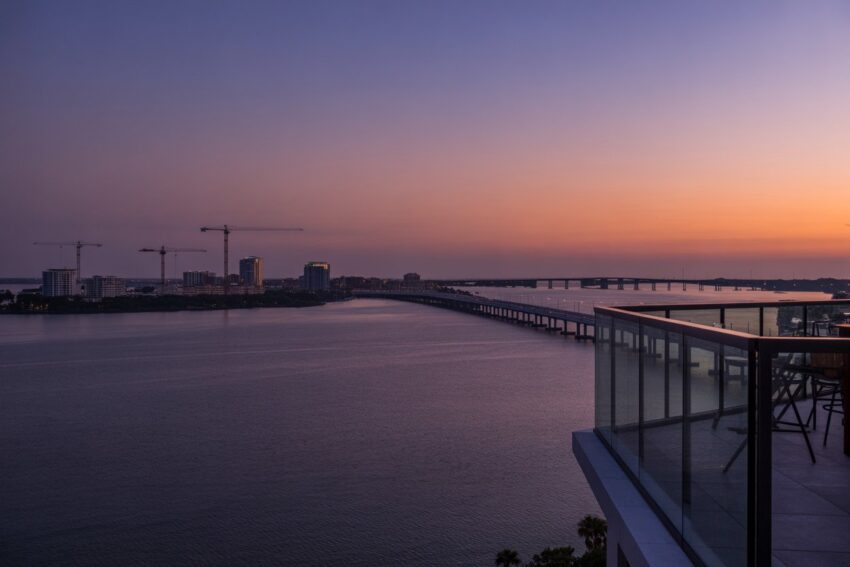
The confidence in Sarasota’s future is visible in the skyline. Wes Santos, General Manager of the Art Ovation Hotel, notes that the presence of six construction cranes in the downtown core is a clear sign of investor confidence. Even with the loss of legacy properties like the Hyatt Regency (set for redevelopment), the influx of modern, boutique, and branded hotels is keeping the area competitive.

“Sarasota is now in the same conversation as Miami and Orlando,” says Santos. The city has evolved from a sleepy retirement community into a vibrant urban destination that balances world-class beaches with a sophisticated arts scene.

The Airport Indicator

Perhaps the most telling sign of Sarasota’s health is the Sarasota-Bradenton International Airport (SRQ). While local hotel stays have leveled off, the airport is expecting to hit a record 4.5 million passengers in 2025—a massive leap from the 1.9 million seen in 2019. This suggests that while some travelers may be choosing short-term rentals or visiting friends and family, the “bread and butter” of the region—the inbound passenger—is stronger than ever.

Strategic Marketing for 2026

Visit Sarasota County is moving into 2026 with a surgical approach to marketing. Instead of casting a wide net, they are targeting specific high-value demographics:

  • Sports Tourism: Actively recruiting competitions to facilities like Nathan Benderson Park.
  • Meetings and Conventions: Filling rooms during the “shoulder seasons” when leisure travel dips.
  • The Arts Enthusiast: Leveraging Sarasota’s unique status as a hub for opera, ballet, and fine arts.

The Resident Benefit

The “Quality over Quantity” mantra also serves a dual purpose: protecting the lifestyle of those who call Sarasota home. By focusing on higher spending per visitor rather than sheer volume, the county can generate the revenue needed for beach renourishment and infrastructure without the soul-crushing congestion often seen in other Florida hotspots.

As Erin Duggan puts it, “We’re residents, too. We would rather have fewer visitors spending more money than more visitors spending less money.”

A Steady Path Forward

The 2026 outlook is one of stability. After the turbulence of the early 2020s and the weather events of 2024, a “flat” year provides the breathing room needed to refine the visitor experience and invest in long-term sustainability. Sarasota isn’t just a place people are fleeing to anymore; it’s a place they are choosing—intentionally, and with a willingness to invest in the local culture.

The post Sarasota Tourism Outlook 2026: Why “Flat” Growth is a Win for Florida’s Gulf Coast appeared first on Travel And Tour World.


Canary Islands Phone Warning: New Emergency Alert System to Protect Tourists from ‘Silent’ Dangers

Canary Islands Phone Warning: New Emergency Alert System to Protect Tourists from ‘Silent’ Dangers

For millions of British sun-seekers, the Canary Islands represent the ultimate escape. Whether it’s the dramatic cliffs of Los Gigantes in Tenerife or the golden dunes of Maspalomas in Gran Canaria, these islands offer a rugged beauty that is hard to match. However, that very beauty can turn deadly in an instant. Following a string of tragic accidents, local authorities are now pushing for a major technological upgrade to keep holidaymakers safe: a direct-to-phone emergency warning system.

A Winter of Tragedy

The call for enhanced safety measures comes on the heels of a devastating period for the archipelago. In the last two months alone, seven people have lost their lives to the treacherous Atlantic swells surrounding Tenerife.

Most recently, a somber cloud was cast over the popular Los Gigantes coast when four tourists were swept away at a natural ocean pool. Despite swimming bans and visible warnings, the power of the waves proved insurmountable. These incidents have highlighted a critical gap in communication: how do you warn someone who isn’t watching the local news or following Spanish authorities on social media?

The Solution: ES-Alert for Tourists

Enter CIT Sur (The Centre for Tourism and Initiatives of South Tenerife). This influential tourism body is officially requesting that the regional government expand the use of the ES-Alert system.

Currently, ES-Alert is reserved for “Level 1” catastrophes—think volcanic eruptions (like the 2021 La Palma event) or widespread wildfires. CIT Sur wants to bring this technology down to “Level 3,” allowing it to be used for more frequent but equally dangerous “silent” threats like:

  • Abnormal Wave Activity: Warning swimmers before they enter natural pools.
  • Adverse Weather: Alerting hikers to flash floods or extreme winds in the highlands.
  • High-Temperature Alerts: Preventing heatstroke during intense Saharan dust events (Calima).

How It Works: No App Required

One of the most significant advantages of the ES-Alert system is its accessibility. Unlike traditional travel apps that require a download and an active data plan, ES-Alert uses cell broadcast technology.

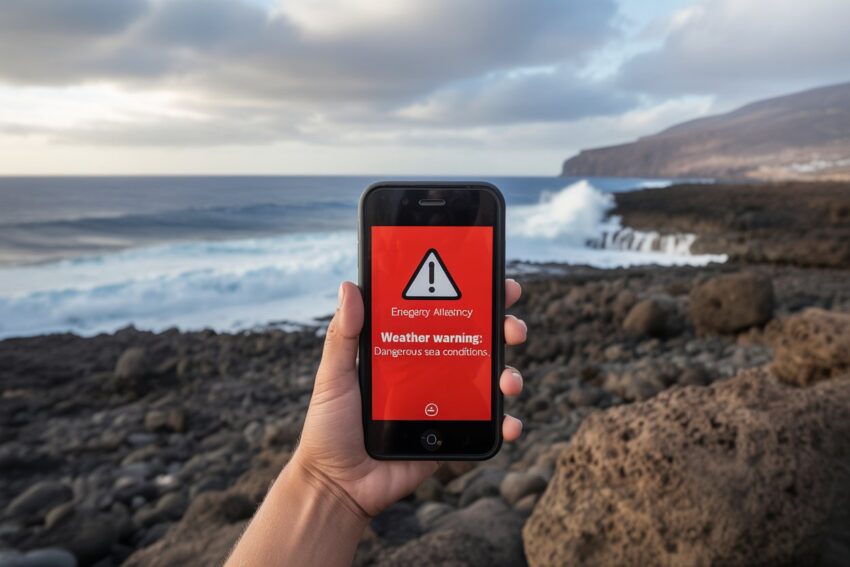
If you are within a specific geographical area—for example, near a dangerous hiking trail in Teide National Park—your 4G or 5G phone will emit a loud, distinct alarm and display a text message. Crucially for Brits, these messages can be broadcast in multiple languages, ensuring that the warning is understood instantly, regardless of your nationality.

The “Digital Bubble” Problem

David Pérez, Vice President of CIT Sur, pointed out a modern dilemma facing tourism safety. “Social media algorithms and the digital environment do not lead tourists to our local news outlets,” he explained.

When you’re on holiday, your feed is likely filled with restaurant recommendations and sunset photos, not local weather warnings. By sending an alert directly to a visitor’s handset, authorities can pierce through that “digital bubble” and provide real-time, life-saving information exactly when it is needed.

Personal Responsibility vs. Government Intervention

While the proposed system is a massive step forward, authorities are quick to remind travelers that technology is not a substitute for common sense. The tragedy at Los Gigantes occurred in an area where warnings were already in place.

The goal of the ES-Alert expansion is to provide an extra layer of protection—a final, undeniable “ping” on your phone that says, “The path ahead is closed” or “The sea is too dangerous today.” It is about making sure that every tourist has the information they need to make a safe decision, even if they’ve missed the physical signs or the local radio broadcast.

Looking Ahead: A Safer Archipelago

As the Canary Islands continue to see record-breaking tourist numbers, the pressure to modernize safety protocols is mounting. With the proposal now heading to the General Directorate of Security and Emergencies, holidaymakers could see these alerts active as early as the 2026 season.

For the regular visitor to Tenerife, Lanzarote, or Fuerteventura, this change should be seen as a welcome companion. It’s a small interruption that could mean the difference between a memorable holiday and a tragic headline.

The post Canary Islands Phone Warning: New Emergency Alert System to Protect Tourists from ‘Silent’ Dangers appeared first on Travel And Tour World.

Las Vegas Reverse Sales Mission: Strengthening the Vital Link with the Canadian Travel Trade

Las Vegas Reverse Sales Mission: Strengthening the Vital Link with the Canadian Travel Trade

In an era where digital booking platforms often dominate the conversation, the Las Vegas Convention and Visitors Authority (LVCVA) recently sent a clear, powerful message: the human touch of the travel trade is irreplaceable. Last week, the LVCVA hosted 11 of Canada’s major tour operators in a high-stakes “reverse sales mission.” Rather than sending a team to Canada, Vegas brought the Canadian gatekeepers to the Neon City. The goal was simple but profound—to reinforce a partnership that is currently facing its most significant headwinds in a decade.

Navigating “Challenging Times”

The backdrop of this mission is undeniable. 2025 has been a complex year for cross-border travel. Between a fluctuating Canadian dollar and a shifting political climate, many Canadians have expressed a newfound hesitancy toward U.S. travel. Statistics from Harry Reid International Airport reflected this “chill,” showing a decline of nearly 17% in Canadian arrivals this past September.

LVCVA President and CEO, Stephen Hill, didn’t shy away from these realities. “We know that the current environment can make booking travel to the United States more challenging,” Hill remarked during a welcome address at the Encore Resort. His tone was one of empathy rather than just economics. He acknowledged that when the relationship between two neighbors gets disrupted, it becomes “emotional,” not just financial.

The $3.6 Billion Handshake

Why is Las Vegas so focused on Canada? The numbers tell a story of deep interdependence. In 2024, Canadians injected approximately $3.6 billion into the Southern Nevada economy, supporting an estimated 43,000 local jobs. Canada remains the #1 international market for Las Vegas, contributing roughly 3% of the city’s record-breaking 41.7 million arrivals.

For the small business owners in Vegas—the outdoor tour operators at Red Rock Canyon, the family-run restaurants, and the boutique retailers—the “Canadian slump” isn’t just a stat; it’s a loss of income. This is why the LVCVA views the Canadian travel trade as the “vital link.” Advisors and operators are the ones who can speak directly to travelers, addressing their concerns about value and safety with firsthand knowledge.

The Experience: More Than Just a Meeting

The “reverse sales mission” wasn’t just a series of boardroom meetings. To truly equip Canadian partners, the LVCVA curated an “insider” experience of the city’s newest and most iconic offerings:

  • Behind the Scenes at Bellagio: Partners took a “back of the house” tour to see the magic behind the Fountains of Bellagio, followed by a private lakeside dinner at the new CARBONE Riviera.
  • The Sphere & Beyond: A visit to the world-largest spherical structure provided a glimpse into the future of immersive entertainment.
  • Allegiant Stadium: With sports tourism becoming a massive draw for Canadians, a private tour of the Raiders’ home emphasized why Vegas is now the “Sports Capital of the World.”
  • Aerial Perspectives: A night flight with Maverick Helicopters reminded everyone why the Vegas skyline remains one of the most recognizable and inviting views on the planet.

A New Value Proposition

Recognizing the impact of the exchange rate, Las Vegas suppliers are pivoting toward “value-added” incentives rather than just price cuts. During the mission, 16 major suppliers—including MGM Resorts, Caesars Entertainment, and Fontainebleau—pitched packages that include significant food and beverage credits and waived resort fees.

The strategy is to ensure that even with a weaker “Loonie,” a Canadian traveler feels they are getting an elite experience for their dollar. From the “Learn and Earn” rewards for advisors to instant-savings packages from WestJet and Air Canada Vacations, the industry is working in lockstep to lower the barrier to entry.

The Sports and Entertainment Magnet

Keynote speaker Jeff Sharples, a British Columbia native and former NHL defenseman, spoke passionately about the “emotional high” of Vegas sports. Whether it’s the Vegas Golden Knights or the upcoming A’s Ballpark (set for 2028), sports give Canadians a concrete, non-political reason to visit.

Couple that with the current residency lineup—featuring legends like Dolly Parton and Alanis Morissette—and the city’s appeal remains robust. The mission highlighted that while politics may fluctuate, the desire for “celebration and escape” is a constant human need.

Looking Forward: A Partnership Restored

As the mission concluded, the sentiment among both Vegas suppliers and Canadian operators was one of cautious optimism. The LVCVA made it clear: they don’t just want Canadian business; they miss Canadian travelers.

By investing in the travel trade, Las Vegas is betting on the expertise of professionals to steer the narrative back to what the city does best—providing a world-class escape. As Steve Hill put it, “Vegas just keeps getting better,” and the city is ready to prove it to their northern neighbors, one handshake at a time.

The post Las Vegas Reverse Sales Mission: Strengthening the Vital Link with the Canadian Travel Trade appeared first on Travel And Tour World.
The Green Revolution in Portugal: Why Local Business is the Future of Sustainable Tourism

The Green Revolution in Portugal: Why Local Business is the Future of Sustainable Tourism

For decades, mass tourism was the engine of growth, but it often came at a high environmental cost. Today, Portugal is pivoting. The core of this transformation is the Local Business Model. Unlike giant international chains, Portuguese small and medium-sized enterprises (SMEs) have a literal “stake in the soil.” For a local boutique hotel owner in Sintra or a vineyard operator in the Douro Valley, sustainability isn’t a corporate social responsibility (CSR) report—it is the protection of their home.

This “human-centric” approach to sustainability ensures that the beauty of the Algarve’s cliffs or the biodiversity of the Azores isn’t just a commodity to be sold, but a heritage to be guarded.

Where You Rest Your Head: The Rise of Eco-Stays

The journey toward sustainability in Portugal begins with where travelers sleep. The country has seen an explosion of accommodations that have traded excess for efficiency.

Take, for instance, the Tivoli Palácio de Seteais in Sintra. While it drips with history and luxury, it operates under strict environmental certifications like Green Key and EarthCheck. This means every drop of water used and every kilowatt of energy consumed is monitored. But it’s not just the luxury tier. The “social” side of travel is also turning green. Hostels like The Independente in Lisbon have become hubs for the eco-conscious, emphasizing organic, locally sourced breakfasts and waste-reduction programs that turn recycling into a community activity.

Moving with Intent: Transportation Redefined

Getting around a country as geographically diverse as Portugal usually requires a significant carbon footprint. However, the new model encourages “Slow Travel” or high-efficiency movement.

The rise of ECO Rent a Car has made electric vehicle (EV) travel across the Algarve’s coast not just possible, but preferable. Meanwhile, in the bustling hills of Lisbon, the Lisbon Bike Tour shows travelers that the best way to see the city’s historic tiles and hidden alleys is on two wheels. By integrating high-speed rail and expanded tram networks, the Portuguese government has supported these local efforts, making it easier for a tourist to ditch the domestic flight for a scenic train ride.

A Taste of the Land: Gastronomy as Conservation

Perhaps the most delicious part of Portugal’s green model is its food. Gastronomy here is intrinsically linked to the land. The “Farm-to-Table” movement is no longer a niche trend; it’s the standard for excellence.

When you dine at a place like Cantinho do Avillez in Lisbon, you aren’t just eating a meal; you are supporting a local supply chain that reduces “food miles” to almost zero. In the Douro Valley, vineyards like Quinta da Pacheca are pioneering organic viticulture, proving that world-class wine doesn’t need harsh chemicals.

Even the seafood—a staple of the Portuguese soul—is being scrutinized for its impact. Restaurants such as Marisqueira Azul lead the way by sourcing exclusively from sustainable fisheries, ensuring that the bacalhau or sardinhas you enjoy today will still be available for your grandchildren.

Adventure with an Anchor: Eco-Experiences

Sustainability in Portugal extends beyond the plate and the pillow; it’s in the very way people interact with nature. In the Azores and Madeira, tourism isn’t about “conquering” the landscape but observing it. Tour operators like Azores Adventure prioritize conservation, offering whale-watching tours that respect marine boundaries and nature walks that fund local reforestation.

In the surfing world—a pillar of Portuguese tourism—the shift is even more tactile. Schools like Lisbon Surf Rentals are moving away from traditional foam boards toward sustainable materials, educating a new generation of surfers on how to protect the very oceans they ride.

How to Be a Part of the Solution

The article in Algarve Daily News reminds us that the success of this model depends on the traveler. To truly support the “Green Portugal” model, visitors are encouraged to:

Seek Certifications: Look for the Green Key logo when booking.

Eat Locally: Avoid the global fast-food chains and seek out the tascas and farm-to-table eateries.

Opt for EVs or Rails: Use the country’s improving green infrastructure.

Practice “Leave No Trace”: Especially in sensitive areas like the Ria Formosa.

    Conclusion: The Portugal Blueprint

    Portugal is proving that a country can be a world-class destination without losing its environmental integrity. By empowering local entrepreneurs to lead the way, the nation has created a resilient, sustainable, and deeply human tourism model.

    The next time you find yourself looking at a map of Europe, remember that your choice of destination is a vote for the kind of world you want to live in. Choosing Portugal isn’t just a choice for a beautiful vacation; it’s a choice for a greener future.

    The post The Green Revolution in Portugal: Why Local Business is the Future of Sustainable Tourism appeared first on Travel And Tour World.
    Destination Niagara: Ontario’s Multibillion-Dollar Strategy to Revolutionize Global Tourism

    Destination Niagara: Ontario’s Multibillion-Dollar Strategy to Revolutionize Global Tourism

    For generations, Niagara Falls has been the undisputed crown jewel of Canadian tourism. Millions of travelers arrive every year, witness the thunderous roar of the Horseshoe Falls, snap a few photos, and perhaps enjoy a quick meal before heading back to Toronto or crossing the border. But the Ontario government believes the region is capable of so much more.

    On December 16, 2025, Premier Doug Ford and the Ontario government officially launched the Destination Niagara Strategy. This isn’t just a minor facelift; it is a multibillion-dollar, long-term roadmap designed to transform the entire Niagara Peninsula into a world-class, multi-day destination that rivals the likes of Orlando, Las Vegas, or the great wine regions of Europe.

    With a goal of attracting 25 million annual visitors and injecting an additional $3 billion into Ontario’s GDP every year, the province is betting big on the power of “The Mist.”

    Breathing New Life into Industrial Icons

    One of the most exciting aspects of the strategy is the creative “adaptive reuse” of Niagara’s historic industrial architecture. For decades, the massive power stations lining the river stood as silent monuments to 20th-century engineering. Now, they are becoming the focal points of luxury travel.

    The Toronto Power Generating Station is already being revitalized into a high-end boutique hotel, offering guests a chance to sleep within a piece of national history. Not far behind is the Ontario Power Generating Station, which is slated for redevelopment into a brand-new guest experience that combines history with modern entertainment. By turning these limestone giants into vibrant hubs, the province is ensuring that Niagara’s heritage remains a living, breathing part of its future.

    Thrills and Spills: A New Era of Attractions

    To keep families staying longer, Ontario is looking beyond the natural wonders. The government has issued a Request for Information (RFI) to explore the development of a brand-new, signature theme park. While details are still under wraps, the aim is to create a landmark attraction where families can spend days, not just hours.

    Additionally, the skyline of the city is set to change. Taking inspiration from the “London Eye” and “High Roller” in Vegas, Niagara Parks is initiating procurement for a world-class observation wheel. This will offer a slow, panoramic ascent, providing unmatched views of both the American and Horseshoe Falls from a height never before accessible to the general public.

    The Niagara River Line: Innovation in Motion

    Perhaps the most “human-centric” improvement is how visitors will move through the region. The proposed Niagara River Line is an automated, fully accessible electric tram system.

    Running 3.8 kilometers through the heart of Queen Victoria Park, the tram will feature suspended capsules. This isn’t just about efficiency; it’s about the experience. Imagine gliding silently above the crowds, encased in glass, as the mist from the falls rises to meet you. It’s a sustainable, all-season solution that connects major landmarks while reducing the traffic congestion that has long plagued the river road.

    A Toast to the Peninsula: Wine and Culinary Excellence

    While the Falls get the headlines, the Niagara region is also home to some of the world’s most prestigious wineries and “farm-to-table” dining experiences. The Destination Niagara Strategy seeks to elevate this agritourism sector to a global stage.

    The plan emphasizes investments in the region’s wine, beer, and spirits industries, promoting culinary tours that lead visitors into the rolling hills of Niagara-on-the-Lake and the burgeoning food scene in St. Catharines. By showcasing the region’s gastronomic depth, the province aims to attract a demographic of “slow travelers”—those who come for the view but stay for the vintage.

    Connecting the World to the Water

    Infrastructure is the backbone of any great tourism destination. To support the influx of 25 million visitors, the province is committing to massive transportation upgrades:

    • The Garden City Skyway: Twinning the bridge to ensure smooth traffic flow across the canal.
    • Expanded GO Service: Making the train journey from Toronto more frequent and reliable.
    • Niagara District Airport: Issuing an RFP to improve air access, potentially allowing for more direct regional flights that connect the Niagara Region to the Greater Golden Horseshoe and beyond.

    The Human Impact: Jobs and Community

    Beyond the steel, glass, and tarmac, this strategy is about the people of Ontario. Minister of Tourism, Culture and Gaming Stan Cho highlighted that this is an “economic engine” for the province. The plan is designed to create thousands of “good-paying jobs” in hospitality, construction, and the arts.

    From the performers at the Shaw Festival to the vineyard workers in Jordan and the engineers on the new electric tram, the Destination Niagara Strategy is an investment in the workforce. It’s a promise that the prosperity generated by the falls will flow back into the communities that call this region home.

    Final Thought: A 365-Day Destination

    For too long, Niagara has been viewed as a seasonal stop. By investing in indoor theme parks, all-weather trams, and year-round cultural festivals, Ontario is signaling that Niagara is open 365 days a year.

    Whether it’s the crisp chill of a winter wine tour or the summer spray of a boat ride under the falls, the Destination Niagara Strategy ensures that the “World’s Most Famous Waterfalls” are just the beginning of the story. The future of Niagara is brighter, busier, and more connected than ever before.

    The post Destination Niagara: Ontario’s Multibillion-Dollar Strategy to Revolutionize Global Tourism appeared first on Travel And Tour World.

    Tokua Airport Upgrade: NAC Opens A220 Operations and Night Flights for PNG Festive Peak

    Tokua Airport Upgrade: NAC Opens A220 Operations and Night Flights for PNG Festive Peak

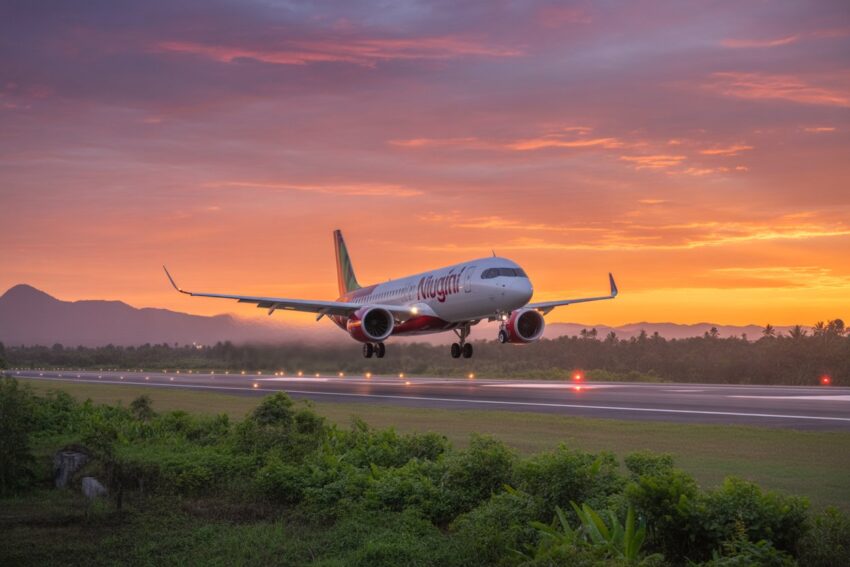
    Effective December 16, 2025, Tokua Airport has been cleared to accommodate the Airbus A220 on a temporary concession basis. For the people of Kokopo and Rabaul, this is more than just a new plane on the tarmac—it is a massive leap in capacity.

    The A220-300, recently dubbed “The People’s Balus,” is the cornerstone of Air Niugini’s fleet modernization. Compared to the aging Fokker fleet, the A220 offers:

    • Increased Capacity: More seats per flight to handle the Christmas rush.
    • Fuel Efficiency: Lower emissions and better range.
    • Modern Comfort: Larger windows, quieter cabins, and a smoother ride through PNG’s challenging terrain.

    Dominic Kaumu, Acting Managing Director and CEO of NAC, noted that this concession is a direct response to the surge in demand. By allowing the A220 into Tokua, NAC is providing airlines with the heavy-lifting tools needed to clear passenger backlogs.

    The Night Sky Opens Up: Extending Operational Hours

    In a rare move, the NAC has also agreed to facilitate temporary night flight operations at a selection of vital airports:

    Nadzab Tomodachi International Airport (Lae)

    Wewak Airport

    Momote Airport (Manus)

    Kavieng Airport

      Usually, regional airports in PNG operate on a strict daytime schedule. However, to combat the holiday congestion, NAC is extending these hours. This allows airlines to run “late-night shuttles,” effectively doubling the utility of their aircraft.

      “While night operations fall outside our standard hours and require significant extra resources and staffing, we recognize the necessity of these steps to improve passenger movement,” Kaumu stated.

      Why This Matters: Humanizing the Holiday Rush

      Behind every flight schedule is a human story. It’s the student in Port Moresby trying to get home to Wewak, the grandmother in Kavieng waiting for her family to arrive from Lae, and the small business owner in Kokopo relying on air freight for festive supplies.

      In previous years, limited capacity meant that many travelers were left stranded or forced to pay exorbitant last-minute fares. By introducing the A220 to Tokua and opening night slots elsewhere, the NAC is actively reducing the “travel anxiety” that often overshadows the joy of the holidays.

      Collaboration for Safety: A “Team Effort” Approach

      The NAC has been clear that while they are opening the doors, safety remains the non-negotiable priority. Carriers wishing to utilize the new night slots must provide advance notice to ensure that ground crews, rescue and firefighting services, and security personnel are fully briefed and in place.

      Furthermore, the introduction of the A220 at Tokua requires careful management. Because the A220 is significantly heavier than the Fokkers (70 tonnes vs 44 tonnes), NAC is monitoring runway integrity closely. This “concession” is a calculated move to balance immediate public need with long-term infrastructure health.

      Looking Forward: A Blueprint for PNG Aviation

      While these measures are currently “temporary” for the 2025 festive season, they serve as a pilot program for the future of PNG aviation. The success of A220 operations at Tokua and night flights at regional hubs could lead to more permanent upgrades under the Civil Aviation Development Investment Program (CADIP).

      NAC and Air Niugini are working in lockstep to prove that Papua New Guinea’s skies are ready for the next generation of travel—one that is on-time, efficient, and capable of connecting even the most remote corners of the nation.

      Conclusion: A Season of Smoother Skies

      The National Airports Corporation deserves credit for its agility. By listening to the traveling public and working closely with airline partners, they have turned a potential logistical crisis into an opportunity for growth.

      As the second A220 (P2-PGB) begins its service and the night flights start their engines, Papua New Guineans can look forward to a holiday season where “going home” is finally as easy as it should be.

      The post Tokua Airport Upgrade: NAC Opens A220 Operations and Night Flights for PNG Festive Peak appeared first on Travel And Tour World.

      European Airport Strikes December 2025: All Planned Disruptions & Dates

      European Airport Strikes December 2025: All Planned Disruptions & Dates

      For most, a flight during the last two weeks of December isn’t just another trip; it’s the journey toward a long-awaited hug from a parent, a child’s first “white Christmas,” or a rare week of respite. However, as labor disputes over pay and working conditions reach a boiling point, the “Grinch” of industrial action is visiting several key European terminals.

      The frustration of a 3 a.m. text message announcing a cancellation is immense. Yet, behind these strikes are ground crews and cabin staff who argue that the rising cost of living has made their roles unsustainable. Understanding the why helps, but for the traveler, the when and where are what truly matter.

      Italy: Coordinated Afternoon Walkouts

      Italy is facing a particularly concentrated burst of disruption mid-month. Aviation authorities have warned that while the strike windows are specific, the ripple effects can last for days.

      • Key Date: December 17, 2025
      • The Schedule: A coordinated four-hour walkout between 1:00 PM and 5:00 PM.
      • Who is Involved? Air traffic controllers (ENAV), ground handling staff, and personnel from ITA Airways, Vueling, and subsidiaries of Air France-KLM.
      • Affected Hubs: Expect significant delays at Rome Fiumicino, Milan Malpensa, Venice, Naples, and Catania.

      Even though the strike is brief, afternoon flights are the most likely to be canceled or delayed as aircraft are out of position for their evening rotations.

      The United Kingdom: Twin Walkouts at Major Terminals

      The UK is bracing for its busiest travel days of the year, with nearly half a million people expected to fly on the Friday before Christmas alone. Two major strikes are set to hit London’s infrastructure.

      • London Luton (easyJet operations):
        • Ground handlers employed by DHL are striking in two waves: December 19–22 and December 26–29.
        • This targets the peak departure and return periods for easyJet passengers, potentially slowing baggage delivery and check-in to a crawl.
      • London Heathrow (SAS operations):
        • Scandinavian Airlines (SAS) cabin crew are scheduled to walk out from December 22–24 and again on Boxing Day (December 26).
        • This will primarily impact routes connecting London to Copenhagen, Stockholm, and Oslo.

      Spain: Rolling Stoppages Through New Year’s Eve

      Spain’s labor unrest has been a slow burn since the summer, but it is reaching a crescendo this month. The strikes specifically target the ground operations of the region’s largest budget carrier.

      • Dates: Every Wednesday, Friday, Saturday, and Sunday throughout December.
      • The Impact: Workers for Azul Handling (Ryanair’s partner) are holding three daily walkouts:
        • 5:00 AM – 9:00 AM
        • 12:00 PM – 3:00 PM
        • 9:00 PM – Midnight
      • Major Hubs at Risk: Madrid-Barajas, Barcelona-El Prat, Malaga, Palma de Mallorca, Alicante, and Tenerife South.

      Portugal: Post-General Strike Tensions

      While the massive nationwide general strike occurred on December 11, the atmosphere at Portuguese airports remains tense. Unions for ground handling staff at Lisbon, Porto, and Faro have not ruled out further “flash” strikes if negotiations regarding labor reform laws continue to stall. If you are flying via TAP Air Portugal, check your status 48 hours in advance.

      Proactive Travel: How to Safeguard Your Holiday

      You don’t have to be a passive victim of travel chaos. Use these “Human-First” tips to navigate the disruption:

      The 48-Hour Rule: Most airlines are required to notify you of cancellations at least a few days in advance. Check your email and the airline’s app religiously starting 48 hours before departure.

      Pack Like a Pro: With baggage handlers on strike in Spain and the UK, carry-on is king. If you must check a bag, include an AirTag and pack “survival essentials” (meds, chargers, a change of clothes) in your cabin bag.

      The “Early Bird” Advantage: If there is a strike scheduled for the afternoon (like in Italy), try to rebook on the earliest morning flight. These are statistically the least likely to be canceled.

      Know Your Rights: Under EU261 (or the UK equivalent), if your flight is canceled due to a strike by the airline’s own staff (like SAS cabin crew), you may be entitled to compensation. However, strikes by airport staff (like air traffic controllers) are often classed as “extraordinary circumstances,” meaning you get a refund or rebooking, but no extra cash.

        Final Thoughts: Flexibility as a Gift

        The best gift you can give yourself this season is the gift of a “Plan B.” Whether it’s looking into Eurostar alternatives or simply ensuring your travel insurance is up to date, being prepared is the only way to beat the holiday travel blues.

        The post European Airport Strikes December 2025: All Planned Disruptions & Dates appeared first on Travel And Tour World.
        ❌