
 Login
Login
Do We Still Need Dedicated Gaming Phones in 2026?
The year 2025 marked a decisive turning point for mobile gaming. Rapid advances in silicon technology, led by Qualcomm’s Snapdragon 8 Elite Gen 5 and Apple’s A19 Pro, fundamentally changed what mainstream smartphones can deliver. Performance gains combined with improved efficiency and AI-assisted upscaling pushed flagship phones into territory once reserved for dedicated gaming hardware. As the industry looks ahead to 2026, the line between a gaming phone and a flagship phone has become increasingly difficult to define.
This convergence raises a pivotal question for 2026: Do niche gaming phones still have a place in the market?
Rise of the All-Rounder Gaming Flagship
Mainstream flagships have closed the performance gap that once separated them from gaming-focused devices. Phones such as the OnePlus 15 and iQOO 15 sustain 120fps gameplay in demanding MOBA and battle royale titles without the frame drops or thermal throttling that plagued earlier generations. These gains are not limited to peak benchmarks but extend to long, uninterrupted gaming sessions.
The iPhone 17 Pro / Pro Max reflects the same shift. Hardware-level cooling upgrades, including a proper vapor chamber system, allow the A19 Pro to maintain high performance for longer periods. These changes address historical limitations such as heat buildup and brightness reduction during extended gameplay.
Flagship phones also offer a level of balance that gaming phones often lack. Camera systems remain a priority, software experiences feel refined for daily use, and long-term update support adds real value. For users who keep their phones for several years, a device that performs well across every scenario makes more sense than one optimized for a single task.
Why Dedicated Gaming Phones Still Exist
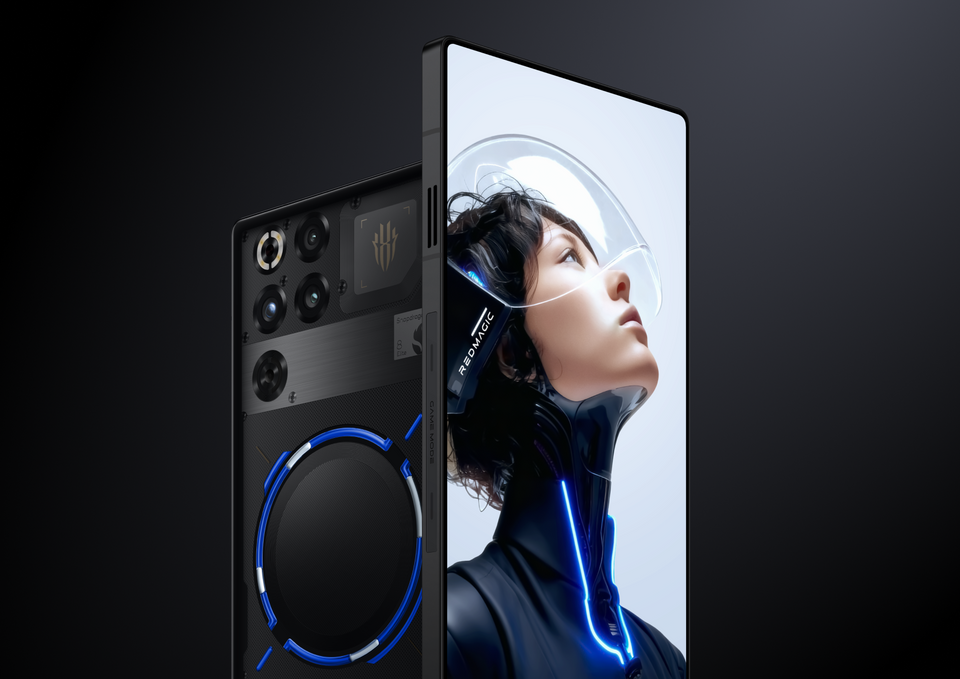
Dedicated gaming phones have not vanished, but their relevance has narrowed. Devices like the Red Magic 11 Pro+ target a specific audience that prioritizes sustained peak performance over versatility. Active cooling systems with internal fans and advanced heat dissipation allow these phones to run at maximum output for hours without noticeable performance drops.
Gaming phones also integrate features that mainstream flagships rarely match. Physical shoulder triggers provide precise, low-latency input. Displays push refresh rates beyond 144Hz, paired with extremely high touch sampling rates. Dedicated gaming software enables deep system-level control over performance, thermals, network behavior, and notifications.
These advantages matter most in competitive environments where consistency and responsiveness outweigh everyday convenience.
Gaming Phones in 2026: Niche Over Necessity
For the majority of users, a modern flagship already delivers more gaming performance than required. Phones like the OnePlus 15, iQOO 15, and iPhone 17 Pro Max provide stable frame rates, controlled thermals, and a polished daily experience that extends well beyond gaming.
Dedicated gaming phones now serve a narrow group of esports players and enthusiasts who treat gaming as a primary use case. For everyone else, gaming has become a standard capability of premium smartphones rather than a defining category.
As silicon efficiency continues to improve and brands focus on sustained performance instead of short-lived benchmark peaks, the concept of the gaming phone is shifting. In 2026, gaming is no longer a niche feature. It is an expected part of the flagship experience.
For more daily updates, please visit our News Section.
Stay ahead in tech! Join our Telegram community and sign up for our daily newsletter of top stories! 
The post Do We Still Need Dedicated Gaming Phones in 2026? appeared first on Gizmochina.
