Login
Login
India Joins Thailand, Malaysia, Singapore, Indonesia, Vietnam, Japan, and South Korea to Unveil the Best Street Food Markets: A Culinary Adventure Awaits in 2025
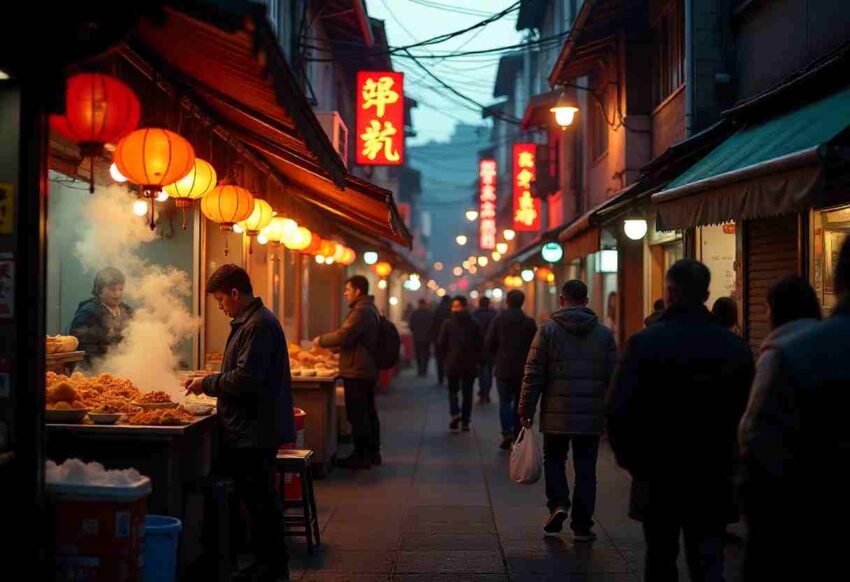
India joins Thailand, Malaysia, Singapore, Indonesia, Vietnam, Japan, and South Korea to unveil the best street food markets in 2025. These countries are home to some of the most vibrant and diverse food cultures in the world. From Thailand’s sizzling seafood stalls to India’s iconic chaats, street food markets offer a unique experience that combines culture, flavour, and tradition. Each destination brings its own culinary adventure. In Singapore, you’ll find Michelin-starred dishes at hawker centres, while in Vietnam, the streets are lined with stalls serving pho and bánh mì. Whether you’re in Japan, sampling takoyaki, or in South Korea, indulging in tteokbokki, these countries offer something for every food lover. Join us as we explore these food capitals, where street food isn’t just a meal, but an experience. A culinary adventure awaits, with each country offering a feast of unforgettable flavours and vibrant market scenes.
India’s Street Food Pioneers: Clean Hubs & Market Magic
India’s street food scene is legendary. The Ministry of Health and Family Welfare has launched initiatives to ensure hygiene and safety at local food stalls. Their Clean Street Food Hubs (CSFH) are iconic food markets where cleanliness is just as important as taste. These hubs include famous spots like Juhu Chowpatty and Girgaon Chowpatty in Mumbai, Chappan Dukan in Indore, and Delhi Haat INA in the capital. These places offer a mix of hygiene and India’s vast culinary diversity, from crispy chaats to spicy samosas.
The Eat Right India initiative also lists potential hubs in cities like Ahmedabad’s Law Garden, Pune’s Khao Gali, and Kolkata’s Vardan Market. These hubs combine safety with vibrant local cuisine, allowing visitors to try street food staples like dosas, sweets, and pani puri while knowing that the vendors follow government health guidelines. India’s street food culture spans tiffin stalls, late-night chaat carts, and coastal snack shacks, making it a paradise for food lovers.
India’s Culinary Wonderland: Spice Trails and Chaat Paradise
Beyond certified hubs, India’s street food is an adventure in itself. Sarafa Bazaar in Indore, for example, transforms from a jewellery market by day to a bustling food street by night, where visitors enjoy samosas, jalebi, and spicy bhutte ka kees. In West Bengal, Dalhousie is home to kathi rolls and momos, popular among street food enthusiasts. Coastal cities like Goa celebrate seafood at chowpattys, with freshly fried fish and prawns to tempt your taste buds.
Indian street food markets offer a kaleidoscope of flavours, with each region adding its own twist on food. From buttery pav bhaji in Mumbai to crunchy jalebi in Rajasthan, every state offers a new culinary adventure. These street food stalls reflect India’s cultural diversity, where every dish tells a story passed down through generations.
Thailand’s Street Food Kingdom: Categories and Yaowarat Nights
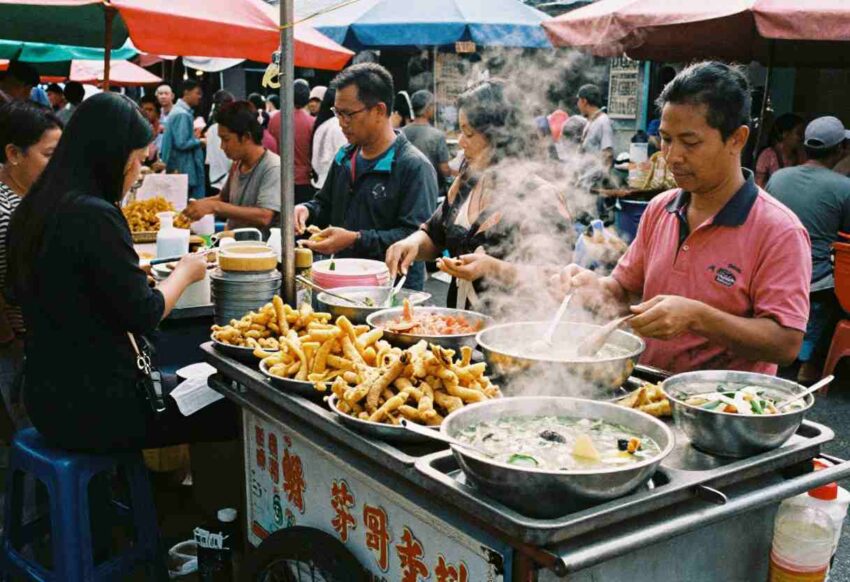
Thailand is a kingdom of street food lovers. The Tourism Authority of Thailand explains that Thai street food comes in many varieties, with vendors selling dishes from chicken rice to glass noodle soup. The street food culture is deeply rooted in Thailand’s history, with bustling food stalls lining the streets of Bangkok and other cities.
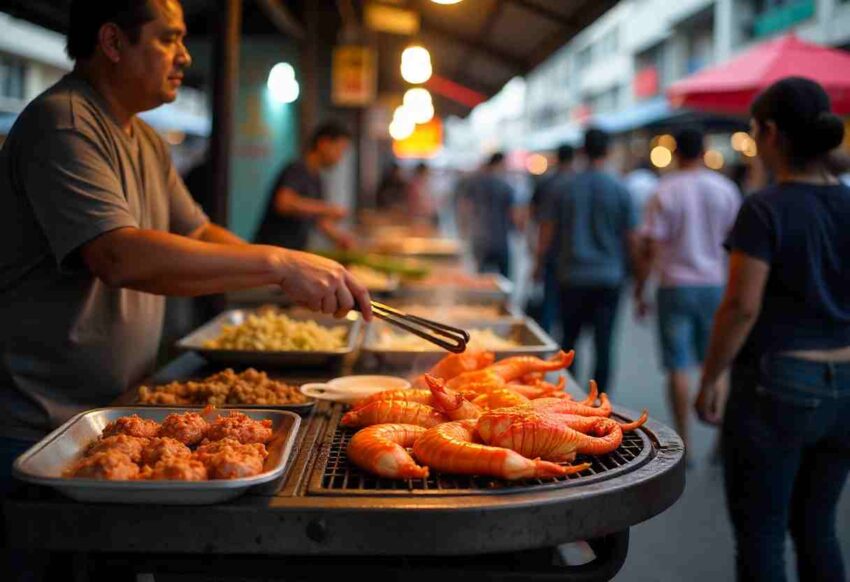
Yaowarat Road in Bangkok’s Chinatown is a paradise for street-food lovers. Official guides highlight legendary food stalls like Guay Jub Ouan Pochana, serving peppery noodle soup for over fifty years, and T&K Seafood, where grilled shellfish is a must-try. This area comes alive at night, with vibrant street food stalls and local favourites like pad thai and som tam (green papaya salad) on every corner.
Thailand’s Market Treasures: Nong Mon & Coastal Delights
Thai street food is not just confined to the bustling streets of Bangkok. The Tourism Authority of Thailand also promotes regional markets like Nong Mon Market near Bang Saen Beach, which is famous for sun-dried squid, shrimp paste, and fish cakes. Vendors also sell sweet treats like kanom chak (palm leaf-wrapped coconut cakes) and khao lam (sticky rice cooked in bamboo). These markets typically operate early in the morning and evening when the temperatures are cooler, creating a lively and cheerful atmosphere.
Malaysia’s Culinary Tours: Pasar Malam and Food Festivals
In Malaysia, the Islamic Tourism Centre encourages visitors to explore the country’s diverse cuisine. Visitors can join culinary tours and sample local street food at pasar malam (night markets), food stalls, and restaurants. Malaysia’s food scene is shaped by Malay, Chinese, and Indian influences, offering a variety of dishes such as laksa in Penang, satay in Melaka, and nasi lemak in Kuala Lumpur.
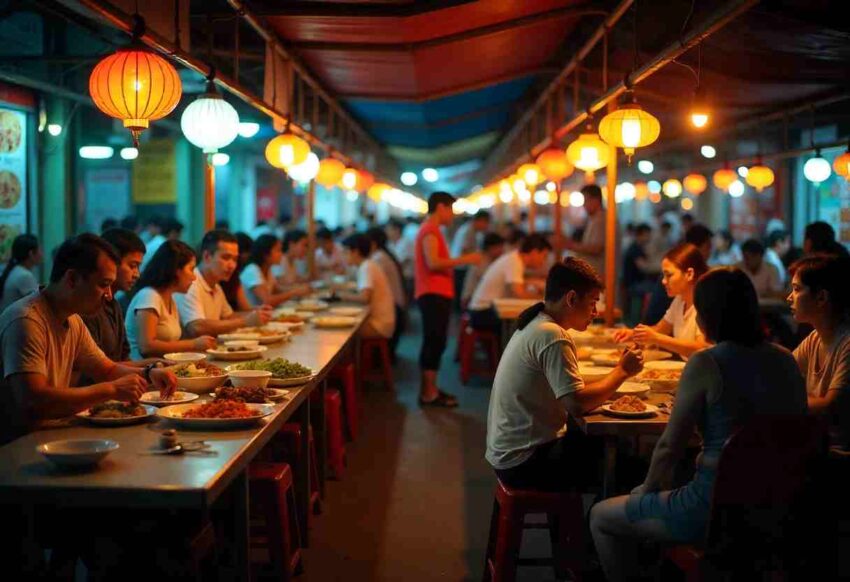
The Sabah Tourism Board highlights Kota Kinabalu’s Gaya Street, which transforms into a weekend food fiesta. Visitors can enjoy satay skewers, murtabak, char kuey teow, and oyster omelette while listening to live music under the glow of lanterns. On Friday and Saturday nights, Api-Api Night Food Market is the place to be, where locals and tourists alike indulge in delicious street food. The following morning, Sunday Market returns, offering even more food and crafts.
Singapore’s UNESCO-Listed Hawker Culture
Singapore’s hawker food culture is internationally recognised, even making it onto UNESCO’s Representative List of the Intangible Cultural Heritage of Humanity. The National Heritage Board explains that hawker culture is a community effort, with food stalls operating in government-run centres. Popular hawker centres in Singapore include Maxwell Food Centre, Chinatown Complex, Old Airport Road Food Centre, Tiong Bahru Market, Chomp Chomp, and Newton Food Centre.
These hawker centres serve iconic dishes such as chilli crab, satay, chicken rice, and hainanese pork chop. Many of these centres also offer Michelin-starred dishes at affordable prices. Eating at a hawker centre is an adventure in itself, with queues forming quickly at popular stalls. For visitors, it’s a chance to enjoy the vibrant atmosphere and communal dining culture of Singapore’s multicultural society.
Singapore’s Hawker Wonders: Dishes and Etiquette
Dining at a Singaporean hawker centre can be a thrilling experience. You’ll often see people placing tissue packets on seats to reserve their table, and the crowds at popular stalls can be overwhelming. The dishes are varied, ranging from char kway teow noodles and nasi lemak to laksa and roti prata. Some of these stalls have even earned Michelin Bib Gourmand awards, highlighting the culinary prowess of the hawkers.
In Singapore, food is more than just sustenance; it’s a social event. Hawker centres are places where people from all walks of life gather to share meals, celebrate culture, and enjoy affordable dining. The National Heritage Board emphasises that hawker centres, which began as street food stalls, were eventually relocated to government buildings to preserve food safety and cultural traditions.
Indonesia’s Street Food Favourites: Jakarta’s Icons
Indonesia is famous for its vibrant street food scene. The official tourism board highlights iconic dishes like Martabak, a savoury pancake filled with eggs, meat, and spices, and Kerak Telor, a Betawi specialty made of sticky rice, egg, and fried shallots. Other must-try street foods include Gado-Gado, a salad topped with peanut sauce, and Siomay, steamed fish dumplings served with peanut sauce.
In Jakarta, street vendors operate at all hours, offering dishes like soto soup, satay skewers, and nasi goreng (fried rice). Jakarta’s food culture is a melting pot of influences, from Chinese dumplings to Dutch-inspired pancakes. Visitors can explore the city’s annual food festivals, which highlight traditional snacks and modern twists.
Vietnam’s Street Food Etiquette: A Beginner’s Guide
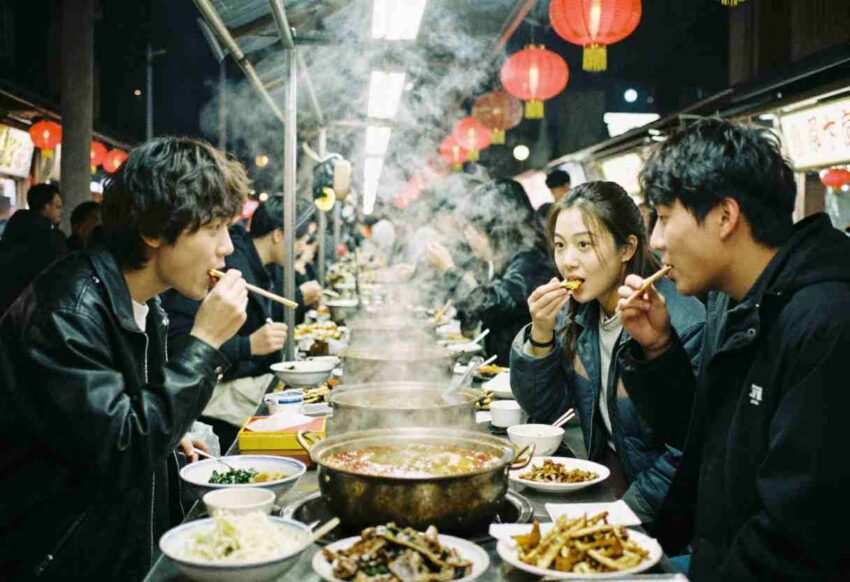
Vietnam’s national tourism site teaches travellers how to enjoy street food like locals. It advises eating early in the morning near markets for noodles and rice porridge, midday at cơm bình dân lunch stalls, and evening at hotpot or grilled seafood stalls. Diners should choose stalls with fresh ingredients and local crowds, eat first and pay later, and drop used napkins into bins. Respecting these customs ensures a smooth and authentic food adventure.
Vietnam’s Food Streets: Saigon’s Feast in the Streets
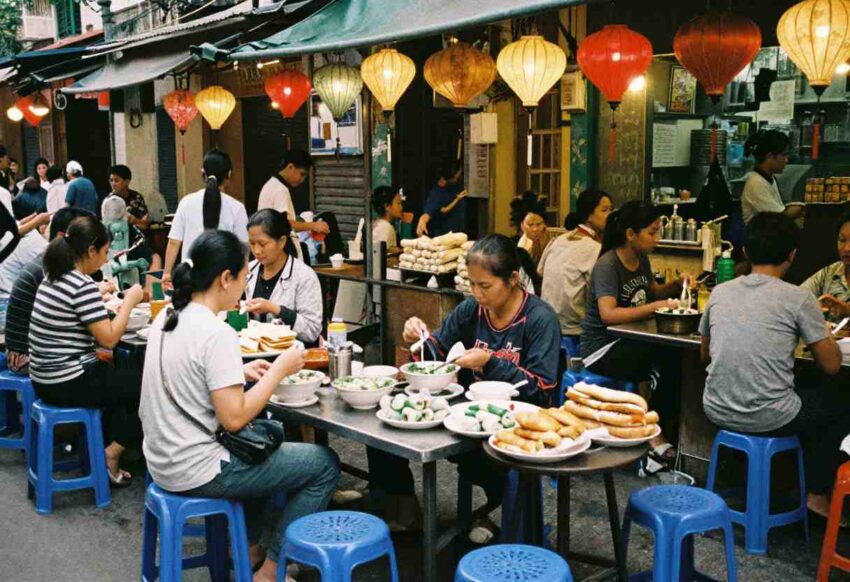
Ho Chi Minh City (Saigon) boasts famous food streets like Cô Giang Street for traditional Vietnamese dishes, Trần Khắc Chân Street for neon-lit food stalls, Phan Văn Hân Street where students enjoy inexpensive eats, and Nguyễn Thượng Hiền Street for fresh seafood. These streets are lined with plastic stools and tables; diners often share space with strangers while enjoying pho, bánh mì, and fresh fruit juices. Such lively scenes reflect Vietnam’s communal dining culture.
Japan’s Street Food Variety: From Ramen to Yakitori
Japan’s street food scene is diverse and beloved worldwide. The Japan National Tourism Organization (JNTO) celebrates dishes like ramen, takoyaki, taiyaki, okonomiyaki, yakitori, tonkatsu, croquettes, gyoza, and udon. Visitors can find these treats at local festivals, temple fairs, and shopping streets. Major markets like Tsukiji in Tokyo, Nishiki in Kyoto, and Kuromon in Osaka remain essential destinations for food lovers.
Japan’s Historic Food Streets & Regional Markets
Japan’s food markets are destinations in themselves. Sanmachi Street in Takayama retains Edo-period architecture and offers treats like mitarashi dango (rice dumplings) and Hida beef sushi. Omicho Market in Kanazawa has been a seafood haven for over 300 years, with 170 stalls selling fresh fish, pickles, sweets, and sake. Hakodate Morning Market in Hokkaido features live squid and seafood bowls topped with salmon roe.
South Korea’s Market Culture: Gwangjang & Gukje
South Korea’s market culture is vibrant, with two legendary markets highlighted by the VisitKorea site: Gwangjang Market in Seoul, known for its food street, and Gukje Market in Busan, which has over 60 years of history. These markets serve dishes like tteokbokki (spicy rice cakes), sundae (blood sausage), bibim dangmyeon, and patbingsu (shaved ice dessert). Visitors enjoy the vibrant, old-fashioned atmosphere and the chance to sample traditional Korean food.
Conclusion: Taste the Continent, One Street at a Time
Asia’s street food and market culture are integral to its identity. From India’s Clean Street Food Hubs to Thailand’s Yaowarat Road, Malaysia’s Gaya Street, Singapore’s hawker centres, and Vietnam’s bustling food streets, each country offers its own special culinary adventure. These official programmes preserve food heritage while ensuring safety for visitors. Whether you’re enjoying ramen in Japan or satay in Malaysia, street food connects you to the soul of Asia—one delicious bite at a time!
The post India Joins Thailand, Malaysia, Singapore, Indonesia, Vietnam, Japan, and South Korea to Unveil the Best Street Food Markets: A Culinary Adventure Awaits in 2025 appeared first on Travel And Tour World.