Login
Login
Mount Athos, Greece: A Sacred Pilgrimage Destination Where Faith and Tradition Shine Amid Modern Tourism
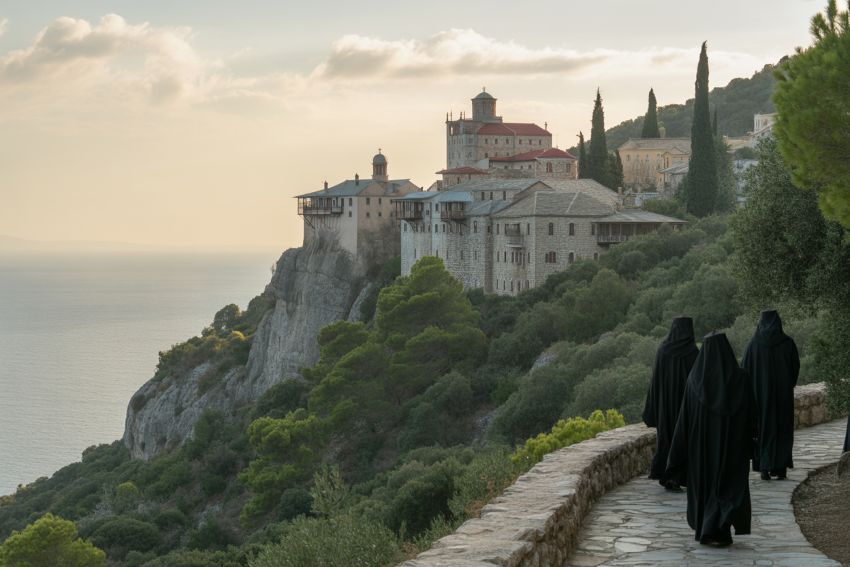
Mount Athos, located on the Athonite Peninsula in northern Greece, is a prime example of religious tourism, attracting visitors who are motivated by faith rather than the usual reasons for leisure travel. This sacred destination is distinguished by its long-standing monastic traditions, which date back to the eighth century, as well as its unique status as a monastic republic governed by strict religious rules. Mount Athos, also known as “The Garden of the Virgin Mary”, continues to hold a special place in the hearts of Orthodox Christians who come not only to explore its natural beauty and ancient monasteries but also to deepen their spiritual connection to God.
A Sanctuary of Spiritual Seeking
Unlike most tourist destinations, Mount Athos is primarily a site for religious pilgrimage, where individuals journey to seek spiritual enlightenment rather than purely cultural or recreational experiences. The peninsula, which houses 20 holy monasteries, several sketes, and cells, is regarded as a hub of spiritual growth and Orthodox culture. It is also home to the largest collection of Greek manuscripts in the world and invaluable religious artefacts. Visitors who make the journey to Mount Athos do so to experience the uninterrupted rhythm of monastic life, to engage in prayer, and to explore a way of life that has remained unchanged for centuries.
Pilgrimage versus Religious Tourism
The distinction between pilgrimage and religious tourism is often blurred, but Mount Athos offers a clear example of the former. Pilgrims on Mount Athos travel with a singular purpose: to fulfil a vow or to search for a deeper connection to God. Religious tourism, on the other hand, may involve secular motivations, such as the desire for cultural exploration, recreation, or educational experiences. In the case of Mount Athos, however, the vast majority of visitors—82.25% of those surveyed—identify as pilgrims rather than religious tourists. This significant distinction reflects the sacred nature of the destination, where the visitor’s primary motivation is spiritual rather than secular.
Spiritual Significance and Pilgrim Experiences
The religious journey to Mount Athos is not simply a sightseeing tour. Rather, it is an immersive experience in monastic life. Visitors typically stay for four days, during which they follow the monastic routine, participate in liturgical services, and engage in the daily tasks of the monastery. The monks’ hospitality is a central aspect of the experience, as pilgrims participate in activities like cooking, cleaning, and serving others. These tasks are viewed not only as acts of service but also as an opportunity for personal spiritual growth. The focus remains on humility, reverence, and a deeper understanding of the Orthodox Christian faith.
A Study of Visitor Motivations
A study conducted in May–June 2023 explored the motivations behind visitors’ journeys to Mount Athos. A significant portion of the respondents, 41.60%, had visited Mount Athos only once, but 28.92% had made the journey more than three times, showing a sustained commitment to the pilgrimage experience. Interestingly, the study also revealed that the majority of visitors to Mount Athos self-identify as pilgrims. The motivations behind their visit centre around the fulfilment of vows, seeking spiritual enlightenment, and engaging with Orthodox culture. For most pilgrims, the focus is not on leisure activities such as hiking or sampling local cuisine, but rather on immersing themselves in the spiritual practices of the monastic community.
Cultural and Natural Attractions
While the primary focus of a visit to Mount Athos is spiritual, the destination also offers other attractions. The region is known for its stunning natural beauty, including dramatic landscapes and ancient monasteries perched on the mountainsides. The Athonite cuisine, traditional winemaking, and cultural heritage further enrich the experience. However, as the research reveals, these offerings serve only as complementary features to the religious experience, rather than as the central motivation for visitors’ travels. In contrast to secular tourist destinations, Mount Athos provides an environment conducive to prayer, meditation, and spiritual renewal.
Strict Entry Requirements: Preserving Sanctity
Access to Mount Athos is governed by strict rules, and entry is restricted to men, in accordance with the tradition of the Avaton, a constitutionally enshrined prohibition on female visitors. In order to visit, men must apply for a special permit called a “diamonitirion”. The permit allows pilgrims to stay for a maximum of four days, ensuring that the experience remains focused on religious observance rather than tourism. Visitors to Mount Athos are expected to adhere to the monastic lifestyle during their stay, engaging in prayer, communal work, and silent reflection. Activities such as swimming, fishing, and other forms of recreation are discouraged, further emphasizing the sacred nature of the pilgrimage.
The Impact of Mount Athos on Local Communities
Despite its strict entry requirements and limited appeal to secular tourists, Mount Athos plays an important role in the local economy. The influx of religious pilgrims helps sustain the monasteries and supports the surrounding communities, particularly through the sale of religious artefacts, traditional foodstuffs, and local wines. However, it is crucial that tourism to Mount Athos is carefully managed to preserve its sanctity and spiritual integrity. The balance between faith-driven travel and the economic benefits of religious tourism remains a critical issue for the future of the destination.
A Pilgrimage of Transformation
Visiting Mount Athos is far more than just an opportunity to see ancient monasteries and beautiful landscapes. It is a transformative spiritual journey that allows visitors to reconnect with their faith and engage in practices that are both humbling and uplifting. For many, the journey to Mount Athos becomes an annual pilgrimage, a return to a place that offers both physical and spiritual nourishment. The experience fosters a deeper connection to the Orthodox faith while also providing pilgrims with a sense of peace and tranquility that is often difficult to find in the hustle and bustle of everyday life.
Mount Athos as a Unique Destination for Spiritual Growth
Mount Athos remains a beacon of spiritual devotion in a world increasingly dominated by secular concerns. Visitors to this sacred site have a clear purpose in mind: to participate in an Orthodox Christian pilgrimage. The overwhelming majority of visitors identify as pilgrims, highlighting the importance of spirituality in the Mount Athos experience. While tourism is undoubtedly a key driver of the local economy, visitors’ attention is firmly focused on the location’s spiritual and religious significance. Mount Athos remains one of the world’s most revered pilgrimage sites, with faith and tradition at the heart of the visitor experience.
The post Mount Athos, Greece: A Sacred Pilgrimage Destination Where Faith and Tradition Shine Amid Modern Tourism appeared first on Travel And Tour World.