
Reading view

Sri Lanka Sees Impressive Growth in 2025 Tourism with Over Two Million Arrivals, Despite Cyclone Impact: Strong Recovery Shaping Future
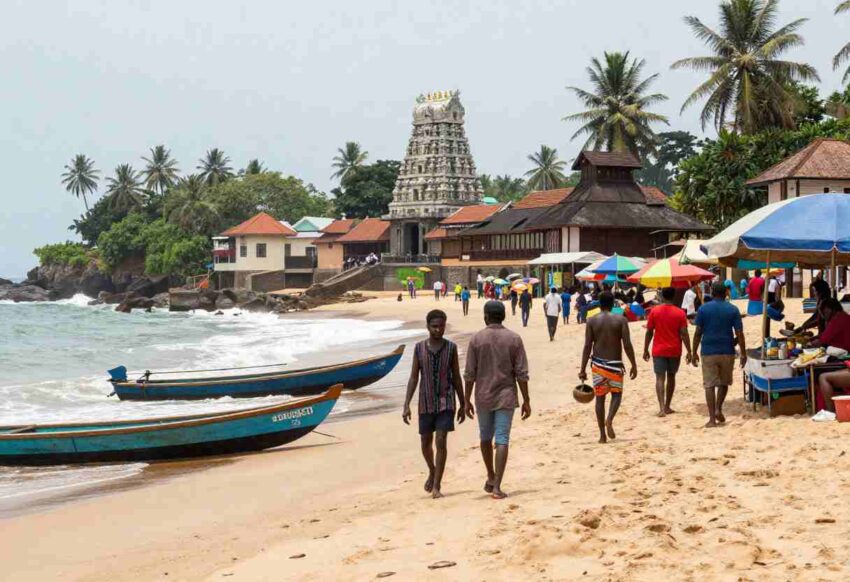
Sri Lanka Sees Impressive Growth in 2025 Tourism with Over Two Million Arrivals, Despite Cyclone Impact: Strong Recovery Shaping Future
Sri Lanka tourism

Sri Lanka’s tourism sector continues its robust recovery, as confirmed by the latest figures released by the Sri Lanka Tourism Development Authority (SLTDA). As of yesterday, the total number of tourist arrivals to the island nation has reached 2.25 million in 2025. This impressive figure comes despite a slowdown in the first two weeks of December due to the impact of Cyclone Ditwah. The event, which caused temporary disruptions, was not enough to undermine the overall growth momentum in Sri Lanka’s tourism industry.

Tourist Arrivals Surge in November, Despite Cyclone Impact

In November 2025, Sri Lanka welcomed 212,906 tourists, marking a 15.6% increase compared to the same period last year. This growth highlights the ongoing recovery and strong demand for the island as a tourism destination. The rise in arrivals reflects an industry that is steadily recovering from the twin challenges of the Covid-19 pandemic and the economic crisis that followed.

With total arrivals reaching 2,103,593 by November 31, 2025, it’s clear that Sri Lanka’s tourism industry is on a solid upward trajectory. Notably, the lowest number of arrivals in 2025 occurred in May, with only 132,919 visitors. However, the overall trend indicates a strong rebound throughout the year, with significant growth across key months.

Consistent Growth in Tourist Arrivals from January to November

The cumulative arrivals for the year from January to November 2025 stood at 2,103,593, representing an impressive 16.6% growth compared to the same period in 2024. The most notable spike in arrivals occurred in September, where an impressive 30.2% increase was recorded. This surge highlights Sri Lanka’s growing ability to attract tourists during the shoulder season, when demand is traditionally lower. The month of September stands as a key example of how Sri Lanka is expanding its reach and attracting visitors year-round.

Double-digit growth was also observed in January, June, October, April, May, August, and November. These figures collectively paint a picture of consistent demand across various tourism periods, showing that Sri Lanka’s appeal as a destination is steadily increasing across different months of the year.

Europe Dominates as Leading Source Market

Europe has emerged as the leading source market for tourists visiting Sri Lanka, with 108,100 European tourists arriving in November 2025, making up a substantial 50.8% of all visitors to the island that month. This strong European presence emphasizes Sri Lanka’s appeal to travelers from this region, particularly influenced by winter tourism trends and established travel connections. The combination of Europe’s proximity to Sri Lanka and the favorable winter weather conditions has made the island an attractive choice for European vacationers seeking an exotic destination during the colder months.

India Leads the Way in Tourist Arrivals

The highest number of tourists to Sri Lanka continues to come from neighboring India, with 51,391 Indian tourists visiting the country in November 2025. This represents the largest single market for Sri Lanka’s tourism sector. The strong demand from India reflects the close cultural and geographical ties between the two countries, with Sri Lanka serving as a popular travel destination for Indian tourists seeking leisure, culture, and adventure.

Following India, Russia secured the second spot with 24,953 Russian tourists visiting Sri Lanka in November 2025. The Russian market has been steadily growing, and Sri Lanka remains a popular destination for Russian travelers looking for an affordable and accessible destination with rich cultural offerings and scenic landscapes.

The UK also contributes significantly to Sri Lanka’s tourism, with 16,915 British tourists arriving in the country in November 2025. This represents a consistent flow of visitors from the United Kingdom, reflecting Sri Lanka’s broad international appeal as a holiday destination.

Strong Economic Impact of the Tourism Sector

Sri Lanka’s tourism sector continues to play a vital role in driving the country’s economic growth. In 2024, Sri Lanka saw a record 90.36 million visitors, generating an impressive 137.22 billion Sri Lankan rupees (US$19.44 billion) in revenue. This marked a 16.6% increase in tourism revenue compared to the previous year, demonstrating the sector’s resilience and ongoing expansion.

The tourism industry’s economic impact is not limited to visitor spending alone. The Harbin International Ice and Snow Festival continues to significantly boost sectors such as transportation, hospitality, and retail. The Sri Lanka Tourism Development Authority projects that the total market size for Sri Lanka’s ice and snow economy in Heilongjiang Province will surpass 266.17 billion Sri Lankan rupees (US$37.8 billion). This growth reflects the broader tourism ecosystem’s expansion, creating thousands of jobs and increasing Sri Lanka’s profile as a global travel hub.

Tourism Services Enhancement for International Visitors

To further support the increasing flow of international visitors, the Sri Lanka Tourism Development Authority has made significant improvements to its services. The introduction of streamlined payment systems now allows overseas bank cards to be used for ticket purchases, making it easier for international travelers to access attractions. Additionally, multilingual guides have been introduced to cater to Sri Lanka’s growing international tourist base, enhancing the visitor experience and ensuring seamless communication.

The Path Forward for Sri Lanka’s Tourism Industry

As Sri Lanka continues to attract growing numbers of international tourists, the government and tourism authorities are focused on expanding infrastructure and improving visitor services. The ongoing recovery from the Covid-19 pandemic and economic challenges presents a unique opportunity for Sri Lanka to diversify its tourism offerings and further position itself as a top global destination.

With increasing international arrivals, a steady rise in visitor spending, and ongoing improvements in tourism infrastructure, Sri Lanka is on track to solidify its status as a major player in the global tourism market.

The post Sri Lanka Sees Impressive Growth in 2025 Tourism with Over Two Million Arrivals, Despite Cyclone Impact: Strong Recovery Shaping Future appeared first on Travel And Tour World.
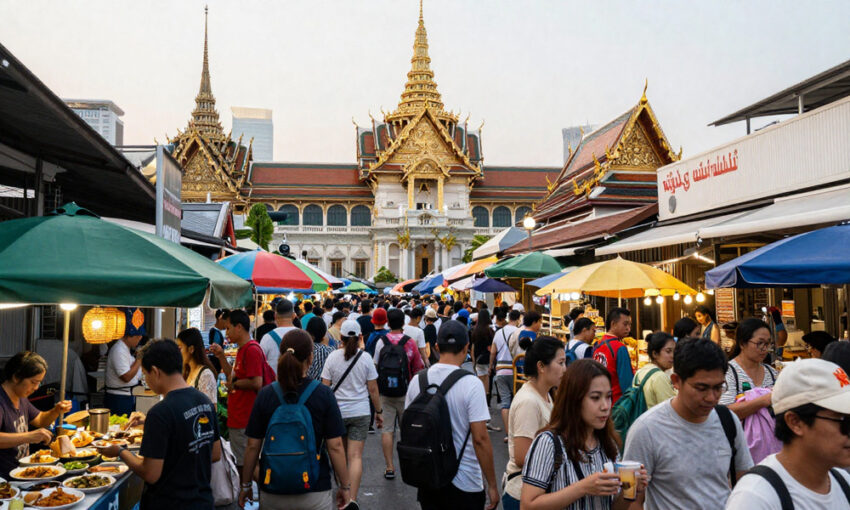

Russia Joins South Korea, United Kingdom, China, Malaysia, Singapore, India, The United States, And More As Powerful Allies In Thailand’s 2026 New Year Tourism Boom, Counteracting Decline In Foreign Arrivals

Russia Joins South Korea, United Kingdom, China, Malaysia, Singapore, India, The United States, And More As Powerful Allies In Thailand’s 2026 New Year Tourism Boom, Counteracting Decline In Foreign Arrivals
Russia
Thailand’s

Thailand’s tourism sector is witnessing a pivotal shift in travel patterns as Russia joins South Korea, the United Kingdom, China, Malaysia, Singapore, India, and the United States as key markets for the New Year 2026 season. Despite challenges such as flooding in southern Thailand and geopolitical tensions at the Thai-Cambodian border, the growth in these markets is poised to drive the country’s tourism recovery. The strong performance from these nations reflects a promising outlook for the year-end season, with increased bookings and heightened interest in Thailand’s key destinations.

The Tourism Authority of Thailand (TAT) has forecasted a decline in tourism revenue for the 2026 New Year period, expecting it to reach between 70.1 billion and 76.5 billion baht. This represents a reduction of 2-9% compared to the previous year. The decline is attributed to a slower foreign tourism market, partly offset by a strong domestic tourism recovery.

TAT projects a drop in foreign tourist arrivals, with an expected range of 1.4 to 1.5 million international visitors between December 20, 2025, and January 1, 2026. This marks a decline of 6-12% compared to the same period last year. Foreign tourism revenue is anticipated to fall between 51.6 and 58 billion baht, representing a decrease of 4-15% year-on-year. This slowdown is attributed to several factors, including natural disasters and ongoing geopolitical tensions along Thailand’s borders.

However, the domestic tourism market is expected to experience an uptick. TAT anticipates a 7% increase in domestic travel during the New Year period, with around 4.96 million domestic tourist trips generating an estimated 18.5 billion baht in revenue. This is bolstered by several factors, including cooler weather, which encourages local travel, and strong tourism promotion campaigns, such as the Amazing Thailand Countdown 2026.

In terms of international tourism, TAT’s projections for the top 10 source markets during the New Year period include China, Russia, India, Malaysia, South Korea, the United Kingdom, Singapore, the United States, Eastern Europe, and Germany. While Chinese tourists have historically been one of the largest groups visiting Thailand, TAT reports positive developments in the Chinese market. A recent visit by the Thai monarchy to China sparked renewed interest, as seen in a rise in searches for Thailand on popular Chinese travel platforms, such as Baidu and Ctrip.

Additionally, Thailand’s image is improving, especially in China, where social media platforms like Weibo and Xiaohongshu feature more content highlighting the safety, friendliness, and convenience of travel to Thailand. This shift is expected to contribute to a modest recovery in Chinese arrivals over the coming years.

Aviation also plays a key role in the tourism outlook. TAT has highlighted that at least 10 new routes are set to launch during the New Year period, including services from China, Taiwan, Japan, Singapore, and Vietnam. Additionally, charter flights from Poland, the Czech Republic, Russia, and Uzbekistan will boost travel to major Thai destinations such as Bangkok, Chiang Mai, Phuket, Krabi, and U-Tapao.

Despite these optimistic trends, several headwinds are challenging Thailand’s tourism sector. One major obstacle is the flooding in southern Thailand, particularly in Hat Yai, Songkhla. The heavy damage to tourist sites and infrastructure in the region has disrupted travel plans for Malaysian tourists, a significant demographic for Thailand, especially those who travel by land. With around 70% of Malaysian visitors entering Thailand via land border crossings, the floods are expected to further dampen the inflow of foreign tourists.

Moreover, the ongoing border conflict with Cambodia since December 7 has impacted tourism sentiment. While no blanket travel ban has been issued for Thailand, the international media coverage of the situation, along with travel advisories from various countries, has raised concerns among potential travelers. Countries have warned against non-essential travel to seven border provinces, which could deter tourists from booking trips to Thailand during the peak New Year season. Should the situation escalate, stricter measures could be enforced, further affecting tourism.

Regarding hotel bookings, TAT projects that average occupancy rates for major destinations in Thailand will range between 77% and 87%, with Bangkok expected to see the highest occupancy. The southern, central, and eastern regions are also expected to witness high demand, though the northeastern regions may experience slightly lower occupancy rates at 73%. Overall, domestic travel is expected to remain a vital pillar of Thailand’s tourism industry during this period.

For the hotel industry, occupancy in Bangkok during the New Year period is forecast to be around 80%, slightly lower than last year. The Thai Hotels Association (THA) attributes this decrease to the border dispute, which has affected tourism flows, particularly from ASEAN countries. However, the outlook for major destinations, including Phuket and Chiang Mai, remains strong. Five-star hotels in these locations are expected to be fully booked, which will likely lead to a surge in bookings at four-star establishments as well. Room rates during the holiday period are expected to hold steady, with prices closely mirroring those of the previous year.

While the Thai tourism sector faces challenges in the form of natural disasters, geopolitical tensions, and a slow recovery in foreign arrivals, the strong domestic market and positive developments in key international markets provide optimism for the holiday season. Thailand’s tourism sector remains resilient, and with effective promotion and marketing, it is well-positioned to navigate these headwinds and build momentum for a successful 2026.

The post Russia Joins South Korea, United Kingdom, China, Malaysia, Singapore, India, The United States, And More As Powerful Allies In Thailand’s 2026 New Year Tourism Boom, Counteracting Decline In Foreign Arrivals appeared first on Travel And Tour World.

Greece Joins Spain, Italy, Turkey, France and Netherlands in Driving Europe’s Tourism Renaissance with Unprecedented Tourist Arrivals and Overnight Growth in 2025

Greece Joins Spain, Italy, Turkey, France and Netherlands in Driving Europe’s Tourism Renaissance with Unprecedented Tourist Arrivals and Overnight Growth in 2025
Turkey’s tourism boom in 2025 drives Europe’s travel revival with record arrivals and economic impact, joining Italy, Spain, Greece, Austria and Norway.

Turkey has emerged as a powerful engine in Europe’s tourism resurgence in 2025, with millions of travellers rediscovering its ancient cities, vibrant culture and stunning coastal landscapes. For many visitors, this year has marked a long‑awaited return to international travel, bringing a renewed sense of excitement and confidence in global tourism. The nation’s strong showing this year reflects a broader upswing in European travel, with Turkey, Italy, Spain, Greece, Austria and Norway collectively reporting significant increases in visitor arrivals and overnight stays. This lively revival in tourism has brought joy to local communities and bolstered economies that rely heavily on international tourism revenue.

Europe’s Tourism Landscape in 2025: Broad Strength Across Destinations
Europe continues to reign as the world’s leading tourism hub in 2025, attracting hundreds of millions of international visitors seeking culture, history and unforgettable experiences. According to recent data tracking travel trends across the continent, both international arrivals and overnight stays have edged higher compared with last year, reflecting strong resilience and ongoing demand for travel in European markets. This broad upward trajectory underpins confidence in travel recovery and highlights the continent’s enduring appeal to global travellers well beyond the traditional holiday season.

Turkey Surpasses Expectations with Record Visitor Figures
Turkey’s tourism industry has been on a remarkable climb, with international arrival figures placing it among the world’s most visited destinations. Official reports show that the country welcomed more than 60 million foreign tourists in 2024 and set ambitious targets to host at least 65 million visitors in 2025. This remarkable volume underscores Turkey’s global appeal and the effective measures taken by the tourism and culture ministry to expand connectivity, diversify offerings and enhance visitor experiences. Istanbul, Antalya and other iconic destinations continued to pull large crowds, reinforcing Turkey’s position as a must‑visit travel hotspot.

Driving Forces Behind Turkey’s Tourism Momentum
Experts attribute Turkey’s tourism success to a combination of factors: easy access through expanded air routes, rich historical and cultural assets, world‑class hospitality, and competitive pricing. From the surreal landscapes of Cappadocia to the azure waters of the Turquoise Coast, Turkey’s diverse attractions draw leisure travellers and culture seekers alike. The travel industry’s coordinated efforts to boost off‑season visitation and highlight lesser‑known gems within the country have also helped sustain growth throughout the year.

Spain Nears Record Tourism Levels in 2025
Spain also reported strong demand in 2025, approaching record levels of international visitors. Provisional data suggests the country exceeded figures from previous years, confirming its reputation as a perennial favourite for sun, cuisine and cultural tourism. This sustained interest highlights the strength of Spain’s tourism infrastructure and its ability to attract diverse traveller markets, from European holidaymakers to long‑haul visitors seeking Mediterranean experiences.

Italy’s Continued Growth in Arrivals and Overnight Stays
Italy, a destination synonymous with history, art and gastronomy, has continued to register substantial travel demand in 2025. Tourism projections for Italy indicate strong increases in both international visitor arrivals and overnight stays, pointing to rising economic impact on the country’s hospitality sector. With cities like Rome, Florence and Venice consistently ranking among the world’s top travel destinations, Italy continues to be a powerhouse in European tourism.

Greece Maintains High Visitor Levels Through Extended Seasons
Greece has maintained elevated visitor numbers throughout much of 2025, thanks to its compelling mix of ancient heritage, idyllic islands and year‑round travel appeal. National statistics reveal a notable increase in tourists compared to last year, reinforcing Greece’s status as a leading Mediterranean destination. The strength of Greece’s travel season well into autumn reflects successful marketing efforts and high traveller satisfaction levels.

Austria’s Overnight Stay Surge Highlights Accommodation Demand
In Austria, industry data shows unprecedented accommodation use during the summer, with millions of overnight stays recorded across hotels, guesthouses and vacation apartments. These figures underscore the strength of Austria’s tourism sector and the growing appeal of its alpine terrain, historic towns and cultural attractions. The robust demand for stays across the country has generated increased economic activity in local communities.

Norway’s Growth in International Guest Nights
Norway has also reported growth in international travel, with guest night figures rising notably in early 2025. Visitors from around the world have been drawn to Norway’s dramatic fjords, scenic wilderness and outdoor attractions, contributing to a rise in tourism accommodation use and reinforcing the destination’s profile among international travellers.

Turkey and Europe’s Tourism Recovery: Economic Impacts
The collective growth in tourism across these key destinations has translated into significant economic gains. In Turkey alone, travel and tourism are projected to contribute a substantial percentage to national economic output in 2025, supporting jobs and stimulating related industries like hospitality, transport and retail. Across the continent, rising tourism revenue has provided vital support for local economies still navigating post‑pandemic recovery phases.

Future Outlook: Sustaining Momentum in 2026 and Beyond
Industry leaders and tourism authorities remain optimistic about the outlook for 2026, with continued investment in infrastructure, sustainability initiatives and experience‑driven travel expected to keep growth on track. As travellers continue to seek meaningful and diverse experiences, destinations across Europe are focused on enhancing visitor satisfaction and spreading tourism benefits more equitably across regions.

Humanised Closing Paragraph
For millions of visitors, 2025 has been a year of joyful rediscovery, new adventures and memorable experiences across Europe’s diverse landscapes and cultures. Turkey’s impressive performance as a tourism leader has not only added vibrancy to its own economy but has also helped energise travel across the continent. As families, solo explorers and cultural enthusiasts plan future trips, the spirit of travel remains strong, underscoring the enduring allure of Europe’s most iconic destinations and the shared human joy of discovering new horizons.

The post Greece Joins Spain, Italy, Turkey, France and Netherlands in Driving Europe’s Tourism Renaissance with Unprecedented Tourist Arrivals and Overnight Growth in 2025 appeared first on Travel And Tour World.
❌