
Reading view

China Unveils World’s Longest Expressway Tunnel in Xinjiang, Slashing Travel Time Between Urumqi and Korla
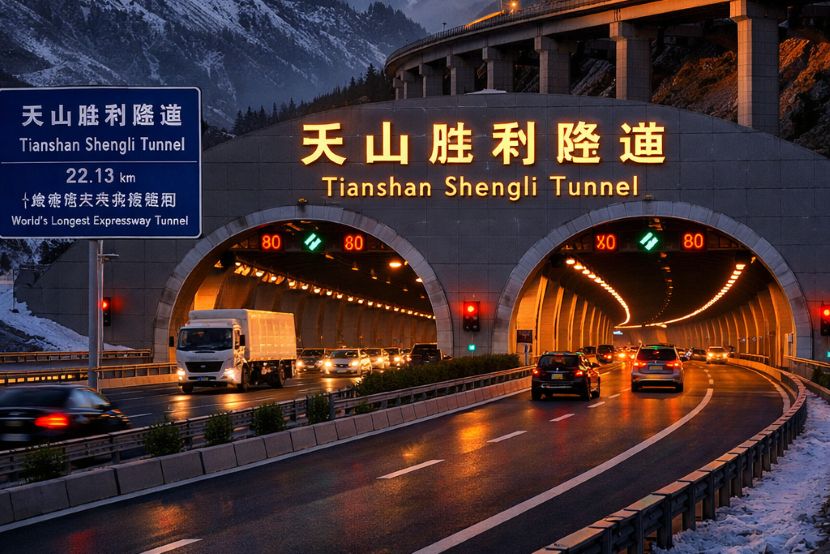
China Unveils World’s Longest Expressway Tunnel in Xinjiang, Slashing Travel Time Between Urumqi and Korla

On Friday, December 26, 2025, China officially inaugurated the Tianshan Shengli Tunnel in the Xinjiang Uygur Autonomous Region, marking a significant milestone in the nation’s infrastructure development. The 22.13-kilometer (13.75-mile) tunnel, now recognized as the world’s longest expressway tunnel, promises to revolutionize transportation across the Tianshan Mountains. This monumental project is poised to drastically reduce travel time, streamline logistics, and bolster regional connectivity, further enhancing China’s ambitious Belt and Road Initiative.

What Is the Tianshan Shengli Tunnel?

The Tianshan Shengli Tunnel, part of the G0711 Urumqi-Yuli Expressway, is the longest expressway tunnel globally, with a multi-lane, dual-tube configuration designed to accommodate high-speed expressway traffic. At 22.13 kilometers, the tunnel is crucial for bypassing the Tianshan Mountain range, which once posed a formidable geographical barrier between northern and southern Xinjiang. With a design speed of 100 km/h (62 mph), the tunnel allows for a smoother, faster journey across the mountain range, which previously involved navigating the treacherous Shengli Pass, situated at an elevation of 4,280 meters (14,040 feet).

Before the tunnel’s construction, travelers faced perilous, multi-hour trips through mountainous terrain. A journey from Urumqi, the regional capital, to Korla, a major southern hub, would take approximately seven hours. Now, thanks to the Tianshan Shengli Tunnel, the same trip can be completed in just three hours, effectively slashing travel time by more than half. This transformative infrastructure project enhances the region’s accessibility and economic integration, benefiting both local and international trade routes.

Key Features of the Tianshan Shengli Tunnel

World’s Longest Expressway Tunnel

At 22.13 kilometers, the Tianshan Shengli Tunnel surpasses previous expressway tunnel records, although it is still shorter than Norway’s Lærdal Tunnel (24.51 km), which holds the title of the longest road tunnel in the world. However, there is a technical distinction: Lærdal Tunnel is a single-tube, two-lane highway, while the Tianshan Shengli Tunnel is a dual-tube, high-capacity expressway with multiple lanes, making it suitable for high-speed traffic.

Construction and Engineering Marvel

The Tianshan Shengli Tunnel sets several engineering benchmarks, including its maximum burial depth of 1,112 meters beneath the mountain ridge. The tunnel also boasts the world’s deepest vertical shaft for a highway tunnel, extending over 700 meters to ensure proper ventilation and emergency access. The tunnel’s construction involved advanced Tunnel Boring Machines (TBMs), notably China’s self-developed “Tianshan号” and “Victory号” TBMs, which allowed for accelerated construction time, completing the project in just five years—approximately 25% faster than traditional methods.

Construction was also highly challenging due to the 16 geological fault zones the tunnel crosses, and its location at an average altitude of nearly 3,000 meters, where temperatures often drop to -42°C (-44°F). The project team employed a “three drifts and four shafts” method to successfully navigate these obstacles and complete the tunnel in time.

Economic and Strategic Impact

Improving Regional Connectivity

The tunnel’s strategic location not only shortens travel time but also improves logistics across Xinjiang, enhancing the flow of goods and services. A key benefit of the G0711 Expressway, which includes the Tianshan Shengli Tunnel, is that it opens a new, all-weather corridor for transporting goods and agricultural products between northern and southern Xinjiang. The tunnel offers significant time savings, allowing fresh products from southern Xinjiang to reach northern markets in under half a day. Previously, this route was plagued by closures due to heavy snow for six to eight months each year.

Belt and Road Initiative

The tunnel is integral to China’s Silk Road Economic Belt, which seeks to connect China’s eastern economic hubs, like Beijing, Tianjin, and Hebei, to Eurasian trade routes. The new expressway corridor enhances Xinjiang’s strategic position as a key transit hub along the Belt and Road, enabling faster, more efficient trade with neighboring countries and facilitating greater cross-border economic activity.

Safety Features and Restrictions for the Trial Phase

As part of the trial operation of the G0711 Urumqi-Yuli Expressway, which begins on January 1, 2026, officials have implemented several safety measures and regulations for the tunnel:

  1. Speed Limits: While the expressway allows speeds up to 100 km/h (62 mph), the maximum speed inside the tunnel is strictly capped at 80 km/h (49.7 mph). High-precision radar and cameras will monitor compliance throughout the tunnel’s 22.13 km span.
  2. Vehicle Restrictions: To ensure safety during the trial period, vehicles carrying hazardous materials or heavy trucks are restricted. Dangerous goods vehicles are prohibited at all times, and medium and large trucks will be restricted to the right-hand lane after the trial phase ends.
  3. Service Areas and Refueling: Travelers should be aware of the 98 km (61-mile) gap between service areas along the expressway. The Alagou Service Area offers refueling, electric vehicle (EV) charging, and catering services, while the Yongfeng Service Area near Urumqi provides EV charging and catering but lacks a functioning gas station, making it essential for drivers of combustion vehicles to refuel before entering the tunnel.
  4. Driver Assistance: To combat “tunnel hypnosis,” the tunnel’s design includes psychological lighting, such as blue sky and cloud patterns on the ceiling, to reduce driver fatigue. Full 5G coverage and emergency satellite phone links are also available every 200 meters for added safety.

Looking Ahead: The Future of the Tianshan Shengli Tunnel

With the trial operation set to begin in January 2026, the Tianshan Shengli Tunnel stands as a monumental achievement in China’s infrastructure development, transforming transportation across Xinjiang. This feat of engineering not only brings significant logistical and economic benefits but also showcases China’s growing capacity to undertake ambitious infrastructure projects on the global stage.

As the tunnel becomes fully operational, its impact will be felt not only in terms of improved regional connectivity but also in the broader context of China’s Belt and Road Initiative, facilitating trade and economic cooperation between China and its neighboring countries.

The post China Unveils World’s Longest Expressway Tunnel in Xinjiang, Slashing Travel Time Between Urumqi and Korla appeared first on Travel And Tour World.
UAE Joins Palau, Costa Rica, and Singapore in Pioneering 2026’s Most Cutting-Edge Travel Trends: AI Personalization, Regenerative Tourism, and Seamless Borders

UAE Joins Palau, Costa Rica, and Singapore in Pioneering 2026’s Most Cutting-Edge Travel Trends: AI Personalization, Regenerative Tourism, and Seamless Borders
Singapore, UAE, Palau, Costa Rica, and Germany

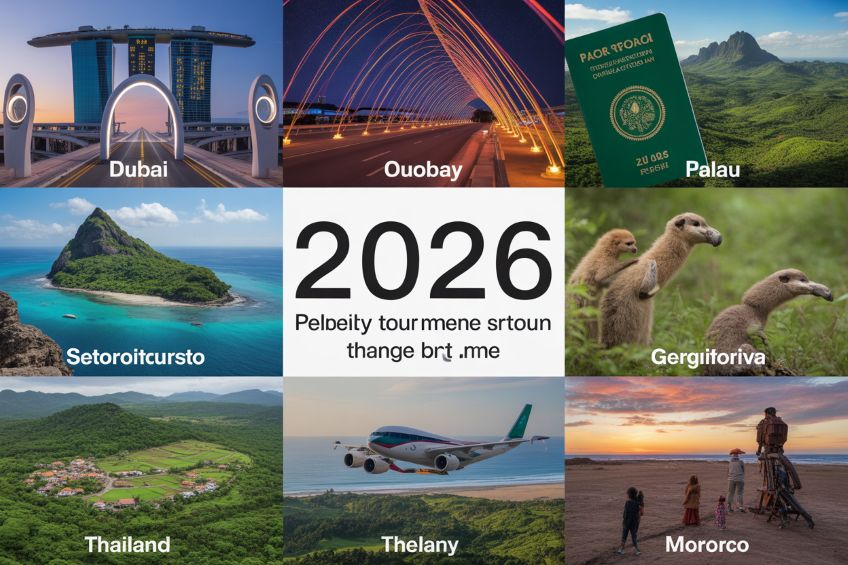
The tourism sector is undergoing a massive transformation for 2026, driven by innovative strategies from leading nations around the world. Singapore, the UAE, Palau, Costa Rica, and Germany are emerging as trailblazers in implementing the top eight trends outlined by international organizations, including UN Tourism, the International Civil Aviation Organization (ICAO), and the European Travel Commission (ETC). These countries are pioneering biometric borders, regenerative tourism, sustainable travel, and visa simplification, which will redefine the future of global travel.

1. Seamless Biometric Borders: A Step Towards Digital Travel

Countries across the globe are shifting away from traditional passport checks to “Digital Travel Credentials” (DTC) and facial recognition systems, enhancing the efficiency and security of international travel. Singapore, UAE, Finland, and the United States are leading this initiative, significantly reducing waiting times at borders.

CountryInitiative
SingaporeRollout of “passport-less” departures at Changi Airport for residents and visitors.
UAE (Dubai)Expanding “Biometric Tunnels” and “Smart Gates” to eliminate manual passport stamping.
Finland & NetherlandsPiloting EU Digital Identity Wallets to store passport data for seamless border crossings.
United StatesExpanding CBP Global Entry with facial biometrics at major international ports.

2. Regenerative Tourism: Moving Beyond Sustainability

Shifting from sustainability to regeneration, nations like Palau, Bhutan, and Costa Rica are introducing groundbreaking policies aimed at improving environmental and cultural sustainability, rather than just minimizing harm. These countries are embedding environmental agreements directly into visitor experiences.

CountryInitiative
PalauImplementing the Palau Pledge, where visitors sign an environmental agreement in their passports.
BhutanCharging a Sustainable Development Fee that funds carbon-negative projects and forest preservation.
Costa RicaLaunching the Pura Vida 2026 strategy focusing on agro-tourism and community-led reforestation.
New ZealandPromoting the Tiaki Promise, urging tourists to act as guardians of the land.

3. Seasonal Dispersion: Spreading Out the Tourism Season

To combat over-tourism, countries like Italy, Spain, and Greece are actively promoting travel during off-peak months. These governments are working to distribute the flow of tourists more evenly across the year, minimizing environmental and social strain on popular destinations.

CountryInitiative
ItalyHosting the 2026 Tourism Seasonality Summit and promoting tiered entry fees to extend travel into the winter months.
SpainBalearic Islands are shifting marketing to promote “Active Winter” activities like cycling and hiking.
GreeceThe Rhodes Co-Lab project promotes year-round tourism by extending the season to 12 months.

4. Coolcationing: The Northern Shift to Cooler Climates

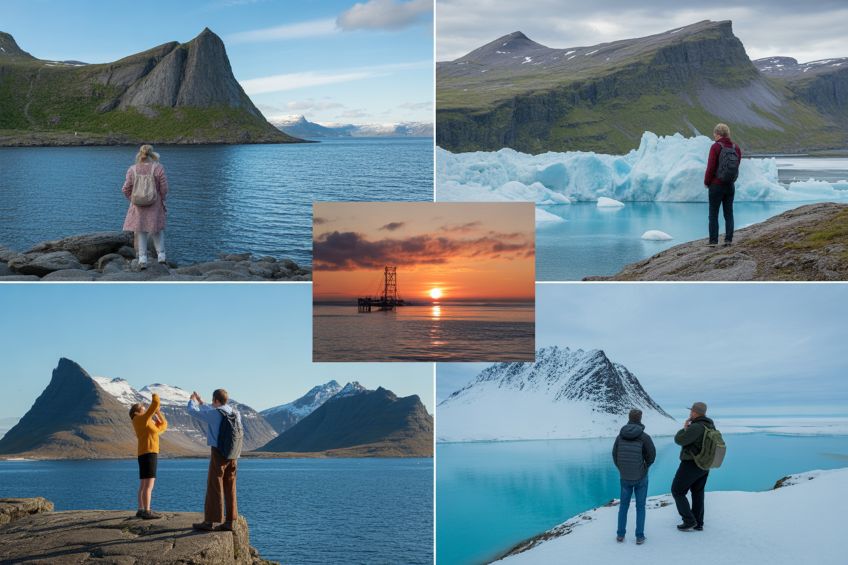
Countries with colder climates are capitalizing on the “Coolcationing” trend, attracting tourists seeking relief from rising summer temperatures in more temperate regions. Norway, Sweden, Finland, and Iceland are seeing record-high investments in summer infrastructure to accommodate this surge in demand.

CountryInitiative
Norway, Sweden & FinlandRebranding the Nordic Summer as a temperate escape, attracting tourists seeking cool climates.
IcelandExpanding regional airport infrastructure to accommodate demand outside of Reykjavik.
Japan (Hokkaido)Promoting Hokkaido as a summer sanctuary to escape the heat of Tokyo and Kyoto.
CanadaFocusing on Atlantic Provinces (Nova Scotia and Newfoundland) as primary summer cooling destinations.

5. Rural and Community-Centric Tourism: Empowering Local Economies

The United Nations’ Best Tourism Villages initiative is highlighting countries where rural tourism is booming, empowering local economies and preserving traditions. Japan, South Korea, and Argentina are leading the charge in promoting spiritual and rural tourism as a way to preserve cultural heritage while boosting local economies.

CountryInitiative
Japan (Koyasan)Promoting Spiritual Ruralism by opening historic temples to international visitors.
South Korea (Muju)Focusing on Spiritual Ruralism, with temple stays and mountain village visits.
ArgentinaPromoting Gaucho rural stays in Carlos Pellegrini to distribute tourism wealth to indigenous communities.
PeruShowcasing Andean rural stays as part of its community-centered tourism initiatives.

6. AI-Driven Hyper-Personalization: Tailoring Travel Experiences

Countries are integrating AI to hyper-personalize travel experiences, from digital concierges to crowd management. Saudi Arabia, South Korea, and Singapore are spearheading this shift by leveraging AI in national tourism infrastructure.

CountryInitiative
Saudi ArabiaUsing AI-driven Digital Concierges in the NEOM and Red Sea Global projects to personalize guest experiences.
SingaporeImplementing AI heat maps to analyze real-time tourist crowd data and recommend alternative locations.
South KoreaLaunching AI-powered translation and navigation services for national transport apps.

7. Sustainable Modal Shift: The Rail Renaissance

To promote sustainable travel, countries are prioritizing high-speed rail over short-haul domestic flights. France, Germany, and Morocco are leading the charge in expanding rail networks for tourists.

CountryInitiative
FranceExpanding the ban on short-haul domestic flights where rail alternatives exist under 2.5 hours.
GermanyIntroducing the Deutschlandticket, a €49 monthly pass promoting rail travel over car rentals.
MoroccoExpanding the Al Boraq high-speed rail line to Marrakech ahead of 2026/2030 international events.
ChinaAdding 2,000km of new high-speed rail aimed at connecting tourist hubs by the end of 2026.

8. Visa Simplification and Open Borders: A Global Push for Easier Travel

Countries are making cross-border travel easier with unified visa schemes and digital systems. The GCC, Thailand, Kenya, and Malaysia are streamlining their visa processes to promote regional tourism.

CountryInitiative
GCCIntroducing the “GCC Grand Tours” unified visa for all six Gulf countries in 2026.
Thailand & MalaysiaExpanding 60-day visa-free entry and Digital Nomad visas to encourage long-term stays.
KenyaMoving to a visa-free system and using Digital Travel Authorizations (eTA) for easier entry.

The Future of Global Tourism in 2026

As the world moves into 2026, these countries are setting the stage for a new era in travel. From seamless biometric borders to regenerative tourism, these trends are redefining what it means to travel in a world increasingly focused on sustainability, personalization, and innovation. With advancements in AI, high-speed rail, and simplified visa processes, the future of tourism is not only more efficient but also more responsible and inclusive.

The global tourism landscape in 2026 will be driven by these forward-thinking nations, which are not only meeting current demands but shaping the future of travel for generations to come. As these initiatives continue to roll out, travelers will experience a new wave of accessible, eco-conscious, and personalized journeys that push the boundaries of what travel can be.

The post UAE Joins Palau, Costa Rica, and Singapore in Pioneering 2026’s Most Cutting-Edge Travel Trends: AI Personalization, Regenerative Tourism, and Seamless Borders appeared first on Travel And Tour World.
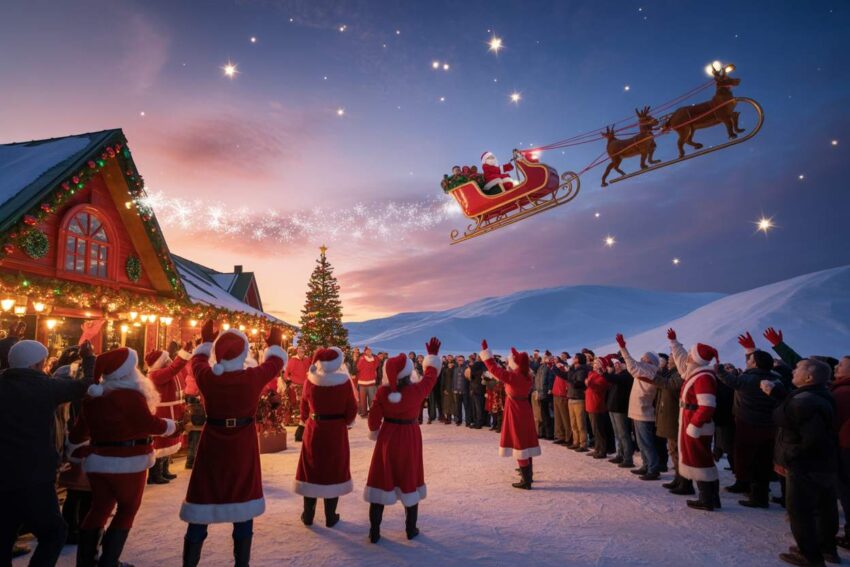
Discover How Santa’s Journey Changed This Year: Rovaniemi’s Grand Departure and NORAD’s 70th Anniversary Mission Set New Records and Spread a Message of Peace

Discover How Santa’s Journey Changed This Year: Rovaniemi’s Grand Departure and NORAD’s 70th Anniversary Mission Set New Records and Spread a Message of Peace
NORAD Tracks Santa

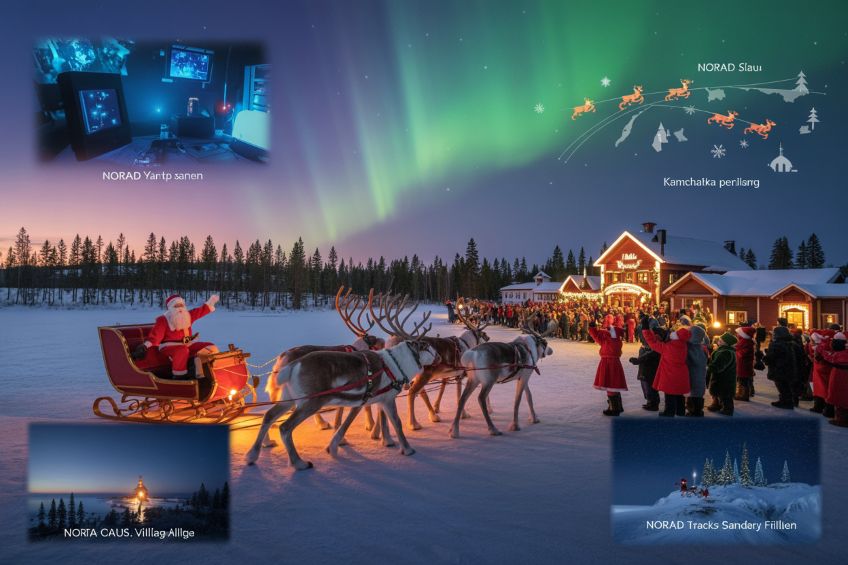
On December 23, 2025, the world witnessed a historic milestone as Santa Claus departed from the Official Hometown of Santa Claus in Rovaniemi, Finland for his annual Christmas Eve journey. This year, the event was especially significant, as it marked the 70th anniversary of the NORAD Tracks Santa program, a beloved holiday tradition that began in 1955. The event saw a record surge in participation, both in person in Finland and through the NORAD mission in the United States.

Rovaniemi’s Grand Departure: A Tradition of Peace and Unity

At the heart of this Grand Departure was the message Santa conveyed to the world before his reindeer-pulled sleigh took off. Santa packed the sleigh with bags filled with gifts processed by his dedicated elves in Santa Claus Village, which receives more than half a million letters from children in over 200 countries each year. Before departing, Santa addressed the crowd, calling for global unity and peace, urging everyone to take a moment to reflect on how Christmas can bring the world closer together.

The Santa Claus Village, located on the Arctic Circle, was the perfect setting for this magical event. It marked not only the start of Santa’s mission to deliver gifts around the world but also emphasized the importance of unity, making this year’s Christmas message more poignant than ever.

NORAD’s 70th Anniversary Mission: A Global Phenomenon

While Rovaniemi celebrated Santa’s departure, NORAD (North American Aerospace Defense Command) was gearing up for its most significant mission yet. As Operation Santa began at 4:00 a.m. MST on December 24, 2025, it marked the official start of the 70th anniversary of tracking Santa’s journey. The NORAD Tracks Santa program, which initially began as a response to a misprinted phone number in a newspaper ad, has evolved into a global phenomenon with millions of people eagerly following Santa’s every move.

This year, 1,250 uniformed personnel and civilian volunteers staffed the NORAD Tracks Santa Operations Center at Peterson Space Force Base, located in Colorado, to manage the unprecedented level of interest in the program. The previous year saw 32 million views on the NORAD website, and the hotline, 1-877-HI-NORAD, handled more than 380,000 calls from children and adults eager to know where Santa was at any given moment.

A New Era of Interactive Santa Tracking

In addition to its traditional operations, NORAD introduced an exciting new interactive feature for 2025. The “Radar” AI Chatbot, a cutting-edge tool on the NORAD website, allowed children and adults alike to interact with Santa’s tracking systems in real time. This new tool significantly enhanced the user experience, making the holiday tradition even more accessible and engaging for the millions of fans worldwide.

Santa’s Sleigh: The Tech Behind the Magic

This year, NORAD also released updated “technical specifications” for Santa’s sleigh, giving children and adults alike a fun glimpse into how Santa’s high-tech vehicle stays ahead of the world’s fastest jets. According to NORAD’s data:

  • Propulsion: Powered by nine reindeer (rp).
  • Max Speed: “Faster than starlight.”
  • Gifts at Takeoff: 60,000 tons.
  • Climbing Speed: One “Twinkle of an eye.”
  • Fuel: Hay, oats, and carrots.

This playful but informative look into Santa’s sleigh gave fans a chance to appreciate just how magical and efficient the sleigh really is, making it a highlight for young fans who have grown up watching NORAD’s coverage each year.

Record-Breaking Sightings and Global Tracking

NORAD’s “Santa Cams”—high-speed digital cameras placed around the world—captured a significant sighting on Christmas Eve, as Santa’s sleigh was spotted crossing the Kamchatka Peninsula in the Russian Far East. This marks one of the first major landmasses Santa visits after crossing the International Date Line, symbolizing the start of his global journey.

At 9:00 p.m. local time on Christmas Eve, the sleigh made its way across this remote region, visible to NORAD’s cameras. The Kamchatka sighting was just one of many that captivated millions of followers around the world, further solidifying the magic and excitement surrounding NORAD’s mission.

The Participation of the First Family and Global Engagement

The First Family of the United States also participated in answering calls to the NORAD hotline on Christmas Eve. This tradition has become an important part of the NORAD Tracks Santa program, showing the global engagement and goodwill that the mission has inspired over the years.

With more than 1,250 volunteers manning the phones and providing real-time updates, the entire mission was a global endeavor, bringing people together from all corners of the world to celebrate the joy of Christmas and the magic of Santa’s annual flight.

A Global Celebration of Christmas and Peace

As Santa departed from Rovaniemi, Finland, and NORAD tracked his every move, the world came together to celebrate not just the joy of Christmas, but also the message of peace and unity that Santa conveyed to the world. The 70th anniversary of NORAD Tracks Santa was more than just a tracking mission; it was a symbol of how Christmas connects us all, no matter where we are in the world.

From Rovaniemi to Kamchatka, from Finland to the United States, this global celebration was a reminder that no matter how far apart we are, the magic of Christmas brings us together in the spirit of joy, love, and peace.

Conclusion: A Tradition More Magical Than Ever

As the 70th anniversary of NORAD Tracks Santa came to a close, it was clear that this beloved tradition had only grown in scope and significance. Santa’s Grand Departure in Rovaniemi, coupled with the cutting-edge NORAD tracking system, captured the essence of the holiday season in a way that continues to bring joy to millions worldwide. With global unity at the heart of Santa’s message and record-breaking participation from fans of all ages, Christmas 2025 will undoubtedly be remembered as a landmark year in both holiday traditions and technological advancements in festive tracking.

The post Discover How Santa’s Journey Changed This Year: Rovaniemi’s Grand Departure and NORAD’s 70th Anniversary Mission Set New Records and Spread a Message of Peace appeared first on Travel And Tour World.
❌