Reading view

After Apple, Huawei may be next to try a square front camera sensor for better framing
Huawei may be experimenting with a different approach to front cameras, and it could quietly solve a few everyday annoyances in the process. According to a new tip shared by Digital Chat Station on Weibo, the company is exploring the use of a 1:1 square sensor for selfie cameras in future smartphones.
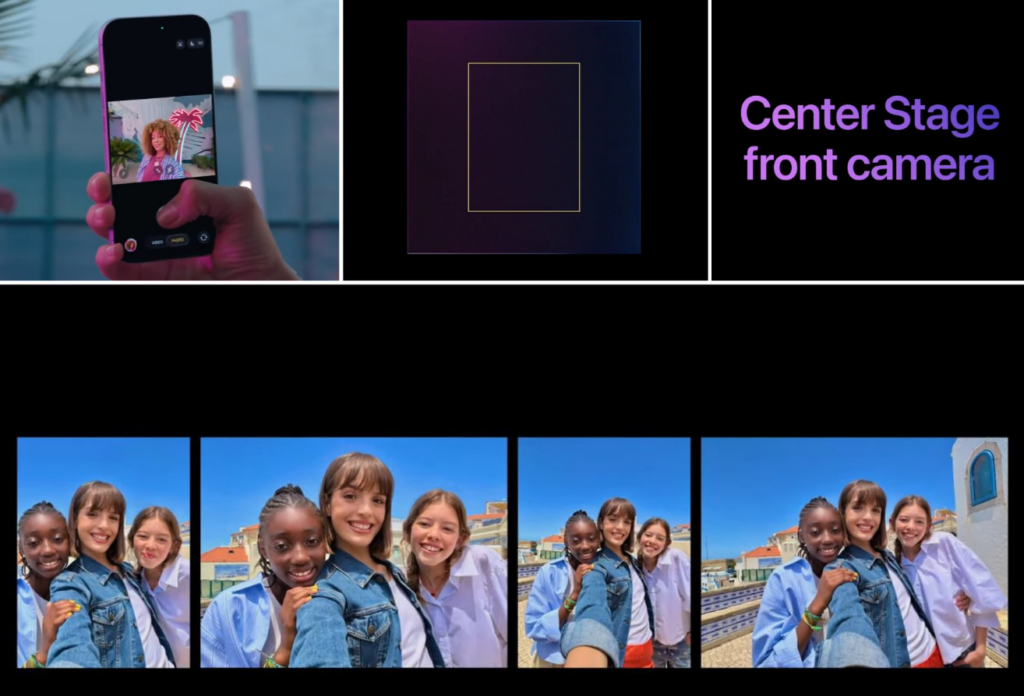
On the surface, a square sensor doesn’t sound dramatic. But the idea behind it is fairly practical. Unlike traditional rectangular sensors, a 1:1 sensor captures a more balanced image area, giving software more room to crop, reframe, or rotate shots without cutting too much out of the frame. That could be especially useful for group selfies, video calls, and social content where orientation changes often lead to awkward framing or lost detail.

The idea isn’t entirely new. Apple moved in a similar direction with the iPhone 17 series, where its updated Center Stage front camera relies on a square sensor to enable features like auto-framing, smooth orientation switching, and subject tracking during video calls. The hardware allows the software to do more without forcing users to constantly adjust how they hold the phone.

If Huawei adopts the same sensor layout, it could unlock similar benefits on the Android side: cleaner framing in both portrait and landscape, more flexibility during video recording, and fewer compromises when switching formats. This would matter most for users who rely heavily on the front camera for calls, vlogging, or social media. There’s no confirmation yet on resolution, timing, or which phones might get the feature first.

For now, this remains an idea under evaluation, not a locked-in product feature. Still, it highlights how front cameras are becoming a real area of hardware innovation again. If Huawei moves forward, the square sensor could quietly become one of those changes users appreciate every day.

Don’t miss a thing! Join our Telegram community for instant updates and grab our free daily newsletter for the best tech stories!

For more daily updates, please visit our News Section.

(Source | Image)

The post After Apple, Huawei may be next to try a square front camera sensor for better framing appeared first on Gizmochina.

iPhone Fold could pack a battery about 25% larger than Samsung’s 7th-gen foldable

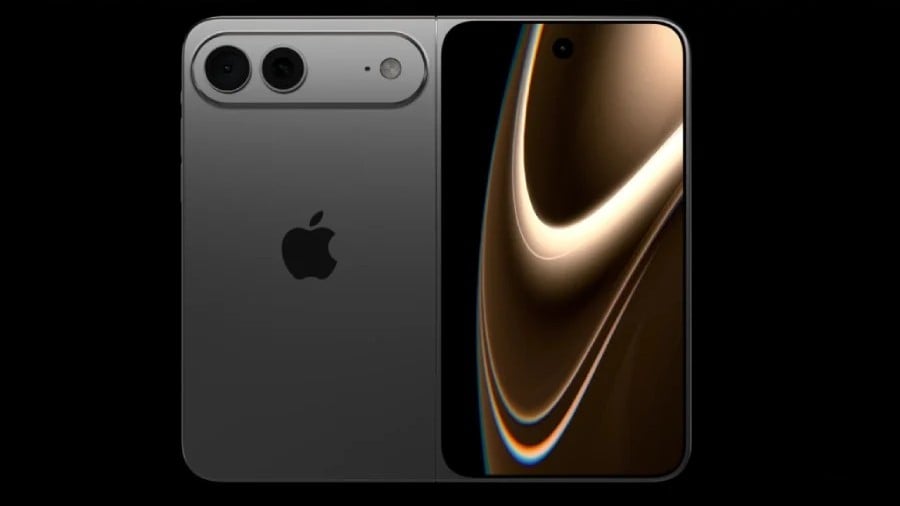
Apple’s first foldable iPhone is still some distance away, but new leaks suggest battery life could be one of its main selling points. According to a new leak, Apple may be planning its largest battery ever for the foldable model.

Weibo leaker Fixed Focus Digital claims Apple’s foldable iPhone could ship with a battery exceeding 5,500mAh, which would already put it ahead of every iPhone currently on the market. For reference, the iPhone 17 Pro Max tops out at 5,088mAh, making this a meaningful jump rather than a minor increase.

This isn’t the first time similar numbers have surfaced. Earlier leaks from yeux1122 suggested Apple was testing battery capacities in the 5,400–5,800mAh range, alongside efforts to slim down internal components and improve power efficiency. Analyst Ming-Chi Kuo has also pointed to Apple using higher-density battery cells, likely to balance size, weight, and longevity.

If the numbers are accurate, Apple’s foldable would be competitive even by foldable standards. Recent devices like the Huawei Mate X7, Oppo Find N5, and Honor Magic V series all sit in roughly the same battery range, while Samsung’s Galaxy Z Fold lineup continues to lag behind in capacity.

iPhone Fold: 5,500mAh (rumored)
Huawei Mate X7: 5,600 mAh (or 5,525 mAh in some variants)
Honor Magic V5: 5,820 mAh (international) or 6,100 mAh (China model)
Xiaomi Mix Fold 4: 5,100 mAh
Oppo Find N5: 5,600 mAh
Vivo X Fold5: 6,000 mAh

While the leak focuses on battery capacity rather than real-world battery life, Apple’s track record suggests the numbers could translate well in practice. iPhones often deliver longer endurance than Android devices with significantly larger batteries, largely due to Apple’s tight hardware-software integration. If Apple’s foldable launches with a battery similar in size to Chinese rivals — and notably larger than Samsung’s Galaxy Z Fold lineup — it could realistically offer stronger battery life than many competing foldables.

The foldable iPhone is rumored to feature a 7.8-inch inner display, a 5.5-inch outer screen, Touch ID integrated into the side button, a dual-camera setup, and Apple’s upcoming A20 chip with a custom modem. A launch alongside the iPhone 18 Pro series in 2026 is currently expected.

Don’t miss a thing! Join our Telegram community for instant updates and grab our free daily newsletter for the best tech stories!

For more daily updates, please visit our News Section.

(Via)

The post iPhone Fold could pack a battery about 25% larger than Samsung’s 7th-gen foldable appeared first on Gizmochina.
Moto G17 may not receive a single Android update

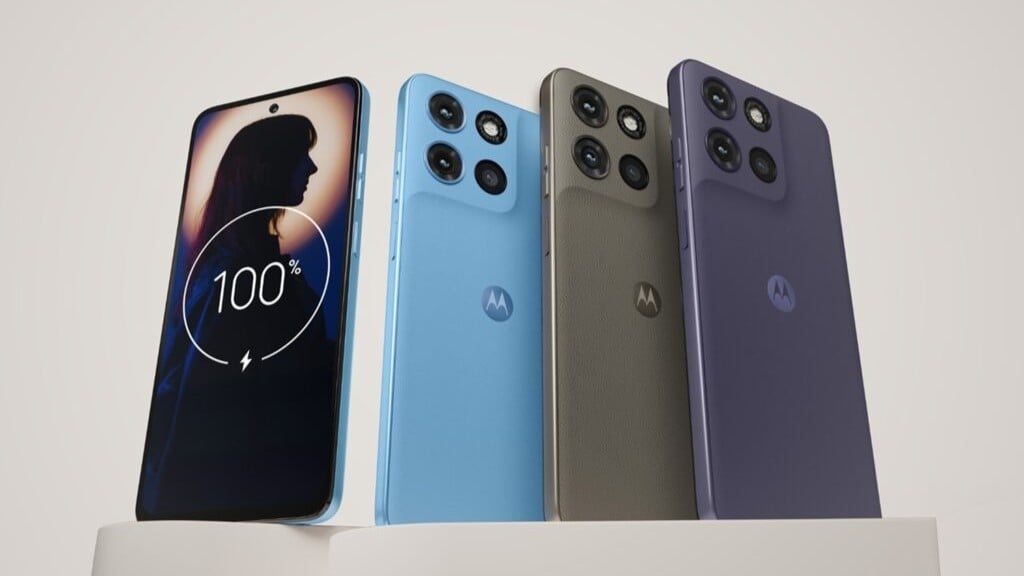
The Moto G17, which recently launched in parts of Europe, is already drawing criticism, and not because of its hardware. The issue is software support, or more specifically, how little of it Motorola is expected to offer.

The Moto G17 was announced last week as a refresh to the Moto G15. Changes are limited. The most noticeable upgrade is a 32MP front-facing camera, while most other specs remain familiar. The phone runs on the MediaTek Helio G81 Extreme and ships with Android 15, an OS version that first rolled out in mid-2024 and now feels a generation behind in early 2026.

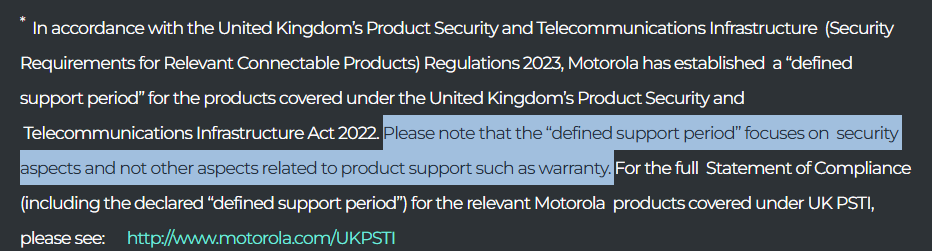
On the UK product page, the company explicitly promises two years of security updates, taking coverage to around early 2028. There is no mention of any Android version upgrades.

The company points to EU Ecodesign regulations, which require manufacturers to provide security, corrective, and functionality updates for several years after a product stops being sold. Crucially, the rules only apply to major Android upgrades if a manufacturer chooses to offer them. That wording allows companies to meet legal requirements while skipping OS version updates entirely.

While this approach appears to comply with the letter of the law, it has not gone over well with critics. Budget rivals are doing far more. The Samsung Galaxy A17, for example, is promised up to six Android version updates, and Xiaomi’s Redmi Note 15 line offers four years of OS upgrades.

At roughly £150, the Moto G17 still offers decent basics—a large display, IP64 protection, and a 50MP main camera. But buyers are being asked to accept limited long-term support in return.

As the phone rolls out across EMEA markets, it highlights a growing split in the budget segment: some brands now treat long software support as standard, while others continue to treat it as optional.

Don’t miss a thing! Join our Telegram community for instant updates and grab our free daily newsletter for the best tech stories!

For more daily updates, please visit our News Section.

(Sources: 1, 2)

The post Moto G17 may not receive a single Android update appeared first on Gizmochina.
Xiaomi Pad 8 global variant appears on Geekbench revealing chipset details and CPU scores

Xiaomi Pad 8

The Xiaomi Pad 8 seems to be getting ready for a wider release, and a new Geekbench listing suggests the global launch may not be far off. The tablet’s international variant has now shown up on the benchmark database.

Xiaomi Pad 8

This isn’t the first sign of movement either. The Pad 8 Pro appeared on Geekbench earlier, and together the two listings make it look like Xiaomi is preparing to bring the full Pad 8 lineup to more markets. So far, the series has only been available in China, where it launched back in September 2025 alongside the Xiaomi 17 series.

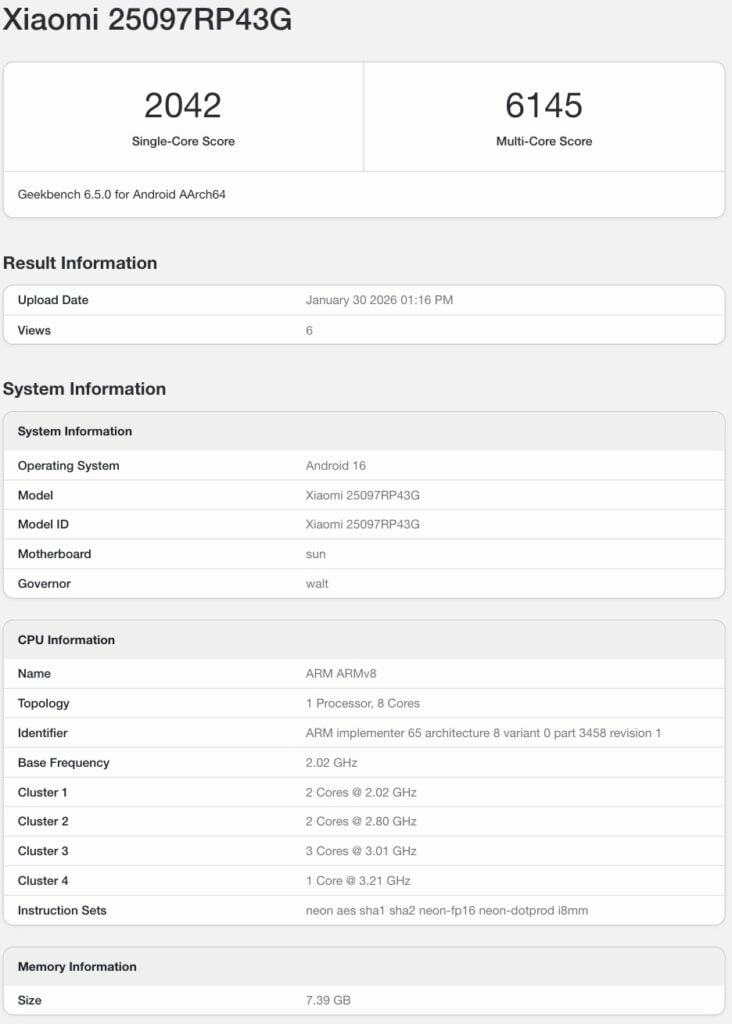
The new listing belongs to a device with the model number 25097RP43G, which is believed to be the global version of the standard Pad 8. According to the Geekbench entry, the CPU core configuration is as follows:

  • 2 × 2.02GHz
  • 2 × 2.8GHz
  • 3 × 3.01GHz
  • 1 × 3.21GHz

This layout matches the Chinese variant exactly, effectively confirming the presence of the Snapdragon 8s Gen 4 chipset. The test unit is listed with 8GB of RAM.

Performance numbers are solid. The tablet scores just over 2,000 points in single-core tests and around 6,100 points in multi-core. That places it comfortably ahead of the Snapdragon 7+ Gen 3-powered Xiaomi Pad 7, which recorded 1,877 and 5,106 points in single- and multi-core tests respectively.

In day-to-day use, this should translate to smoother multitasking and better performance in heavier apps, which is where tablets tend to show their limits.

The software version is listed as Android 16, which likely means it will ship with Xiaomi’s newer HyperOS build out of the box.

If the Chinese model is anything to go by, the Pad 8 should feature an 11.2-inch LCD panel with a 144Hz refresh rate, a large 9,200mAh battery, and 45W wired charging.

Tipster Abhishek Yadav has suggested that Xiaomi could launch the Pad 8 series globally in early March 2026, possibly around the time of MWC. That would line up with the recent increase in leaks and certifications.

For now, the Geekbench appearance doesn’t tell us everything, but it does confirm one thing: the Xiaomi Pad 8 is no longer China-only, and its global release is likely getting close.

Don’t miss a thing! Join our Telegram community for instant updates and grab our free daily newsletter for the best tech stories!

For more daily updates, please visit our News Section.

(Source | Via)

The post Xiaomi Pad 8 global variant appears on Geekbench revealing chipset details and CPU scores appeared first on Gizmochina.

iPhone photography kit brings up to 12x optical zoom, fill lights, SD card slot and more

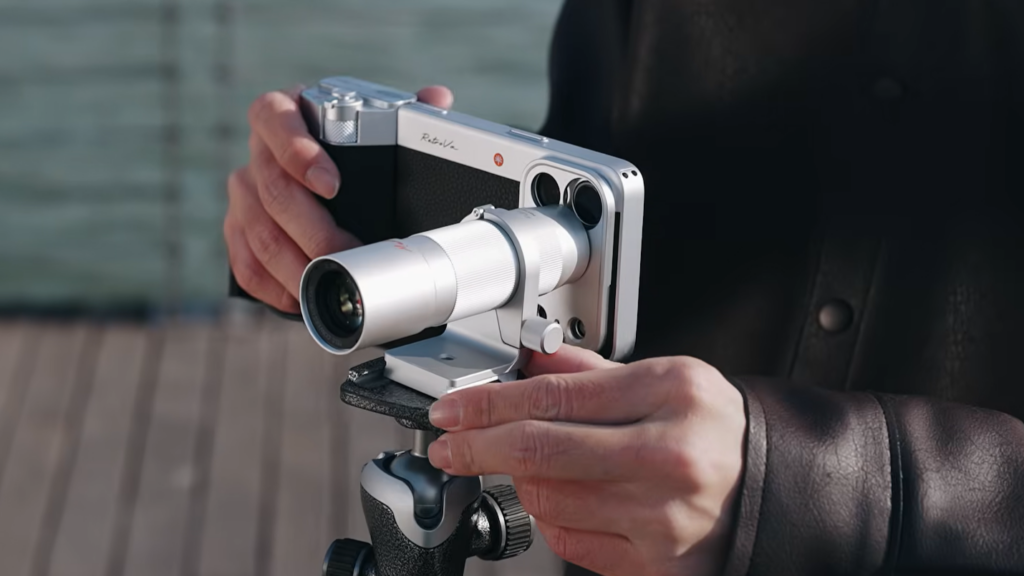
PGYTECH is taking a slightly unusual approach to mobile photography with its new RetroVa Vintage Imaging Kit, a Kickstarter project that turns recent iPhones into something that feels closer to a compact mirrorless camera than a phone with accessories bolted on.

The idea isn’t entirely new. Chinese brands like Xiaomi, Vivo and Oppo have already experimented with external camera modules and add-on optics, but RetroVa is one of the first attempts to bring that concept properly to iPhones.

The kit is designed for the iPhone 16 Pro and Pro Max, as well as the iPhone 17 Pro lineup, with hints that future models could also be supported. It’s clearly aimed at users who are happy with their phone but frustrated by the limits of smartphone zoom.

There are two main versions of the kit. The entry-level option is a grip and case combo that adds a proper camera-style handle to the iPhone. It includes a two-stage shutter button, a zoom rocker, a control dial, and extra buttons that can be mapped to settings like ISO or exposure. The goal here isn’t just convenience, it’s to make shooting feel more deliberate and controlled, closer to using a dedicated camera.

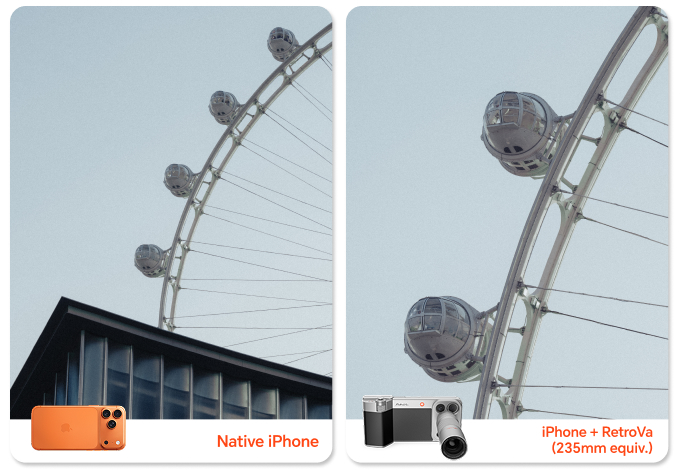
The more expensive bundle adds a screw-on 2.35x telephoto extender. When paired with the iPhone 17 Pro’s 4x telephoto camera, this pushes the effective focal length to around 235mm equivalent, or 10x optical zoom. On the iPhone 16 Pro’s 5x lens, it goes up to 12x. The promise is cleaner results than digital zoom can offer, especially for wildlife, sports, or events.

One of the more interesting touches is the built-in microSD card slot for creators, which reportedly allows direct recording of ProRes video. There’s also a companion app with manual controls and a retro-inspired interface, though the grip itself has only a small battery meant to power its controls.

The Kickstarter campaign launched in late January 2026 and has already passed its funding goal comfortably. Shipping is planned for March and April, depending on the kit.

It’s still a crowdfunded product, so there’s the usual risk involved. But for iPhone users who want better zoom and more hands-on control — without buying a new phone or a separate camera — RetroVa is an interesting experiment.

Don’t miss a thing! Join our Telegram community for instant updates and grab our free daily newsletter for the best tech stories!

For more daily updates, please visit our News Section.

(Source)

The post iPhone photography kit brings up to 12x optical zoom, fill lights, SD card slot and more appeared first on Gizmochina.

❌