Reading view

Dimensity 9400 vs Snapdragon 8 Gen 5: Which chip is actually faster?
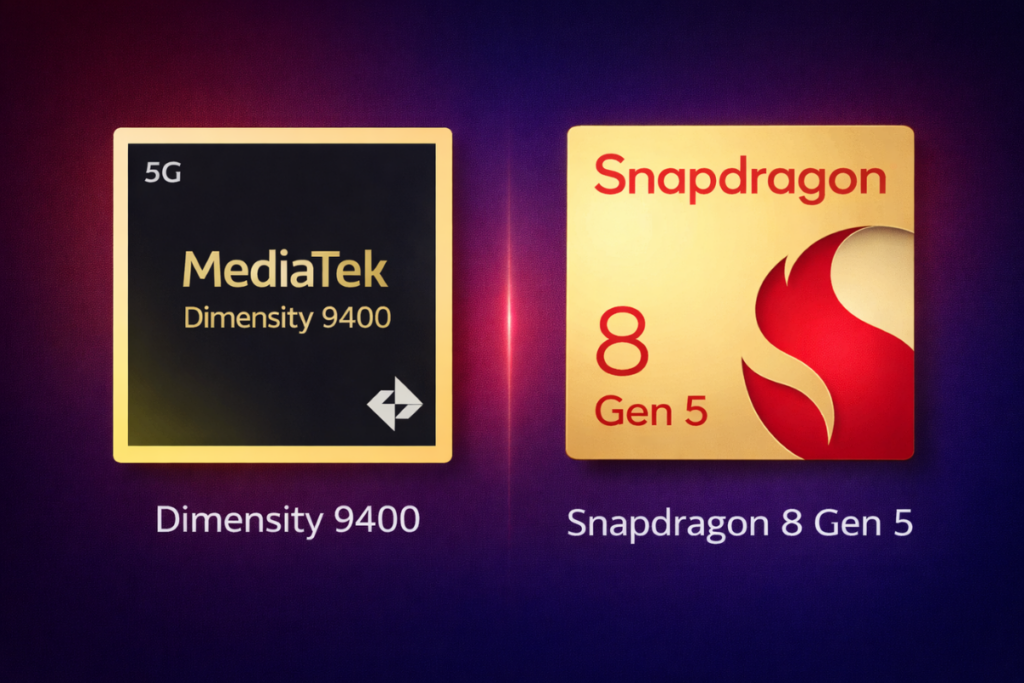
Dimensity 9400 vs Snapdragon 8 Gen 5

The Dimensity 9400 is a true flagship chipset from MediaTek, featuring an all-big-core CPU design that aims to deliver high peak and sustained performance. It’s powerful enough to rival Qualcomm’s Snapdragon 8 Elite, even if it trails in a few areas, as noted in our detailed comparison. That makes the Snapdragon 8 Gen 5 an interesting opponent.

Announced in November 2025, the Snapdragon 8 Gen 5 sits just below the Snapdragon 8 Elite and therefore is an exciting matchup against the Dimensity 9400. The big question is: can Qualcomm’s sub-Elite flagship hold its ground against MediaTek’s all-big-core powerhouse?

Let’s begin with the spec sheet:

Dimensity 9400Snapdragon 8 Gen 5
AnnouncedOctober 2024November 2025
Process nodeTSMC’s 3nm (N3E)TSMC’s 3nm (N3P)
CPU1 x 3.62GHz — Cortex-X925
3 x 3.3GHz — Cortex-X4
4 x 2.4GHz — Cortex-A720
2 x 3.8GHz — Oryon (3rd gen)
6 x 3.32GHz — Oryon (3rd gen)
GPUMali-G925 Immortalis MP12
Ray tracing support
MediaTek HyperEngine Gaming Technology
Adreno 840
ray tracing support
Snapdragon Elite Gaming features
NPUMediaTek NPU 890
Agentic AI support
Qualcomm Hexagon NPU
Agentic AI support
MemoryLPDDR5x, up to 5.3GHzLPDDR5x, up to 4.8 GHz
StorageUFS 4.0 + MCQUFS 4.1
CameraMediaTek Imagiq 1090 ISP
up to 320MP single camera
up to 8K/60fps video recording
supports real-time semantic segmentation
Qualcomm Spectra triple AI ISP (20-bit)
up to 320MP single camera
up to 108MP single camera with zero shutter lag, 30fps
up to 48MP triple cameras with zero shutter lag, 30fps
real-time semantic segmentation (limitless)
up to 4K/120fps video recording
Connectivity3GPP Release-17 5G modem
download speed: 7Gbps (peak)
Wi-Fi 7 (peak speed: 7.3Gbps)
Bluetooth 6.0
Snapdragon X50 5G modem
download speed: 10 Gbps (peak)
upload speed: 3.5 Gbps (peak)
Wi-Fi 7 (peak speed: 5.8 Gbps)
Bluetooth 6.0

Dimensity 9400 vs Snapdragon 8 Gen 5: Benchmark score

Note: The benchmark tests were performed on the Vivo X200 Pro (powered by Dimensity 9400) and the OnePlus 15R (powered by Snapdragon 8 Gen 5).

Geekbench score

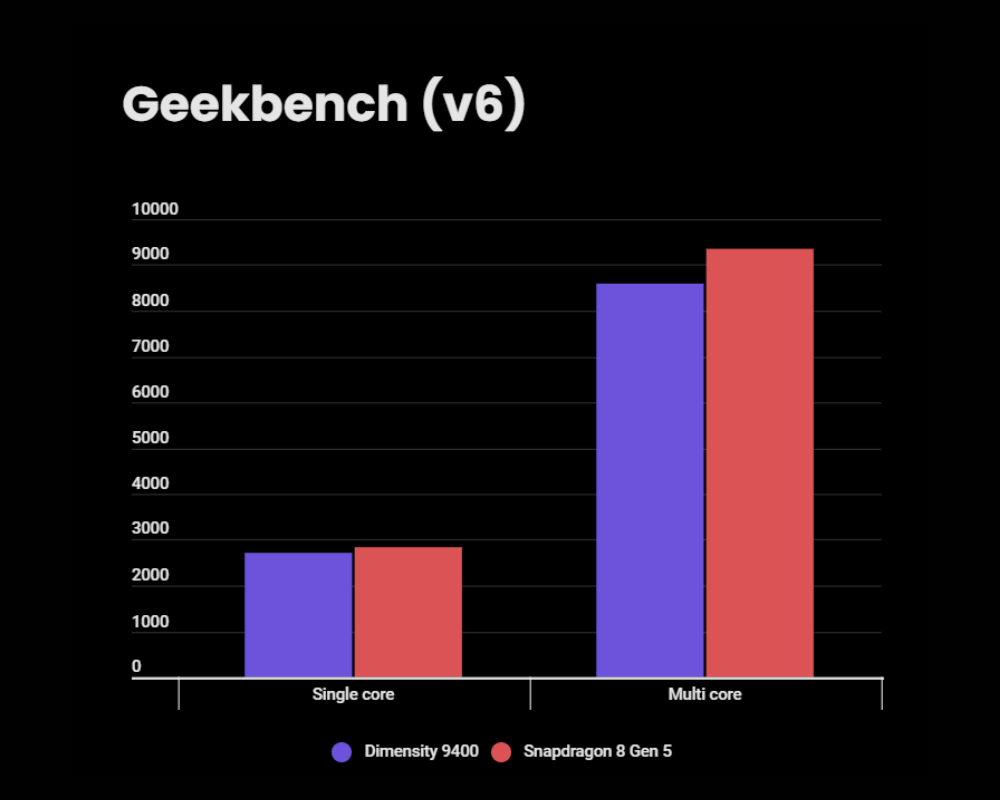
Dimensity 9400 vs Snapdragon 8 Gen 5 - Geekbench score

The single-core scores are pretty close, but Qualcomm holds a slight 4.5% lead. The gap widens in multi-core performance, where the Snapdragon 8 Gen 5 posts a 9% higher score than the Dimensity 9400.

Geekbench scores suggest higher peak performance for the Snapdragon 8 Gen 5. In everyday tasks like browsing the internet, scrolling through your social app feeds, and watching movies, you’d hardly be able to spot a difference.

Dimensity 9400Snapdragon 8 Gen 5
Single core2,7132,837
Multi core8,5929,352

AnTuTu score

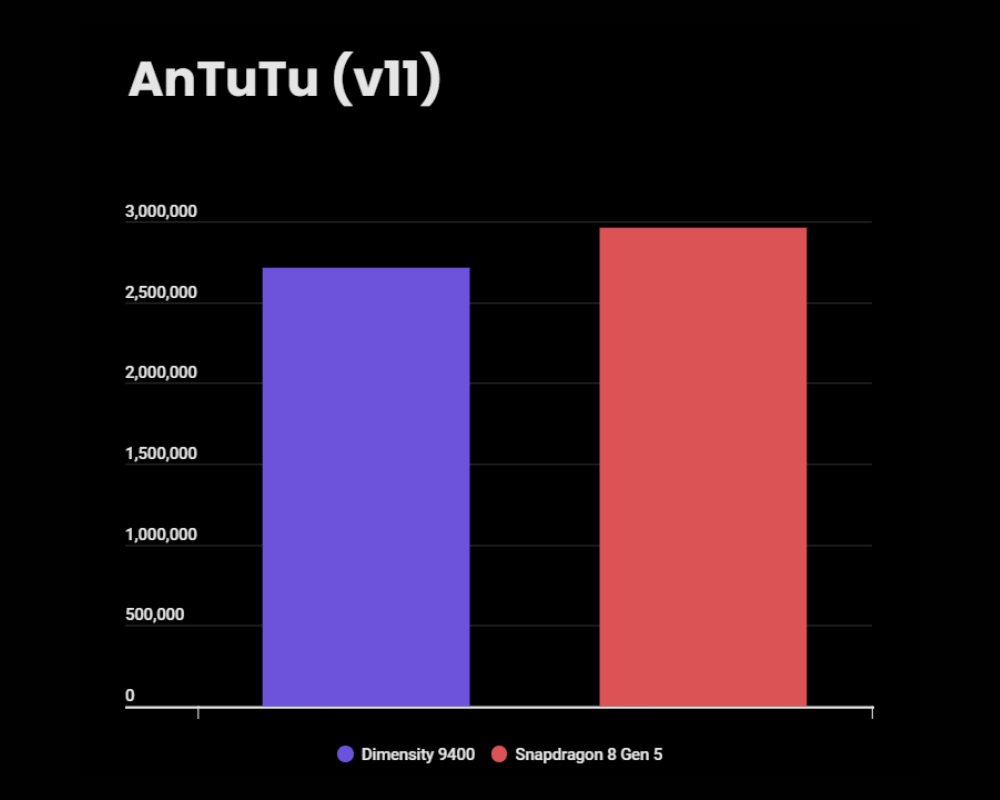
Dimensity 9400 vs Snapdragon 8 Gen 5 - AnTuTu score

On the AnTuTu benchmark, the Snapdragon 8 Gen 5 scores nearly 3 million, while the Dimensity 9400 reaches 2.7 million. That’s about a 9% higher score for the Snapdragon chip.

The Snapdragon 8 Gen 5 consistently outperforms the Dimensity 9400 across every AnTuTu test, though the difference is not significant. The CPU score is 7% higher, and the GPU score is 5% higher. The memory and UX scores also favor the Snapdragon chip.

Dimensity 9400Snapdragon 8 Gen 5
AnTuTu score2,713,6502,961,236
CPU853,995914,878
GPU927,892974,402
Memory355,391382,729
UX576,372689,228

The benchmarks favor Snapdragon 8 Gen 5 over the Dimensity 9400 in terms of performance, but they don’t provide insights into the capabilities of connectivity, camera, and other important aspects of the chips. So, let’s dig further to uncover the real-world differences between the two high-end chips.

Dimensity 9400 vs Snapdragon 8 Gen 5: Key differences

Both Dimensity 9400 and Snapdragon 8 Gen 5 are manufactured using TSMC’s 3nm process, but the latter uses the N3P node, which offers slightly better performance and power efficiency over the N3E node used for the Dimensity 9400.

Furthermore, the chips differ greatly in terms of CPU architecture. The Dimensity 9400 has a 1+3+4 layout, featuring one Cortex-X925 prime core, three Cortex-X4 performance cores, and four Cortex-A720 performance cores. In contrast, the Snapdragon 8 Gen 5 features a 2+6 CPU layout with two Oryon prime cores and six Oryon performance cores.

Notably, the Snapdragon 8 Gen 5 features third-generation Oryon cores, the same CPU cores from the top-tier Snapdragon 8 Elite Gen 5 chipset. They offer better performance and power efficiency than those inside the Dimensity 9400. Plus, they run at higher speeds, offering an additional performance boost.

For graphics rendering, the Dimensity 9400 relies on the Mali-G925 Immortalis MP12 GPU, while the Snapdragon chip uses the Adreno 829 GPU with the new Sliced architecture. Both chips offer ray tracing capabilities, along with their own set of gaming features: Snapdragon Elite Gaming on the Snapdragon 8 Gen 5 and MediaTek HyperEngine Gaming Technology on the Dimensity 9400.

The Snapdragon 8 Gen 5 also maintains an edge in imaging capabilities, as it borrows the triple 20-bit ISP from the Snapdragon 8 Elite Gen 5 with strong “always-sensing” camera support. The Dimensity 9400 features an Imagiq 1090 ISP with emphasis on HDR video across the zoom range and AI-assisted zoom features.

Both chipsets offer robust connectivity features, although the Snapdragon chip may have some advantage here, thanks to mature modem and better carrier-integration in some regions. Furthermore, the chip supports mmWave, UWB, and dual-way satellite connectivity, which are not mentioned on the official Dimensity 9400 page.

Dimensity 9400 vs Snapdragon 8 Gen 5: Conclusion

The Snapdragon 8 Gen 5 holds an upper hand in almost every aspect over the Dimensity 9400. It offers better CPU and GPU performance, a more powerful ISP with greater capabilities, and advanced connectivity features.

That said, the Dimensity 9400 is still a capable high-end chipset with strong performance and robust connectivity. Plus, you’ll likely get a device powered by this chip at a lower price than one powered by Snapdragon 8 Gen 5. That makes it a sweet deal for those looking for a high-performance device at an affordable price. For the absolute best of the two, the Snapdragon 8 Gen 5 is clearly the better choice.

The post Dimensity 9400 vs Snapdragon 8 Gen 5: Which chip is actually faster? appeared first on Gizmochina.
Virgin Australia vs Qantas vs Jetstar: The Ultimate Carry-On Baggage Comparison You Need to Know in 2026

Virgin Australia vs Qantas vs Jetstar: The Ultimate Carry-On Baggage Comparison You Need to Know in 2026
Virgin Australia ,Qantas,Jetstar carry-on baggage rules compared

As the aviation sector continues to evolve, baggage policies have become a central part of the passenger experience. Airlines are increasingly refining carry-on rules to improve boarding efficiency, manage overhead locker space, and deliver a smoother journey from gate to seat. From February 2026, Virgin Australia will introduce a revised carry-on baggage policy that places it in sharper contrast with long-standing approaches adopted by Qantas and Jetstar. When viewed side by side, the three airlines now represent distinctly different philosophies around cabin baggage, convenience, and flexibility.

This comparative analysis examines how Virgin Australia, Qantas, and Jetstar approach carry-on baggage allowances, how their policies differ, and what those differences mean for travellers planning domestic and short-haul international journeys.

Carry-On Baggage as a Core Part of the Travel Experience

Carry-on baggage rules are no longer a minor detail. They influence boarding speed, cabin comfort, and traveller satisfaction. For frequent flyers, business travellers, and short-haul passengers, cabin baggage allowances often determine airline choice. As aircraft cabins become denser and overhead locker space more contested, airlines have increasingly moved to standardise and enforce carry-on rules.

Against this backdrop, Virgin Australia’s upcoming policy changes represent a structural shift, while Qantas continues to offer flexibility, and Jetstar maintains a more tightly controlled low-cost approach.

Virgin Australia Carry-On Baggage Policy from February 2026

From 2 February 2026, Virgin Australia will implement a revised carry-on baggage allowance for Economy Class travellers. Under the new policy, Economy passengers, including Velocity Red and Silver members, will be permitted to bring one standard carry-on bag weighing up to 8 kilograms. This bag must be stored in the overhead locker. In addition, one small personal item will be allowed, provided it fits under the seat in front. Typical personal items include handbags, laptop bags, or small backpacks.

This new structure replaces Virgin Australia’s previous allowance, which permitted two carry-on items with a combined weight limit of 7 kilograms. While the total number of cabin items is being reduced, the allowable weight of the main carry-on bag is being increased.

For Business Class passengers, Economy X travellers, and eligible Velocity Frequent Flyer members, no changes are being introduced. These travellers will continue to enjoy an allowance of two carry-on items with a combined weight of up to 14 kilograms, along with one small personal item.

The revised policy has been designed to reduce congestion during boarding, ease competition for overhead locker space, and create a more consistent onboard experience. By limiting Economy travellers to one overhead-locker bag, Virgin Australia is seeking to ensure that each passenger’s baggage remains close to their seat, reducing delays caused by searching for available storage.

How Virgin Australia’s New Approach Compares in Practice

Virgin Australia’s revised policy places a clear emphasis on simplicity and predictability. Economy passengers will be required to consolidate belongings into a single main bag, reducing ambiguity at the gate and onboard. Compared to the airline’s previous two-item structure, this represents a notable behavioural shift for passengers accustomed to splitting belongings across multiple small bags.

At the same time, the increased weight allowance of 8 kilograms offers more flexibility than Jetstar’s standard Economy allowance, positioning Virgin Australia between full-service and low-cost models.

Qantas Carry-On Baggage Policy and Its Flexibility

Qantas continues to operate one of the most generous carry-on baggage policies among Australian airlines, particularly on domestic routes. Under current rules, Economy passengers on most domestic flights are permitted to carry either one standard carry-on bag weighing up to 10 kilograms, or two smaller carry-on items with a combined weight of up to 14 kilograms. An alternative combination of one carry-on bag and one non-rigid garment bag is also permitted, provided the total weight does not exceed 14 kilograms.

In addition to these options, one personal item such as a handbag or laptop case is commonly allowed, provided it fits under the seat. This layered flexibility allows passengers to adapt their packing style to the nature of their trip.

Some variations apply. On Dash 8 aircraft, carry-on allowances are more restrictive, with a single bag permitted up to 7 kilograms. On many international Economy services, a standard allowance of one carry-on bag up to 7 kilograms plus one personal item is applied.

Despite these variations, Qantas remains the most accommodating of the three airlines in terms of combined carry-on weight and item flexibility, particularly for domestic travellers.

Qantas Compared with Virgin Australia

When placed alongside Virgin Australia’s February 2026 policy, Qantas offers a fundamentally different approach. Virgin Australia prioritises standardisation by limiting Economy passengers to one overhead-locker bag, while Qantas prioritises choice by allowing multiple configurations.

For travellers who value flexibility and carry multiple cabin items, Qantas remains the more accommodating option. For those who prefer a clear, enforced structure that reduces cabin competition, Virgin Australia’s revised approach may deliver a more predictable experience.

Jetstar Carry-On Baggage Policy and the Low-Cost Model

Jetstar’s carry-on baggage policy reflects its low-cost carrier model. Economy passengers are generally permitted to bring one cabin bag with a total weight of up to 7 kilograms. This allowance typically includes one main bag that fits in the overhead locker and one small personal item that fits under the seat, depending on fare type.

Unlike Virgin Australia and Qantas, Jetstar offers passengers the option to purchase additional carry-on allowance. An extra 7 kilograms can be added, increasing the total carry-on allowance to 14 kilograms, subject to availability and fare conditions.

While Jetstar’s base allowance is the most restrictive of the three airlines, the paid upgrade model allows passengers to customise their baggage entitlement if needed.

Jetstar in Comparison with Full-Service Carriers

Compared with Virgin Australia’s upcoming 8-kilogram single-bag rule, Jetstar remains more restrictive in terms of weight, though more flexible in item count depending on fare. Compared with Qantas, Jetstar’s standard allowance is significantly lower, reinforcing the trade-off between lower fares and reduced inclusions.

For travellers who pack light and prioritise cost, Jetstar’s model remains suitable. For those carrying heavier or multiple cabin items, additional fees or alternative airlines may be more practical.

Side-by-Side Comparison of Carry-On Allowances

When comparing the three airlines directly, distinct patterns emerge:

Virgin Australia from February 2026 will permit Economy passengers one overhead bag up to 8 kilograms and one personal item. Business Class, Economy X, and eligible Velocity members will retain a two-bag allowance with a combined weight of up to 14 kilograms.

Qantas allows Economy passengers on many domestic flights to carry one bag up to 10 kilograms or two bags totalling up to 14 kilograms, plus a personal item. International allowances vary but generally remain more flexible than competitors.

Jetstar permits one cabin bag up to 7 kilograms as standard, with the option to purchase additional allowance to reach 14 kilograms.

Implications for Different Types of Travellers

For frequent flyers and business travellers, baggage policy consistency is critical. Virgin Australia’s revised structure provides clarity, but may require changes in packing habits. Qantas continues to cater strongly to this segment with flexibility and higher weight limits. Jetstar remains attractive to cost-conscious travellers who are comfortable with stricter limits.

For families and leisure travellers, the number of items allowed may be as important as total weight. Virgin Australia’s shift to a single overhead bag may simplify boarding but could reduce convenience for those carrying multiple smaller items. Qantas’ allowance remains well-suited to this group, while Jetstar requires careful planning to avoid additional fees.

What the Changes Mean for the Australian Aviation Landscape

Taken together, these policies illustrate three distinct approaches to carry-on baggage management. Virgin Australia is moving toward tighter enforcement and standardisation in Economy while preserving premium flexibility for higher fare classes. Qantas continues to emphasise choice and generosity, reinforcing its full-service positioning. Jetstar maintains a controlled, add-on-driven model aligned with low-cost operations.

As enforcement becomes stricter across airports, passengers are increasingly required to align their packing strategies with airline policies. Awareness of these differences will play a growing role in airline selection.

Conclusion: Choosing the Right Airline Based on Carry-On Needs

In summary, Virgin Australia, Qantas, and Jetstar now represent three clearly differentiated carry-on baggage philosophies. Virgin Australia’s February 2026 changes focus on simplifying Economy travel through one overhead bag up to 8 kilograms. Qantas continues to offer the most generous and flexible allowances, particularly for domestic travellers. Jetstar maintains the tightest standard limits, offset by optional paid upgrades.

By understanding how these policies compare, travellers can make more informed decisions based on their packing habits, travel frequency, and comfort expectations. As cabin baggage rules continue to shape the onboard experience, carry-on allowances are set to remain a decisive factor in airline choice.

The post Virgin Australia vs Qantas vs Jetstar: The Ultimate Carry-On Baggage Comparison You Need to Know in 2026 appeared first on Travel And Tour World.

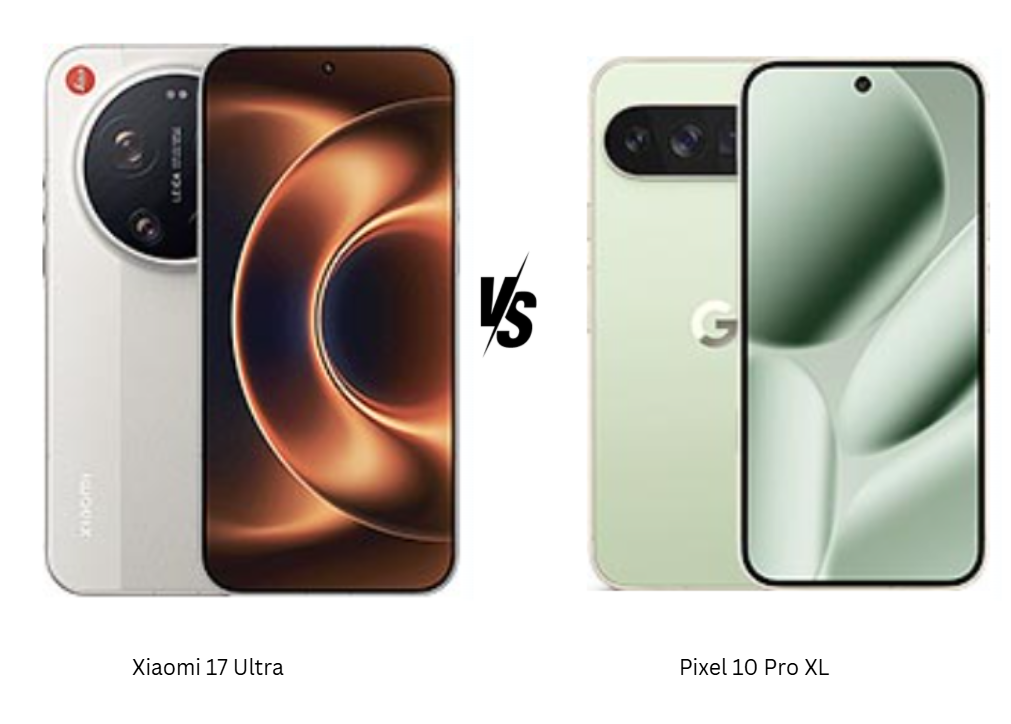
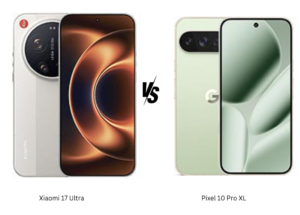
Xiaomi 17 Ultra vs Pixel 10 Pro XL: Specs, Camera, Battery, and Price Compared

xiaomi vs pixel

Xiaomi 17 Ultra and Pixel 10 Pro XL are two of the most powerful Android phones you can buy right now. Both promise top-tier performance, excellent cameras, and premium features, but they go about it very differently. One focuses on bigger hardware and faster charging, while the other leans on software and smart features. This comparison breaks down which one actually delivers the better flagship experience.

Design and Display 

Build and Feel

Xiaomi 17 Ultra goes for a bold, camera-centric identity that feels engineered for power users. Its materials and visual weight give it a professional, almost tool-like presence. The Pixel 10 Pro XL takes the opposite route with a restrained, minimalist design that blends seamlessly into daily life. Xiaomi feels more expressive and experimental, while Pixel feels calmer and more refined. One draws attention, the other avoids it, and that difference is immediately noticeable in everyday handling.

Display Quality

Both phones deliver flagship LTPO panels with excellent HDR and adaptive refresh rates. Xiaomi prioritizes visual punch with extremely high brightness and contrast, making content feel cinematic and vibrant. Pixel focuses on accuracy, offering cleaner whites, more natural colors, and consistent tuning across apps. Xiaomi’s display feels more dramatic, while Pixel’s feels more controlled and reliable over long use.

Verdict

Xiaomi wins on visual impact. Pixel wins on balance and refinement.

Specifications 

Performance

Xiaomi 17 Ultra is built for raw performance. Its Snapdragon chipset delivers top-tier speed for gaming, multitasking, and heavy camera use with ease. Pixel 10 Pro XL, powered by Google’s Tensor chip, emphasizes AI-driven efficiency rather than peak benchmarks. Everyday tasks feel smooth and intelligent, but it lacks the headroom power users may expect. Xiaomi feels faster under pressure; Pixel feels optimized for routine use.

Battery and Charging

Battery life strongly favors Xiaomi thanks to its much larger capacity and extremely fast wired and wireless charging. Long days feel less stressful, and short charging sessions go a long way. Pixel’s battery life is stable and predictable, but charging speeds are conservative. Google clearly prioritizes longevity and thermal stability over speed.

Verdict

Xiaomi dominates in endurance and charging. Pixel focuses on efficiency and consistency.

Camera 

Main and Secondary Lenses

Xiaomi’s camera setup is aggressively hardware-driven. Its large main sensor and high-resolution periscope lens deliver excellent detail, strong low-light results, and standout zoom performance. It feels designed for users who enjoy versatility and control. Pixel relies more on computational photography, producing consistently natural images with excellent dynamic range and dependable color science. Xiaomi often delivers more dramatic shots; Pixel delivers safer, more predictable results.

Selfie Camera

Both phones perform well, but the Pixel’s front camera excels in focus reliability and social-ready processing. Xiaomi offers more detail, while Pixel offers better consistency.

Verdict

Xiaomi suits photography enthusiasts. Pixel suits users who want effortless, reliable results.

Pricing 

Price Comparison

Xiaomi 17 Ultra is priced at approximately $1000, while the Pixel 10 Pro XL sits higher at around $1200. This gap significantly changes the value conversation. Xiaomi delivers stronger battery life, faster charging, and more aggressive camera hardware for less money. Pixel positions itself as a premium experience rather than a spec-heavy bargain.

Is the Price Justified?

Xiaomi feels generous, offering flagship hardware that clearly exceeds expectations at its price. It appeals to users who want maximum capability per dollar. Pixel’s higher price is tied to long-term software updates, deep AI integration, and ecosystem reliability. That premium makes sense for users who value longevity and simplicity over raw specs.

Verdict

Xiaomi offers superior value. Pixel charges more for software polish and long-term support.

Disclaimer:
Prices are approximate and may vary based on country, region, and applicable taxes.

Conclusion 

Xiaomi 17 Ultra stands out with its massive battery, ultra-fast charging, powerful chipset, and camera system built for versatility and zoom. It feels like a device designed to push limits. The Pixel 10 Pro XL differentiates itself through clean software, advanced AI tools, and years of guaranteed updates. It feels designed for stability, intelligence, and long-term reliability rather than experimentation.

Final Verdict 

Xiaomi 17 Ultra is the better overall smartphone. It delivers stronger performance, a far better battery and charging, more advanced camera hardware, and a lower price. Pixel 10 Pro XL remains an excellent choice for users deeply invested in Google’s ecosystem, but Xiaomi offers a more complete flagship experience with fewer compromises.

Read More:

The post Xiaomi 17 Ultra vs Pixel 10 Pro XL: Specs, Camera, Battery, and Price Compared appeared first on Gizmochina.

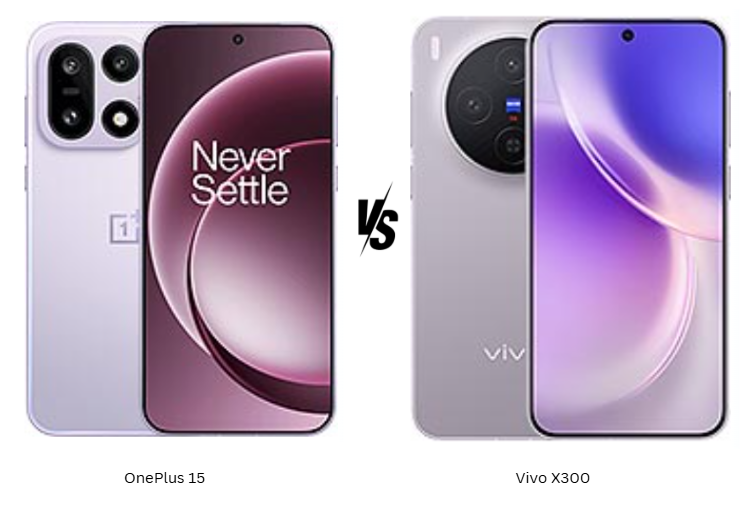
OnePlus 15 vs Vivo X300: Why Vivo X300 Might Be a Better Buy Than OnePlus 15

oneplus vs vivo

The flagship Android space in 2026 is no longer about one phone doing everything best. The OnePlus 15 and Vivo X300 take two clearly different approaches, one built around raw performance and ultra-fast charging, the other centered on camera quality, display impact, and everyday refinement. Both target premium buyers, yet their priorities could not be more different. This comparison looks beyond specs to highlight which phone feels more satisfying in real-world use, and which one delivers better value depending on what matters most.

Major Features:

FeatureOnePlus 15Vivo X300Winner
Design & BuildPremium feel with stronger durability and IP ratingSleeker, more refined everyday designVivo X300 – Cleaner design feels more premium and easier to live with
Display165Hz AMOLED, super smooth and responsiveBright AMOLED with excellent outdoor visibilityVivo X300 – Better brightness and visual pop for media
PerformanceSnapdragon 8 Elite Gen 5 – raw powerDimensity 9500 – balanced performanceOnePlus 15 – Slight edge for sustained high performance
Battery & ChargingLarger battery + extremely fast wired & wireless chargingReliable fast charging, more conservativeOnePlus 15 – Wins with flexible and faster charging options
Main CameraBalanced triple setup, reliable results200MP primary + Zeiss opticsVivo X300 – Superior sensor and optics for standout photos
Selfie CameraSolid 32MPStrong 50MP autofocusVivo X300 – Better selfie quality and versatility
Value for Money~$900 / ₹80,000~$650 / ₹76,000Vivo X300 – Better overall value with strong features
Overall VerdictGreat performance flagshipWell-rounded flagship with camera edgeVivo X300 – Best balanced choice for most users

Please Note: When you buy something using the links in our articles, we may earn a small commission at no cost to you.

Please Note: When you buy something using the links in our articles, we may earn a small commission at no cost to you.

Design and Display

Build and Feel

The OnePlus 15 leans into a bold, performance-driven design with premium materials and stronger durability credentials. It feels engineered for long-term, heavy use and carries a more aggressive flagship identity. The Vivo X300, in contrast, prioritizes elegance and comfort, with a cleaner, more refined look that feels easier to live with day to day. Its design feels less about showing power and more about quiet polish.

Display Quality

OnePlus delivers a high-refresh AMOLED display focused on smoothness and responsiveness. Scrolling, gaming, and animations feel exceptionally fluid, reinforcing its performance-first personality. Vivo counters with a display that emphasizes brightness and visual punch. Colors look vivid, highlights stand out more, and outdoor visibility feels superior, especially for media consumption.

Verdict

OnePlus 15 suits users who value durability and ultra-smooth interaction, while the Vivo X300 feels more refined and visually impressive in everyday use.

Specifications 

Performance

OnePlus 15 is tuned for raw power, offering fast app launches, stable gaming, and sustained performance under load. It feels unapologetically built for enthusiasts who demand speed. The Vivo X300 focuses on balanced performance, delivering smooth multitasking and reliable day-to-day responsiveness without pushing extremes.

Battery and Charging

OnePlus clearly leads in charging versatility, combining a large battery with extremely fast wired and wireless charging options. It feels designed for heavy users who dislike downtime. Vivo takes a more conservative approach, offering dependable fast charging that comfortably supports daily usage without aiming to impress with numbers alone.

Verdict

OnePlus 15 is better for power users and gamers, while the Vivo X300 offers a more efficient, well-rounded performance experience.

Camera 

Main and Secondary Lenses

Vivo places a strong emphasis on camera hardware, led by a high-resolution main sensor and Zeiss tuning. Photos show excellent detail, strong dynamic range, and pleasing color consistency, especially in portraits. The OnePlus 15 focuses on balance, delivering reliable results across all lenses without heavily stylized processing.

Selfie Camera

Vivo’s front camera stands out with higher resolution and autofocus, making it better suited for video calls and content creation. OnePlus offers dependable selfies, though the experience feels more functional than standout.

Verdict

Vivo X300 is the stronger option for photography-focused users, while the OnePlus 15 delivers consistent, no-surprise camera performance.

Pricing

OnePlus 15 is positioned as a premium flagship at around $900 or ₹80,000. It targets users who want top-tier performance and advanced charging features. The Vivo X300 comes in lower, at roughly $650 or ₹76,000, making it more accessible while still offering flagship-grade hardware.

Is the Price Justified?

OnePlus justifies its higher price through performance headroom and charging technology, though not everyone will need that level of power. Vivo’s pricing feels more balanced, offering strong cameras and display quality without pushing into ultra-premium territory.

Verdict

Vivo X300 delivers better value overall, while OnePlus 15 charges extra for performance-focused priorities.

Disclaimer:
Prices are approximate and may vary based on country, region, and applicable taxes.

Conclusion 

OnePlus 15 stands out for its speed-focused tuning, charging flexibility, and hardware choices. It feels purpose-built for users who push their phones hard. Vivo X300 emphasizes refinement, camera quality, and visual appeal, creating a more relaxed and polished daily experience.

Verdict

If you have to choose only one, the Vivo X300 emerges as the better overall pick for most users. It delivers stronger camera performance, a more polished display experience, and better value for money at its price point. While the OnePlus 15 excels in raw power and ultra-fast charging, those advantages mainly benefit power users and enthusiasts. For everyday use, balanced performance, and long-term satisfaction, especially if photography and display quality matter, Vivo X300 is the smarter choice

Read More:

The post OnePlus 15 vs Vivo X300: Why Vivo X300 Might Be a Better Buy Than OnePlus 15 appeared first on Gizmochina.

❌