
Reading view

What’s New in Luxembourg, France, Belgium, and Germany Impacting Travel, Healthcare, and Retail: Everything You Must Know
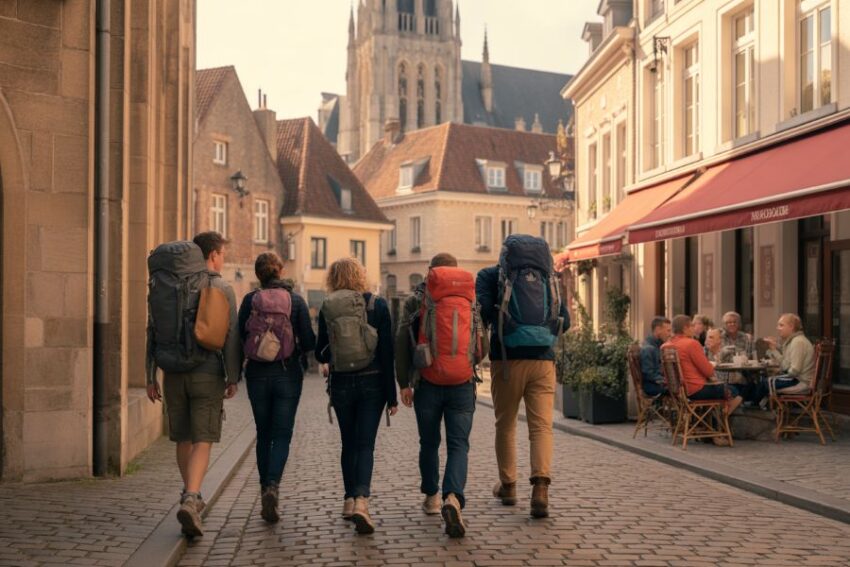
What’s New in Luxembourg, France, Belgium, and Germany Impacting Travel, Healthcare, and Retail: Everything You Must Know

Luxembourg: New Public Entity and Changes in Retail and Rail Travel

In Luxembourg, February brings important changes, including the establishment of a public entity and international rail travel restrictions, which will affect Luxembourg. The National Centre for Purchasing and Logistics (CNAL) will become operational. CNAL is the first public entity, and law mandates it to centralize the purchasing and logistics for the country’s hospitals, the ambulance and fire service (CGDIS), and other emergency service healthcare facilities. The government’s focus is on operational efficiency, reducing the administrative burden on medical staff, and cutting costs.

Retail: New Ladurée and Delayed Nike Store

In retail, a Ladurée (the French macaron brand) store will open in the Cloche d’Or shopping center in Luxembourg, making it the first store of the brand in the country and adding a Parisian touch to the shopping center. The opening of a Nike store in Cloche d’Or has been delayed from February to Spring, causing some excitement among shoppers.

Changes to Policy on Clothing Recycling

New policy changes within Luxembourg’s clothing recycling initiatives highlight the Kolping non-profit organization. Due to operational cost increases, Kolping will no longer oversee the collection of used clothing at the country’s recycling boxes. The boxes will continue to be used; however, the collection of clothes remains uncertain. Municipalities may potentially be requested to supervise the boxes, but there are no confirmed details on this yet.

Traffic Impacts on Luxembourg’s Railways

From 14 to 23 February, passengers utilizing railways in Luxembourg will face unavoidable impacts. Planned construction will temporarily disrupt key routes in Luxembourg to Metz-Thionville, Esch-sur-Alzette, and Arlon. During the construction period, replacement buses will be utilized, and these temporary disruptions will significantly impact all commuters, particularly cross-border commuters.

New Travel Rules for the United Kingdom

New rules will apply to travelers to the United Kingdom starting on 25 February. When traveling visa-free, travelers will need an Electronic Travel Authorisation (ETA). Since April 2025, airlines will verify ETAs. An ETA costs about €18 and will last for 2 years. Make sure to have an ETA before purchasing a flight to avoid travel disruptions.

Changes in France: New Prices and Less Expensive Energy

From 1 February in France, the prices for certain things are changing. First, the price of tobacco will be more expensive, and there will be new prices for motorway tolls. These will depend on which operator you are using (the prices will be more expensive for some and less expensive for others). If you are monitoring your energy costs, there will be new regulations for the price of electricity, which will be less expensive, as well as a reduction in the price of natural gas per kWh. France also experienced a decrease in the savings rate for the Livret A and LDDS to 1.5%, while the LEP rate decreased to 2.5%. On the other hand, the prices for bank services will be more expensive, with an average increase of 3%, which will impact all customers in the country.

Belgium: Changes to Healthcare and Rising Costs at the Start of February

Beginning 1 February 2026, costs in Belgium are changing. In Belgium, bus tickets in Wallonia are increasing in price by over 2%, and train tickets are increasing by around 2.5% on average across the country. A new policy will also change how people access certain medications. In this case, the medications are anti-diabetic. Patients will now have to obtain an authorization request from a medical advisor, in addition to a prescription, to receive certain reimbursements.

Germany: Changes to Photovoltaics and Pension Cuts

Beginning in 2026, Germany residents will experience added costs for supplementary health insurance, which are now affecting pension payments. As a result, a large number of pensioners will see their net pensions decrease for the month. At the same time, Germany also has changes to photovoltaics: as of 1 February, new photovoltaics will receive a 1% decrease in their feed-in tariff.

Effects on Cross-Border Commuters

Adjustments will be needed by core cross-border metro commuters and travelers in the Luxembourg/France/Belgium/Germany corridor. Rail cross-border metro Luxembourg disruptions will disturb commuter day cycles. Price increases in transit, healthcare, and all services will be disruptive for border-crossing Luxembourg/France/Belgium/Germany. More restrictions in cross-border metro UK travel will be disruptive for Luxembourg/France/Belgium/Germany commuters.

In sum, core cross-border metro commuters and travelers in the Luxembourg/France/Belgium/Germany corridor will be most affected by the changes in February 2026 and beyond. Rail changes, disruptions, increasing cross-border travel restrictions, and border-crossing Luxembourg/France/Belgium/Germany travel will be most affected by increasing price changes. New UK travel ETA requirements will be disruptive in adjusting border-crossing metro travel. Transport will be significantly affected for Luxembourg/France/Belgium/Germany corridor cross-border metro commuters.

The post What’s New in Luxembourg, France, Belgium, and Germany Impacting Travel, Healthcare, and Retail: Everything You Must Know appeared first on Travel And Tour World.

Belgium Extends Schengen Internal Border Checks Until July to Combat Migration and Smuggling Threats: Everything You Need to Know

Belgium Extends Schengen Internal Border Checks Until July to Combat Migration and Smuggling Threats: Everything You Need to Know

The Belgian federal government has decided that Belgium will keep internal Schengen border checks until at least July 31, 2026. This is due to the growing fears of security, irregular migration, and the country’s persistent border smuggling. These checks started in July 2025 and will continue to include highways, train services, long-distance bus services, and planes to and from areas of high migration.

More Schengen Border Measures

The federal and local police will continue to be able to check the internal border controls. This means that they can stop and check long-distance buses and cars, and they can ask questions to people on intra-Schengen flights that are coming from high-migration countries, such as Greece and Italy. Belgium recognizes that they have to take more measures in order to control the borders and keep the flow of refugees and migrants from entering the Schengen Area.

Stats Show the Effects of Ongoing Activities

Data from Belgium’s Interior Ministry shows that the first two quarters of internal checks have seen 25,500 participants inspected. The inspections have found several people lacking residency permits. 170 travelers were recorded as lacking the required travel documents, and 108 were sent to the Immigration Office for processing. From these, 23 were detained in closed return centers, and 12 were returned to their country of origin.

The checks, which Belgium’s Migration Minister Anneleen Van Bossuyt is in charge of, believe these checks are a “necessary signal” to the people and the proposed migrants. The signal is clear: From now on, Belgium won’t be seen as a soft target for irregular secondary movements within the Schengen. The action is part of the set of measures to combat the illegal flow of migrants and ensure Belgium has a balanced approach to its Schengen liberalization and national security.

Concentrating on Criminal Networks and Smuggling

While the checks are mainly aimed at controlling migration, Belgian officials have pointed out the need to address smuggling and other crimes. According to Interior Minister Bernard Quintin, the operations have enabled the police to discover and disrupt several smuggling systems in the country. In particular, the roadside checks have been crucial in the control of drug trafficking, which Belgian authorities consider a serious problem.

Belgian authorities state that the border interception rate is much higher than in the neighboring Netherlands, which shows the efficiency of the border checks that are currently in place. This is a clear sign of border control in Belgium and proves that the measures in place are working to quell illegal border crossings.

Belgium’s Border Management: A Major Step Forward

The extension of internal Schengen border checks is further evidence of Belgium’s determination to provide the country’s citizens with a secure and safe environment. The Schengen Area has been known for open borders and the ability to freely travel across Europe. However, the increasing number of people migrating, the organized crime and smuggling networks, and the use of technology have resulted in a necessary change of perspective on the enforcement of border control.

Belgium has taken action to manage immigration while upholding the ideals of the Schengen Agreement combined with the necessity of safe and secure borders. Extending border checks for another six months allows the Belgian government to evaluate the effectiveness of the initiative and adjust measures to counter other potential threats.

The Future of Europe’s Border Security

Belgium has made a decision to keep the Schengen internal border checks in place until mid-2026. This is part of the ongoing trend of European nations tightening border control. For the duration of these checks, other Schengen nations with the same problems will look to Belgium for border control and regulation, providing insight into the effectiveness of limited control in border regulation.

The more profound implications of the extended border checks for the Schengen Area and the Belgian immigration policy is the shift towards increased border control to maintain the Schengen Area’s integrity. The decision to extend border checks also supports the European policy to control the borders against elements of irregular migration and cross-border crime, and keep Europe a safe and secure place to live.

Belgium balancing these internal checks and the Schengen Area principles is exemplifying freedom of movement and security challenges in today’s geopolitics.

The post Belgium Extends Schengen Internal Border Checks Until July to Combat Migration and Smuggling Threats: Everything You Need to Know appeared first on Travel And Tour World.

Traveling with Your Dog in 2026? These Five European Cities Are Perfect for Pet Owners

Traveling with Your Dog in 2026? These Five European Cities Are Perfect for Pet Owners
Discover Europe's top 5 dog-friendly cities for where your furry friend can join you for cultural explorations local experiences outdoor adventures.

Traveling with your dog is an unforgettable experience, and some of Europe’s most iconic cities offer pet-friendly spaces, eateries, and parks where your four-legged companion can join in the fun. In fact, some European cities go the extra mile to ensure pets are treated like family. From walking along canals in Amsterdam to lounging in parks in Zurich, these cities roll out the welcome mat for dogs of all sizes. If you’re considering a trip with your pet, these five dog-friendly destinations in Europe should be at the top of your list for 2026.

1. Rome, Italy: A Pawsitively Historic Getaway for Dogs

Why Rome is Perfect for Your Dog

Rome is not just known for its ancient ruins and incredible history; it’s also one of the most dog-friendly cities in Europe. Italians are known for their love of pets, and in Rome, dogs are welcome in many places where their owners go. Whether you’re sitting in a café enjoying an espresso or exploring a historic monument, your furry friend is likely to be by your side. Visitors to Rome can also take their dogs on public transportation, provided they are kept on a leash or in a carrier.

In addition to being welcomed at many cafes and restaurants, Rome boasts a number of dog parks like the Villa Borghese Gardens, where dogs can roam freely. If you’re visiting in summer, be sure to check out Bau Beach, where dogs can enjoy the sea and sand near Fiumicino Airport. The city’s relaxed attitude towards pets makes it a great destination for dog owners who want to experience the beauty of Rome without leaving their furry friends behind.

2. Amsterdam, Netherlands: A City of Canals and Dog-Friendly Cruises

Why Amsterdam is a Dog’s Dream Destination

Amsterdam is known for its scenic canals, and what better way to experience them than with your dog? Amsterdam is one of the most pet-friendly cities in Europe, offering ample space for dogs to run, play, and explore. Vondelpark, the city’s most famous park, is a hub for dog lovers, where pets can roam off-leash in designated areas. There are also many canal-side cafes that cater to pet owners, offering plenty of outdoor seating where dogs are always welcome.

For those who want a unique experience, there are pet-friendly boat tours available through companies like Amsterdam Boat Trips, where dogs are allowed on board as long as they’re comfortable sitting between your legs. This allows you to experience the city from the water while enjoying the company of your pet. Additionally, small dogs can ride the city’s public transport for free, and larger dogs need a special ticket.

3. Zurich, Switzerland: A Clean, Green, and Dog-Friendly City

Why Zurich Is Ideal for Outdoor Adventures with Dogs

Zurich is a stunning city known for its clean air, green spaces, and outdoor activities — all of which make it a paradise for dog owners. In Zurich, dogs are welcomed in restaurants, cafés, and even on public transport. Small pets can ride for free on trams and trains, and larger dogs can travel at a reduced fare. The public transportation system in Zurich is highly efficient, making it easy for dog owners to explore the city with their pets.

Dogs are allowed to run off-leash in several areas of Zurich, including Grunewaldsee, a swimming lake, and Allmend Brunau, a large park perfect for walks and play. For those interested in hiking, Zurich’s proximity to the Swiss Alps means there are numerous hiking trails that welcome dogs, allowing you to explore nature together. While Zurich has strict leash laws during certain months to protect wildlife, the city is still a dream for dog lovers.

4. Berlin, Germany: A Dog-Friendly Paradise with Plenty to Explore

Why Berlin is the Ultimate Dog-Friendly City

Berlin, with its vibrant mix of history, art, and parks, is one of the most dog-friendly cities in Europe. Dogs are allowed in most public spaces, including cafes, bars, and even some museums. Visitors can take their pets on public transport, where they must be leashed or in a carrier, and larger dogs can travel with a reduced fare ticket. Whether you’re strolling along the Spree River or enjoying the iconic Brandenburg Gate, Berlin offers an abundance of dog-friendly spaces.

For off-leash activities, Berlin has designated dog areas within its famous Grunewald Forest and Tempelhofer Feld, a former airport turned public park. These spaces are perfect for allowing your dog to run free and socialize with other pets. Additionally, dog-friendly hotels like The Hoxton and Orania.Berlin offer special services for pets, ensuring your stay is as comfortable as possible.

5. Bruges, Belgium: A Fairy-Tale City Where Dogs Are Always Welcome

Why Bruges is Perfect for Pet Travelers

The medieval charm of Bruges makes it a perfect destination for dog lovers who enjoy leisurely walks and historical sites. Known as the “Venice of the North,” Bruges is a small, walkable city with canals, cobbled streets, and picturesque squares. Dogs are welcome in most restaurants, cafés, and shops, allowing you to explore the city with your furry companion. Bruges also offers public transport options for dogs, where they can travel for free if leashed.

For outdoor fun, Bruges has Hondenweide Ryckevelde, a large dog meadow about 15 minutes outside the city center, where your dog can run and swim freely in a safe, enclosed space. Bruges is also home to the famous Fidel, a Labrador who became a local icon for lounging by the canals, and serves as a reminder of the city’s dog-friendly nature. For pet owners who appreciate a relaxing break, Bruges provides the ideal mix of culture, history, and leisure.

Conclusion: Europe’s Dog-Friendly Cities Are Waiting for You and Your Pet

Traveling with your dog doesn’t have to be a hassle. Europe’s most dog-friendly cities, including Rome, Amsterdam, Zurich, Berlin, and Bruges, offer everything a pet owner could want — from off-leash parks and dog-friendly cafes to pet-friendly transport and accommodations. Whether you’re taking in the sights along the canals in Amsterdam or strolling through historic streets in Bruges, you and your dog can enjoy a vacation that feels as comfortable as being at home.

So, if you’re looking for a pet-friendly travel destination, these cities should definitely be on your list. Not only will your dog be welcomed, but you’ll also experience some of the most beautiful and unique destinations in Europe. Pack your bags, bring your furry companion, and start planning a getaway that you’ll both remember for years to come.

The post Traveling with Your Dog in 2026? These Five European Cities Are Perfect for Pet Owners appeared first on Travel And Tour World.
❌