
 Login
Login
US Joins Brazil, Canada, UK, Japan, South Korea, and More as Electric Air Taxis Edge Closer to Reality Boosting Sustainable Travel and Mobility: Everything You Need to Know
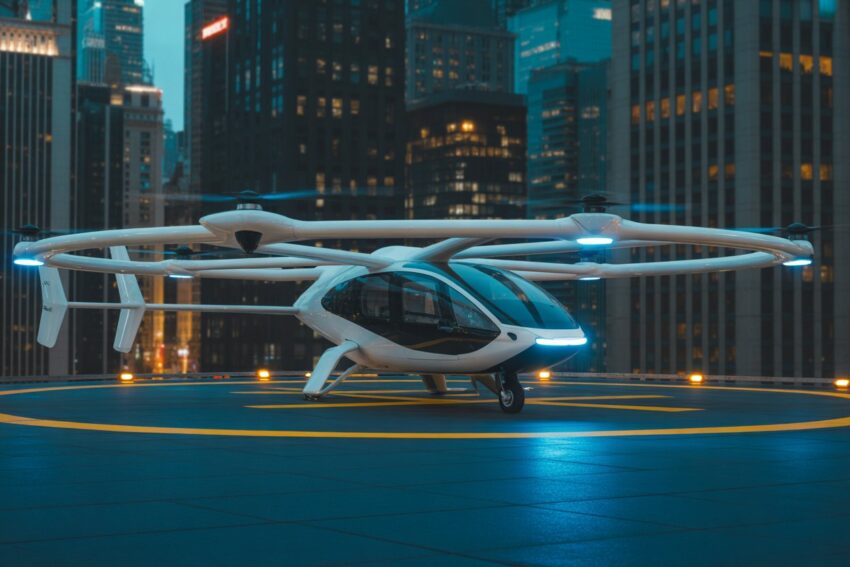
Electric air taxis are on the horizon as the globe moves toward more environmentally friendly modes of transportation. In developing this innovative technology, the United States has joined an increasing number of nations, including Brazil, Canada, the United Kingdom, Japan, South Korea, and more. These cities will transform urban transportation by providing quicker, greener, and more efficient travel choices as electric vertical takeoff and landing (eVTOL) aircraft quickly become a reality. The potential of these zero-emission cars to lower carbon footprints and offer convenient, fast transit between airports and city centers is poised to transform travel and tourism in the future.
Countries such as the United States, Brazil, Canada, United Kingdom, Japan, and South Korea are leading the way in advancing this innovative technology. With sustainability at the heart of the development, electric air taxis will not only help reduce carbon emissions but will also boost the growth of sustainable tourism, offering travelers a faster, greener, and more accessible way to reach airports and tourist hotspots.
United States: Leading the Charge in Electric Air Mobility

The United States is at the forefront of the electric air taxi revolution, with several companies and regulatory bodies actively working to bring eVTOL aircraft to the skies. With the U.S. government’s proactive approach to developing Advanced Air Mobility (AAM), the country is positioned to launch electric air taxis in the coming years, radically changing how urban transportation works.
Key Developments:
- U.S. Department of Transportation released the National Advanced Air Mobility (AAM) Strategy in December 2025, outlining a formal framework for integrating eVTOL aircraft into national airspace. The plan focuses on airspace management, infrastructure development, and safety standards, with trial flights expected to begin in mid-2026.
- Joby Aviation, a major player in the U.S. market, has completed over 9,000 test miles and is progressing through Stage 4 of the FAA certification process. Joby plans to launch commercial services in 2027, initially focusing on major cities like Los Angeles, San Francisco, and New York. The S4 eVTOL aircraft, which will serve as Joby’s primary vehicle, is designed to carry 4 passengers over distances of up to 150 miles with zero emissions.
- Vertical Aerospace launches its U.S. tour in New York City with the introduction of its Valo electric air taxi, a zero-emission aircraft capable of flying 100 miles at 150 mph; the aircraft is set to be certified by 2028, with plans for sustainable airport-to-city center connections, boosting tourism and urban mobility.
- Archer Aviation has partnered with United Airlines and is developing the Midnight eVTOL. The company plans to achieve FAA certification by 2026, with commercial operations expected shortly after. Archer aims to offer quick, sustainable connections between airports and city centers, reducing travel times and improving accessibility for tourists.
Vertical Aerospace Launches U.S. Tour with Valo: A Step Toward Sustainable Electric Air Travel
Vertical Aerospace has launched the U.S. tour of its electric air taxi, Valo, in New York City, bringing it to the U.S. for the first time. This marks a major milestone in the electric aviation revolution, offering a glimpse of the future of sustainable travel.
The Valo is a certification-ready aircraft, designed to carry four passengers with zero emissions and travel up to 100 miles at speeds of 150 mph. With a premium cabin and the option to expand to six seats, Valo aims to reduce fares and offer a sustainable, eco-friendly alternative to traditional transport.
Impact on Sustainable Travel and Tourism
Alongside its U.S. tour, Vertical Aerospace is working with Bristow Group and Skyports Infrastructure to develop electric air travel routes in New York. These will provide airport transfers, event travel, and sightseeing tours, cutting travel time and offering a greener alternative for tourists and locals alike. By connecting major airports to Manhattan in minutes, Valo will offer faster, cleaner mobility, boosting sustainable tourism in the city.
Valo’s certification is expected by 2028, with American Airlines among its key airline partners.
As electric air taxis become more widespread in the U.S., tourism will benefit greatly. Tourists will be able to travel between airports and city centers in minutes, significantly enhancing their overall travel experience. With the potential to save time, reduce carbon emissions, and make cities more accessible, electric air taxis will improve both the sustainability and convenience of travel.
| Company | Progress | Key Dates | Commercial Launch Target |
|---|---|---|---|
| Joby Aviation | FAA Certification Progress | FAA Certification by 2026 | 2027 |
| Archer Aviation | Partnership with United Airlines | Test Flights by 2026 | 2027 |
| Vertical Aerospace | U.S. Tour Launch with Valo | New York, Jan 2026 | 2028 |
Brazil: Preparing for Takeoff with Eve Air Mobility

Brazil is making great strides in electric air mobility, with Eve Air Mobility, a subsidiary of Embraer, leading the way. Eve recently completed the first full-scale prototype flight of its eVTOL aircraft in December 2025, marking a significant milestone for the country in terms of sustainable travel.
Key Developments:
- Eve Air Mobility completed its first full-scale prototype flight in December 2025, a key achievement in the development of eVTOL air taxis in Brazil. The aircraft is designed to carry four passengers over a distance of 60 miles.
- Certification Timeline: Eve is aiming for type certification by 2027, with commercial services expected to begin by the end of 2027. These services will likely start in São Paulo, where electric air taxis will provide airport-to-city center connections.
- Brazil’s National Civil Aviation Agency (ANAC) is working with Eve to ensure the eVTOL aircraft meet all necessary regulatory requirements, ensuring that the aircraft is safe for public use.
For tourism, electric air taxis in Brazil will significantly reduce travel time between airports and major tourist destinations. With faster and more sustainable transport options, tourists will find it easier to explore Brazil’s top attractions, such as Rio de Janeiro and the Amazon Rainforest. The environmental impact will also be much lower compared to traditional fossil-fuel-powered transport, helping to further boost sustainable tourism in Brazil.
| Progress | Key Dates | Commercial Launch Target |
|---|---|---|
| Eve Air Mobility Prototype Flight | December 2025 | 2027 |
| Certification Process with ANAC | Ongoing | 2027 |
Canada: Early Development & Market Projections

While Canada may not see commercial electric air taxi services immediately, the country is heavily involved in the research, development, and regulatory groundwork needed for eVTOL aircraft. Companies like Horizon Aircraft are leading the way in hybrid-electric VTOL aircraft development.
Key Developments:
- Horizon Aircraft, a Canadian company, is working on the Cavorite X7, a hybrid-electric VTOL aircraft designed for regional flights. The first flight of the Cavorite X7 is expected to take place in 2026, with commercial services slated for 2030.
- Transport Canada is in the process of developing regulatory frameworks for eVTOL aircraft and advanced air mobility (AAM). The government is working to ensure that Canada has the necessary infrastructure, certification processes, and safety standards to support electric air taxis in the coming decade.
As electric air taxis are rolled out in Canada, the tourism sector will benefit greatly. By providing faster, cleaner connections to major tourist cities and national parks, electric air taxis will improve accessibility to Canada’s stunning natural landscapes while supporting the country’s commitment to sustainable travel.
| Progress | Key Dates | Commercial Launch Target |
|---|---|---|
| Horizon Aircraft Cavorite X7 Prototype | 2026 | 2030 |
| Transport Canada Regulatory Framework | 2026 | 2030s |
United Kingdom: Poised for Launch with Strategic Partnerships

The United Kingdom is advancing quickly toward commercial eVTOL operations, with several partnerships and regulatory milestones paving the way for the launch of electric air taxis. The UK Civil Aviation Authority (CAA) has already published a roadmap for eVTOL certification, and Joby Aviation is working closely with Virgin Atlantic to provide electric air taxi services in the UK.
Key Developments:
- In June 2025, the UK Civil Aviation Authority (CAA) published a roadmap for eVTOL certification, outlining the steps needed to safely introduce these aircraft into the country’s airspace. The UK government’s Future of Flight Action Plan envisions eVTOL services launching by 2028.
- Joby Aviation and Virgin Atlantic have announced plans to operate electric air taxi services in the UK, connecting major airports to city centers. These services are expected to begin by 2028, once the necessary certifications are obtained.
As eVTOL aircraft become a reality in the UK, tourists will benefit from faster access to the country’s most popular destinations. With connections between airports and tourist hotspots like London, Manchester, and Edinburgh, electric air taxis will transform how visitors travel within the UK.
| Progress | Key Dates | Commercial Launch Target |
|---|---|---|
| Joby Aviation & Virgin Atlantic Partnership | 2025 | 2028 |
| CAA Certification Roadmap | June 2025 | 2028 |
Japan: Expo 2025 Demos and AAM Developments

Japan is preparing for electric air taxis with the upcoming 2025 Osaka World Expo, where eVTOL aircraft will be demonstrated to the public. The country’s commitment to advanced air mobility is clear, and commercial operations are expected to begin by 2028.
Key Developments:
- Joby Aviation and ANA Holdings will showcase eVTOL aircraft during the 2025 Osaka World Expo. This will be one of the first major public demonstrations of electric air taxis in Japan.
- The Japan Civil Aviation Bureau (JCAB) has already established a regulatory framework for advanced air mobility, with plans for commercial services to begin by 2028.
For tourists traveling to Japan, electric air taxis will provide fast, environmentally friendly transportation between airports and popular tourist destinations such as Kyoto, Osaka, and Tokyo. This will significantly reduce travel time and make tourist experiences more accessible.
| Progress | Key Dates | Commercial Launch Target |
|---|---|---|
| Expo 2025 Osaka eVTOL Demos | 2025 | 2028 |
| JCAB Regulatory Framework | 2025 | 2028 |
South Korea: Industry Partnerships and Market Development Roadmap

South Korea is rapidly advancing its electric air mobility goals, with major partnerships and a strong regulatory roadmap in place. In October 2025, Archer Aviation partnered with Korean Air to bring 100 eVTOL aircraft to South Korea’s cities.
Key Developments:
- Archer Aviation and Korean Air announced a partnership in October 2025, with the goal of introducing 100 eVTOL aircraft into South Korea’s transportation network.
- South Korea’s government has been developing an AAM roadmap, with test flights set to begin in 2027 and commercial operations planned for the late 2020s.
As electric air taxis take to the skies in South Korea, tourists will benefit from quick, affordable air travel, reducing traffic congestion and providing easy access to city centers and popular tourist sites.
| Progress | Key Dates | Commercial Launch Target |
|---|---|---|
| Archer Aviation & Korean Air Partnership | October 2025 | 2028 |
| South Korea AAM Regulatory Framework | Ongoing | 2028 |
Conclusion: A Sustainable Future for Air Travel
The development of electric air taxis is no longer just an idea—it’s quickly becoming a reality. As Joby Aviation, Eve Air Mobility, Archer Aviation, and other innovators push forward with the certification process, electric air taxis are poised to become a key part of the transportation landscape in cities around the world. These eVTOL aircraft will reduce travel times, cut emissions, and provide an eco-friendly alternative to traditional travel options, benefiting both tourism and urban mobility.
In countries like the United States, Brazil, Canada, the United Kingdom, Japan, and South Korea, eVTOL aircraft are set to reshape how we get around, making travel quicker, more convenient, and more sustainable. As we approach 2026–2028, the skies are on the verge of being filled with electric air taxis, offering faster, cleaner travel for consumers and tourists alike.
| Country | Progress | Commercial Launch Target |
|---|---|---|
| USA | FAA Certification Progress | 2026–2027 |
| Brazil | Eve Air Mobility Prototype | 2027 |
| Canada | Horizon Aircraft Prototype | 2030s |
| UK | Joby and Virgin Atlantic Partnership | 2028 |
| Japan | Expo 2025 Demos | 2028 |
| South Korea | Archer Aviation & Korean Air Partnership | 2028 |
As electric air taxis take to the skies, we will witness the future of travel unfold before us. These technologies are transforming cities and offering tourists and commuters a sustainable, convenient, and efficient way to navigate urban landscapes—boosting both tourism and sustainable mobility. The sky truly is the limit.
The US joins Brazil, Canada, the UK, Japan, South Korea, and more in advancing electric air taxis. This revolutionary technology promises to boost sustainable travel and mobility, transforming urban transportation worldwide.
The United States, Brazil, Canada, the United Kingdom, Japan, South Korea, and other countries are leading the way in revolutionising urban transportation as electric air taxis become a reality. By providing efficient, environmentally friendly substitutes for conventional transportation, this technology has the potential to greatly increase sustainable travel and mobility. The future of travel appears to be quicker, greener, and more accessible because to these nations’ increasing commitment to integrating eVTOL aircraft, opening the door to a new age in international movement.
The post US Joins Brazil, Canada, UK, Japan, South Korea, and More as Electric Air Taxis Edge Closer to Reality Boosting Sustainable Travel and Mobility: Everything You Need to Know appeared first on Travel And Tour World.
