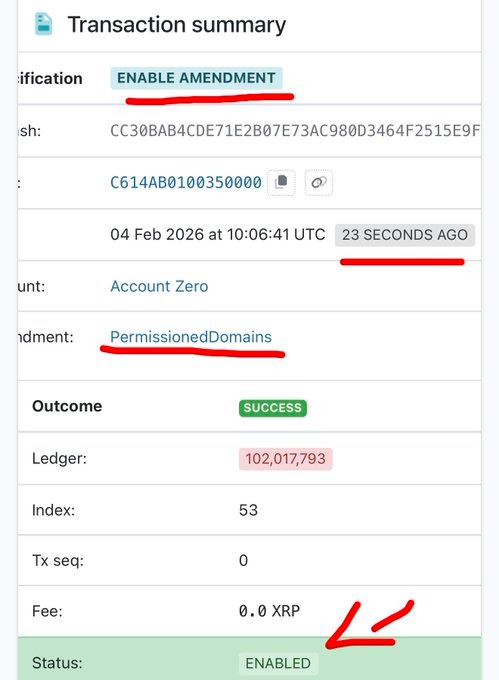
The XRP Ledger has taken a major step toward regulated blockchain adoption with the activation of a new feature called Permissioned Domains. The update went live on February 4, after receiving strong support from network validators, and is designed to help institutions use blockchain technology while staying compliant with regulations.
What Are Permissioned Domains on XRP Ledger?
Permissioned Domains allow users to create a restricted area on the public XRP Ledger where only approved accounts can take part. This allows developers, banks, and regulated companies to build apps where only verified users can access certain services.
This feature works with the Credentials system, which helps confirm things like KYC and AML checks directly on the blockchain. Together, they make it possible to run secure financial activities on a public network while keeping access limited and controlled.
The amendment was activated at ledger index 102,017,953, and the first Permissioned Domain appeared on the network immediately after launch.
Strong Validator Support Drove the Upgrade
The amendment, known as XLS-80, needed at least 80% validator approval for two consecutive weeks to go live. That threshold was reached in late January, and by the time activation occurred, more than 90% of validators had voted in favor.
This level of support shows broad agreement within the XRP Ledger community that controlled access features are important for the network’s future growth.
Another related upgrade, called Permissioned DEX, is also approaching activation and is expected to go live around February 18 if voting continues at current levels.
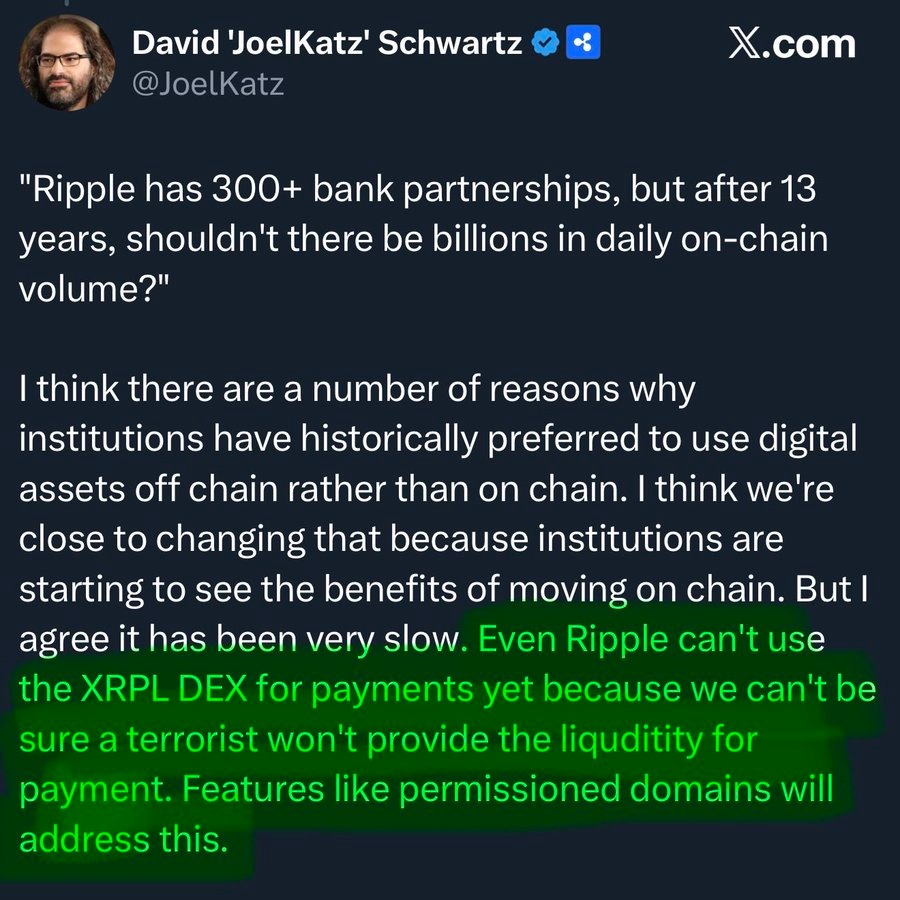
Ripple’s CTO explained that compliance has long been a barrier for institutions wanting to use public blockchains. Permissioned Domains help solve that problem by allowing liquidity pools, trading features, and payment flows to operate only among verified participants.
This makes it easier for institutions to safely use blockchain technology for stablecoins, foreign exchange trades, tokenized assets, and cross-border payments, without violating regulatory rules.
With Permissioned Domains now live, the XRP Ledger is positioning itself as a network that can support both open innovation and regulated financial use cases.
Never Miss a Beat in the Crypto World!
Stay ahead with breaking news, expert analysis, and real-time updates on the latest trends in Bitcoin, altcoins, DeFi, NFTs, and more.
FAQs
What are Permissioned Domains on the XRP Ledger?
Permissioned Domains let institutions restrict access on XRP Ledger, allowing only verified accounts to use certain apps and services securely.
How do Permissioned Domains help with compliance?
They work with blockchain credentials to enforce KYC and AML checks, letting banks and businesses operate safely on a public ledger.
Who can use Permissioned Domains on XRP Ledger?
Banks, developers, and regulated companies can use Permissioned Domains to run apps and services for verified participants only.
What is the benefit of Permissioned Domains for enterprises?
They enable secure trading, stablecoin flows, and tokenized assets while ensuring regulatory compliance on a public blockchain.
Following the regulatory clarity of XRP, institutions and banking giants rushed to get their hands on XRP. And what’s more stable than an ETF?
In a recent investment disclosure, Bank of America has shown its exposure in XRP through investment in an XRP exchange-traded fund (ETF). This shows that the bank continued to deepen its partnership with Ripple, exploring cross-border payments and RLUSD stablecoin.
Bank of America Discloses XRP ETF Holdings
As per the latest U.S. SEC filing, Bank of America holds around 13,000 shares of the Volatility Shares XRP ETF, with a total value of about $224,640. While this investment is small compared to the bank’s overall portfolio, it is still an important step toward institutional crypto adoption.
What makes this move more interesting is that Bank of America recently expanded its crypto-related services. On January 5, 2026, the bank allowed its wealth advisors to begin recommending crypto ETFs to clients for the first time.
This move follows Bank of America’s shift in strategy, where Bank of America started supporting limited crypto exposure of up to 1–4% in client portfolios, mainly through regulated investment products like ETFs.
Institutional Growing Interest in XRP ETFs
Rising institutional demand for XRP ETFs is a key trend in the market. U.S. spot XRP ETFs have seen strong inflows and rapid growth since their launch, putting them on track to near $1.20 billion in assets under management (AUM) in a short period.
In fact, XRP ETF products have recorded extended streaks of inflows as demand from pension funds, asset managers, and advisory firms increases.
On 3 feb XRP ETF recorded an inflow of $19.46 million.
Even with strong institutional activity, the XRP price has remained weak. As of now, XRP is trading around $1.59, reflecting a drop of about 1%.
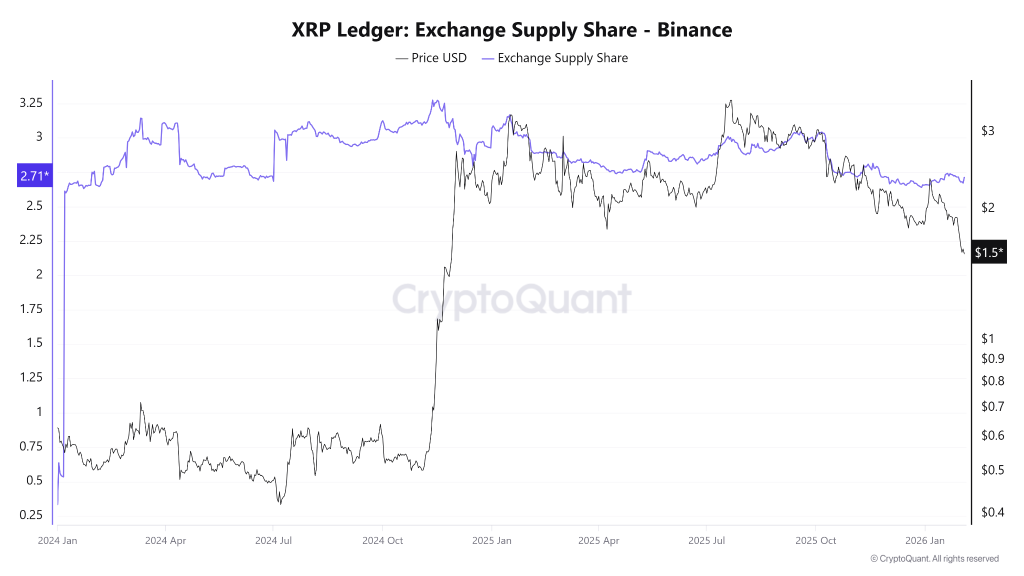
Perhaps, Cryptoquant data shows that the XRP exchange supply on Binance has been shrinking. From early 2025, the exchange stayed relatively stable around 2.7% – 3.1%.
This suggests holders are moving XRP to private wallets instead of selling, which indicates accumulation and potentially reduced selling pressure.
Never Miss a Beat in the Crypto World!
Stay ahead with breaking news, expert analysis, and real-time updates on the latest trends in Bitcoin, altcoins, DeFi, NFTs, and more.
FAQs
Why are institutions investing in XRP ETFs?
Institutions invest in XRP ETFs for regulated crypto exposure, portfolio diversification, and to participate in Ripple’s cross-border payment network.
Has XRP price reacted to institutional ETF inflows?
Despite strong ETF inflows, XRP trades around $1.59, showing little change as accumulation suggests reduced selling pressure.
Are XRP ETFs safe for client portfolios?
XRP ETFs offer regulated crypto exposure, limiting risk to 1–4% of a portfolio, making them a safer option for wealth advisors and investors.
Binance founder Changpeng Zhao, widely known as CZ, has strongly denied claims that Binance manipulated Bitcoin prices during the October 10 market crash, which led to $20 billion in market liquidation.
He said the fall was caused by global tariff announcements, not by Binance systems or trading activity.
CZ Denies Binance Role in October Crash
Speaking during a recent AMA session, CZ addressed concerns from users who blamed Binance for the sudden market drop on October 10.
However, CZ called those accusations misleading and incorrect. He explained that the sudden fall in crypto prices came immediately after major tariff announcements, which triggered fear across global financial markets.
CZ made it clear that Binance had nothing to do with the fall in Bitcoin prices. He said the timing of the crash proves it was linked to economic news and not to any technical issue on the exchange.
CZ: No One in the World Is Crazy Enough to Manipulate Bitcoin
On January 31, Binance founder Changpeng Zhao stated in an AMA that the October 10 market crash was triggered by a tariff announcement, not Binance system error or price manipulation. He emphasized neither he nor… pic.twitter.com/ZFPtdGEkU0
CZ also made it clear that Binance does not trade cryptocurrencies to profit from price movements. He said the company’s role is to provide a trading platform, not to speculate or control markets.
“We don’t buy or sell crypto to make money from price changes,” CZ said, pushing back against claims that Binance benefits from market swings.
He also rejected rumors that Binance or he personally profited from trading during the crash.
CZ stated clearly that Binance does not trade crypto to make profits from price movements. The platform only provides services for users to buy and sell.
Addressing rumors of price manipulation, CZ said the idea is unrealistic. He pointed out that Bitcoin is now a nearly $2 trillion market.
To significantly move Bitcoin’s price, someone would need to risk hundreds of billions of dollars. “No one in their right mind would do that.”
He said, “I don’t know anyone on the planet who is crazy enough to try to manipulate Bitcoin.”
Lastly, CZ also highlighted that Binance is now a regulated company under the Abu Dhabi Global Market (ADGM). The exchange is closely monitored by regulators, and even U.S. compliance teams oversee its operations.
Because of this strict oversight, he said Binance cannot engage in any unfair activity. All trades on the platform are reviewed by regulators, making manipulation impossible.
Never Miss a Beat in the Crypto World!
Stay ahead with breaking news, expert analysis, and real-time updates on the latest trends in Bitcoin, altcoins, DeFi, NFTs, and more.
FAQs
Could Binance face legal or regulatory consequences from the October 10 crash?
Even though CZ denies involvement, regulators could still review trading activity across all exchanges to ensure no market manipulation occurred. Binance’s oversight under ADGM and U.S. compliance teams may help mitigate legal exposure, but investigations could affect reporting requirements or future audits.
How might this crash affect retail crypto investors?
Investors who experienced losses may adjust their trading strategies, possibly moving to stablecoins or less volatile assets. Market sentiment can remain cautious for weeks after a large liquidation event, impacting liquidity and short-term price volatility.
Could other exchanges be implicated in similar price movements?
Large-scale Bitcoin price swings often involve activity across multiple exchanges due to arbitrage and liquidity chains. Regulators may monitor whether coordinated selling occurred anywhere, not just on Binance, to determine systemic market risks.
Michael Burry, the investor famous for predicting the 2008 financial crisis, has issued a strong warning about Bitcoin. He has warned that the ongoing Bitcoin crash could seriously damage crypto miners and companies that hold large amounts of Bitcoin.
In a recent Substack post, Michael Burry said that Bitcoin has failed to prove itself as a safe store of value like gold or silver. He described it as a purely speculative asset that moves mainly on market hype.
While precious metals have recently reached record highs, Bitcoin has continued to slide lower.
He said Bitcoin has not reacted positively to typical market drivers like dollar weakness or geopolitical tensions. Instead, it is moving closely with the stock market, especially the S&P 500.
Burry pointed out that Bitcoin’s correlation with the S&P 500 has reached around 0.50, showing that it is acting more like a tech stock than an independent asset.
Michael Burry Warns Bitcoin Price To Crash To $50K
Since October, Bitcoin has already dropped around 40% from its high of $126,000, and Burry believes the worst may still be ahead.
However, Bitcoin recently fell below $73,000, its lowest level in over a year, due to weaker demand and lower liquidity.
He further criticized Bitcoin exchange-traded funds ETFs, which have seen some of their biggest outflows in recent months. He believes ETFs have increased speculation and made price swings even sharper.
Therefore, he believes that Bitcoin could further slide toward $50,000, which could seriously hurt miners and companies tied to crypto.
Bitcoin Holding Company & Miners May Face Heavy Risks
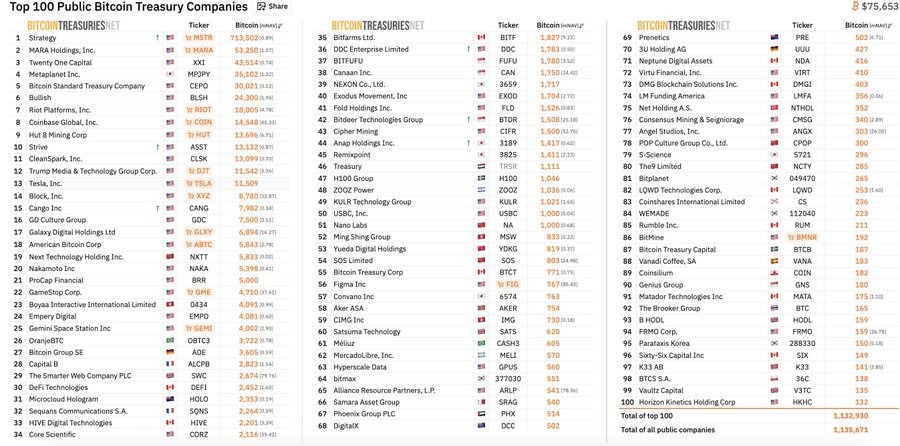
Burry is even more worried about large companies that hold Bitcoin on their balance sheets. He warned that firms like Strategy Inc., one of the biggest corporate Bitcoin holders, face serious risks.
If Bitcoin falls another 10%, the company could face billions of dollars in losses and struggle to raise new funds.
He also warned that continued price drops could push many Bitcoin mining firms toward bankruptcy. Since miners depend on high Bitcoin prices to stay profitable, a deeper crash could destroy their business models.
Never Miss a Beat in the Crypto World!
Stay ahead with breaking news, expert analysis, and real-time updates on the latest trends in Bitcoin, altcoins, DeFi, NFTs, and more.
FAQs
Why could a Bitcoin drop to $50K impact financial markets beyond crypto?
A sharp Bitcoin decline could strain companies holding large crypto positions, potentially affecting investor confidence, lending markets, and related tech stocks tied to crypto ecosystems.
What risks do corporate Bitcoin holdings pose to company finances?
Companies with significant Bitcoin reserves may face balance sheet volatility, impaired credit access, and potential write-downs, which could influence stock prices and investor sentiment.
Could this situation trigger regulatory or market interventions?
Persistent market stress from a steep Bitcoin decline could prompt regulators like the SEC or CFTC to issue guidance or scrutiny on trading practices, ETFs, and corporate disclosures.
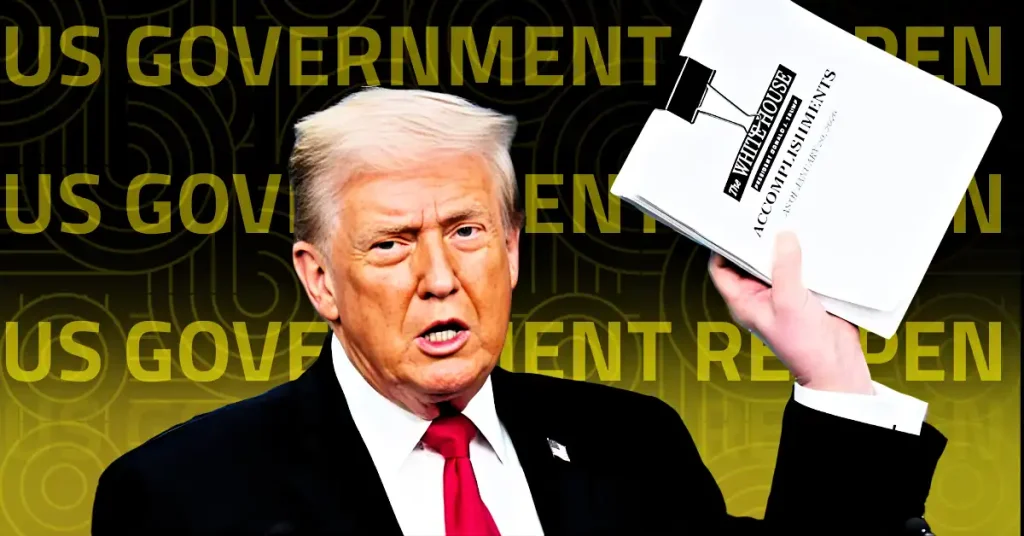
US President Donald Trump has signed a massive $1.2 trillion government funding bill, bringing an end to a brief four-day federal shutdown. The shutdown began over the weekend after lawmakers failed to reach an agreement on key spending measures.
The decision has reduced political uncertainty and brought a positive reaction in the crypto market, especially for Bitcoin.
Trump Signs $1.2 Trillion Bill Ending Government Shutdown
On February 3, 2026, US President Donald Trump signed the Consolidated Appropriations Act of 2026, a massive $1.2 trillion spending bill.
The bill was passed by Congress in the House by a narrow margin, 217-215. It finalizes 11 major annual spending bills that cover government programs and operations for the rest of the fiscal year.
BREAKING: The law being signed by President Trump SLASHES $10B in wasteful and fraudulent foreign aid, ENDS taxpayer grants to NPR and PBS, and solidifies the closure of USAID
With Trump’s signature, most federal agencies will now remain funded through September 30, 2026.
Key Highlights of the Spending Bill
The newly signed bill includes several important changes. It cuts funding for NPR and PBS, reduces foreign aid by nearly $10 billion, raises military pay, and increases money for deportation flights. It also confirms that USAID will be closed as part of budget reforms.
However, not everything is settled yet. The spending plan for the Department of Homeland Security is still under negotiation, with Democrats pushing for tighter limits on enforcement actions.
The bill also showed divisions inside the Republican Party, as some members disagreed with parts of the spending plan.
House Democratic Leader Hakeem Jeffries said Democrats will not support any more short-term funding for Homeland Security unless major changes are made. This creates a risk of another partial government shutdown soon.
How the Bill Impacts the Crypto Market
The bill does not include any direct rules for cryptocurrency, but it still affects the crypto market in important ways. As the bill was signed, Bitcoin saw a small recovery bounce from $75,600 and $77,310.
During the four-day shutdown, regulators like the SEC and CFTC were partly inactive, which slowed crypto approvals and ETF discussions.
With the government now reopened, key economic data, including the January jobs report and weekly jobless claims, will be released on time. These reports influence Federal Reserve decisions, which have a strong impact on crypto prices.
Never Miss a Beat in the Crypto World!
Stay ahead with breaking news, expert analysis, and real-time updates on the latest trends in Bitcoin, altcoins, DeFi, NFTs, and more.
FAQs
What does the $1.2 trillion funding bill do?
It ends the four-day shutdown and funds most federal agencies through Sept 30, 2026 with $1.2T in approved spending.
How did the bill affect Bitcoin and crypto markets?
It eased uncertainty; Bitcoin rebounded as markets welcomed reopened agencies and timely economic data that guide Fed expectations.
Does the bill include new cryptocurrency regulations?
No. It adds no crypto rules, but reopening the SEC and CFTC restarts reviews, data releases, and ETF-related processes.
Is another government shutdown still possible?
Yes. DHS funding is still disputed, and party divisions mean a partial shutdown risk remains if talks stall.
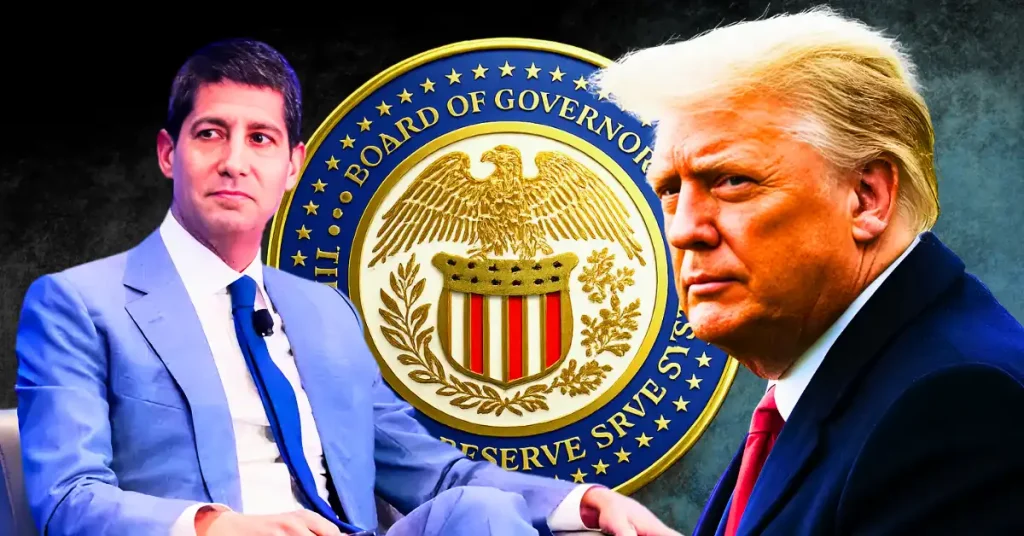
The nomination of Kevin Warsh as the next Chair of the US Federal Reserve is already facing serious hurdles. The group, led by Senator Elizabeth Warren are pushing back strongly, warning that the warsh nomination should not move forward while major investigations involving current Fed Jerome Powell remain unresolved.
Why Democrats Want Warsh’s Fed Nomination To Be Delayed
In a letter to the committee, the Democrats demanded that “any nomination proceedings for Mr. Warsh” be put on hold until the investigations are fully completed. They believe it would be unfair and politically risky to replace Powell while the cases are still open.
Jerome Powell is currently being investigated by the Department of Justice over possible issues tied to $2.5 billion in extra renovation costs at the Federal Reserve headquarters.
Although Powell has called the investigation “unprecedented” and hinted that it may be connected to political pressure from President Donald Trump over policy disagreements.
At the same time, Fed Governor Lisa Cook is reportedly dealing with a separate legal issue connected to an alleged mortgage fraud case. Trump had previously tried to remove Cook from her role, but she remains in office for now.
Concerns Over Federal Reserve Independence
Democrats say these investigations are being used as a political tool to weaken the independence of the Federal Reserve. They argue that allowing Trump to choose a new Fed Chair while two sitting officials are under investigation creates a dangerous situation.
The letter from Democratic lawmakers warned that letting the administration influence the Fed in this way could damage the credibility of the central bank.
They called the situation “absurd” and accused the government of trying to take control of the Fed through legal pressure.
Thin Senate Margin Gives Democrats Leverage
The Senate Banking Committee is narrowly divided, with 13 Republicans and 11 Democrats. While Democrats alone cannot block the nomination, even a single Republican dissent would be enough to stall Warsh’s confirmation.
That risk became real after Senator Thom Tillis announced he would oppose any Federal Reserve nominations until the investigations conclude. His stance effectively gives Democrats the leverage needed to delay the process.
Perhaps, until the investigations are closed, Warsh’s nomination is unlikely to advance smoothly. Even if Republicans push forward, the risk of a committee deadlock remains high.
Never Miss a Beat in the Crypto World!
Stay ahead with breaking news, expert analysis, and real-time updates on the latest trends in Bitcoin, altcoins, DeFi, NFTs, and more.
FAQs
Who is Kevin Warsh and why did Trump nominate him as Fed chair?
Kevin Warsh is a former Federal Reserve governor and Stanford fellow, nominated by Trump for his deep experience in monetary policy and markets.
Why do Democrats want to delay Kevin Warsh’s Fed nomination?
Democrats say replacing the Fed Chair while investigations into current officials are ongoing risks politicizing the central bank and harming its credibility.
Can Democrats block Kevin Warsh’s confirmation?
They can’t block it alone, but with the Senate narrowly split, one Republican opposing the move could stall the nomination process.
What role does Donald Trump play in the controversy?
Democrats argue the investigations may be used to pressure the Fed, allowing Trump to reshape leadership amid unresolved legal scrutiny.
The live price of the VeChain token is $ 0.00857868.
Price predictions for 2026 range from $0.035 to $0.088.
VET could extend toward $0.450 by 2030, if recovery structure holds.
VeChain (VET) enters the current market phase at a point where long-term fundamentals and price behavior are gradually beginning to align. As one of the earliest blockchain networks focused on real-world enterprise adoption, VeChain has spent years building infrastructure around supply-chain tracking, data transparency, and business-level integrations. While broader market interest faded during the prolonged correction, the protocol continued developing quietly, preserving its relevance beyond speculative cycles.
From a technical standpoint, VET’s chart structure no longer reflects panic-driven selling. Instead, price action has shifted into controlled consolidation, marked by lower volatility and consistent reactions around established demand zones. This type of behavior often suggests the market is transitioning from extended distribution into a valuation phase. As the year progresses, attention turns to whether VeChain can maintain this base and convert stability into a broader recovery move heading toward 2026.
As February unfolds, VeChain’s price action indicates that the market is prioritizing balance rather than momentum. VET has been rotating within a defined range, with buyers repeatedly defending the $0.020–$0.023 zone, while upside attempts continue to face supply pressure near $0.035–$0.038. As long as price holds above this lower support band, the broader structure remains constructive.
Rather than signaling weakness, this sideways movement suggests that selling pressure is being absorbed. A sustained break above the upper resistance zone would improve short-term sentiment, but even continued consolidation within this range supports the view that VeChain is building a base rather than entering a renewed downtrend.
VeChain (VET) Price Prediction 2026
Looking ahead, 2026 appears to be a transition year for VeChain, where prolonged consolidation may evolve into early trend development. The extended compression visible on higher timeframes suggests that speculative excess from previous cycles has largely been unwound, allowing price to rebuild on a firmer foundation.
During the first half of 2026, VET is likely to continue rotating within a broad band, potentially revisiting support near $0.030–$0.040 while making repeated attempts to reclaim resistance around $0.060. This range-bound behavior is typical during accumulation phases, where long-term participants gradually establish positions. If VeChain manages to reclaim and hold above the $0.060–$0.070 region later in the year, the technical structure would open the door for an advance toward the $0.088 level by year-end. Such a move would likely unfold gradually, supported by higher lows and improving trend consistency rather than sharp, speculative spikes.
VeChain Crypto Price Prediction 2026 – 2030
Year
Potential Low ($)
Potential Average ($
Potential High ($)
2026
0.035
0.060
0.088
2027
0.055
0.095
0.140
2028
0.085
0.160
0.250
2029
0.130
0.240
0.360
2030
0.200
0.350
0.450
VET Token Price Projection 2026
In 2026, VeChain price could project a low price of $0.035, an average price of $0.060, and a high of $0.088.
VeChain Coin Price Target 2027
As per the VeChain Price Prediction 2027, VET may see a potential low price of $0.055. Meanwhile, the average price is predicted to be around $0.095. The potential high for VET price in 2027 is estimated to reach $0.140.
VET Crypto Price Action 2028
In 2028, VeChain price is forecasted to potentially reach a low price of $0.085 and a high price of $0.250.
VeChain (VET) Price Forecast 2029
Thereafter, the VeChain (VET) price for the year 2029 could range between $0.130 and $0.360.
VeChain Price Prediction 2030
Finally, in 2030, the price of VeChain is predicted to maintain a steady positive. It may trade between $0.200 and $0.450.
The long-term projection assumes VeChain sustains relevance in enterprise blockchain use cases, with growth moderating over time as the asset matures.
Year
Potential Low ($)
Potential Average ($)
Potential High ($)
2031
0.30
0.40
0.60
2032
0.26
0.50
0.60
2033
0.30
0.55
0.75
2040
0.42
0.85
1.20
2050
0.65
1.40
2.20
VeChain (VET) Price Prediction: Market Analysis?
Year
2026
2027
2030
Changelly
$0.071
$0.105
$0.42
CoinCodex
$0.058
$0.082
$0.330
WalletInvestor
$0.086
$0.0125
$0.480
CoinPedia’s VeChain Price Prediction
Coinpedia’s price prediction suggests that VeChain is currently progressing through a late-stage accumulation phase. If VET continues holding its base and successfully reclaims higher resistance levels, the token could trade near $0.088 by the end of 2026, with longer-term potential extending toward the $0.30–$0.45 range by 2030, depending on market participation and trend strength.
Year
Potential Low ($)
Potential Average ($)
Potential High ($)
2026
0.035
0.060
0.088
Never Miss a Beat in the Crypto World!
Stay ahead with breaking news, expert analysis, and real-time updates on the latest trends in Bitcoin, altcoins, DeFi, NFTs, and more.
FAQs
What is the VeChain (VET) price prediction for 2026?
VeChain is projected to trade between $0.035 and $0.088 in 2026, with price action shaped by consolidation, accumulation, and gradual trend development.
What is the VeChain price prediction for 2027?
VeChain price prediction for 2027 suggests VET could trade between $0.055 and $0.140, supported by accumulation and gradual trend expansion.
What is the VET Chain price prediction for 2030?
VeChain price prediction for 2030 estimates a range of $0.200 to $0.450 if enterprise adoption grows and long-term market trends remain positive.
What is the VeChain price forecast for 2035?
VeChain price prediction for 2035 assumes steady maturity, with VET potentially trading between $0.45 and $0.75 as growth moderates over time.
What is the VeChain price prediction for 2040?
VeChain price prediction for 2040 projects VET could range from $0.85 to $1.20 if it maintains relevance in enterprise blockchain solutions.
How high can VeChain price go in 2025?
VeChain price in 2025 could range between $0.030 and $0.060 if consolidation holds and market conditions gradually improve without strong speculative momentum.
Is VeChain a long-term investment?
VeChain’s focus on enterprise blockchain use cases supports its long-term outlook, though price growth is expected to be gradual rather than explosive.
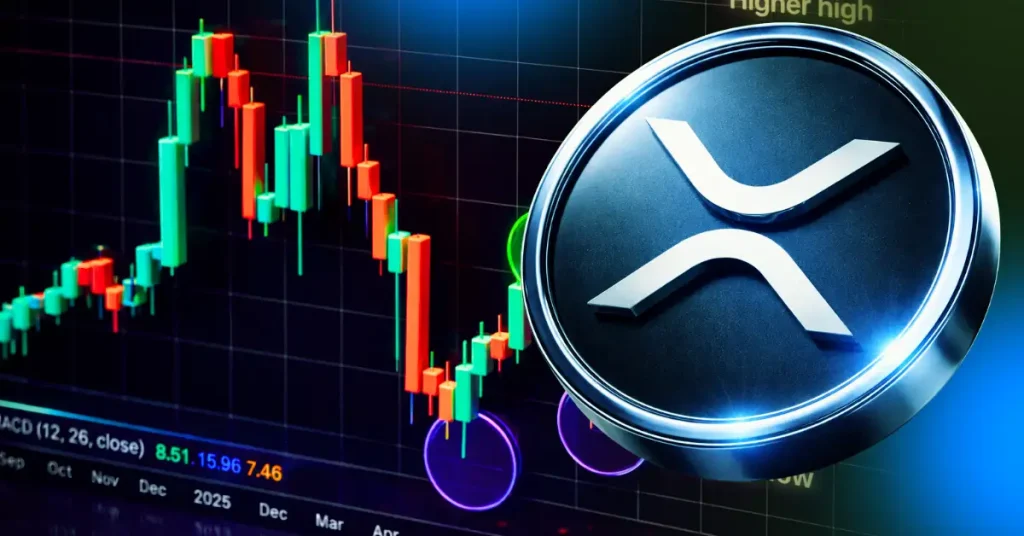
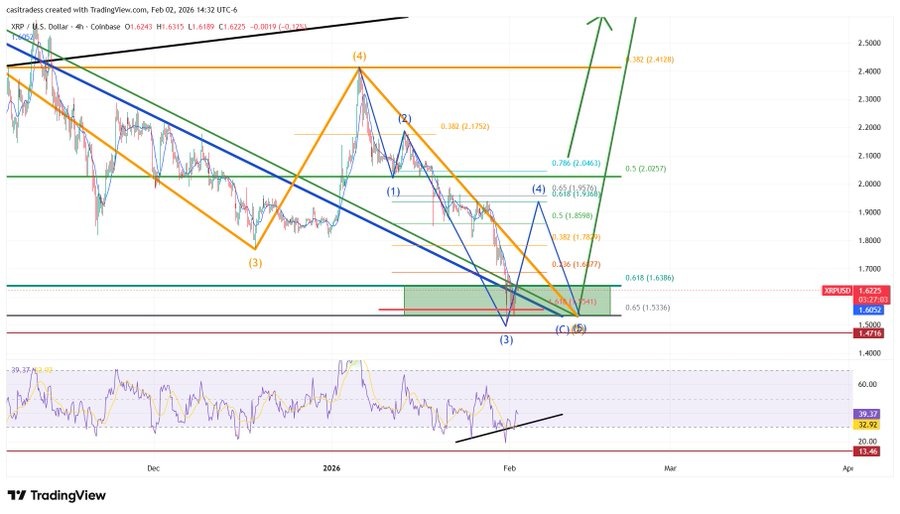
Amid an overall crypto market decline, the XRP price has fallen nearly 15% this week to the $1.53 zone. Despite the drop, veteran trader CasiTrades sees signs of a short-term recovery towards $2 as XRP tests a key technical support area known as the golden pocket.
XRP Rally Fades as Market Sentiment Turns Bearish
XRP started 2026 on a strong bullish note, rising nearly 30% to reach a high of $2.41 in the early weeks of January. This rally was mainly driven by growing regulatory clarity and optimism around new XRP ETF approvals, which attracted millions of dollars in steady inflows.
However, that positive momentum did not last long. As market excitement cooled, many investors began booking profits, leading to a broader sell-off. XRP was not spared from this shift and soon slipped back below the important $2 level.
Fast forward to today, XRP is trading near $1.60 and showing early signs of stabilization after recently falling to a low of $1.53.
Important Resistance Levels to Watch for XRP
As per Casitrade’s analysis, XRP has completed a major downside move and is now sitting in what traders call the “golden pocket” support zone.
Looking at her XRP price chart, the recent drop followed an Elliott Wave pattern, with Wave 3 ending near the $1.55 to $1.60 area. This level acted as solid support and helped stop the fall.
Now traders are watching for a possible Wave 4 relief rally. As the first key resistance level to watch is around $1.78, which matches the 0.382 Fibonacci retracement and could act as a barrier.
Further, CasiTrades explains that Wave 2, earlier in the cycle, was very shallow. In Elliott Wave theory, when Wave 2 is shallow, Wave 4 usually becomes deeper. That means XRP could push higher than many expect during this relief rally.
If buyers step in with strength, XRP could move toward $1.93 or even $2.03. The $2.03 level is especially important because it represents the macro 0.5 retracement zone.
Why $2.03 Is a Critical Level for XRP
CasiTrades analysis highlights that XRP must reclaim $2.03 and hold above it to change the current bearish structure. If the price successfully breaks and stays above this level, it would reduce the chances of another drop toward $1.55 or lower.
A strong move above $2.03 could also increase the possibility that the expected final bearish wave fails, opening the door for a larger recovery.
Never Miss a Beat in the Crypto World!
Stay ahead with breaking news, expert analysis, and real-time updates on the latest trends in Bitcoin, altcoins, DeFi, NFTs, and more.
FAQs
What will XRP be in 2026 price prediction?
XRP price predictions for 2026 range between $3.45 and $5.05, depending on ETF inflows, market sentiment, and sustained demand above key levels.
What will XRP be worth in 2030?
By 2030, XRP forecasts suggest a potential range of $17 to $26.50 if adoption grows and Ripple maintains its role in global payments.
How much will 1 XRP be worth in 2040?
Long-term projections estimate XRP could trade between $97 and $179 by 2040, assuming continued network usage and institutional integration.
Is XRP a good investment going into 2026?
XRP’s outlook for 2026 depends on ETF inflows, broader crypto sentiment, and its ability to hold key support levels above $2.
Dubai is taking a big step toward the future of digital assets. Billiton Diamond and tokenization company Ctrl Alt have partnered to launch a major diamond tokenization project worth more than $280 million.
The initiative aims to make diamond trading faster, more transparent, and easier to access for investors around the world.
Diamond Tokenization To Be Minted On XRPL
In a recent press release by Ctrl Alt, the company confirmed a historic partnership with Billiton Diamond to tokenize more than AED 1 billion ($280 million) worth of polished diamonds in Dubai.
This collaboration aims to modernize the diamond industry by using blockchain technology to make diamond trading more transparent, secure, and efficient.
The project focuses on turning physical diamonds into digital tokens that can be easily tracked, transferred, and verified on the blockchain.
These tokenized assets are being minted on the XRP Ledger, a fast and low-cost blockchain network, while Ripple’s enterprise-grade custody technology is being used to secure the assets.
How Diamond Tokenization Will Change the Industry
Traditionally, buying and selling diamonds has been a slow and complex process. Investors often face challenges such as limited transparency, high costs, and difficulty in verifying authenticity. Through tokenization, every diamond can now have a digital record showing its origin, grading, and ownership history.
The company is also exploring ways to enable future trading of tokenized diamonds on primary and secondary markets.
However, all these activities will be subject to approval from Dubai’s Virtual Assets Regulatory Authority (VARA).
Industry leaders believe this project could change how diamonds are bought and sold. According to Billiton Diamond’s Joint Owner Jamal Akhtar, tokenization turns diamonds from an illiquid asset into a transparent and investable digital product. He added that it can improve liquidity and shorten working capital cycles for traders and manufacturers.
Ripple’s Managing Director for Middle East & Africa, Reece Merrick, also highlighted that the initiative proves high-value physical assets can be safely managed on-chain.
Ripple is proud to support Billiton Diamond and @CtrlAltCo who have tokenized over AED 1 billion ($280m) of certified polished diamonds on the XRPL.
This initiative shows how @Ripple's technology can bridge the gap between physical assets and the digital economy, utilising our…
“Ripple is proud to support Billiton Diamond and Ctrl Alt, who have tokenized over AED 1 billion ($280m) of certified polished diamonds on the XRPL.”
With strong regulatory support and advanced technology, Dubai is positioning itself as a global leader where traditional commodities meet the digital economy.
Never Miss a Beat in the Crypto World!
Stay ahead with breaking news, expert analysis, and real-time updates on the latest trends in Bitcoin, altcoins, DeFi, NFTs, and more.
FAQs
What is diamond tokenization and how does it work?
Diamond tokenization converts physical diamonds into digital tokens on blockchain, allowing secure, transparent, and tradable ownership.
How does tokenizing diamonds benefit investors?
It increases transparency, reduces costs, and improves liquidity by making diamonds easily tradable digital assets with clear provenance and ownership records.
Is tokenized diamond trading regulated in Dubai?
Yes, all trading of tokenized diamonds will require approval from Dubai’s Virtual Assets Regulatory Authority (VARA), ensuring compliance and investor protection.
As the Epstein files continue to be released, new claims are surfacing almost every day, raising serious concerns. One recent claim circulating on X and within crypto circles alleges that Israel secretly gained control of the Bitcoin network more than a decade ago.
The claim also tries to connect the newly discussed Epstein files with Bitcoin core developers, Blockstream, and Tether.
So Coinpedia stepped in to fact-check whether the claim is real or just another false allegation.
Who Made This Claim?
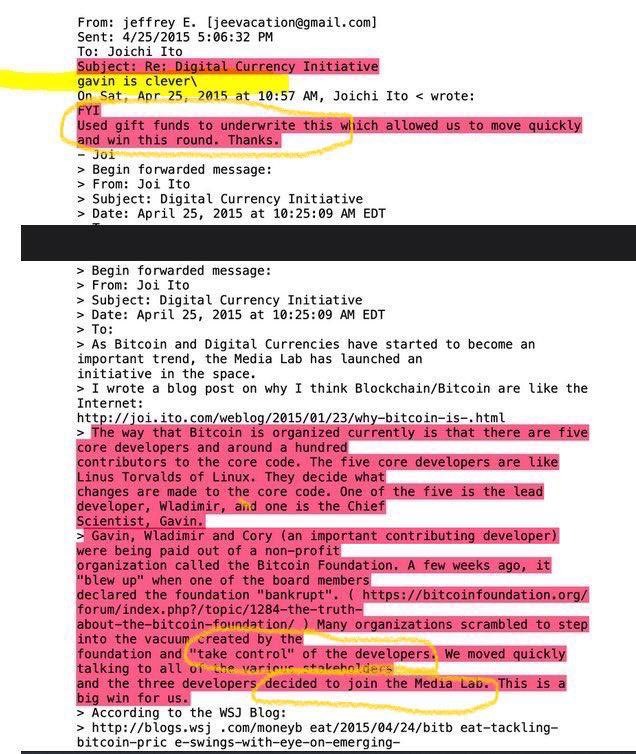
The claim was made by SwanDesk CEO Jacob King, who cited an alleged Epstein file document. He says the document shows a conversation between Jeffrey Epstein and Joichi Ito, a Japanese entrepreneur, suggesting that some Bitcoin core developers received hidden gifts.
King also claimed that Israel paid the salaries of about 60% of Bitcoin developers. He further alleged that Epstein and Israel were major investors in Blockstream, and that Blockstream and Tether could influence Bitcoin’s price and code.
But is all this claim true? Let’s break it down.
Coinpedia’s Key Findings: What’s Actually True?
No Evidence Israel Controlled Bitcoin Developers
The recent release of millions of documents by the U.S. Department of Justice (DOJ) under the Epstein Files Transparency Act has found no substantiated evidence that Israel hijacked control of the Bitcoin network
Also, the claim that Israel paid 60% of Bitcoin core developers is unsupported. Meanwhile, no document proves Israeli state payrolls or centralized hiring.
Epstein Had a Minor, Indirect Blockstream Investment
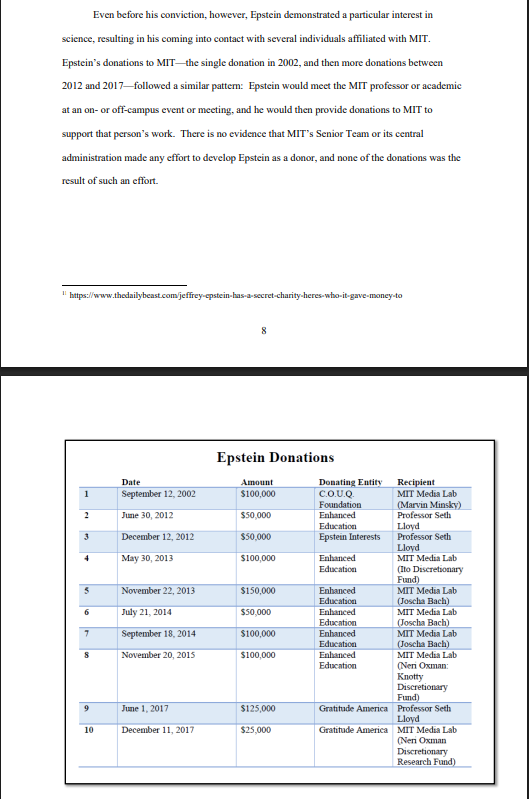
MIT Digital Currency Initiative (DCI) records show that Jeffrey Epstein donated around $850,000 to MIT between 2002 and 2017. Perhaps, this does not amount to control or major ownership.
In 2015, part of this money was reportedly used by MIT’s Digital Currency Initiative to pay salaries of Bitcoin Core developers like Gavin Andresen and Wladimir van der Laan. This support came after the Bitcoin Foundation shut down, and funding for developers became uncertain.
Why is Israel being linked to the Bitcoin Foundation and MIT Media Lab?
The main Israel link comes through former Prime Minister Ehud Barak. Records show Barak stayed at Jeffrey Epstein’s New York home several times between 2013 and 2017, the same period when claims of Israeli control over Bitcoin.
Epstein also reportedly acted as a backchannel for Israeli interests, helping arrange security deals in several countries.
In 2015, Epstein donated $850,000 to the MIT Media Lab. Prominent Israeli figures, such as designer Neri Oxman, were senior researchers at the Media Lab during the period it was accepting Epstein’s funds.
Epstein was also connected to Bitcoin infrastructure as well. In 2014, he joined an $18 million funding round for Blockstream, a company that employs important Bitcoin developers.
However, Blockstream CEO Adam Back later clarified that Epstein’s stake was quickly sold and the company has no financial ties to him today.
In 2014, during Blockstream’s seed-round investor roadshow, the company was introduced to then MIT Media Lab director Joi Ito. Subsequently Blockstream met with Jeffrey Epstein, who was described at the time as a limited partner in Ito’s fund. That fund later invested a minority…
Claims that Bitcoin’s price can be manipulated using “unbacked Tether” are separate allegations. These claims do not prove that anyone controls the Bitcoin network, controls Bitcoin developers, or that any government is manipulating Bitcoin.
Summary Table: Coinpedia’s Evidence Against the Theory
Claim Made by Theory
Coinpedia’s Counter-Evidence
Does Israel Hijack Control of the Bitcoin Network?
U.S. Department of Justice (DOJ) said their were no substantiated evidence to support this claim
Did Epstein funded Bitcoin takeover?
Minor, but that was also through indirect investment of only $50,000 and $500,000
Were 60% of devs paid by Israel
No Document to support these claims.
Conclusion
Claim
Do the Epstein Files Reveal Israel Hijacked Control of the Bitcoin Network?
Verdict
False
Fact-Check by Coinpedia
As per Coinpedia research and a review of official sources, there is no credible evidence that Israel controls Bitcoin, pays core developers, or manipulates the network through Blockstream or Tether. Until then, this claim remains unverified and speculative.
Never Miss a Beat in the Crypto World!
Stay ahead with breaking news, expert analysis, and real-time updates on the latest trends in Bitcoin, altcoins, DeFi, NFTs, and more.
The live price of the Zilliqa crypto token is $ 0.00680531.
ZIL price could claim its potential high of $0.0350 in 2026.
By 2030, Zilliqa could revisit the $0.18 range if its sharding-based infrastructure regains relevance in Web3.
Zilliqa is one of the first blockchains to use sharding as a built-in solution to handle more transactions at the same time. By processing transactions in parallel, it aimed to reduce network congestion long before scalability became a major topic in crypto.
However, despite being an early innovator, Zilliqa lost attention as newer Layer-1 blockchains entered the market with bigger ecosystems and stronger funding.
Recently, interest in Zilliqa returned after the Cancun hard fork went live. Following this upgrade, the ZIL token surged nearly 70%, now trading around $0.00670.
So, let’s dive into Coinpedia’s Zilliqa (ZIL) price predictions for 2026, 2027, and 2030.
Zilliqa (ZIL) is now working on a major upgrade called Zilliqa 2.0, which will bring big changes to the network. As part of this update, the blockchain is moving from the older Proof-of-Work system to a faster and more efficient Proof-of-Stake model.
An important technical upgrade is set for February 5, 2026, aimed at improving network speed, scalability, and performance.
The update will also add Cancun-compatible Ethereum Virtual Machine (EVM) features to make Zilliqa more developer-friendly and better connected with the wider crypto ecosystem.
Ahead of the major upgrade, the ZIL token has already seen a strong price pump and is now trading around $0.0066.
Coinpedia experts believe this momentum could continue, with the token potentially rising to around $0.0130 by the end of February.
Technical Analysis
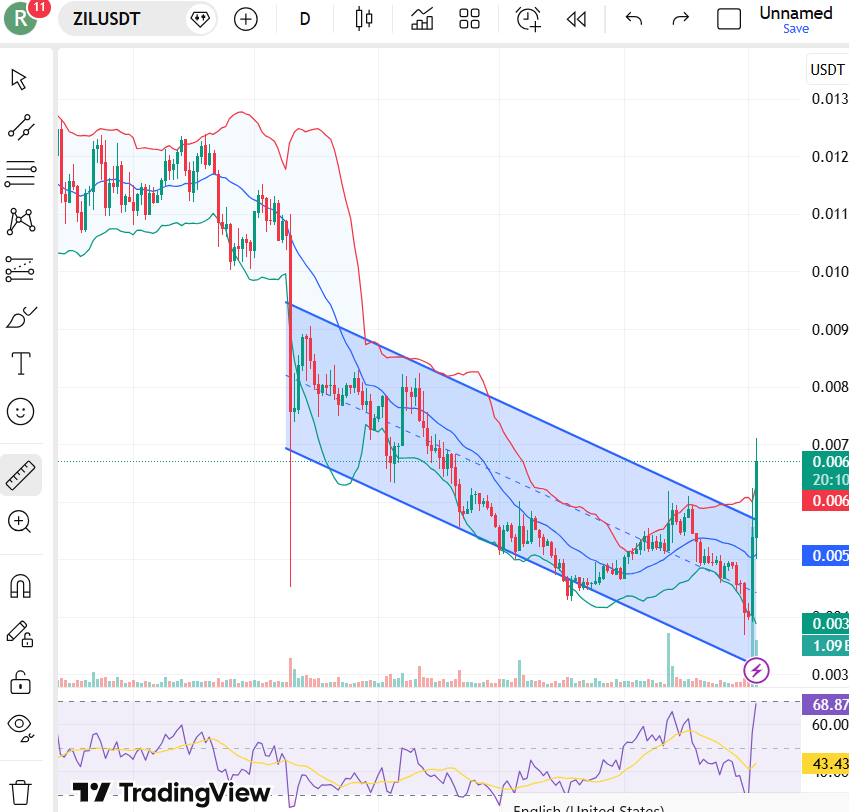
Looking at the ZIL/USDT 1-day price chart, ZIL was moving inside a clear downward channel for many weeks, showing strong bearish control. Price kept forming lower highs and lower lows.
Recently, ZIL broke above the upper trendline of this channel with a sharp bullish candle and high volume, which signals a potential trend reversal.
However, the immediate resistance is near $0.007, a breakout above this level could push the price toward $0.010, and if momentum stays strong, ZIL may reach up to $0.013.
Meanwhile, the RSI has also jumped above neutral levels, confirming rising momentum.
Month
Potential Low ($)
Potential Average ($)
Potential High ($)
ZIL Crypto Price Prediction February 2026
$0.0042
$0.0077
$0.0130
Zilliqa Price Prediction 2026
The year 2026 will test whether Zilliqa can convert technical upgrades into ecosystem growth. Beyond the Cancun hard fork, Zilliqa’s plan focuses on performance optimization, developer tooling, and real-world use cases.
Zilliqa has continued to position itself in gaming, payments, and enterprise blockchain solutions, areas where low fees and high throughput matter. If the network attracts new projects or revives existing dApps post-upgrade, demand for ZIL staking and transactions could rise.
However, competition from newer high-performance chains remains intense. To keep growing, the network will need to stand out and offer clear advantages over its rivals.
Year
Potential Low ($)
Potential Average ($)
Potential High ($)
Zilliqa Price Prediction 2026
$0.0026
$0.0155
$0.0350
Zilliqa (ZIL) Price Prediction 2026 – 2030
Year
Potential Low ($)
Potential Average ($)
Potential High ($)
2026
$0.0026
$0.0155
$0.0350
2027
$0.0671
$0.0280
$0.0600
202
$0.0107
$0.0514
$0.0953
2029
$0.0336
$0.0750
$0.1301
2030
$0.0550
$0.115
$0.180
Zilliqa (ZIL) Price Prediction 2026
In 2026, ZIL may stabilize after the Cancun-driven rally. A push toward $0.035 is possible if network usage grows meaningfully.
Zilliqa Price Prediction 2027
By 2027, broader adoption of scalable Layer 1s could support ZIL near $0.06, assuming Zilliqa maintains developer engagement.
Zilliqa Price Forecast 2028
In 2028, if Zilliqa secures long-term partnerships in gaming or payments, prices could approach $0.095.
Zilliqa Coin Price Prediction 2029
As Web3 infrastructure matures, Zilliqa’s early sharding advantage may regain attention, lifting ZIL toward $0.13.
Zilliqa Price Prediction 2030
By 2030, Zilliqa’s valuation will depend on sustained relevance. Under favorable conditions, ZIL could test $0.18.
What Does The Market Say?
Year
2026
2027
2030
Coincodex
$0.005158
$0.0049
$0.0022
Changelly
$0.00743966
$0.01033266
$0.00523643
DigitalCoinprice
$0.00826
$0.0108
$0.0181
CoinPedia’s Zilliqa Price Prediction
From a CoinPedia perspective, Zilliqa represents an early scalability pioneer attempting to regain relevance in a crowded Layer 1 market. The Cancun hard fork has improved sentiment, but sustained growth depends on real usage.
CoinPedia expects ZIL to see a gradual recovery in 2026, with a potential high near $0.035 if post-upgrade adoption improves.
Year
Potential Low ($)
Potential Average ($)
Potential High ($)
2026
$0.0026
$0.0155
$0.0350
Never Miss a Beat in the Crypto World!
Stay ahead with breaking news, expert analysis, and real-time updates on the latest trends in Bitcoin, altcoins, DeFi, NFTs, and more.
FAQs
What is the price prediction for Zilliqa (ZIL) in 2026?
Zilliqa’s 2026 price is projected to range between $0.0026 and $0.035, with upside depending on post-upgrade adoption and network activity.
What is the Zilliqa price prediction for 2028?
In 2028, Zilliqa may trade between $0.010 and $0.095 if gaming, payments, and enterprise use cases gain traction.
What is the Zilliqa coin price prediction for 2030?
ZIL’s 2030 forecast ranges from $0.055 to $0.18, depending on long-term relevance, adoption, and broader crypto market growth.
What is the Zilliqa (ZIL) price prediction for 2040?
By 2040, Zilliqa’s price will depend on sustained relevance; optimistic scenarios suggest higher valuations if adoption continues.
What role does Zilliqa 2.0 play in ZIL’s future price?
Zilliqa 2.0 shifts the network to Proof-of-Stake, improving speed and efficiency, which could support long-term value if adoption rises.
Is Zilliqa (ZIL) a good investment?
Zilliqa may appeal to long-term investors if upgrades translate into real usage, but it carries risk due to strong Layer-1 competition.
After dropping from last week’s high of $90,562 bitcoin price is now facing one of its toughest market phases in recent years. Alex Thorn, Head of Research at Galaxy Digital, the world’s largest cryptocurrency, may fall much lower in the coming weeks.
According to Alex Thorn, Bitcoin’s recent performance shows clear weakness following a big sell-off in late January. The price fell nearly 15% in one week and dropped to around $74,551, close to its April 2025 low.
This sudden crash also triggered more than $2 billion in long-position liquidations, one of the largest in Bitcoin history.
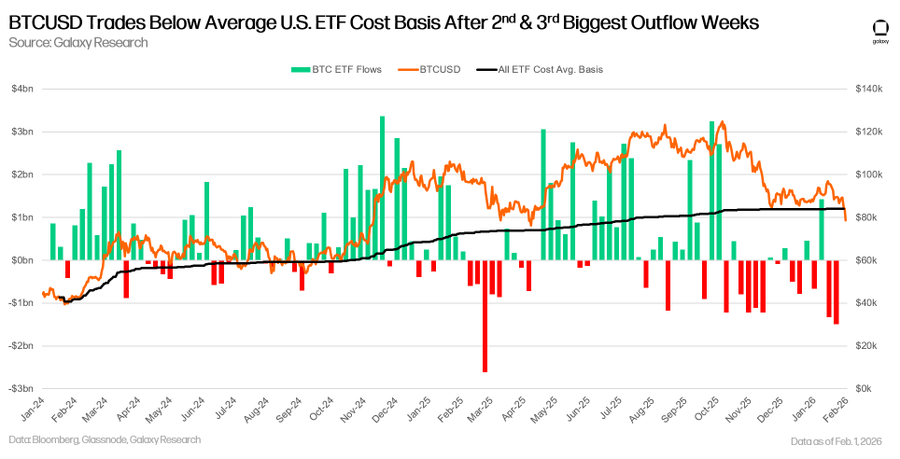
Another major concern Thorn highlighted is that Bitcoin has fallen below the average buying price of U.S. Bitcoin ETFs, which is around $84,000. ETF investors are usually long-term holders, so this drop is a negative sign.
In the last two weeks, Bitcoin ETFs saw outflows of about $2.8 billion, showing weaker confidence from big investors.
What is more concerning is that Bitcoin has failed to rise along with traditional safe-haven assets like gold and silver, which hit new ATHs. This has weakened Bitcoin’s image as a hedge against currency devaluation.
Nearly Half of Bitcoin Supply Now in Loss
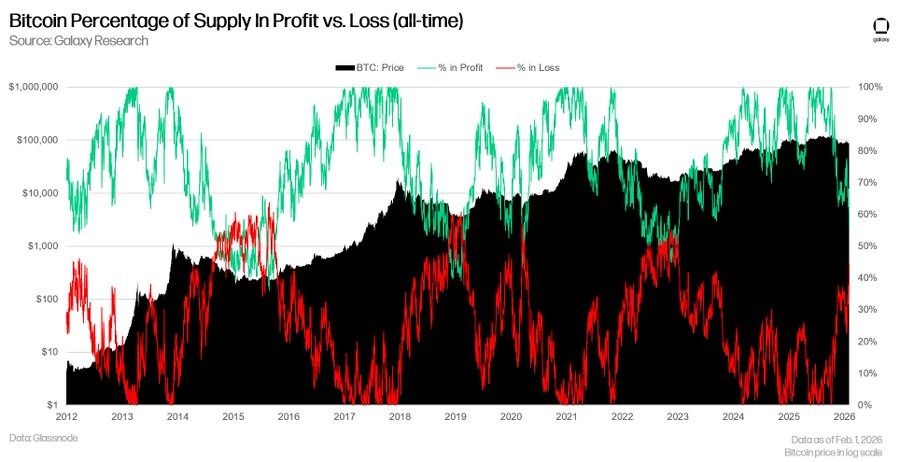
Right now, Bitcoin is trading near $78,392, which is almost 38% below its all-time high of $126,296. Because of this drop, on-chain data shows that around 46% of the total Bitcoin supply is now in loss. This means nearly half of all BTC was last bought at prices higher than today.
In past bear markets like 2015, 2018, and 2022, major Bitcoin bottoms have often formed when the number of holders in profit and loss was nearly equal.
Right now, it’s moving toward that point, suggesting the market could be nearing a bottom.
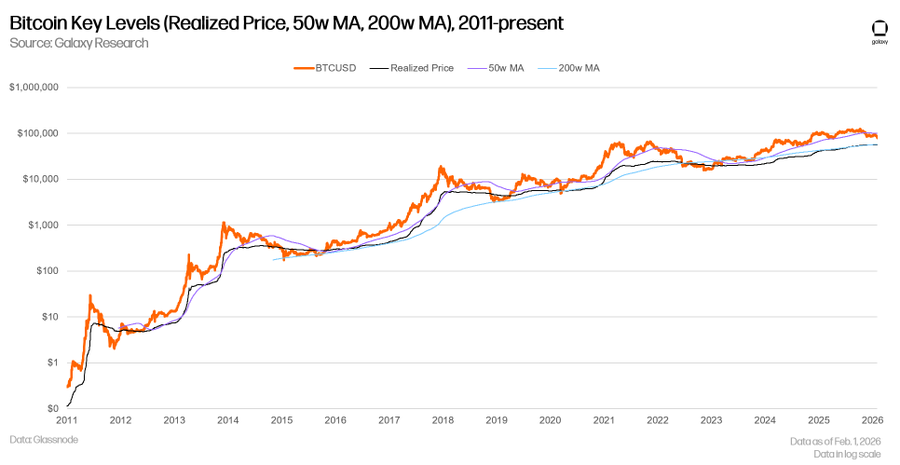
Further into the analysis, Alex Thorn noted that Bitcoin has already lost an important technical level, the 50-week moving average. In past market cycles, whenever BTC breaks below this level, the price often falls toward the 200-week moving average.
Currently, the 200-week moving average is near sept 2024 low of $58,000, while Bitcoin’s realized price stands around $56,000. These levels have historically acted as strong long-term support zones, and Thorn believes BTC could test these ranges in the coming weeks or months.
And one of the biggest reasons for this to happen is the supply gap between $70,000 and $80,000, where fewer coins were bought, making support weak.
If demand doesn’t pick up, Bitcoin could first dip toward $70,000 and then possibly reach $58,000–$56,000, which are strong long-term support levels.
Never Miss a Beat in the Crypto World!
Stay ahead with breaking news, expert analysis, and real-time updates on the latest trends in Bitcoin, altcoins, DeFi, NFTs, and more.
FAQs
How low could Bitcoin price go in 2026?
Bitcoin may drop toward $56,000–$58,000 if current weakness continues, testing long-term support levels before a potential rebound.
When might Bitcoin start a bullish trend again?
A bullish trend could start once the market balances holders in profit and loss and demand returns near long-term support levels.
What does it mean that nearly half of Bitcoin supply is in loss?
It indicates about 46% of BTC was bought higher than current prices, signaling potential for reduced selling pressure and market stabilization.
How does Bitcoin compare to gold and silver now?
Bitcoin has lagged behind gold and silver gains, weakening its image as a hedge against currency devaluation.
Could Bitcoin become a safe-haven asset again?
Yes, if it stabilizes near long-term support and regains correlation with inflation hedges like gold, investor confidence may return.

 Login
Login

 BREAKING: The law being signed by President Trump SLASHES $10B in wasteful and fraudulent foreign aid, ENDS taxpayer grants to NPR and PBS, and solidifies the closure of USAID

 1.44%
1.44%

 False
False