Login
Login
Samsung Galaxy Watch 8 vs Watch 7: Same Look, Different Features
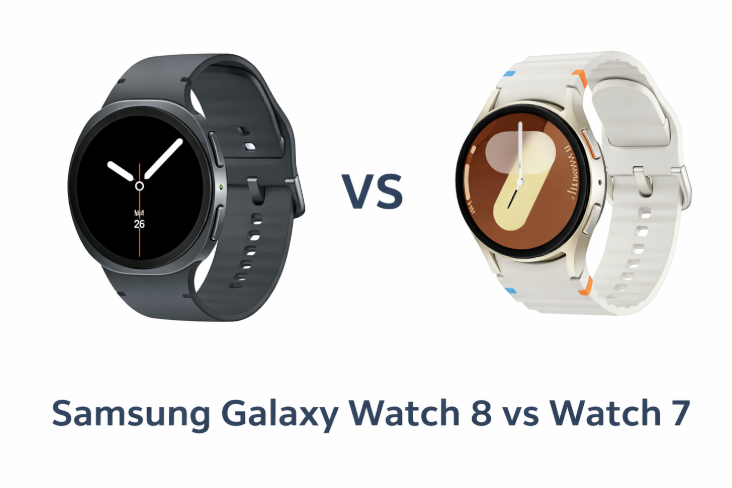
Choosing between the Samsung Galaxy Watch 8 and Samsung Galaxy Watch 7 isn’t about old versus new, it’s about refinement versus value. Both smartwatches look nearly identical on the surface and share the same powerful chipset, yet Samsung has quietly tweaked brightness, health tracking, and software longevity in ways that matter over time. For buyers upgrading from an older Galaxy Watch or entering Samsung’s ecosystem for the first time, these subtle differences can influence daily comfort, outdoor visibility, and long-term usability. This comparison breaks down where the Watch 8 genuinely improves and where the Watch 7 still makes a strong case as the better-value choice.
| Preview | Product | |
|---|---|---|

|
Samsung Galaxy Watch 8 (2025) 40mm Bluetooth Smartwatch, Cushion Design | Check Price on Amazon Global |
Please Note: When you buy something using the links in our articles, we may earn a small commission at no cost to you.
Major Features and Upgrades:
| Feature | Galaxy Watch 7 | Galaxy Watch 8 | Upgrades |
|---|---|---|---|
| Display Brightness (Peak) | 2000 nits | 3000 nits | Brighter screen |
| Body Thickness | 9.7 mm | 8.6 mm | Slimmer profile |
| Battery Capacity | 425 mAh | 435 mAh | Slightly bigger battery |
| Operating System at Launch | Wear OS 5 → upgradable | Wear OS 6 | Newer software |
| Health Sensors | BioActive (heart rate, ECG, SpO₂, temp) | BioActive + Antioxidant Index | New sensor |
| Display Size | 1.5″ | 1.47″ | Very similar |
| Resolution | 480×480 | 480×480 | Same sharpness |
| Chipset | Exynos W1000 | Exynos W1000 | Same performance |
| Connectivity | Bluetooth 5.3, NFC, Wi-Fi, eSIM | Bluetooth 5.3, NFC, Wi-Fi, eSIM | No change |
| Water/Dust Rating | IP68 (5ATM) | IP68 (5ATM) | Same durability |
| Weight | 33.8 g (44mm) | 34 g (44mm) | Similar |
| GPS | Dual-band (L1+L5) | Dual-band (L1+L5) | Same |
| Charging | 10W Wireless | 10W Wireless | Same |
| Approx. Price | $200 / ₹25,000 | $260 / ₹38,000 | Higher Price but More Features |

Please Note: When you buy something using the links in our articles, we may earn a small commission at no cost to you.
Design and Display
Build & Comfort
Both the Samsung Galaxy Watch 8 and Samsung Galaxy Watch 7 follow Samsung’s familiar circular design with an Armor Aluminum 2 frame and sapphire crystal protection. The Watch 8 is noticeably slimmer at 8.6mm, which makes it feel sleeker on the wrist and easier to wear all day, especially during sleep tracking. Weight differences are minor, but the thinner profile subtly improves comfort during long workdays or workouts. Both watches retain MIL-STD-810H durability and 5ATM water resistance, keeping them reliable for daily use and outdoor activities.
Display Brightness & Visibility
The Watch 8 clearly pulls ahead with a peak brightness of 3000 nits versus 2000 nits on the Watch 7. This makes a visible difference outdoors, especially during runs or cycling under harsh sunlight. Resolution remains identical, so sharpness is equally excellent on both, but the extra brightness gives the newer model a more premium, modern feel.
Verdict
Design changes are evolutionary, but the slimmer body and brighter display give the Watch 8 a subtle edge that power users will appreciate.
Health and Fitness Tracking
Sensors & Tracking Accuracy
Samsung equips both watches with its BioActive sensor suite, covering heart rate, SpO₂, ECG, blood pressure, skin temperature, and advanced sleep tracking. The Watch 8 adds an antioxidant index sensor, expanding its health-focused appeal and pushing deeper into wellness insights rather than just fitness metrics. Day-to-day accuracy remains consistent across both models, with reliable heart rate tracking and stable sleep stage detection.
Workout Modes
Both watches support a wide range of workout modes, from strength training to outdoor running with dual-frequency GPS (L1+L5). Auto-workout detection is fast and dependable on each, but the Watch 8 feels slightly more refined in presenting post-workout insights, especially for recovery and overall health trends. This feels less like a sports upgrade and more like a lifestyle wellness evolution.
Verdict
The Watch 7 still delivers excellent health tracking, but the Watch 8’s added sensor and refined insights make it better suited for users focused on long-term wellness monitoring.
Performance and Software
UI Smoothness
Both watches run on the same Exynos W1000 (3nm) chipset with 2GB RAM, resulting in equally smooth animations and fast app launches. Scrolling through tiles, notifications, and workouts feels fluid on both models, with no meaningful performance gap in everyday use. The hardware clearly isn’t a limiting factor for either watch.
App Support & Features
The key difference lies in the software. The Watch 8 ships with Wear OS 6 and One UI 8 Watch out of the box, bringing newer UI refinements and longer future update support. The Watch 7 runs Wear OS 5 but is upgradeable, meaning it won’t be left behind. Still, starting on a newer platform gives the Watch 8 a longer runway, which matters for buyers planning to keep their smartwatch for several years.
Verdict
Performance is effectively a tie, but the Watch 8 gains a long-term advantage by launching with the latest software and ecosystem support.
Battery and Connectivity
Battery Life
The Watch 8 packs a slightly larger 435mAh battery compared to the 425mAh unit in the Watch 7. In real-world use, both comfortably last a full day with health tracking and notifications enabled. The Watch 8 squeezes out a bit more endurance, particularly with heavy outdoor use, thanks to software optimizations. Charging speeds remain identical at 10W wireless, so top-ups feel equally convenient.
GPS, Bluetooth, LTE
Connectivity is identical across both models, including dual-band GPS (L1+L5), Bluetooth 5.3, Wi-Fi, NFC, and optional eSIM support. Location tracking is accurate and quick to lock, making both watches reliable for outdoor workouts and navigation without a phone.
Verdict
Battery and connectivity improvements are modest, but the Watch 8’s slightly better endurance adds polish rather than a dramatic leap.
Pricing
With an approximate price of $260 / ₹38,000, the Watch 8 clearly sits in a higher tier than the Watch 7 at $200 / ₹25,000. The price gap is significant, especially considering how similar the core experience remains. Buyers are essentially paying for a brighter display, slimmer design, a new health sensor, and longer software longevity.
For value-focused users, the Watch 7 remains a compelling deal.
Disclaimer:
Prices are approximate and may vary based on country, region, and applicable taxes.
Conclusion
Best For Whom
The Watch 8 is best for users who want the latest Samsung smartwatch experience, value display visibility outdoors, and care about emerging health metrics. The Watch 7 is ideal for buyers who want nearly the same performance and tracking at a far more accessible price.
Final Verdict
The Samsung Galaxy Watch 8 is the more refined and future-ready smartwatch, but the Galaxy Watch 7 remains the smarter buy for most users who prioritize value over incremental upgrades.
Read More:
- OnePlus 15 vs Realme GT 8 Pro: Same Chip, Very Different Flagship Experience
- Xiaomi 17 Ultra vs Pixel 10 Pro XL: Specs, Camera, Battery, and Price Compared
- OnePlus 15 vs Vivo X300: Why Vivo X300 Might Be a Better Buy Than OnePlus 15
The post Samsung Galaxy Watch 8 vs Watch 7: Same Look, Different Features appeared first on Gizmochina.