Reading view

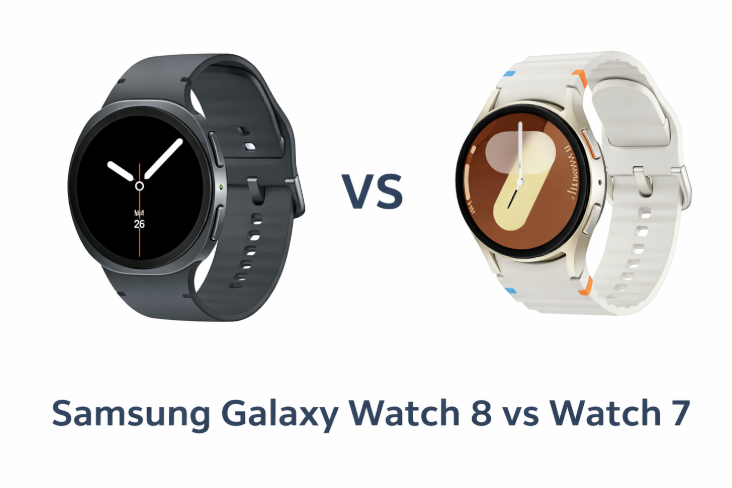
Samsung Galaxy Watch 8 vs Watch 7: Same Look, Different Features
galaxy watch 8 vs 7

Choosing between the Samsung Galaxy Watch 8 and Samsung Galaxy Watch 7 isn’t about old versus new, it’s about refinement versus value. Both smartwatches look nearly identical on the surface and share the same powerful chipset, yet Samsung has quietly tweaked brightness, health tracking, and software longevity in ways that matter over time. For buyers upgrading from an older Galaxy Watch or entering Samsung’s ecosystem for the first time, these subtle differences can influence daily comfort, outdoor visibility, and long-term usability. This comparison breaks down where the Watch 8 genuinely improves and where the Watch 7 still makes a strong case as the better-value choice.
Please Note: When you buy something using the links in our articles, we may earn a small commission at no cost to you.

Major Features and Upgrades:

FeatureGalaxy Watch 7Galaxy Watch 8Upgrades
Display Brightness (Peak)2000 nits3000 nitsBrighter screen
Body Thickness9.7 mm8.6 mmSlimmer profile
Battery Capacity425 mAh435 mAhSlightly bigger battery
Operating System at LaunchWear OS 5 → upgradableWear OS 6Newer software
Health SensorsBioActive (heart rate, ECG, SpO₂, temp)BioActive + Antioxidant IndexNew sensor
Display Size1.5″1.47″Very similar
Resolution480×480480×480Same sharpness
ChipsetExynos W1000Exynos W1000Same performance
ConnectivityBluetooth 5.3, NFC, Wi-Fi, eSIMBluetooth 5.3, NFC, Wi-Fi, eSIMNo change
Water/Dust RatingIP68 (5ATM)IP68 (5ATM)Same durability
Weight33.8 g (44mm)34 g (44mm)Similar
GPSDual-band (L1+L5)Dual-band (L1+L5)Same
Charging10W Wireless10W WirelessSame
Approx. Price$200 / ₹25,000$260 / ₹38,000Higher Price but More Features

Please Note: When you buy something using the links in our articles, we may earn a small commission at no cost to you.

Design and Display

Build & Comfort

Both the Samsung Galaxy Watch 8 and Samsung Galaxy Watch 7 follow Samsung’s familiar circular design with an Armor Aluminum 2 frame and sapphire crystal protection. The Watch 8 is noticeably slimmer at 8.6mm, which makes it feel sleeker on the wrist and easier to wear all day, especially during sleep tracking. Weight differences are minor, but the thinner profile subtly improves comfort during long workdays or workouts. Both watches retain MIL-STD-810H durability and 5ATM water resistance, keeping them reliable for daily use and outdoor activities.

Display Brightness & Visibility

The Watch 8 clearly pulls ahead with a peak brightness of 3000 nits versus 2000 nits on the Watch 7. This makes a visible difference outdoors, especially during runs or cycling under harsh sunlight. Resolution remains identical, so sharpness is equally excellent on both, but the extra brightness gives the newer model a more premium, modern feel.

Verdict

Design changes are evolutionary, but the slimmer body and brighter display give the Watch 8 a subtle edge that power users will appreciate.

Health and Fitness Tracking

Sensors & Tracking Accuracy

Samsung equips both watches with its BioActive sensor suite, covering heart rate, SpO₂, ECG, blood pressure, skin temperature, and advanced sleep tracking. The Watch 8 adds an antioxidant index sensor, expanding its health-focused appeal and pushing deeper into wellness insights rather than just fitness metrics. Day-to-day accuracy remains consistent across both models, with reliable heart rate tracking and stable sleep stage detection.

Workout Modes

Both watches support a wide range of workout modes, from strength training to outdoor running with dual-frequency GPS (L1+L5). Auto-workout detection is fast and dependable on each, but the Watch 8 feels slightly more refined in presenting post-workout insights, especially for recovery and overall health trends. This feels less like a sports upgrade and more like a lifestyle wellness evolution.

Verdict

The Watch 7 still delivers excellent health tracking, but the Watch 8’s added sensor and refined insights make it better suited for users focused on long-term wellness monitoring.

Performance and Software

UI Smoothness

Both watches run on the same Exynos W1000 (3nm) chipset with 2GB RAM, resulting in equally smooth animations and fast app launches. Scrolling through tiles, notifications, and workouts feels fluid on both models, with no meaningful performance gap in everyday use. The hardware clearly isn’t a limiting factor for either watch.

App Support & Features

The key difference lies in the software. The Watch 8 ships with Wear OS 6 and One UI 8 Watch out of the box, bringing newer UI refinements and longer future update support. The Watch 7 runs Wear OS 5 but is upgradeable, meaning it won’t be left behind. Still, starting on a newer platform gives the Watch 8 a longer runway, which matters for buyers planning to keep their smartwatch for several years.

Verdict

Performance is effectively a tie, but the Watch 8 gains a long-term advantage by launching with the latest software and ecosystem support.

Battery and Connectivity

Battery Life

The Watch 8 packs a slightly larger 435mAh battery compared to the 425mAh unit in the Watch 7. In real-world use, both comfortably last a full day with health tracking and notifications enabled. The Watch 8 squeezes out a bit more endurance, particularly with heavy outdoor use, thanks to software optimizations. Charging speeds remain identical at 10W wireless, so top-ups feel equally convenient.

GPS, Bluetooth, LTE

Connectivity is identical across both models, including dual-band GPS (L1+L5), Bluetooth 5.3, Wi-Fi, NFC, and optional eSIM support. Location tracking is accurate and quick to lock, making both watches reliable for outdoor workouts and navigation without a phone.

Verdict

Battery and connectivity improvements are modest, but the Watch 8’s slightly better endurance adds polish rather than a dramatic leap.

Pricing

With an approximate price of $260 / ₹38,000, the Watch 8 clearly sits in a higher tier than the Watch 7 at $200 / ₹25,000. The price gap is significant, especially considering how similar the core experience remains. Buyers are essentially paying for a brighter display, slimmer design, a new health sensor, and longer software longevity. 

For value-focused users, the Watch 7 remains a compelling deal.

Disclaimer:
Prices are approximate and may vary based on country, region, and applicable taxes.

Conclusion

Best For Whom

The Watch 8 is best for users who want the latest Samsung smartwatch experience, value display visibility outdoors, and care about emerging health metrics. The Watch 7 is ideal for buyers who want nearly the same performance and tracking at a far more accessible price.

Final Verdict

The Samsung Galaxy Watch 8 is the more refined and future-ready smartwatch, but the Galaxy Watch 7 remains the smarter buy for most users who prioritize value over incremental upgrades.

Read More:

The post Samsung Galaxy Watch 8 vs Watch 7: Same Look, Different Features appeared first on Gizmochina.
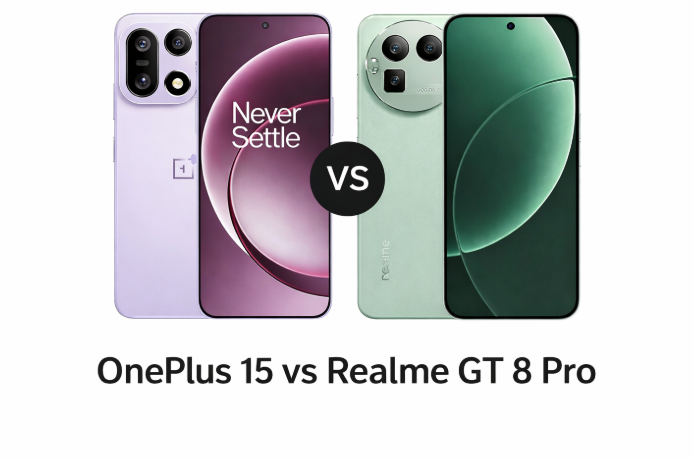
OnePlus 15 vs Realme GT 8 Pro: Same Chip, Very Different Flagship Experience

oneplus vs realme

When two Android flagships share the same cutting-edge chipset, the real battle shifts from raw power to how that power is used. The OnePlus 15 and Realme GT 8 Pro both promise elite performance, fast charging, and serious camera hardware, but they approach the flagship formula very differently. One aims for refinement, balance, and long-term comfort, while the other leans into bold specs, sharper visuals, and aggressive pricing. This comparison breaks down where each phone truly excels and, more importantly, which one actually makes more sense to buy once the spec sheets stop looking impressive and daily use begins.

Major Features:

FeatureOnePlus 15Realme GT 8 ProWinner
Display Type & Refresh RateLTPO AMOLED, 165Hz, Dolby VisionAMOLED, 144Hz, Dolby VisionOnePlus 15 – LTPO + higher refresh, better efficiency
Display Resolution & Sharpness1272 × 27721440 × 3136Realme GT 8 Pro – higher resolution, sharper output
Brightness1800 nits (HBM)2000 nits HBM, 7000 nits peakRealme GT 8 Pro – significantly brighter
ProcessorSnapdragon 8 Elite Gen 5Snapdragon 8 Elite Gen 5Tie – same chipset
Software ExperienceOxygenOS 16Realme UI 7.0OnePlus 15 – cleaner, more refined
Battery Capacity7300mAh7000mAhOnePlus 15 – larger battery
Charging (Wired & Wireless)120W wired, 50W wireless, more protocols120W wired, 50W wirelessOnePlus 15 – wider charging support
Main Camera50MP OIS50MP OISTie – similar primary sensors
Telephoto Camera50MP periscope, 3.5×200MP periscope, 3×Realme GT 8 Pro – higher resolution zoom
Video FeaturesDolby Vision, LUT, 4K@120fpsDolby Vision, 10-bit LOGOnePlus 15 – stronger video tools
Selfie Camera32MP with AF32MPOnePlus 15 – autofocus advantage
Build & DurabilityGorilla Glass Victus 2, IP68/IP69KGorilla Glass 7i, IP68/IP69OnePlus 15 – stronger glass
ConnectivityWi-Fi 7, BT 6.0, USB 3.2Wi-Fi 7, BT 6.0, USB 2.0OnePlus 15 – faster USB
Price$900 / ₹80,000$700 / ₹73,000Realme GT 8 Pro – cheaper

Please Note: When you buy something using the links in our articles, we may earn a small commission at no cost to you.

Please Note: When you buy something using the links in our articles, we may earn a small commission at no cost to you.

Design and Display

Build and Feel

OnePlus 15 uses a glass front with Gorilla Glass Victus 2, an aluminum alloy frame, and premium glass or fiber-reinforced back options. These materials give it a more polished and flagship-typical feel, focused on durability and long-term comfort rather than visual drama. The overall design language feels restrained and premium.

Realme GT 8 Pro combines Gorilla Glass 7i on the front with an aluminum frame and eco-leather or polymer back options. This approach adds texture and personality, making the phone feel more expressive and bold. It prioritizes visual identity over subtlety.

Display Quality

OnePlus features an LTPO AMOLED panel with a 165Hz refresh rate and Dolby Vision support. This allows the refresh rate to adapt dynamically, making scrolling smoother while improving efficiency, which feels more comfortable during extended use.

Realme offers a higher-resolution AMOLED display with a 144Hz refresh rate and extremely high peak brightness. This results in sharper visuals and stronger visual impact, especially for videos and HDR content.

Verdict

OnePlus focuses on refinement and balance; Realme focuses on sharpness and visual intensity.

Specifications 

Performance

Both phones use the Snapdragon 8 Elite Gen 5 (3nm) chipset paired with Adreno 840 GPU and UFS 4.1 storage. This ensures identical flagship-level speed, fast app launches, and smooth gaming performance.

OnePlus runs OxygenOS 16, which emphasizes stable scheduling and controlled performance behavior, making extended usage feel more consistent. Realme UI 7.0 is tuned more aggressively, delivering fast responses but with a slightly more performance-forward feel.

Battery and Charging

OnePlus includes a 7300mAh silicon-carbon battery with 120W wired, 50W wireless, and extensive charging protocol support. This combination provides both endurance and flexibility, especially for heavy users.

Realme uses a 7000mAh silicon-carbon battery with 120W wired and 50W wireless charging, offering fast top-ups but slightly less capacity and protocol versatility.

Verdict

Performance is equal, but OnePlus clearly leads in battery capacity and charging flexibility.

Camera

Main and Secondary Lenses

OnePlus uses a 50MP triple-camera system with a periscope telephoto and ultrawide lens, supported by OIS, laser focus, Dolby Vision video, and LUT recording. This setup prioritizes consistency across photo and video, making results reliable in varied conditions.

Realme features a 200MP periscope telephoto camera alongside a 50MP main and ultrawide sensor. The high-resolution telephoto enables stronger zoom detail and cropping flexibility, appealing to users who want more dramatic photography options.

Selfie Camera

Both phones include a 32MP front camera with 4K video support. OnePlus adds autofocus and more stable video behavior, while Realme emphasizes clarity and contrast in stills.

Verdict

OnePlus wins for consistency and video tools; Realme excels in zoom hardware and camera experimentation.

Pricing

OnePlus 15 is priced at $900 / ₹80,000, placing it firmly in the ultra-premium flagship segment. The Realme GT 8 Pro costs $700 / ₹73,000, making it noticeably cheaper.

OnePlus justifies its higher price with a larger battery, broader charging standards, refined software, and a more balanced camera system. These additions contribute to long-term usability rather than short-term excitement.

Realme delivers excellent core specs for less money, but the savings come with fewer refinements rather than missing performance.

Verdict

Realme is cheaper, but OnePlus better justifies its higher price.

Disclaimer:
Prices are approximate and may vary based on country, region, and applicable taxes.

Conclusion

OnePlus stands out with its LTPO AMOLED display, larger silicon-carbon battery, extensive fast-charging support, and video-focused camera tools like Dolby Vision and LUTs. These features collectively enhance daily usability and long-term comfort.
Realme differentiates itself with a higher-resolution display, 200MP periscope camera, and bold design options, making it feel more spec-driven and visually striking.

Final Verdict

OnePlus 15 is the better overall smartphone. It offers superior refinement, stronger battery confidence, more versatile charging, and more reliable cameras. Realme GT 8 Pro makes sense only if saving money and having bold hardware features matter more than polish. For a long-term flagship experience, OnePlus is the more sensible choice.

Read More:

The post OnePlus 15 vs Realme GT 8 Pro: Same Chip, Very Different Flagship Experience appeared first on Gizmochina.
Redmi Note 15 Series Comparison: Differences, Upgrades, and Which to Buy

redmi note 15 series

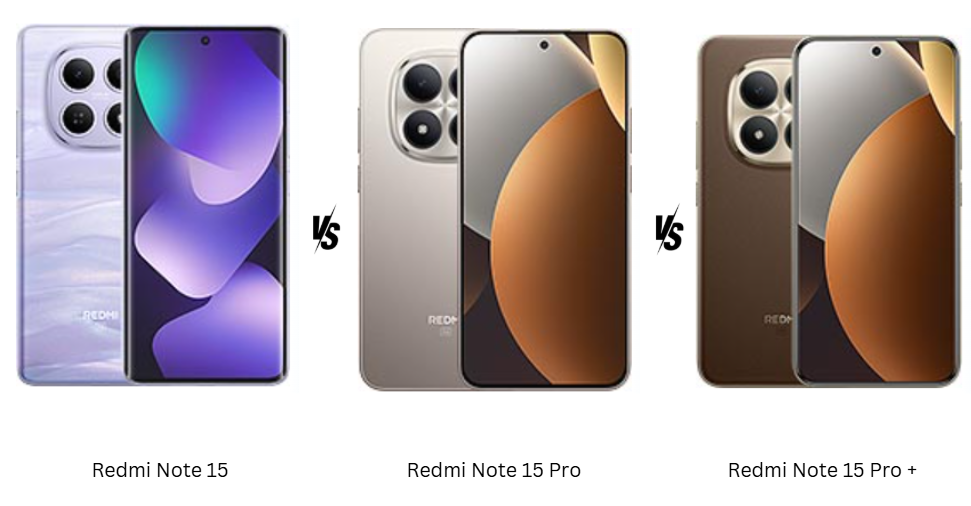
The Redmi Note 15 series marks a clear shift in strategy. Instead of offering small spec bumps, Redmi now uses features to clearly separate value, premium, and near-flagship users. All three phones share AMOLED displays, Android 15 with HyperOS 2, and modern connectivity, but the experience changes meaningfully as you move up the lineup. Understanding which features matter actually is the key to making the right choice.

Major Features Compared:

FeatureRedmi Note 15Redmi Note 15 ProRedmi Note 15 Pro+Winner
PositioningValue & durability focusedPremium mid-range balanceNear-flagship experiencePro+ – most complete package
Build & ProtectionPlastic build, IP66Premium glass, IP68/IP69KPremium glass, IP68/IP69KPro / Pro+ – stronger protection
Display Resolution & HDRAMOLED FHD+, HDR10+Higher-res AMOLED, Dolby VisionSame as ProPro / Pro+ – sharper & richer
Performance ChipsetSnapdragon 6 Gen 3Dimensity 7400 UltraSnapdragon 7s Gen 4Pro+ – strongest sustained performance
Gaming & LongevityCasual gamingBetter thermal stabilityBest long-term performancePro+ – future-ready
Main Camera Sensor108MP with OIS200MP with OIS200MP with OISPro / Pro+ – higher detail
Camera ProcessingGood daylight shotsMore consistent resultsMost refined tuningPro+ – most reliable
Selfie Camera20MP20MP (better tuning)32MPPro+ – sharper selfies
Battery Capacity5520mAh6580mAh6500mAhPro / Pro+ – longer endurance
Charging Speed45W45W100WPro+ – game-changing speed
ConnectivityWi-Fi 5 / BT 5.1–5.3Wi-Fi 6 / BT 5.4Wi-Fi 6/6e / BT 5.4Pro+ – most advanced
Price (Approx)$200 / ₹23,000$350 / ₹30,000$450 / ₹38,000Depends on budget
Best ForBudget buyersBalanced usersPower users

Please Note: When you buy something using the links in our articles, we may earn a small commission at no cost to you.

Design, Protection, and Display Features

The Redmi Note 15 focuses on toughness with IP66 water resistance, drop protection, and MIL-STD-810H compliance. It feels purpose-built for everyday reliability rather than visual flair. 

The Note 15 Pro upgrades to IP68/IP69K protection, Gorilla Glass Victus 2, and stronger drop resistance, making it far more reassuring for long-term use. 

The Pro+ keeps the same high-end protection but adds better material finishes, giving it the most premium feel in the series.

Display features scale similarly. The Note 15 offers a 120Hz AMOLED panel with HDR10+ and very high peak brightness. 

The Pro and Pro+ upgrade to higher resolution panels, Dolby Vision, and better HDR tuning, making streaming content noticeably richer and sharper. The difference feels most obvious during video playback and gaming.

Verdict: Durability improves with the Pro, while display clarity and HDR quality peak with Pro and Pro+.

Performance, Battery, and Charging Features

Performance upgrades are driven by chipset choice. The Snapdragon 6 Gen 3 in the Note 15 is efficient and smooth for daily use. 

The Dimensity 7400 Ultra in the Pro offers higher sustained performance, faster multitasking, and better gaming stability. 

The Snapdragon 7s Gen 4 in the Pro+ introduces a newer CPU architecture and a stronger GPU, making it the most future-ready option.

Battery capacity increases with the Pro and Pro+, but charging features create the real separation. Both Note 15 and Pro support 45W fast charging with reverse wired charging. 

The Pro+ jumps to 100W fast charging, delivering a full charge in roughly 40 minutes, which fundamentally changes daily usage habits.

Verdict: Choose the Pro for better performance, or the Pro+ for maximum speed and convenience.

Camera and Imaging Features

Camera hardware clearly differentiates the lineup. The Note 15’s 108MP OIS camera delivers sharp daylight photos and reliable stabilization. 

The Pro and Pro+ upgrade to a 200MP OIS sensor, offering better detail retention, improved HDR, and more flexibility for cropping. 

Video features also improve, with higher frame-rate options and better stabilization on the Pro models.

Selfie features scale upward as well. The Note 15’s 20MP camera is adequate, the Pro improves tuning and frame-rate options, and the Pro+ upgrades to a 32MP front camera, delivering sharper selfies and better video clarity.

Verdict: Casual photography works on Note 15, but Pro and Pro+ are clearly better for content creation.

Pricing and Buyer Fit:

  • Redmi Note 15 (~$200 / ₹23,000): Best for users who want AMOLED, OIS camera, solid durability, and long battery life at the lowest price.
  • Redmi Note 15 Pro (~$350 / ₹30,000): Justified by upgrades like IP69K protection, 200MP camera, stronger chipset, and sharper display.
  • Redmi Note 15 Pro+ (~$450 / ₹38,000): Targets power users with 100W charging, top-tier performance, advanced connectivity, and better selfie hardware.

Disclaimer:
Prices are approximate and may vary based on country, region, and applicable taxes.

Final Verdict:

The Redmi Note 15 series is now clearly segmented by features, not just pricing. The Note 15 covers the essentials extremely well. The Note 15 Pro is the most balanced upgrade, adding premium protection, camera, and performance features. The Note 15 Pro+ is for users who value speed, charging technology, and long-term performance. Choosing the right model depends on which features will actually be used every day.

The post Redmi Note 15 Series Comparison: Differences, Upgrades, and Which to Buy appeared first on Gizmochina.
8849 TANK X Launches as the World’s First Rugged Smartphone with Built-in 1080p Projector

8849 Tank X

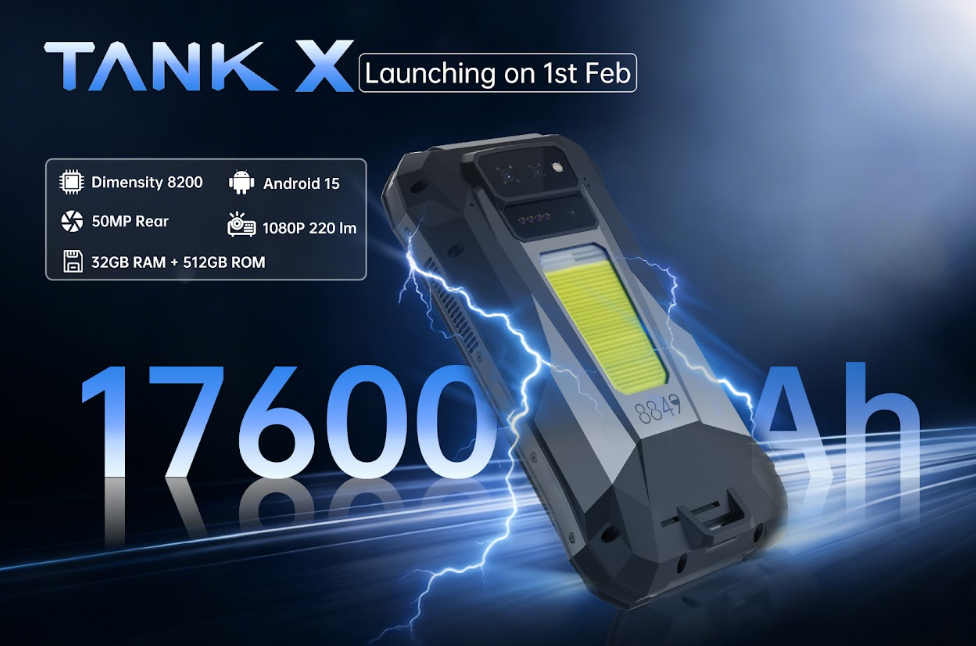
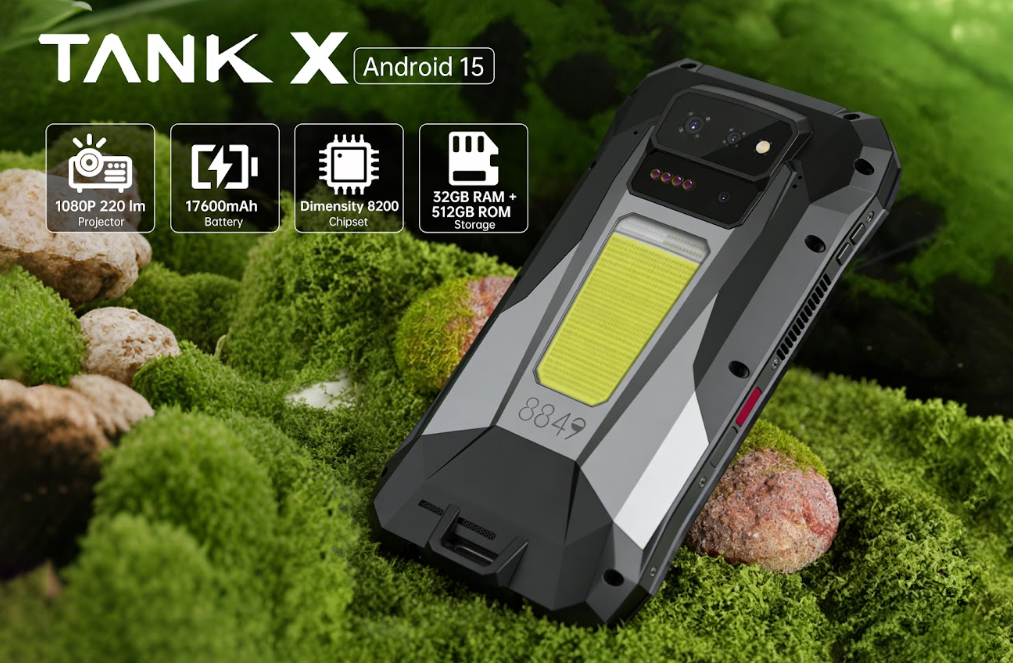
8849 TANK X enters the rugged smartphone segment with a feature set unlike anything currently on the market. Designed for industrial users, outdoor professionals, and extreme-condition environments, it combines a high-lumen DLP projector, ultra-large battery, and advanced connectivity inside a reinforced 5G chassis. This is not a generic lifestyle phone but a strong, purpose-built hardware.

Industrial-Grade Design and Durability

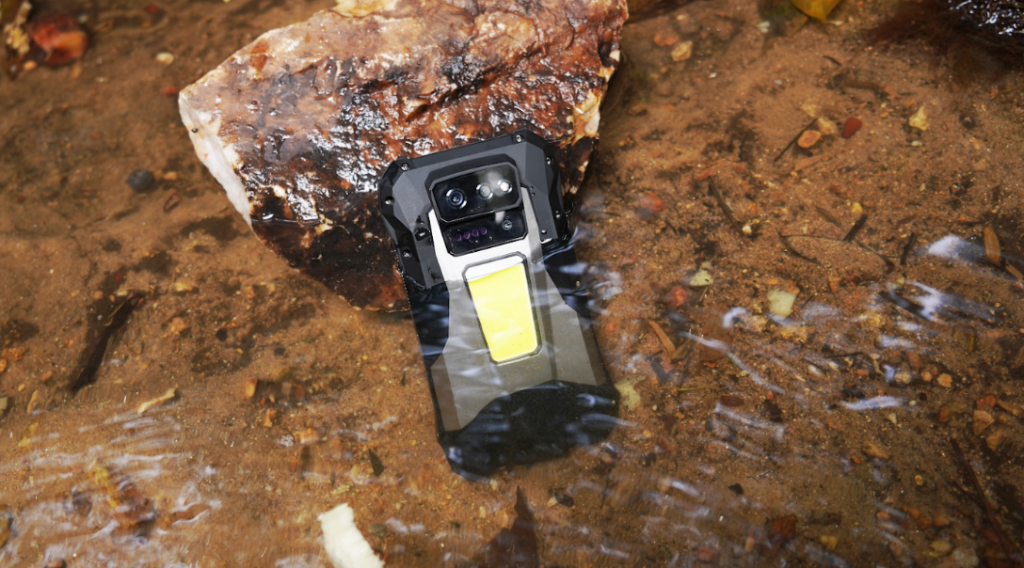
The TANK X uses a half-board, double-sided internal layout to accommodate its projector, dual-cell battery, and thermal controls. With IP68 and IP69K certification, the device is resistant to water immersion, dust ingress, and high-pressure wash environments. Its reinforced construction targets field engineers, emergency responders, and expedition users who require reliability over portability.

Display Optimized for Field Visibility

The device features a 6.78-inch FHD+ LCD panel with a 120Hz adaptive refresh rate and peak brightness of 750 nits. The PWM-free backlight design reduces eye strain during extended usage, making it suitable for long shifts, navigation tasks, and outdoor operations under direct sunlight.

Integrated 1080p DLP Projector System

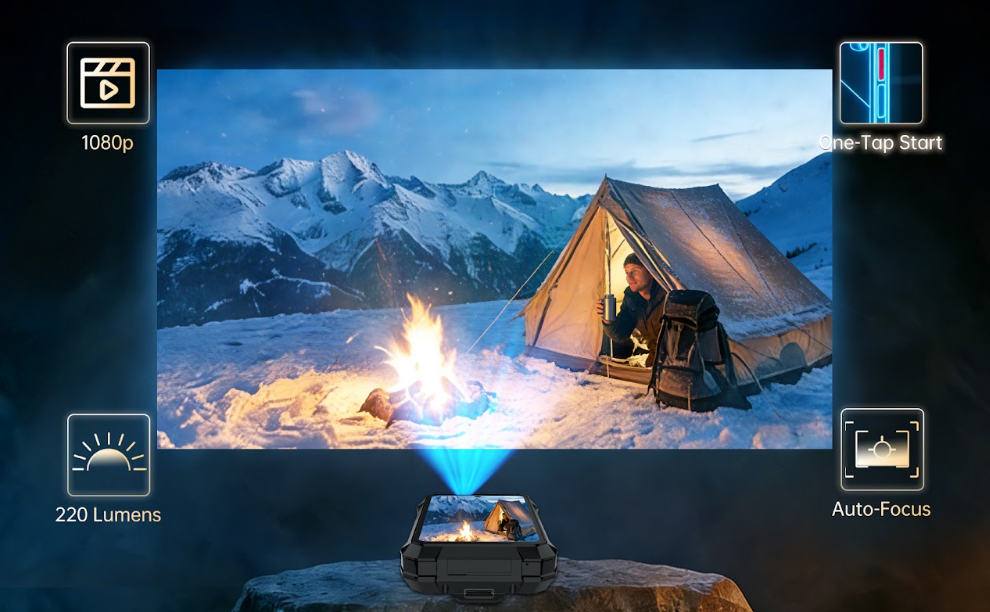
The standout feature is the built-in DLP projector, capable of projecting content at up to 1920×1080 resolution with 220 lumens brightness. Laser auto-focus, ±40° keystone correction, and one-key activation allow quick deployment. The projector supports multiple power modes, delivering up to six hours of use, making it viable for field briefings, training, or outdoor entertainment without additional equipment.

Performance and Storage

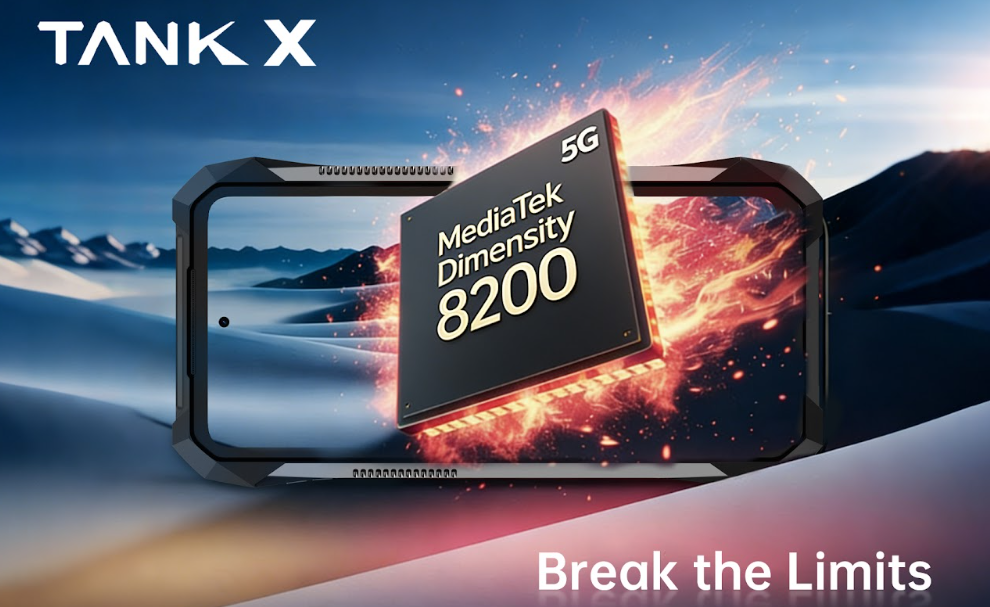
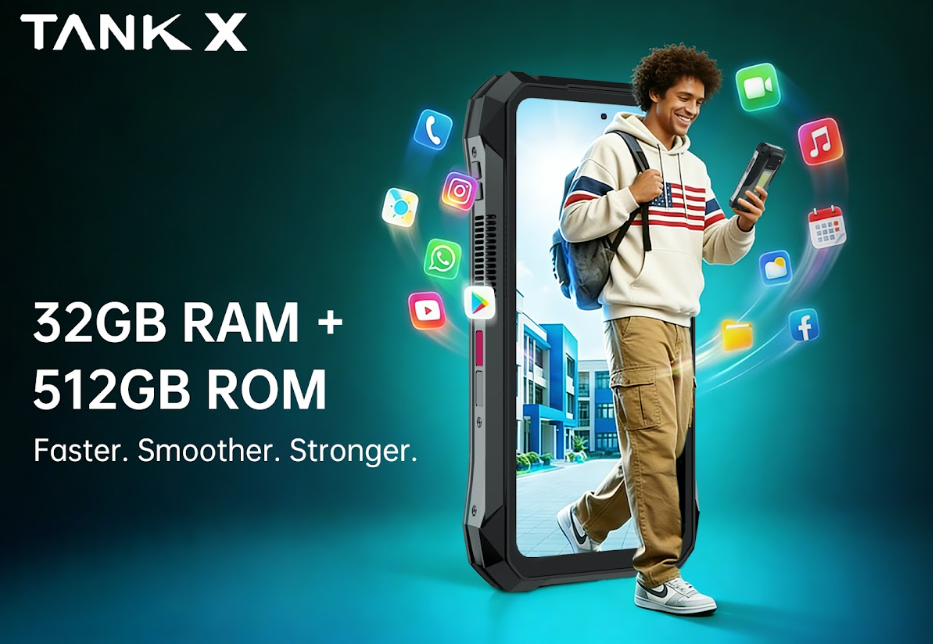
Powered by the MediaTek Dimensity 8200 (4nm) chipset, the TANK X delivers flagship-level efficiency with strong sustained performance. Paired with 16GB LPDDR5 RAM, up to 16GB virtual memory, and 512GB UFS 3.1 storage, it supports heavy multitasking, AI applications, and large offline datasets. Storage expansion up to 2TB via microSD further enhances its utility for professional workflows.

Advanced Imaging and Night Vision

The camera system is tuned for both documentation and surveillance. A 50MP Sony IMX766 main sensor handles standard imaging, while a 64MP infrared night vision camera with quad IR LEDs enables visibility in complete darkness. A 3× optical telephoto lens adds flexibility for inspection and distance capture.

Extreme Battery Capacity and Charging

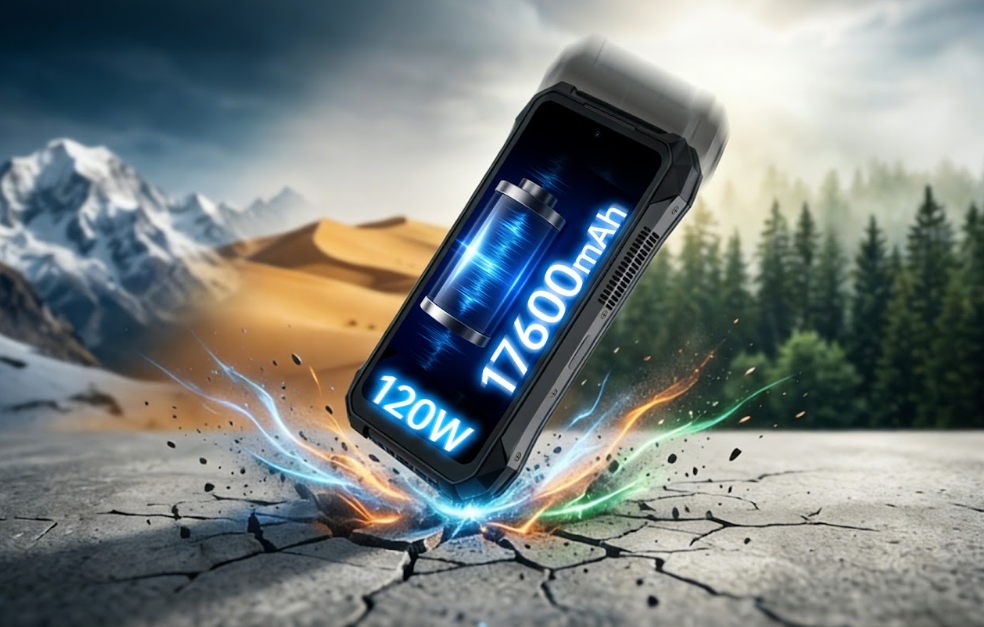
A defining advantage is the 17,600mAh dual-cell battery, engineered for multi-day endurance. Despite the capacity, 120W wired fast charging delivers a full charge in approximately 70 minutes. Reverse wired charging allows the device to function as a portable power source in the field.

Connectivity, Tools, and Emergency Systems

The TANK X supports global 5G bands, Wi-Fi 6, Bluetooth 5.4, dual-band GNSS with meter-level accuracy, NFC, IR remote control, and a comprehensive digital toolbox. High-output camping lights, emergency RGB warning lights, programmable PTT keys, and SOS features position it as a multifunctional operational device.

Pricing and Availability

8849 Tank X is now available for an early bird price of $549.99, significantly reduced from its regular price of $1049.99. Pre-orders are live, with global shipping beginning March 1 from multiple international warehouses. The 8849 TANK X sets a new benchmark for rugged smartphones by merging projection, power, and durability into a single professional-grade platform.


The post 8849 TANK X Launches as the World’s First Rugged Smartphone with Built-in 1080p Projector appeared first on Gizmochina.
❌