Reading view

Exynos 2600 performs 10% better than Snapdragon 8 Elite Gen 5 in ray tracing performance
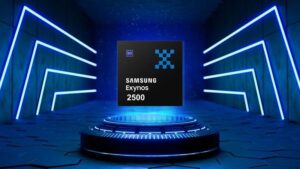
Samsung’s next flagship mobile chip is already making noise in graphics benchmarks. After recently appearing on a Vulkan GPU test, the Exynos 2600 has now topped the Basemark ray tracing leaderboard, beating Qualcomm’s best Snapdragon offering by a noticeable margin.

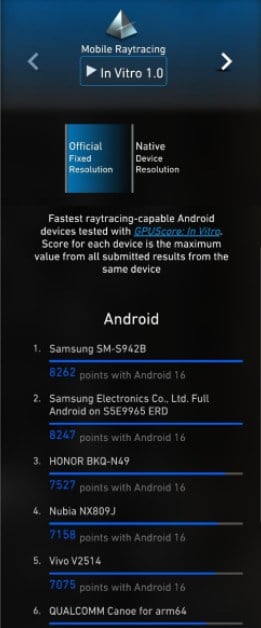
According to the latest Basemark Ray Tracing results, the Exynos 2600 outperformed the Snapdragon 8 Elite Gen 5 chip by roughly 10 to 15 percent. The chip claimed first place, thanks largely to Samsung’s new Xclipse 960 GPU.

Exynos 2600 vs Snapdragon 8 Elite Gen 5 in ray tracing benchmark

The benchmark data shows a device labeled SM-S942B — believed to be the standard Samsung Galaxy S26 powered by the Exynos 2600 — scoring 8,262 points. In comparison, the BKQ-N49, likely the international version of the Honor Magic8 running the 8 Elite Gen 5, scored 7,527 points. That gives Samsung’s chip a 9.76 percent lead in this specific ray tracing test.
Much of this performance gain appears to come from the Exynos 2600’s underlying design. It is the first smartphone processor to use Samsung’s 2nm Gate-All-Around (GAA) manufacturing process. The approach uses a four-sided gate transistor structure, which improves electrostatic control and allows the chip to operate at lower voltages, potentially boosting both performance and efficiency.

The GPU is another major factor. The Xclipse 960 is the first mobile GPU to use a customized version of AMD’s RDNA 4 architecture, enabling a generational leap in ray-tracing capabilities on smartphones.

Samsung has also focused on thermal management. The Exynos 2600 uses fan-out wafer-level packaging (FOWLP) to shrink the overall package size and includes a new thermal path block (HPB). This copper heatsink makes direct contact with the application processor, reducing thermal resistance by around 16 percent.

While benchmarks don’t tell the whole story, these early results prove Exynos 2600 as a serious competitor in high-end mobile graphics. This could be a comeback moment for Exynos in flagship phones.

Don’t miss a thing! Join our Telegram community for instant updates and grab our free daily newsletter for the best tech stories!

For more daily updates, please visit our News Section.

The post Exynos 2600 performs 10% better than Snapdragon 8 Elite Gen 5 in ray tracing performance appeared first on Gizmochina.

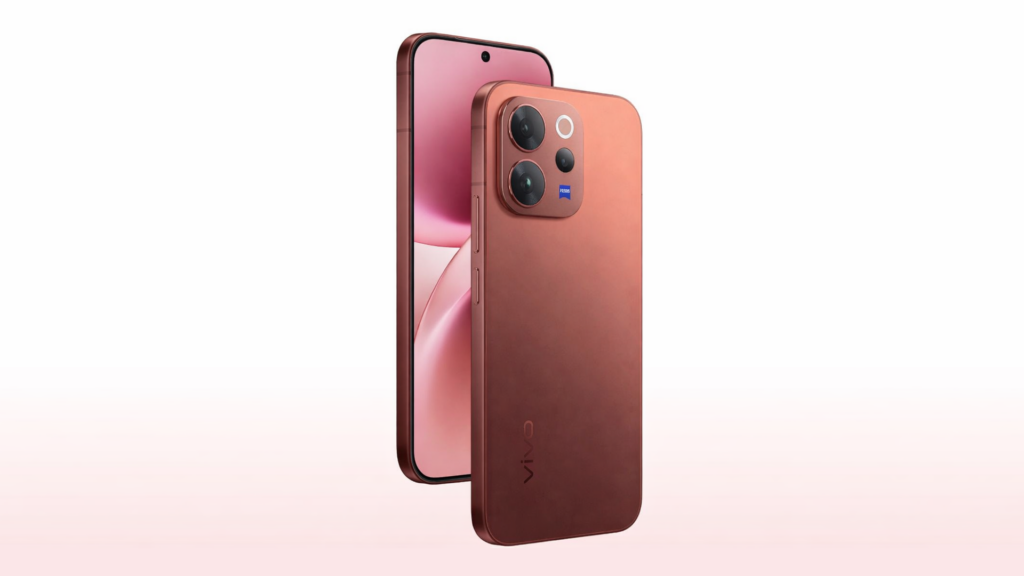
Vivo V70 and V70 Elite set to launch on February 19

Vivo V70 Elite

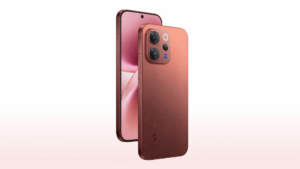
After weeks of teasers, Vivo has officially announced the launch date for its latest V-series smartphones in India. The Vivo V70 and V70 Elite are scheduled to debut on February 19 at 12 PM local time.

The company claims that both phones will feature some of the narrowest bezels in their price segment, measuring just 1.25 mm. These bezels are extremely slim indeed, even slimmer than those of the flagship Samsung Galaxy S25 Ultra.

Vivo V70 and V70 Elite Specifications

The screen itself is said to measure 6.59 inches on both models. They will also share a 1.5K display with a pixel density of 459 ppi, support for up to a 120 Hz refresh rate, peak brightness of 5,000 nits, and 1.07 billion colors.

Under the hood, the V70 Elite will run on Qualcomm’s Snapdragon 8s Gen 3 chipset, while the standard V70 will use the Snapdragon 7 Gen 4. The former ran a Geekbench benchmark, scoring 1973 points in single-core and 4863 points in the multi-core test. 

Vivo V70 Elite
Vivo V70 Elite

Likewise, both phones are powered by a 6,500mAh cell that supports 90W wired fast charging. The phones carry IP68 and IP69 ratings for dust and water resistance.

On the camera side, the V70 series will include a Zeiss-powered 50-megapixel Sony IMX882 primary sensor with optical image stabilization, a 50-megapixel telephoto camera, and an ultrawide lens. The front camera is a 50-megapixel unit. 

As for the color options, the V70 comes in Passion Red and Lemon Yellow, while the V70 Elite will be offered in Passion Red, Sand Beige, and Authentic Black.

With the launch less than two weeks away, more details about pricing and availability are expected to be revealed closer to the February 19 event.

For more daily updates, please visit our News Section.

Stay ahead in tech! Join our Telegram community and sign up for our daily newsletter of top stories.

The post Vivo V70 and V70 Elite set to launch on February 19 appeared first on Gizmochina.

Xiaomi HyperOS 4 to adopt self-developed architecture while retaining native Android services

Xiaomi-HyperOS-4-self-developed-architecture

Xiaomi is moving closer to a more independent software stack with its upcoming HyperOS 4, as new reports suggest the company is gradually removing legacy MIUI-era code and replacing parts of the system with its own architecture.

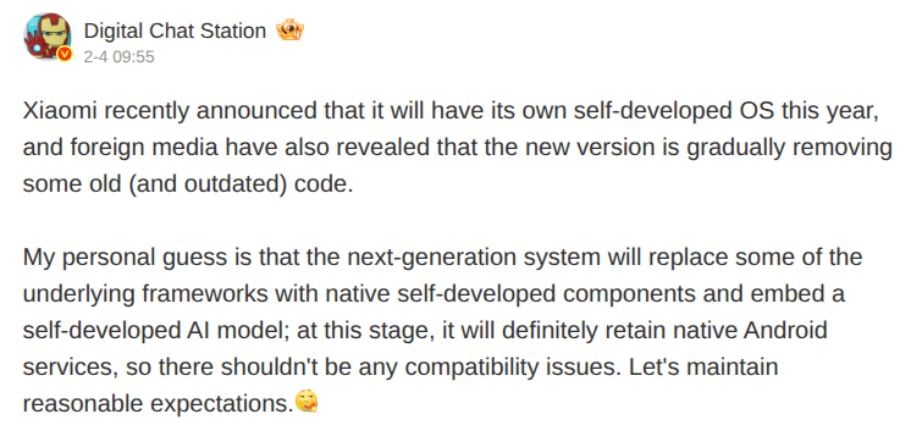
According to a leak by well-known tipster Digital Chat Station, Xiaomi’s next-generation system could replace parts of the underlying framework with a native, self-developed one. 

The company is also expected to integrate its own AI model at the system level. For now, though, native Android services are likely to remain in place to avoid app compatibility issues. 

The shift is not surprising. Xiaomi itself confirmed in January its aim to achieve “grand convergence” in 2026 with a self-developed chip, operating system, and large AI models on a single device. As you might know, Xiaomi’s XRING O1 chip, introduced in 2025, is the first step of this transition. 

Behind the scenes, Xiaomi is already preparing for that transition. Reports from Xiaomitime claim that some system modules in HyperOS 3.1, including the Weather and Photo Album apps, have begun removing MIUI-era SDK components. HyperOS 4, expected to launch in August, could be the first version described as a “zero legacy” release.

Image Credit: Xiaomitime

Xiaomi is also experimenting with rewriting core system apps using Google’s Flutter framework and the Rust programming language. The company could be moving toward a more modular system architecture, where components can be updated or replaced more easily.

For now, HyperOS 3.1 is said to act as a transitional release. It introduces a native HyperOS SDK while still keeping the older MIUI SDK in place to maintain stability and compatibility.

For more daily updates, please visit our News Section.

Stay ahead in tech! Join our Telegram community and sign up for our daily newsletter of top stories.

The post Xiaomi HyperOS 4 to adopt self-developed architecture while retaining native Android services appeared first on Gizmochina.

Samsung Galaxy S26 series price leak shows dramatic hike across all models

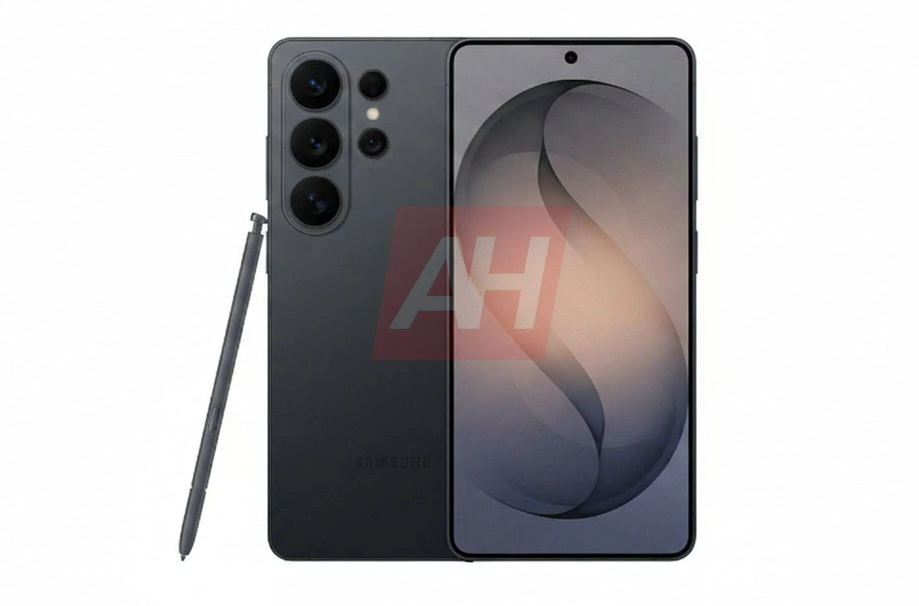
Galaxy S26 Ultra in Black

Samsung’s Galaxy S26 series is just a few weeks away from its official release. Ahead of it, a new report suggests that most models in the upcoming lineup will launch at higher prices than last year in Europe.

A fresh report from Dealabs claims that every model in the series, including the Galaxy S26, S26 Plus, and S26 Ultra, will see a price hike.

Galaxy S26 and S26 Plus Expected Price

According to the leak, the standard Galaxy S26 with 256GB of storage could start at EUR 999—a jump from the Galaxy S25’s launch price of EUR 959. The increase isn’t dramatic on its own, but it adds to the sense that Samsung’s baseline flagship is slowly inching closer to four-figure pricing across the board.

Samsung Galaxy S26 Plus CAD renders
Samsung Galaxy S26 Plus CAD render by AndroidHeadlines / OnLeaks

The Galaxy S26 Plus’ 256GB variant is reportedly priced at EUR 1,269, up from EUR 1,169 last year. Higher storage options could also see increases. The Galaxy S26 with 512GB of storage is tipped to cost EUR 1,199, while the 512GB Galaxy S26+ could reach EUR 1,469.

Galaxy S26 Ultra Expected Price

As for the S26 Ultra, the base 256GB version is expected to stick to the same EUR 1,469 price as the Galaxy S25 Ultra. However, higher storage variants are said to be more expensive.

The 512GB Ultra could rise to EUR 1,669, while a 1TB version may cost as much as EUR 1,969. The report also claims Samsung may drop the 128GB storage option entirely for the Galaxy S26 and S26+ in Europe.

Galaxy S26 Ultra in Black

As for why prices are going up, higher component costs are the most likely explanation. Chips, memory, and other key parts haven’t exactly become cheaper, and Samsung isn’t immune to that pressure. 

That said, Dealabs notes that the extreme price hikes seen in earlier regional leaks, such as those from Bulgaria, are unlikely to apply across the wider Eurozone. Pre-order bonuses and carrier deals could also soften the blow for early buyers.

For more daily updates, please visit our News Section.

Stay ahead in tech! Join our Telegram community and sign up for our daily newsletter of top stories! 💡

(Source)

The post Samsung Galaxy S26 series price leak shows dramatic hike across all models appeared first on Gizmochina.

❌