
Reading view

British Airways Moves Toward App-Based Meal Selection on Long-Haul Routes From London Heathrow

British Airways Moves Toward App-Based Meal Selection on Long-Haul Routes From London Heathrow

A service process update is being prepared by British Airways as part of efforts to modernize long-haul travel operations. An electronic system for recording inflight meal selections is being tested for use in Club World on long-distance services departing from London Heathrow Airport. The initiative is designed to replace traditional handwritten notes with a digital alternative used by onboard teams, marking a procedural change for premium travel service.

The trial centers on a mobile-based platform that allows inflight teams to log food and beverage requests electronically. This change affects how information is recorded and shared during service rather than altering menus or service structures. The rollout is being handled gradually, with testing underway before broader deployment across aircraft.

Digital Meal Ordering Trial for Club World Travelers

Within Club World, the new system is intended to record passenger choices through company-issued smartphones used by cabin crew. The platform, referred to internally as iOrder, allows selections to be entered directly during service. Once logged, the data becomes accessible across crew devices, creating a shared digital reference throughout the cabin.

This approach replaces decades-old manual processes where selections were written down individually. By shifting meal ordering into a centralized digital format, onboard coordination is expected to become more streamlined during long-haul operations. The process is focused on operational accuracy rather than introducing new service elements for travelers.

The initiative is limited to business class cabins on long-haul flights and applies only to services departing from London Heathrow Airport. No changes to passenger interaction methods have been indicated, as the system is primarily designed for internal use by crew members during inflight service routines.

What Digital Processes Mean for Modern Air Travel

In premium air travel, operational systems often evolve behind the scenes rather than through visible passenger-facing changes. Digital tools used during flights can influence how services are delivered by improving internal coordination. For travelers, such changes may be experienced indirectly through smoother service flow or fewer interruptions during inflight routines.

Within Club World, the introduction of electronic systems reflects a broader movement toward digitized inflight processes. While the immediate experience remains familiar to travelers, internal accuracy and consistency are areas often targeted by airlines operating long-haul routes. These adjustments are typically designed to support reliability rather than transform the onboard atmosphere.

As air travel continues to rely on data-driven planning, digital service records become part of how travel experiences are refined over time. For frequent long-distance travelers, consistency in onboard service plays a role in overall journey satisfaction, even when changes are not overtly visible.

Data Collection and the Long-Term Travel Experience

The use of iOrder also allows historical data on meal ordering patterns to be retained and reviewed after flights are completed. This information can support planning decisions for future services rather than addressing shortages during the same journey. Any adjustments based on recorded demand would therefore apply to later operations.

For travelers, this means that the system’s benefits are oriented toward long-term service planning rather than real-time problem-solving. The focus remains on understanding preferences within business class cabins to inform future provisioning. As a result, the immediate inflight experience remains unchanged while operational planning evolves incrementally.

Such systems have been adopted elsewhere in the industry, with airlines including Emirates and Qatar Airways having already moved away from paper-based methods. British Airways’ trial reflects alignment with existing industry practices rather than a novel passenger-facing feature.

Operational Context for Long-Haul Tourism Travel

Long-haul tourism often depends on reliable premium cabin operations, especially for travelers undertaking extended journeys. Internal service tools play a role in maintaining consistency across flights, particularly on routes where expectations for Club World service standards remain high. Digitized systems can support these expectations by reducing manual handling of service details.

By consolidating records across cabin crew devices, the airline aims to maintain clearer oversight of service execution. For long-distance travelers, such measures are part of the operational framework that supports uninterrupted travel experiences. While the system operates in the background, its purpose is tied to sustaining service quality over time.

As testing continues, the emphasis remains on internal efficiency rather than immediate changes for passengers. The trial represents a procedural adjustment within British Airways long-haul operations, focused on how service data is captured and shared during flights departing from London Heathrow Airport.

Image Source: AI

The post British Airways Moves Toward App-Based Meal Selection on Long-Haul Routes From London Heathrow appeared first on Travel And Tour World.

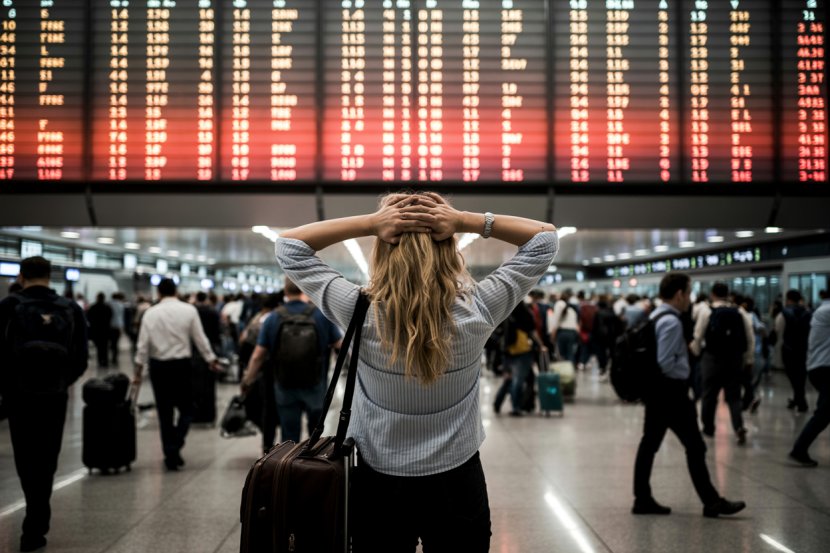

Passengers Grounded Around Ireland Today as Dublin Airport Faced 211 Delays And 3 Cancelled Flights, Disrupting Ryanair, Emerald Airlines, Aer Lingus, British Airways, And Other Airlines

Passengers Grounded Around Ireland Today as Dublin Airport Faced 211 Delays And 3 Cancelled Flights, Disrupting Ryanair, Emerald Airlines, Aer Lingus, British Airways, And Other Airlines

Passengers disrupted in Ireland today as Dublin International Airport (DUB) recorded 211 total delays and 3 cancellations today. The most affected airlines by volume were Ryanair (2 cancellations, 102 delays), Emerald Airlines (38 delays), Aer Lingus (26 delays), and Buzz (1 cancellation, 17 delays). Other widely used carriers that were not among the most affected but still faced delays today included British Airways, Air France, KLM, SAS, United Airlines, and Air Canada.
On the airport side, the heaviest delay volumes linked to Dublin were faced by Manchester Airport (multiple delayed services), Edinburgh Airport (repeated delays), London Heathrow Airport, and Amsterdam Schiphol Airport, while Berlin Brandenburg Airport (3 cancellations) accounted for all recorded cancellations tied to Dublin.

  • Updated today: operations at Dublin show 211 delays and 3 cancellations affecting short-haul, regional, and limited long-haul routes.
  • Ryanair recorded the highest disruption volume with 102 delays and 2 cancellations.
  • Emerald Airlines and Aer Lingus together accounted for 64 delays, with no cancellations.
  • UK and European routes represented the majority of delayed services.

Airlines Most Affected by Flight Cancellations and Delays

Ryanair

Ryanair recorded the highest disruption volume today, with 102 delayed flights from Dublin, making it the most impacted airline overall by operational delays.

Emerald Airlines

Emerald Airlines followed with 38 delayed flights, largely affecting regional and short-haul connections across the UK and Ireland.

Aer Lingus

Aer Lingus experienced 26 delays, impacting a mix of domestic, UK, and European services.

Buzz

Buzz reported 17 delayed flights, contributing to secondary disruption within short-haul European routes.

British Airways

British Airways saw multiple delayed flights, mainly on UK–Ireland sectors, without widespread network disruption.

Air France

Air France recorded isolated delays, primarily linked to France–Ireland operations.

KLM

KLM experienced limited delays, connected to services operating via Amsterdam.

What Can Affected Passengers Do?

  • Monitor airline apps and airport departure boards frequently
    Check for real-time updates on departure times, gate changes, and boarding status, as schedules may change multiple times within a short window.
  • Confirm aircraft status before leaving for the airport
    Verify whether the inbound aircraft for your flight has arrived or is delayed, as this often determines whether departure times will shift further.
  • Allow additional buffer time for connections
    Build in extra time between connecting flights, especially on short-haul routes where delays can cascade and affect onward travel.
  • Keep boarding passes and notifications accessible
    Ensure digital or printed boarding passes are easy to access, as gate reassignments or rapid boarding calls may occur with limited notice.
  • Contact airline customer service for rebooking or updates
    Use official airline channels—apps, desks, or helplines—to explore rebooking options, standby possibilities, or updated travel arrangements if delays persist.

Overview of Flight Disruptions

Today’s disruption pattern is delay-heavy rather than cancellation-driven, with operational pressure concentrated on Ireland–UK and Ireland–Europe corridors. Ryanair, Emerald Airlines, Aer Lingus, Buzz, British Airways, and Air France all recorded delays, reflecting broad network impact rather than a single-carrier event.
On the airport level, Dublin International Airport remained the central hub for delays, while Manchester, Edinburgh, London Heathrow, and Amsterdam Schiphol appeared repeatedly across delayed origin and destination lists. From a country perspective, Ireland, the United Kingdom, Germany, France, Spain, and the Netherlands surfaced multiple times, underscoring how today’s disruption extended across Western and Central Europe. Long-haul exposure stayed limited, indicating that today’s operational strain primarily affected short-haul and regional travel flows rather than intercontinental services.

Image Source: AI
Source: Different airports and FlightAware

The post Passengers Grounded Around Ireland Today as Dublin Airport Faced 211 Delays And 3 Cancelled Flights, Disrupting Ryanair, Emerald Airlines, Aer Lingus, British Airways, And Other Airlines appeared first on Travel And Tour World.

Passengers Grounded Around Italy Today As Rome, Milan, Bergamo And Catania Delay 383 And Cancel 13 Flights, Hitting ITA Airways, Wizz Air Malta, Ryanair, easyJet, And Other Airlines

Passengers Grounded Around Italy Today As Rome, Milan, Bergamo And Catania Delay 383 And Cancel 13 Flights, Hitting ITA Airways, Wizz Air Malta, Ryanair, easyJet, And Other Airlines
Passengers Grounded Around Italy Today As Rome, Milan, Bergamo And Catania Delay 383 And Cancel 13 Flights

Passengers grounded across Italy today as Rome, Milan, Bergamo and Catania face 396 flight cancellations and delays across Rome, Milan, Bergamo and Catania. The most affected airlines were Ryanair (114 delays, 7 cancellations), Wizz Air Malta (42 delays), ITA Airways (28 delays), and easyJet (23 delays, 5 cancellations). Other widely used carriers that also faced operational issues included Air France (8 delays), KLM (8 delays), British Airways (3 delays), Lufthansa, Iberia, and Pegasus Airlines.
At the airport level, the largest disruption volumes were recorded at Rome Fiumicino Airport (133 delays, 4 cancellations), Milan Malpensa Airport (118 delays, 2 cancellations), Bergamo Orio al Serio Airport (71 delays, 2 cancellations), Milan Linate Airport (31 delays, 3 cancellations), and Catania Fontanarossa Airport (30 delays, 2 cancellations).
Affected Italian cities including Rome, Milan, Bergamo, and Catania, saw delays spread across short-haul, low-cost, and full-service operations.

  • Update today: 396 total disruptions recorded nationwide, including 383 delays and 13 cancellations.
  • Rome Fiumicino led by volume with 133 delays and 4 cancellations.
  • Milan Malpensa followed with 118 delays and 2 cancellations.
  • Ryanair was the most impacted airline overall (114 delays, 7 cancellations).
  • Wizz Air Malta logged 42 delays, while ITA Airways recorded 28 delays.
  • easyJet saw 23 delays alongside 5 cancellations across multiple airports.

Most Affected Italian Airports

Rome Fiumicino Airport

Rome’s primary international gateway recorded the highest number of delays (133) and 4 cancellations, affecting a broad mix of low-cost and legacy carriers, with Ryanair, ITA Airways, and Wizz Air Malta accounting for a large share of delayed departures.

Milan Malpensa Airport

Malpensa reported 118 delays and 2 cancellations, with disruption spread across Wizz Air Malta, easyJet, Ryanair, and several European network carriers, indicating wide operational impact.

Bergamo Orio al Serio Airport

Bergamo logged 71 delays and 2 cancellations, driven primarily by Ryanair operations, which alone accounted for the majority of delayed flights at the airport.

Milan Linate Airport

Linate experienced 31 delays and 3 cancellations, with easyJet responsible for all cancellations and multiple full-service airlines recording smaller clusters of delays.

Catania Fontanarossa Airport

Catania registered 30 delays and 2 cancellations, with Ryanair and Wizz Air Malta contributing the largest delay volumes, alongside smaller impacts from regional and international carriers.

Airlines Most Affected by Italy Flight Cancellations and Delays

Ryanair

Ryanair was the most affected airline nationwide, with 114 delays and 7 cancellations across Rome, Milan, Bergamo, and Catania.

Wizz Air Malta

Wizz Air Malta recorded 42 delays, particularly concentrated at Milan Malpensa and Rome Fiumicino.

ITA Airways

ITA Airways logged 28 delays, mainly at Rome Fiumicino, with additional disruption at Milan Linate and Catania.

easyJet

easyJet experienced 23 delays and 5 cancellations, impacting operations at Rome Fiumicino, Milan Malpensa, Milan Linate, and Catania.

Air France

Air France reported 8 delays across Rome, Milan Malpensa, and Milan Linate.

KLM

KLM also recorded 8 delays, split between Rome Fiumicino and Milan Linate.

British Airways

British Airways saw 3 delays, all reported at Milan Linate.

What Can Affected Passengers Do?

  • Monitor airline notifications and airport departure boards at hubs such as Rome Fiumicino, Milan Malpensa, and Bergamo Orio al Serio.
  • Allow extra buffer time when transiting busy airports like Milan Linate during peak periods.
  • Check rebooking options directly with airlines operating from Catania Fontanarossa and other affected airports.
  • Retain boarding passes and booking confirmations in case assistance or compensation policies apply.
  • Use official airline apps and airport channels for the most current operational updates.

Learn More

Overview of Italy Flight Cancellations And Delays

Italy’s aviation network saw widespread but uneven disruption today, with Ryanair, Wizz Air Malta, ITA Airways, easyJet, Air France, and KLM among the airlines most affected by delays and cancellations. The heaviest impacts were concentrated at Rome Fiumicino and Milan Malpensa, while Bergamo Orio al Serio, Milan Linate, and Catania Fontanarossa also reported notable disruption volumes.
Across Rome, Milan, Bergamo, and Catania, delay totals significantly outweighed cancellations, underscoring schedule congestion rather than large-scale service suspensions. Overall, 383 delayed flights and 13 cancellations defined today’s operational picture across Italy’s major airports.

Image Source: AI
Source: Different airports and FlightAware

The post Passengers Grounded Around Italy Today As Rome, Milan, Bergamo And Catania Delay 383 And Cancel 13 Flights, Hitting ITA Airways, Wizz Air Malta, Ryanair, easyJet, And Other Airlines appeared first on Travel And Tour World.

tigerair Taiwan Expands Japan Network with New Taichung–Okinawa Flights

tigerair Taiwan Expands Japan Network with New Taichung–Okinawa Flights

Travel options between central Taiwan and southern Japan are set to expand following a fresh reservation update by tigerair Taiwan, reflecting a reshaped network approach ahead of the upcoming travel season. The latest changes place renewed emphasis on Japan-bound leisure travel while also marking the withdrawal and adjustment of select regional routes.

Subject to regulatory clearance, a new international service is planned between Taichung and Okinawa, with operations scheduled to begin at the end of March 2026. The route is expected to operate twice per week using Airbus A320 aircraft, adding another Japan-focused option for travelers departing from central Taiwan.

The reservation opening, dated Thursday 05 February 2026, signals a shift in available choices for tourists planning spring and early summer travel, particularly those seeking short-haul international destinations.

Flight Schedule Details and Planned Start Date

Under the current schedule filing, the Taichung–Okinawa route is planned to commence on 30 March 2026, pending government approval. Two weekly rotations have been outlined, with flights operating on different days to accommodate return flexibility.

One outbound service is scheduled to depart Taichung in the morning, arriving in Okinawa later the same morning. Return services are planned in the evening, with arrival back in Taichung on the same day. All flights are listed to be operated by Airbus A320 aircraft, consistent with the airline’s narrowbody fleet deployment.

The inclusion of specific operating days in the reservation system indicates a structured but limited-frequency service, aligning with leisure-oriented travel patterns rather than daily commuter demand. For travelers, this setup may support short breaks and extended weekend trips without requiring long stays.

While the route remains subject to formal approval, the publication of schedules and seat availability suggests a clear intention to position Okinawa as a key destination from Taichung within the airline’s Japan network.

Route Discontinuations and Seasonal Adjustments

Alongside the planned Japan expansion, adjustments have been made elsewhere in the network. The Taichung–Macau service is scheduled to be discontinued, with flights set to operate only until 27 March 2026. This route has been operating twice weekly and will conclude just days before the planned launch of the Taichung–Okinawa service.

In addition, schedule listings for the Taipei Taoyuan–Asahikawa route have been removed for the summer season. The change indicates that the service will operate as a winter-only route rather than year-round. The affected route connects Taipei Taoyuan with Asahikawa, and its absence from the summer timetable reflects a seasonal recalibration rather than a permanent withdrawal.

These updates collectively highlight a rebalancing of capacity, with Japan leisure routes being refined by season and origin city while select regional services are phased out.

What These Changes Mean for Leisure Travelers

For tourists, such network updates can subtly reshape travel planning without dramatically altering destination appeal. Limited-frequency services often encourage travelers to plan itineraries around fixed departure days, which can influence trip length and accommodation choices. At the same time, the presence of a direct international route from a secondary city like Taichung can reduce reliance on larger hub airports.

From a travel-focused perspective, the introduction of a new Japan-bound route from central Taiwan may be seen as an effort to align capacity with leisure demand patterns that favor short-haul international destinations. Okinawa’s positioning as a compact island destination makes it compatible with twice-weekly flight schedules, particularly for travelers seeking relaxed, non-rushed itineraries.

Meanwhile, the removal of certain routes may simplify network complexity, indirectly affecting how travelers distribute their trips across different seasons and departure points.

Seasonal Flying and Travel Planning Considerations

Seasonality plays a recurring role in airline scheduling, and its impact is often most visible to tourists rather than business travelers. Routes that shift to winter-only operation or are paused during specific periods can shape destination accessibility without changing overall travel interest.

For travelers, such adjustments reinforce the importance of aligning trip timing with airline schedules. Summer removals and spring launches can create natural windows for travel, guiding demand toward destinations that remain available during peak periods.

In this context, the newly filed Taichung–Okinawa service and the seasonal treatment of other routes reflect how leisure-focused networks are continuously adjusted to match expected traveler flows, aircraft availability, and timing considerations, all without fundamentally altering destination portfolios.

Image Source: AI

The post tigerair Taiwan Expands Japan Network with New Taichung–Okinawa Flights appeared first on Travel And Tour World.
❌