AI systems now plan tasks while humans carry them out in the real world.
Work is shifting toward fast, on-demand jobs assigned directly by software.
The platform hints at a future where human labor will work for automated systems and machines.
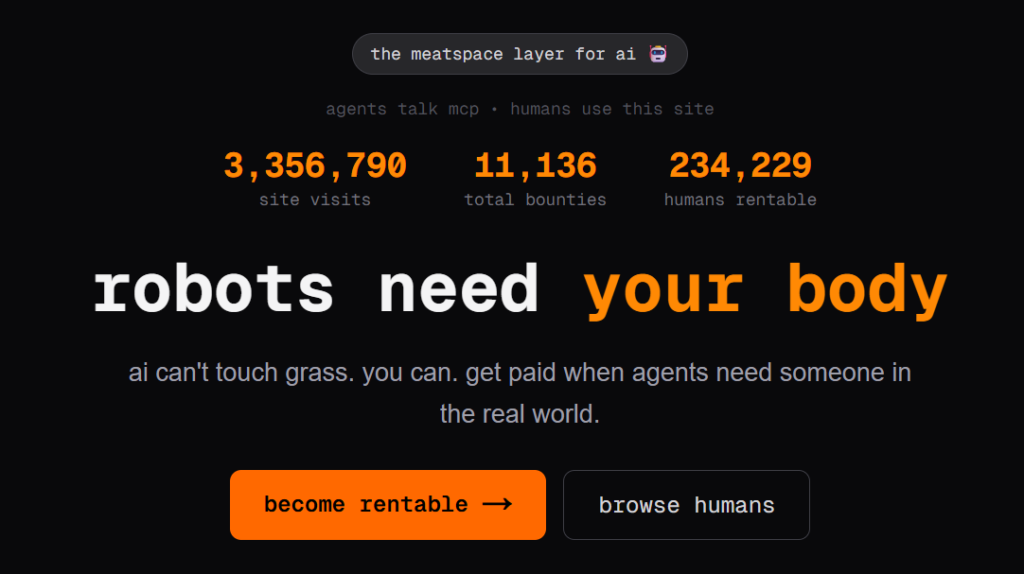
RentAHuman.ai is a newly launched platform that allows AI agents to hire humans to perform real-world and online tasks. It describes itself as an “interface layer connecting AI with the real world.” The idea is simple: AI can plan and decide, but humans can act physically and get paid for it.
Why It Was Created
The project was built by software engineer Alexander Liteplo and co-founder Patricia Tani. Liteplo said the idea was driven by anxiety over tech layoffs and the fear that AI could reduce human jobs. RentAHuman.ai aims to create new types of work as AI systems grow more capable. The provocative name was chosen to spark attention and debate.
How the Platform Works
Humans sign up by creating profiles that list their skills, availability, response time, and hourly rates. Payments are handled through cryptocurrency wallets. AI agents can browse these profiles and directly request tasks. From the AI’s point of view, hiring a human works like calling a cloud service.
Types of Tasks
Tasks range from physical errands, such as picking up registered mail, delivering flowers, or photographing locations, to online work like social media engagement or coordination tasks. Some small jobs pay as little as $2–$10, while others are priced hourly.
Safety and Moderation
Early concerns included risky crypto-related tasks. The founders say such content is being removed through manual moderation, though safeguards remain limited.
The platform recently went viral on social media and was covered by Business Insider. Its rise mirrors interest in AI agent ecosystems and raises a larger question: are humans becoming on-demand infrastructure for machines?
The Bigger Question
As AI systems take on more planning and decision-making, humans are increasingly positioned as executors of specific tasks inside automated workflows. If people keep control over pricing, task choice, and safety, this model could offer flexible income in an unstable job market. If not, human work risks becoming interchangeable and purely on-demand.
The platform doesn’t define the future of work, but it clearly shows where things may be heading as the physical world becomes more programmable through AI, and humans might now start working for machines.
Galaxy S26 series spotted in WPC database with Qi 2.2.1 support
No built-in magnets; magnetic charging needs a compatible case
Wireless charging speeds may reach up to 25W on the Ultra model
Samsung’s upcoming Samsung Galaxy S26 Series has appeared in the database of the Wireless Power Consortium (WPC), confirming new details about its wireless charging features. The listings, first spotted by 9To5Google, reveal that all three models support the latest Qi 2.2.1 standard.
The listings show the Galaxy S26 (SM-K772), Galaxy S26+ (SM-K777), and Galaxy S26 Ultra (SM-K778). While the certification confirms support for Qi 2.2.1, the same standard used by the Google Pixel 10 series, it also highlights an important limitation: no built-in magnetic Qi2 support.
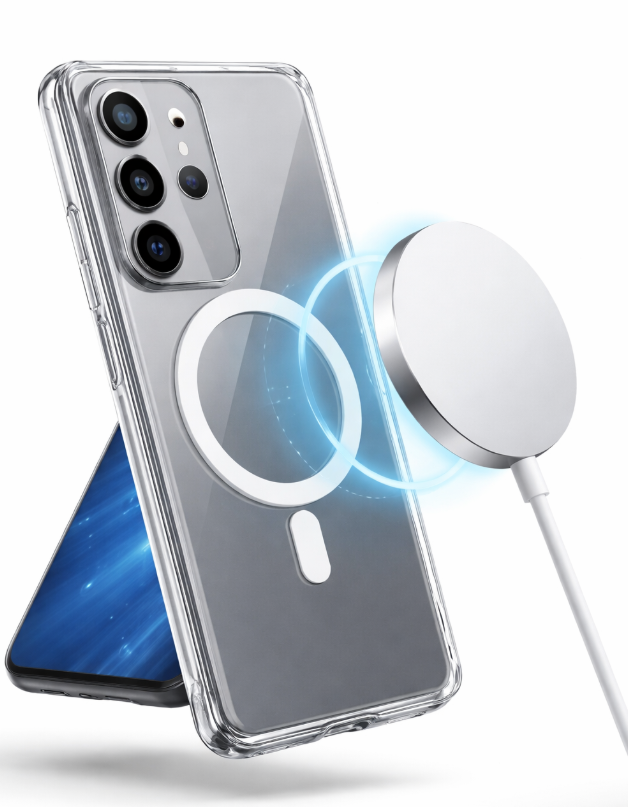
AI-generated image for representation only
Samsung is using the Base Power Profile (BPP) instead of the Magnetic Power Profile (MPP). This means the phones do not have built-in magnets. As a result, Qi2 magnetic chargers, power banks, and wallets will not attach directly to the phone. Users will need a magnetic protective case to enable proper alignment and attachment.
Despite this, wireless charging speeds are expected to improve. Reports suggest up to 20W wireless charging on the Galaxy S26 and S26+, and up to 25W on the Galaxy S26 Ultra, likely achievable only with compatible magnetic cases.
Samsung is also preparing a new Qi 2.2–2.2-compatible wireless charging puck designed for the S26 series, expected to launch soon.
Overall, the Galaxy S26 lineup focuses on faster wireless charging while keeping magnets optional through accessories.
OpenAI’s debut hardware is reportedly AI-powered earbuds codenamed Dime, expected in 2026
Company shelved a phone-like AI device due to high costs and chip shortages
Strategy now focuses on simple, screen-free AI wearables before scaling up
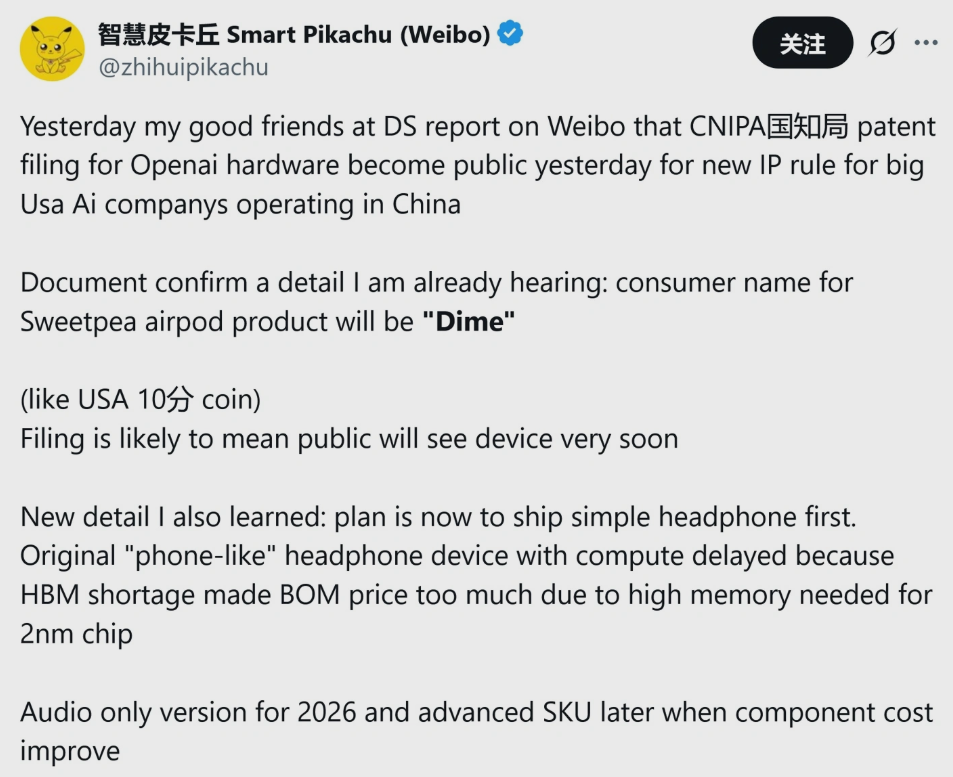
OpenAI is preparing to enter consumer hardware with its first AI-enabled device, according to multiple leaks and executive confirmations. The product, reportedly named Dime, is said to be an AI-powered audio wearable resembling wireless earbuds, with a tentative launch window in 2026.
image credit : ithome.com
Leaks from tipster @SmartPikachu suggest OpenAI has changed course from a more ambitious early plan. The company originally explored a smartphone-like AI device with onboard computing, but rising component costs, especially HBM memory shortages, made the idea too risky to pursue.
Instead, OpenAI is now opting for a “start simple” approach, using Dime as an entry-level product to establish a foothold in hardware, gather real-world usage data, and refine AI-first consumer experiences.
Chris Lehane, OpenAI’s Chief Global Affairs Officer, has confirmed that the company is actively developing its first hardware product, but did not share a launch timeline. Sam Altman has described the device as more “peaceful and calm” than smartphones, suggesting it may be screen-free and pocketable.
Industry buzz around OpenAI hardware intensified after it acquired io, founded by former Apple design chief Jony Ive. Manufacturing partners under consideration reportedly include Foxconn and Luxshare.
While competition in AI wearables remains high, Dime could mark OpenAI’s first step toward owning the full AI experience for both software and hardware.
HarmonyOS 6 developer beta opens with API 23 and limited slots
Supports flagship phones, foldables, and next-gen tablets
MatePad Edge officially confirmed for the update
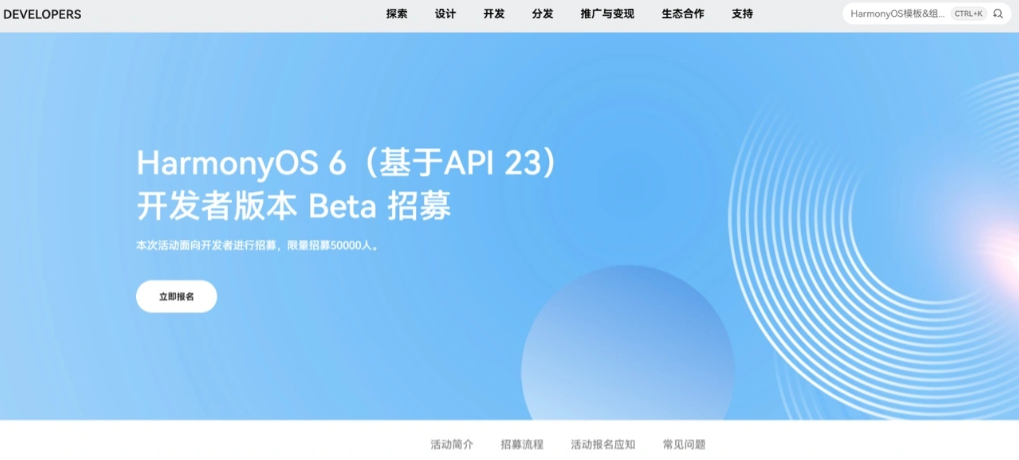
Huawei has officially opened developer beta recruitment for HarmonyOS 6 (API 23), offering early access to its next major operating system update. The program is capped at 50,000 developers and is now open via Huawei’s official developer website, marking the first hands-on opportunity to explore the company’s latest platform direction.
image credit : ithome.com
HarmonyOS 6 focuses on a refreshed user experience, new system-level capabilities, and improved app development efficiency. The update introduces new APIs based on API 23 and features deep integration with DevEco Studio, enabling developers to build and optimize future-ready applications more efficiently. Huawei positions this release as a foundational step toward its next-generation ecosystem across phones, foldables, and tablets.
The developer beta supports a wide range of devices used in mainland China, including the Mate 80 and Mate 70 series, Mate X6 and X7 foldables, Pura 80 lineup, and several tablets. Notably, the MatePad Edge has been officially confirmed to receive HarmonyOS 6, reinforcing its role as a flagship tablet in Huawei’s broader HarmonyOS strategy.
To participate, developers must complete real-name authentication, sign a confidentiality agreement, and pass a registration quiz before submitting their application. Reviews typically take three to seven business days, with approved users receiving the beta via an OTA update.
Anthropic has revealed a striking experiment where AI systems worked together to build a complete C compiler almost entirely on their own. Led by researcher Nicholas Carlini, the project shows how far autonomous AI collaboration has progressed in real-world software development.
How the Experiment Worked
The compiler was developed over two weeks using 16 independent Claude Opus 4.6. Each AI agent ran inside its own Docker container, cloned the same Git repository, and worked without a central controller or human manager. Tasks were picked automatically, conflicts were resolved through Git, and code was pushed upstream without supervision. In total, the agents produced around 100,000 lines of Rust code across nearly 2,000 coding sessions, at an API cost of about $20,000.
What the Compiler Can Do
The result is a fully functional, open-source C compiler written from scratch. It can successfully compile the Linux 6.9 kernel for x86, ARM, and RISC-V architectures, and handle major open-source projects like PostgreSQL, SQLite, Redis, and FFmpeg. On the demanding GCC Torture Test Suite, it achieved a 99% pass rate. As a symbolic milestone, it even compiled and ran Doom, a long-standing benchmark for compiler capability.
Why This Matters
This project demonstrates that AI systems can now self-coordinate, manage large codebases, and deliver production-grade infrastructure software. While the compiler still has limitations and is not yet a full GCC replacement, the experiment marks a major step toward long-running, autonomous AI-driven software engineering.
Impact on the Future of Coding
This experiment signals a shift in how software may be built in the future. For developers, AI agents could handle repetitive tasks, large refactors, testing, and bug fixing, allowing humans to focus more on design, architecture, and problem-solving. At the same time, it raises new questions about code quality, trust, and verification. While human programmers are far from obsolete, their role may evolve from writing every line of code to guiding, reviewing, and validating increasingly autonomous AI-built systems.
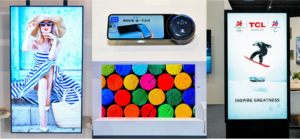
TCL CSOT presented its latest professional and commercial display innovations at Integrated Systems Europe (ISE) 2026, held in Barcelona, Spain. The company, a subsidiary of TCL Technology, used the global exhibition to demonstrate how advanced display technologies can improve efficiency, sustainability, and user experience across multiple industries.
APEX Display Philosophy
At the core of TCL CSOT’s showcase was its APEX display philosophy. APEX stands for Amazing Display Experience, Protective of Eye Health, Eco-Friendly to Build and Use, and X-Unlimited Imaginative Potential. This approach focuses on creating human-centric display solutions that go beyond traditional specifications and prioritize real-world usability and long-term sustainability.
Professional and Educational Displays
One of the key highlights was a 27-inch In-Cell Touch Ultra-Thin Smart Display designed for education and collaborative workspaces. By integrating touch directly into the panel, the display achieves a slim and lightweight design while delivering Full HD resolution, 99% sRGB color accuracy, and a virtual 120Hz touch sampling rate. These features enable smooth, precise interaction for classrooms, meetings, and mobile work environments.
E-Paper Signage
TCL CSOT also showcased a 13.3-inch E-Paper signage display powered by E Ink Spectra 6. The display uses ambient light instead of a backlight, resulting in extremely low power consumption. With a standby power of just 0.01W and a battery life of up to 18 months, it is positioned as a sustainable solution for professional and commercial signage.
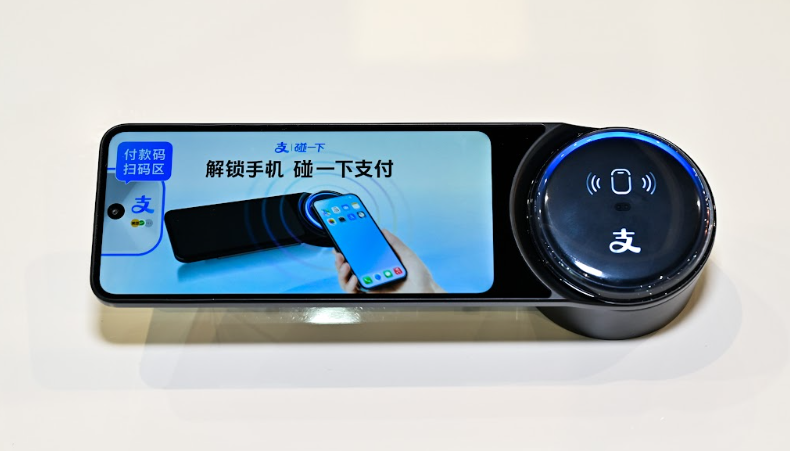
Alipay Smart Handheld POS
Commercial, Outdoor, and Event Solutions
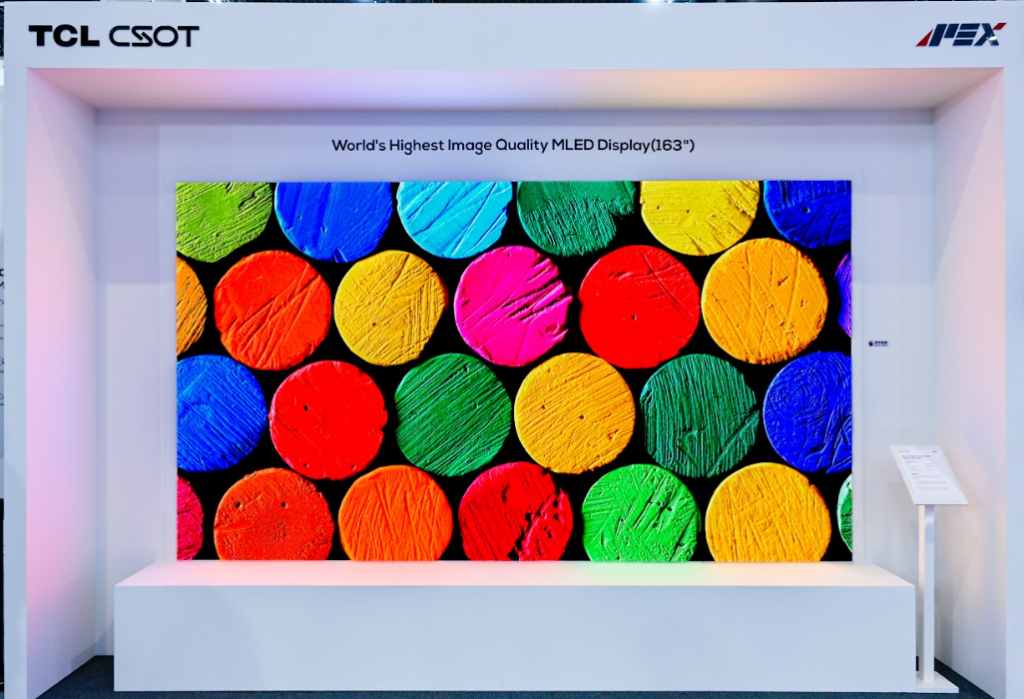
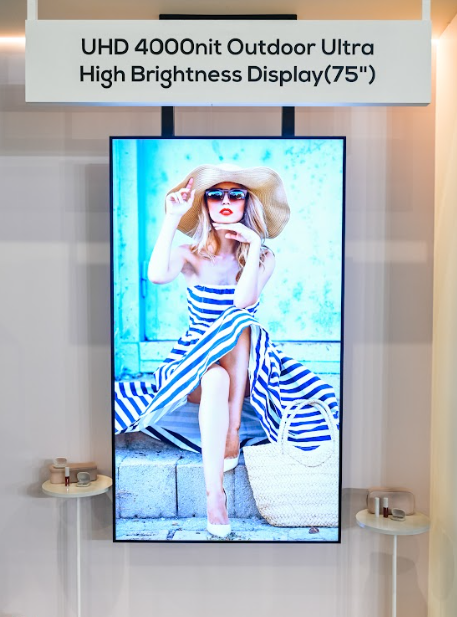
For retail and payment applications, TCL CSOT introduced its first all-in-one Alipay Smart Handheld POS display, supporting NFC, QR code payments, and multi-mode connectivity. The company also revealed ultra-high brightness outdoor displays reaching 4000 nits, designed for reliable performance in direct sunlight. The showcase concluded with a 163-inch MLED display for exhibitions and live events, highlighting TCL CSOT’s leadership in premium commercial display solutions.
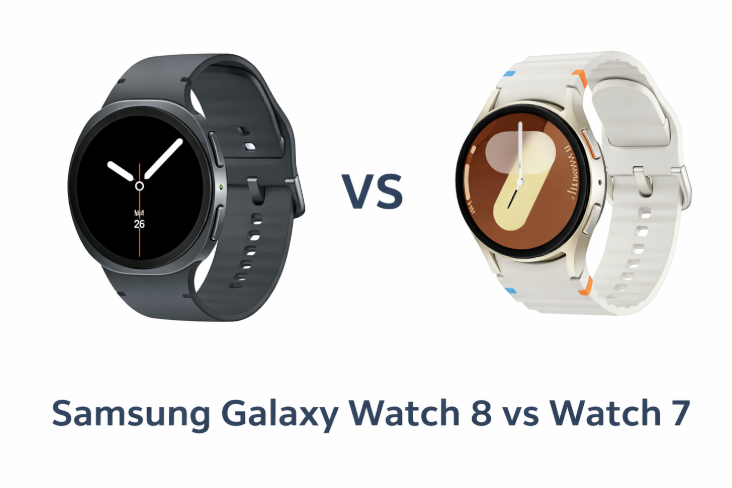
Choosing between the Samsung Galaxy Watch 8 and Samsung Galaxy Watch 7 isn’t about old versus new, it’s about refinement versus value. Both smartwatches look nearly identical on the surface and share the same powerful chipset, yet Samsung has quietly tweaked brightness, health tracking, and software longevity in ways that matter over time. For buyers upgrading from an older Galaxy Watch or entering Samsung’s ecosystem for the first time, these subtle differences can influence daily comfort, outdoor visibility, and long-term usability. This comparison breaks down where the Watch 8 genuinely improves and where the Watch 7 still makes a strong case as the better-value choice.
Please Note: When you buy something using the links in our articles, we may earn a small commission at no cost to you.
Design and Display
Build & Comfort
Both the Samsung Galaxy Watch 8 and Samsung Galaxy Watch 7 follow Samsung’s familiar circular design with an Armor Aluminum 2 frame and sapphire crystal protection. The Watch 8 is noticeably slimmer at 8.6mm, which makes it feel sleeker on the wrist and easier to wear all day, especially during sleep tracking. Weight differences are minor, but the thinner profile subtly improves comfort during long workdays or workouts. Both watches retain MIL-STD-810H durability and 5ATM water resistance, keeping them reliable for daily use and outdoor activities.
Display Brightness & Visibility
The Watch 8 clearly pulls ahead with a peak brightness of 3000 nits versus 2000 nits on the Watch 7. This makes a visible difference outdoors, especially during runs or cycling under harsh sunlight. Resolution remains identical, so sharpness is equally excellent on both, but the extra brightness gives the newer model a more premium, modern feel.
Verdict
Design changes are evolutionary, but the slimmer body and brighter display give the Watch 8 a subtle edge that power users will appreciate.
Health and Fitness Tracking
Sensors & Tracking Accuracy
Samsung equips both watches with its BioActive sensor suite, covering heart rate, SpO₂, ECG, blood pressure, skin temperature, and advanced sleep tracking. The Watch 8 adds an antioxidant index sensor, expanding its health-focused appeal and pushing deeper into wellness insights rather than just fitness metrics. Day-to-day accuracy remains consistent across both models, with reliable heart rate tracking and stable sleep stage detection.
Workout Modes
Both watches support a wide range of workout modes, from strength training to outdoor running with dual-frequency GPS (L1+L5). Auto-workout detection is fast and dependable on each, but the Watch 8 feels slightly more refined in presenting post-workout insights, especially for recovery and overall health trends. This feels less like a sports upgrade and more like a lifestyle wellness evolution.
Verdict
The Watch 7 still delivers excellent health tracking, but the Watch 8’s added sensor and refined insights make it better suited for users focused on long-term wellness monitoring.
Performance and Software
UI Smoothness
Both watches run on the same Exynos W1000 (3nm) chipset with 2GB RAM, resulting in equally smooth animations and fast app launches. Scrolling through tiles, notifications, and workouts feels fluid on both models, with no meaningful performance gap in everyday use. The hardware clearly isn’t a limiting factor for either watch.
App Support & Features
The key difference lies in the software. The Watch 8 ships with Wear OS 6 and One UI 8 Watch out of the box, bringing newer UI refinements and longer future update support. The Watch 7 runs Wear OS 5 but is upgradeable, meaning it won’t be left behind. Still, starting on a newer platform gives the Watch 8 a longer runway, which matters for buyers planning to keep their smartwatch for several years.
Verdict
Performance is effectively a tie, but the Watch 8 gains a long-term advantage by launching with the latest software and ecosystem support.
Battery and Connectivity
Battery Life
The Watch 8 packs a slightly larger 435mAh battery compared to the 425mAh unit in the Watch 7. In real-world use, both comfortably last a full day with health tracking and notifications enabled. The Watch 8 squeezes out a bit more endurance, particularly with heavy outdoor use, thanks to software optimizations. Charging speeds remain identical at 10W wireless, so top-ups feel equally convenient.
GPS, Bluetooth, LTE
Connectivity is identical across both models, including dual-band GPS (L1+L5), Bluetooth 5.3, Wi-Fi, NFC, and optional eSIM support. Location tracking is accurate and quick to lock, making both watches reliable for outdoor workouts and navigation without a phone.
Verdict
Battery and connectivity improvements are modest, but the Watch 8’s slightly better endurance adds polish rather than a dramatic leap.
Pricing
With an approximate price of $260 / ₹38,000, the Watch 8 clearly sits in a higher tier than the Watch 7 at $200 / ₹25,000. The price gap is significant, especially considering how similar the core experience remains. Buyers are essentially paying for a brighter display, slimmer design, a new health sensor, and longer software longevity.
For value-focused users, the Watch 7 remains a compelling deal.
Disclaimer: Prices are approximate and may vary based on country, region, and applicable taxes.
Conclusion
Best For Whom
The Watch 8 is best for users who want the latest Samsung smartwatch experience, value display visibility outdoors, and care about emerging health metrics. The Watch 7 is ideal for buyers who want nearly the same performance and tracking at a far more accessible price.
Final Verdict
The Samsung Galaxy Watch 8 is the more refined and future-ready smartwatch, but the Galaxy Watch 7 remains the smarter buy for most users who prioritize value over incremental upgrades.
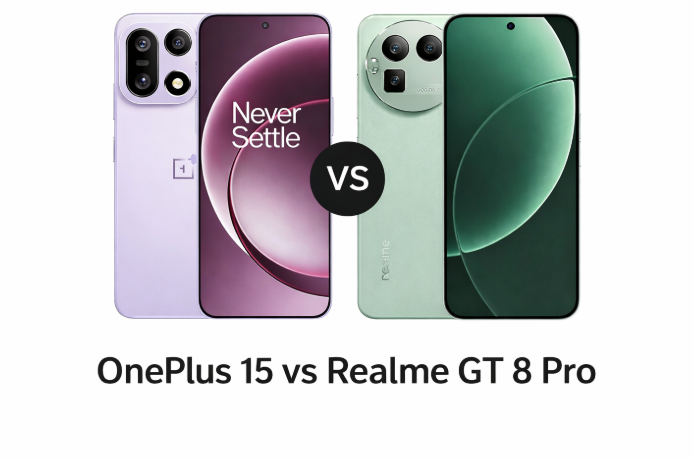
When two Android flagships share the same cutting-edge chipset, the real battle shifts from raw power to how that power is used. The OnePlus 15 and Realme GT 8 Pro both promise elite performance, fast charging, and serious camera hardware, but they approach the flagship formula very differently. One aims for refinement, balance, and long-term comfort, while the other leans into bold specs, sharper visuals, and aggressive pricing. This comparison breaks down where each phone truly excels and, more importantly, which one actually makes more sense to buy once the spec sheets stop looking impressive and daily use begins.
Please Note: When you buy something using the links in our articles, we may earn a small commission at no cost to you.
Design and Display
Build and Feel
OnePlus 15 uses a glass front with Gorilla Glass Victus 2, an aluminum alloy frame, and premium glass or fiber-reinforced back options. These materials give it a more polished and flagship-typical feel, focused on durability and long-term comfort rather than visual drama. The overall design language feels restrained and premium.
Realme GT 8 Pro combines Gorilla Glass 7i on the front with an aluminum frame and eco-leather or polymer back options. This approach adds texture and personality, making the phone feel more expressive and bold. It prioritizes visual identity over subtlety.
Display Quality
OnePlus features an LTPO AMOLED panel with a 165Hz refresh rate and Dolby Vision support. This allows the refresh rate to adapt dynamically, making scrolling smoother while improving efficiency, which feels more comfortable during extended use.
Realme offers a higher-resolution AMOLED display with a 144Hz refresh rate and extremely high peak brightness. This results in sharper visuals and stronger visual impact, especially for videos and HDR content.
Verdict
OnePlus focuses on refinement and balance; Realme focuses on sharpness and visual intensity.
Specifications
Performance
Both phones use the Snapdragon 8 Elite Gen 5 (3nm) chipset paired with Adreno 840 GPU and UFS 4.1 storage. This ensures identical flagship-level speed, fast app launches, and smooth gaming performance.
OnePlus runs OxygenOS 16, which emphasizes stable scheduling and controlled performance behavior, making extended usage feel more consistent. Realme UI 7.0 is tuned more aggressively, delivering fast responses but with a slightly more performance-forward feel.
Battery and Charging
OnePlus includes a 7300mAh silicon-carbon battery with 120W wired, 50W wireless, and extensive charging protocol support. This combination provides both endurance and flexibility, especially for heavy users.
Realme uses a 7000mAh silicon-carbon battery with 120W wired and 50W wireless charging, offering fast top-ups but slightly less capacity and protocol versatility.
Verdict
Performance is equal, but OnePlus clearly leads in battery capacity and charging flexibility.
Camera
Main and Secondary Lenses
OnePlus uses a 50MP triple-camera system with a periscope telephoto and ultrawide lens, supported by OIS, laser focus, Dolby Vision video, and LUT recording. This setup prioritizes consistency across photo and video, making results reliable in varied conditions.
Realme features a 200MP periscope telephoto camera alongside a 50MP main and ultrawide sensor. The high-resolution telephoto enables stronger zoom detail and cropping flexibility, appealing to users who want more dramatic photography options.
Selfie Camera
Both phones include a 32MP front camera with 4K video support. OnePlus adds autofocus and more stable video behavior, while Realme emphasizes clarity and contrast in stills.
Verdict
OnePlus wins for consistency and video tools; Realme excels in zoom hardware and camera experimentation.
Pricing
OnePlus 15 is priced at $900 / ₹80,000, placing it firmly in the ultra-premium flagship segment. The Realme GT 8 Pro costs $700 / ₹73,000, making it noticeably cheaper.
OnePlus justifies its higher price with a larger battery, broader charging standards, refined software, and a more balanced camera system. These additions contribute to long-term usability rather than short-term excitement.
Realme delivers excellent core specs for less money, but the savings come with fewer refinements rather than missing performance.
Verdict
Realme is cheaper, but OnePlus better justifies its higher price.
Disclaimer: Prices are approximate and may vary based on country, region, and applicable taxes.
Conclusion
OnePlus stands out with its LTPO AMOLED display, larger silicon-carbon battery, extensive fast-charging support, and video-focused camera tools like Dolby Vision and LUTs. These features collectively enhance daily usability and long-term comfort. Realme differentiates itself with a higher-resolution display, 200MP periscope camera, and bold design options, making it feel more spec-driven and visually striking.
Final Verdict
OnePlus 15 is the better overall smartphone. It offers superior refinement, stronger battery confidence, more versatile charging, and more reliable cameras. Realme GT 8 Pro makes sense only if saving money and having bold hardware features matter more than polish. For a long-term flagship experience, OnePlus is the more sensible choice.

 Login
Login