Login
Login
Morocco Joins Egypt and Tunisia in 2025 Tourism Surge, Achieving Historic Growth and Record-Breaking Revenue Across North Africa
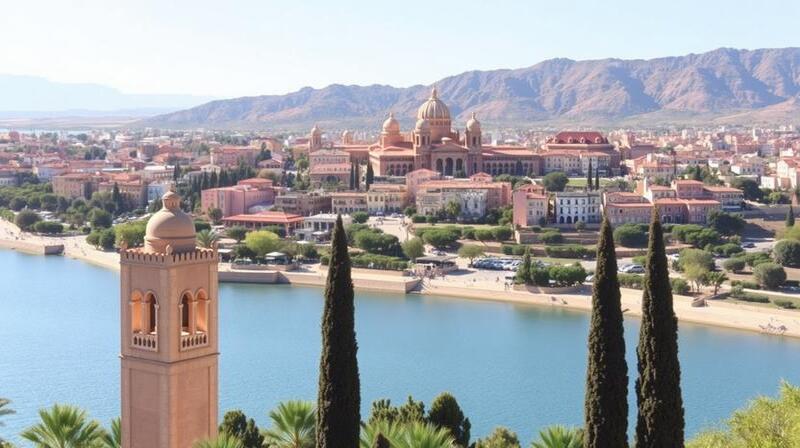
Morocco, alongside Egypt and Tunisia, has emerged as a key player in North Africa’s tourism surge, achieving historic growth and record-breaking revenue in 2025 due to rising visitor numbers, diversified offerings, and higher spending per tourist.
The global travel industry closed 2025 on a powerful note, confirming that tourism has not only recovered but entered a new phase of sustained growth. According to the latest World Tourism Barometer, international tourist arrivals climbed to an estimated one billion five hundred twenty million, marking a four percent rise compared with the previous year. Even more striking was the financial impact. International tourism receipts reached a preliminary one trillion nine hundred billion dollars, up five percent year on year, while total export revenues from tourism, including passenger transport, hit a record two trillion two hundred billion dollars.
These figures underline a clear shift: travelers are moving in greater numbers and spending more per trip. Longer stays, higher accommodation rates, and stronger demand for experiences have reshaped tourism economics across regions. Among the standout performers in this global rebound, North Africa emerged as one of the most compelling success stories of 2025.
Across Egypt, Morocco, and Tunisia, tourism revenue surged to a combined thirty-five billion two hundred fifty million dollars, up sharply from roughly twenty-eight billion dollars the year before. This performance placed North Africa well above the global average for both arrivals growth and earnings. Rising visitor volumes played a role, but the real driver was value. Higher hotel rates, upgraded tourism products, improved air connectivity, and favorable currency movements against the dollar helped push revenues to new highs.
While these three destinations shared regional momentum, their results reveal three very different tourism models, each offering lessons on how volume, value, and strategy intersect in a competitive global market.
Egypt stood out as the regional leader in revenue generation and spending per visitor. In 2025, the country generated approximately seventeen billion eight hundred million dollars in tourism receipts, a robust seventeen percent increase from the previous year. This placed Egypt among the fastest-growing destinations worldwide in tourism earnings. The surge was powered by a strong rebound in arrivals, which rose by around twenty-one percent to reach nineteen million visitors.
High occupancy rates across Red Sea resorts played a central role, supported by year-round demand and expanded flight capacity. At the same time, Egypt’s cultural tourism continued to anchor its appeal. Ancient heritage sites, combined with upgraded visitor facilities and improved crowd management, attracted travelers seeking immersive historical experiences. Demand from high-spending markets, including parts of Europe, the Gulf region, and Eastern Europe, further lifted revenue performance.
What truly set Egypt apart was yield. Average spending per tourist climbed to approximately nine hundred thirty-seven dollars, the highest in North Africa. This reflects a deliberate move toward premium positioning, with growth in upscale resorts, curated cultural tours, and longer stays. The country is now leveraging this momentum with ambitious medium-term goals, including major investments in airports, expanded route networks, streamlined entry procedures, and a push to diversify beyond traditional beach and heritage tourism into wellness, desert experiences, and niche cultural offerings.
Morocco delivered what many analysts described as one of the most impressive tourism performances anywhere in the world in 2025. The country welcomed nearly nineteen million eight hundred thousand visitors, a jump of roughly fourteen percent, allowing it to retain its position as Africa’s most visited destination by arrivals. Tourism revenue reached about fourteen billion seven hundred million dollars, with partial-year figures already surpassing thirteen billion dollars well before year-end.
What made Morocco’s performance exceptional was the pace of revenue growth. In dollar terms, tourism earnings rose by around nineteen percent, the strongest growth rate globally according to international benchmarks. Revenue expanded faster than arrivals, signaling a clear rise in value per visitor. Average spending per tourist approached seven hundred forty dollars, driven by higher accommodation prices, longer stays, and a broader mix of experiences.
Morocco’s diversified tourism portfolio proved to be a major strength. Coastal resorts, historic cities, desert landscapes, mountain escapes, and vibrant urban centers all contributed to spreading demand throughout the year. This diversification also helped tourism receipts surpass remittances from citizens abroad, making tourism the second-largest source of foreign currency for the national economy. The sector’s growing role has reinforced its importance in regional development, job creation, and infrastructure investment, positioning Morocco for further expansion in the coming years.
Tunisia presented a different picture, one defined by strong volume recovery but ongoing value challenges. In 2025, the country welcomed more than eleven million tourists for the first time, surpassing previous records and signaling a full return of international demand. Tourism revenue reached approximately two billion seven hundred fifty million dollars, reflecting a moderate increase of around six to seven percent compared with the prior year.
While the rebound in arrivals was significant, average spending per visitor remained low, at roughly two hundred fifty dollars. This gap highlights Tunisia’s continued reliance on mass tourism and all-inclusive packages, where much of the value is captured by foreign operators rather than retained within the local economy. Despite this limitation, tourism remains a critical source of foreign exchange and employment, especially during peak seasons.
The challenge ahead for Tunisia is clear: converting high visitor volumes into greater and more sustainable economic value. Efforts are increasingly focused on diversifying into higher-yield segments such as ecological tourism, cultural experiences, health and wellness travel, and medical tourism. Upgrading accommodation standards, enhancing local supply chains, and promoting longer stays will be essential to closing the value gap with regional peers.
Taken together, the 2025 results confirm North Africa’s emergence as a global tourism powerhouse. Egypt demonstrates how strong yield and premium positioning can drive revenue leadership. Morocco shows the power of diversification and rapid value growth. Tunisia illustrates the importance of rebalancing volume with sustainability and local economic impact.
With global travel demand remaining steady and consumer confidence improving, the region is well placed to capture a larger share of international tourism in the years ahead. Continued investment in infrastructure, digital services, and environmentally responsible projects will be critical. Equally important will be the shift toward higher value experiences that benefit local communities. As 2025 has shown, North Africa is no longer just recovering. It is redefining its role in the global tourism economy.
The post Morocco Joins Egypt and Tunisia in 2025 Tourism Surge, Achieving Historic Growth and Record-Breaking Revenue Across North Africa appeared first on Travel And Tour World.