Reading view

Pi Network Update for 2026: Forget Pump-and-Dump, Pi Wants Proof Before Profit

Pi Network Update for 2026

The post Pi Network Update for 2026: Forget Pump-and-Dump, Pi Wants Proof Before Profit appeared first on Coinpedia Fintech News

Pi Network is reinforcing its utility-first vision with a new framework designed to ensure ecosystem tokens are tied to real applications, not speculation. On February 27, co-founder Chengdiao Fan introduced the PiRC1 proposal in a detailed video shared through official Core Team channels.

The timing is notable. The update comes just after the first anniversary of Pi’s Open Network launch, signaling what the team describes as the next phase of ecosystem growth. The message is simple: tokens must power working apps, support real users, and contribute measurable value to the network.

Utility Over Speculation

Under the proposed PiRC1 structure, ecosystem tokens will be community-created assets built on the Pi blockchain, but with stricter entry requirements.

Unlike many token launches across Web3, Pi’s framework requires projects to have a functioning product before issuing a token. In other words, no live app means no token launch.

Fan emphasized that the focus is “not on tokens for their own sake.” Instead, tokens are meant to accelerate user acquisition, engagement, and service delivery. This product-first rule aims to prevent empty launches that prioritize fundraising over functionality.

A Different Liquidity Model

Another major shift involves how funds are handled. Instead of sending token proceeds directly to project teams, the framework proposes routing committed Pi into permanent liquidity pools.

According to the Core Team, this design serves three purposes:

  1. Strengthen token stability
  1. Reduce the risk of fund misuse
  1. Align long-term incentives within the ecosystem

By separating fundraising from direct project control, Pi is attempting to introduce a structural safeguard rarely seen in typical token launches.

Accountability and Real Use Cases

Projects launching ecosystem tokens must clearly define real-world use cases. Tokens should function as tools within apps, not stand-alone financial instruments.

Because Pi’s network consists of KYC-verified users, the team believes builders will operate under greater accountability compared to anonymous blockchain environments. This added layer of transparency is intended to push developers toward delivering real, usable products rather than speculative concepts.

Community Input Before Finalization

Importantly, PiRC1 is not final. The proposal has been released publicly for feedback via GitHub and Google Forms through March.

This open review approach reflects Pi Network’s community-driven identity. Alongside upgrades to migration systems and developer tools, the new token framework highlights the network’s broader objective: scale through utility, not hype.

Whether this structured model succeeds will ultimately depend on developer adoption and consistent execution in the months ahead.

Never Miss a Beat in the Crypto World!

Stay ahead with breaking news, expert analysis, and real-time updates on the latest trends in Bitcoin, altcoins, DeFi, NFTs, and more.

FAQs

What is the Pi Network PiRC1 proposal?

PiRC1 is a new framework requiring ecosystem tokens on Pi to be tied to a working real-world application, aiming to prioritize utility and long-term value over market speculation.

How does PiRC1 reduce token misuse risk?

Token proceeds would go into permanent liquidity pools instead of directly to teams, helping stabilize tokens and limit misuse of raised funds.

Can anyone launch a token under PiRC1?

Only projects with a working app and clear real-world use case can launch tokens, ensuring higher quality and stronger accountability.

Is PiRC1 finalized or still under review?

PiRC1 is still a proposal. The Core Team has opened it for community feedback before finalizing the framework.


Ripple’s ‘Rookie Numbers’ Moment: Is Triple-Digit XRP Closer Than Anyone Thinks?

Ripple’s ‘Rookie Numbers’ Moment Is Triple-Digit XRP Closer Than Anyone Thinks

The post Ripple’s ‘Rookie Numbers’ Moment: Is Triple-Digit XRP Closer Than Anyone Thinks? appeared first on Coinpedia Fintech News

A fresh round of debate around XRP is picking pace after comments from Ripple’s technology leadership hinted that public adoption numbers may only tell part of the story.

In a recent video breakdown, crypto commentator Ripple Bull Winkle opened up about  remarks from David Schwartz, Chief Technology Officer at Ripple, and his successor Luke. The message was straightforward: current usage metrics across crypto may look modest, but they likely understate what is happening beneath the surface.

One insider reportedly described today’s figures as “rookie numbers,” arguing that millions of users and transactions tied to integrations, backend infrastructure and indexed assets may not be fully reflected in headline statistics.

The Utility Argument

At the heart of the bullish case is what Schwartz has previously referred to as “meaningful secondary market utility.”

The idea is simple. XRP’s long-term value would not come from one-time purchases or speculative trading spikes. Instead, it would come from repeated use inside financial systems. If XRP becomes embedded within payment rails, liquidity pools or tokenized asset platforms, the same units could circulate continuously. Over time, that velocity could amplify demand.

In that framework, a triple-digit XRP price would require sustained global usage at scale, not just retail enthusiasm during bull runs.

Big Tech, Stablecoins and Tokenization

Broader industry trends are adding context to the conversation.

Major technology firms are once again exploring digital payments infrastructure. Large financial institutions are building tokenized settlement systems. The Depository Trust & Clearing Corporation, or DTCC, has publicly discussed a future where multiple blockchains operate side by side.

In such an environment, interoperability becomes essential. Assets that can bridge liquidity between networks could play a functional role rather than a purely speculative one.

Even after the market turmoil of 2022, including collapses tied to Terraform Labs, institutional activity did not vanish. Instead, many firms shifted focus toward regulated products, exchange-traded funds and tokenized financial instruments. The infrastructure buildout has continued, even during periods of muted price performance.

The $100 Question

On the technical side, analyst EGRAG Crypto has outlined a long-term chart structure he calls a “Nike” formation. After falling from its 2018 peak near $3.31 to a low around $0.114, XRP has formed a rounded base with progressively higher lows on the macro chart.

Within that broader pattern, he interprets price action as part of a multi-year Elliott Wave structure. An initial impulsive wave reportedly carried XRP from the $0.20 range to above $3 in early 2025. The current retracement is viewed as a corrective phase, with key support zones below current levels.

If the larger structure remains intact, projected upside levels discussed by some technical analysts range from the low double digits to far more ambitious targets. A $100 scenario, often cited in online discussions, would represent an extreme expansion phase rather than a base-case outcome.

Bitcoin Price Prediction by Wikipedia Co-Founder: $10,000 or Lower for BTC?

Bitcoin Price Prediction by Wikipedia Co-Founder $10,000 or Lower for BTC

The post Bitcoin Price Prediction by Wikipedia Co-Founder: $10,000 or Lower for BTC? appeared first on Coinpedia Fintech News

Search interest in “Bitcoin zero” has surged in the United States, hitting record levels in February as Bitcoin slid toward $60,000 after peaking in October. Data shows global search interest actually topped out months earlier, suggesting the most recent wave of panic is concentrated largely among U.S. investors.

At the time of writing, Bitcoin was trading near $67,680, attempting to steady itself after weeks of volatility and renewed debate about its long-term future.

Adding to that debate, Jimmy Wales, co-founder of Wikipedia, offered a stark long-range projection. While rejecting the idea that Bitcoin will collapse to zero, Wales said the cryptocurrency could fade to what he described as “hobbyist levels” by 2050, potentially trading below $10,000 in today’s dollars.

Survival Does Not Mean Dominance

Wales acknowledged that Bitcoin’s underlying cryptographic structure is resilient. In his view, the network could theoretically survive indefinitely unless it faced a major cryptographic breakdown or sustained 51% attack. Even then, he noted, it could fork and continue operating.

But durability, he argues, does not guarantee global dominance.

Wales questioned Bitcoin’s track record as both a currency and a reliable store of value, describing it as “speculative at best.” He pushed back against narratives suggesting that institutional adoption, exchange-traded funds or artificial intelligence integration ensure long-term price appreciation.

Using a practical example, he compared sending £10 within the United Kingdom through a traditional bank transfer, typically free and instant, with sending Bitcoin, which can involve spreads, transaction fees and reconversion costs. That friction, he suggested, limits mainstream usability.

Crypto Community Pushes Back

Not everyone agrees with Wales’ assessment.

Some market participants argue that comparing Bitcoin unfavorably to gold oversimplifies its value proposition. They note that much of gold’s valuation stems from its role as a store of value rather than industrial demand. In that sense, Bitcoin’s monetary premium may not be fundamentally different.

Supporters also highlight Bitcoin’s fixed 21 million supply and expanding global network as structural strengths. They point to improvements such as Layer 2 scaling solutions and the Lightning Network as evidence that functionality continues to evolve.

Others argue that even in a worst-case scenario involving protocol changes or forks, the Bitcoin brand and network effect could persist in a modified form rather than collapsing entirely.

A Divided Long-Term Outlook

Wales’ $10,000 scenario implies a steep real-term decline over the next two decades, a forecast that many analysts consider difficult to model without dramatic shifts in global monetary policy or technological displacement.

For now, Bitcoin remains well above that threshold, but the debate underscores a broader question facing digital assets: whether they mature into durable financial infrastructure or retreat into niche communities.

Trump Media Targets Jane Street: Wall Street Giant Hit With Naked Short Selling Bombshell

Jane Street naked short selling investigation

The post Trump Media Targets Jane Street: Wall Street Giant Hit With Naked Short Selling Bombshell appeared first on Coinpedia Fintech News

Jane Street, one of Wall Street’s most influential trading firms, has suddenly found itself pulled into a political and legal storm that stretches from crypto markets to Capitol Hill.

The firm, widely known for its dominance in exchange-traded funds and high-speed trading strategies, is now facing pressure from multiple directions. At the center of the latest controversy is Trump Media & Technology Group, which is reportedly urging lawmakers to take a closer look at the trading practices of Jane Street and other major firms.

While no regulator has formally accused the firm of wrongdoing, the combination of lawsuits, political noise, and viral online claims has placed Jane Street under an uncomfortable spotlight.

Trump Media Raises Naked Short Selling Concerns

The newest flashpoint involves allegations of naked short selling.

According to market chatter circulating this week, Trump Media & Technology Group has sent a letter to members of Congress requesting an investigation into Jane Street, Citadel, and other large trading firms. The concern revolves around whether shares were sold short without first being properly borrowed.

Under U.S. securities rules, naked short selling is restricted because it can increase the apparent supply of shares and potentially weigh on stock prices in an artificial way. Supporters of the investigation argue that if such practices occurred, they could have placed abnormal pressure on certain stocks.

As of Thursday afternoon Eastern Time, neither Trump Media nor Jane Street has publicly confirmed details of the reported letter. Citadel has also not issued a statement.

If Congress chooses to step in, the situation could quickly turn into a broader political fight over transparency, market structure, and the power of high-frequency trading firms in modern finance.

Terra Collapse Lawsuit Returns to the Headlines

Separate from the political tension, Jane Street is already dealing with a federal lawsuit tied to the collapse of Terraform Labs in 2022.

The complaint, filed February 23 in the U.S. District Court for the Southern District of New York, accuses the firm of using confidential information obtained through its relationship with Terraform Labs to protect itself before the Terra and Luna ecosystem unraveled.

That crash erased roughly $40 billion in market value almost overnight. The lawsuit claims Jane Street managed to sidestep more than $200 million in losses.

Jane Street has pushed back strongly, calling the lawsuit an attempt to extract money and dismissing the claims as baseless. The case has not reached any final conclusion, and no court has determined liability.

Still, the timing has revived questions about how deeply sophisticated trading firms were positioned during one of crypto’s most devastating collapses.

Never Miss a Beat in the Crypto World!

Stay ahead with breaking news, expert analysis, and real-time updates on the latest trends in Bitcoin, altcoins, DeFi, NFTs, and more.

FAQs

What is Jane Street being accused of?

Jane Street faces scrutiny over alleged naked short selling and a Terra-linked lawsuit, but no regulator has formally charged the firm.

Has Jane Street been found guilty of any wrongdoing?

No. While facing political pressure and a lawsuit, no regulator or court has formally accused or found Jane Street liable for any illegal activity.

Why are politicians getting involved in Jane Street’s trading?

Trump Media has reportedly urged Congress to investigate major trading firms, turning a market structure debate over short selling into a political issue in Washington.

Is Ethereum at Risk? Vitalik Buterin Reveals Post-Quantum Upgrade Strategy

Ethereum Quantum Roadmap

The post Is Ethereum at Risk? Vitalik Buterin Reveals Post-Quantum Upgrade Strategy appeared first on Coinpedia Fintech News

In an X post, Ethereum co-founder Vitalik Buterin introduced what he described as a “quantum roadmap”, a sweeping plan to upgrade the cryptographic foundations of Ethereum before quantum computers become a real-world threat.

While large-scale quantum machines remain theoretical, rapid advances in research have unsettled both crypto engineers and Wall Street investors. Buterin has repeatedly warned that Ethereum’s security model could be vulnerable sooner than many expect, even suggesting last year that meaningful risk could emerge before 2028.

Unlike the divided response within the Bitcoin community, Ethereum developers are signaling a proactive stance.

Here’s the Four Key Sides of Vulnerability

Let’s talk about Buterin’s roadmap, which identifies four primary quantum-sensitive components: consensus-layer BLS signatures, KZG-based data availability, externally owned account (EOA) signatures built on ECDSA, and certain zero-knowledge proof systems.

ECDSA, the cryptographic backbone of Ethereum accounts today, is particularly exposed. To begin migrating away from it, Buterin is pushing native account abstraction, allowing accounts to adopt alternative, quantum-resistant signature schemes.

One proposal central to that shift is “frame transactions,” a new transaction type offering more robust account abstraction. Ethereum Foundation developer Felix Lange has argued the feature is critical to creating an “off-ramp from ECDSA.” Buterin has voiced support for including frame transactions in the upcoming Hegota upgrade, expected in the latter half of 2026.

If adopted, frame transactions would give users first-class accounts capable of supporting any signature algorithm, including hash-based or lattice-based systems resistant to quantum attacks.

Something deeper is brewing inside…

Beyond signatures, Buterin’s roadmap outlines deeper architectural changes, including recursive STARKs and protocol-layer proof aggregation.

Having said that, STARK-based systems would eventually replace quantum-vulnerable cryptographic primitives used in data availability and proof verification. 

However, these systems are computationally heavy today. 

As Buterin argues, recursive aggregation, compressing multiple verifications into a single proof, is essential to keeping costs manageable. Transitioning away from KZG commitments and BLS signatures will require significant engineering effort, but Buterin describes the challenge as “manageable.”

Are We in the Post-Quantum Era?

The Ethereum Foundation recently formalized its quantum push, establishing a dedicated post-quantum research team after years of quiet R&D. The organization is launching bi-weekly quantum security calls and offering a $1 million prize to accelerate quantum-resistant cryptography.

Still, in Ethereum’s decentralized ecosystem, no roadmap is final. As researcher Justin Drake noted in a recently released “strawman roadmap,” an official path requires broad consensus.

But with quantum risk moving from theory toward inevitability, Ethereum appears determined to get ahead of the curve.

Never Miss a Beat in the Crypto World!

Stay ahead with breaking news, expert analysis, and real-time updates on the latest trends in Bitcoin, altcoins, DeFi, NFTs, and more.

Why the $35T U.S. Debt Problem Has Crypto Analysts Talking About XRP and Ripple?

Why the $35T U.S. Debt Problem Has Crypto Analysts Talking About XRP and Ripple

The post Why the $35T U.S. Debt Problem Has Crypto Analysts Talking About XRP and Ripple? appeared first on Coinpedia Fintech News

Rising concerns around America’s $35 trillion national debt have sparked intense debate about the future of the global financial system. While policymakers continue relying on traditional tools like rate adjustments and monetary expansion, some crypto analysts argue that bigger structural changes may already be underway.

Among them, Edo Farina has floated a bold theory: that XRP could eventually play a role in a broader financial reset, not as a speculative coin, but as infrastructure within a new settlement framework.

From the beginning, XRP has faced skepticism. Critics have questioned its role, its ties to institutions, and whether it can truly differentiate itself from thousands of other digital assets. Yet, supporters argue that its long-term positioning has always centered on cross-border settlement and financial plumbing rather than retail hype cycles.

“What’s Really Changing Globally”

Farina frames the discussion around macro reality. The U.S., he argues, cannot sustainably manage its debt through endless money printing or higher taxation. Inflation erodes purchasing power, and confidence in fiat systems is gradually weakening.

“A new financial system is emerging where debt is being tokenized onto blockchain rails,” Farina says. In that environment, he believes XRP could serve as a neutral bridge asset, facilitating value transfer between institutions and even sovereign entities.

He emphasizes that governments may eventually need to participate directly in digital asset ecosystems to maintain influence. “If you want control, you have to participate,” he argues, suggesting that ignoring blockchain infrastructure may no longer be an option for major economies.

Gold, De-Dollarization, and Blockchain

Farina ties his thesis to accelerating de-dollarization trends and record central bank gold accumulation. Around the world, nations are diversifying reserves and reducing reliance on the U.S. dollar for trade settlement.

“There will be an intersection between precious metals and blockchain technology,” he claims. He outlines two possibilities. Tokenized gold operating on blockchain networks like the XRP Ledger, or digital assets indirectly linked to commodity-backed systems.

In his view, a split global financial order, with competing currency blocs, could increase demand for neutral settlement layers that are not directly controlled by any single nation.

Infrastructure Over Speculation

However, going deep inside, Farina’s argument is not about short-term price targets. It is about positioning. If global finance shifts toward tokenized assets, real-time settlement, and commodity-linked digital rails, assets designed for liquidity bridging could become strategically important.

Whether XRP ultimately plays that role remains speculative. But as debt levels climb and monetary systems evolve, discussions about blockchain-based settlement are no longer fringe; they are increasingly part of mainstream macro conversations.

Never Miss a Beat in the Crypto World!

Stay ahead with breaking news, expert analysis, and real-time updates on the latest trends in Bitcoin, altcoins, DeFi, NFTs, and more.

FAQs

How could XRP be used in a debt-driven financial reset?

Supporters believe tokenized debt and cross-border payments may require fast settlement layers, where XRP could provide liquidity.

Could XRP support tokenized gold or commodity-backed systems?

Some analysts suggest blockchain networks like XRP Ledger could host tokenized gold or assets tied to commodities.

Is XRP’s role in a financial reset guaranteed?

No. The theory is speculative. While XRP targets cross-border settlement, adoption depends on regulation and institutions.

Saylor Leaves XRP Out, Backs Solana and Ethereum for Digital Credit Future

Saylor Leaves XRP Out, Backs Solana and Ethereum for Digital Credit Future

The post Saylor Leaves XRP Out, Backs Solana and Ethereum for Digital Credit Future appeared first on Coinpedia Fintech News

Michael Saylor has built his reputation as one of Bitcoin’s most vocal supporters. For years, his message was simple: Bitcoin is digital property, and companies should hold it.

But at the recent Strategy World 2026 conference, Saylor shifted the conversation.

This time, he wasn’t just talking about Bitcoin. He spoke about the future of digital credit — and said it will run on blockchains like Solana and Ethereum.

Interestingly, XRP didn’t come up.

A Different Vision of Finance

Saylor described a future where credit isn’t tied to traditional banking systems. Instead of loans moving through legacy rails, he sees them issued directly on blockchains as programmable digital instruments.

In simple terms, credit could become tokenized.

He suggested that lending products in the future may look more like software than paperwork, with built-in yield settings, liquidity controls, and adjustable terms coded directly into the asset. Rather than calling it a new asset class, he framed it as a new financial building block.

And in his view, networks like Solana and Ethereum already have what’s needed: liquidity, scale, and active developer ecosystems.

Markets Didn’t Ignore It

The reaction was immediate.

Solana jumped more than 13% within 24 hours of his comments, pushing its market value close to $50 billion. Ethereum also saw renewed buying interest as traders interpreted Saylor’s remarks as institutional validation.

When someone with Saylor’s track record talks about infrastructure, markets tend to listen.

For years, Solana and Ethereum have competed to position themselves as the foundation for decentralized finance. Saylor’s comments added fuel to that narrative, especially as institutions explore tokenized assets and on-chain lending.

More Than Just Hype?

The real question now is whether this vision turns into action.

It’s one thing to outline a future where credit lives on blockchain networks. It’s another to see major banks or asset managers actually launch large-scale products on those chains.

If that happens, it would mark a major shift in how traditional finance interacts with crypto infrastructure.

For now, Saylor has broadened the conversation. He’s still bullish on Bitcoin — but when it comes to programmable credit, he’s looking at Solana and Ethereum as the rails of the future.

Never Miss a Beat in the Crypto World!

Stay ahead with breaking news, expert analysis, and real-time updates on the latest trends in Bitcoin, altcoins, DeFi, NFTs, and more.

FAQs

What is tokenized credit on blockchain?

Tokenized credit turns loans into digital assets with coded terms, yield settings, and liquidity rules built directly on-chain.

What risks come with blockchain-based credit?

Smart contract bugs, market volatility, and regulatory uncertainty remain key risks in on-chain lending systems.

How is tokenized credit different from traditional banking loans?

Traditional loans rely on banks and paperwork, while tokenized credit uses smart contracts for automation and transparency.

Could tokenized credit increase institutional crypto adoption?

Yes. If large institutions issue on-chain credit products, it could accelerate mainstream blockchain integration.

Is Wall Street Capping Bitcoin Every Morning? Bitwise Breaks Silence

Bitcoin 10 a.m. dump theory

The post Is Wall Street Capping Bitcoin Every Morning? Bitwise Breaks Silence appeared first on Coinpedia Fintech News

A new theory has been making the rounds online: that Bitcoin is being deliberately pushed down every day at 10 a.m. Eastern Time.

Some social media users have pointed fingers at Jane Street, claiming the firm used an algorithm to sell Bitcoin at the same time each morning, triggering retail liquidations, scooping up coins at lower prices, and repeating the cycle. According to the narrative, the pattern mysteriously stopped once legal scrutiny intensified, and Bitcoin has since posted one of its strongest days in months.

But Jeff Park, an advisor at Bitwise Asset Management, says there’s simply no evidence to support it.

“No One Is Capping Bitcoin”

Park pushed back on the idea that institutions are coordinating to suppress prices during U.S. morning trading hours.

Instead, he argues that many observers are misunderstanding how Bitcoin ETFs and institutional trading actually work.

At the center of the confusion is the structure of spot Bitcoin ETFs. When demand for ETF shares increases, large firms known as authorized participants step in to create new shares. But they don’t always rush out and buy spot Bitcoin immediately.

Often, they hedge exposure first using futures or derivatives. The actual spot buying may happen later. That timing gap can make price action look strange in the short term — especially during heavy trading hours.

According to Park, what some are calling manipulation may simply be ETF mechanics and arbitrage doing what they’re designed to do.

Why 10 A.M. Isn’t That Mysterious

There’s also a bigger market reality at play.

Ten o’clock in the morning comes shortly after U.S. stock markets open at 9:30 a.m. That’s when trading volumes surge, portfolios are adjusted, and institutional desks rebalance positions. Bitcoin has shown a strong correlation with the S&P 500, so equity-driven flows can spill into crypto almost instantly.

Bitcoin trades around the clock, but liquidity conditions change throughout the day. When U.S. participation ramps up, order books can shift quickly, making routine moves look more dramatic than they are.

Narrative vs. Market Structure

The idea of a coordinated “10 a.m. dump” is easy to share and hard to prove.

Markets move in patterns. Algorithms trade at set times. Liquidity shifts when major financial centers come online. That doesn’t automatically mean there’s a coordinated effort to cap prices.

For now, the viral theory remains just that — a theory.

And according to Park, the simpler explanation is often the right one: market structure, ETF flows, and macro trading dynamics are more than enough to explain the volatility.

Never Miss a Beat in the Crypto World!

Stay ahead with breaking news, expert analysis, and real-time updates on the latest trends in Bitcoin, altcoins, DeFi, NFTs, and more.

FAQs

Is Bitcoin being deliberately pushed down at 10 a.m. ET?

There’s no verified evidence of coordinated 10 a.m. price suppression. Most moves align with U.S. market open volatility and ETF trading flows.

Why does Bitcoin often drop around 10 a.m. Eastern Time?

10 a.m. ET follows the U.S. stock market open. Higher trading volume, portfolio rebalancing, and ETF hedging can trigger short-term swings.

Are institutions manipulating Bitcoin through algorithms?

Algorithmic trading is common, but timing patterns alone don’t prove manipulation. Market structure and liquidity shifts explain most moves.

Why is Bitcoin correlated with the S&P 500?

Bitcoin often reacts to macro trends and risk sentiment. When stocks move after market open, crypto can follow due to shared investor flows.

Pi Network News: One Year Later, Is Pi Quietly Building a Real Blockchain Ecosystem?

Pi Network News: One Year Later, Is Pi Quietly Building a Real Blockchain Ecosystem?

The post Pi Network News: One Year Later, Is Pi Quietly Building a Real Blockchain Ecosystem? appeared first on Coinpedia Fintech News

Pi Network has completed one year since launching its Open Network, and its founders used the milestone to stress that their focus remains on building infrastructure and real-world use cases rather than chasing short-term price action.

From the very beginning, the project has faced doubt and controversy. Questions about its structure, rollout, and long-term vision have followed it closely, making its first year in the open market anything but quiet.

Pi Co-founder Dr. Nicolas Kokkalis boosts the Pi community with a detailed roadmap of ongoing work on KYC, migration, developer tools, protocol upgrades, and broader ecosystem growth.

While the project’s native token has experienced volatility, the core team continues to push forward with long-term development goals. In a recent video update, Kokkalis laid out how the team is prioritizing work that matters most to Pioneers and builders alike.

“What Pi Is Working On Now”

According to Kokkalis, the immediate priorities remain KYC verification and mainnet migration, which he described as fundamental to Pi’s broader vision. He explained that the team is increasing KYC throughput and speeding up verification processes, including “unblocking more users” and integrating advanced technologies like AI into the flow. This, he noted, will help more Pioneers fully participate in the Mainnet ecosystem without unnecessary delays.

KYC and migration remain a top priority,” Kokkalis said, highlighting that completing identity verification is essential for ensuring the network’s integrity and enabling real usage of Pi tokens. He also mentioned expected KYC validator rewards coming soon, which aim to incentivize community participation and broaden verification coverage.

Building Tools for Developers

Beyond migration and identity work, Kokkalis stressed the importance of improving developer tools that make it easier to build on Pi’s blockchain. 

“We’re lowering the barrier to building on Pi,” he said, noting that new utilities such as faster payment integrations and expanded development environments will help creators launch real applications.

This push aligns with the broader ecosystem’s growth; recent data shows Pi’s Mainnet now supports hundreds of live apps, and over 300 applications are reported running on the network.

Protocol Upgrades and Infrastructure

Kokkalis also touched on deeper technical work, including upgrades to the network protocol, node infrastructure, and future decentralized exchange (DEX) and liquidity pool components. These upgrades aim to transition Pi from a mobile mining project toward a fully functioning blockchain capable of supporting broad decentralized finance and commerce activity.

Utility Over Hype

Founders have repeatedly stressed that Pi’s approach is about utility and real use cases rather than speculation. This philosophy underpins the network’s design choices, from fully KYC-verified participation to ecosystem token models tied to real application usage rather than simple trading.

Never Miss a Beat in the Crypto World!

Stay ahead with breaking news, expert analysis, and real-time updates on the latest trends in Bitcoin, altcoins, DeFi, NFTs, and more.

FAQs

What is the Pi Network Open Network?

The Pi Network Open Network is the mainnet phase where Pi transitions from an enclosed system to a fully functional blockchain, enabling real-world transactions and external connectivity.

Why is Pi Network KYC verification important?

KYC verification is essential for ensuring network security and compliance, allowing Pioneers to migrate to the Mainnet and safely transact Pi tokens within the ecosystem.

How can developers build apps on Pi Network?

Developers can build apps using Pi’s expanding toolkit, which includes faster payment integrations and development environments designed to lower technical barriers for creators.

Is Pi Network focused on its token price or utility?

The project prioritizes long-term utility and real-world use cases over short-term price action, focusing on building infrastructure to support commerce and applications.

Crypto News: From Prison, SBF Applauds Trump’s Crypto Bill, But Warren Calls It a Red Flag

Elizabeth Warren CLARITY Act criticism

The post Crypto News: From Prison, SBF Applauds Trump’s Crypto Bill, But Warren Calls It a Red Flag appeared first on Coinpedia Fintech News

Senator Elizabeth Warren said Sam Bankman-Fried’s public backing of the CLARITY Act should “set off alarm bells” for lawmakers and regulators. 

Elizabeth Warren delivered a sharp criticism of the bill after it received surprising praise from Sam Bankman-Fried, the former FTX executive who is currently serving a 25-year prison sentence for fraud.

The back-and-forth unfolded publicly on X, where Bankman-Fried called the legislation a major milestone for the crypto industry and credited the White House for helping move it forward. The debate escalated further when SBF portrayed the bill as a response to what he had previously described as excessive regulatory action by SEC leadership.

Warren responded, arguing that endorsement from a convicted figure tied to one of crypto’s largest collapses should raise serious concerns.

“Alarm Bells” Over Regulatory Direction

Warren, a longtime critic of the digital asset sector, framed the situation as a warning sign rather than a coincidence. In her view, any legislation governing crypto markets must prioritize consumer safeguards, financial system stability, and taxpayer protection above industry expansion.

She stressed that any new regulatory framework should help prevent another collapse like FTX, not open gaps in oversight that could put investors at greater risk.

The CLARITY Act aims to clearly define which agencies oversee different parts of the crypto market, including the role of the SEC and other regulators. Supporters say setting clearer boundaries would reduce confusion and encourage innovation. Critics, including Warren, argue that the bill could limit enforcement powers and weaken investor protections.

“You Weren’t Saying This Before”

Tony Edward, host of the Thinking Crypto Podcast, responded sharply on X, pointing to Bankman-Fried’s history of political donations. He argued that the outrage feels selective, pointing out that Bankman-Fried donated millions of dollars to Democratic candidates and political committees in the past.

Edward also said that regulators, including former SEC Chair Gary Gensler, did not act quickly enough to examine FTX before it collapsed. 

Donations Back in the Spotlight

Political analyst John Hawkins shared a similar view, noting that Bankman-Fried was one of the Democratic Party’s biggest donors during the 2022 election cycle. He openly questioned whether some of the lawmakers now criticizing SBF had previously accepted or benefited from his political contributions.

Bankman-Fried’s past donations have remained a sensitive topic since FTX collapsed. Court records and public disclosures show that he directed large sums of money to political campaigns and committees in the months leading up to the exchange’s downfall.

With the CLARITY Act still under discussion, the political and crypto communities appear locked in a broader battle over credibility, accountability, and the future direction of digital asset regulation.

Never Miss a Beat in the Crypto World!

Stay ahead with breaking news, expert analysis, and real-time updates on the latest trends in Bitcoin, altcoins, DeFi, NFTs, and more.

FAQs

What is the CLARITY Act in crypto regulation?

The CLARITY Act aims to define which agencies oversee crypto markets, seeking clearer rules for innovation and enforcement.

How could the CLARITY Act impact crypto investors?

Supporters say it brings regulatory clarity, while critics warn it could weaken enforcement and reduce investor protections.

Why Owning 100 XRP Could Become Increasingly Difficult in a Shrinking Supply Market

XRP price prediction $100

The post Why Owning 100 XRP Could Become Increasingly Difficult in a Shrinking Supply Market appeared first on Coinpedia Fintech News

The claim sounds dramatic at first: one day, owning just 100 XRP might feel like holding something scarce. But that’s the argument gaining attention after a recent breakdown by Edo Farina, and he insists it’s less about moon-talk and more about simple math.

XRP is trading around $1.37 during a broader market cooldown. Nothing explosive on the surface. But Farina says the price today is a distraction. What matters, in his view, is who could end up holding the supply tomorrow.

The Bank Liquidity Theory

Farina’s core argument starts with global banking plumbing.

Banks currently park massive sums of money in what are known as nostro accounts — prefunded pools used to settle cross-border payments. Trillions of dollars sit idle in that system worldwide. If XRP were used as a bridge asset to replace that structure, he argues, financial institutions would need to hold significant reserves.

His rough model goes like this:

If around 150 central banks held 100 million XRP each, that alone would absorb 15 billion tokens. Add roughly 25,000 private banks holding 1 million XRP each, and another 25 billion tokens would be tied up. Combined, that’s about 40 billion XRP — nearly half of the total 100 billion supply.

Whether those numbers are realistic is up for debate. But the point he’s making is simple: institutional reserves could dramatically thin out the liquid supply.

CBDCs, Wallet Reserves, and Retail Demand

Farina doesn’t stop at banks. He layers in consumer adoption through central bank digital currencies and stablecoins potentially operating on the XRP Ledger. If even a fraction of the global population needed XRP to activate wallets or maintain reserve balances, that demand would add up quickly.

For example, if 800 million users held just five XRP each to operate wallets, that would remove 4 billion tokens from active circulation.

It’s not just accumulation, either. Every transaction on the XRP Ledger burns a tiny amount of XRP. Over time, that mechanism slowly reduces total supply. The burn rate is small, but across large-scale usage, it compounds.

Supply Shock or Stretch Scenario?

The bullish case is clear. If institutions lock reserves, retail users hold base balances, and transaction activity continues to chip away at supply, fewer tokens would remain freely tradable. In theory, prices would need to rise to balance shrinking availability with steady or growing demand.

The counterargument is just as straightforward. These projections assume widespread institutional adoption, coordinated accumulation, and heavy retail usage. That’s a tall order. Global banks move cautiously. Governments move slower. And crypto adoption rarely follows a clean, linear path.

Still, the idea sticks because it reframes the conversation. Instead of asking whether XRP can reach a certain price, it asks how much of the supply could realistically stay liquid if large players begin holding it long term.

If that shift ever materializes, 100 XRP might not sound like pocket change.

For now, it remains a theory built on potential structural demand.

Hyperliquid News: HYPE Tops Treasury Rankings as Shorts Pull Back

Altcoin to Watch in February Hyperliquid (HYPE) Primed for a 50% Upswing

The post Hyperliquid News: HYPE Tops Treasury Rankings as Shorts Pull Back appeared first on Coinpedia Fintech News

In the downtrend, HYPE has climbed to 8.2% of circulating supply held by digital asset treasuries, overtaking major crypto assets in just 12 months. At the same time, derivatives data show a sharp reduction in large short positions, signaling a potential shift in market sentiment.

Hyperliquid is rapidly reshaping treasury allocation charts.

According to data shared by CryptoRank, HYPE has moved from near-zero treasury presence to leading all major digital assets in circulating supply held by digital asset treasuries. By February 2026, 8.2% of HYPE’s circulating supply was held in treasury structures, nearly double Bitcoin’s 4.2% and far ahead of BNB’s 0.5%.

While broader markets remain volatile, this metric signals strong ecosystem-level positioning.

From Zero to Treasury Leader

In just one year, HYPE transitioned from minimal strategic allocation to the top spot in treasury concentration. Treasury holdings often represent long-term ecosystem conviction rather than speculative trading flows. That makes this shift notable.

Unlike Bitcoin’s widely distributed supply model, HYPE’s higher treasury share suggests coordinated allocation, potentially tied to ecosystem incentives, liquidity management, or long-term growth planning. The numbers alone show aggressive accumulation relative to peers.

The key question now is whether this represents structural adoption or concentrated positioning during an early growth phase.

Shorts Pull Back as Open Interest Builds

Beyond treasury data, derivatives metrics add another layer. Insights from HyperInsight show that the largest short seller significantly reduced HYPE short exposure by nearly 98,713 contracts, worth roughly $2.94 million.

Total open interest currently sits above $10.4 million, with an average entry price near $30.70. The reported position shows a sizable unrealized profit of over $1.43 million, while the liquidation level is far above current pricing levels. The sharp reduction in short contracts could indicate profit-taking or shifting conviction, potentially easing immediate downside pressure.

Accumulation or Concentration Risk?

HYPE’s rise to the top of treasury accumulation rankings signals strong internal alignment and growing ecosystem strength. At the same time, high treasury concentration and leveraged derivatives activity can amplify volatility in both directions.

For now, HYPE stands at a pivotal moment. Treasury dominance highlights confidence. Short reductions hint at changing sentiment. Whether this momentum evolves into sustained structural growth remains the market’s next big question.

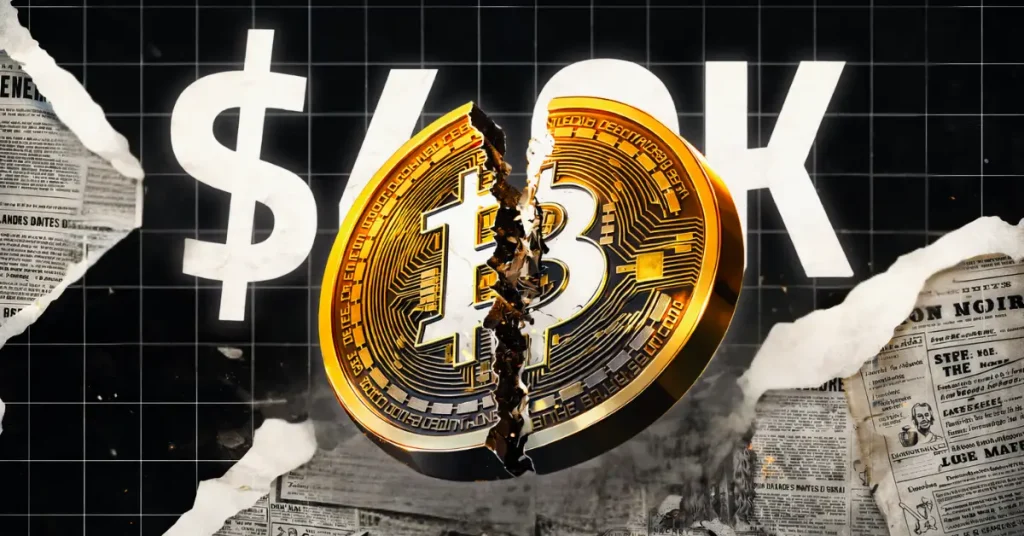
Bitcoin Down 50% From $126K Peter Schiff Warns of $40K Crash

Bitcoin Down 50% From $126K Peter Schiff Warns of $40K Crash

The post Bitcoin Down 50% From $126K Peter Schiff Warns of $40K Crash appeared first on Coinpedia Fintech News

The debate around Bitcoin’s long-term outlook is intensifying once again. While some investors view the recent pullback as a standard cycle correction, longtime critic Peter Schiff believes something far more structural is unfolding.

Bitcoin is currently trading roughly 50% below its October 2025 high of $126,000. After failing to regain sustained upside momentum, the asset has entered a period of consolidation under key resistance levels. Volatility tied to macroeconomic uncertainty and geopolitical stress has further pressured risk assets across the board.

But Schiff’s warning goes beyond charts and technical levels.

The “Bubble Market” Argument

Schiff describes Bitcoin as sentiment-driven and bubble-like, arguing that the multi-year rally was fueled by speculation rather than sustainable fundamentals. In his view, the recent downturn signals that “the air is coming out” of an overextended market.

He has suggested that Bitcoin could fall toward $50,000, or even $40,000, if downside momentum accelerates. Schiff also made headlines by claiming that a single Truth Social post from Donald Trump could significantly impact Bitcoin’s price, underscoring what he sees as the asset’s fragility and dependence on political sentiment.

Schiff has additionally criticized Trump’s pro-crypto stance, calling efforts to position the United States as a global crypto hub misguided and a misallocation of capital.

Gold’s Surge and Institutional Rotation

While Bitcoin struggles, Schiff points to gold’s strong performance as evidence of a broader monetary shift. He argues that rising gold prices reflect de-dollarization trends and renewed central bank accumulation of hard assets.

Institutional flows appear to support a divergence. Hedge fund exposure to Bitcoin ETFs has declined in recent quarters, while gold-backed funds now manage significantly larger total assets. During periods of market stress, capital has increasingly rotated into traditional safe havens.

Two Competing Narratives

Bitcoin supporters maintain that volatility is a normal part of long-term adoption cycles. They argue that network fundamentals and institutional infrastructure remain intact despite the correction.

For now, Bitcoin stands between two sharply contrasting views. One sees a fragile bubble vulnerable to sentiment shocks, even political ones. The other sees a maturing asset navigating another cyclical downturn.

Never Miss a Beat in the Crypto World!

Stay ahead with breaking news, expert analysis, and real-time updates on the latest trends in Bitcoin, altcoins, DeFi, NFTs, and more.

FAQs

Is Bitcoin in a bubble right now?

Some critics call it a bubble due to speculation and volatility. Long-term investors argue it’s a cyclical correction, not a structural collapse.

Are institutions moving from Bitcoin to gold?

Some capital has rotated into gold during market stress. Bitcoin ETF flows have cooled, but long-term institutional interest remains.

Does political news really impact Bitcoin’s price?

Yes. Bitcoin often reacts to political headlines and regulation shifts, but long-term price trends are driven more by adoption and liquidity.

❌