
 Login
Login
Emirates Airlines’ Six Long Haul Flights from Los Angeles, San Francisco, Seattle, New York, Chicago and Houston to Dubai Diverted to Rome, Munich, Hamburg, Vienna, Budapest and Prague Amid US and Israel Strike on Iran
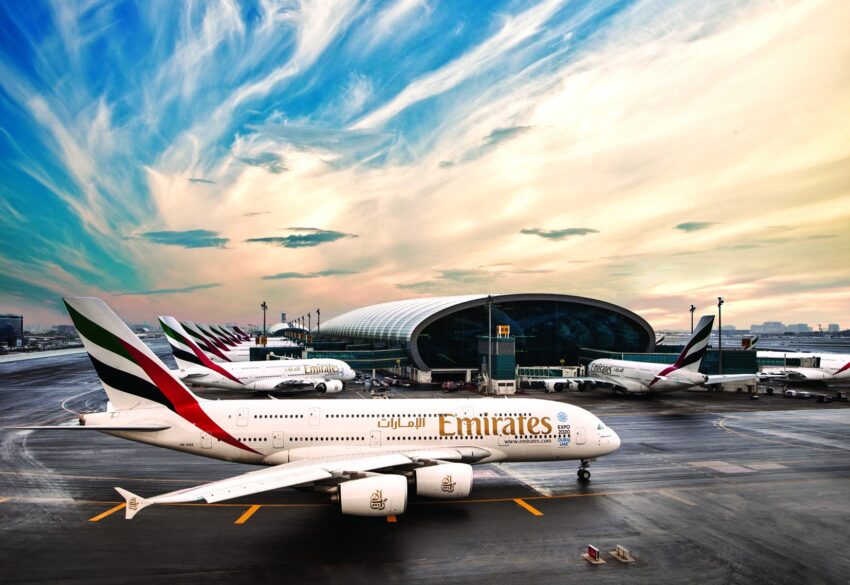
Amid the US and Israel strike on Iran, Emirates Airlines’ six long-haul flights from Los Angeles, San Francisco, Seattle, New York, Chicago, and Houston to Dubai were rerouted to Rome, Munich, Hamburg, Vienna, Budapest, and Prague due to the need for quick reassessments of airspace risk along vital Middle East corridors. As a prudent operational response to the changing security situation, the planes were redirected across Europe rather than arriving in Dubai as planned. Instead than being the result of technical issues, the diversions are the result of coordinated flight management choices; the alternative airports were chosen for their strategic placement and wide-body handling capabilities. Emirates Airlines rerouted its six long-haul trips to maintain passenger safety and operational continuity while avoiding potentially unstable airspace after the US and Israel strike on Iran prompted quick inspection of Gulf-bound routes.
The affected services included four Airbus A380 superjumbos and two Boeing 777-300ER aircraft. Flight tracking data recorded each aircraft at zero feet altitude and zero ground speed after diversion, confirming completed landings at alternate European airports. The timing of the rerouting coincided with escalating geopolitical tensions following reported US and Israel strikes on Iran, prompting widespread airspace risk reassessments across long-haul operations.
EK216 — Los Angeles to Dubai Diverted to Rome
Flight EK216 departed Los Angeles at 15:35 local time bound for Dubai. The service was operated by Airbus A380 aircraft A6-EUK, one of the largest passenger aircraft in commercial service, typically configured for high-capacity long-haul routes between the United States and the Middle East.
En route across the Atlantic, the aircraft diverted and landed in Rome at 23:46 UTC. Post-landing data recorded altitude at zero feet and ground speed at zero knots, confirming the aircraft was parked following arrival.
Rome was a logical alternate. Its infrastructure supports full A380 handling capability, including extended runway length, high-load taxiways and compatible boarding stands. The diversion suggests that the decision was taken prior to entry into Middle Eastern airspace, indicating operational caution rather than an onboard emergency. Passengers bound for Dubai would likely have remained on board pending operational updates or been transferred depending on onward fleet planning.
EK226 — San Francisco to Dubai Diverted to Munich
Flight EK226 departed San Francisco at 15:40 local time. Operated by Airbus A380 aircraft A6-EVR, the aircraft was scheduled to complete a nonstop ultra-long-haul sector to Dubai.
Instead, the aircraft diverted to Munich, landing at 23:42 UTC. Ground data again confirmed zero altitude and zero movement following touchdown. Munich is one of Europe’s primary A380-certified airports and provides extensive ground support infrastructure for wide-body aircraft.
The diversion indicates rerouting while crossing the North Atlantic corridor. Munich’s central European position allows flexibility for onward redeployment, crew changes or holding patterns pending revised flight planning. The scale of the aircraft underscores the operational complexity of such a diversion, as A380 repositioning requires precise gate and stand coordination.
EK230 — Seattle to Dubai Diverted to Hamburg
Flight EK230 departed Seattle at 16:05 local time and was operated by Boeing 777-300ER aircraft A6-EQG. The 777-300ER is a core long-range aircraft within Emirates’ fleet, commonly deployed on US–Gulf routes due to its fuel efficiency and extended operational range.
Rather than continuing to Dubai, the aircraft diverted to Hamburg, landing at 23:59 UTC. Flight data recorded zero feet altitude and no ground movement upon arrival, confirming a completed diversion.
Hamburg is equipped to accommodate wide-body aircraft including the 777-300ER. The choice of northern Germany as an alternate suggests a structured European dispersal strategy rather than random airport selection. The 777’s diversion also reflects that both fleet types — A380 and 777 — were equally affected by the airspace situation.
EK202 — New York to Dubai Diverted to Vienna
Flight EK202 departed New York JFK at 23:00 local time, operated by Airbus A380 aircraft A6-EEF. The overnight service was scheduled to arrive in Dubai the following day.
Instead, the aircraft diverted to Vienna, landing at 04:11 UTC. Vienna is fully certified for A380 operations and serves as a major Central European hub capable of handling high passenger volumes and complex ground operations.
The diversion timing suggests that the reroute occurred during the transatlantic crossing phase. Vienna’s location provides strategic proximity to southeastern European airspace, allowing operational flexibility while avoiding higher-risk corridors. The aircraft’s size and passenger capacity would have required coordinated ground handling and potential passenger accommodation planning upon arrival.
EK236 — Chicago to Dubai Diverted to Budapest
Flight EK236 departed Chicago at 19:45 local time. The Boeing 777-300ER aircraft A6-EQK was scheduled for direct service to Dubai.
The aircraft diverted to Budapest and landed at 02:04 UTC. Post-arrival data confirmed the aircraft at zero altitude and stationary status.
Budapest International Airport supports wide-body operations and is frequently used as an alternate for long-haul services transiting European airspace. The diversion reflects systematic rerouting across Central Europe, suggesting coordinated flight management decisions affecting multiple aircraft simultaneously.
The 777-300ER’s extended range allows flexibility in diversion planning, enabling airlines to select alternates based on infrastructure capacity rather than immediate fuel limitations.
EK212 — Houston to Dubai Diverted to Prague
Flight EK212 departed Houston at 19:10 local time. Operated by Airbus A380 aircraft A6-EUI, the service was part of Emirates’ high-capacity Gulf-bound network.
The aircraft diverted and landed in Prague at 01:06 UTC. Data confirmed zero feet altitude and no ground speed following arrival.
Prague is capable of accommodating A380 operations and offers sufficient runway length and apron space. The diversion aligns with the broader pattern of Central European redistribution seen across the other affected flights.
The A380’s landing in Prague highlights the scale of the operational adjustment. Managing passenger loads, ground logistics and potential onward connections requires immediate fleet repositioning strategy.
| Flight | From | To (Scheduled) | Diverted To | Aircraft Type | Diversion Time (UTC) |
|---|---|---|---|---|---|
| EK216 | Los Angeles | Dubai | Rome | Airbus A380 | 23:46 |
| EK226 | San Francisco | Dubai | Munich | Airbus A380 | 23:42 |
| EK230 | Seattle | Dubai | Hamburg | Boeing 777-300ER | 23:59 |
| EK202 | New York (JFK) | Dubai | Vienna | Airbus A380 | 04:11 |
| EK236 | Chicago | Dubai | Budapest | Boeing 777-300ER | 02:04 |
| EK212 | Houston | Dubai | Prague | Airbus A380 | 01:06 |
Operational Pattern and Fleet Impact
In total:
- Four Airbus A380 aircraft were diverted
- Two Boeing 777-300ER aircraft were diverted
- Six major US departure points were affected
- Six separate European alternates were utilised
The geographic clustering of diversion airports across Italy, Germany, Austria, Hungary and the Czech Republic indicates deliberate airspace avoidance planning. The rerouting coincided with heightened regional instability following reported US and Israel strikes on Iran.
Emirates Airlines’ Six Long Haul Flights from Los Angeles, San Francisco, Seattle, New York, Chicago and Houston to Dubai were Diverted to Rome, Munich, Hamburg, Vienna, Budapest and Prague Amid US and Israel Strike on Iran due to escalating airspace risks.
Rather than isolated mechanical events, the simultaneous diversions across aircraft types and departure cities point to a coordinated operational response to evolving geopolitical conditions. The full impact on scheduling, fleet rotation and passenger re-accommodation is likely to extend beyond the initial diversions as the airline recalibrates its transatlantic network.
The post Emirates Airlines’ Six Long Haul Flights from Los Angeles, San Francisco, Seattle, New York, Chicago and Houston to Dubai Diverted to Rome, Munich, Hamburg, Vienna, Budapest and Prague Amid US and Israel Strike on Iran appeared first on Travel And Tour World.
 Tel Aviv (JFK

