Reading view

Why is Crypto Crashing Today?

Will Bitcoin Break a 15 Year Pattern for the First Time Ever?

The post Why is Crypto Crashing Today? appeared first on Coinpedia Fintech News

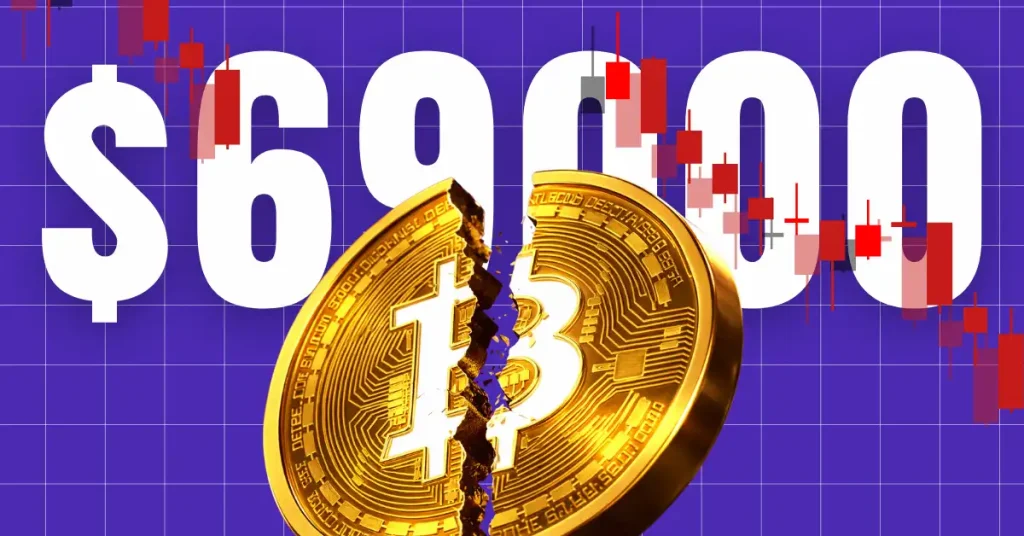
The cryptocurrency market is experiencing sharp volatility today, wiping out billions of dollars in value within hours as both global stocks and digital assets move lower together.

The total crypto market has lost nearly $90 billion, pushing many major coins to their daily lows. At the same time, U.S. stock indices also slipped, showing that investors are becoming more careful across financial markets.

Major cryptocurrencies fall quickly

Bitcoin dropped below $66,000, falling nearly $3,000 in about one hour, which triggered roughly $70 million in long-position liquidations. Ethereum also declined, touching around $1,900, while several altcoins posted losses between 4% and 7%.

BREAKING: Bitcoin dumped $3,000 in just 60 minutes and liquidated $70 million in longs.

The crypto market also erased $90 billion despite US stocks being in green. pic.twitter.com/N8kFxuhL3u

— Bull Theory (@BullTheoryio) February 11, 2026

Market sentiment has turned extremely weak, with the Fear and Greed Index falling into “extreme fear” territory, a signal that traders are becoming more defensive and risk-averse.

Why the market is falling

Analysts say several factors are driving today’s crypto decline:

1. Stock market weakness
Major U.S. indices such as the S&P 500, Nasdaq, and Russell 2000 moved lower, and crypto markets often follow the same direction, especially during uncertain economic periods.

2. Liquidations accelerating the drop
As prices started falling, leveraged traders were forced to close positions, causing additional selling pressure and faster price declines.

3. Bitcoin behaving like tech stocks
A recent report from Grayscale Investments said that Bitcoin is currently moving more like high-growth technology stocks rather than a traditional safe-haven asset such as gold. This means that when technology stocks face pressure, crypto prices often fall as well.

Oversold signals appear

Despite the sharp drop, some technical indicators show that the market is approaching oversold levels, which sometimes leads to short-term rebounds. However, analysts warn that volatility may continue until investors regain confidence and buying demand returns.
Ripple CEO Calls XRP the ‘North Star’ and ‘Heartbeat’ of Company, Reveals What Comes Next

Ripple

The post Ripple CEO Calls XRP the ‘North Star’ and ‘Heartbeat’ of Company, Reveals What Comes Next appeared first on Coinpedia Fintech News

At the opening of XRP Community Day 2026, Brad Garlinghouse, CEO of Ripple, delivered a strong message to the global community, describing XRP as the “north star” and “heartbeat” of Ripple’s long-term strategy.

A celebration of the XRP community

Garlinghouse began his speech by welcoming XRP holders, developers, and partners from around the world, calling the event a celebration of the people building and supporting the ecosystem. He said the growth of XRP has been driven not only by technology but also by the strength of its global community.

XRP remains central to Ripple’s institutional strategy

According to Garlinghouse, XRP continues to guide Ripple’s institutional expansion. He explained that Ripple is focused on:

  • Expanding liquidity around XRP
  • Increasing real-world financial use cases
  • Strengthening enterprise adoption of the XRP Ledger
  • Building more on-chain financial infrastructure

He emphasized that institutions are increasingly looking for fast, low-cost cross-border payment solutions, and XRP remains a key part of that effort.

Ripple’s long-term vision toward 2030

Looking ahead, Garlinghouse said Ripple aims to grow into a global financial platform company by 2030, offering a wider range of infrastructure services while continuing to build trust across its ecosystem. He noted that utility, liquidity, and real-world adoption of XRP will remain at the center of the company’s mission.

The takeaway

Garlinghouse’s remarks reinforced Ripple’s commitment to XRP as a core part of its future, signaling that upcoming initiatives will focus heavily on expanding institutional usage and strengthening the real-world role of the XRP Ledger in global finance.

XRP Community Day [Live] Updates: Ripple CEO Talks Market Crash as XRP Stands Out; Grayscale Calls It a ‘Truly Global Asset’

XRP Community Day [Live] Updates

The post XRP Community Day [Live] Updates: Ripple CEO Talks Market Crash as XRP Stands Out; Grayscale Calls It a ‘Truly Global Asset’ appeared first on Coinpedia Fintech News

February 11, 2026 16:48:26 UTC

Grayscale Calls XRP a “Truly Global” Asset

Rayhaneh Sharif-Askary, Head of Product & Research at Grayscale Investments, said XRP stands out as a highly global digital asset, highlighting its widespread international usage and cross-border relevance as key factors supporting its long-term institutional appeal.

February 11, 2026 16:38:46 UTC

Grayscale Executive Says ETF Listings Marked Key Turning Point for XRP Adoption

Live blog content goes here…

Rayhaneh Sharif-Askary, Head of Product & Research at Grayscale Investments, said last year’s approval of generic ETF listings was a significant milestone, paving the way for the launch of XRP-related and other crypto ETFs. She said that the development has played a meaningful role in expanding institutional access to digital assets.

Matt Hougan Says Current Crypto “Winter” Likely to Be Shorter

Matt Hougan said the market is experiencing a classic crypto-cycle downturn, with some investors selling ahead of the traditional four-year cycle contributing to the recent pullback. He added that improving macroeconomic conditions and the potential shift toward a rate-cut environment could make the current crypto “winter” shorter than previous downturns.

February 11, 2026 16:20:15 UTC

Reforge’s Alexander Lin: RLUSD Positioned to Reduce Market Friction Through Compliance

Alexander Lin, Co-Founder and General Partner at Reforge, said the growth of RLUSD will depend on real-world usage rather than simply adding another stablecoin to the market. He noted that Ripple’s compliance-focused approach could reduce regulatory friction for developers, adding that the combined use of XRP and RLUSD may help accelerate both institutional adoption and broader ecosystem development.

February 11, 2026 16:10:47 UTC

Dragonfly’s Rob Hadick Says RLUSD Could Challenge Stablecoin Duopoly

Rob Hadick, General Partner at Dragonfly Capital, said the launch of RLUSD is focused on “bootstrapping” adoption as the market has long been dominated by major issuers such as Circle and Tether. He added that recent developments, including Ripple’s strategic acquisitions and ongoing technology improvements, could create a “snowball effect” as traditional financial institutions begin exploring real-world usage.

February 11, 2026 15:29:21 UTC

Garlinghouse Says “Clarity Act” Has Strong Chances of Passing This Year

Brad Garlinghouse said recent constructive discussions with policymakers have increased the likelihood that the proposed crypto market structure legislation, often referred to as the “Clarity Act,” will move forward this year. He said that Ripple has been closely engaged in policy conversations, adding that he believes there is roughly a 75% chance the bill advances toward becoming law.

February 11, 2026 15:29:21 UTC

Garlinghouse: Ripple’s 2030 Vision Centers on Platform Growth and XRP Utility

Brad Garlinghouse said he expects Ripple to continue evolving as a global platform company by 2030, focused on expanding financial infrastructure services while strengthening trust across its ecosystem. He emphasized that driving utility, liquidity, and real-world adoption of XRP will remain central to Ripple’s long-term mission.

February 11, 2026 15:23:07 UTC

Garlinghouse Says ETF Growth Key to Institutionalizing Crypto Markets

Brad Garlinghouse said the expansion of crypto ETFs will play a major role in accelerating institutional participation across the sector, pointing to strong investor demand in public markets. He said that XRP-linked investment products were among the fastest to reach $1 billion in assets and now stand near $1.5 billion, signaling rising institutional appetite alongside the success of Bitcoin ETF offerings.

February 11, 2026 15:23:07 UTC

Garlinghouse Praises XRP Community, Signals Focus on Lending Activity Growth

Brad Garlinghouse praised the resilience of the XRP community, saying he is “in awe” of supporters who have stayed with the ecosystem through both strong and challenging market cycles. He added that boosting activity around lending protocols on the XRP Ledger is a key priority for Ripple as it works to expand community-driven utility and on-chain engagement.

February 11, 2026 15:17:25 UTC

Garlinghouse: OCC Banking Charter Strengthens RLUSD Compliance and Protection

Brad Garlinghouse said the Office of the Comptroller of the Currency (OCC) banking charter provides a stronger regulatory foundation for RLUSD, enabling more robust compliance standards and added bankruptcy protections. He said that Ripple’s strategy prioritizes becoming one of the most regulated and compliance-focused players in the sector, positioning RLUSD as a leader under the emerging regulatory framework.

February 11, 2026 15:17:25 UTC

Garlinghouse Says XRP Remains “North Star” of Ripple’s Institutional Strategy

At XRP Community Day, Brad Garlinghouse said XRP remains the “north star” guiding Ripple’s approach to institutional adoption. He said that the company’s institutional strategy is centered on expanding liquidity and real-world utility around XRP and the XRP Ledger, with ongoing initiatives designed to strengthen enterprise use cases and on-chain financial infrastructure.

February 11, 2026 15:02:48 UTC

Ripple Shifts to “Offense” Strategy for 2026, Garlinghouse Highlights Acquisitions

Brad Garlinghouse said Ripple is entering 2026 with a more aggressive growth strategy after spending the past two and a half years largely “playing defense.” He said that the company is now focused on expanding its global presence, making up for lost time through major acquisitions and new strategic initiatives aimed at accelerating ecosystem growth.

February 11, 2026 15:02:48 UTC

Garlinghouse Calls Recent Crypto Sell-Off a “Bloodbath,” Says XRP Remains a Top Performer

Speaking at XRP Community Day, Brad Garlinghouse described the recent market downturn as a “bloodbath,” noting that the sell-off extended beyond crypto, with assets such as gold and silver also declining. He said the current drawdown is comparable to the 2022 bear cycle but said that XRP remains one of the best-performing major cryptocurrencies this year, second only to Bitcoin, while Bitcoin itself has remained largely flat since the U.S. election period.

February 11, 2026 15:02:48 UTC

Brad Garlinghouse Opens XRP Community Day, Calls Event a Celebration of the Community

Brad Garlinghouse officially kicked off XRP Community Day by welcoming XRP holders, supporters, and builders from around the world, emphasizing that the event is dedicated to the strength and growth of the XRP community. He said that the day is designed to celebrate the people driving the ecosystem forward and to highlight the community’s role in shaping XRP’s future.

February 11, 2026 14:52:06 UTC

XRP Supporters Rally as Global Community Event Draws Massive Participation

Excitement is building around XRP Community Day as supporters point to the scale of the two-day global event, which is drawing tens of thousands of participants across multiple sessions worldwide. Many community members say the turnout underscores the strong backing behind the XRP ecosystem and growing enthusiasm surrounding Ripple and its expanding global initiatives.

February 11, 2026 14:43:28 UTC

Ripple Partners With Aviva Investors to Tokenize Traditional Funds on XRPL

Ripple has announced a new partnership with Aviva Investors to tokenize traditional investment funds on the XRP Ledger. More details about the initiative will be shared during XRP Community Day, featuring discussions with Markus Infanger and Alastair Sewell on the future of tokenized finance.

February 11, 2026 14:33:10 UTC

XRP Slips Ahead of Community Day as Broader Crypto Market Weakens

XRP fell 2.91% to $1.37 over the past 24 hours, slightly underperforming the broader crypto market as risk-off sentiment intensified. The decline comes as Bitcoin dropped about 2.1%, with extreme fear across the market driving synchronized selling among major digital assets.

February 11, 2026 14:23:46 UTC

XRP Community Day Returns with Global Focus on ETFs, DeFi, and On-Chain Growth

Building on its inaugural year, XRP Community Day returns with a strong focus on how XRP is being used today and where it is headed next. Sessions across EMEA, the Americas, and APAC will cover regulated investment products, potential ETFs, wrapped XRP, expanding DeFi applications, and the continued evolution of on-chain infrastructure expected through 2026.

February 11, 2026 14:23:46 UTC

XRP Community Day Set to Kick Off Soon

XRP Community Day is set to begin shortly, with Brad Garlinghouse expected to open the event by outlining XRP’s expanding role in global financial infrastructure and capital markets.

Can XRP Community Day Today Push XRP Price Beyond $2?

XRP price prediction 2026

The post Can XRP Community Day Today Push XRP Price Beyond $2? appeared first on Coinpedia Fintech News

The global XRP community is coming together today for XRP Community Day 2026, a virtual event where developers, investors, institutions, and leaders from the Ripple ecosystem will discuss the growing role of XRP in real-world finance. Many traders are now asking a key question: Can this event trigger the next major XRP rally?

What to expect from the event

The event will open with a keynote from Ripple CEO Brad Garlinghouse, who is expected to highlight:

  • Increasing institutional adoption of XRP
  • Expanding use cases in cross-border payments and capital markets
  • The impact of regulatory clarity on long-term growth
  • XRP’s role in global financial infrastructure

Such announcements often improve investor sentiment, which sometimes leads to short-term price momentum.

XRP price before the event

Ahead of the event, XRP is trading around $1.39, down about 3% in the past 24 hours, largely in line with weakness across the broader crypto market. Analysts say the current price movement is mostly sideways consolidation, not a clear uptrend or downtrend.

Key technical levels traders are watching

  • Support zone: $1.31 – $1.43
    XRP is currently holding above this important support range, which suggests buyers are still active.
  • First resistance: $1.54
    XRP must move above this recent high to show early bullish strength.
  • Major breakout level: $1.63 – $1.64
    A strong break above this range could open the door for a larger rally.
  • Lower support if weakness continues: $1.20 – $1.21
    If the market drops below $1.31, this could become the next key demand zone.

Can XRP move toward $2?

For XRP to move toward $2, two conditions may be needed:

  1. Positive announcements or strong adoption signals from Community Day
  2. A technical breakout above the $1.63–$1.64 resistance area

Until then, analysts expect sideways movement with occasional short-term spikes, as traders wait for stronger confirmation of a sustained trend.

XRP Community Day could improve market sentiment and bring attention back to the XRP ecosystem, but price momentum will ultimately depend on whether XRP can break key resistance levels. For now, the market remains in a consolidation phase, with investors watching closely for the next decisive move.

Is Bitcoin’s ‘Fairest Launch’ a Myth? Ripple’s David Schwartz Says Debate Is Misleading

Ripple XRP email controversy

The post Is Bitcoin’s ‘Fairest Launch’ a Myth? Ripple’s David Schwartz Says Debate Is Misleading appeared first on Coinpedia Fintech News

A growing online debate about whether Bitcoin had the “fairest launch in history” has taken a new turn after comments from David Schwartz, Chief Technology Officer at Ripple, sparked controversy across the crypto community.

The discussion began after a widely shared social media post claimed Bitcoin’s launch was uniquely fair and impossible to replicate. Critics quickly pushed back, arguing that early miners, including insiders close to the project’s creation, accumulated a large share of the initial supply before public awareness increased.

Schwartz Says Fairness Debate Based on “False Premises”

Responding to the debate, Schwartz argued that many discussions about launch fairness rely on incorrect assumptions. He stated that it is not inherently unfair for creators of a network to retain a portion of the value they help create, especially when early participants face significant uncertainty and risk.

Schwartz also said that early investors did not necessarily have guaranteed advantages. According to him, early participation involved high risk, with many early adopters unsure whether the project would survive at all. As adoption increased and the technology became more widely known, the risk declined, but the opportunity to participate still remained open to the public.

He further said that hindsight often creates the impression that early participants had an outsized advantage, when in reality the risk-adjusted benefits became clearer only years later as the ecosystem matured.

Comparisons With Ethereum Fuel Further Debate

Some analysts involved in the online discussion compared Bitcoin’s early mining phase to the public pre-sale structure used by Ethereum, arguing that both networks allocated roughly similar portions of supply to bootstrap development. Supporters of this view claim that the idea of Bitcoin having a uniquely “perfect” or “immaculate” launch may be overstated.

Critics, however, maintain that Bitcoin’s lack of a formal pre-sale still distinguishes it from later blockchain launches, keeping the fairness debate unresolved.

“Opportunities Improved Over Time,” Schwartz Adds

In follow-up comments shared online, Schwartz said the opportunity to participate in Bitcoin did not meaningfully worsen in its early years. Instead, he argued that the investment opportunity gradually improved as the risk of total project failure declined and the possibility of long-term success became more visible.

He added that the debate changes mainly after 2018, when it became harder to argue that late entrants had no disadvantage compared with earlier participants. By that stage, Bitcoin had already matured significantly, making early participation advantages more apparent.

Alleged Leaked Documents Claim XRP Could 100x as Ripple’s New System Expands

XRP Price

The post Alleged Leaked Documents Claim XRP Could 100x as Ripple’s New System Expands appeared first on Coinpedia Fintech News

Fresh claims circulating in the crypto market suggest that alleged leaked documents and institutional reports may point to a larger long-term role for XRP within Ripple’s expanding global payments infrastructure. While the claims have not been officially confirmed, they are fueling debate about whether the company’s new stablecoin and institutional strategy could increase demand for the digital asset.

RLUSD Strategy May Expand XRP Utility

According to the claims, Ripple’s planned RLUSD stablecoin is not designed to replace XRP but to expand institutional adoption of the XRP Ledger. Analysts referenced in the discussion suggest that RLUSD could be integrated into institutional settlement and trading systems, allowing banks and financial institutions to use a stable dollar-based token while still relying on XRP as a bridge asset for cross-border liquidity.

If this model is adopted, institutions using RLUSD for settlements could still require XRP to move value between different currencies and markets, increasing demand for the token over time.

Reports Suggest Growing Stablecoin Competition

Some institutional analyses cited in the discussion predict that the global stablecoin market, currently dominated by USDT and USDC, may shift toward a more competitive landscape as new issuers enter the sector. Ripple’s entry through RLUSD is expected to target institutional payment flows, a segment that could play a key role in large-scale transaction settlement across financial networks.

Market observers say that if RLUSD gains traction among financial institutions, the increased activity on Ripple’s infrastructure could indirectly drive higher usage of XRP within liquidity and settlement processes.

Alleged Legal Language Raises Licensing Debate

One of the more controversial claims centers on alleged legal documentation suggesting that XRP functions as a type of access or operational right within Ripple’s transactional ecosystem. Supporters argue that if XRP is required for certain system functions, wider network adoption would naturally create higher demand for the token.

However, experts warn that these interpretations remain unverified and should not be treated as confirmed regulatory or legal classification. Until official filings or company statements clearly define such a structure, the licensing interpretation remains speculative.

Institutional DeFi Plans Put XRP at the Center

Ripple has also outlined plans to build compliance-focused institutional decentralized finance infrastructure on the XRP Ledger. In these plans, XRP is positioned as both a settlement asset and a bridge asset, meaning it can be used to finalize payments and connect different currencies during cross-border transactions.

Ripple CEO Brad Garlinghouse has repeatedly stated that XRP remains a central part of the company’s long-term strategy, even as Ripple expands into stablecoins and new payment technologies.

Price Impact Remains Speculative

Some market commentators claim that if Ripple’s infrastructure expansion, RLUSD adoption, and institutional partnerships scale rapidly, XRP could see a dramatic long-term price increase, with extreme forecasts suggesting “100x” scenarios. 

However, such projections are highly speculative and depend on regulatory approvals, institutional adoption, and real-world transaction growth across Ripple’s network.

Crypto Market Today: What’s Next for Ethereum, Solana, and XRP Prices?

Crypto Market Crash Why Bitcoin and Altcoins are Dropping Today

The post Crypto Market Today: What’s Next for Ethereum, Solana, and XRP Prices? appeared first on Coinpedia Fintech News

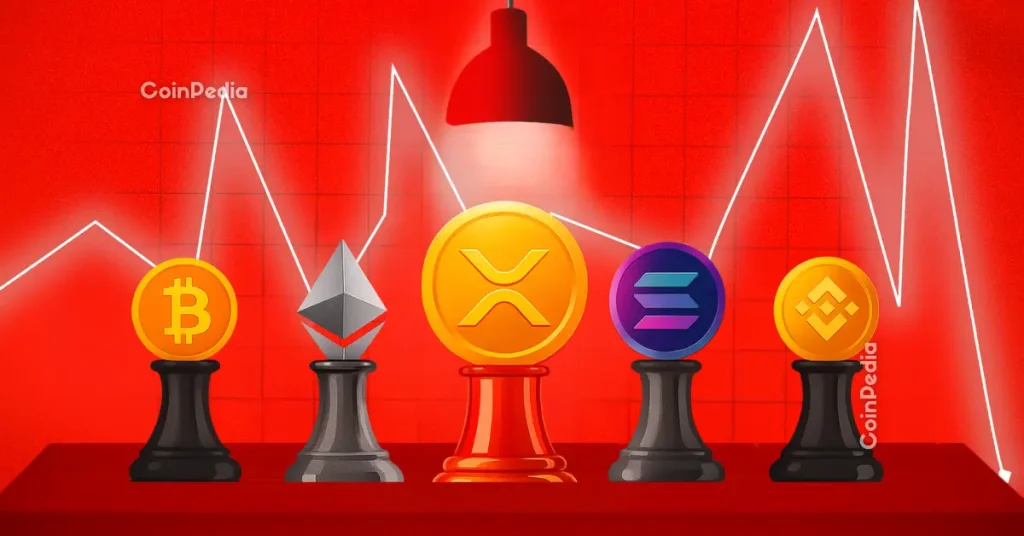
After the recent crypto market correction, analysts are monitoring altcoins to determine whether prices are forming a bottom or preparing for another decline. Technical analysis by Gareth Soloway shows that Ethereum (ETH), Solana (SOL), and XRP may see short-term recovery attempts, but broader trends remain uncertain.

Ethereum: Short-term bounce possible

Ethereum recently experienced a sharp sell-off, breaking below an important support level before stabilizing. According to technical analysis, the former support area has now turned into resistance, a common market behavior following panic-driven declines.

Analysts note that Ethereum is currently showing a short-term bullish structure that could support a limited rebound, with upside likely capped around the $2,500–$2,600 region unless stronger buying momentum emerges. 

However, the broader trend remains fragile, and maintaining support around the $1,500–$1,600 range is seen as crucial for longer-term stability. A sustained move below that zone could signal a deeper corrective phase.

Solana: Potential recovery toward $120

Solana has also been trading within a short-term bullish formation inside a broader downtrend. Technical patterns indicate the possibility of a rebound from the $80 range toward roughly $115–$120, representing a meaningful recovery if market sentiment improves.

At the same time, analysts warn that failure to hold current support levels could trigger another leg lower. If Solana breaks below key pivot areas near recent lows, the next major support zone could appear around $50, making current price levels important for determining the next trend direction.

XRP: Support breakdown 

XRP’s technical structure appears more fragile compared with other large-cap altcoins after the token fell below a long-standing support level formed during the previous bull cycle. That breakdown has transformed the former support zone into heavy resistance, now estimated around $1.60–$1.70.

While a short-term bounce toward that region is possible, XRP must reclaim and hold above the resistance band to improve its longer-term outlook. On the downside, relatively limited support exists until the $0.95–$1.00 area, raising the risk of sharper volatility if selling pressure intensifies.

Mixed outlook for altcoins

Overall, the technical outlook across major altcoins shows a similar pattern: short-term bullish signals indicating possible relief rallies, combined with broader bearish structures that have not yet been fully reversed. Sustained recoveries will likely depend on whether the wider crypto market stabilizes and whether key resistance zones are successfully reclaimed in the coming weeks.

Why Is Aster Price Rallying Today?

Aster DEX Initiates Buybacks as $ASTER Declines

The post Why Is Aster Price Rallying Today? appeared first on Coinpedia Fintech News

The price of Aster (ASTER) jumped more than 10% in the past 24 hours, rising to around $0.66 and outperforming the broader crypto market, which has remained mostly flat. Analysts say the rally is mainly being driven by rising activity on the Aster decentralized exchange and a recent technical breakout.

Surge in DEX trading volume boosts demand

The biggest reason behind the price increase is a sharp rise in trading activity on the Aster perpetual futures exchange. Over the last 24 hours, Aster’s DEX processed more than $3 billion in trading volume, bringing it closer to sector leader Hyperliquid.

Higher trading activity typically increases demand for the ASTER token because it is closely linked to the platform’s usage. This surge in utility provides a stronger fundamental reason for the price rally rather than purely speculative buying.

Break above resistance attracts traders

Aster’s price also moved above the important $0.65 resistance level, a technical breakout that often signals improving short-term sentiment. The move was supported by a 27% jump in overall trading volume, suggesting strong participation from traders and momentum buyers.

If the token continues to hold above the $0.65 level, the next potential upside target could be near $0.80 in the short term.

Upcoming token unlock creates short-term risk

Despite the positive momentum, traders are also watching a scheduled token unlock on February 17, which could temporarily increase supply in the market and create volatility. If the price falls back below $0.65, analysts warn the token could retest lower support levels near $0.59.

Outlook

Overall, Aster’s latest rally appears to be driven by a combination of strong exchange usage, rising trading volumes, and a technical breakout. The key question for the coming days will be whether the platform can maintain high trading activity and hold above the newly reclaimed support zone ahead of the upcoming token unlock event.

Top Analyst Reveals if The Bitcoin Price Crash is Over

When Will the Crypto Market Recover

The post Top Analyst Reveals if The Bitcoin Price Crash is Over appeared first on Coinpedia Fintech News

Bitcoin’s sharp decline in recent months has left investors questioning whether the worst of the sell-off has passed or if further downside is still ahead. According to market strategist Gareth Soloway, current chart patterns hint at a mixed outlook, with short-term strength possible but longer-term risks still present.

Short-term bullish signals emerge

Bitcoin is currently trading near the mid-$60,000 range after falling significantly from earlier highs. Soloway says recent price action shows a short-term bullish setup forming within a larger negative trend.

He described the situation as “a macro bearish pattern inside a micro bullish pattern,” meaning that price action over the next several days or weeks could favor a rebound even though the broader multi-month trend remains weak. Technical indicators such as reversal candles and consolidation patterns show the possibility of a near-term bounce.

Such counter-trend rallies are common during larger corrections, as traders temporarily buy dips before the broader direction becomes clearer.

Macro trend still signals downside risk

Despite the short-term positive signals, the broader chart structure continues to show lower highs and lower lows, a typical bearish pattern. Soloway said that the larger structure resembles a “bear flag,” which historically often resolves with additional downside movement.

He warned that if key support levels fail, further declines could follow. In particular, a break below the $60,000 region could open the door for deeper losses, potentially pushing prices toward significantly lower support zones.

Resistance zone between $80,000 and $85,000

On the upside, there is a strong resistance area between roughly $80,000 and $85,000, where previous price pivots created heavy selling pressure. A sustained move above this region would be needed to invalidate the broader bearish structure and signal a stronger recovery.

Until such a breakout occurs, many traders expect Bitcoin to remain in a volatile consolidation phase, with intermittent rallies followed by renewed selling pressure.

Longer-term scenario depends on global market conditions

Soloway added that broader financial market conditions, particularly the performance of equities, could play a major role in Bitcoin’s next major move. If global markets experience a significant correction, crypto assets may face additional pressure as investors reduce exposure to riskier holdings.

Ripple CEO Says XRP Community Remains ‘Top of Mind’ Amid Price Struggles

JUST IN Ripple Wins UK FCA Registration as Crypto Rules Tighten

The post Ripple CEO Says XRP Community Remains ‘Top of Mind’ Amid Price Struggles appeared first on Coinpedia Fintech News

The chief executive of Ripple has reaffirmed the company’s commitment to the XRP ecosystem, saying the “XRP family has and always will be top of mind for Ripple,” a message that comes as the token struggles to regain upward momentum following recent market volatility.

Glad to see the message is (finally, even more) clear!

XRP family has and always will be top of mind for Ripple. https://t.co/Pu2aMx6ja0

— Brad Garlinghouse (@bgarlinghouse) February 9, 2026

The reassurance followed renewed discussion around XRP’s role as a bridge asset for cross-border payments after Ripple outlined plans for compliance-focused decentralized finance infrastructure on the XRP Ledger. Supporters welcomed the statement, noting that it reinforces the company’s long-standing strategy of keeping XRP central to its payments vision.

Price Struggles Near Recent Levels

The comments come at a time when XRP is trading near $1.44, with the broader cryptocurrency market still recovering from a sharp sell-off that pushed many major digital assets lower. Although XRP recently attempted a rebound along with the wider market, the rally did not hold, and the token has since moved into a consolidation phase.

XRP Price Consolidates After Recent Volatility

In the short term, XRP’s price action remains uncertain. Market data shows the token has been moving mostly sideways after a recent swing high, with no clear breakout pattern yet visible. 

Support levels around $1.36 and $1.31 are being closely watched, with a deeper key support near $1.19 seen as critical. A drop below these levels could open the door to further downside pressure, while holding above them may help maintain the possibility that a broader market bottom has already formed.

On the upside, traders say XRP would need to break above nearby resistance levels around $1.55 and then $1.63–$1.64 to signal stronger recovery momentum. 

Analysts say the token has not yet formed a strong bullish breakout pattern, and the short-term trend remains uncertain.

XRP News: Ripple Brings Institutional ETH and Solana Staking to Custody Clients

XRP News Today

The post XRP News: Ripple Brings Institutional ETH and Solana Staking to Custody Clients appeared first on Coinpedia Fintech News

Blockchain payments company Ripple is expanding its institutional digital asset custody services through new partnerships designed to strengthen security infrastructure and broaden staking capabilities for large financial clients.

The company announced collaborations with cybersecurity provider Securosys and staking infrastructure firm Figment, moves aimed at helping banks, asset managers, and regulated institutions deploy digital asset custody solutions more quickly while meeting compliance and security requirements.

Enhanced Security for Institutional Custody
Under the partnership with Securosys, Ripple will integrate high-security hardware security module (HSM) technology into its custody platform. These systems allow institutions to manage cryptographic keys directly while maintaining strong security protections across both cloud-based and on-premises environments. Industry analysts say such infrastructure is increasingly important as financial institutions seek enterprise-grade storage solutions for digital assets.

Institutional Staking Added to Custody Services
Ripple’s collaboration with Figment will enable institutional clients using its custody platform to access staking services for proof-of-stake blockchain networks, including Ethereum and Solana. By offering staking as part of custody workflows, financial institutions can participate in blockchain network validation and earn staking rewards without building their own validator infrastructure.

Part of Broader Institutional Expansion Strategy
The new partnerships follow a series of recent developments in Ripple’s institutional services, including expanded compliance integrations and infrastructure upgrades intended to support regulated financial institutions entering the digital asset market. Analysts note that as institutional participation in cryptocurrencies grows, demand for integrated custody, compliance, and staking solutions has increased significantly.

Growing Institutional Focus in the Digital Asset Sector
Ripple’s latest moves reflect a broader industry trend in which financial technology firms are building infrastructure tailored to banks, custodians, and large enterprises seeking exposure to digital assets. As regulatory clarity gradually improves in several jurisdictions, market participants expect institutional-grade custody and asset management platforms to play a larger role in the next phase of digital asset adoption.

Macro Researcher Says XRP Price Could Surge to $5–$7, But Only After This Happens

XRP Price

The post Macro Researcher Says XRP Price Could Surge to $5–$7, But Only After This Happens appeared first on Coinpedia Fintech News

XRP is approaching what some analysts describe as a critical technical range that could determine its next major price move. Macro researcher Jim Willie said XRP’s first big breakout could begin if the token decisively moves above the $2.70–$3.00 zone, a level he believes could trigger rapid upward momentum.

“If it goes above about $2.70 to $3, it could quickly move to $5 and then possibly $7,” he said, hinting that once important resistance levels are cleared, technical buying and investor interest could accelerate the rally.

At the time of writing, XRP is trading at $1.44.

Adoption, Not Trading, Seen as the Real Catalyst

While short-term price movements often depend on market trading activity, Willie said that the long-term direction of XRP will depend more on real-world adoption than on technical factors.

“It’s not just a trading phenomenon, it’s a usage phenomenon,” he said, arguing that large-scale institutional or national adoption of XRP-based payment systems could dramatically expand transaction volumes and market demand.

XRP’s core value proposition lies in its role as a bridge asset for cross-border settlements, where faster settlement speeds and lower transaction costs are key advantages compared with traditional payment systems.

Potential Impact of Institutional or Government Adoption

According to Willie, major adoption announcements, such as governments or large corporations integrating XRP for international trade payments, could change the asset’s valuation outlook. Increased transaction flows tied to trade settlement or financial infrastructure could create sustained demand, potentially pushing prices to higher long-term targets if adoption accelerates.

Market Outlook Remains Linked to Utility Growth

XRP’s next major rally may depend on a combination of technical breakout levels and measurable growth in payment usage across financial institutions and global payment networks. A decisive move above the $3 range could signal renewed bullish momentum, but sustained long-term gains are likely to depend on continued expansion of real-world applications rather than short-term speculative trading alone

Mark Yusko Reveals How Low Bitcoin Price Could Go in 2026

Bitcoin price crash 2026

The post Mark Yusko Reveals How Low Bitcoin Price Could Go in 2026 appeared first on Coinpedia Fintech News

Investor Mark Yusko says the cryptocurrency market is still moving through a classic cycle, even as institutional participation has grown dramatically. “We’re in crypto winter,” he said, adding that many investors assumed the traditional four-year cycle had ended once large institutions and ETFs began accumulating Bitcoin. Yet, according to Yusko, price behavior hints the historical cycle structure is still influencing markets.

He pointed out that institutional investors last year “bought four times more than the amount of Bitcoin that was mined,” yet prices still declined. The reason, he explained, is that long-term holders who accumulated coins years earlier also sold into rallies, adding supply that offset institutional buying.

Futures Markets Now Drive Price Movements

Yusko said that Bitcoin’s price is no longer determined mainly by spot transactions. “The price of Bitcoin isn’t necessarily set only by spot,” he said, explaining that derivatives markets, particularly futures, now dominate trading activity. Because large leveraged positions can push prices higher or lower quickly, futures markets can sometimes suppress price gains even when underlying demand appears strong.

Where Could Bitcoin Bottom?

Using historical cycle patterns, Yusko suggested that previous bear markets often pushed Bitcoin down toward long-term trend indicators such as the 200-week moving average. Based on current conditions, he said potential downside levels could fall into the range around the high-$50,000s to low-$60,000s before a durable bottom forms.

He also noted that the latest cycle peak was not as far above estimated “fair value” as in previous cycles, meaning the current correction may not need to fall as deeply as earlier downturns.

Human Behavior Still Shapes Crypto Markets

Despite the growing role of algorithms and institutional trading, Yusko said investor psychology remains a dominant force behind crypto market cycles. “Humans are going to human,” he said, explaining that investors often buy when prices are rising and sell when liquidity is needed, reinforcing repeating boom-and-bust patterns across the market.

Recovery Likely Requires a Breakout Catalyst

According to Yusko, the next sustained rally may begin only when strong buying pressure breaks through the current ceiling created by derivatives positioning, potentially triggering a large short squeeze. Until that happens, he expects the market to trade in a volatile range, with gradual stabilization rather than an immediate return to record highs.

Former House Financial Services Chairman Says CLARITY Act Could Be Signed Before Memorial Day

CLARITY Act Could Become Law by April 2026, Industry Leaders Optimistic

The post Former House Financial Services Chairman Says CLARITY Act Could Be Signed Before Memorial Day appeared first on Coinpedia Fintech News

Patrick McHenry, vice chairman of Ondo Finance and former chairman of the House Financial Services Committee, said he expects the long-awaited U.S. crypto market structure legislation, widely known as the CLARITY Act, to advance in the coming months, potentially reaching the president’s desk before Memorial Day.

Speaking at a recent event, McHenry said negotiations around the bill are progressing despite ongoing disagreements, particularly over rules governing stablecoin yield payments. He said that discussions led by White House officials have brought crypto companies and banking representatives together to seek a compromise that would allow the broader legislation to move forward.

Stablecoin Yield Debate Remains the Key Obstacle

According to McHenry, cryptocurrency firms have shown willingness to negotiate on how yield-bearing stablecoins should operate, while banks remain cautious due to concerns that higher-yield digital dollar products could attract deposits away from traditional financial institutions. He said the issue is likely to be resolved because market structure legislation cannot advance without a final agreement on this point.

Lawmakers and industry participants view the stablecoin yield debate as the primary hurdle preventing full regulatory clarity for the digital asset sector.

DeFi Framework Seen as Essential to Final Legislation

McHenry also said that decentralized finance (DeFi) must be addressed in the legislation for it to succeed. He said the benefits of blockchain-based financial systems—such as faster transactions, continuous trading, and lower lending costs—are closely tied to DeFi innovation, making it an important component of any comprehensive regulatory framework.

Regulatory Coordination and Policy Clarity

Another focus of the proposed legislation is improving coordination between U.S. regulators overseeing securities, commodities, and stablecoins, a move McHenry said would simplify compliance and provide clearer rules for investors and companies. Harmonizing these regulatory frameworks is expected to reduce confusion for market participants and support broader adoption of tokenized financial products.

Outlook for Passage

Despite political disagreements and ongoing negotiations, McHenry expressed confidence that lawmakers will reach common ground. He said Senate action could occur in the coming months, followed by final legislative approval, allowing the administration to sign the market structure bill into law later this year if current momentum continues.

❌