Reading view

Brazil Proposes Plan to Buy 1 Million Bitcoin Over Five Years
Brazil Proposes Plan to Buy 1 Million Bitcoin Over Five Years

The post Brazil Proposes Plan to Buy 1 Million Bitcoin Over Five Years appeared first on Coinpedia Fintech News

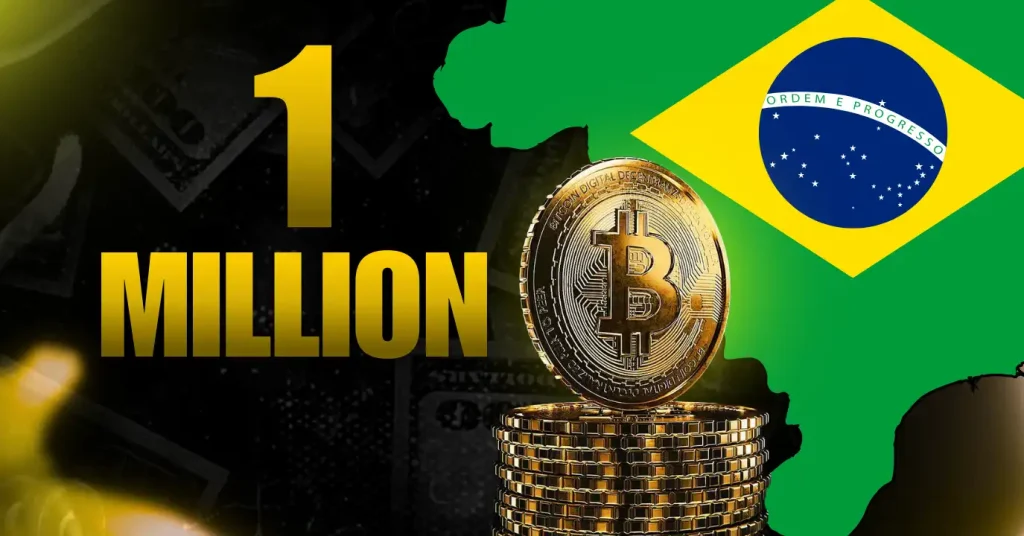
Brazil’s Congress is once again debating a bold proposal that could reshape the country’s financial strategy. Lawmakers have reintroduced a bill that would allow the gradual purchase of up to 1 million Bitcoin over five years, creating what they call the Strategic Sovereign Bitcoin Reserve (RESbit). If approved, the plan would make Brazil one of the largest holders of Bitcoin in the world and show strong support for the asset from a major economy.

How It Could Impact Bitcoin’s Supply and Price

Bitcoin has a fixed supply of 21 million coins, and many are already lost or held for the long term. If a large country buys up to 1 million BTC over five years, it would reduce the amount available in the market.

If the buying happens slowly, the price impact may not be immediate. However, steady government purchases could increase demand over time and reduce available supply. Even the expectation of such buying could push prices higher, as traders often react in advance. When a country commits to buying Bitcoin, it sends a strong signal that it believes in its long-term value.

When the Effects Could Begin

The timing depends on the political process. The bill must pass through congressional committees and may face resistance from Brazil’s central bank, which does not currently treat Bitcoin as part of official reserves. This process could take months or even longer.

Still, markets often react before policies are fully implemented. If the proposal gains support or shows signs of approval, prices could move even before any actual purchases begin. On the other hand, delays or rejection could reduce excitement in the market. Early price changes are likely to be driven by sentiment, while later effects would depend on real buying activity.

Broader Impact on the Crypto Market

Beyond Bitcoin, such a move could influence how other governments view digital assets. If Brazil commits around $68 billion to buying BTC, other emerging economies may consider similar steps so they are not left behind. The revised bill sets a clear goal of acquiring at least 1,000,000 BTC over five years.

This could encourage more governments to hold Bitcoin as part of their national reserves, similar to how countries hold gold. Greater government participation could also attract more institutional investors and increase trust in the crypto market.

Over time, the plan could strengthen Bitcoin’s image as “digital gold” and as a way to protect against currency risks. Although the proposal still faces regulatory and political challenges, its discussion alone shows a shift in how some countries view Bitcoin — not just as a speculative asset, but as a possible part of national financial strategy.

Never Miss a Beat in the Crypto World!

Stay ahead with breaking news, expert analysis, and real-time updates on the latest trends in Bitcoin, altcoins, DeFi, NFTs, and more.

FAQs

How would Brazil buying 1M BTC affect Bitcoin’s price?

Gradual government buying could tighten supply and lift demand over time. Markets may also react early if approval looks likely.

When could Brazil start purchasing Bitcoin?

Purchases would begin only after the bill clears Congress and regulatory review, a process that could take months or longer.

Why would Brazil add Bitcoin to national reserves?

Supporters see Bitcoin as digital gold—scarce, global, and potentially useful for diversification and currency risk protection.

Could other countries follow Brazil’s Bitcoin reserve plan?

Yes. If approved, it may encourage emerging economies to consider BTC reserves to diversify assets and stay competitive.

Top Altcoins That Could Outperform Despite Bitcoin Price Crash

Top Altcoins That Could Outperform Despite Bitcoin Price Crash

The post Top Altcoins That Could Outperform Despite Bitcoin Price Crash appeared first on Coinpedia Fintech News

Bitcoin has pulled back sharply, falling to levels seen before Donald Trump’s reelection and bringing fresh fear into the crypto market. In a recent YouTube update, Altcoin Daily analyst Austin explained why the drop happened and shared a few altcoins he believes could perform well over the long term despite the crash.

He made it clear that most altcoins may not survive in the long run. However, projects with real use cases and growing adoption could still reward patient investors.

Why Bitcoin Crashed

According to 10x Research, Bitcoin’s sharp rally after Trump’s late-2024 victory created a weak price structure. The price jumped from $70,000 to $90,000 in less than two weeks. Because the rise was so fast, there was not much strong buying support in between those levels.

When selling pressure began, Bitcoin dropped quickly through those thin areas. Around $75,000, large traders who deal in options had to sell even more as the price fell, which pushed Bitcoin down faster toward the $60,000 range before it found some stability.

At the same time, Fundstrat’s Tom Lee suggested that gold may have attracted a large share of investor money, which could explain why Bitcoin struggled. Austin noted that in the past, Bitcoin has often outperformed gold as a store of value, and he believes that trend could return.

Cardano and the Stablecoin Boost

Austin highlighted Cardano as a key project to watch. The network is preparing to launch USDCx at the end of February. Founder Charles Hoskinson confirmed that users will have full wallet support and direct conversion access through major exchanges.

He described this as an important step for Cardano. The network has fallen behind Ethereum, Tron, Solana, and BNB Chain in stablecoin usage. With clearer stablecoin rules developing globally, better liquidity on Cardano could help bring new capital into its ecosystem.

Zcash and Bittensor

Speaking about comments from Digital Currency Group CEO Barry Silbert at Bitcoin Investor Week, Austin mentioned Zcash and Bittensor as potential high-upside bets.

Zcash fits into the privacy-focused theme, which could gain attention as governments increase financial monitoring. However, Austin personally prefers Bittensor because it combines crypto with artificial intelligence. The project runs a system where developers compete to build useful AI tools, and stronger projects are rewarded. He sees this link between crypto and AI as a major long-term opportunity.

Solana’s Growing Role

Solana was also highlighted as a strong infrastructure project. Developer activity on the network has grown sharply since 2020, with thousands of new developers joining last year. Payment activity is increasing, and some major prediction markets are reportedly planning token launches on Solana.

Although Austin does not expect Solana to deliver extreme returns because of its already large size, he believes it still has solid growth potential compared to traditional financial infrastructure.

XRP, Chainlink, Polkadot, and Propy

XRP focuses on fast international payments and liquidity services. Supported by Ripple’s enterprise efforts, it remains one of the most widely discussed utility tokens. While it is unlikely to disappear, very large returns would depend on broader global adoption.

Chainlink continues to be viewed as an important infrastructure project in the crypto space. Austin also still holds Polkadot but with more modest expectations.

Propy stands out as a higher-risk opportunity. The project has raised over $100 million, completed a $14 million commercial real estate deal using USDT, and is expanding escrow services across several U.S. states. Austin believes Propy could modernize real estate transactions by turning them into software-based processes.

He concluded by reminding viewers that Bitcoin and Ethereum remain his core holdings, while these altcoins represent higher-risk investments that could deliver strong returns if their long-term visions succeed.

Bhutan Sells $6.7M in Bitcoin, Still Holds $372M 

Bhutan Bitcoin sales strategy

The post Bhutan Sells $6.7M in Bitcoin, Still Holds $372M  appeared first on Coinpedia Fintech News

The Royal Government of Bhutan has sold another $6.7 million worth of Bitcoin this week, continuing a steady pattern of sales over the past three weeks. Data tracked by Arkham shows these transactions are part of an ongoing treasury plan, not a sudden sell-off.

Even after the recent sales, wallets linked to the government still hold around $372 million in Bitcoin. Bhutan had already sold at least $100 million worth of BTC in September and appears to be continuing its gradual selling strategy.

From Mining Expansion to Post-Halving Reality

Most of Bhutan’s Bitcoin comes from state-backed mining operations managed by Druk Holding and Investments. The country previously partnered with Bitdeer Technologies to expand mining capacity to as much as 600 megawatts.

However, mining rewards were reduced after the April 2024 Bitcoin halving, which cut the amount of Bitcoin miners receive for validating transactions. This change made mining less profitable across the industry. As a result, Bhutan appears to have moved from simply holding its mined Bitcoin to selling portions of it when needed to generate cash.

Analysts estimate Bhutan’s average purchase cost is close to $8,000 per Bitcoin, meaning the country is still sitting on large profits despite recent price swings.

Structured Selling, Not Panic

Market analyst Vugar Usi said Bhutan’s recent sales look planned and controlled. The government has been selling in smaller amounts over time rather than making one large transaction.

Reports suggest that some transactions involve large trading firms such as QCP. The steady weekly pattern indicates Bhutan is managing risk by spreading out its sales instead of trying to sell at a perfect price.

Reuters has previously reported that Bhutan has used crypto profits to support public spending, including salary payments. This supports the idea that the sales are meant to fund operations, not signal a loss of confidence.

A Sign of Market Growth

Bhutan’s approach shows how governments may be starting to treat Bitcoin more like a financial reserve than a speculative asset. The country uses its hydropower resources to mine Bitcoin, then sells some of it when funds are required.

The key question for the broader market is not whether Bhutan is bearish, but whether Bitcoin is increasingly being handled like a balance-sheet asset. If a small country can manage its Bitcoin holdings in a transparent way, it suggests that other governments or institutions could be following similar strategies.

In that sense, Bhutan’s steady sales may reflect the crypto market’s growing maturity rather than a shift in long-term belief in Bitcoin.

Never Miss a Beat in the Crypto World!

Stay ahead with breaking news, expert analysis, and real-time updates on the latest trends in Bitcoin, altcoins, DeFi, NFTs, and more.

XRP Price Crash Ahead? Analysts Flag Potential Drop to $0.85

XRP Price Crash

The post XRP Price Crash Ahead? Analysts Flag Potential Drop to $0.85 appeared first on Coinpedia Fintech News

Sentiment around XRP has turned cautious as the token struggles to hold important price levels during a wider crypto market slowdown. After trading comfortably above $1 earlier in the cycle, XRP is now hovering near a critical support zone. Analysts warn that a clear break below $1 could lead to a deeper decline.

The $1 level is seen as a major psychological support. If XRP falls below this mark and fails to recover quickly, selling pressure may increase and push the price lower.

Key XRP Levels to Watch

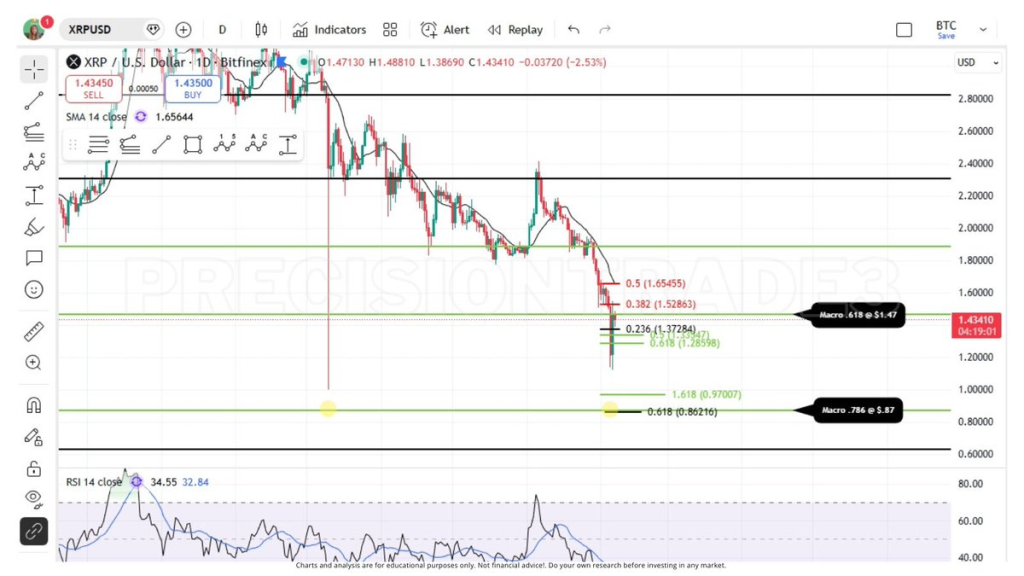
Market analyst Tara believes XRP may continue its pullback before finding strong support.

In the short term, she sees:

  • $1.30 as an important support level
  • $1.65 as a key resistance level

If XRP fails to move above $1.65 and hold that level, the price could decline again. A drop below $1 may open the door for a fall toward the $0.85 to $0.87 range.

This area is considered a strong technical support zone based on previous price movements and historical retracement levels.

How Bitcoin Could Impact XRP

How Bitcoin Could Impact XRP

XRP often follows Bitcoin’s price trend. Tara noted that if Bitcoin falls toward the $52,200 support level, XRP could face additional pressure.

During market downturns, altcoins like XRP tend to drop faster than Bitcoin. If Bitcoin weakens further, XRP may see sharper losses.

Bearish Scenario for XRP

Bearish Scenario for XRP

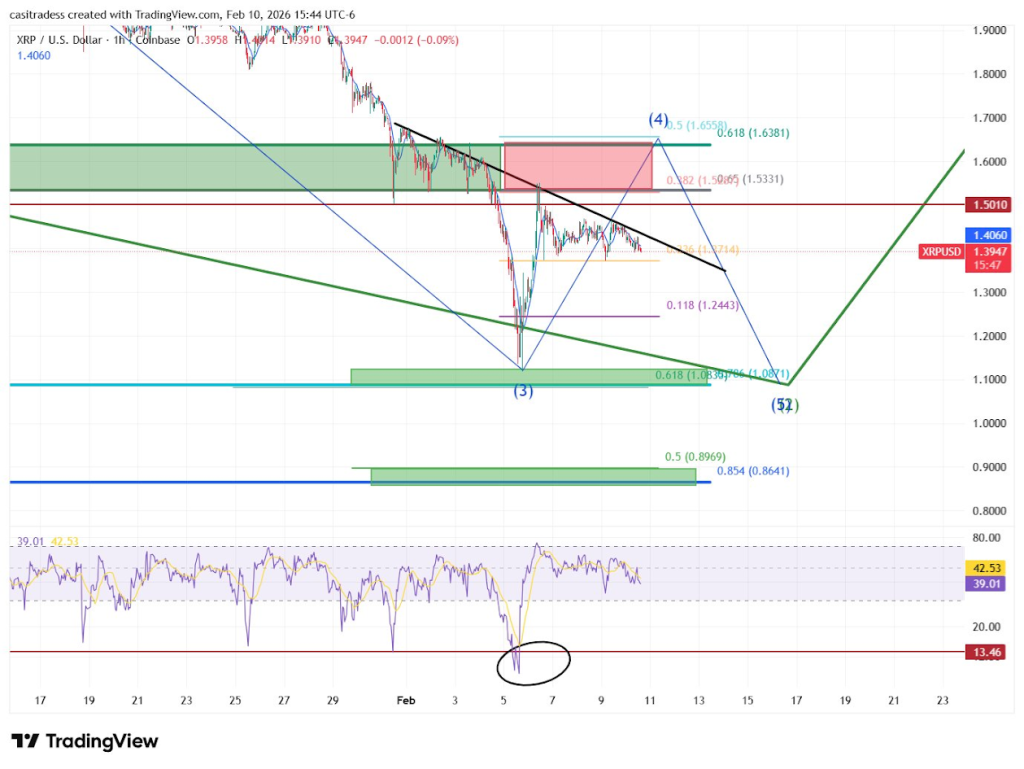
Another analyst, CasiTrades, described the recent price bounce as a temporary recovery within a larger correction.

According to her outlook:

  • If XRP fails to hold above $1.65, the next downside target could be $1.09
  • In a stronger sell-off, the price could slide toward $0.90
  • In an extreme case, XRP may test support near $0.85

A move toward $0.85 would mark one of the largest pullbacks of this cycle.

Current XRP Price

As of now, XRP is trading near $1.38, down more than 4% in the past 24 hours.

For now, $1.30 support and $1.65 resistance remain the key levels to watch. A move above resistance could support recovery, while a break below support may lead to another drop before a stronger rebound begins.

Never Miss a Beat in the Crypto World!

Stay ahead with breaking news, expert analysis, and real-time updates on the latest trends in Bitcoin, altcoins, DeFi, NFTs, and more.

FAQs

How high can XRP go in the next recovery phase?

A confirmed break above $1.65 could push XRP toward previous swing highs, depending on Bitcoin strength and market momentum.

Can XRP recover after dropping below $1?

Yes, but only if buyers quickly reclaim $1. A fast rebound above that level may reduce downside pressure.

What signals would confirm an XRP trend reversal?

A strong close above $1.65 with rising volume would signal momentum shifting bullish and potential recovery continuation.

CFTC Launches Innovation Advisory Committee, Appoints Coinbase and Ripple CEOs

CFTC Launches Innovation Advisory Committee, Appoints Coinbase and Ripple CEOs

The post CFTC Launches Innovation Advisory Committee, Appoints Coinbase and Ripple CEOs appeared first on Coinpedia Fintech News

The U.S. Commodity Futures Trading Commission has officially launched its Innovation Advisory Committee, appointing a broad group of leaders from both crypto and traditional finance. The initiative comes under Chairman Mike Selig as the agency positions itself to take on a greater role in overseeing digital asset and derivatives markets.

Among the most prominent appointees are Coinbase CEO Brian Armstrong and Ripple CEO Brad Garlinghouse. Their inclusion signals a direct line between major U.S.-based crypto firms and federal regulators at a time when policy clarity remains a top industry priority.

Selig described the committee as a critical resource for modernizing regulatory frameworks to keep pace with financial and technological innovation.

A Wider Role in Crypto Regulation

The 35-member committee will advise the CFTC on innovation-driven developments in financial markets. Its creation reflects the agency’s growing influence in crypto oversight, particularly as it works more closely with the Securities and Exchange Commission on digital asset initiatives.

The CFTC is increasingly viewed as a primary regulator for crypto derivatives and potentially broader digital commodity markets. By expanding the advisory body beyond its previous CEO-level council and nearly tripling its size, the agency is signaling a more structured engagement with industry stakeholders.

Notably, the panel brings together crypto-native leaders and established financial institutions, including executives from Nasdaq, CME Group, Cboe Global Markets, the Futures Industry Association, and the International Swaps and Derivatives Association. The presence of traditional market infrastructure firms underscores how digital assets are becoming integrated into mainstream finance.

Key Crypto Figures at the Table

Beyond Armstrong and Garlinghouse, the committee includes Uniswap Labs CEO Hayden Adams, Gemini CEO Tyler Winklevoss, Kraken Co-CEO Arjun Sethi, Solana Labs CEO Anatoly Yakovenko, Chainlink Labs co-founder Sergey Nazarov, and Grayscale CEO Peter Mintzberg.

Venture capital representation comes from Chris Dixon of a16z Crypto and Alana Palmedo of Paradigm. The diversity of participants, from decentralized protocol founders to centralized exchange executives, reflects the CFTC’s attempt to gather broad market insight.

Industry Reaction and Market Implications

The move has drawn positive reactions within the crypto community. Crypto analyst Michael Petricone described it as an example of serious U.S. fintech leadership, arguing that bringing builders into the policy process ensures digital finance develops under American rules and values.

Crypto user Diana called Garlinghouse’s appointment a major win for Ripple and XRP holders. She framed it as giving XRP a seat at the U.S. regulatory table, fueling optimism about Ripple’s long-term regulatory positioning.

While the committee is advisory, its influence could shape derivatives rules, exchange compliance standards, and token classifications. For the crypto sector, the development marks a shift from enforcement-driven headlines toward collaborative rulemaking, a sign that regulatory integration may be entering a new phase.

Never Miss a Beat in the Crypto World!

Stay ahead with breaking news, expert analysis, and real-time updates on the latest trends in Bitcoin, altcoins, DeFi, NFTs, and more.

FAQs

What is the CFTC Innovation Advisory Committee?

The CFTC Innovation Advisory Committee is a 35-member panel guiding U.S. regulators on crypto, derivatives, and digital asset policy modernization.

Why were Brian Armstrong and Brad Garlinghouse appointed to the CFTC panel?

They were appointed to provide industry expertise, ensuring crypto exchanges and blockchain firms have direct input in shaping U.S. regulation.

Does the CFTC regulate cryptocurrency in the U.S.?

The CFTC oversees crypto derivatives and is increasingly seen as a key regulator for digital commodities like Bitcoin and related markets.

How could this committee impact crypto markets?

The panel may influence derivatives rules, exchange compliance standards, and token classifications, shaping future U.S. crypto policy.

What does this mean for Ripple and XRP holders?

Garlinghouse’s appointment gives Ripple representation in regulatory discussions, boosting optimism around XRP’s long-term U.S. positioning.

Coinbase CEO Brian Armstrong Sells $550M in Shares as COIN Stock Faces Pressure

Brian Armstrong Coinbase stock sale

The post Coinbase CEO Brian Armstrong Sells $550M in Shares as COIN Stock Faces Pressure appeared first on Coinpedia Fintech News

Coinbase CEO Brian Armstrong has sold more than $550 million worth of company shares over the past year, according to publicly available data.

Figures highlighted by VanEck’s Head of Digital Assets Research, Matthew Sigel, show Armstrong sold over 1.5 million Coinbase (COIN) shares between April 2025 and January 2026.

Key Share Sales Details

  • Total shares sold: 1.5 million+
  • Total value: Around $550 million
  • Largest sale: June 25, 2025 – 336,265 shares at about $355 per share
  • Most recent sale: January 5, 2026 – 40,000 shares at about $249 per share
  • Total transactions: 88 separate sales
  • Shares purchased during this period: None

Despite the sales, Armstrong still holds an estimated $14 billion worth of Coinbase stock, keeping him one of the company’s largest shareholders.

Why Is Brian Armstrong Selling Coinbase Stock?

The sales were made under a Rule 10b5-1 trading plan. This is a legal framework that allows company executives to schedule stock sales in advance. The purpose of this plan is to reduce insider trading concerns by setting up automatic transactions ahead of time.

Armstrong adopted the trading plan in August 2025. Because the sales were pre-arranged, they were not necessarily based on short-term market movements. However, large insider sales can still create negative sentiment, especially when they happen during periods of stock price weakness.

Coinbase Stock Under Pressure

Armstrong’s stock sales come at a time when Coinbase shares have pulled back from earlier highs. On February 12, major banks, including JPMorgan and Citi, lowered their price targets on COIN ahead of the company’s earnings report. Analysts pointed to softer crypto trading volumes and cautious revenue expectations.

The decline in Coinbase stock has also affected Armstrong’s personal net worth, reportedly pushing him off Bloomberg’s list of the world’s 500 richest individuals.

Never Miss a Beat in the Crypto World!

Stay ahead with breaking news, expert analysis, and real-time updates on the latest trends in Bitcoin, altcoins, DeFi, NFTs, and more.

FAQs

Do insider stock sales always signal a lack of confidence in the company?

Not necessarily. Executives often sell shares for diversification, tax planning, or liquidity reasons. When trades are made under pre-arranged plans, they are typically structured to avoid reacting to short-term market developments.

Could these sales affect how institutional investors view Coinbase?

Institutional investors usually examine broader fundamentals such as revenue trends, trading volumes, and regulatory outlook. However, sizable insider sales can influence short-term sentiment, particularly during periods of market uncertainty.

What should investors watch next regarding Coinbase?

Market participants will likely focus on upcoming earnings results, forward guidance, and crypto trading activity trends. Analyst revisions and macroeconomic conditions could also shape near-term stock performance.

Bitcoin Price Outlook: Analysts Warn BTC Could Fall to $40,000 Before Recovery

Bitcoin Price Outlook: Analysts Warn BTC Could Fall to $40,000 Before Recovery

The post Bitcoin Price Outlook: Analysts Warn BTC Could Fall to $40,000 Before Recovery appeared first on Coinpedia Fintech News

Bitcoin sentiment has weakened as the market continues its correction after reaching nearly $120,000. Since that peak, BTC price has struggled to regain strength, and many analysts believe the decline may not be over.

Unlike previous bull markets that ended with sharp spikes and sudden crashes, this cycle has been different. Instead of a dramatic fall, Bitcoin has been slowly trending lower. This steady drop has frustrated many investors and created what some describe as a slow and exhausting bear market.

Now, several market experts believe Bitcoin could revisit much lower levels before finding a strong bottom.

Could Bitcoin Price Drop to $40,000?

Crypto analyst Benjamin Cowen recently said that Bitcoin is still in a bear phase and may fall toward $40,000 if past patterns repeat.

According to Cowen, Bitcoin’s latest peak came around day 1,062 of its market cycle. This timing is similar to previous cycle tops, which suggests the broader four-year Bitcoin cycle may still be playing out.

When Could Bitcoin Bottom?

Cowen believes there is a 60% to 70% chance that Bitcoin will form its final bottom around October 2026. He sees May 2026 as the second most likely time for the market to reach its lowest point.

In past cycles, Bitcoin often reached its lowest point during April or May before starting a new recovery phase.

He also compared the current situation to 2019. At that time, Bitcoin peaked shortly before monetary policy tightened. Even after liquidity conditions improved, the price failed to recover immediately.

Is the Four-Year Bitcoin Cycle Still Valid?

In past cycles, Bitcoin has fallen heavily before recovering. In its early years, it dropped about 94%. In the last bear market, it fell around 77%. If Bitcoin declines 70% from its $120,000 high, the price would be near $40,000. 

Current data also shows important levels in this range. The average buying price of holders is around $55,000, and another key support level is close to $40,000.

In earlier cycles, Bitcoin traded below these levels before forming a long-term bottom.

Another key indicator, which tracks how much Bitcoin supply is in profit versus loss, has not yet reached the level that historically signals full capitulation. That shift would likely happen if BTC trades in the $45,000 to $50,000 range.

Zacks Investment Research Chief Equity Strategist John Blank also told CNBC that Bitcoin bear markets usually last 12 to 18 months, and a move toward $40,000 remains technically possible.

Will Bitcoin Recover in 2026?

Despite short-term weakness, long-term Bitcoin forecasts remain positive.

Major firms such as Grayscale and Bernstein believe Bitcoin could reach a new all-time high in 2026. Some analysts suggest the market may now follow a five-year cycle instead of the traditional four-year pattern, which could delay the next major peak.

Bitcoin could remain under pressure through 2025 and 2026. Based on past cycles, $40,000 may act as a strong support level. While short-term weakness is possible, the long-term outlook still points to recovery. Investors may need patience before the next sustained bull run begins.

Never Miss a Beat in the Crypto World!

Stay ahead with breaking news, expert analysis, and real-time updates on the latest trends in Bitcoin, altcoins, DeFi, NFTs, and more.

FAQs

Could Bitcoin hit a new all-time high after this correction?

Historically, Bitcoin has reached new highs after major drawdowns. Long-term projections still expect another ATH post-bottom.

How low can Bitcoin realistically go this cycle?

Key technical zones sit between $40,000 and $50,000, where long-term holder cost bases and prior support levels converge.

Is Bitcoin expected to recover quickly after the bottom?

Past cycles show recoveries take time. Consolidation often follows the bottom before sustained bullish momentum returns.

What is Bitcoin price prediction for February 2026?

In February 2026, Bitcoin may trade between $50,000 and $75,000, with upside toward $80,000 if recovery momentum strengthens.

Barry Silbert Says 5–10% of Bitcoin Capital Could Shift to Privacy Coins Like Zcash

XRP News Binance RLUSD Integration on XRP Ledger Goes Live

The post Barry Silbert Says 5–10% of Bitcoin Capital Could Shift to Privacy Coins Like Zcash appeared first on Coinpedia Fintech News

Digital Currency Group CEO Barry Silbert believes a noticeable shift could be coming inside the crypto market. Speaking at Bitcoin Investor Week in New York, Silbert said that 5% to 10% of Bitcoin’s capital may eventually move into privacy-focused cryptocurrencies such as Zcash.

He remains bullish on Bitcoin and still sees it as a core portfolio holding. But he made it clear that Bitcoin’s size limits its explosive upside. According to Silbert, Bitcoin is unlikely to deliver 500x returns unless there is a complete collapse of the U.S. dollar. Smaller projects with focused use cases, like Zcash and even AI-driven network Bittensor, offer much higher return potential because they are earlier in their growth cycles.

Why Privacy Is Gaining Attention

Silbert’s argument revolves around financial privacy. He acknowledged that Bitcoin’s old narrative as anonymous digital cash no longer holds up. With blockchain analytics firms such as Chainalysis and Elliptic tracking transactions, Bitcoin is now highly transparent.

As more institutional capital enters crypto, regulatory oversight and compliance standards are increasing. That shift is creating a new dynamic. The more regulated and monitored the space becomes, the more valuable privacy technology may appear.

Silbert does not believe Bitcoin will meaningfully integrate strong privacy features. Because of that, he expects capital to flow toward networks that are designed with privacy at their core, especially those using zero-knowledge technology to protect transaction data.

DCG’s Position Reflects the Thesis

Silbert’s comments carry weight because of DCG’s history in crypto. Grayscale, a DCG subsidiary, launched the first institutional Bitcoin investment vehicle in 2013. That product later became one of the most actively traded spot Bitcoin ETFs.

Grayscale also runs the Grayscale Zcash Trust, launched in 2017, and is working toward an ETF conversion. DCG has previously backed other privacy-focused projects as well. Silbert even suggested that Zcash could act as a long-term hedge against potential quantum computing risks to Bitcoin, though he does not see that threat as immediate.

Privacy Chain or Privacy Layer

Not everyone agrees that standalone privacy coins will dominate. Crypto user neural_gin argued that privacy is becoming a premium feature as regulations tighten, but questioned whether it needs its own blockchain.

He suggested that zero-knowledge proofs integrated into major networks like Ethereum or Solana could compete directly with projects like Zcash. In his view, privacy should be a feature users can switch on when needed rather than something tied to a separate token.

If even a small portion of Bitcoin capital rotates, the privacy sector could see renewed momentum. The real debate now is where that value ultimately lands.

Never Miss a Beat in the Crypto World!

Stay ahead with breaking news, expert analysis, and real-time updates on the latest trends in Bitcoin, altcoins, DeFi, NFTs, and more.

FAQs

Is Bitcoin still anonymous?

No, Bitcoin is no longer anonymous. Blockchain analytics tools like Chainalysis now make Bitcoin transactions highly transparent and traceable.

What are privacy-focused cryptocurrencies?

Privacy coins like Zcash use zero-knowledge technology to shield transaction data, keeping sender, receiver, and amount confidential.

Could tighter regulation make privacy coins harder to access?

Yes. Some exchanges may limit or delist privacy-focused tokens if compliance requirements increase. That could reduce liquidity in certain regions, even if global demand remains strong.

Who stands to benefit most if privacy demand rises?

Developers building compliance-friendly privacy tools, custodians offering secure storage, and funds creating regulated investment products could see increased activity. Exchanges may also adapt to balance user privacy with reporting rules.

Charles Hoskinson Confirms LayerZero Integration on Cardano

Cardano LayerZero integration

The post Charles Hoskinson Confirms LayerZero Integration on Cardano appeared first on Coinpedia Fintech News

Charles Hoskinson has confirmed that LayerZero will be integrated into the Cardano blockchain, marking a major step in Cardano’s institutional expansion strategy. The announcement came during his keynote at Consensus Hong Kong 2026, where the Input Output CEO revealed that the institutional-focused protocol will be ported over to Cardano.

LayerZero has been positioning itself as infrastructure for institutional-grade financial markets and recently secured backing from Citadel Securities. Its arrival on Cardano signals a stronger push toward cross-chain interoperability and high-performance financial applications, areas increasingly critical for attracting large-scale capital.

USDCx Launch and Stablecoin Expansion

A key highlight of the partnership is the upcoming launch of USDCx on Cardano, with broad wallet and exchange support already planned. Hoskinson described the rollout as a milestone moment, bringing compliant and institution-ready stablecoin infrastructure to the network.

He emphasized that the integration will enable privacy-enhanced and immutable stablecoin functionality powered by zero-knowledge technology. The move aligns with Cardano’s long-term strategy of combining regulatory clarity with technical innovation. The announcement also coincided with the rollout of Midnight’s mainnet, strengthening Cardano’s privacy-focused ecosystem and expanding its utility stack.

Bear Market Sentiment, Bullish Long-Term Vision

Hoskinson directly addressed the ongoing market downturn during his speech, calling sentiment “at an all-time low.” In a lighthearted but symbolic gesture, he appeared wearing a McDonald’s uniform, referencing a popular crypto meme about bear markets.

Despite the short-term weakness, he maintained that the broader macro outlook for crypto remains bullish. According to Hoskinson, partnerships like LayerZero demonstrate that institutional development continues regardless of price action. Infrastructure building, he suggested, does not stop during downturns; it accelerates.

Market Signals and Related Activity

The timing of the integration is notable. Just days after LayerZero revealed plans to launch its own Layer 1 blockchain, Zero, a bankruptcy-linked Alameda Research wallet swapped approximately $24 million worth of Stargate (STG) tokens for LayerZero’s ZRO token. Arkham data shows 129.04 million STG, valued at $24.49 million, was exchanged for 11.14 million ZRO worth about $24.29 million.

While the move is tied to bankruptcy proceedings, it highlights growing market attention around LayerZero’s ecosystem.

Overall, Cardano’s LayerZero integration strengthens its position in the competitive Layer 1 race, expands its institutional toolkit, and signals that long-term ecosystem building continues even in challenging market conditions.

Never Miss a Beat in the Crypto World!

Stay ahead with breaking news, expert analysis, and real-time updates on the latest trends in Bitcoin, altcoins, DeFi, NFTs, and more.

FAQs

What is LayerZero integration on Cardano?

LayerZero integration brings institutional-grade cross-chain and financial infrastructure to Cardano, enabling high-performance apps and interoperability.

Why is LayerZero important for Cardano’s growth?

LayerZero adds institutional tools, cross-chain capabilities, and high-performance infrastructure, boosting Cardano’s adoption by large investors.

Does the LayerZero integration mean Cardano is preparing for a price recovery?

Not directly—it’s about long-term infrastructure. But such partnerships often signal growing utility and confidence, which historically support stronger market fundamentals over time.

Tether Emerges as Major U.S. Treasury Holder as Stablecoin Demand Explodes

Tether USDT Treasury holdings

The post Tether Emerges as Major U.S. Treasury Holder as Stablecoin Demand Explodes appeared first on Coinpedia Fintech News

Tether could soon become one of the top 10 buyers of U.S. Treasury bills, according to Bo Hines, CEO of Tether’s U.S. arm. The shift is being driven by explosive demand for USDT, the world’s largest stablecoin, and the launch of USAT, its new U.S.-compliant counterpart. Speaking at Bitcoin Investor Week, Hines signaled that as stablecoin issuance grows, so too will Tether’s appetite for short-term government debt.

USDT now has roughly $185 billion in circulation and serves an estimated 530 million users, adding about 30 million new users each quarter. To back this supply, Tether holds more than $122 billion in U.S. Treasury bills, accounting for over 83% of its reserves. At current levels, that places Tether among the top 20 global holders of U.S. government debt, between major sovereign nations like Germany and Saudi Arabia.

When Stablecoins Became a Profit Engine

The turning point for Tether’s influence came as interest rates surged globally. With higher Treasury yields, stablecoin reserves became significantly more profitable. According to The Kobeissi Letter, Tether reported $10 billion in profit in just the first nine months of 2025, supported by $137 billion in Treasury holdings, ranking it as the 17th-largest holder of U.S. debt at the time.

The model is simple but powerful: users mint USDT and receive a dollar-pegged digital token that pays no interest. Tether invests the underlying reserves into short-term Treasurys and captures the yield spread. In effect, stablecoin users provide zero-cost capital, while Tether earns interest on highly liquid government securities.

What Makes Tether the Top Choice?

Tether’s dominance stems from liquidity, global accessibility, and trust in redemption stability. USDT remains deeply integrated across exchanges, DeFi platforms, and emerging markets, making it the primary on-chain dollar substitute. The introduction of USAT, issued through Anchorage Bank and structured under the U.S. GENIUS Act, further strengthens its regulatory positioning. USAT is designed to meet strict 1:1 high-quality asset backing requirements, signaling alignment with U.S. compliance standards.

This dual-token approach, global USDT and compliant USAT, reinforces Tether’s reach across both offshore and regulated markets.

Crypto and Market Impact

Tether’s growing Treasury footprint links crypto liquidity directly to U.S. debt markets. As stablecoin supply expands, so does demand for Treasurys, effectively turning crypto adoption into a driver of sovereign debt buying.

However, rising scrutiny is emerging around whether stablecoin issuers should share yield with users. Competitors like Jupiter’s $JUPUSD aim to redistribute Treasury returns on-chain. If that model gains traction, it could reshape the stablecoin landscape and challenge Tether’s high-margin dominance.

❌