
Reading view

Endeavor Air Faces 381 Flight Cancellations And 34 Delays Today, Grounding Passengers Across The US At New York JFK, LaGuardia, Chicago O’Hare, Atlanta, and More
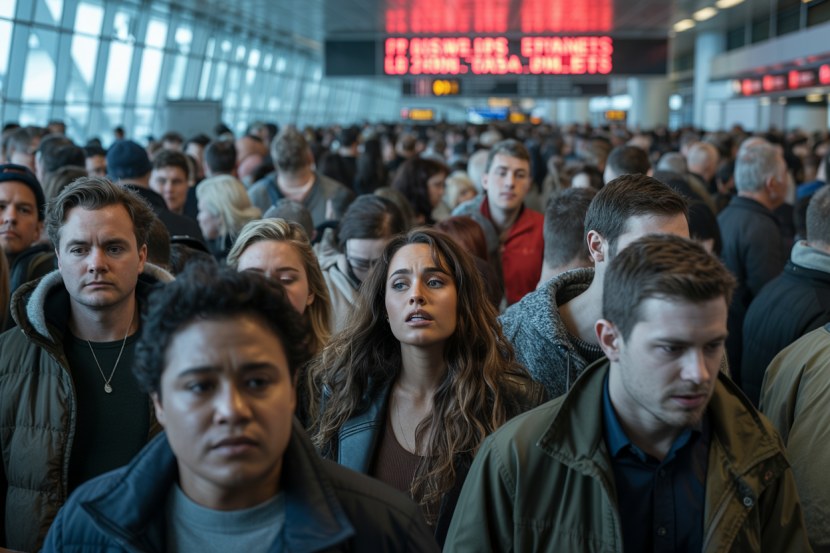
Endeavor Air Faces 381 Flight Cancellations And 34 Delays Today, Grounding Passengers Across The US At New York JFK, LaGuardia, Chicago O’Hare, Atlanta, and More

A powerful winter storm sweeping across the northeastern United States has triggered widespread travel chaos, with millions of residents under winter alerts and blizzard warnings and hundreds of flights grounded. Endeavor Air (DAL) reported significant operational disruptions, including 381 cancellations and 34 delays — part of a broader network impact.
With New York City placed under its first blizzard warning in nine years, and multiple states declaring emergencies, the aviation and surface transport systems across the region are facing extraordinary strain.

Millions Under Blizzard Warnings Across the Northeast

Blizzard warnings now stretch from Maryland to Massachusetts, placing millions of residents in the direct path of hazardous winter weather. The situation is particularly notable in New York City, which is experiencing its first blizzard warning in nine years — underscoring the severity of the current system.

In response to deteriorating conditions:

  • New Jersey
  • Rhode Island
  • Pennsylvania
  • Connecticut

have declared states of emergency. These declarations include travel restrictions, signaling the seriousness of the storm’s impact on road and public transportation networks.

The combination of high winds, heavy snowfall, and restricted mobility has created cascading effects across regional infrastructure — especially air travel.

Endeavor Air Reports 381 Cancellations and 34 Delays

Amid the storm, Endeavor Air (DAL) reported:

  • 381 flight cancellations
  • 48% cancellation rate
  • 34 flight delays
  • 4% delay rate

These figures represent overall disruptions across its operations, with airport-level statistics accounting for only part of the total impact.

The high cancellation percentage indicates that nearly half of the airline’s scheduled operations were scrapped during the severe weather window, reflecting both safety protocols and airport-level operational constraints.

LaGuardia and JFK Bear the Brunt

The most concentrated disruptions were recorded at New York-area airports.

LaGuardia Airport (LGA)

  • 197 cancellations
  • 99% cancellation rate
  • 0 delays

LaGuardia experienced near-total shutdown conditions, with 99% of scheduled Endeavor Air operations canceled. No delays were recorded, indicating flights were largely preemptively canceled rather than operating under extended departure holds.

New York JFK

  • 145 cancellations
  • 100% cancellation rate
  • 0 delays

At JFK, Endeavor Air operations were completely halted, with a 100% cancellation rate and no reported delays. This suggests full operational suspension rather than partial activity.

Together, LaGuardia and JFK account for 342 cancellations, representing the overwhelming majority of the 381 total cancellations reported.

Chicago and Atlanta Show Diverging Patterns

While New York airports saw near-total shutdowns, other hubs displayed different disruption patterns.

Chicago O’Hare (ORD)

  • 8 cancellations
  • 100% cancellation rate
  • 0 delays

Although the total number was smaller, Chicago O’Hare saw a complete cancellation rate for the affected flights. No delays were reported, mirroring the pattern seen in New York — full cancellation rather than staggered operations.

Atlanta (ATL)

  • 12 cancellations
  • 5% cancellation rate
  • 19 delays
  • 8% delay rate

The 19 delays at ATL account for the majority of the airline’s 34 total delays during the disruption period.

The airport-level statistics provided — JFK, LaGuardia, Chicago O’Hare, and Atlanta — account for a substantial portion of the overall 381 cancellations and 34 delays reported by Endeavor Air.

Travel Restrictions Intensify Regional Impact

The declared states of emergency in New Jersey, Rhode Island, Pennsylvania, and Connecticut have imposed travel restrictions that compound aviation challenges. Surface transportation constraints affect:

  • Crew movement
  • Passenger access to airports
  • Ground service operations
  • Aircraft repositioning logistics

With New York City under its first blizzard warning in nine years, the concentration of cancellations at JFK and LaGuardia reflects how severely the metropolitan aviation corridor has been affected.

The near-total cancellation rates in New York — 99% at LaGuardia and 100% at JFK — align with the broader emergency measures enacted across the region.

A Storm With System-Wide Consequences

The convergence of:

  • Millions under blizzard warnings
  • Multiple state emergency declarations
  • Travel restrictions across four states
  • 381 Endeavor Air cancellations (48%)
  • 34 delays (4%)

illustrates the scale of disruption caused by this winter event.

While Atlanta maintained partial operational continuity with manageable delays, New York-area airports experienced near-complete shutdown conditions for the airline’s operations. Chicago O’Hare also recorded total cancellation of the affected flights.

As the storm continues to move through the Northeast, transportation systems remain under pressure. With millions still under winter alerts and emergency declarations active in several states, the full recovery timeline for airline operations remains closely tied to weather stabilization and the lifting of travel restrictions.

For now, the numbers reflect a significant operational halt across key northeastern hubs, with New York at the epicenter of aviation disruption.

Source: Different airports and FlightAware

The post Endeavor Air Faces 381 Flight Cancellations And 34 Delays Today, Grounding Passengers Across The US At New York JFK, LaGuardia, Chicago O’Hare, Atlanta, and More appeared first on Travel And Tour World.

Korean Air and Delta Air Lines Trigger Travel Disruption Across South Korea as Two Incheon Flights Are Cancelled Impacting Routes to New York and Seattle

Korean Air and Delta Air Lines Trigger Travel Disruption Across South Korea as Two Incheon Flights Are Cancelled Impacting Routes to New York and Seattle

Recent Incheon flight cancellations at Incheon International Airport resulted in the cancellation of two international departures, disrupting nonstop services to New York and Seattle. While limited in number, these cancellations affected high-capacity, long-haul routes linking South Korea with major U.S. aviation hubs, increasing their overall operational significance.

Both cancelled services were widebody aircraft scheduled for transpacific travel, meaning the impact extended beyond individual passengers to airline networks and airport operations. Even a small number of such cancellations can create scheduling pressure due to the scale and complexity of long-haul international flights.

Korean Air Flight to New York Cancelled

One of the affected services involved Korean Air cancelled flights, specifically flight KAL85. The aircraft was scheduled to depart Incheon on Sunday at 7:30 PM KST using a Boeing 777-300ER.

Key details of the cancelled service include:

  • Airline: Korean Air
  • Flight number: KAL85
  • Aircraft: Boeing 777-300ER
  • Destination: John F Kennedy International Airport
  • Scheduled departure: Sunday, 7:30 PM KST

The cancellation directly affected the Incheon to JFK flight, a heavily used long-haul route supporting business travel, international education, and cross-border connectivity. With limited nonstop alternatives, passengers likely faced longer rerouting times or rescheduling challenges.

Delta Air Lines Service to Seattle Cancelled

The second cancellation involved Delta Air Lines cancellations, affecting flight DAL9963. This service was planned for a Friday departure at 1:00 PM KST and was scheduled to operate with an Airbus A330-300.

Key details of this cancelled flight include:

  • Airline: Delta Air Lines
  • Flight number: DAL9963
  • Aircraft: Airbus A330-300
  • Destination: Seattle-Tacoma International Airport
  • Scheduled departure: Friday, 1:00 PM KST

The cancellation of the Incheon to Seattle flight disrupted access to a major West Coast gateway that supports extensive domestic and international connections, increasing the likelihood of downstream delays for connecting travelers.

Overview of Cancelled Flights

AirlineFlight NumberAircraftDestinationScheduled Departure
Korean AirKAL85Boeing 777-300ERNew York (JFK)Sunday, 7:30 PM KST
Delta Air LinesDAL9963Airbus A330-300Seattle (SEA)Friday, 1:00 PM KST

Total cancellations: 2
Affected destinations: New York (JFK), Seattle (SEA)

Why Long-Haul Cancellations Have a Greater Passenger Impact

Widebody international flights transport large volumes of passengers and cargo in a single operation. As a result, Incheon flight cancellations involving long-haul routes tend to have a disproportionate effect compared to short-haul disruptions.

Common passenger-related consequences include:

  • Reduced availability of alternative nonstop flights
  • Increased reliance on indirect routings with longer travel times
  • Higher demand for limited rebooking options
  • Delays affecting onward connections and cargo shipments

These factors contribute to broader transpacific flight disruption, particularly when cancellations occur at a major international hub like Incheon.

Operational Context and Industry Implications

Although the specific reasons for the cancellations were not disclosed, such disruptions typically stem from aircraft availability constraints, maintenance scheduling, or crew-related limitations. Long-haul flights require precise coordination across multiple operational layers, leaving little margin for last-minute adjustments.

From an airline perspective, these cancellations highlight the ongoing challenge of maintaining schedule reliability on resource-intensive transpacific routes. For travelers, they underscore the importance of monitoring flight updates closely and preparing for potential changes when flying long-distance international services.

Together, these events demonstrate how even a small number of Incheon flight cancellations can ripple across global aviation networks, reinforcing the interconnected nature of international air travel.

Key Takeaways

  • Two long-haul departures were cancelled at Incheon International Airport, impacting international travel from South Korea to the United States.
  • The cancellations affected major transpacific routes to John F Kennedy International Airport and Seattle-Tacoma International Airport.
  • One cancellation involved a widebody Boeing 777-300ER operated by Korean Air, while the other involved an Airbus A330-300 scheduled by Delta Air Lines.
  • Even a small number of long-haul flight cancellations can cause outsized disruption due to limited alternative services and high passenger volumes.
  • Passengers traveling on transpacific routes may face longer rerouting times and reduced seat availability when cancellations occur at major international hubs.

The post Korean Air and Delta Air Lines Trigger Travel Disruption Across South Korea as Two Incheon Flights Are Cancelled Impacting Routes to New York and Seattle appeared first on Travel And Tour World.
❌