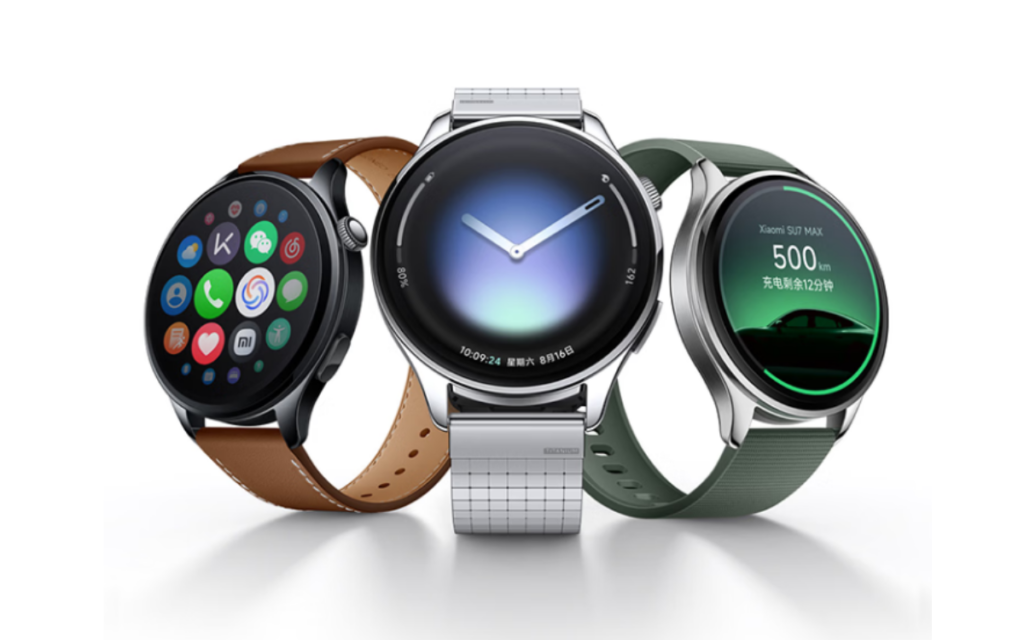
After debuting in China back in December 2025, Xiaomi has now officially confirmed that the Watch 5 will be coming to the global market before the end of February. During the “The New Wave of Imagery” launch event, where it will unveil the Xiaomi 17 series of flagship phones, the company will also showcase the latest wearable.
Xiaomi Watch 5: Where and When Does it Drop?
The Chinese tech giant has confirmed the launch date for its upcoming global hardware showcase. On 28th February 2026, starting at 13:00 UTC (Barcelona Time), the company will unveil the Xiaomi 17 series, Xiaomi Pad 8 tablets, Xiaomi Watch 5, and more. This major announcement arrives right ahead of the MWC 2026 event (Mobile World Congress).
Xiaomi Watch 5
While Xiaomi hasn’t published a standalone release date for Watch 5 shipments, the appearance of the device on its global event teaser page and the timing of the show suggest it will be available shortly after the February 28 event. The global version of the Watch 5 will stand out from its China-only release in a few key ways:
It runs WearOS, giving access to Google Play Store, Google Maps, Google Wallet and Gemini AI support. These are features not available on Xiaomi’s custom OS-based models.
The watch sports a 1.54-inch AMOLED screen.
It’ll likely deliver multi-day life on a single charge.
Expect at least two color options at launch for broader consumer appeal.
Early pricing leaks suggest that the Xiaomi Watch 5 could launch in Europe for around 329 Euros (roughly about 390 US Dollars), which makes it compete with existing WearOS devices like the Samsung Galaxy Watch lineup and the Pixel Watch series.
For more daily updates, please visit our News Section.
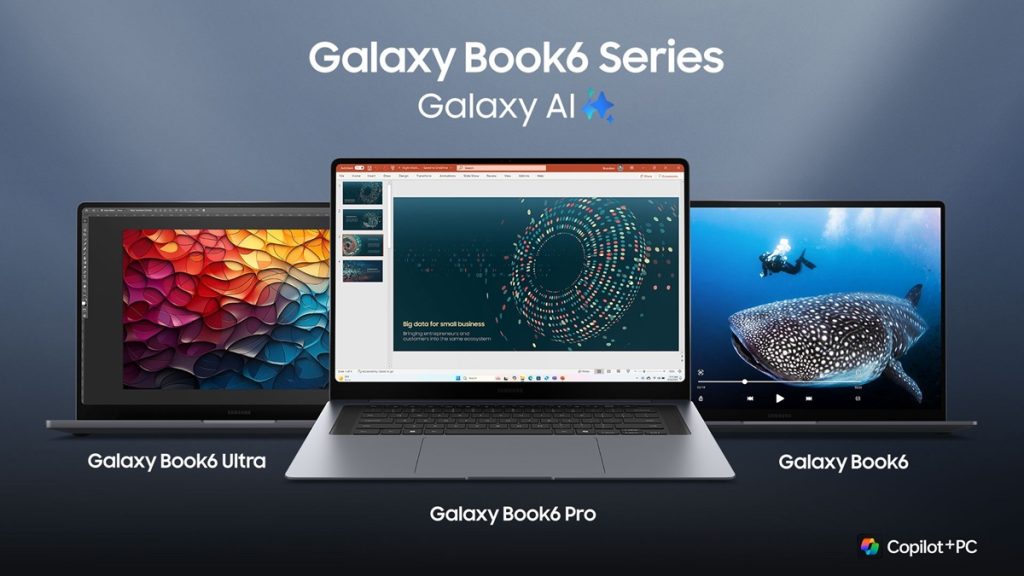
Samsung’s next-generation laptop lineup, the Galaxy Book 6 series, is finally rolling out around the world after officially debuting at CES 2026 earlier this year. The lineup brings powerful new hardware, AI powered features, and a sleek new design. So here is everything you need to know.
What’s New in the Galaxy Book 6 Series
The South Korean tech giant equips the Galaxy Book 6 family with Intel Core Ultra Series 3 processors that offer strong CPU, GPU, and NPU performance for AI related tasks. These chips are based on Intel’s advanced 18A process, and are built for creative work, multitasking, and everyday productivity. The performance gains are packed in a refined, ultra-slim chassis with improved thermal designs. The Galaxy Book 6 Pro gets a vapor chamber solution, while the Galaxy Book 6 Ultra gets a redesigned cooling system.
Samsung Galaxy Book 6 series
Global Launch & Availability
Pre-orders for the entire lineup kicked off last week, and we already reported on the European pricing. So here are the pricing details for the US and more info regarding their region availability:
United States: Official sales begin 11th March 2026 via Samsung Experience Stores and Samsung’s online store, with the lineup available in a Grey color option.
Europe: Pre-orders began in late February in markets including the UK, Germany, France, Spain, Italy, Belgium, the Netherlands and Scandinavia, with shipments starting around the same March 11 window.
Other regions: Availability will expand to additional markets through spring and into April 2026.
Pricing varies by region and configuration, but in the US, the series starts at roughly $1,049.99 for the base Galaxy Book 6, $1,599.99 for the Pro and $2,449.99 for the Ultra model.
For more daily updates, please visit our News Section.
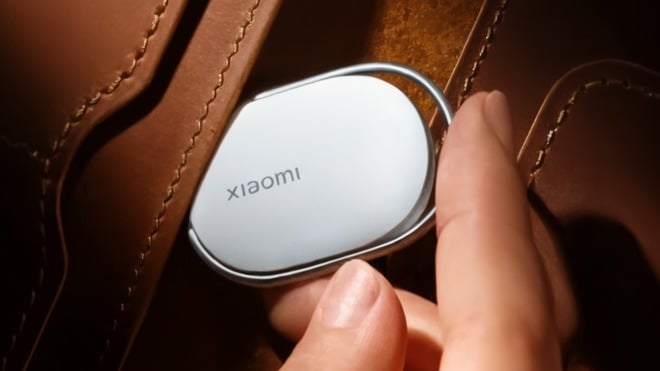
Xiaomi has officially stepped into the smart tracking market with the launch of the Xiaomi Tag. This is a compact Bluetooth tracker designed to help you find misplaced keys, wallets, luggage and more, all while offering cross-platform support that sets it apart from many rivals. Unlike proprietary solutions that tie you to a single mobile ecosystem, the Xiaomi Tag is built to work seamlessly with both Apple’s and Google’s ecosystems, giving users flexibility whether they use an iPhone or Android device.
Xiaomi Tag: Lightweight Design with Practical Tracking Tools
The Chinese tech giant’s latest smart tracker sports a minimalist white plastic build, weighing just around 10g and measuring about 7.2mm thick. So it is slim enough to slip into a wallet or attach to keychains and bags with a compatible strap or accessory.
Xiaomi Tag
Inside, the tracker uses Bluetooth 5.4 and NFC for connectivity with nearby devices, and it’s powered by a replaceable CR2032 coin-cell battery that Xiaomi says can last over one year before needing a swap. But one thing that sets this smart tracker apart from the crowd is the cross platform tracking via Apple Find My and Google Find Hub. This allows items to be located by compatible devices across ecosystems.
There is also a built-in buzzer that plays a tone when triggered from your phone, which is handy for finding an item nearby. Xiaomi offers “Left Behind” alerts as well, to notify you when you walk away from a tagged object. It supports Lost Mode and contact details so others can also help return a missing item via pop-ups if discovered on another network phone. This model gets an IP67 rating for water and dust resistance.
The Xiaomi Tag has just released in Malaysia, being available in a single white color option. It carries a RM 79 (roughly 20 US Dollars) price tag for a single unit, while a pack of four is available for RM 299 (roughly 77 US Dollars).
For more daily updates, please visit our News Section.
It’s increasingly common to see Xiaomi flagship phones launch in China with larger battery capacities than the same models sold in global markets. For example, the Xiaomi 17’s Chinese version reportedly uses a 7,000mAh battery, but the global variant is tipped to carry around 6,300mAh instead. But this isn’t simply a random downgrade or cost-cutting move. So let’s break down why this happens and what it means for consumers.
Battery Shipping Regulations Are the Core Reason
The most widely cited reason for global Xiaomi phones having smaller batteries boils down to international transportation rules for lithium-ion batteries, especially in Europe and certain other major markets. Under agreements such as the European “International Carriage of Dangerous Goods by Road” (ADR) and similar global aviation regulations, lithium-ion battery cells over 20Wh are classified as “dangerous goods”.
Xiaomi 17 Pro Max
In a typical smartphone, a single battery cell above 20Wh translates to around 5,200mAh at a nominal voltage when simplified for consumer terms. If a phone’s battery exceeds this threshold, shipping it becomes more complicated and costly. Many carriers refuse regular shipments of such devices, requiring special handling and documentation. This makes large single-cell smartphone batteries harder to transport and sell in Europe, the US, and some other global markets.
Why Not Just Use Multiple Battery Cells?
At first glance, splitting a large battery into two smaller cells that individually stay under the 20Wh limit seems like an easy workaround. In fact, some devices can do this with dual-cell layouts, and certain international models use that to bump up capacity without breaching the rules. However, widely adopting a multi-cell design across all global smartphones is not straightforward.
Redmi Note 14 Pro+ 5G with Dual Batteries
It adds engineering complexity, requiring different internal layouts, charging circuitry, and safety mechanisms. Multi-cell configurations take up more internal volume, increasing weight and thickness. For many brands (including Xiaomi), the slim form factor and competitive design aesthetics are a priority, making this trade-off difficult. As a result, rather than redesigning each phone’s internal structure for different regions, manufacturers often opt to reduce total battery capacity to stay within safer and easier-to-ship limits.
It’s Not Just Xiaomi
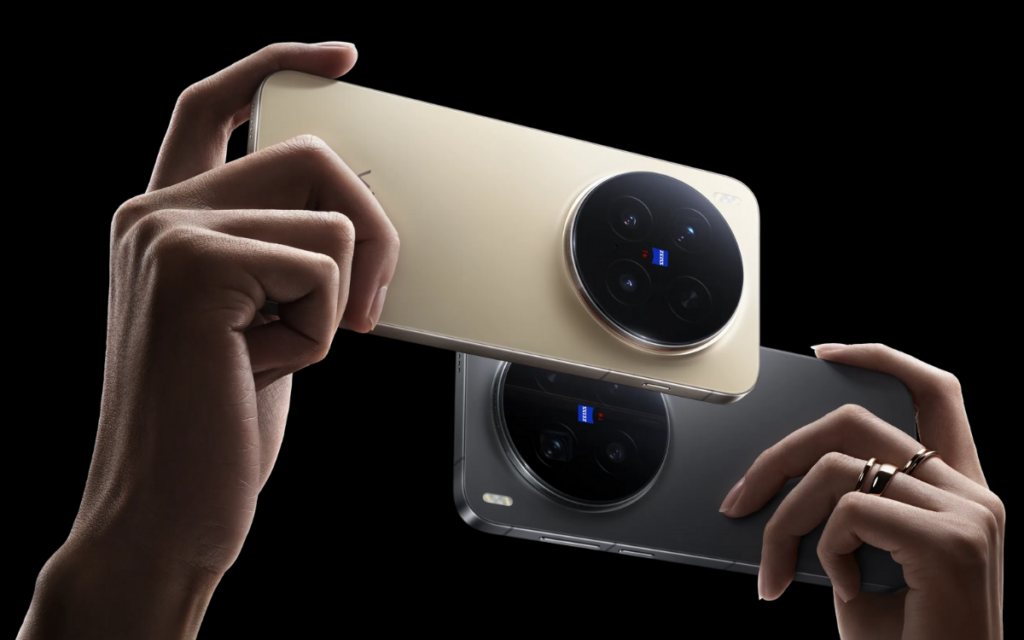
Vivo X300 Pro ships with a smaller 5,440mAh battery in Europe
This battery difference isn’t unique to Xiaomi. Other Chinese brands like Vivo and Xiaomi, and sub-brands like Redmi and POCO, also have smaller batteries compared to their Chinese or Asian counterparts because of similar battery size and logistics constraints in global markets.
Does This Impact Real-World Performance?
On paper, smaller batteries could suggest less endurance. To offset this limitation, brands tend to compensate with aggressive power efficient chipsets, software optimizations in HyperOS, and faster charging tech to reduce time spent plugged in. That’s why, even with a slightly smaller battery, global versions generally still offer all-day battery life under typical use. Though they might not quite match their Chinese counterparts in raw battery capacity numbers.
Other Practical Factors
While shipping rules are the main reason, some secondary factors can also play a role:
Market priorities: Different regions have different expectations for phone size, weight, and design. International markets often favor slim phones over max battery capacity.
Certification and testing: Devices with larger cells may require more extensive certification in each region, increasing cost and time to market.
Logistics and warranty services: Selling and servicing phones with larger batteries can be more challenging for global companies that would otherwise need specialized transport or warranty repair channels.
For more daily updates, please visit our News Section.
Xiaomi could be preparing a major announcement for Mobile World Congress (MWC) 2026 this March in Barcelona, not just around new hardware like the Xiaomi 17 series, but also a significant software upgrade. The company is expected to unveil the new HyperOS 3.1 update along with a new feature for improved cross-platform connectivity with Apple devices, thanks to a new “iOS Bridge” feature.
What is “iOS Bridge” in HyperOS 3.1?
Reports suggest that HyperOS 3.1 won’t be a minor patch. Instead, it’s shaping up as a cross-platform bridge that lets Xiaomi users interact more seamlessly with iOS devices. Key components tipped for iOS Bridge include:
iPhone Call Notifications: Incoming calls on an iPhone could show up on connected Xiaomi tablets or PCs, letting users answer or manage calls even when their phone is not nearby.
AirPods Support: Full compatibility with Apple’s AirPods, including battery levels, controls and spatial audio indicators directly on Xiaomi devices, much like native support seen on Apple hardware.
Easy File Transfer: A feature similar to AirDrop, enabling fast, lossless file sharing between iPhones and Xiaomi phones or tablets without needing third-party apps.
Xiaomi HyperOS 3.1
This set of features could closely mimic Apple-style cross-device integration, which is something that Android manufacturers traditionally haven’t matched natively and help position Xiaomi’s ecosystem as more friend-friendly for users who juggle multiple platforms.
Why MWC 2026 is the Right Stage
The MWC 2026 event is set to kick off at the start of next month as one of the biggest events on the tech calendar. Xiaomi is already expected to use the stage for global announcements, bringing in its latest flagship Xiaomi 17 series to the international stage. The latest HyperOS 3.1 could share this spotlight with various software upgrades, which makes sense considering how premium models typically bring the latest software iterations.
For more daily updates, please visit our News Section.
After a brief slowdown tied to the Chinese New Year holiday, Xiaomi’s HyperOS 3 software rollout has resumed earlier than expected, bringing fresh builds and public releases to a range of devices worldwide. While the initial break was expected to stretch till the next month, the brand has kicked off the latest build for the Xiaomi and other sub-brands’ devices.
Why the Rollout Slowed Down
Like many other tech companies in China, Xiaomi paused new HyperOS 3 releases and internal build compilations to celebrate the Chinese New Year festivities, which traditionally stretch from mid-February to early March. During this time, development teams typically enter a maintenance mode, and new public updates slow down or stop entirely while engineers take the holiday.
Xiaomi HyperOS 3
However, it now appears that Xiaomi has ended that break early, with new HyperOS 3 builds already rolling out again to eligible devices as of February 21. This marks a quicker return to routine update work than many had expected.
First Wave of Post-Holiday Releases
A variety of Redmi, POCO and Xiaomi devices are already seeing new builds as Xiaomi resumes the rollout:
Redmi Turbo 5 (China) received OS3.0.11.0.WPJCNXM based on Android 16.
POCO M6 Plus 5G / Redmi 13 5G / Redmi Note 13R (India) are getting OS3.0.10.0.WNUINXM.
POCO M6 Pro 4G / Redmi Note 13 Pro 4G builds (Android 16) have also arrived in the global and Russia regions.
POCO M7 Plus / Redmi 15 (Global) and others saw Android 15/16-based builds.
POCO C75 5G / Redmi A4 (India) got OS3.0.3.0.WGVINXM with updated UI elements like HyperIsland and redesigned home visuals.
These public releases follow an early holiday-week flurry of activity, including new Recovery ROMs being pushed to users and internal test builds spotted on Xiaomi update trackers.
For more daily updates, please visit our News Section.
Microsoft’s latest Surface Pro firmware update fixes VPN and cellular issues, arriving as the company deepens its 5G push through a new Ericsson partnership.
Asha Sharma’s appointment as Xbox CEO has raised questions about her gaming background, but the real issue is whether she’ll put players and creativity first.
Sky‑high GPU and RAM prices have made upgrading painful in 2026, but this Lenovo doorbuster cuts $1,570 off a Legion Tower 7i with an RTX 5070 Ti and 32GB of RAM.
The ROG Xbox Ally X just received another regional price hike, now in Australia. The increase raises questions about rising handheld costs and hardware pricing.
I've spent hundreds of hours with the GameSir Super Nova. At $29.99, this Hall Effect controller is a steal you shouldn't pass up before tonight's deal deadline.

 Login
Login