
 Login
Login
How China’s Mars-Themed Tourism Site is Revolutionizing Spring Festival Celebrations with Science, Technology, and Tradition
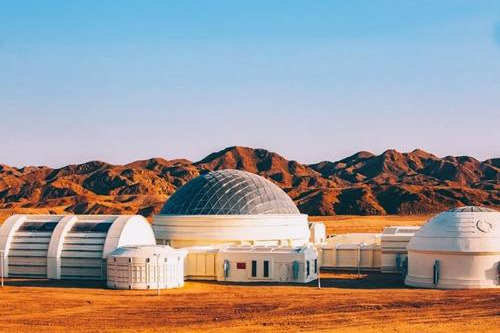
In Northwest China, the Mars Base 1 Camp, located in Jinchang, Gansu province, has experienced a significant surge in interest during the Spring Festival holiday of 2026. This unique Mars-themed tourism destination has become a popular alternative to the traditional temple fairs and urban sightseeing, reflecting a broader shift in how travelers engage with holidays. With its immersive blend of space science and cultural celebration, the site is attracting families, young visitors, and tourists seeking a more interactive experience.
Immersive Experiences with a Space Twist
The Mars Base 1 Camp is situated on redrock terrain in the Gobi Desert, an environment that closely resembles the Martian surface. This location offers visitors an immersive space-themed experience, combining science education with festive activities. During the Spring Festival, the base hosted a space-themed New Year blessing ceremony, where visitors wrote wishes and attached them to model rockets, launching them into the desert sky. This activity allowed people to participate in a modern twist on traditional rituals, while also adding an exciting technological element to their holiday experience.
In addition to the rocket launches, the site hosted traditional dragon and lion dances, further integrating cultural customs with the space theme. Visitors also participated in digital activities, such as virtual lantern lighting and augmented reality red envelope games, which blended the spirit of the festival with cutting-edge technology.
A Rapidly Growing Cultural Tourism Destination
The growing appeal of Mars Base 1 Camp is a testament to the rising popularity of experiential tourism in China. Local authorities reported that the site recorded 503,000 visits in 2025, nearly doubling the attendance of the previous year. This rapid growth underscores the increasing demand for tourism experiences that combine entertainment, education, and interactive learning. As the Mars Base 1 Camp gains recognition, it has become one of the fastest-growing cultural tourism destinations in the region, drawing attention from both domestic and international visitors.
Reinterpreting Traditional Blessings with Aerospace Technology
The integration of aerospace technology into the Spring Festival celebrations represents a novel approach to honoring traditional customs. Chen Guohai, deputy director of Jinchang’s culture and tourism bureau, highlighted the significance of blending space science with traditional rituals. He explained that the use of rockets to launch wishes symbolizes the fusion of modern technology with cultural heritage, helping to preserve traditional values while embracing new forms of expression. This combination has attracted visitors looking for a more engaging and futuristic way to celebrate the Spring Festival.
The Role of Science and Technology in Modern Tourism
The growth of Mars Base 1 Camp signals a shift in China’s tourism sector, where destinations centered on science, technology, and immersive experiences are becoming key drivers of cultural consumption. The site is not only a place for entertainment but also serves an educational function. Developed in collaboration with aerospace research institutions, the base recreates a simulated Mars living environment, complete with habitat cabins, rover models, and mission-based activity zones. These features allow visitors to experience what life might be like on Mars, offering a unique combination of space exploration and cultural tourism.
Educating the Public and Inspiring Future Scientists
Beyond its role as a tourist attraction, Mars Base 1 Camp serves as a center for education and research. The Peking University School of Earth and Space Sciences has designated the Mars field research route as a teaching base, where students can conduct fieldwork and simulations in extreme environmental conditions. The camp provides an opportunity for young people and students to engage with space science in an interactive and hands-on way, inspiring the next generation of scientists, engineers, and explorers.
Combining Education and Entertainment for Families
For families, Mars Base 1 Camp offers a unique blend of education and entertainment. Visitors can explore hydroponic plant systems, participate in astronaut training scenarios, and discover the challenges of surviving in a simulated Martian environment. This combination of learning and fun makes the site a perfect destination for families looking to enrich their holiday experience while fostering a sense of wonder and curiosity about space.
One young visitor shared how special it felt to watch his written wish soar into the sky. The personal connection made during the rocket launch added an emotional dimension to the experience, turning a simple holiday tradition into something deeply memorable. This highlights the site’s ability to connect with visitors on both an educational and emotional level.
Mars Base 1 Camp: A New Era of Tourism in China
The growing success of Mars Base 1 Camp is part of a larger trend in China’s tourism industry, where innovative, science-based attractions are becoming more prevalent. The site’s combination of space exploration with traditional holiday celebrations has helped redefine the way people experience cultural festivals. Local authorities have integrated the base into a larger Spring Festival consumption campaign, connecting it with other tourist attractions, winter sports venues, and dining promotions to create a comprehensive tourist experience.
The Future of Experiential Tourism in China
As Mars Base 1 Camp continues to grow, it serves as a model for the future of experiential tourism in China. The integration of science, technology, and cultural experiences is likely to become a cornerstone of the country’s tourism development. Sites that offer immersive learning experiences, such as Mars Base 1 Camp, provide travelers with a more meaningful way to engage with both the environment and cultural traditions.
Conclusion
The rise of Mars Base 1 Camp in Gansu represents a broader shift in China’s tourism sector, where destinations focused on space science and immersive experiences are becoming increasingly popular. By blending traditional holiday customs with modern aerospace technology, the site offers a unique opportunity for visitors to engage with the Spring Festival in a futuristic setting. As Mars Base 1 Camp continues to attract visitors and inspire interest in space science, it is set to play a significant role in the evolution of cultural tourism in China.
The post How China’s Mars-Themed Tourism Site is Revolutionizing Spring Festival Celebrations with Science, Technology, and Tradition appeared first on Travel And Tour World.