
 Login
Login
U.S. Embassy Warns Travelers as Rubio Sets Out for Israel During Iran Tension Escalation
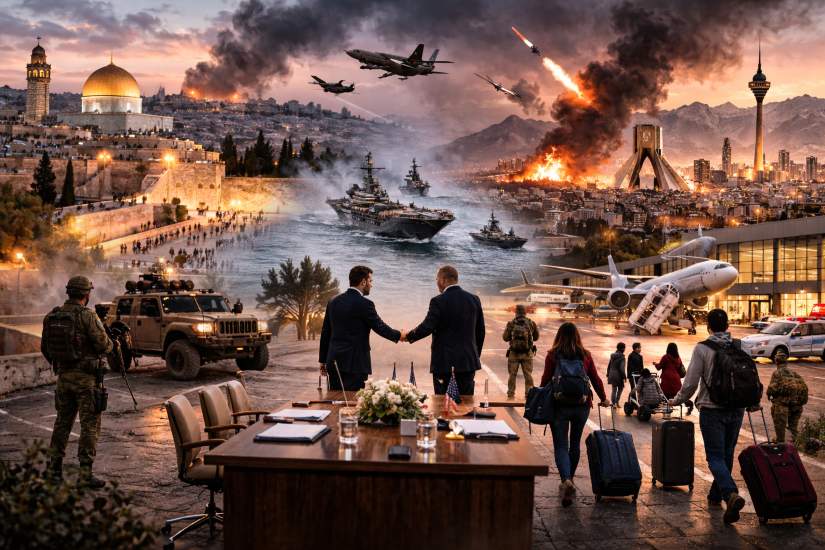
As tensions between the United States and Iran reach a boiling point, Secretary of State Marco Rubio is set to visit Israel next week. Rubio’s trip comes at a time when U.S. military forces are significantly ramping up their presence in the Middle East, and diplomatic talks over Iran’s nuclear program have hit a stalemate.
In response to the growing uncertainty, the U.S. Embassy in Jerusalem has implemented an “authorized departure” status for non-essential personnel and their families. This move signals a shift in the U.S. government’s approach to the rapidly escalating situation, offering embassy staff the option to leave Israel at government expense. The embassy has encouraged those considering departure to act immediately due to the increasing security risks in the region.
In an email to embassy staff, U.S. Ambassador Mike Huckabee stressed the urgency of leaving the country, advising that “those wishing to take AD should do so TODAY.” While Huckabee reassured staff that there was “no need for panic,” he emphasized that flight availability could be limited, urging quick action to secure outbound flights.
U.S. Embassy Staff Urged to Leave Amid Uncertainty
The decision to authorize the departure of embassy personnel follows a week of intense diplomatic discussions. The collapse of nuclear talks between the U.S. and Iran in Geneva earlier this week has raised concerns about the future of the negotiations. The U.S. had hoped these talks would lead to a breakthrough in resolving tensions surrounding Iran’s nuclear ambitions, but both sides failed to reach an agreement.
With the situation becoming increasingly volatile, Rubio’s visit to Israel underscores the urgency of the moment. Although details of the trip remain sparse, it is expected that Rubio’s visit will focus on managing the escalating tensions, particularly with the significant buildup of U.S. warships and military aircraft in the region. This buildup, described as the largest U.S. military presence in the Middle East in decades, is seen as a strong signal of Washington’s readiness to respond if the situation continues to deteriorate.
Global Response: Countries Withdraw Staff and Advise Caution
As U.S.-Iran tensions grow, other countries are also taking precautionary measures. The United Kingdom’s Foreign Office announced the temporary withdrawal of British diplomatic staff from Iran, with officials working remotely due to the increasingly unstable security environment. Similarly, Australia has instructed the dependents of Australian officials posted in Israel to depart, citing the escalating crisis in the region.
China, India, and several European nations have also warned their citizens against traveling to Iran. The Chinese Foreign Ministry issued an official statement urging Chinese nationals to leave Iran if possible. This move aligns with earlier directives from other governments, reflecting a growing international concern over the risks of conflict in the region.
The U.S. Embassy in Jerusalem is also assisting embassy staff in securing flights out of Tel Aviv’s Ben Gurion International Airport. With flights increasingly limited, the embassy is prioritizing the swift evacuation of non-essential personnel.
Nuclear Talks and Diplomatic Deadlock: A Crucial Moment
The U.S. State Department had hoped that the nuclear talks in Geneva would result in a breakthrough in the ongoing dispute over Iran’s nuclear program. However, after three rounds of talks, both the U.S. and Iran walked away without an agreement. As a result, technical discussions are set to continue in Vienna next week, but many questions remain about the future of the nuclear deal.
Iranian officials have suggested that while progress has been made, many issues remain unresolved. There are concerns about the International Atomic Energy Agency (IAEA)’s inability to access key nuclear facilities in Iran, which has raised questions about transparency and the country’s commitment to international agreements.
Military Options and the Path Ahead
As U.S. officials continue to weigh their options, military action remains a possibility. President Donald Trump has made it clear that he is prepared to take drastic steps if Iran does not agree to terms that would prevent the country from developing nuclear weapons. The U.S. military presence in the region continues to grow, with the deployment of warships and aircraft signaling the administration’s readiness to act.
The growing tension has sparked debates within U.S. domestic politics, with some lawmakers urging caution. Congressional leaders recently met with Secretary of State Marco Rubio to discuss next steps in the region, and there are calls for new legislation to limit Trump’s military authority in the Middle East. However, it remains unclear whether such measures will gain the support needed to pass.
Iran, for its part, has made it clear that any U.S. military strike will result in retaliation, with threats to target U.S. military bases in the region. These warnings have added to the sense of urgency and uncertainty in the region.
The post U.S. Embassy Warns Travelers as Rubio Sets Out for Israel During Iran Tension Escalation appeared first on Travel And Tour World.