Login
Login
Red Sea Lifeline: Arab Bridge Boosts Sailings as War Grounds Gulf Flights

As airlines across the Middle East suspend and reroute flights due to escalating conflict in the region, maritime transport is rapidly emerging as a crucial alternative. Arab Bridge Maritime Company has announced an increase in Red Sea sailings to accommodate stranded travellers and tour groups unable to complete their journeys by air.
Egypt’s Ministry of Transport confirmed that the company will expand services along its key international maritime corridors. The move follows widespread airspace closures and flight suspensions that have severely disrupted aviation routes linking the Gulf, the Levant and parts of Europe and Asia.
Daily Aqaba–Nuweiba and Aqaba–Taba Services Continue
Arab Bridge Maritime Company stated on Sunday, 1 March 2026, that it continues to operate daily scheduled sailings on the Aqaba–Nuweiba international route and the Aqaba–Taba tourist line. These routes now serve as vital corridors for travellers seeking to bypass restricted airspace.
The Aqaba–Nuweiba route connects Jordan and Egypt across the Red Sea, while the Aqaba–Taba line primarily supports tourism flows. In the current climate, both services have taken on heightened importance as aviation networks across multiple Middle Eastern states face temporary shutdowns.
Director-General Adnan Al-Abadla emphasised that the company, jointly owned by the governments of Egypt, Jordan and Iraq, remains the principal maritime link between Jordan and Egypt. He described sea travel as a “safe and reliable” alternative for passengers whose air travel plans have been disrupted.
Maritime Alternative for Stranded Travellers
“In light of widespread flight suspensions and destination changes, Arab Bridge offers travellers and tourist groups a secure option to reach their final destinations through regular and dependable sailings,” Al-Abadla said.
Passengers crossing into Egypt via Nuweiba can connect onward to global destinations through Sharm El-Sheikh International Airport and Cairo International Airport. Authorities confirmed that Egypt’s airspace remains fully operational and capable of handling diverted flights from neighbouring countries.
This maritime corridor is now acting as a bridge between disrupted Gulf airspace and stable Egyptian aviation hubs. The Red Sea crossing offers stranded passengers an alternative pathway to resume international travel.
Support for Iraqi and Syrian Nationals
Al-Abadla also confirmed that Arab Bridge Maritime Company is facilitating transport for Iraqi and Syrian nationals travelling from Egypt to Baghdad and Damascus via the Nuweiba–Aqaba line. This measure is subject to necessary approvals and coordination between authorities.
Many of these passengers had airline bookings cancelled following escalating military tensions and the closure of multiple regional airspaces. The maritime route now provides a structured and organised solution for repatriation and onward travel.
Travellers can secure tickets in advance through accredited booking offices in Egypt and Jordan or via the company’s online reservation system. Officials highlighted that flexible scheduling allows passengers to choose suitable departure dates amid ongoing uncertainty.
Airline Suspensions Trigger Maritime Shift
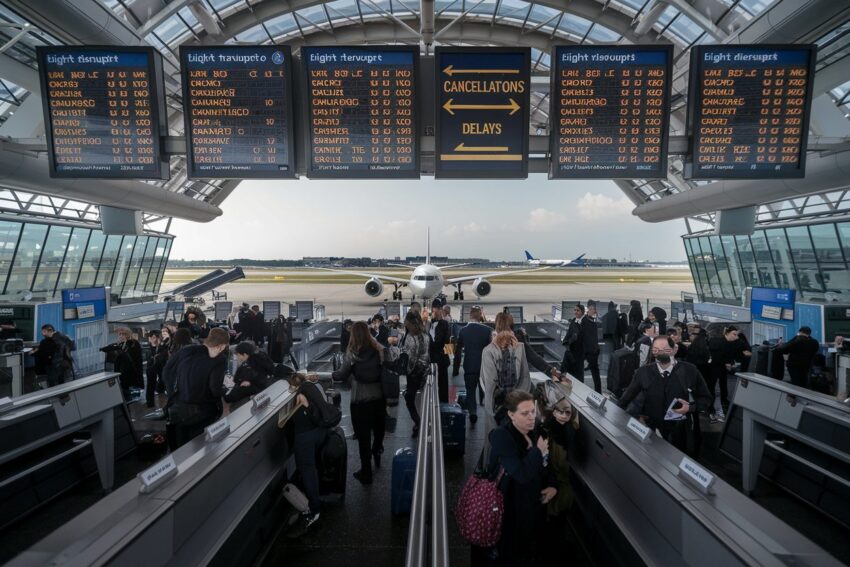
The expansion of Red Sea sailings follows extensive flight suspensions by major regional carriers. EgyptAir suspended services from Cairo to nearly a dozen Middle Eastern destinations after coordinated US and Israeli strikes on Iran led to cascading airspace closures.
The national carrier halted flights to Kuwait, Dubai, Doha, Bahrain, Abu Dhabi, Sharjah, Dammam, Erbil, Baghdad, Amman and Beirut until further notice.
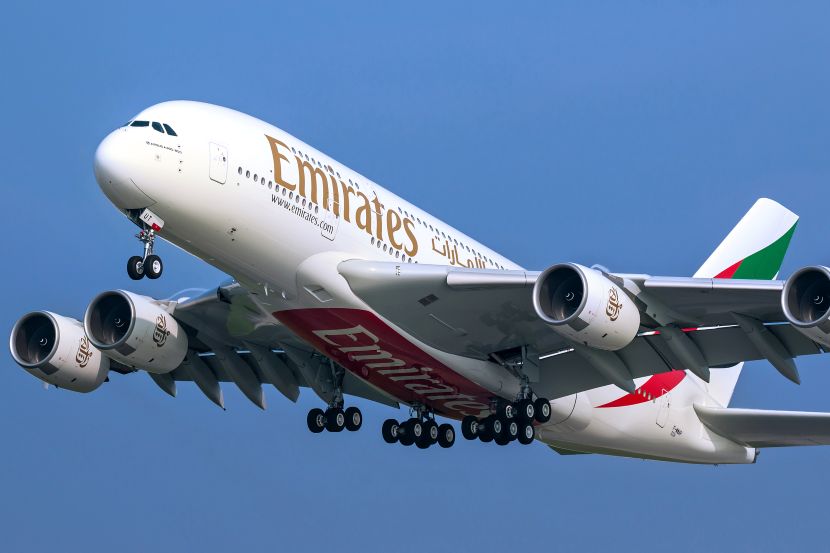
Other regional airlines have implemented similar measures. Emirates and flydubai adjusted schedules to avoid closed air corridors. Qatar Airways and Etihad Airways suspended or rerouted selected services. Royal Jordanian and Iraqi Airways reported significant disruptions as well.
The combined effect has severed key aviation corridors linking Gulf hubs with neighbouring regions.
Widespread Airspace Closures Across the Region
Airspace closures have been declared by Iran, Israel, Iraq, Jordan, Qatar, Bahrain, Kuwait and the United Arab Emirates. These restrictions have disrupted some of the world’s most heavily trafficked flight paths.
The closures effectively cut off direct aviation links between parts of the Gulf, the Levant and broader international networks. Airlines are now navigating longer alternative routes or grounding aircraft entirely in affected markets.
Against this backdrop, Egypt has positioned itself as a stable aviation gateway. The Ministry of Civil Aviation confirmed that Egyptian airspace remains open and operating at normal capacity. Authorities are prepared to receive flights diverted from neighbouring states.
Red Sea Connectivity Gains Strategic Importance
The sudden pivot toward maritime solutions underscores the strategic importance of Red Sea connectivity. The Aqaba–Nuweiba and Aqaba–Taba routes have transitioned from supplementary tourism lines into critical logistical arteries.
Tour operators are now coordinating with maritime providers to redirect group movements. Travel agencies are advising customers to consider sea crossings as part of revised itineraries. Hotels in coastal areas are adjusting to accommodate passengers awaiting onward connections.
While sea travel cannot fully replace the scale of aviation networks, it offers a structured alternative during periods of crisis. Regular and dependable sailings provide reassurance for travellers facing uncertainty.
Balancing Safety and Continuity
The current maritime expansion reflects broader efforts to maintain continuity in passenger movement despite geopolitical instability. Governments and transport operators are working in coordination to ensure that stranded individuals have safe options.
Egypt’s dual role as both maritime connector and aviation hub places it at the centre of regional transit flows. By keeping its airspace open and strengthening Red Sea sailings, the country is absorbing part of the shock created by widespread flight suspensions.
For passengers and tour groups caught in sudden itinerary changes, the availability of sea crossings offers a practical pathway home or onward to global destinations.
An Adaptive Transport Network in Crisis
The unfolding situation illustrates how transport systems adapt under pressure. When air corridors close, maritime routes gain prominence. When flights halt, ferries step forward.
Arab Bridge Maritime Company’s increased sailings signal more than a schedule adjustment. They represent a logistical response to a region navigating disruption.
As airlines reassess routes and governments monitor developments, Red Sea crossings are now serving as a lifeline for travellers seeking certainty amid instability.
The post Red Sea Lifeline: Arab Bridge Boosts Sailings as War Grounds Gulf Flights appeared first on Travel And Tour World.