Login
Login
San Francisco International Airport Travel Disruption as United, Southwest, Delta and American Airlines Flights Face 142 Delays and 5 Cancellations Impacting San Francisco, Los Angeles, Seattle, Chicago and Major US cities
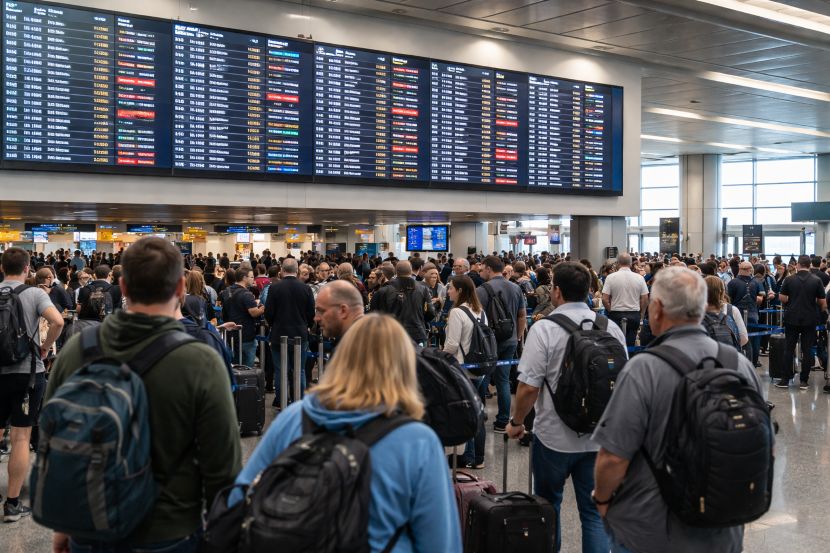
San Francisco, California – Flight operations at San Francisco International Airport were temporarily affected as airlines recorded 142 delay reports and 5 operational cancellations, problems impacting passengers traversing one of the busiest international entry points in the United States. The delays pertained to both domestic and international flights to and from San Francisco to major cities in North America, Asia, Europe, and the Middle East.
As per the operational data of the day’s aviation and the usual monitoring of the Federal Aviation Administration (FAA) and the respective airport authorities, most airlines recorded delays, with only a few cancellations. The affected airlines included domestic airlines and some of the major long-haul international airlines operating in the San Francisco Bay Area.
Airlines Experiencing Delays and Cancellations
The data shows that United Airlines, one of the primary carriers operating from San Francisco International Airport, recorded the highest number of delays with 49 flights affected. Other airlines experiencing operational disruptions included Southwest Airlines with 22 delayed flights, Delta Air Lines with 9 delays, and American Airlines with 8 delays.
Several international airlines also reported delays affecting inbound and outbound flights. These included Air Canada, Japan Airlines, Korean Air, Cathay Pacific, EVA Air, Qantas, Emirates, Air India, All Nippon Airways and Philippine Airlines. Regional carriers and partner airlines such as SkyWest and Horizon Air also recorded delays across connecting routes.
The five cancellations reported during the period involved international carriers including SAS and Qatar Airways, along with one cancellation linked to regional operator SkyWest.
Cities and Regions Impacted by the Disruptions
San Francisco International Airport serves as a major global aviation hub linking the United States with cities across Asia, Oceania, Europe and North America. As a result, the delays had ripple effects across numerous destinations.
Domestic routes connecting San Francisco to Los Angeles, Seattle, Denver, Chicago, Dallas, Phoenix and Las Vegas were among those impacted. International routes linking the city to major global hubs such as Tokyo, Seoul, Taipei, Doha, Vancouver, Hong Kong and Auckland also experienced operational delays.
Government aviation guidance from the U.S. Department of Transportation notes that delays at large hub airports often cascade across national and international networks because aircraft rotations and crew schedules operate on tightly coordinated timetables.
Estimated Passenger Impact
San Francisco International Airport is one of the busiest gateways on the U.S. West Coast, handling tens of millions of passengers each year according to official airport statistics. With aircraft serving both domestic and long-haul routes, a single delayed flight can affect hundreds of travellers.
Based on typical aircraft capacity ranges published by the Federal Aviation Administration, the disruptions may have affected several thousand passengers travelling through the airport during the day. Passengers connecting between domestic and international flights were particularly vulnerable to missed connections and schedule adjustments.
Airport authorities generally advise travellers to monitor airline notifications and airport updates during periods of operational disruption to stay informed about gate changes, rebooking options and updated departure times.
Operational Challenges Behind Flight Delays
While flight disruptions can arise from several factors, aviation authorities frequently cite air traffic congestion, weather patterns, aircraft rotation delays and operational scheduling challenges as common causes.
Large international hubs like San Francisco handle heavy air traffic flows, especially during peak travel periods when long-haul departures to Asia and domestic connections occur simultaneously. Even minor delays in aircraft arrivals can create scheduling bottlenecks across multiple terminals.
According to aviation operational guidelines published by U.S. government aviation agencies, maintaining schedule stability requires coordination between airlines, air traffic controllers and airport ground operations.
Impact on Tourism and Business Travel
San Francisco is one of the most visited destinations in the United States, attracting millions of international tourists each year for its cultural landmarks, technology industry presence and proximity to California’s coastal attractions.
Temporary disruptions at the airport can influence travel schedules for both leisure travellers and business passengers heading to major technology and finance centers in the Bay Area. Travel planners note that international arrivals are particularly sensitive to delays because of long flight durations and tight onward connections.
Tourism authorities in California continue to emphasize the importance of resilient aviation infrastructure to maintain the region’s global accessibility.
Conclusion
There were 142 delays and 5 cancellations at the San Francisco International Airport (SFO) and this is not anything out of the ordinary when considering that SFO is one of the busiest international airports in the world. Flights are still able to operate, but delays affect all types of international routes, and impact airlines on the unites states side of the operation.
Both Aviation Authorities and Airport Officials suggest that passengers check with the airline for the most updated flight information in order to minimize the disruption caused.
Source: Flightaware
The post San Francisco International Airport Travel Disruption as United, Southwest, Delta and American Airlines Flights Face 142 Delays and 5 Cancellations Impacting San Francisco, Los Angeles, Seattle, Chicago and Major US cities appeared first on Travel And Tour World.