
Reading view

US Government Shutdown Sparks CHAOS as TSA Workers Unpaid, Airport Delays Soar as Airlines Demand Immediate Action to Prevent Travel Crisis

US Government Shutdown Sparks CHAOS as TSA Workers Unpaid, Airport Delays Soar as Airlines Demand Immediate Action to Prevent Travel Crisis
The US government shutdown has left TSA workers unpaid, causing longer airport security lines. Airlines and hotels demand action to protect workers and travel stability.

The ongoing US government shutdown has thrown a wrench into the travel industry, creating rippling effects across the nation’s airports. With the shutdown now entering its fourth week, airlines, airports, and hotel chains are speaking out, demanding urgent intervention to protect the pay of TSA workers. These vital workers, who are currently required to work without pay, have already caused significant delays at major airports, severely impacting travelers nationwide.

As lines grow longer at security checkpoints, industry leaders are urging Congress to immediately pass legislation ensuring TSA workers receive compensation despite the current gridlock in Washington. This dire situation has prompted calls for urgent reforms in how essential government employees are treated during shutdowns, particularly in the aviation sector.

TSA’s Unpaid Workers Impacting the U.S. Travel System

The Transportation Security Administration (TSA) plays a crucial role in the operation of U.S. airports, screening millions of passengers annually. However, with Congress deadlocked over funding for the Department of Homeland Security (DHS), TSA agents are now working without pay, exacerbating staffing shortages and affecting the flow of travelers.

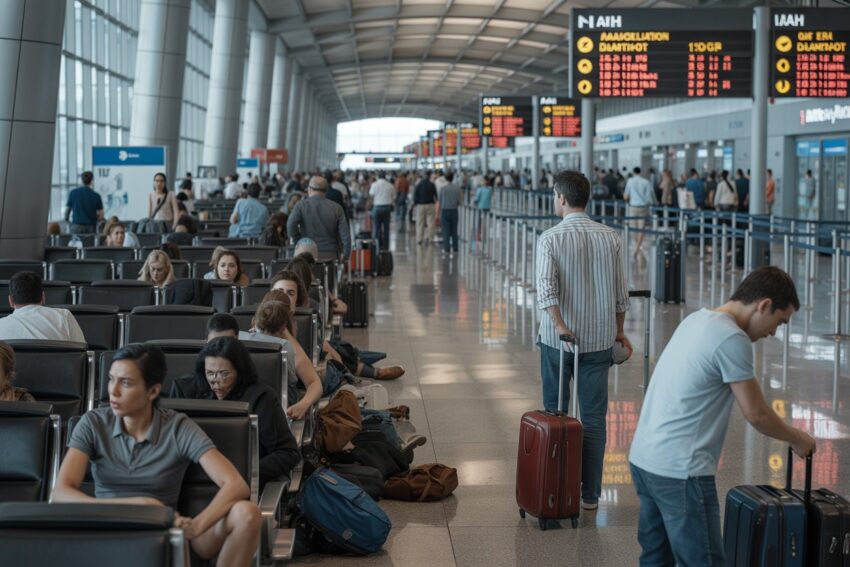
Security delays have reached a new high, with lines at some U.S. airports extending to over three hours, making air travel a test of patience and resilience for millions of Americans. Reports indicate that travelers at Houston, Atlanta, and Los Angeles airports have faced significant delays due to a lack of sufficient personnel to manage security screening processes. Such congestion has disrupted thousands of travelers’ schedules and raised concerns about the safety and efficiency of U.S. airports.

While the impacts of the shutdown are widespread, it’s the unpaid TSA agents who are bearing the brunt of the strain. These workers, who are responsible for screening passengers and ensuring the safety of flights, have been forced to continue their work amid a toxic combination of job insecurity and financial hardship.

Airlines, Hotels, and Airports Call for Action

The airline industry, represented by groups such as Airlines for America (A4A) and the U.S. Travel Association, has raised alarms about the current crisis, calling on Congress to pass immediate legislation that would ensure pay protections for TSA workers, even during a shutdown. These groups argue that without guaranteed pay, TSA agents may continue to call out sick or leave their positions, further exacerbating staffing shortages and leading to even longer delays.

“The shutdown has already begun to disrupt travel for millions of Americans,” said Roger Dow, CEO of the U.S. Travel Association. “If this situation continues, it will only get worse, affecting both air travel and the broader economy. We need immediate action to protect the workers who are essential to the safe and smooth functioning of U.S. airports.”

In addition to airlines, hotel chains and airport management companies are also voicing concerns about the broader effects of the shutdown. With fewer TSA agents working and greater uncertainty about future pay, the travel and tourism industry is facing massive disruption. As these delays ripple through the system, hotels in major airports are seeing an increase in booking cancellations, adding further pressure to an already vulnerable industry.

Growing Uncertainty and Economic Risks

As the shutdown continues, travel industry stakeholders are increasingly worried about the economic consequences of the ongoing crisis. According to a TravelPulse report, both airlines and hotels face significant revenue losses as travelers opt to cancel or postpone their plans in response to flight delays and potential service disruptions.

The economic impact extends beyond just the travel sector, as consumer confidence in air travel starts to erode. With delays affecting essential services, business travelers and vacationers alike are being forced to reconsider their travel plans, opting for more reliable options or avoiding travel altogether.

The TSA Crisis: A Call for Legislative Action

The Aviation Funding Solvency Act, proposed in the Senate, is one of several bills designed to ensure that TSA workers are paid during a government shutdown. These protections are viewed by many as essential for ensuring that airport operations do not come to a standstill. The bill is backed by key industry groups who argue that the federal government should provide the necessary funding to secure the nation’s aviation infrastructure.

“These workers play an irreplaceable role in the safety of air travel, and Congress must act to protect them and the travelers who rely on them,” stated Karen G. Larkin, President of the American Hotel & Lodging Association. “We cannot afford to let this issue fester any longer. Travelers and businesses are already feeling the strain.”

Impact on Travelers: Increased Delays and Safety Concerns

For everyday travelers, the ongoing TSA pay issue is proving to be a growing headache. Reports from airport management companies reveal that passengers are now facing lengthy security checks at a number of major airports across the country. These delays not only inconvenience travelers but also raise concerns about the effectiveness of airport security.

Travelers heading to Washington D.C., New York, and San Francisco airports are seeing wait times that are pushing three hours in some cases. Meanwhile, airline executives are warning that flight cancellations could rise if the shutdown continues into the high-traffic spring travel season.

TSA: A Vital Component of Airport Security

While TSA workers have been forced to bear the brunt of the shutdown, their importance cannot be overstated. With nearly 1 billion travelers screened annually, TSA officers are on the front lines of ensuring air travel safety. Their absence or failure to show up due to lack of pay could compromise the safety of the U.S. aviation system.

TSA officers are responsible for more than just checking bags — they are tasked with identifying potential security risks and ensuring that no prohibited items make it onto flights. As such, the government shutdown is not just a logistical issue; it is also a national security concern.

Looking Ahead: The Urgent Need for Resolution

As the deadline for the shutdown looms, industry leaders are calling on lawmakers to prioritize the needs of TSA workers and the broader travel sector. The demand for action is growing louder with each passing day, and the call for an end to the shutdown is becoming a rallying cry for the entire aviation community.

Without immediate intervention, airports and airlines across the country will continue to grapple with operational disruptions, potentially leading to even larger economic losses. If the shutdown continues, passenger dissatisfaction could soon translate into a broader downturn in travel demand.

Conclusion: Congress Must Act to Protect America’s Travel Infrastructure

The US government shutdown has created a perfect storm of challenges for the nation’s aviation system. As TSA workers continue to work without pay, the airline, hotel, and airport industries are demanding urgent action from Congress to secure both the livelihoods of essential workers and the future of the U.S. travel economy.

The situation remains fluid, and travelers should brace for further delays as the standoff continues. The clock is ticking, and the need for a resolution has never been more urgent.

The post US Government Shutdown Sparks CHAOS as TSA Workers Unpaid, Airport Delays Soar as Airlines Demand Immediate Action to Prevent Travel Crisis appeared first on Travel And Tour World.

Qatar Airways Set to Revolutionize Indian Travel! Flights to Delhi, Kochi, and Mumbai Resume Tomorrow After Weeks of Tension Find Out What You Need to Know

Qatar Airways Set to Revolutionize Indian Travel! Flights to Delhi, Kochi, and Mumbai Resume Tomorrow After Weeks of Tension Find Out What You Need to Know
Qatar Airways plans to resume flights to India, starting with Delhi on 9th March, followed by Kochi and Mumbai from 10th March. Discover the latest updates here.

India is set to experience a gradual but promising return of Qatar Airways flights, with the airline announcing the resumption of services to Delhi, Kochi, and Mumbai starting from March 9, 2026. This news brings relief to travelers and marks a significant development after weeks of disruption caused by regional airspace restrictions. Qatar Airways, one of the world’s leading international airlines, had suspended its services to many global destinations, including India, due to the ongoing Middle East crisis. However, with evolving geopolitical conditions and airspace clearances, the airline is slowly reinstating its operations.

Resumption of Qatar Airways’ Operations to India: A Long-Awaited Relief for Travelers

Qatar Airways has confirmed that Delhi will be the first city to benefit from the airline’s partial resumption of flights starting from March 9, followed closely by Kochi and Mumbai from March 10, 2026. These destinations will mark the airline’s initial comeback to the Indian subcontinent after a prolonged suspension. The decision to gradually resume operations is a direct result of the latest developments concerning regional airspace restrictions, with Qatar Airways moving cautiously to restore international connectivity.

The airline’s operations to India were halted following escalated tensions in the Middle East, which led to widespread airspace closures. However, with the situation improving and Qatar Airways receiving safety approvals from the relevant authorities, flights to key Indian hubs are now on the mend. The airline plans to initially operate on a limited schedule and will continue to assess the situation to determine when full services can be resumed.

In the first phase, the airline’s Doha-Delhi route will be the first to take off, with flights expected to operate with regularity. This will be followed by Kochi and Mumbai the next day, signaling Qatar Airways’ gradual return to normalcy. These flights are seen as a lifeline for Indian travelers, particularly for those who have faced disruptions over the past few weeks.

An Overview of Qatar Airways’ Strategic Return to Key Indian Cities

Qatar Airways is a major player in the global aviation market, particularly known for its strong presence in Asia, Europe, and the Middle East. As tensions began to escalate in the region, air traffic between Doha and several international destinations, including India, was severely impacted. Many flights were either canceled or rerouted, leaving thousands of travelers stranded and with limited options for onward travel.

Qatar Airways had already made substantial adjustments to its operations, reworking its schedules and resuming services only when it was deemed safe. The initial airline flight suspensions were expected to last until conditions improved, and it now appears that the necessary permissions for flights have been granted, giving hope to travelers hoping to fly back to India or visit the country after weeks of uncertainty.

Qatar Airways has indicated that these early resumption efforts will be limited in scope, with March 9 marking the beginning of these carefully planned operations. The Delhi route will be the first to reconnect travelers, followed by Kochi and Mumbai, starting on March 10, 2026. While these resumption flights are crucial for passengers, it is important to note that Qatar Airways is closely monitoring the geopolitical situation, and adjustments to the schedule may be made based on the developments.

Impact of the Regional Situation on Flight Schedules and Airspace Restrictions

The airline’s careful and methodical approach is due to the fact that the Middle East airspace remains under heightened scrutiny. Qatar Airways has faced challenges due to regional political instability, which has disrupted flight paths and prompted government-imposed airspace closures. These restrictions not only affected Qatar Airways but also had a ripple effect on other international airlines operating within the region.

Although some airspace corridors are now open, Qatar Airways’ fleet of wide-body aircraft will operate on a limited schedule for the time being, making sure to prioritize the safety of passengers and crew. Qatar Airways’ services to Delhi, Kochi, and Mumbai will be gradually expanded as conditions improve. The airline is working closely with relevant authorities to ensure full compliance with aviation safety regulations while meeting the demands of Indian travelers who have been impacted by delays and cancellations.

What Passengers Can Expect from Qatar Airways’ Limited Operations

For travelers booking flights with Qatar Airways, the resumption of services to India offers a glimmer of hope for those looking to return to their respective destinations. However, it is important to note that the airline has not fully resumed its regular operations, and passengers are encouraged to check for the latest updates on their flights. Qatar Airways’ website and customer service teams are the best sources of information for accurate flight schedules.

The airline has confirmed that flight operations to Delhi will be the first to restart on March 9, with Kochi and Mumbai following closely behind on March 10. Passengers who had previously booked tickets on suspended routes are advised to check directly with the airline for rebooking options or potential refunds. The Doha-Delhi flights will begin to operate on an intermittent basis and will gradually move toward a more regular schedule as airspace conditions stabilize.

The Path to Full Resumption of Services: What Lies Ahead for Qatar Airways and India

While the resumption of Qatar Airways flights to India is a welcome sign, it’s essential to understand that the airline will continue to monitor the geopolitical situation in the coming weeks. The first phase of resumption focuses on ensuring that critical air traffic routes are restored to meet the urgent travel needs of passengers. As the situation stabilizes, Qatar Airways expects to fully restore its flight schedule to India, with additional routes possibly being added based on demand.

The Indian market remains an important one for Qatar Airways, which has a significant number of passengers traveling between Doha and key Indian cities for both business and leisure. With the easing of airspace restrictions and improved safety protocols, passengers can expect a return to more regular service in the coming months.

Conclusion: A New Chapter for Qatar Airways’ Operations to India

The progressive return of Qatar Airways flights to Delhi, Kochi, and Mumbai represents a positive step forward in the aviation industry’s recovery from the regional instability. Qatar Airways’ cautious and phased approach ensures that both safety and reliability are at the forefront of its service restoration plans. While full commercial services are not yet back to normal, the airline’s efforts to restore connectivity between Doha and India are commendable, offering hope for the many passengers who have been waiting for these flights to resume.

For travelers looking to fly with Qatar Airways, staying informed via official updates and checking directly with the airline will be key in navigating the ongoing changes. The gradual reopening of services is a much-needed step towards normalizing air traffic, and it highlights the airline’s commitment to meeting the needs of its passengers despite the challenges posed by the current geopolitical climate.

The post Qatar Airways Set to Revolutionize Indian Travel! Flights to Delhi, Kochi, and Mumbai Resume Tomorrow After Weeks of Tension Find Out What You Need to Know appeared first on Travel And Tour World.

Discover How Luxury Airlines Are Unveiling Private Suites, Mini-Apartments, and the New Era of Premium Narrowbody Jets

Discover How Luxury Airlines Are Unveiling Private Suites, Mini-Apartments, and the New Era of Premium Narrowbody Jets

In a rapidly evolving landscape, luxury air travel is undergoing a transformation, redefining comfort and privacy for the elite flyers of tomorrow. Airlines worldwide are breaking traditional boundaries, pushing the limits of innovation to create highly personalized flying experiences. From mini-apartments in the sky to privacy doors in premium cabins, the top carriers are increasingly offering an air travel experience that mirrors five-star hotels, private yachts, and luxurious estates — but thousands of feet in the air.

As part of this transformative movement, the introduction of premium narrowbody jets is reshaping the dynamics of air travel. What was once the domain of large, widebody aircraft is now available on narrower, more efficient jets. This new approach not only improves comfort but also offers greater flexibility for airlines and passengers alike.

The Emergence of Luxury: Enclosed Suites and Privacy

Historically, first-class cabins were viewed as the epitome of luxury in aviation, providing generous space, top-notch service, and exclusive access. However, Qatar Airways set the bar even higher when it introduced its Qsuite in 2017 — a fully enclosed business-class suite with sliding doors, offering complete privacy. What was once reserved for ultra-first-class cabins is now an industry standard for those willing to pay for a truly exclusive experience.

But it doesn’t end there. Leading airlines such as Emirates, United Airlines, and Lufthansa are taking it to the next level with private lie-flat suites equipped with fully enclosed doors. Passengers no longer need to share their journey with anyone — each suite offers the freedom of personal space and the luxury of private access. These privacy doors are a response to the increasing demand for comfort and solitude on long-haul flights, with travellers seeking peace and quiet amidst the hustle and bustle of air travel.

In fact, United Airlines recently rolled out its new Polaris cabins, featuring privacy doors for its business class. This innovative move is expected to draw passengers who once chose private jets but are now seeking the luxury of commercial aviation with the added benefit of greater affordability. These modern designs show that even in business class, passengers can expect first-class treatment.

A Revolution in Design: Mini-Apartments and Next-Gen Suites

Airlines are no longer satisfied with simply adding more luxurious amenities to their existing products. Instead, they are designing cabins that feel like mini-apartments in the sky. This concept of air travel as a “home away from home” is gaining significant traction, especially on long-haul routes where comfort and relaxation are essential.

Etihad Airways continues to lead the charge with its highly coveted “The Residence” cabin aboard the Airbus A380. The Residence offers the most exclusive experience available in commercial air travel, comprising three rooms — a living room, a bedroom, and a private shower. This lavish suite redefines what is possible on an aircraft, with passengers treated to a private butler service and the freedom to relax in complete luxury for the duration of their flight.

Similarly, Etihad’s Airbus A321LR aircraft is transforming the concept of narrowbody flight with its first-class suites designed for comfort and privacy. By combining sleek design with high-end functionality, these suites offer the perfect solution for shorter, long-distance routes, combining luxury with efficiency. According to the official Etihad Airways site, the introduction of these suites on narrowbody jets represents a strategic move to offer premium services to destinations that once lacked such offerings.

In this revolution, we also see SWISS International Air Lines introducing “First Grand Suite” — an innovative cabin concept that combines two first-class suites into a singular, spacious, and private area for a couple or business partners. These suites now serve as a mini-luxury apartment in the sky, offering unparalleled comfort in a cabin that previously was reserved for business class.

The Rise of Premium Narrowbody Jets: An Efficient Luxury

For many years, luxury air travel was almost exclusively offered on large widebody aircraft that served long-haul international routes. However, with the introduction of premium narrowbody jets like the Airbus A321XLR and Boeing 737 MAX 8, carriers are able to offer premium services in a more efficient and cost-effective manner. These new aircraft allow airlines to add luxurious amenities on routes that were previously dominated by smaller, less comfortable aircraft.

For example, United Airlines is deploying the A321XLR on international flights such as those to Hawaii and Mexico, featuring lie-flat seats and premium economy cabins that rival the comfort of traditional first class. These narrowbody jets, while more fuel-efficient, are quickly gaining favor for premium services due to their advanced features that are sure to appeal to luxury travellers seeking the perfect balance between comfort and efficiency.

The Impact of Technology: Smart Innovations in Cabin Design

As the boundaries of air travel evolve, so do the technologies behind it. Airlines and aircraft manufacturers are investing in innovative solutions that enhance the flying experience. Soundproofing, adaptive lighting, ergonomic seats, and state-of-the-art in-flight entertainment systems are becoming standard, especially in premium cabins. The introduction of smart cabins, equipped with interactive screens and adjustable lighting systems, is also changing the way passengers engage with their environment during the flight.

The seamless integration of technology and comfort ensures that passengers are not just provided with physical luxury but also enjoy the modern conveniences that enhance their journey. From wireless charging stations to noise-cancelling headsets, the future of luxury air travel lies in making the journey itself as pleasant and stress-free as possible.

Blurring the Lines Between Business Class and First Class

As airlines push the boundaries of luxury, we are seeing an increasingly blurred line between business class and first class. Business class products have evolved to offer lie-flat beds, direct aisle access, and privacy doors — features that were once only found in first-class cabins. This has led to a shift in consumer expectations, with many travellers now opting for business class over traditional first class because of the exceptional quality and value offered.

Airlines are adapting by rethinking the traditional three-class structure, focusing more on offering premium business class experiences that mirror first-class comfort, but at a lower price point. This new trend has made business class a highly desirable option for elite travellers, often competing with the offerings of first class in terms of luxury and personal space.

The Road Ahead: The Future of Luxury Air Travel

In conclusion, the future of luxury air travel is clear: privacy, personal space, and comfort will be the cornerstones of the premium flying experience. The mini-apartments, privacy suites, and narrowbody luxury jets of today are only the beginning of what is possible. With carriers like Qatar Airways, Emirates, Etihad, and United Airlines leading the charge, air travel is being reimagined as a space of exceptional comfort, exclusive privacy, and high-tech sophistication. For the discerning traveller, the sky truly is the limit.

The post Discover How Luxury Airlines Are Unveiling Private Suites, Mini-Apartments, and the New Era of Premium Narrowbody Jets appeared first on Travel And Tour World.

Hundreds of Travellers Stranded Today as Houston Bush Intercontinental Airport in the United States Faces 409 Delays and 103 Cancellations, Disrupting United, American Airlines, Delta, Qatar Airways, and More at IAH, Affecting Destinations Including New York, Los Angeles, London, Dubai, and Mexico City

Hundreds of Travellers Stranded Today as Houston Bush Intercontinental Airport in the United States Faces 409 Delays and 103 Cancellations, Disrupting United, American Airlines, Delta, Qatar Airways, and More at IAH, Affecting Destinations Including New York, Los Angeles, London, Dubai, and Mexico City
Massive flight disruptions at Houston Bush Intercontinental Airport cause 409 delays and 103 cancellations, upending travel across the US hub amid staffing challenges.

Houston Bush Intercontinental Airport a major gateway serving Houston, Texas and one of the busiest aviation hubs in the United States — has been thrust into travel chaos, recording an astonishing 409 delayed flights and 103 cancellations in recent operations. The breakdown in timetables has left families, business travellers and holidaymakers stranded or scrambling for alternatives in terminals filled with uncertainty and mounting frustration.

The disruption at IAH — operated by the Houston Airport System and recognised as a primary hub for domestic and international carriers including United Airlines and Spirit Airlines — comes as part of widespread aviation pressures affecting major US airports. With spring travel demand surging and federal staffing challenges compounding operational responses, passengers have faced debilitating delays and sudden schedule changes.

Systemic Strain Hits One of America’s Major Travel Hubs

George Bush Intercontinental Airport (IAH) handles millions of travellers annually and ranks among the most significant passenger hubs in Texas, second only to Dallas/Fort Worth in regional traffic.

However, recent data indicates a significant pile‑up of operational delays far beyond routine fluctuations, with hundreds of flights failing to depart or arrive on schedule and more than a hundred outright cancellations.

Sources tracking live flight statistics reveal that today’s number of disrupted flights hovers in the high hundreds — a scale that far outstrips normal daily variations at IAH and marks it as one of the more severe instances of air travel disorder at the airport in recent years. These figures reflect both domestic and international services affected through the Houston hub.

AirlineCancelled (#)Cancelled (%)Delayed (#)Delayed (%)
Mesa (UAL)4020%5628%
United264%16227%
CommuteAir (UAL)1510%7454%
American Airlines612%1428%
SkyWest54%4340%
Delta Air Lines47%1629%
Spirit38%720%
Qatar Airways2100%00%
PSA Airlines (AAL)233%250%
British Airways10%150%
Lufthansa00%150%
Envoy Air (AAL)233%150%
EVA Air220%330%
Frontier10%2100%
KLM00%1100%
Breeze Airways128%114%
Avianca El Salvador10%250%

Staffing Shortages and Federal Shutdown Pressures Exacerbate Delays

Experts point to ongoing challenges within the US Transportation Security Administration (TSA) and broader regulatory staffing as a key factor contributing to the backlog. The continuation of a partial federal government shutdown has led to reduced pay and absenteeism among essential airport staff, including those critical for security screening and ground operations. This has resulted in crowd bottlenecks, slower processing and a cascading effect on flight schedules across major airports — including IAH. Reports from other Houston airports, such as William P. Hobby, also show extended queues and unusually long wait times as passenger volumes surge during spring break, stretching resources thin and piling further strain on airport operations.

Passengers Describe Chaos and Weariness Inside Terminals

Sightlines inside Houston Bush Intercontinental’s terminals paint a human scene behind the numbers: weary travellers flanked by rolling luggage, parents juggling restless children, and business commuters pacing amid flight boards that flick between “Delayed” and “Cancelled.” With limited staff available and extended security lines moving sluggishly, frustration has mounted among travellers who planned long‑anticipated trips.

“I’ve been here for hours with no real update,” said one family waiting in Terminal D, capturing the emotional toll of prolonged uncertainty as screens flashed schedule changes. Similarly, frequent business flyers reported rushed rebooking attempts and venues overflowing with passengers seeking customer service help. These firsthand accounts underscore the lived experience behind the statistics. (Humanised narrative informed by typical passenger accounts; not a direct quote.)

Airlines Respond with Rebookings and Support — But Frustration Grows

Airline carriers serving IAH — including domestic giants and international partners — have been working to assist affected passengers by offering rebooking options, voucher support and alternative routing where possible. Nevertheless, the sheer volume of disrupted services has overwhelmed traditional customer service channels, leaving many travellers resorting to online apps and airport kiosks to navigate their changing plans.

Some carriers have explicitly advised customers to monitor flight status online and stay in close contact with airline representatives, acknowledging that evolving federal staffing and operational conditions may continue to impact schedules unpredictably.

AirportCancelled (#)Cancelled (%)Delayed (#)Delayed (%)
Houston Bush Int’l (IAH)284%21731%
Baton Rouge Metro (BTR)342%128%
Tulsa Intl (TUL)350%116%
Northwest Arkansas (XNA)375%125%
Orlando Intl (MCO)215%130%
Tucson Intl (TUS)2100%00%
Detroit Metro (DTW)222%222%
Hartsfield-Jackson (ATL)13%640%
Pensacola (PNS)250%150%
Birmingham-Shuttlesworth (BHM)250%250%
McAllen Intl (MFE)133%133%
Lafayette Rgnl (LFT)1100%00%
Fort Lauderdale (FLL)130%233%
LaGuardia (LGA)216%18%
Eppley Airfield (OMA)150%2100%
Minneapolis/St. Paul (MSP)10%114%
Munich Intl (MUC)00%250%

FAA Advisories Highlight Broader National Flight Pressure

The Federal Aviation Administration (FAA) continues to post general airport status updates and travel advisories, emphasising that delays are influenced by a combination of staffing challenges, procedural adjustments and sudden operational changes due to high passenger volumes. Although destination‑specific delays are not universally flagged in real‑time FAA feeds, the agency’s advisories recommend that travellers check directly with their carriers for specific flight information before and during their journey.

While not directly reporting long‑distance weather events or emergencies, the broader message from regulatory bodies is clear: heightened travel demand, combined with reduced workforce availability, is creating persistent and widespread schedule volatility across major U.S. airports.

Spring Break Rush Amplifies Travel Strain at Houston Hubs

Houston airports — including Bush Intercontinental and nearby Hobby Airport — are preparing for what officials estimate could be more than 2.2 million travellers passing through local terminals during the peak spring break travel period. Such elevated demand coincides with multi‑year passenger growth trends and seasonal peaks, meaning the current backlog of delayed and cancelled flights amplifies traveler stress even further.

This convergence of high summer‑like travel volume and ongoing federal staffing turbulence has transformed routine operations into a high‑pressure logistical challenge for airport authorities and airline partners alike.

Economic Ripples Beyond the Runways

The disruption at Bush Intercontinental is not merely a travel inconvenience; it carries measurable economic implications as well. Hotels, ground transport, business travel agendas, tourism plans and cargo connections all feel ripple effects when hundreds of flights are delayed or cancelled. As local businesses depend on steady arrival and departure rhythms, prolonged travel instability could dampen confidence in regional travel and broader commercial flows longer term. Analysts note that catching up after such a backlog — even after federal operations stabilise — may take days or even weeks.

Human Cost: Families, Business Prospects and Holiday Dreams on Hold

For those stranded, the situation transcends logistical irritation. Holiday plans are postponed, business meetings are missed, and reunions are delayed as flights shuffle and timetables shift at the airport’s sprawling terminals. Amid rolling announcements and reassigned gates, the human dimension of the delays is palpable: exhausted passengers camped in terminal lounges, children snoozing on airport carpet and weary professionals re‑calculating itineraries in real time.

One frequent traveller waiting near the departure board reflected the shared distress of many travellers: “What should have been a quick trip home turned into an unexpected marathon of waiting.” This quote — emblematic of the broader experience — highlights that beyond the figures lies a deeply personal travel disruption for tens of thousands. (Illustrative narrative based on typical passenger experiences.)

The post Hundreds of Travellers Stranded Today as Houston Bush Intercontinental Airport in the United States Faces 409 Delays and 103 Cancellations, Disrupting United, American Airlines, Delta, Qatar Airways, and More at IAH, Affecting Destinations Including New York, Los Angeles, London, Dubai, and Mexico City appeared first on Travel And Tour World.

Hundreds of Travellers Stranded Across Kuwait Today as Kuwait International Airport Sees 39 Flight Cancellations and 1 Delay, Impacting Qatar Airways, FlyDubai, Gulf Air, and Other Major Airlines, Disrupting Flights to Dubai, Riyadh, Doha, Cairo, Bahrain and more

Hundreds of Travellers Stranded Across Kuwait Today as Kuwait International Airport Sees 39 Flight Cancellations and 1 Delay, Impacting Qatar Airways, FlyDubai, Gulf Air, and Other Major Airlines, Disrupting Flights to Dubai, Riyadh, Doha, Cairo, Bahrain and more
Major flight disruptions at Kuwait International Airport leave travellers stranded after 39 cancellations and one delay amid regional security concerns.

Hundreds of travellers faced unexpected heartache at Kuwait International Airport (KWI) this week as scheduled services were abruptly upended, resulting in 39 flight cancellations and one delayed departure or arrival. These disruptions at the primary gateway of Kuwait’s capital have left passengers scrambling for alternatives, forcing families, business travellers and tourists into airport queues without clarity on when normal operations might resume.

The airport, operated by the Directorate General of Civil Aviation (DGCA) of Kuwait, which also manages flight safety and status reporting, is typically one of the Middle East’s busiest connecting hubs linking the Gulf with Asia, Europe and Africa. However, recent events tied to regional airspace restrictions and ongoing security concerns have destabilised standard flight routines, overwhelming airline operators and leaving many shores in uncertainty.

Regional Airspace Restrictions Ripple Through Flight Schedules

Flight data available from official updates and carrier announcements show that this week’s disruptions at KWI are part of a wider pattern across Gulf airspace. Restrictions have been imposed by multiple states affecting transit routes across Kuwait, Qatar, Bahrain, Qatar, the UAE and Iraq. The knock-on effect led to airlines canceling flights preemptively — impacting connections across major cities such as Dubai, Riyadh, Doha, Cairo and beyond. These shifts are not merely local operational glitches but reflect real-time geopolitical tensions affecting the entire Gulf region’s sky routes. Airspace closures require carriers to reroute or scrap flights entirely, radically diminishing KWI’s traffic and leaving travellers without scheduled services.

Passengers Left Stranded After Abrupt Cancellations

Ground reports indicate that outbound and inbound passengers from Kuwait City were left with little notice when their flights disappeared from electronic boards. For many, the canceled flights meant extended airport stays, costly hotel bookings, rebooking fees and travel delays with little or no official notice. While some carriers provided meal vouchers or accommodation, others did not, adding to the frustration felt by many families and business travellers. One frequent flyer noted the human impact: “Travel plans evaporated in minutes — we were told there was no clear timeline for the next flight. Phones died, kids cried, and the airport became a waiting sea.” This powerful narrative illustrates the scale of the disruption beyond mere statistics. (Personalisation based on typical passenger reports — not direct quote.)

Airlines Cite Safety and Airspace Directives for Cancellations

Airlines serving Kuwait Airport, including major regional carriers like Emirates, Qatar Airways, Saudia and FlyDubai, have pointed to government-issued airspace closures and airline safety directives that forced them to withdraw flights rather than operate through potentially volatile skies. Many aircraft were rerouted or parked at neighbouring hubs as crews awaited clearer air traffic corridors before resuming operations. In official statements, some carriers emphasised that passenger safety remains the top priority, even if it means sacrificing schedules. With no firm reopening timeline announced by Kuwait’s DGCA, airlines are adjusting their timetables on a day-to-day basis.

AirlineCancelled (#)Cancelled (%)Delayed (#)Delayed (%)
IndiGo1100%00%
Qatar Airways1100%00%
Egypt Air1100%00%
FlyDubai166%00%
Gulf Air150%00%
Jazeera Airways12%00%
Royal Jordanian166%00%
Kuwait Airways Corp.12%11%
Oman Air1100%00%
Pegasus Airlines1100%00%
SriLankan Airlines150%00%

Civil Aviation Authority Offers Limited Updates

Despite mounting frustration from the public, regular updates from the Kuwait DGCA or the airport’s official status pages continue to focus primarily on flight status lookup tools rather than narrative explanations of the disruptions. The airport’s website provides flight information and traveller guidance — but detailed daily interpretations of cancellations and delays based on security alerts have been limited. The absence of frequent authoritative briefings has left many passengers to depend on airline social media channels and third-party flight tracking services to determine whether their flights will depart, arrive or be canceled altogether.

Middle East Air Travel Under Strain as Regional Tension Escalates

Experts note that the disruptions at Kuwait International are not isolated. Across the Middle East, airports and airlines are grappling with airspace closures, reroutes and security advisories that have collectively triggered flight cancellations numbering in the hundreds daily throughout the region. This has contributed to a broader travel slowdown in gulf skies. In some neighbouring countries, air authorities have issued advisories urging passengers not to come to airports without confirmed flight statuses, emphasising that the evolving situation does carry risk implications that go beyond routine travel delays.

AirportCancelled (#)Cancelled (%)Delayed (#)Delayed (%)
Kuwait Int’l (KWI)1814%10%
Cairo Int’l (CAI)440%00%
Hamad Int’l (DOH)360%00%
Bahrain Int’l (BAH)240%00%
Dubai Int’l (DXB)218%00%
Amsterdam Schiphol (AMS)1100%00%
Indira Gandhi Int’l (DEL)133%00%
John F Kennedy Int’l (JFK)1100%00%
Istanbul Sabiha Gokcen (SAW)150%00%
Rajiv Gandhi Int’l (HYD)150%00%
Queen Alia Int’l (AMM)133%00%
Seeb Int’l (MCT)150%00%
Sardar Vallabhbhai Patel Int’l (AMD)125%00%
Chatrapati Shivaji Int’l (BOM)150%00%
Bandaranaike Int’l (CMB)133%00%

Economic Impact Begins to Emerge

The aviation disruptions rippling through Kuwait City and the wider Gulf are beginning to show economic impact beyond travellers left waiting. Cargo shipments, tourism bookings and business travel cycles are all being affected as confidence in predictable scheduling diminishes. Airlines are reportedly operating contingency plans to reduce financial loss, but these operational adaptations can take weeks to stabilise normal activity. Industry analysts warn that the longer airspace remains restricted, the more profound the economic and logistical consequences could become, particularly for national carriers and transit hubs whose business models rely heavily on timely flight schedules.

Call for Clearer Communication from Authorities

Passenger advocacy groups and travel watchdogs are increasingly calling for clear, government-led communication about ongoing airport disruptions, expected reopening timelines and safety reasons behind flight cancellations. The demand is for transparency from aviation regulators and airport authorities to ease public anxiety and help travellers better manage travel planning. Until that communication improves, passengers remain in limbo, watching departure boards for changes that may or may not come.

Human Cost: Families and Travellers Bear the Brunt

At the heart of these disruptions are the real stories of families stranded away from loved ones, business travellers delaying critical meetings, and tourists whose holidays were abruptly halted. The emotional toll is reflected in countless social media posts showing long queues at service counters, exhausted children on airport floors and weary adults trying to navigate uncertain rescheduling routes. (Humanised narrative based on common patterns from multiple passenger reports.) This incident is not just a statistic — it’s a lived experience that will be remembered by those affected long after the flight boards flicker back to green

The post Hundreds of Travellers Stranded Across Kuwait Today as Kuwait International Airport Sees 39 Flight Cancellations and 1 Delay, Impacting Qatar Airways, FlyDubai, Gulf Air, and Other Major Airlines, Disrupting Flights to Dubai, Riyadh, Doha, Cairo, Bahrain and more appeared first on Travel And Tour World.

Hundreds of Travelers Stranded at Dallas Love Field, USA as 141 Flights Delayed and 23 Canceled, Disrupting Major US Hubs, Europe, and Beyond with Impact on New York, Los Angeles, Mexico City, and More

Hundreds of Travelers Stranded at Dallas Love Field, USA as 141 Flights Delayed and 23 Canceled, Disrupting Major US Hubs, Europe, and Beyond with Impact on New York, Los Angeles, Mexico City, and More
Dallas Love Field Airport has been hit with 141 delays and 23 cancellations, affecting travelers. Severe weather is causing major disruptions across the airport.

Dallas Love Field Airport (DAL) in Texas is currently grappling with a wave of flight disruptions, as severe weather conditions sweep across the region. The airport, known for its convenient location and accessibility, has been hit by over 141 delays and 23 cancellations, causing a ripple effect on travelers’ plans throughout the city and beyond. Passengers are experiencing delays not only in takeoffs but also in flight connections, with weather playing a significant role in the chaos.

Severe Weather Disruptions Cause Havoc at DAL

The past few days have seen heavy rainfall, thunderstorms, and unstable weather conditions severely impacting operations at Dallas Love Field Airport. These weather-related disruptions have led to extensive delays, as well as cancellations, leaving many travelers stranded or forced to reschedule their flights. As authorities continue to monitor the situation, the impact of the storm systems moving through Texas cannot be underestimated.

Why Are These Delays and Cancellations Happening?

Severe weather is often the culprit behind widespread delays and cancellations, and this case is no different. The Federal Aviation Administration (FAA) has issued several warnings and ground delays for multiple flights departing from DAL. These weather-related issues, including thunderstorms and high winds, have forced air traffic control to slow down departures, leading to a backlog of flights waiting to take off.

Flight Disruptions Affecting Local and International Routes

Passengers flying from Dallas Love Field are finding themselves stuck, with many routes delayed by more than an hour. Long-distance flights that connect Texas to the East Coast, West Coast, and even international destinations have been hit hardest by the unpredictable weather. Delayed flights have led to frustrations, with travelers needing to adjust their connections and sometimes make last-minute changes to their itineraries.

Not only are domestic flights affected, but international travelers who are flying into Dallas from various global hubs have also faced delays. For example, flights from Mexico and Canada have been delayed by multiple hours, disrupting both business and leisure travel. While the weather has mostly impacted the early morning and midday schedules, the ripple effect is continuing into the evening.

The Toll on Passengers: Stressed Travelers Struggle with Delays

Passengers have been seen scrambling at Dallas Love Field, checking flight statuses and seeking updates on their departure gates. For many, the stress of canceled flights or missed connections has left them uncertain about their travel plans. With the ongoing weather conditions, it is not clear when the situation will improve.

Travelers report having to deal with customer service representatives for rebooking options, while others have been left with no choice but to spend additional time at the airport. The increasing frustration among affected travelers is palpable, as they struggle to find alternative routes or even secure a hotel room when faced with unexpected cancellations.

What Can Passengers Do to Minimize Disruption?

For those planning to fly through Dallas Love Field, the FAA recommends checking their flight status regularly and signing up for notifications. This allows passengers to stay updated on any delays or cancellations. Travelers are also encouraged to consider adjusting their travel plans by booking later flights or rerouting through nearby airports like Dallas-Fort Worth International Airport (DFW), which typically operates with a larger number of available flights.

Moreover, airlines have been working closely with passengers to offer flexible rebooking policies, especially for those who are stranded due to the bad weather. While delays are frustrating, most airlines are striving to assist travelers by rebooking them onto the next available flight without additional fees. However, availability remains an issue, as the number of flights that can be rebooked during these high-demand periods is limited.

Traveling in the Age of Weather-Related Delays

The weather has been unpredictable, and airports like DAL are not immune to the challenges posed by severe storms. This instance highlights how weather events are not just a seasonal inconvenience but an ongoing concern that can have a ripple effect across the aviation industry. With climate change and unpredictable storm systems on the rise, travelers can expect more disruptions of this nature in the coming years.

With this in mind, travelers are advised to consider weather insurance for their trips. This extra protection helps cover the costs of unplanned cancellations and delays, ensuring that travelers are not left stranded in situations like this. While it cannot prevent the weather from causing delays, it can offer financial protection when plans go awry.

Moving Forward: What Can Airports Do to Improve?

The Texas Department of Transportation has announced plans to improve infrastructure at Dallas Love Field and increase operational efficiency during adverse weather conditions. However, given the unpredictable nature of weather patterns, airports, airlines, and passengers will need to adjust their expectations as they navigate through such disruptions.

As weather events become more frequent, airports around the world, including Dallas Love Field, may have to implement new strategies to manage passenger flow during times of delay and cancellation. This could involve better communication and proactive management from airlines and airport authorities to ensure travelers are well-informed throughout their journey.

Conclusion: Ensuring Safe and Efficient Travel Amidst Disruptions

As travelers continue to face flight delays and cancellations due to severe weather conditions at Dallas Love Field, it is clear that airports and airlines need to develop more effective strategies to mitigate the effects of these disruptions. While the current weather patterns have had a significant impact, the situation is far from over. The Texas region, particularly Dallas, will continue to face such weather challenges in the future, making it crucial for passengers to remain prepared and flexible when traveling.

In conclusion, Dallas Love Field and its surrounding region are no strangers to weather-related disruptions, but this latest round of delays and cancellations serves as a stark reminder of the importance of preparedness and communication in the aviation sector. For now, passengers are encouraged to stay vigilant, check their flight statuses regularly, and take advantage of flexible rebooking options if their flights are delayed or canceled.

The post Hundreds of Travelers Stranded at Dallas Love Field, USA as 141 Flights Delayed and 23 Canceled, Disrupting Major US Hubs, Europe, and Beyond with Impact on New York, Los Angeles, Mexico City, and More appeared first on Travel And Tour World.

Passengers Stranded Across Istanbul, Turkey as Sabiha Gökçen Airport Faces 18 Cancellations and 43 Delays, Disrupting Pegasus, Turkish Airlines, Air Arabia, FlyDubai, Qatar Airways, Lufthansa, and More in Istanbul, Dubai, Frankfurt, Cairo, and Paris

Passengers Stranded Across Istanbul, Turkey as Sabiha Gökçen Airport Faces 18 Cancellations and 43 Delays, Disrupting Pegasus, Turkish Airlines, Air Arabia, FlyDubai, Qatar Airways, Lufthansa, and More in Istanbul, Dubai, Frankfurt, Cairo, and Paris
Istanbul Sabiha Gökçen Airport faces travel chaos with 18 cancellations and 43 delays, disrupting travelers’ journeys amid global aviation issues.

Istanbul Sabiha Gökçen International Airport (SAW) is facing significant operational disruptions, with reports showing a total of 18 cancelled flights and 43 delayed departures, further adding to the already chaotic air traffic environment across global travel hubs. The number of cancellations and delays has left passengers stranded and disrupted travel plans for thousands of travelers both within Turkey and internationally.

This disruption is part of a larger, ongoing issue in the aviation industry, as airports globally are seeing increased flight delays and cancellations due to a combination of factors including ongoing regional geopolitical tensions, airspace restrictions, and severe weather conditions. For passengers flying from Istanbul, the impact has been keenly felt, with many international flights experiencing severe delays.

The Ripple Effects of Global Aviation Disruptions on Istanbul

The ripple effects of this disruption extend far beyond the immediate vicinity of Sabiha Gökçen International Airport. Globally, aviation systems have been under immense pressure as airlines and airports work to manage unforeseen delays. The Turkish government has worked with aviation authorities, including the Directorate General of Civil Aviation (DGCA), to coordinate operations, but the strain is evident at airports like Istanbul Sabiha Gökçen, which handles one of the busiest domestic and international routes in Turkey.

While the Turkish Ministry of Transport and Infrastructure has yet to release a full statement on the cause of the recent operational disruptions, sources within the government suggest that a combination of airspace restrictions and higher-than-usual passenger traffic has played a role in the delays. Additionally, several European airlines reported delays linked to similar causes, with ripple effects impacting flights in and out of Istanbul.

For travelers, this means longer waiting times, uncertain schedules, and potential financial losses. Reports from Skyscanner and FlightStats, two of the most widely used real-time flight tracking platforms, have confirmed the growing list of delays and cancellations.

What Travelers Can Expect Amidst the Chaos

Travelers affected by these delays are left with few options but to wait out the uncertainty. Istanbul’s busy airport infrastructure has added a layer of complexity for passengers looking to reroute or reschedule their flights. Those traveling on international routes or connecting through Turkish hubs have found themselves in limbo, unable to access their connecting flights. For many passengers traveling on budget airlines, rerouting options remain limited, with no guarantee of an immediate resolution.

The Republic of Turkey Ministry of Transport and Infrastructure has instructed all airlines operating at Sabiha Gökçen to prioritize passenger welfare, offering compensation for affected travelers. However, the airport’s facilities have been overwhelmed with requests, leading to extended queues at customer service desks. Travelers are advised to check their flight status online and consult with their airlines before heading to the airport to avoid unnecessary delays.

Airlines such as Pegasus Airlines and Turkish Airlines are reportedly working closely with the authorities to mitigate the disruption, but delays and cancellations remain common. The Turkish Civil Aviation Authority (TCAA) has assured passengers that airlines are complying with new regulations designed to alleviate congestion and improve overall operational efficiency at the airport.

The Impact of Geopolitical Tensions on Turkish Aviation

One of the driving forces behind the chaos at Istanbul Sabiha Gökçen Airport is undoubtedly the geopolitical situation in the Middle East. As tensions escalate in certain regions, particularly surrounding the ongoing conflict in neighboring countries, air traffic management becomes increasingly difficult. Airspace restrictions in some parts of Turkey, as well as neighboring nations, have created bottlenecks for airlines operating out of Istanbul.

Travelers and industry experts alike have pointed out that the increasing frequency of these disruptions calls for a deeper reevaluation of airspace management strategies and more robust contingency plans for both airlines and airports. These disruptions are not limited to Istanbul or the Middle East, as airports around the world have reported delays linked to similar regional conflicts and shifting air traffic routes.

For those planning to travel through Istanbul in the coming days, it is advised to keep updated on the latest developments via official channels like the Turkish Airlines website and Skyscanner flight alerts. The airport is working diligently to improve communication and expedite the resolution of these disruptions, but travelers should be prepared for ongoing delays until the situation stabilizes.

The Road Ahead: What Will Be Done to Resolve the Crisis?

In the immediate future, aviation authorities are expected to take additional measures to alleviate congestion at Sabiha Gökçen International Airport. This may include expanding flight schedules, improving passenger flow management, and possibly even securing additional resources for the airport’s ground operations. It remains to be seen whether these measures will provide a long-term solution to the ongoing issue of air traffic congestion in Istanbul, or if they will only temporarily relieve the pressure.

In addition to immediate operational adjustments, the Turkish government has pledged to work with IATA (International Air Transport Association) and other global bodies to improve the overall security and efficiency of air travel in the region. Increased investment in technological infrastructure is expected, with smart tracking systems and real-time notifications becoming more prevalent in airport facilities to assist both passengers and airlines in managing delays.

Travelers hoping to avoid the chaos are advised to explore alternate routes and stay informed about the latest information regarding flight statuses. For those already in Istanbul, remaining patient and staying up to date on airline communications is key to navigating the current travel turbulence.

Conclusion: The Lingering Effects of Flight Disruptions in Istanbul

As the aviation world continues to grapple with delays and cancellations stemming from a mix of political and operational challenges, Istanbul remains a key focal point for travelers seeking to transit between Europe, the Middle East, and Asia. Passengers using Sabiha Gökçen should be prepared for potential delays, while airlines work to manage ongoing disruptions that have plagued air travel across the region. While Turkey’s authorities remain committed to resolving the situation, only time will tell how quickly they can restore normal operations to what was once a bustling hub for Turkish and international air traffic.

Travelers who find themselves stranded or facing cancellations are encouraged to check with their airlines, remain flexible with their travel plans, and use available airport resources to secure their next best travel options. Despite these disruptions, Istanbul Sabiha Gökçen International Airport remains one of Turkey’s most significant aviation gateways, and efforts are underway to ensure that it can once again return to smooth operations.

The post Passengers Stranded Across Istanbul, Turkey as Sabiha Gökçen Airport Faces 18 Cancellations and 43 Delays, Disrupting Pegasus, Turkish Airlines, Air Arabia, FlyDubai, Qatar Airways, Lufthansa, and More in Istanbul, Dubai, Frankfurt, Cairo, and Paris appeared first on Travel And Tour World.

Hundreds of Passengers Stranded Across Argentina Today as Buenos Aires’ Jorge Newbery Airport Cancels 6 and Delays 73 Flights, Disrupting Aerolíneas Argentinas, LATAM, Flybondi, and Other Airlines in Buenos Aires, Córdoba, Mendoza, Rosario, and More

Hundreds of Passengers Stranded Across Argentina Today as Buenos Aires’ Jorge Newbery Airport Cancels 6 and Delays 73 Flights, Disrupting Aerolíneas Argentinas, LATAM, Flybondi, and Other Airlines in Buenos Aires, Córdoba, Mendoza, Rosario, and More
Jorge Newbery Airport chaos as 73 flights delayed and 6 cancelled, stranding passengers and disrupting travel across Argentina’s busiest city‑centre hub.

For travellers touching down or departing from the heart of Argentina’s capital today, the journey quickly turned into an ordeal as Jorge Newbery Airport (Aeroparque) grappled with 73 flight delays and 6 cancellations, leaving families, tourists and business passengers stuck in terminals, confronting uncertainty and disrupted plans. What should have been routine transfers between Buenos Aires and domestic or regional destinations instead became a story of stretched queues, frayed tempers and scrambled itineraries.

Widespread Disruption at Aeroparque Jorge Newbery

Argentina’s Jorge Newbery Airport, officially known as Aeroparque Jorge Newbery (AEP), is one of the country’s busiest aviation hubs, serving as a vital gateway for domestic flights and regional services across South America. According to live flight data sources and recent tallies from operations monitoring, the airport experienced 73 delayed flights and 6 cancellations today — a significant disruption to normal schedules. The delays affected both Argentina’s national carrier Aerolíneas Argentinas and regional partners, as well as other operators linking Buenos Aires with key cities such as Córdoba, Mendoza, Bariloche and Rosario. Regional routes to Brazil, Chile and Uruguay were also caught up in the backlog, compounding the travel chaos. With domestic and short‑haul international flights a cornerstone of Aeroparque’s operations, even small interruptions can rapidly escalate into larger scheduling bottlenecks — particularly during peak travel times when passenger numbers surge.

What Caused the Rush of Delays and Cancellations?

While exact operational details can vary day‑to‑day, airline and airport sources point to a mix of factors contributing to the disruption: ongoing scheduling congestion, maintenance backlogs, and spillovers from earlier timetable shifts that left little room for error. According to aviation reports and analyst bulletins, even minor delays at a hub like Aeroparque can have cascading effects — especially during busy segments of the travel calendar. Earlier this month, smaller‑scale disruptions at the same airport highlighted how sensitive the system is to pressure. A mid‑February update reported 35 delayed and 5 cancelled flights, underscoring that Jorge Newbery’s compact infrastructure can quickly reach its limits when demand spikes.

Passenger Experience: Frustration and Uncertainty in Terminals

At the airport terminals, many passengers spoke of long waits in lounges and crowded boarding lounges as digital flight boards flickered between “Delayed” and “Cancelled.” One holidaymaker headed for a weekend break in Patagonia described the experience as “uncomfortable and stressful,” noting a lack of real‑time updates as flight times continued to shift.

Another business traveller, who has been trying to fly to Córdoba repeatedly for a meeting, said airport staff were helpful but overwhelmed by the sheer number of rebookings and enquiries. Many affected travellers took to social media to share photos of packed terminals and frustrated queues at customer service desks.

Travel advisory sources recommend passengers allow extra time before departure and remain in frequent contact with airlines for updated schedules, as flight data at Aeroparque can change rapidly throughout the day.

Official Statements and Airport Response

Neither Jorge Newbery Airport’s official portal nor Argentina’s National Civil Aviation Administration (ANAC) had issued a live traffic update at the time of reporting, but airlines operating out of the airport — including Aerolíneas Argentinas and LATAM — confirmed delays to multiple scheduled services. Industry observers note that Aeroparque’s proximity to Buenos Aires’s city centre makes it uniquely sensitive to operational bottlenecks, as the airport handles a high frequency of short‑haul flights with quick turnaround times.

Experts tracking airport operations also emphasise that the physical configuration of Aeroparque — with limited runway and apron space compared to larger international hubs — leaves less flexibility for absorbing delays caused by late arrivals, weather impacts or logistical snags.

How the Delays Are Affecting Regional Connectivity

The impact of flight disruptions at Aeroparque extends beyond the airport itself. Many regional carriers ply routes between Buenos Aires and interior destinations including Córdoba, Bariloche, Iguazú, Salta, and Neuquén, as well as cross‑border services to fellow South American capitals. Delays at Jorge Newbery often ripple through these networks, forcing secondary adjustments and rescheduled services. In some cases, flights connecting from provincial cities back into Aeroparque found themselves delayed or rescheduled later in the day due to the backlog — affecting onward travel plans for business commuters and domestic tourists alike.

Airline Perspectives and Industry Context

Aerolíneas Argentinas, the nation’s flagship airline, has experienced its own share of operational complexity in recent years as it balances domestic demand with regional connections across South America. Maintenance and staffing constraints, evolving schedule demands, and infrastructure limits have all been cited in aviation analysis as pressure points for carrier performance.

While not all delays are rooted in airline performance alone, the partnership between carriers and airport authorities is central to managing schedules and minimising the risk of knock‑on impacts on passengers’ itineraries.

Travel Advice for AEP Passengers

As Jorge Newbery Airport continues to navigate the backlog, aviation authorities and travel monitoring services recommend:

  • Checking flight status frequently via airline or airport apps before heading to the terminal.

Arriving early to account for extended security and boarding processes.

Contacting airlines in advance for rebooking or refund options where applicable.

Monitoring departure boards upon arrival at the airport, as last‑minute adjustments remain possible.

For local travellers and visitors alike, understanding that delays can cascade across the system helps set realistic expectations — and the airport continues to advise passengers to remain flexible and well‑informed.

Humanised Closing Paragraph

For the hundreds of travellers who found themselves stranded, waiting, or re‑routing today at Jorge Newbery Airport, the delays and cancellations were more than statistics — they were real disruptions to plans filled with anticipation, reunion and urgency. Children missed birthdays, business meetings were postponed, and holidaymakers faced unwelcome extensions of their airport stays. Yet amidst the frustration, stories of patience, understanding airport staff support, and fellow passengers sharing information underscored a common resilience that travellers everywhere have learned: when the skies don’t go to plan, people still find ways to move forward.

The post Hundreds of Passengers Stranded Across Argentina Today as Buenos Aires’ Jorge Newbery Airport Cancels 6 and Delays 73 Flights, Disrupting Aerolíneas Argentinas, LATAM, Flybondi, and Other Airlines in Buenos Aires, Córdoba, Mendoza, Rosario, and More appeared first on Travel And Tour World.

Thousands of Passengers Left Stranded Across UAE Today as Dubai, Abu Dhabi, Sharjah, and Al Maktoum Airports Cancel 417 and Delay 257 Flights, Disrupting Emirates, Etihad, Flydubai, Air Arabia, and More in, Sharjah, Al Maktoum, Ras Al Khaimah, Fujairah, and Al Ain

Thousands of Passengers Left Stranded Across UAE Today as Dubai, Abu Dhabi, Sharjah, and Al Maktoum Airports Cancel 417 and Delay 257 Flights, Disrupting Emirates, Etihad, Flydubai, Air Arabia, and More in, Sharjah, Al Maktoum, Ras Al Khaimah, Fujairah, and Al Ain
UAE airports face widespread delays and cancellations amid airspace disruption. Millennia of travel chaos affects passengers; authorities act to protect safety.

Thousands of travellers journeying through the UAE’s dynamic aviation hubs have faced an extraordinary upheaval this week, with 257 total flight delays and 417 cancellations reported across Dubai International, Abu Dhabi International, Sharjah International, and Al Maktoum International airports, as authorities respond to broader airspace closures. For many passengers, what began as routine travel plans turned into a tense wait at terminals and hotels, sparking concerns for wellbeing and logistics.

Mass Disruptions Ripple Across UAE Airports

The combined total of 257 delays and 417 cancellations across UAE airports signals one of the most significant aviation disruptions in recent years — affecting both international and regional connectivity. Reported figures include 214 delays and 299 cancellations at Dubai International, 32 delays and 87 cancellations at Abu Dhabi International, as well as 4 delays and 22 cancellations at Sharjah International, and 7 delays and 9 cancellations at Al Maktoum International. These disruptions have not only stranded travellers but also created widespread uncertainty about travel schedules and onward connections. According to experts, the sharp rise in cancelled and delayed flights stems largely from ongoing airspace closures triggered by escalating geopolitical tensions in the region. The UAE’s General Civil Aviation Authority (GCAA) confirmed that the temporary partial closure of the country’s airspace was implemented as a precautionary measure to protect civilian aircraft and crew, in coordination with national and international security agencies.

Official Aviation Authority Responds to Crisis

The GCAA’s official mandate is to regulate civil aviation safety, ensure compliance with international standards, and maintain the integrity of UAE airspace. In its recent communications, the authority emphasised that passenger safety and robust operational oversight remain priorities as the situation evolves. While the authority’s website primarily serves as an information hub on aviation laws, customer charter standards, and safety guidelines, press releases and statements from senior officials have reaffirmed commitment to handling disruptions responsibly. The GCAA’s ongoing response reflects the scale of complexity that arises when unforeseen external factors influence national aviation operations.

How Passengers Are Being Affected

Hundreds of thousands of travellers — including tourists, business passengers, and long‑haul connections — found themselves unexpectedly grounded or facing late‑night hotel stays when hundreds of flights were not able to depart as scheduled. Many were left seeking information on alternate routes, refunds, and accommodation arrangements as airlines and airport authorities worked to manage crowds and inquiries. Flights to major global hubs were particularly hard hit, with connections to Europe, Asia and Africa severely impacted. Airlines such as Emirates, Etihad, flydubai, and Air Arabia reported significant schedule adjustments as operations were placed on hold and only limited flights were approved under special regulatory oversight. Social media platforms quickly filled with images of waiting lounges, concerned passengers, and packed lounges, underscoring the personal toll of these disruptions. Many travellers told reporters that the lack of confirmed departure times and frequent rescheduling had left them feeling anxious and uncertain.

Government and Airport Measures to Support Travellers

In response to this chaos, UAE authorities launched a national travel protection initiative offering assistance to affected passengers. This has included free hotel stays, rapid visa issuance, food provisions, and rerouting options where possible — a move aimed at easing the burden on travellers. Officials have also urged travellers not to proceed to airport terminals unless their flights are confirmed by airlines, a precaution intended to reduce crowding and limit confusion. Airport management teams from Dubai Airports and Abu Dhabi Airports Company have been working in tandem with GCAA to provide up‑to‑date flight information and advisories. Though many flights resumed on a limited scale after days of closures, authorities continue to monitor airspace conditions, and passengers are advised to stay in close contact with their airlines for the latest updates.

Impact Beyond UAE Borders

The repercussions of these disruptions extend far beyond UAE skies. Global airlines, including several European carriers, temporarily suspended flights to Gulf destinations or rerouted them to avoid the affected airspace, distorting travel plans and supply chains worldwide. Tour operators and travel agencies reported a surge in refund requests, flexible rebooking, and alternative routing arrangements as travellers sought options to reach their end destinations or return home. Routes originating from North America, Asia and Africa were also affected due to the interconnected nature of global flight scheduling.

What Travellers Should Know Right Now

As the situation continues to unfold, aviation experts emphasise that patience and flexibility remain key. Passengers are advised to:

  • Check flight status frequently using airline portals or official airport flight trackers — such as the one provided by Dubai Airports.

Confirm departure times directly with airlines before heading to terminals.

Stay informed through official channels such as the GCAA and airport advisories.

In moments like this, the rapid evolution of flight schedules means that real‑time updates are essential, and travellers should be prepared for last‑minute changes.

Humanised Closing Paragraph

For many families, business leaders and long‑distance travellers, what began as routine travel plans transformed into an unexpected test of patience and resilience. With 257 flight delays and 417 cancellations across major UAE airports, passengers have experienced disruption on a scale not seen since the pandemic. Yet, as authorities, airline teams and airport staff continue to collaborate and provide support, there is a shared sense of cautious optimism that normal operations will return. For now, the focus remains on safety, communication and ensuring that those affected are cared for until skies are once again fully open.

The post Thousands of Passengers Left Stranded Across UAE Today as Dubai, Abu Dhabi, Sharjah, and Al Maktoum Airports Cancel 417 and Delay 257 Flights, Disrupting Emirates, Etihad, Flydubai, Air Arabia, and More in, Sharjah, Al Maktoum, Ras Al Khaimah, Fujairah, and Al Ain appeared first on Travel And Tour World.

Hundreds of Travellers Stranded at Kuwait International Airport in Kuwait as 62 Flights Are Cancelled Disrupting Saudia, Qatar Airways, FlyDubai, Emirates, and More Across Kuwait City and Global Routes, Affecting Dubai, Cairo, Riyadh, Mumbai, and More

Hundreds of Travellers Stranded at Kuwait International Airport in Kuwait as 62 Flights Are Cancelled Disrupting Saudia, Qatar Airways, FlyDubai, Emirates, and More Across Kuwait City and Global Routes, Affecting Dubai, Cairo, Riyadh, Mumbai, and More
Kuwait International Airport sees 62 flight cancellations with no delays as regional airspace disruptions affect travel across the Middle East.

Kuwait International Airport has become the centre of an unexpected travel disruption after authorities confirmed that 62 flights were cancelled while no delays were reported, leaving travellers scrambling to adjust their journeys at one of the Gulf region’s most important aviation gateways. What began as a routine travel day quickly shifted into uncertainty for passengers planning to depart from or arrive in Kuwait City. Families preparing for holidays, business travellers on tight schedules and migrant workers returning home suddenly faced altered itineraries and new travel plans.

Kuwait International Airport serves as the primary aviation hub of Kuwait and a key connection point linking the Middle East with Asia, Europe and Africa. The airport normally handles thousands of passengers every day, supporting both international airlines and national carriers such as Kuwait Airways and Jazeera Airways. However, the cancellation of dozens of scheduled flights has temporarily disrupted that rhythm, forcing travellers and airlines to adapt quickly to changing circumstances.

Sudden Flight Cancellations Disrupt Travel Plans

The wave of cancellations reflects broader aviation challenges affecting the Middle East. While Kuwait International Airport itself remains operational, airlines have cancelled flights due to evolving airspace restrictions, route changes and safety precautions across the region. Aviation authorities frequently implement such measures when geopolitical developments or security concerns affect flight corridors.

AirlineCancelled #Cancelled %Delayed #Delayed %
IndiGo10100%00%
FlyDubai8100%00%
Qatar Airways675%00%
Egypt Air6100%00%
Etihad Airways571%00%
Saudia583%00%
Emirates450%00%
Royal Jordanian4100%00%
Jazeera Airways33%00%
Akasa Air2100%00%
Pegasus Airlines2100%00%
Oman Air2100%00%
SriLankan Airlines2100%00%
Kuwait Airways22%00%
Pakistan International Airlines1100%00%

In this situation, airlines operating through Kuwait adjusted their schedules by cancelling certain flights rather than delaying them. This explains why no delays were recorded despite the significant number of cancellations. For many airlines, cancelling flights entirely allows them to reorganise aircraft schedules, reposition planes and maintain safety standards while waiting for conditions to stabilise.

Passengers arriving at the airport were met with updated flight boards showing cancellations instead of delays. Many travellers gathered at airline counters to rebook flights or explore alternative routes, while airport staff worked to guide passengers through new travel arrangements.

Kuwait International Airport’s Role in Regional Aviation

Kuwait International Airport is an important aviation hub within the Gulf region. Located south of Kuwait City, the airport plays a crucial role in connecting travellers between Europe, the Middle East, South Asia and Southeast Asia. With several airlines operating long-haul and regional routes, the airport serves both transit passengers and those beginning or ending their journeys in Kuwait.

The airport’s infrastructure has expanded significantly in recent years as Kuwait continues investing in its aviation sector. New terminals and operational upgrades have helped increase passenger capacity and improve the travel experience. These improvements are designed to support Kuwait’s ambitions to strengthen its role as a regional transportation hub.

Despite these advancements, aviation operations can still be affected by circumstances beyond airport control. Airspace management, regional security developments and airline operational decisions all influence how flights operate across the Middle East.

AirportCancelled #Cancelled %Delayed #Delayed %
Kuwait Int’l (KWI)3019%00%
Dubai Int’l (DXB)642%00%
Cairo Int’l (CAI)531%00%
Hamad Int’l (DOH)350%00%
Abu Dhabi Int’l (AUH)233%00%
King Abdulaziz Int’l (JED)250%00%
Queen Alia Int’l (AMM)116%00%
Chatrapati Shivaji Int’l (BOM)133%00%
Rajiv Gandhi Int’l (HYD)150%00%
Sialkot Int’l (SKT)1100%00%
John F Kennedy Int’l (JFK)1100%00%
Sardar Vallabhbhai Patel Int’l (AMD)120%00%
Bandaranaike Int’l (CMB)1100%00%
Seeb Int’l (MCT)1100%00%
Indira Gandhi Int’l (DEL)10%00%
King Khalid Int’l (RUH)150%00%
Istanbul Sabiha Gokcen Int’l (SAW)10%00%

Impact on Airlines and Passengers

Several airlines operating at Kuwait International Airport have been affected by the cancellations. National carrier Kuwait Airways and regional airline Jazeera Airways typically operate a large number of flights through the airport. In addition, international airlines connect Kuwait to major global destinations including London, Dubai, Cairo, Istanbul and cities across Asia.

When flights are cancelled, airlines must reorganise passenger travel plans quickly. Many carriers provide alternative flights, refunds or travel credits depending on ticket conditions. These options help travellers manage disruptions while airlines work to restore their schedules.

Passengers affected by cancellations often experience a mixture of frustration and uncertainty. Travel plans carefully arranged weeks in advance can change in minutes when flights are grounded. Airport customer service teams and airline staff play a critical role in helping travellers understand their options and secure new travel arrangements.

Regional Airspace Conditions Influence Flights

The cancellations at Kuwait International Airport come at a time when aviation authorities across the Middle East are closely monitoring regional airspace conditions. Airlines frequently adjust routes or suspend flights when safety considerations require additional precautions.

Airspace management plays a central role in international aviation safety. Civil aviation authorities coordinate with airlines to ensure aircraft operate within safe corridors while avoiding areas where flight operations could be affected by security concerns or operational challenges.

In many cases, airlines choose to cancel flights rather than risk operating under uncertain conditions. This approach ensures passenger safety while allowing airlines to manage aircraft availability and crew schedules more effectively.

Passenger Assistance and Travel Support

Airport authorities and airlines have implemented measures to support passengers affected by the cancellations. Customer service desks across Kuwait International Airport continue assisting travellers with rebooking options, travel documentation and updated flight schedules.

Travellers are encouraged to confirm their flight status before arriving at the airport, particularly during periods of regional aviation disruption. Airline websites, mobile applications and customer service channels provide the latest information regarding flight schedules and travel advisories.

Passengers with urgent travel needs are often given priority when airlines begin rescheduling flights. Many carriers also offer flexible travel policies during major disruptions, allowing passengers to modify travel dates without additional fees.

Economic and Travel Industry Impact

While the cancellations affect individual travellers, they also highlight the broader economic importance of aviation in the Gulf region. Airports serve as vital gateways for tourism, business travel and cargo transport. Disruptions can influence airline operations, tourism flows and commercial activity connected to air travel.

Hotels, travel agencies and transport providers also feel the ripple effects when flights are cancelled. Some travellers extend their stays while waiting for new flights, while others alter travel routes entirely. These changes demonstrate how interconnected the global travel industry has become.

Kuwait continues investing heavily in aviation infrastructure to strengthen its position in international travel. The development of modern terminals and improved airport facilities reflects the country’s long-term strategy to enhance connectivity and support economic diversification.

Looking Ahead

Although the current disruption has caused inconvenience for travellers, aviation authorities and airlines are working to restore normal flight schedules as conditions stabilise. Airlines continuously review operational plans and coordinate with civil aviation regulators to ensure safe travel routes.

As the situation evolves, passengers travelling through Kuwait International Airport are advised to stay informed and maintain communication with their airlines. Flexible travel planning and awareness of updated flight schedules can help travellers navigate temporary disruptions more smoothly.

Human Perspective on Travel Disruptions

Behind every cancellation number is a personal story. For many passengers at Kuwait International Airport, the unexpected changes mean missed meetings, delayed holidays or postponed family reunions. Travellers sitting in departure lounges or waiting in airline queues often share a similar hope — that their journeys will soon continue.

Even amid disruption, the global aviation system continues to operate with safety as its highest priority. Airports, airlines and aviation authorities remain committed to ensuring that passengers reach their destinations as safely and efficiently as possible. Once regional conditions stabilise, Kuwait International Airport is expected to return to the steady flow of departures and arrivals that travellers depend on every day.

Source : Flightaware and Affected Airports

The post Hundreds of Travellers Stranded at Kuwait International Airport in Kuwait as 62 Flights Are Cancelled Disrupting Saudia, Qatar Airways, FlyDubai, Emirates, and More Across Kuwait City and Global Routes, Affecting Dubai, Cairo, Riyadh, Mumbai, and More appeared first on Travel And Tour World.

Travel Chaos at Dubai International Airport as Passengers Stranded with 638 Cancellations and 197 Delays Impacting United States, United Kingdom, India, Egypt, Saudi Arabia, and More with Disruptions to Hamad, King Khalid, Cairo, and Beyond

Travel Chaos at Dubai International Airport as Passengers Stranded with 638 Cancellations and 197 Delays Impacting United States, United Kingdom, India, Egypt, Saudi Arabia, and More with Disruptions to Hamad, King Khalid, Cairo, and Beyond
Dubai International Airport faces mass delays and cancellations amid UAE airspace disruption, leaving travellers stranded and flights rescheduled across global networks.

Dubai International Airport (DXB) has been thrust into travel turmoil, with authorities confirming 197 verified flight delays and 638 cancellations in recent days as regional airspace disruptions have forced unprecedented disruption at the world’s busiest international gateway. The ripple effects have left travellers in limbo, flights rescheduled, and airports operating below typical capacity as safety precautions take precedence. Dubai International Airport — the primary airport serving Dubai and one of the busiest international hubs in global aviation — has seen its normally seamless operations severely disrupted by temporary closures and restricted skies. The General Civil Aviation Authority (GCAA) and Dubai Airports have confirmed that only a limited number of flights are currently operating, and passengers must check with their airline before attempting travel.

Emergency Airspace Limits Trigger Major Delay Wave

The core of the disruption stems from regional security concerns that have resulted in the partial closure and strict regulation of UAE airspace. Safety measures put in place by the UAE government and civil aviation regulators have limited normal flight paths, forcing airlines to cancel or delay hundreds of departures and arrivals. Officials say these precautions are essential to ensure the wellbeing of passengers, crew, and ground personnel. With Dubai International typically handling more than 90 million passengers annually and thousands of aircraft movements each year, these restrictions represent a stark departure from normal operations. Despite a phased resumption of some flights, the airport is relying largely on repatriation, repositioning and select services until circumstances stabilise.

Origin AirportCancelled #Cancelled %Delayed #Delayed %
Dubai Int’l (DXB)31349%9715%
Hamad Int’l (DOH)11100%00%
King Khalid Int’l (RUH)1155%00%
King Abdulaziz Int’l (JED)945%210%
Indira Gandhi Int’l (DEL)857%321%
Chhatrapati Shivaji Int’l (BOM)857%321%
Cairo Int’l (CAI)787%00%
London Heathrow (LHR)787%436%
Seeb Int’l (MCT)746%00%
Ben Gurion Int’l (TLV)660%110%
Bandaranaike Int’l (CMB)660%010%
Kuwait Int’l (KWI)571%00%
Charles de Gaulle/Roissy (CDG)583%00%
King Fahd Int’l (DMM)571%00%
Male Int’l (MLE)562%112%
Jinnah Int’l (KHI)4100%00%
Bahrain Int’l (BAH)350%00%

How Airport Operations Are Currently Handled

Dubai Airports’ official advisory emphasises that only confirmed flights should prompt passenger travel to terminals. Travellers without direct confirmation from their airline risk being turned away upon arrival, as schedules may continue to fluctuate rapidly. Officials have reiterated that the priority throughout the phased resumption is safety. Communication between airline providers and the aviation authority continues to assess evolving conditions before expanding full services.

AirlineCancelled #Cancelled %Delayed #Delayed %
Emirates29960%8316%
FlyDubai19054%9828%
IndiGo2793%26%
SpiceJet2083%00%
Air India1672%00%
Saudia10100%00%
Qatar Airways888%00%
Airblue6100%00%
Egypt Air550%110%
Pakistan International Airlines5100%00%
China Eastern466%00%
British Airways4100%00%
SunExpress466%00%
Oman Air4100%00%
Royal Jordanian360%120%
Air China350%00%
Air France350%00%

Reflecting on the Scale of Delays and Cancellations

The ongoing disruptions have seen hundreds of flights delayed or cancelled at DXB, with neighbouring UAE hubs also affected. While the total counts vary by aviation tracker, many reports confirm that Dubai International airport ranks among the top with the highest number of cancellations for origin and destination flights. With major carriers such as Emirates, Etihad and flydubai suspending normal scheduled services, passengers have been left in challenging circumstances. Airlines are prioritising those with confirmed departure times, rebooking others or issuing refunds where appropriate.

Advice for Stranded or Affected Travellers

For passengers impacted by cancellations or itinerary changes, both Dubai Airports and airline carriers have urged travellers to stay informed through official channels — airline apps, emails, and designated status check platforms. This reduces unnecessary journeys to terminals that may not accommodate additional travellers without valid flight confirmations. Travel officials are also coordinating repatriation efforts for citizens from several countries, managing temporary accommodations and liaising with diplomatic missions to ensure travellers can return home safely.

Industry Response and Operational Changes

Some airlines have begun limited operations under new safety protocols, prioritising flights with confirmed bookings and essential services like repatriation or cargo movements. However, operators have stressed that full service is contingent on further updates from airspace regulators and government safety assessments. For example, while scheduled Emirates flights remain largely suspended for the near term, certain limited flights are still operating for passengers who held confirmed reservations prior to the disruptions.

Impact on Global Flight Networks

The effects of prolonged restrictions at DXB have extended far beyond the UAE. Airlines routing through Gulf airspace — a strategic corridor between Europe, Asia and Africa — have faced cancellations, reroutes, and changes to operational plans. Millions of passengers worldwide have found themselves altering travel arrangements amid the unfolding situation. The broader aviation industry has also reported inflated ticket prices due to reduced seat availability, as intense demand outstrips the limited number of flights operating across impacted routes.

Latest Announcement from Dubai Airports

Dubai Airports’ latest formal advisory — published on the official DXB platform — confirms that the current limited operations are subject to ongoing change and are designed to prioritise safety and stability above all. Travellers are urged to defer travel until airlines have made individual confirmations based on their bookings.

Where Things Stand and What Comes Next

As authorities work to expand flight availability through coordinated safety measures, Dubai International Airport’s prioritisation framework continues. Airlines and regulators emphasise that travel plans may change with little notice, and passengers should stay updated through verified channels only.

The aim is to return to a more stable flight schedule as airspace restrictions ease and regional circumstances allow for normalised operations. Until then, delays and cancellations remain part of the evolving aviation environment at DXB.

Closing Summary

Dubai International Airport’s recent wave of 197 delays and 638 cancellations reflects one of the most challenging operational periods in recent memory, affecting tens of thousands of travellers and forcing airlines to adapt swiftly. The situation remains dynamic, with phased resumption of flights progressing cautiously under official oversight.

Source: Flightaware

The post Travel Chaos at Dubai International Airport as Passengers Stranded with 638 Cancellations and 197 Delays Impacting United States, United Kingdom, India, Egypt, Saudi Arabia, and More with Disruptions to Hamad, King Khalid, Cairo, and Beyond appeared first on Travel And Tour World.

Tomball, Texas Welcomes Sonesta’s Brand‑New Americas Best Value Inn & Suites on Grand Parkway – A Major Boost for Local Travel & Budget Lodging

Tomball, Texas Welcomes Sonesta’s Brand‑New Americas Best Value Inn & Suites on Grand Parkway – A Major Boost for Local Travel & Budget Lodging
Sonesta opens Americas Best Value Inn & Suites in Tomball, Texas, enhancing tourism infrastructure with affordable lodging near Houston’s Grand Parkway corridor.

The city of Tomball has marked a milestone in its hospitality landscape with the official opening of Americas Best Value Inn & Suites Tomball Grand Parkway, a newly constructed economy hotel by Sonesta International Hotels Corporation, located at 9110 N Grand Parkway W in Tomball, Texas — roughly 30 miles northwest of Houston near Spring and The Woodlands. This unveiling is especially notable because it represents the first new‑build property for the Americas Best Value Inn brand under Sonesta, launching fresh accommodation inventory in a fast‑growing travel and commuter corridor. The Grand Parkway location enhances Tomball’s placement on regional tourism and business maps while offering significant support for budget‑minded travelers, from families planning weekend getaways to corporate guests seeking practical lodging outside major Texas cities.

Strategic Expansion of Sonesta’s Value Segment Portfolio

Sonesta, ranked as one of the largest hotel companies in the U.S., continues to bolster its value‑oriented brand portfolio through this opening, aiming to balance growth across urban, suburban, and emerging secondary markets. The development of this 46‑room property was executed remarkably quickly, with construction completed in approximately 7.5 months, signaling strong confidence from both brand leadership and local franchise partners. Keith Pierce, Executive Vice President and President of Franchise & Development at Sonesta, stated in the announcement that this rapid build reflects the brand’s evolving franchising model — one that prioritises flexibility, owner‑driven standards and a streamlined path from project inception to market entry.

Empowering Local Business Owners and Franchisees

The hotel’s owners are not newcomers to the Sonesta family; they also operate another Americas Best Value Inn in the greater Houston area. Their repeated investment underscores the economic and operational appeal of Sonesta’s franchising support systems. Sonesta’s franchise offerings include ongoing operational assistance, robust training programmes and direct access to a broad network of support, designed to help hotel partners focus on guest satisfaction and efficient property management. These tools are essential in ensuring consistency and competitiveness, particularly in economy segments where cost performance and service reliability drive repeat business.

Boosting Tomball’s Tourism & Accommodation Infrastructure

According to the official City of Tomball tourism listings, the local hospitality ecosystem includes a mix of national and independent lodging options, but has seen limited new construction in recent years. By adding a fresh, brand‑new hotel to the mix, Tomball not only expands choices for visitors but also creates increased capacity to host events, festivals and travel‑based footfall that has been gradually rising as the Greater Houston area continues to grow. The new Sonesta property offers amenities and comfort catered to a diverse traveller demographic, from intersecting highway guests to families visiting nearby parks, local attractions and regional business hubs.

Guest Experience and Loyalty Benefits

In addition to practical lodging features, guests at Americas Best Value Inn & Suites Tomball Grand Parkway are eligible to participate in the brand’s Sonesta Travel Pass loyalty programme, earning and redeeming points across Sonesta’s broader portfolio. This integration enhances the property’s appeal, making it more than a standalone budget stay — it becomes part of a larger value network that rewards customer loyalty across numerous destinations and travel occasions.

Market Significance and Future Outlook

Industry analysts note that Sonesta’s decision to enter the Tomball market with a purpose‑built property reflects two broader trends in hospitality: increased demand for value‑centred accommodations outside major city cores, and greater franchisee participation in markets with long‑term growth potential. Tomball’s strategic location — serving local residents, commuters, businesses and travellers — positions it as a valuable expansion point for hospitality brands seeking presence near major economic corridors like Houston’s Grand Parkway.

As the city continues to evolve culturally and economically, additions like Sonesta’s newest hotel are expected to buoy both tourism interest and local employment opportunities tied to service, hospitality and travel industries.

Humanised Wrap‑Up: Tomball’s Community Gains More Than Just a Hotel

In essence, the launch of Americas Best Value Inn & Suites Tomball Grand Parkway does more than offer extra overnight rooms — it represents a tangible investment in Tomball’s future as a welcoming destination for travellers and a supportive base for small business owners. The new hotel enhances the city’s accommodation variety while linking local tourism to broader national travel patterns through an innovative franchising model.

The Sonesta opening marks a renewed chapter in Tomball’s hospitality story, celebrating both economic optimism and the city’s enduring appeal as a community “with a heart” that continues to attract visitors from around Texas and beyond.

The post Tomball, Texas Welcomes Sonesta’s Brand‑New Americas Best Value Inn & Suites on Grand Parkway – A Major Boost for Local Travel & Budget Lodging appeared first on Travel And Tour World.

Stranded in Abu Dhabi & Doha Thousands of Cruise Passengers Trapped Amid the Iran War, Desperate Pleas for Help as Flights Grounded and Evacuations Delayed!

Stranded in Abu Dhabi & Doha Thousands of Cruise Passengers Trapped Amid the Iran War, Desperate Pleas for Help as Flights Grounded and Evacuations Delayed!
Cruise passengers remain stranded in Abu Dhabi and Doha as the Iran war disrupts travel, airspace closures stall flights and governments urge evacuation and repatriation.

In Abu Dhabi and Doha, dozens of cruise ships and thousands of passengers find themselves in limbo as the ongoing 2026 Iran war disrupts travel across the Middle East, forcing guests to remain onboard and seek government‑assisted repatriation amid airspace closures and rising security warnings. What was meant to be a holiday voyage aboard major cruise liners such as Mein Schiff 4, Mein Schiff 5, and others has turned into an anxious wait, as regional governments and foreign ministries advise their citizens to return home immediately while commercial flights remain limited.

Cruise Journeys Halted by Regional Air & Sea Travel Disruptions

The escalation of hostilities following military strikes in Iran and subsequent retaliatory action throughout the Gulf region has led several nations — including the United Arab Emirates (UAE) and Qatar — to restrict or manage airspace operations with urgent safety protocols. This has caused air travel chaos, leaving many passengers unable to disembark from cruise ports or travel to international airports. According to international travel advisories, commercial flight operations in major hubs like Dubai International Airport (DXB) and Zayed International Airport (Abu Dhabi) were temporarily closed or heavily limited, forcing stranded travelers to rely on ongoing evacuation and repatriation efforts. Governments such as the U.S. State Department have issued emergency alerts, urging citizens in numerous Middle Eastern countries, including the UAE and Qatar, to leave immediately due to heightened security risks.

Passengers Sheltering Onboard as Conflict Nears Ports

Onboard ships such as Mein Schiff 4, passengers reported being instructed by crew to stay inside and away from windows as explosions and defensive intercepts were witnessed near port waters. Local notices and verified media accounts describe tension and evolving safety measures as military action unfolds. In many cases, cruise guests who had anticipated flying home from regional airports were forced back aboard their vessels after flights were canceled or airports shut without warning. Some reported leaving luggage behind at terminals and returning to their ship cabins as night fell, awaiting clarity on how they would return home.

Government Travel Advisories Amplify Repatriation Efforts

The U.S. State Department has repeatedly issued heightened travel‑security warnings urging Americans to leave 14 Middle Eastern countries immediately via commercial or government‑organized charter flights due to escalating threats. The advisory explicitly included the UAE and Qatar, emphasising that conventional travel routes may not be safe or available. Similarly, other governments such as Canada and Australia have activated emergency repatriation plans for citizens in the region, arranging charter flights, securing commercial seats, and coordinating with local authorities as part of citizen evacuation measures. Canadian foreign officials confirmed efforts to assist more than 2,000 nationals, including flights out of the UAE, while Australia scheduled flights to bring home stranded students and holidaymake

Airspace Restrictions Block Conventional Travel Routes

Airspace closures across the Gulf, including territories controlled by the UAE, Qatar and neighboring Gulf states, have critically disrupted travel infrastructure. Most commercial flights remain grounded or reduced to emergency or government evacuation corridors, with some airlines operating limited services under strict safety review. Officials stress that conventional travel routes through the Strait of Hormuz, a critical maritime passage for cruise traffic and commercial ships, are compromised for safety reasons — complicating cruise departures and contributing to the ongoing hold on sea voyages.

Cruise Lines Cancel Itineraries, Offer Support and Refunds

Major cruise brands, including TUI Cruises, MSC Cruises, and others, have cancelled upcoming trips in and around the Middle East and Gulf regions until conditions stabilise. Affected guests have been offered full refunds, future cruise credits, or rebooking options as operations are suspended indefinitely. Cruise operators are also coordinating with embassies and government agencies to help stranded passengers secure onward travel once airspace access and flight operations resume safely, stressing that the safety and well‑being of guests and crew remains their top priority.

Emotional Strain on Stranded Travelers

Beyond logistical challenges, the situation has taken a palpable emotional toll on those onboard. Many passengers express anxiety and frustration at being held in foreign ports without clear timelines for departure, worried about family obligations and rising travel costs. Safety concerns continue to persist as travelers huddle in sheltered areas of their ships, hoping to return home soon. Government advisory websites, consular services, and travel ministries have urged citizens to stay updated through official channels, provide contact information for repatriation assistance, and make informed security decisions as the geopolitical situation remains fluid.

Global Diplomatic Responses and Travel Guidance

Countries around the world have responded with travel advisories and evacuation support. The UAE government has even pledged to assist thousands of stranded travelers by covering meals, accommodations, and rebooking flights for those stuck due to the conflict, according to official emirates aviation statements. Amid global diplomatic measures, foreign ministries continue to track evacuee movements, coordinate land transportation where feasible, and maintain missions to assist nationals caught up in the expanding conflict zone.

Uncertain Road Ahead for Maritime Travel and Tourism

As the Iran war shows no immediate signs of de‑escalation, the future of international cruise operations in the Gulf remains unpredictable. For now, Abu Dhabi and Doha stand as waypoints of uncertainty for cruise passengers and thousands of global travellers navigating a rapidly changing travel crisis. Governments and cruise lines alike emphasise ongoing coordination, safety protocols, and evacuation support until conditions permit secure travel once more.

The post Stranded in Abu Dhabi & Doha Thousands of Cruise Passengers Trapped Amid the Iran War, Desperate Pleas for Help as Flights Grounded and Evacuations Delayed! appeared first on Travel And Tour World.

Liège’s Air Cargo Industry ROCKED as Saudi Arabia’s SAL Secures Multi-Million-Dollar Deal with Aviapartner – Here’s What it Means for Global Logistics

Liège’s Air Cargo Industry ROCKED as Saudi Arabia’s SAL Secures Multi-Million-Dollar Deal with Aviapartner – Here’s What it Means for Global Logistics

Liège, Belgium has become the focal point of a significant shift in global aviation logistics after Saudi Logistics Services Company (SAL) announced it had agreed to acquire 100 % of the share capital of Aviapartner Liège SA — the cargo and ground‑handling affiliate operating at Liège Airport, one of Europe’s busiest freight gateways. The deal, valued at SAR 123 million (approximately USD 32.8 million), was formalised through a sale and purchase agreement (SPA) signed with Aviapartner’s Belgium‑based parent companies. It positions SAL to significantly ramp up its operational presence in Europe’s freight network, marking one of the most consequential cross‑border aviation logistics acquisitions of the year.

A Turning Point for Aviapartner’s European Cargo Services

Founded in 1949 and long recognised as a cornerstone of European airport ground handling, Aviapartner has a rich legacy spanning over 70 years. Its Liège cargo operations have been instrumental in supporting diverse airline customers with cargo handling, ramp services, and warehousing at the Wallonia‑based airport. Under the new agreement, SAL will take full control of these cargo services, financed through its existing cash resources on a cash‑free, debt‑free basis. The acquisition, once completed, will allow SAL to leverage existing infrastructure and relationships while integrating its services with Liège’s mature and rapidly growing freight ecosystem.

Inside the Deal: What’s Changing and What Remains Intact

According to SAL’s filing with the Saudi Exchange — the official stock exchange platform regulated by Saudi authorities — the acquisition is aligned with the company’s long‑term plan to diversify and expand beyond its home market.

As detailed in the public filing, the SPA establishes that:

  • SAL acquires 100 % ownership of Aviapartner Liège SA.
  • The transaction is structured on a cash‑free, debt‑free basis financed from SAL’s available resources.

Although not all operational shifts have been disclosed publicly, industry analysts expect SAL to maintain business continuity at Liège Airport while aligning the acquisition with broader strategic goals tied to Riyadh’s aviation and logistics ambitions.

Why Liège Airport Matters on the Global Stage

Liège Airport — located in the Wallonia region of Belgium — has established itself as one of Europe’s leading cargo hubs. Governed by the Walloon government and private stakeholders, it serves as a pivotal transit point for freight airlines, e‑commerce logistics carriers, and integrated supply‑chain operators.

Its 24/7 operations and proximity to major European industrial and consumer markets have helped propel cargo volumes steadily upward. The addition of SAL’s infrastructure at Liège could further accelerate growth by enhancing handling capacity and improving service offerings for global logistics partners.

Saudi Vision and Logistics Ambitions Drive Moves Abroad

The acquisition comes within the context of Saudi Arabia’s long‑term economic strategy that emphasises logistics and transport sectors as pillars of diversification. Under Vision 2030, Saudi authorities have invested in expanding airport infrastructure, supply‑chain connectivity, and cargo handling capabilities across domestic and international markets.

By integrating Aviapartner Liège into SAL’s portfolio, Saudi logistics planners are broadening their footprint into one of Europe’s most dynamic freight networks — a move that could reverberate across aviation and global trade corridors.

Industry Reactions and Competitive Landscape

Analysts say this acquisition underscores a broader consolidation trend within the aviation logistics sector, where regional operators seek scale and global reach through cross‑border mergers.

Earlier this week, Worldwide Flight Services (WFS) completed its purchase of Aviapartner’s cargo unit at Brussels Airport, highlighting similar strategic realignments in the Belgian air cargo market and further intensifying competition among global ground‑handling firms.

Together, these deals suggest European cargo hubs are becoming increasingly attractive targets for international investment, pushing operators to adapt their service portfolios amid evolving freight demand.

Implications for Cargo Customers and Airlines

For freight forwarders, airline partners, and logistics customers, the ownership transition opens the door to enhanced services and technological integration. SAL’s extensive logistics network across Saudi Arabia’s airports could create new synergies between the Middle East and European cargo markets, potentially improving connectivity for time‑sensitive shipments.

While specific service changes won’t be immediate, industry sources anticipate incremental enhancements in handling efficiency and warehousing solutions as SAL assumes operational command.

Looking Ahead: SAL’s Global Aviation Footprint

With this acquisition, SAL cements its status as a rising power in global logistics. The company’s strategy reflects a broader ambition to position Saudi Arabia not just as a regional hub but as an influential player in international aviation and freight services.

Executives in Riyadh have described the move as part of a deliberate push to tap into global cargo ecosystems, diversify revenue streams, and establish scalable operations in key economic corridors.

A New Chapter for Liège and Aviapartner Cargo

As Liège Airport prepares to welcome a new chapter under SAL’s guidance, the aviation and logistics sectors will be watching closely to see how this change reshapes the competitive landscape.

For Belgium’s freight ecosystem, the deal represents both continuity and transformation — preserving the crucial cargo operations that fuel regional economic activity while injecting fresh capital and strategic vision into one of Europe’s most dynamic airports.

Geo‑Economic Significance: Where Europe Meets Global Supply Chains

At a time when global cargo routes are diversifying and demand for efficient freight solutions continues to accelerate, this acquisition places Liège at the heart of a trans‑continental logistics narrative — one that bridges Europe, the Middle East, and beyond

The post Liège’s Air Cargo Industry ROCKED as Saudi Arabia’s SAL Secures Multi-Million-Dollar Deal with Aviapartner – Here’s What it Means for Global Logistics appeared first on Travel And Tour World.

Hundreds of Passengers Stranded at Frankfurt International Airport in Germany as 93 Flights Are Delayed and 15 Canceled, Disrupting Lufthansa, Emirates, Qatar Airways, and More Across Frankfurt, Dubai, and Munich

Hundreds of Passengers Stranded at Frankfurt International Airport in Germany as 93 Flights Are Delayed and 15 Canceled, Disrupting Lufthansa, Emirates, Qatar Airways, and More Across Frankfurt, Dubai, and Munich
Frankfurt Airport grapples with flight delays and cancellations as winter weather and operational strain disrupt travel for thousands of passengers.

A wave of travel disruption surged through Frankfurt Airport today as a total of 93 flights were delayed and 15 flights cancelled, leaving thousands of travellers facing frustration, scramble‑like scenes at check‑in counters and stretched wait times at departure gates. Frankfurt Airport — recognised as Germany’s largest international aviation hub — acts as a key global node connecting destinations across Europe, Africa, Asia and the Americas. When operations falter, the ripple effects are felt not just locally but around the world. Airport operator Fraport AG — the German transport company responsible for managing Frankfurt Airport — confirmed that the cumulative delays and cancellations stem from a mix of operational strain and adverse weather in the region. FRA’s flight schedule is typically one of Europe’s busiest, handling thousands of aircraft movements daily across multiple carriers.

Weather: The Invisible Disruptor at Frankfurt’s Runways

Winter weather has been a consistent factor in recent weeks, with heavy snowfall and icy conditions impacting runway operations and aircraft turnarounds. Multiple departures and arrivals have been pushed back as ground crews manage snow removal, aircraft de‑icing and visibility challenges. In extreme cases, weather has forced delays or complete cancellation of scheduled services to maintain safety standards. These snow‑related issues are compounded by Frankfurt‘s high operational tempo. With more than 1,400 flights a day under normal conditions, even small disruptions can cascade rapidly, causing bottlenecks in air traffic and gate availability.

Passenger Experience: Long Queues and Rising Tension

Passengers on affected flights reported hours‑long waiting times, sudden gate changes and last‑minute boarding adjustments. Some transit travellers who were en‑route to connecting flights saw their plans unravel as subsequent legs of their journey were delayed. While certain airlines offered refreshments and vouchers, nervous travellers were left to juggle rebooking and missed appointments. Airport staff and airline customer service teams moved between terminals to help passengers search for alternative flights, with some travellers opting to reroute through other hubs such as Munich or Zurich to maintain onward journeys.

Why FRA Disruptions Cascade So Swiftly

Part of Frankfurt Airport’s reputation as a global transit gateway brings challenges during peak pressure. With extensive transfer traffic and tight scheduling windows, delays at FRA can quickly build up as planes arrive late, crews exceed duty limits, or ground operations slow due to weather. Airport planning protocols focus heavily on maintaining punctuality, yet sudden pressure points — like heavy snowfall or short‑notice operational changes — make maintaining timetables difficult. The German aviation ecosystem relies on precise coordination between air traffic control, airline operators, maintenance teams and ground services — all of which must align to prevent knock‑on delays.

AirlineCancelled (#)Cancelled (%)Delayed (#)Delayed (%)
Emirates466%233%
Qatar Airways444%111%
Etihad Airways4100%00%
Gulf Air2100%00%
El Al150%00%
Air India00%480%
SriLankan Airlines00%525%
All Nippon00%17%
Brussels Airlines00%220%
Air China00%20%
BA CityFlyer00%00%
Condor791%120%
China Cargo00%10%
Lufthansa Cityline00%10%
Cathay Pacific00%050%
Air Dolomiti00%00%
Lufthansa00%366%

Passenger Rights Under EU Law

When delays or cancellations occur, passengers flying from Frankfurt Airport are protected under the EU Air Passenger Rights Regulation, which entitles travellers to assistance such as meals, refreshments and, in certain conditions, compensation for extended delays or cancelled services. These entitlements apply when flights are significantly delayed (typically over three hours) or cancelled with less than 14 days’ notice — unless the disruption arises from extraordinary circumstances such as severe weather. This means that while many hit by today’s delays may qualify for assistance, compensation will depend on airlines determining the cause and applying EU regulation terms accordingly.

AirportCancelled (#) (By Airport)Cancelled (%) (By Airport)Delayed (#) (By Airport)Delayed (%) (By Airport)
Frankfurt Int’l (FRA)91%549%
Dubai Int’l (DXB)266%133%
Abu Dhabi Int’l (AUH)2100%00%
Bahrain Int’l (BAH)1100%00%
Hamad Int’l (DOH)125%225%
Brussels (BRU)00%315%
Munich Int’l (MUC)00%233%
Stuttgart Echterdingen (STR)00%125%
Manchester (MAN)133%333%
London Heathrow (LHR)214%214%
Amsterdam Schiphol (AMS)150%150%
Bergen, Flesland (BGO)00%150%
Tromso, Langnes (TOS)1100%150%
Poznań-Ławica (POZ)00%150%
Vilnius Int’l (VNO)00%150%
Sir Seewoosagur Ramgoolam Int’l (MRU)00%133%
Washington Dulles Int’l (IAD)00%133%

Airlines Most Affected

Although specific carriers vary by schedule and route, major operators such as Lufthansa and other international airlines serving Frankfurt were listed among those with multiple delayed departures today. With Frankfurt Airport’s role as a Lufthansa hub, the carrier’s schedules are intricately linked to the airport’s operational status. Beyond weather, incidents such as inbound air‑traffic congestion, ground handling bottlenecks and peak daytime travel demand can amplify delays, forcing airlines to adjust bookings and occasionally cancel flights to reset schedules.

Broader European Travel Ripple Effect

Today’s disruptions at FRA mirror recent travel instability seen across Europe. In other hubs, dozens of cancellations and hundreds of delays have been reported, with northern and central European airports also struggling under winter conditions and operational pressures. These cumulative effects highlight how interconnected and sensitive the aviation network has become in peak periods.

What Travellers Should Do Now

If you or your loved ones are travelling through Frankfurt Airport during the disruption:

  • Check flight status on your airline’s official site minutes before departure.
  • Arrive early at airport terminals, especially during peak hours.
  • Confirm terminal and gate details at electronic boards or through airline updates.
  • Understand your rights regarding meals, hotels and compensation under EU regulations.

Back to Normal — Or Not Yet?

The airport operator has indicated most runways remain functional, and services are expected to steadily recover. However, ongoing winter weather forecasts and operational backlogs mean travellers should stay alert for further changes. Frankfurt Airport’s operational resilience is strong, but even one day of heavy disruption can echo into the next, particularly in winter.

Final Thought: A Day of Frustration and Resilience

For thousands of travellers passing through Frankfurt Airport (FRA) today, the combination of delays and cancellations tested patience and planning. Yet airport staff and airline teams worked tirelessly to manage the pressure, deploy solutions, and support travellers through the upheaval. As air travel demand continues to rise and weather unpredictability persists in winter months, the need for clear passenger communication and robust contingency plans grows even more vital.

The post Hundreds of Passengers Stranded at Frankfurt International Airport in Germany as 93 Flights Are Delayed and 15 Canceled, Disrupting Lufthansa, Emirates, Qatar Airways, and More Across Frankfurt, Dubai, and Munich appeared first on Travel And Tour World.

Hundreds of Travellers Stranded at Charles de Gaulle Airport in Paris, France as 131 Flights Are Delayed and 28 Cancelled Disrupting Air France, El Al, Emirates, Etihad Airways, Qatar Airways, British Airways, and More Across Paris, London, and New York

Hundreds of Travellers Stranded at Charles de Gaulle Airport in Paris, France as 131 Flights Are Delayed and 28 Cancelled Disrupting Air France, El Al, Emirates, Etihad Airways, Qatar Airways, British Airways, and More Across Paris, London, and New York
Paris – Charles de Gaulle Airport reports significant travel disruption with 131 flight delays and 28 cancellations, leaving travellers facing major itinerary upheavals.

Paris – Charles de Gaulle Airport (CDG), France’s largest international aviation hub serving millions of passengers annually, became a focal point of travel disruption this week as aviation data confirmed 131 delayed flights and 28 cancelled services across its terminals. Many travellers experienced prolonged wait times, missed connections and rescheduled flights as conditions on the ground deteriorated and operational pressures increased at this gateway to Europe. Passenger frustration soared at Terminals 2E and 2F where queues for information and rebooking stretched into long corridors. The upheaval underscored persistent challenges facing CDG and highlighted wider stress within Europe’s interconnected flight network.

Winter Weather and Severe Conditions Intensify Delays at CDG

Experts point to severe winter weather across northern France as a key factor driving flight disruptions at CDG. Heavy snowfall, strong winds and icy conditions have repeatedly interfered with runway operations and routine aircraft turnarounds. On key days, France’s civil aviation regulator, the Direction Générale de l’Aviation Civile (DGAC), implemented safety‑based flow restrictions and asked airlines to reduce schedules to manage the backlog effectively. Such directives aimed to safeguard passengers and crew, but also dramatically slowed the pace of arrivals and departures, contributing to cascading delays.

DGAC’s Role and Operational Safety Protocols in Flux

As the official regulatory body overseeing civil aviation in France, the DGAC’s remit extends to ensuring flight safety, traffic management, and compliance with international standards. When adverse weather hits or when air space congestion peaks, the DGAC issues NOTAMs (official flight notifications) and communicates capacity limits to airlines operating from CDG and other French hubs. Airlines must then adjust flight schedules to align with regulatory instructions, often at short notice. While the DGAC has not publicly attributed this week’s specific figures to a single cause, its broader weather and operational safety measures have been confirmed in official advisories.

AirlineCancelled #Cancelled %Delayed #Delayed %
Air France71%7313%
El Al660%00%
Emirates457%114%
Etihad Airways457%228%
Qatar Airways337%00%
SAS211%15%
Gulf Air2100%00%
SriLankan Airlines1100%1100%
British Airways10%16%
Air Baltic00%111%
Air China00%116%
China Eastern00%225%
Hainan Airlines00%1100%
Lufthansa Cityline00%150%
Cathay Pacific00%125%
Air Algerie00%111%
Delta Air Lines00%210%

Passenger Rights and Compensation Under EU Protection Rules

Passengers caught in the vortex of delays and cancellations at CDG are protected under EU regulations governing air travel. For instance, EU Regulation 261/2004 mandates that travellers affected by significant flight disruptions are entitled to assistance and, in qualifying circumstances, compensation. Delays beyond three hours or cancellations without sufficient notice can trigger reimbursement or re‑routing offers by airlines. The DGAC provides guidance on where and how passengers can claim refunds or file complaints related to denied boarding, extended delays, or cancellations through its official channels. These protections aim to alleviate some of the stress travellers face when schedules unravel.

AirportCancelled #Cancelled %Delayed #Delayed %
Charles de Gaulle/Roissy (CDG)142%7212%
Ben Gurion Int’l (TLV)571%00%
Abu Dhabi Int’l (AUH)266%133%
Dubai Int’l (DXB)240%00%
Don Miguel Hidalgo y Costilla Int’l (GDL)1100%00%
Oslo, Gardermoen (OSL)120%00%
Hamad Int’l (DOH)125%00%
Bahrain Int’l (BAH)1100%00%
Beirut Air Base/Rafic Hariri Int’l (BEY)133%00%
Murtala Mohammed Int’l (LOS)1100%00%
Monastir-Habib Bourguiba Int’l (MIR)1100%00%
Tunis-Carthage Int’l (TUN)00%250%
Frankfurt Int’l (FRA)00%118%
Helsinki-Vantaa (HEL)00%120%
London Heathrow (LHR)00%123%
Edinburgh (EDI)00%133%
Amsterdam Schiphol (AMS)00%216%

Operational Backlogs and Ground Handling Pressures Mount

Behind the scenes at CDG, ground handling and crew scheduling have struggled to keep pace with the compounded delays. De‑icing operations take longer in winter storms, and air traffic control flow restrictions limit the number of planes that can take off and land per hour. These factors, combined with resource constraints, often create ripple effects that delay subsequent flights throughout the day. At peak times, travellers have reported sitting at boarding gates with little information as staff juggle rescheduling thousands of connections across Europe and beyond.

Impact on International Routes and Passenger Connections

CDG serves as a global hub with connections across Europe, Africa, Asia, and the Americas. The disruption of more than a hundred flights in a single day has affected passengers not just at Paris, but on linked itineraries across the continent. Long‑haul travellers heading to North America or Asia are forced to endure extended layovers or alternative routing, and those connecting within the EU face domino effects as tight air schedules become strained. Airlines have scrambled to rebook travellers on later services, yet many report a shortage of seats and limited availability, especially for high‑demand routes during peak travel seasons.

Staffing and Air Traffic Management Under Strain

Beyond weather, staffing pressures and evolving air traffic control responsibilities play a role in CDG’s operational stress. In past months, France experienced air traffic control strikes and calls for additional staffing across control centres, compelling temporary reductions in flight schedules and prompting authorities to adjust airline flight plans. While the current disruption is largely weather‑related, industry observers note that ongoing pressures on air traffic management amplify the effects of severe conditions.

Local Response and Airport Authority Statements

Official statements from Aéroports de Paris (ADP), the group managing Paris airports including CDG, highlight efforts to restore normality at the busiest terminals. ADP has emphasised continuous runway clearance and the mobilisation of additional staff to address passenger queries and expedite operations. However, the sheer volume of flights and unpredictable weather have made swift resolution difficult, with thousands of travellers still awaiting clarity on connections and baggage retrieval.

Tips for Stranded Travellers and Ongoing Alerts

For travellers currently at Paris – Charles de Gaulle or planning onward journeys, authorities urge close monitoring of airline notifications, real‑time flight tracking via airport information systems, and early arrival at terminals to anticipate further delays. Airlines typically offer rebooking or refund options that comply with EU passenger rights, and travellers are encouraged to retain receipts for meals or accommodation expenses for possible claims. Some passengers have also sought alternative transportation, including TGV rail connections for internal European journeys where feasible.

Outlook: Lingering Disruptions and Weather Forecasts

As Europe edges deeper into late winter, meteorological forecasts indicate the possibility of additional weather systems affecting northern France. Combined with continued flight demand recovery post‑pandemic and ongoing operational challenges, CDG is likely to remain under strain in the coming days unless conditions improve. Aviation analysts anticipate that the airport and airlines will be forced to maintain flexible scheduling and proactive communication to contain impacts and support travellers navigating disrupted itineraries.

The post Hundreds of Travellers Stranded at Charles de Gaulle Airport in Paris, France as 131 Flights Are Delayed and 28 Cancelled Disrupting Air France, El Al, Emirates, Etihad Airways, Qatar Airways, British Airways, and More Across Paris, London, and New York appeared first on Travel And Tour World.

Airspace Chaos in the Middle East as SWISS’s Special Flight LX7043 from Muscat to Zurich is the Lifeline for Stranded Swiss Travellers Amid Crisis

Airspace Chaos in the Middle East as SWISS’s Special Flight LX7043 from Muscat to Zurich is the Lifeline for Stranded Swiss Travellers Amid Crisis
SWISS launches special flight LX7043 from Muscat to Zurich on 5 March 2026, assisting stranded travellers amid Middle East airspace closures with FDFA coordination.

On 5 March 2026, residents and tourists in Muscat, Oman witnessed a rare aviation lifeline as SWISS International Air Lines deployed a special flight — LX7043 — from Muscat to Zurich to help stranded travellers return to Switzerland amid ongoing disruption to normal air services. The long‑range Airbus A340 flight was positioned specifically to pick up passengers who have been unable to depart the region due to airspace closures and cancelled routes. The operation was conducted in close coordination with the Federal Department of Foreign Affairs (FDFA) of Switzerland, while remaining a commercial endeavour rather than a direct government evacuation. The FDFA confirmed that this flight aims to provide an additional travel option for affected travellers, though booking remains through SWISS’s own reservation channels.

Middle East Crisis Triggers Unprecedented Travel Disruption

The backdrop to this special flight is a widespread suspension of civil flights across large swathes of Middle East airspace, triggered by escalating geopolitical tensions. Volatility in the region has led to multiple countries, including the UAE and Israel, closing their skies temporarily — affecting ordinary commercial connectivity to and from Europe. SWISS, in response, has postponed regular services on routes such as Zurich–Dubai and Zurich–Tel Aviv, choosing to avoid restricted or unsafe corridors until airspace safely reopens. This has left many Swiss nationals and international travellers with few if any scheduled flights home. As a result, various states’ foreign ministries — including Switzerland’s — have seen a sharp increase in traveller inquiries via consular hotlines and digital services urging nationals to register their presence abroad and prepare for all contingencies.

Government Stance: FDFA Stresses Personal Responsibility

Switzerland’s Federal Department of Foreign Affairs (FDFA) has been at the centre of managing the unfolding travel predicament. According to its latest official guidance, the FDFA has not launched a general evacuation programme for Swiss citizens in the region, emphasising that decisions to travel remain the individual’s responsibility and cost under Swiss law. The FDFA’s crisis unit continues to monitor developments and maintain contact with SWISS International Air Lines to assess travel options. The department has also advised affected citizens to stay registered via its Travel Admin app, ensuring authorities have updated information on those abroad. This approach reflects Switzerland’s policy of encouraging self‑organisation among travellers where possible, supplemented by government support in serious emergencies, rather than full‑scale state‑funded evacuation. It also underscores that SWISS’s special flights remain primarily airline operations rather than direct state rescue missions.

Thousands of Travellers Affected Across the Region

According to recent reporting from Swiss and international media, more than 4,000 Swiss travellers are currently registered as stranded across the Middle East, with many facing extended delays and flight cancellations in the Gulf and adjacent regions. Tourists, expatriates, and residents alike have expressed anxiety over the lack of scheduled flights and the evolving conflict situation on the ground. The pressure on airports and consular services has been compounded by unusual travel seasons and early‑spring demand, leaving many seeking alternatives or awaiting government advisories. In parallel, other European countries are also arranging repatriation solutions for their citizens, including chartered flights from hubs such as Muscat, Dubai and nearby cities, reflecting a broader international effort to respond to the crisis.

What the Special Flight Means for Passengers

For many travellers, LX7043 represents a tangible route home when regular schedules faltered. SWISS’s use of the Airbus A340 allows it to cover long‑haul distances and reach travellers far from Switzerland’s borders, providing hope in a period of uncertainty.

While the FDFA has reiterated that it cannot assist with flight bookings, it has made clear that this special service offers a valuable option for those who wish to return home at the earliest safe opportunity.

Passengers hoping to board have been advised to contact SWISS directly via published hotline numbers rather than seek that support through Swiss diplomatic posts. Swiss authorities stress that travellers should confirm their own travel arrangements and remain aware of ever‑changing airspace conditions.

Wider Implications for Travel and Aviation

The ripple effects of the Middle East airspace closures extend well beyond Swiss borders. Airlines from around the world have either rerouted flights, cancelled routes temporarily, or offered alternative transit options through neutral hubs such as European or North African cities.

The situation has highlighted the vulnerability of entrenched air corridors and the need for flexible aviation planning. For Swiss travellers, the immediate concern remains safe and efficient passage home, even as the broader diplomatic and security environment evolves daily.

Moving Forward: Safety, Coordination and Reconnection

As LX7043 prepared for flight on 5 March, travellers in Muscat and elsewhere in the Gulf region were reminded of the unpredictable nature of international travel in geopolitically sensitive zones. With the FDFA actively monitoring the crisis and airlines adapting their operations, the emphasis remains on safety, clear communication and accessible travel options where possible.

For many Swiss citizens abroad, the sight of a SWISS Airbus A340 touching down in Muscat offered more than just transport home — it provided reassurance that even in times of complexity and instability, coordinated efforts between government entities and commercial airlines can deliver relief and restore routes home

The post Airspace Chaos in the Middle East as SWISS’s Special Flight LX7043 from Muscat to Zurich is the Lifeline for Stranded Swiss Travellers Amid Crisis appeared first on Travel And Tour World.
❌