Reading view

Best Projectors Under $500 in 2026

JMGO-N1-Air-4th-Gen-projector

There’s a certain kind of compromise that comes with buying a projector under $500 in 2026. You’re not getting true home theater performance, and you’re definitely not replacing a high-end TV. 

But you are getting something that can project a large image onto a wall, run streaming apps, and occasionally feel like a cinema, as long as you understand the trade-offs.

JMGO-N1-Air-4th-Gen-projector

That’s really what defines this category now. Most projectors under $500 lean on 1080p resolution, portability, and smart features, while settling on just enough brightness. 

In this article, we will list out five of the best projectors you can find in 2026 with their pros and cons. 

The reality of budget home theater in 2026

Before getting into the list, it’s worth setting expectations, and is a $500 budget tier for projectors?

Yes, $500 is a budget segment for projectors. Proper home theater models can easily cost over $1000, so this sits at the lower end of the market. And that means these projectors come with trade-offs. 

At this price, brightness is the first limitation. Many portable models hover around a few hundred lumens, which means they work best in dark rooms. Even slightly lit environments can wash out the image. For example, compact models like the Nebula Capsule 3 sit at around 200 ANSI lumens, which is enough for nighttime viewing but not much else.

Resolution is less of a problem now. Most options here are Full HD (1920 x 1080), which has become the baseline even for cheaper projectors.

What has improved is usability. Features like autofocus, keystone correction, and built-in Google TV have become standard, even in budget devices. This drastically improves the usability. 

XGIMI Halo+ 

If you want the least compromised projector under $500, the XGIMI Halo+ is the one that looks the most complete on paper and in practice. It has 1080p FHD resolution, 700 ISO lumens, Google TV, a 59.454Wh built-in battery, and 2.5 hours of playtime. 
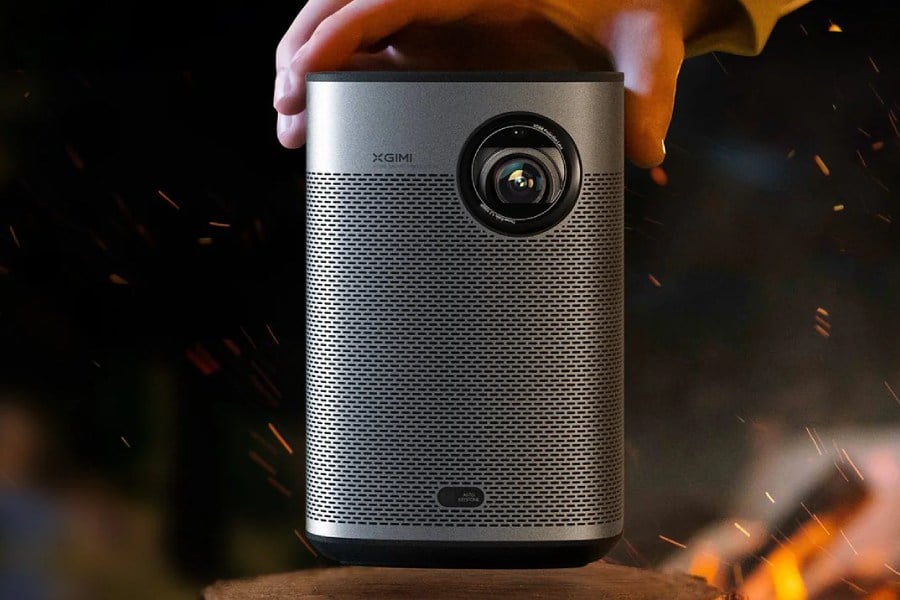
It also includes two 5W Harman Kardon speakers and a full auto-setup suite. It uses a CMOS sensor and a ToF module to focus the image and fix the keystone automatically. 

All these features make Halo+ a worthy choice for most people. It is bright enough for a dark living room, simple enough for a casual movie night, and portable enough to move from room to room.  

The trade-off is still brightness. At 700 ISO lumens, it’s bright enough for a dim room, though you’ll still want to pull the curtains during the day.

Lumio Arc 7

The Lumio Arc 7 is harder to categorize, partly because of its limited availability. It’s mostly sold in India, but it’s a good projector for the price nonetheless. 

The design is a vertical tower, which makes it easy to stick on a crowded nightstand. It’s a 1080p unit with 400 ANSI lumens. It’s lower than the XGIMI on paper, but Lumio uses a proprietary “Arclight Engine,” which is a fully sealed, dust-proof, and precision-aligned optical system.

Lumio Arc 7 Amazon Prime Day Sale

It is designed to be a high-performance projection core rather than a standard, open LED light source, for long-term durability by preventing dust from creating hazy spots or color degradation on the display over time. 

The real standout here is the audio. It packs dual 8W speakers (16W total) that are genuinely impressive. If you’re a renter who doesn’t want to buy a soundbar, this is probably the best all-in-one solution on the list. It also runs a very clean version of Google TV with official Netflix support.

ViewSonic LX60HD

The ViewSonic LX60HD is the simplest option in this group. It currently retails at $249.99 in the US. The projector has 1080p Full HD resolution, 630 ANSI lumens, Google TV, native Netflix support, built-in Wi-Fi and Bluetooth, and auto focus plus auto H/V keystone correction. It also projects up to a 140-inch screen and uses a sealed optical engine designed to keep dust and moisture out.
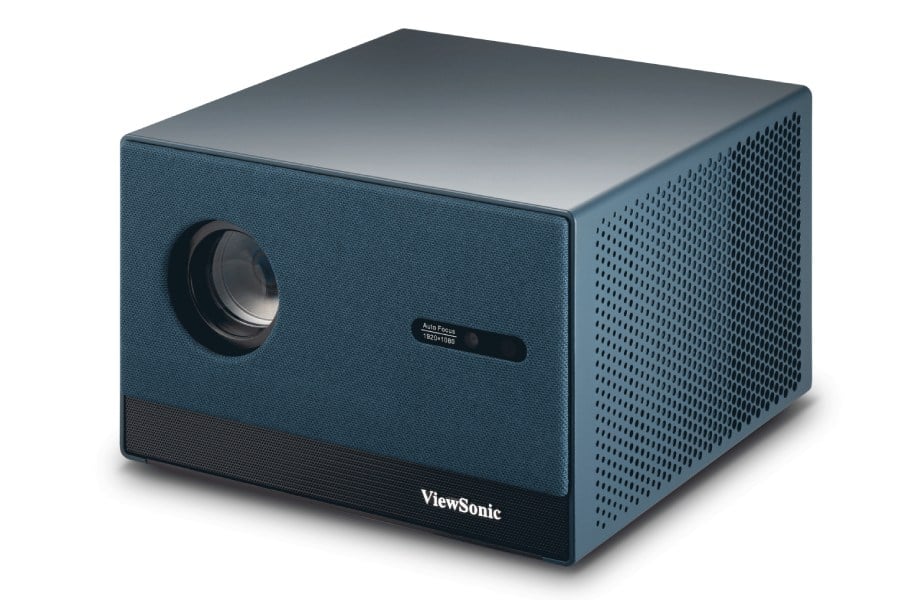
This makes the LX60HD a good fit for people who do not want to assemble a home theater from separate pieces. It has the streaming system built in, the setup tools are straightforward, and the price is low enough that it does not feel risky. 

The downside is that it is still a 630-lumen projector, so it belongs in a dim room rather than one full of daylight. But if you want a compact projector for nighttime movies, this projector is for you.

Epson EpiqVision Flex CO-W01

Unlike other projectors in this list, the Epson EpiqVision Flex is a bit different. It doesn’t try to be portable, nor does it has built-in battery. But if you plan on using your projector in a room with some ambient light, and your budget is under $500, this is the one.
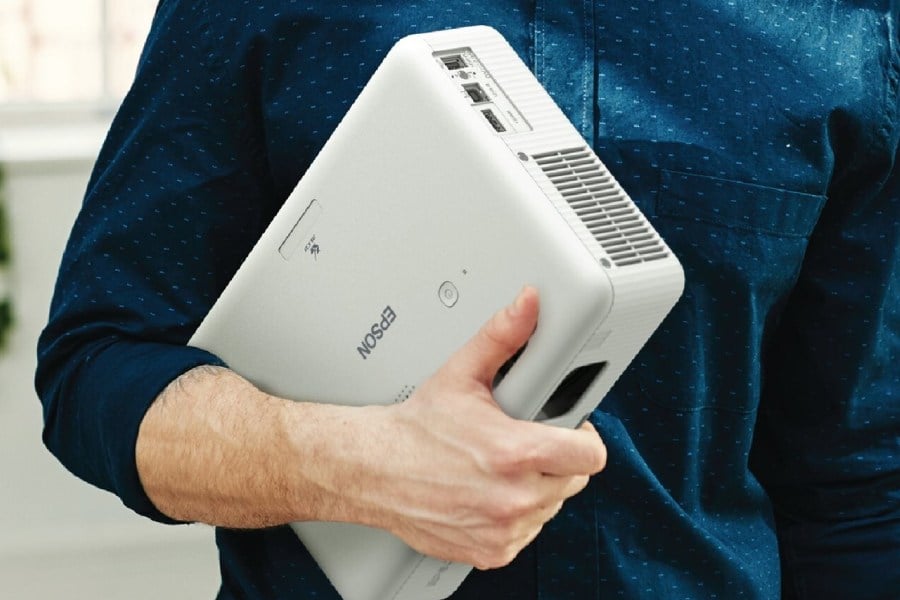
It pumps out 3,000 lumens using 3LCD technology. This means the colors stay vibrant even when the room isn’t pitch black. Most cheap projectors use a single-chip DLP system that can cause a “rainbow effect.” You don’t get that here.

But there are two big trade-offs. First, the resolution is WXGA (1280×800), which is essentially 720p. In 2026, that feels a bit dated. 

Second, it has zero smart features. There’s no Netflix, no Wi-Fi, and no apps. You’ll need to plug in a Chromecast or a Roku stick to actually watch anything. 

Nebula Capsule 3

The Nebula Capsule 3 probably has the most recognizable form factor in this list. It looks like a portable speaker, and in many ways, it behaves like one.

It’s small, battery-powered, and designed to be carried around. It runs Google TV, so you can stream content directly without additional hardware. Setup is simple, and it includes automatic image adjustments.
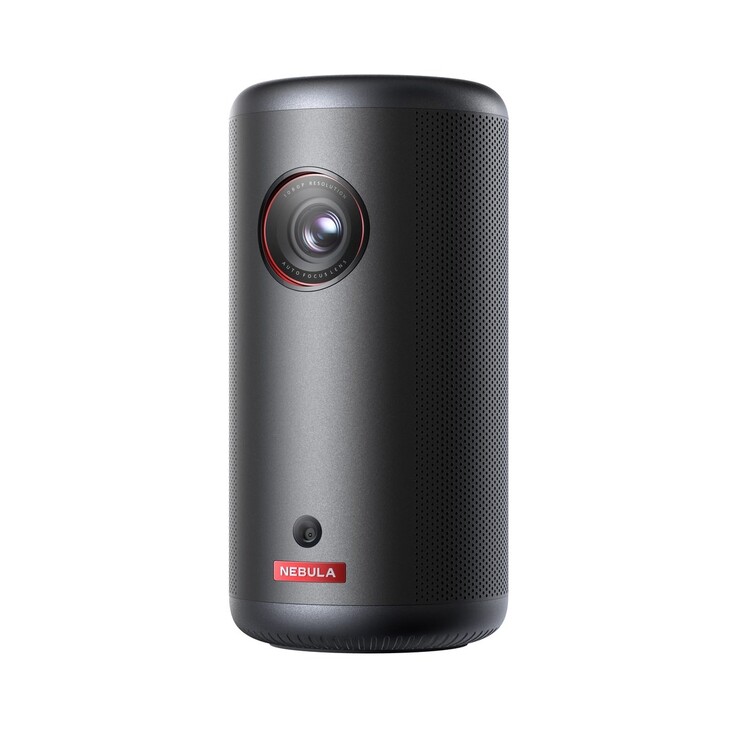
Its limitations are equally clear, too. The brightness is capped at around 200 ANSI lumens, which means it’s strictly a dark-room or nighttime device. The speakers are decent at 8W.

The main point of Capsule 3 is that it’s built for convenience. You can take it anywhere, set it up quickly, and watch something without thinking too much about placement or cables.

It can run for a couple of hours, which is enough for a movie but not much more. It’s less of a home theater projector and more of a personal screen you can move around.

For more daily updates, please visit our News Section.

Stay ahead in tech! Join our Telegram community and sign up for our daily newsletter of top stories.

The post Best Projectors Under $500 in 2026 appeared first on Gizmochina.

Apple is testing a 200MP main camera for future iPhone

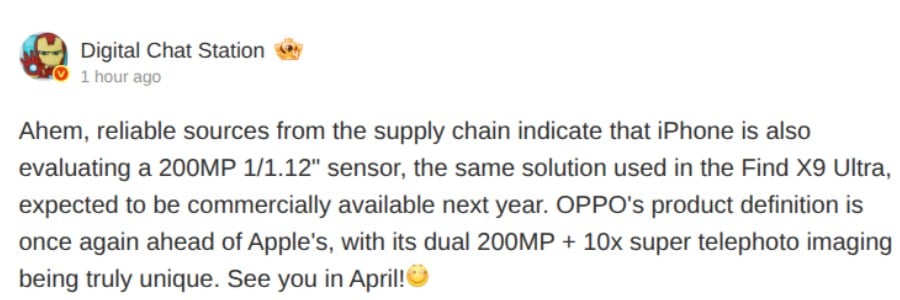
A new rumor suggests Apple might finally be considering a jump to a 200MP camera sensor, though it doesn’t sound like anything is finalized yet.

According to tipster Digital Chat Station, Apple is currently evaluating a 200-megapixel camera sensor for a future iPhone. The sensor in question is said to be a large 1/1.12-inch unit, notably the same type reportedly used in the upcoming Oppo Find X9 Ultra.

In the comments, the tipster also clarifies that the 200MP sensor is only being tested for the main camera, not across multiple lenses. Keep in mind, though, internal testing doesn’t always translate into a shipping feature.

Apple might not ship this soon!

Meanwhile, Oppo is ready to push not one, but two 200MP cameras on the Find X9 Ultra. It features a 200MP primary sensor based on Sony’s LYT-901, also sized at 1/1.12 inches. 

On top of that, it has a 200MP periscope camera with 3x optical zoom, another periscope lens offering 10x optical zoom, and a 50MP ultra-wide camera. The device is also said to support 20x “optical quality” zoom, and up to 120x digital zoom.

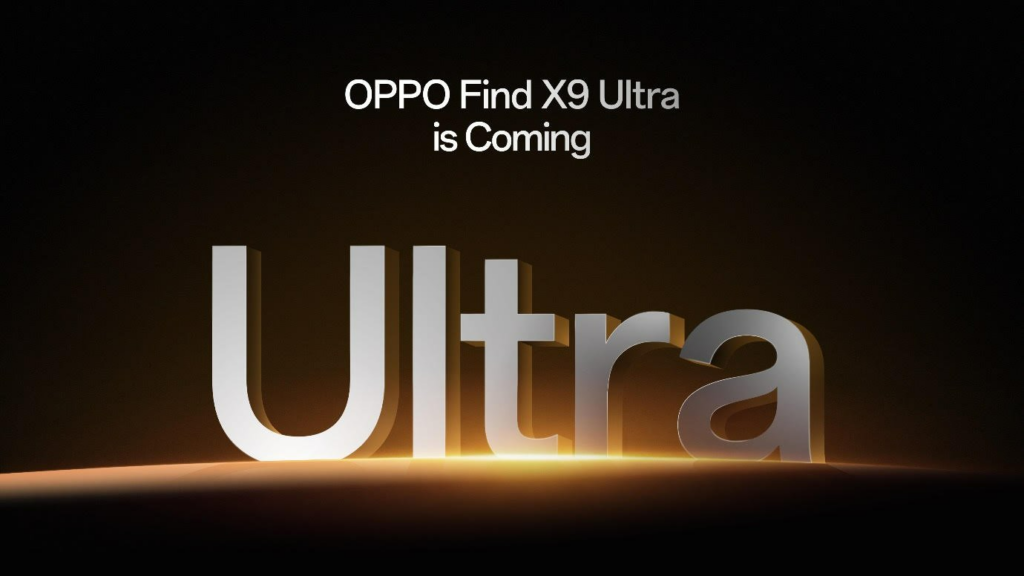
Oppo Find X9 Ultra global launch confirned
Oppo Find X9 Ultra global launch confirned for April

Companies like Oppo are experimenting with hardware-heavy camera systems, while Apple has generally leaned on computational photography to deliver results without dramatically increasing sensor resolution.

There’s also timing to consider. The supply chain rumor points to commercial availability sometime next year, suggesting that even if Apple adopts a 200MP sensor, it likely won’t appear in the immediate next iPhone release.

It’s still a test rather than a confirmed feature. But it does indicate Apple is at least exploring the same high-megapixel territory that Android manufacturers have been pushing into for the past few years. Whether that leads to a real product is still an open question.

Don’t miss a thing! Join our Telegram community for instant updates and grab our free daily newsletter for the best tech stories!

For more daily updates, please visit our News Section.

The post Apple is testing a 200MP main camera for future iPhone appeared first on Gizmochina.

Galaxy Z Fold 8 Wide leak reveals a wider form factor for competing with iPhone Fold

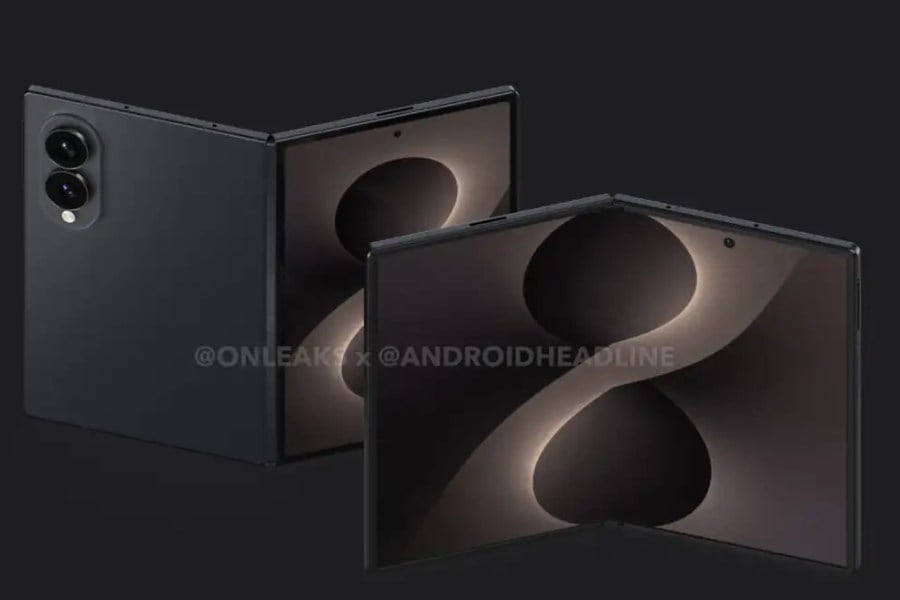
Samsung-Galaxy-Z-Fold-8-Wide-render-2

The Galaxy Z Fold 8 render we previously shared shows that the upcoming foldable will be an iterative upgrade over the existing model, with no major changes to its look and feel. 

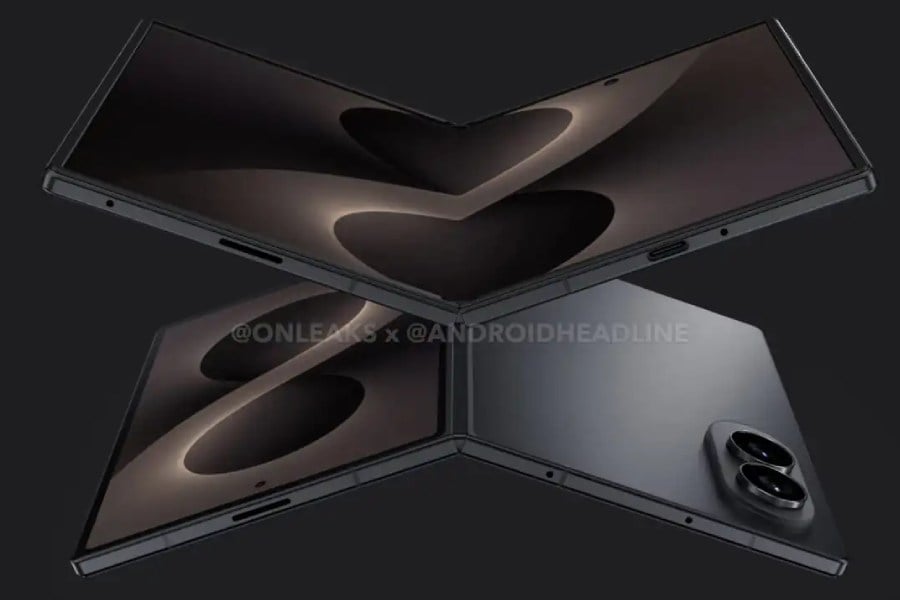
However, the company is also working on a wide foldable, rumored to be called the Samsung Galaxy Z Fold 8 Wide. And renders of it have also surfaced online, revealing the device for the first time. 

According to a report shared by Android Headlines, the device is designed as a counterpart to the rumored foldable iPhone, often referred to as the Apple iPhone Fold.

Samsung Galaxy Z Fold 8 Wide Renders

Based on CAD renderings, the Galaxy Z Fold 8 Wide measures 123.9 x 82.2 x 9.8 mm when folded. When opened, it thins down to just 4.9 mm at its slimmest point.

That said, the camera bump adds noticeable bulk. The vertically aligned dual-camera setup protrudes significantly, and when included, the total folded thickness comes to around 14.6 mm.

The wider body also changes how the displays are used. The outer screen is said to be 5.4 inches, while the inner display stretches to 7.6 inches. That outer display, combined with the wider aspect ratio, could make everyday tasks feel less cramped compared to the narrower covers seen on some earlier foldables.

Under the hood, the Galaxy Z Fold 8 Wide is expected to mirror the standard model. That includes a custom Snapdragon 8-series chip, up to 16GB of RAM, and as much as 1TB of storage.

It’s also expected to come with a 5000mAh battery with support for 45W wired and 25W wireless charging. None of this is particularly surprising, but it does suggest Samsung isn’t treating this as an experiment.

For now, the Galaxy Z Fold 8 Wide looks like an extension of Samsung’s current strategy rather than a departure from it.

Don’t miss a thing! Join our Telegram community for instant updates and grab our free daily newsletter for the best tech stories!

For more daily updates, please visit our News Section.

The post Galaxy Z Fold 8 Wide leak reveals a wider form factor for competing with iPhone Fold appeared first on Gizmochina.

OnePlus opens Android 17 Beta 2 for OnePlus 15

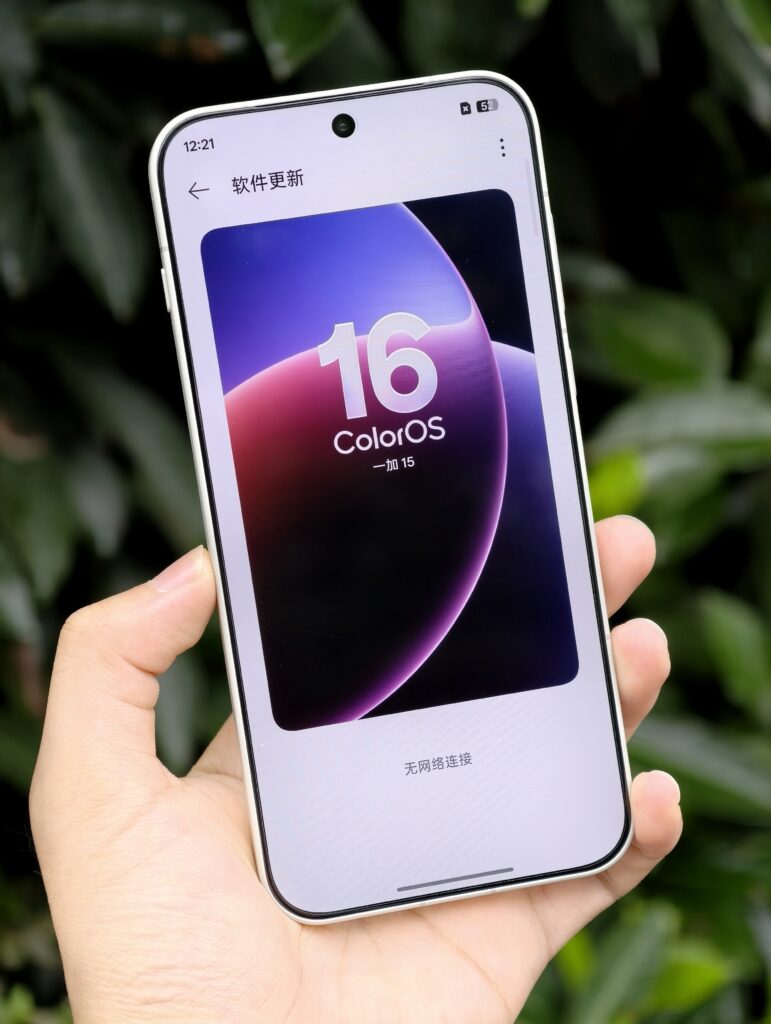
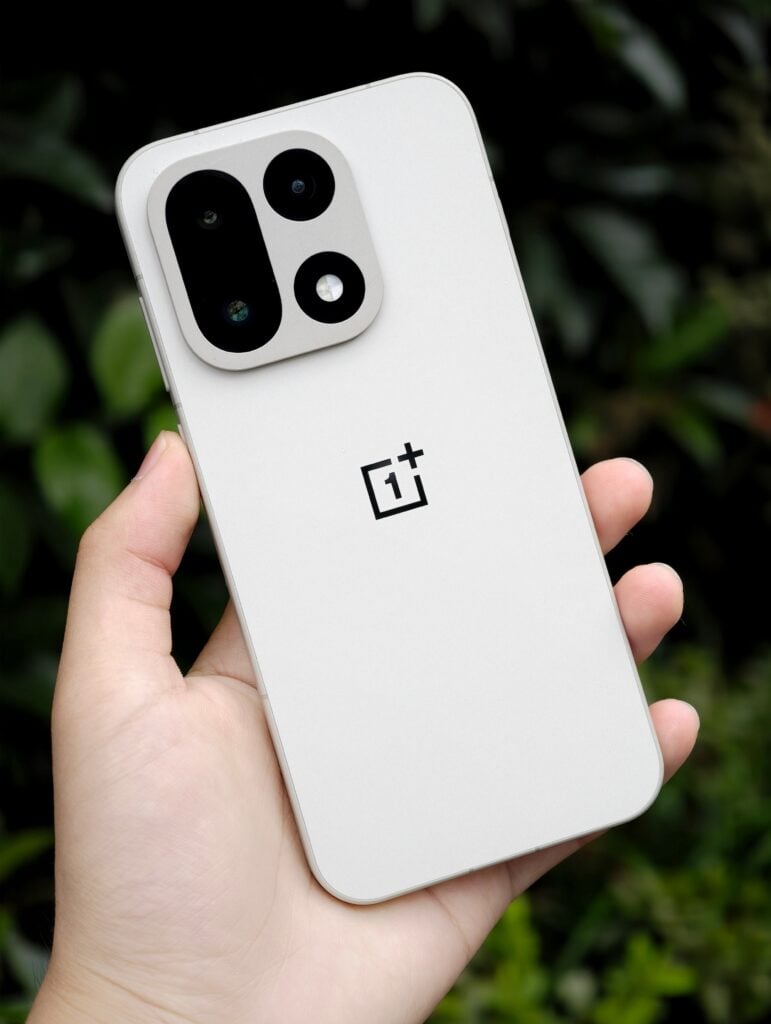
OnePlus 15

OnePlus is opening the door a little wider for developers and early adopters to experiment with its next big software update. The company has officially announced the Android 17 Beta 2 developer preview program for the OnePlus 15.

OnePlus 15
OnePlus 15

This new build is based on Android 17 Beta 2 from Google, which means it brings the latest underlying platform changes while maintaining compatibility with the most recent Google Mobile Services (GMS) package. 

According to OnePlus, any native apps that duplicate functionality already covered by GMS won’t be included here.

OnePlus 15 Android 17 Beta 2 is not for casual users

But like most developer previews, this isn’t meant for casual users. In fact, OnePlus is being very explicit about the risks. Installing Android 17 Beta 2 will completely wipe the device’s storage, erasing everything from photos to music to app data. Install only when you want to tickle it.

There are also strict requirements before users can even attempt the upgrade. The OnePlus 15 must be running specific Android 16 builds — either version 16.0.5.701 or 16.0.3.503. Anything outside that range won’t work, which means some users may need to downgrade or upgrade first before jumping into the beta.

OnePlus 15
OnePlus 15

The installation process itself is fairly manual. Users need to download the firmware package on a PC, transfer it to the phone’s storage, enable developer options, and then go through a local installation process in the settings. 

There are several steps involved, including extracting the firmware file and initiating the installation manually. If the “Install Locally” option doesn’t work, OnePlus says you can clear app data for the system updater and disconnect from the internet before proceeding again. 

If you aren’t tech-savvy, it’s worth waiting for a more stable release. But if you’re building apps or just curious enough to deal with the risks, the Android 17 Beta 2 on the OnePlus 15 is now available to try.

For more daily updates, please visit our News Section.

Tech enthusiast? Get the latest news first! Follow our Telegram channel and subscribe to our free newsletter for your daily tech fix!

The post OnePlus opens Android 17 Beta 2 for OnePlus 15 appeared first on Gizmochina.

❌